The Science Behind Cold Plunging and Saunas: Your Path to Wellness w/ Justin Roethlingshoefer
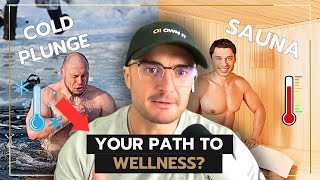
Justin Roethlingshoefer breaks down cold plunging and sauna use as hormetic stressors for health. Cold exposure below 60°F for 11 minutes weekly reduces inflammation and boosts heart-rate variability; sauna at 180-220°F for 90-120 minutes weekly triggers cellular cleanup. Alternating between them in cycles amplifies the benefits.
Chapters
If you're able to maximize that and use that, you will not only notice a change in heart rate variability, you will also notice an increase in mental clarity, energy and an increase in your immune response. So that is what it looks like to live different. That is what it looks like to take ownership of the habits and behaviors and not listen to the ways of the world, but rather step in to what your body needs. This is the ownit show where we tell stories of how everyday people made ownership theirs. Hey, everybody. Welcome back to the Own It Show. I'm your host, Justin Rothling Schofer. And if this is your first time here, be sure to leave a review. Be sure to check out all the other 242 episodes that we have in the back burner and archive for you. Because I'll tell you what, there's amazing information and amazing guests that we've had on everything from the business sector to the entrepreneurial sector, to the corporate sector, to just muscle inflammation to joint inflammation, to all of these components like tendon issues. This is where cold plunging could have such a massive benefit and really start to see a decrease in inflammation in the body, which is a positive thing. And so when we think about getting into cold water, it's a stressor on the body. It's something that the body has to work through. In scientific terms, a stressor that we seek is called hormesis. And so we should seek something that puts us out of the equilibrium state that we're in, out of what our environment is normally. Which is why we should seek stressors. We can seek stressors in exercise, we can seek stressors in cold plunging, we can seek stressors in sauna, all of these components are great. But if we are going and getting into cold water during heavy stress times in our life, like there's a lot of travel going on, we're fighting off a cold, we've got a big business week, we've got friends and family coming in, it's holiday time. All of these things that could be adding more stress to us. The likelihood that we want to add more stress to our system is not optimal. So I'm going to teach you how to find out when to cold plunge as well. So the reason we want to cold plunge is it can decrease inflammation. Awesome. That's a great benefit physiologically. Now, psychologically, getting in and doing something really hard is something that we all want to overcome, something that really has massive benefit to us from how do we show up in different areas of our life. And so if getting into a Cold plunge is something that you're doing as a mental toughness routine or as a mental training. Awesome. Great. I love it. It's something that I actually have to overcome. Every time I get in there. It's like, okay, how do I get back into this mental state? If I can do the hardest thing first thing in the morning, then the of my day is easy. Cool. If that's something that you're all about and you're soaking up and drinking that Kool Aid. Spectacular. But there comes a certain point where it doesn't, it doesn't match up. It's not the thing that's going to get us to create change if we're not really bolstering the rest of our life to actually reflect that as well. So here's what I love to do. Here's what I love to kind of to give as the example and the framework for cold plunging. Number one, we want to cold plunge for 11 minutes a week. If we can cold plunge for 11 minutes a week, that means according to the Soderbergh principle, we have gotten the maximum benefit from cold exposure that humans can. Anything more than 11 minutes a week is unnecessary. Then how do we break that up? Well, what I like to say is that you cold plunge on days that your HRV is above your 10 day average. If you're cold plunging on days that your HRV is above your 10 day average, what you're saying is that you're getting in to the cold plunge when your body has greater capacity to take on more stresses, more hormesis, more search and more stress. That is sought out, that's sought after. And so that's what I want you to think about is days that your HRV is above your 10 day average. That's great. Days to cold plunge. Now let's say on a typical week you are above your 10 day average. Five of those seven days. Well, that would mean if we needed to get 11 minutes, that we would want to cold plunge for about 2 minutes and 15 seconds every single time. And so if you have that concept of getting into a cold plunge for somewhere between 90 to 90 to 180 seconds, that is going to be a really powerful tool to bring us forward into our total minutes of 11 for the week. That is, that's the framework one 90 to 180 seconds per exposure. Number two, I want to get into 11 minutes total per week. Number three, I want to get in when my HRV is above my 10 day average. If you just live by those three things, you are going to optimize your cold plunge experiences. Now, how cold do you make it? All the data, all the research shows that anything less than 60 degrees Fahrenheit is going to produce the reaction necessary internally to get the benefit out of a cold plunge. So you don't need to get into a cold plunge at 31 degrees. You do not need to get into a cold plunge at 40 degrees for it to do anything. And just the colder it is, the better it is. And if you can't get in, you're not a man, you're not a woman, you're not actually getting any benefit of it. That's a myth, it's wrong. And so, quite frankly, I'll say it out loud. My cold plunge, 53 degrees, that's where I feel great. That's where I get in. I get the maximal benefit. I get in, it's extremely uncomfortable. And as I sit into this, I get out, I still have the numbing feeling. I still have all the things that you're experiencing, but it didn't hurt. And so that's the framework for using the cold plunge. Now, when we go into a sauna, we want to do the same type of thing. Now why do we get into the sauna? Well, one, it produces what they call a macrophage. Macrophage is the decay or eating of dying cells. And in our body, we have these cells that are constantly connected to each other. And if you have a dying cell next to a healthy cell, the dying cell will actually infect the healthy cell and start to age it faster, which is why, which is how aging happens. And so when we get into extreme heat, what actually happens is these. The dying cells die off, they get eaten, and then they get expelled as metabolic waste. And the metabolic waste is then taken out through our sweat, which is why I love sauna. There's two types of saunas, infrared sauna and traditional sauna. Infrared sauna heats up at a much slower rate, so they're going to peak out at about 140 to 150 degrees Fahrenheit. A traditional sauna is going to peak out at about 210 to 220. So much hotter, a much hotter experience. Now everyone's like, well, you want to go infrared because it heats you from the inside out and it's going to be a better type of heat. Again, no, all lies. And it's oftentimes like you hear things said enough that it's just, I guess we'll accept this as truth. So. So this is one of Those things. The infrared sauna is better for people who are just uncomfortable when it comes to heat. And you're like, you know what? I'm not going to, I just can't get into a 200 degree sauna. I just really don't feel good when I get in there. No problem. Don't force yourself into something. But you can still get the benefits of an infrared sauna. The only downside to that is you have to spend about 30 to 40 minutes in the sauna before you actually start to get the benefit, before you actually start to start sweating and get into that deep metabolic sweat I call it, where you're, you're, you feel just the sweat profusely pouring out of you. Whereas in a traditional sauna you can get there in about usually five to 10 minutes. And so that's why we want, that's why I have a preference towards a traditional sauna that can ultimately pull the heat at a higher level. So that's the difference between the two. What do you choose? Why do you choose it? On the course of a week, we want to strive for about 120 minutes of sauna, somewhere between 90 and 120 minutes. That's that, that's that peak, that beauty. And so if you think about it and you break it down and it's not a bad thing to get into the sauna every single day. It's a part of my routine. It's something that if you track any of my habits and hrv, anytime that I'm in sauna, it's really actually increasing my sleep quality and increasing HRV for me. But something that I want you to think when you're considering how much time you spend is if you're getting somewhere between 15 and 20 minutes of sauna exposure every single day, you're going to hit at the end of the week, 140 minutes. If you're doing that, upwards of 20 minutes a day. If you're doing 10 minutes a day, somewhere between 70 and 140. So you've literally hit it. So your goal should be 15 minutes of sauna every single day and getting into the upper temperatures of somewhere between 180 and 120 degrees. If you can do that and really maximize that, you are going to notice that your body feels more cleansed, you feel like you've rid yourself of a lot of the toxins within your body and you're going to get into the deeper stages of sleep, you're going to feel more rest, you're going to feel More energetic. And quite frankly, you're going to be able to eliminate a lot of illnesses, sicknesses that come just with the common cold and flu seasons because you're killing off a lot of those dead cells and increasing your immune function. So that is how I would start to push a framework when it comes to sauna. Now, there's also the contrast therapy conversation that we can have here where you go into a sauna at 180 to 220 degrees, you spend 10 to 15 minutes in there, you kind of push it a little bit sometimes and then you go pop into the cold plunge. I love this technique. Why you're creating deep inner heating temperatures through the sauna and then getting into cold. And that contrast is so powerful for decreasing inflammation, so powerful for increasing cellular regeneration. And when we can focus on that and really create a system that works, it can help in a powerful way as well. So if we're going to do that, what I would suggest is somewhere about five to six minutes in the sauna, then a minute cold plunge and repeat that three times. Now, is that the optimal. No. A lot of the data says 20 minutes in the sauna, three minutes in the cold plunge, repeat three times. And if you were to do that, obviously you'd be looking at like an hour and a half. I don't know many people who have an hour and a half to go in through this protocol. I certainly don't. It's not something I do, it's not something I abide by. So never would I ever expect anybody else who's busy and doing things at a high level to, to, to make time for that and then make time for working out and then make time for your zone two conditioning and blah, blah, blah, blah, blah, down the bin. So what I would want you to do and what I would want you to focus on is getting into the cold plunge for about six, seven minutes, pardon me, into the sauna for six to seven minutes, and then a minute in the cold plunge, repeat that three times. That's going to give you your 20ish minutes of, of recovery work. And that is going to give you the optimal state. So hopefully this helps you. Hopefully this makes a little bit more sense of the cold plunge phenomenon and the sauna phenomenon and that you don't need to do everything, you don't need to get into 32 degree water and just grid it out in there and do it every single day. And if you don't get in there every single day, you're not going to be successful. And you're not going to create the changes you need. You need to get the sauna that is cranked to 220 degrees and just get in there and sweat it all out. No, find out what works for you, but use the protocols I talked about on the cold side. You want to make sure you're getting in there somewhere between 90 and 180 seconds every single time that you do it. When you're doing it, you're looking at Your when your HRV is above your 10 day average and then getting up to about 11 minutes a week of cold exposure. On the hot side, choose whether you want to go infrared or traditional. I prefer traditional because I like to maximize my time. So I like to spend somewhere between 10 and 15 minutes in a sauna each day to get my total for the week. Sometime between 90 and 120 minutes for the week. And then making sure that each of my sessions are about, like I said, 10 to 15 minutes each, stemming at 180 to 220 degrees. If you're able to maximize that and use that, you will not only notice a change in heart rate variability, you will also notice an increase in mental clarity energy and an increase in your immune productivity, immune function, if you will. Immune response. So that is what it looks like to live different. That is what it looks like to take ownership of the habits and behaviors and not listen to the ways of the world, but rather step in to what your body needs. We'll see you guys next week.
More from Justin




The Ultimate Blueprint for Taking Ownership of Your Health | Unlock Peak Performance

From Bullied & Anorexic to Healed & Purposeful: My Transformation Story (Justin Roethlingshoefer)


Forget "One-Size-Fits-All" Health! Unlock Your Best Self with True Personalization (The OWN IT Show)

Are Blood Tests Enough? Why Cellular Testing Might Be Better | Justin Roethlingshoefer

Your Body's Language: Understanding Stress & HRV| The Power of Ownership - Chapter 3 & 4


Is "normal" really making you sick? Dive into Different with The Power of Ownership:Chapters 1 & 2