Emerging Pioneers: Panel Discussion - CGI 2015 Annual Meeting
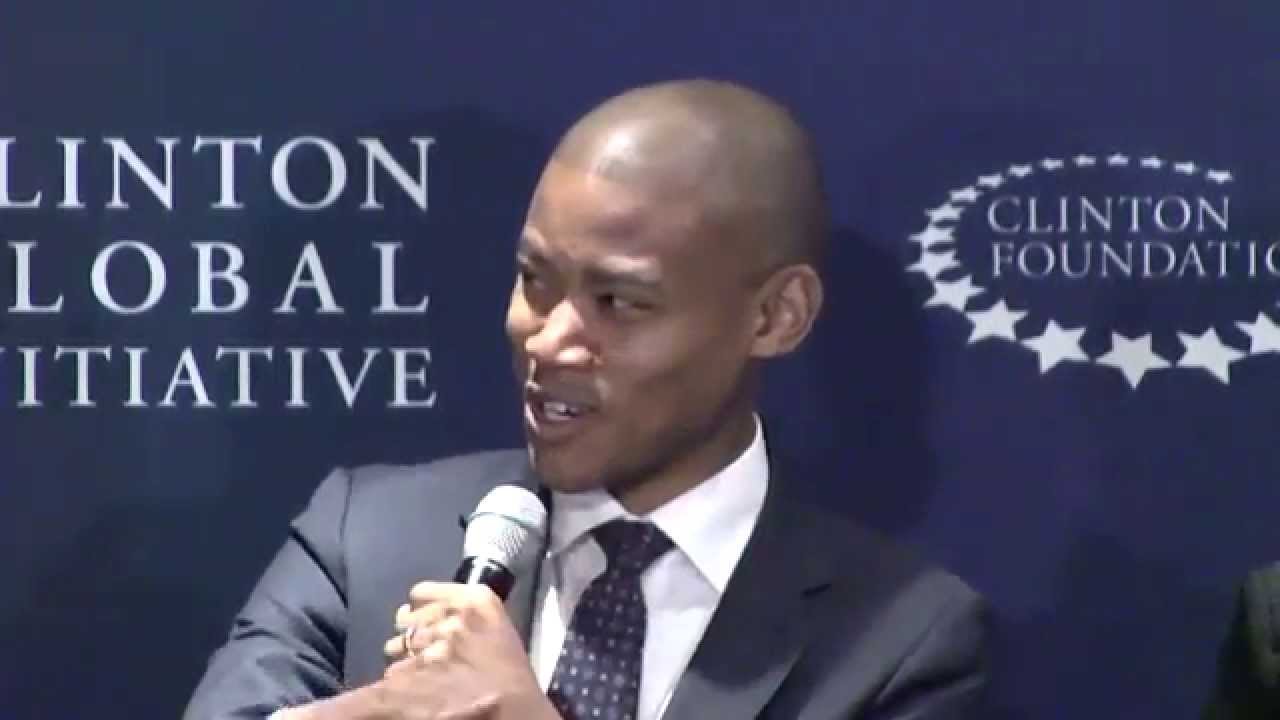
The CGI 2015 Annual Meeting featured a moderated panel with five innovators—Abizar Royesh (Bridges Academy), Juliana Rotich (Ushahidi/BRCK), Kanyi Maqubela (Collaborative Fund), Aya Badeer (LittleBits), and moderator Max Schorr. The discussion explored how technology, platform thinking, and collaborative economics can address global challenges such as youth extremism, education gaps, and civic data. Each panelist described their organization’s mission, tools, and scaling strategies: LittleBits’ modular electronic building‑blocks for STEAM learning; Ushahidi’s open‑source crisis‑mapping and the iHub ecosystem that birthed hardware start‑ups like BRCK; Bridges Academy’s literacy and leadership programs for displaced Afghan youth; Collaborative Fund’s impact‑first investment thesis that blends profit with social good, emphasizing measurement, diversity, and B‑Corp standards; and the broader role of mobile, patient capital, and real‑time data in tracking Sustainable Development Goals. The conversation repeatedly returned to the tension between scale and intimacy, the importance of measurement for impact, and the need for partnerships across public, private, and philanthropic sectors to amplify social change.
Chapters
Today, the largest generation living in the world are millennials and young people. And we're here this weekend, the world leaders are at the United Nations approving new Sustainable Development Goals that are going to end— that have ambitious goals to end poverty by 2030, take on the biggest issues that we're facing. And all around the world, people of all ages are digging in and making social innovation real. Today we have 4 great panelists. So next to me, Abizar Royesh is a co-founder of Bridges Academy and an undergraduate student at Tufts University. Bridges Academy was nominated for a Nobel Prize in 2014, and it looks at ways of engaging people in the Middle East and all around the world increasingly who might fall into extremist paths, and it looks at what are these paths of young people and how can we make them more productive and maybe less extreme. Wonderful to have you here, Abizar.
Thank you.
Juliana Rotich is co-founder of Ushahidi and also BRCK, and she is here all the way from Nairobi, Kenya, where she is on the ground helping to connect and empower Africa in really inspiring ways. Wonderful to have you here.
Thank you. Thank you for having me.
Kanyi Maqubela is a partner at Collaborative Fund based here in New York. Collaborative Fund invests in companies that have both for-good and for-profit returns and are creating a more collaborative shared future. Great to have you.
Thank you, Max.
And Aya Badeer, co-founder and CEO of LittleBits, which is an amazing company that is inspiring invention, education, here and now in over dozens of countries. So here we are. And social innovation is happening. Let's see. I want to kick it off with Aya Badeer. And I want to ask you what your inspiration was in creating LittleBits and how you think of your process for social innovation.
The inspiration for LittleBits— well, let me just explain a bit about what LittleBits is. It's a platform of electronic building blocks, individual circuits, lights, sound, sensors, motors that snap together with magnets to empower anyone to become an inventor without having to be an engineer, without having to program or to solder. So we have a big focus on kids and students, but also adults. Designers to inspire them to be able to invent with technology without having to be experts. The inspiration for LittleBits was very personal. It comes from a personal place. I'm an engineer. I have a background in undergrad engineering, and then I went to the Media Lab at MIT for my master's. And I felt that it was a huge— such a power in combining engineering with creativity in order to create just to innovate, not just technological solutions, but to create art, to create new products, new services, and also to imagine a future anew. And so LittleBits was really born out of this desire to make this technology accessible to everyone so that technology isn't happening within the confines of big R&D companies, but is accessible to everyone so that you can invent no matter what your age is. And we could really help empower 21st century learning.
How many of you are familiar with LittleBits? OK, so about a third of the room. Definitely check it out. It's incredible. It's sort of a Lego for electronics, and it's inspiring kids. I'm excited to get my first set in the mail very soon. And it's a business, but as people touch it, their curiosity is awakening, and it's spreading and growing. Very inspiring. Kanyi Maqubela. Tell us a little bit about Collaborative Fund. You're a partner there, and you're doing investments that are a little different than traditional. How are your investments different? What are you doing?
Yes, gladly. So Collaborative Fund invests at the intersection of good and profit, and it's our belief that over the very long term, good prevails, and over the medium term, good can prevail, and over the short term, there's a hypothesis that good should prevail. And so we're trying to manifest that hypothesis and attract the capital markets and the process, which we think is extremely important. And one of the things I think that distinguishes us is a belief that being values-aligned with the problem-solving needs of the world and being mission-first is a business competitive advantage that is manifest immediately in the hearts and minds of consumers and of users. And there are extraordinary examples of that immediate in front of us. And so we think that that can actually be a great moat that can make for very profitable investing. And so we think we don't actually have to compromise on returns by being focused on the good. And one of the themes that we're trying to invest against in particular is this notion of the collaborative economy, which is a belief that this is a shared future, and that's manifesting in platforms where we're sharing resources, but also manifesting in a way of sharing mindshare and focusing on access for all individuals at the most important levels of society.
Juliana, so a lot of people— the world is changing. We're more connected than ever. And a lot of people are still in a little bit of a realm where it's sort of the first world is helping the third world and that sort of mentality. You've been on the ground in Nairobi creating startups, helping people with new media tools, and birthing what they're calling Silicon Savannah. I'm curious if you could share a little bit about what you're doing and kind of share share that with the group.
So the work that I'm involved in is actually a continuum of two parts. I started out as one of the founding members of Ushahidi. And Ushahidi— how many of you have heard of Ushahidi? Brilliant. So most of you know what it is. But for those who have never heard of Ushahidi, it's a platform for data collection and visualization. It first came out of the post-election violence in Kenya in 2008 and has since scaled as a platform globally, and it's used for mapping human rights violations, crisis mapping, and then also for mapping during elections. We've got a new version of the— it's gotten through different iterations, and the most recent iteration will be launched in just 2 days. So there's the software part of it, and then there's the open source community. It's free and open source software, but we also have a business model behind it that brings in additional support in addition to the grants that come from different foundations and different organizations like Comedia Network and MacArthur Foundation and others. And then, so this one organization called Ushahidi, became sort of the anchor organization for spaces, specifically a space called the iHub in Kenya that allowed the technology community to come together and to have an environment that was very conducive to startups. So in 2010, one of those— It was a very empty space in a 4th floor building in Nairobi, and all we had was a fast internet connection, actually one of the fastest in Nairobi, and we were worried that there would be nobody in that building to take up the space. As I speak to you today, there have been more than 150 startups that have come out of this space in Nairobi, and one of them is now BRCK, which is a hardware company, which I'm now also involved in. So it's been a continuum that covers community, open source software, and now, you know, and coworking space, and then now hardware.
Abazar, extremism touches all of us, and there are many paths young people can go on. How did you get engaged in your work, and share a little bit about it?
So I work with a displaced camp in Kabul, Afghanistan. The camp is mostly comprised of people who've moved from southern Afghanistan due to war, insecurity, bad economy, to Kabul in search of better jobs, better opportunities. But what happens is that when these kids move from Helmand, for example, or Kandahar towards Kabul, they cannot compete in the job market. They're— by that time, they're— a lot of them are older than they can go into schools. The Ministry of Education does not let them go to schools. So they basically get trapped inside this IDP camp, which is a very isolated place from the rest of Kabul. These kids, they have not had educations. They don't have any skills to work in the labor market. And so what they do is, for survival, they have to often go back to opium farms in southern Afghanistan during the opium harvest season. Others, they have to join insurgent groups, extremist groups, because that's the— not only is that a prevailing atmosphere in the camp and their back home, back home where they're from, but also it's because the government and the whole atmosphere in Kabul is not very hospitable to them. These people, they're very susceptible to joining extremist groups like Taliban, Al Qaeda, and now ISIS. So we started this— I started this project with displaced people because in order to combat the power base of an extremist group, you cannot bomb them, because when you bomb a village, you kill one terrorist, but then there are tens of other people who get affected by this bombing, by war. And they, when they grow up, they have no alternative but to hate the West, but to hate Afghan government, but to hate other ethnic groups in the country. And that becomes a cycle. They become violent, they join extremist groups, and then you have extremism that prevails Throughout the region even, because the government in Afghanistan is very corrupt. It's very inefficient. And so this cycle is very hard to break. It's very hard for these kids to get out of that. So what we have done, what we've tried to do in Kabul, in Afghanistan, is to show these kids an alternative, that they don't have to join the extremist groups in order to earn a salary. They don't have to hate the West. They have to instead interact with them. They have to learn about them. They have to learn about other ethnic groups in the country. And that's why we offer leadership and education and literacy classes, short-term— both short-term and long-term projects for the kids in these camps, so we can give them this alternative.
So there you have it. So, you know, there are 5 of us here, and I started a media company, GOOD, 10 years ago, right around the time CGI started, that helped people live well and do good and make— connect the dots between those. And I think when the 5 of us are here and we're talking, I think we're seeing a new world. And there are tools that are new that are fundamentally enabling this type of work. And I'd just like to kind of quickly— we don't have time for long discussions here, but in a sentence or two, what is a tool that's making the type of work you're doing now possible? What are some of the modern tools you use?
Well, the main tool we use is the tool that we make. So we focus on making tools, and so one thing— that's been really important for us at LittleBits is STEM and STEAM education, and really thinking about how to integrate STEM and STEAM into schools in easier ways and in fun ways. And so, but the application doesn't always have to feel educational. It's also innovation. It's some students that are coming up with sustainability solutions. And one of our community members created an earthquake monitoring system using some of the electronic building blocks. Another group of students at UNGC— actually, we're launching a commitment today about that at University of North Carolina at Greensboro, where students are refugees from 10 different countries, mostly African countries. They don't have a language in common, and they've been using LittleBits as methods for invention and problem solving and team building. And so our commitment is to support and scale this program. And actually, we're looking for partners if you're interested. But basically, those are some of the tools that we've been using in ways that are gender-neutral. That's something super important, and we're seeing impact— the impact of it being 30 to 50% of our adoption is with girls, and that's unheard of in electronics. We also are age-agnostic, so it's across different age groups, and so adults and kids together, students and teachers together. And also the third one being across disciplines, so whether you're doing math or science or arts and crafts or design thinking, you're able to kind of spread across different things. So we're— our big focus is to refine the tool because the tool is what then will enable other people to create whether new business opportunities or new products or new types of thinking or most importantly these 21st century problem solvers and inventors that are going to, you know, then improve the world going forward for the next generation.
Anyone else?
Well, very quickly, the notion of there being hundreds of millions of supercomputers in everybody's pocket is something that is still dramatically underrated. And what it has done is, at least from my perspective, started to create an asymptotic curve where the cost of communication is verging towards zero. And when that happens, insane things are possible as a result. And so that in and of itself just continues to blow my mind.
Kanyi Maqubela. Like Aya, we also— we make different types of tools and platforms that people build upon to actually then deliver whatever impact that they would like to have, whether first responders when they're responding to a crisis or election officials in terms of gathering data. And absolutely, the role of mobile is really key. Most of the time in my part of the world, if you're thinking of any type of engagement with customers or users or the public, mobile is absolutely part of the thinking that has to go into the strategy. But last but not least, if we think about other tools, like let's say financial tools, It's sort of what Jacqueline Novogratz called patient capital, and where you see this mix of grant money acting sort of like a seed capital. Because Ushahidi was an— is a not-for-profit, yes, but the way it was run, we always ran it like a startup and where we used the resources from grants, but then we also set up a business model to complement that. So I think if we, if we think about those financial tools as also changing and helping us to, to catalyze other for-profit companies, which is also sort of unique where you have a not-for-profit spinning off a for-profit company, it starts to, to create an interesting mix that we feel can show an alternative way, or at least another, an additional way to deploy capital and catalyze more enterprise.
Love it. And that's something that I think is inherent with this whole generation is we're looking for ways, how can we make a difference and how can we make a living? And we started with that question at GOOD and we sort of asked it and people sort of laughed at us and thought that was strange. And I think increasingly we're seeing so many people who are finding ways to blend those two. And I just want to ask you, because I think all of your projects have such interesting experience design. And so one of the things we're talking about here is scaling social innovation, scaling your projects. So I think what you all do so interestingly is you're dealing on the sort of individual level. In one specific case, you're solving that.. But in this new environment we have, when you do that really well, it's possible for things to grow. So if you could either talk about how it's scaling or one instance. And go ahead.
Well, very, very quickly, one thing that as soon as I hear the word scale, I think awesome, because scale is the best thing in the world and it's the most important, right? No, not necessarily, right? Scale is amoral. It's not immoral. It's not moral. It's amoral. And yet there's a gospel of scale. Which suggests that if something is scalable, that is an element of its sort of moral quality. And I think that there's a lot of interesting social innovation and in general social thinking which doesn't scale and shouldn't scale. And in fact, human scale and this notion of intimacy and this notion of genuine connection is so powerful and ineffable and permanent. And finding ways to celebrate that is something that I'm really excited about, even in this context and this environment of celebrating scale.
If I can talk about that. I actually agree with Kanyi exactly because we had this phone conversation and I couldn't have put it better myself. So I just want to offer like a story on what Kanyi was saying. So this summer I was back home in Afghanistan trying to implement another project, short-term project for kids in the displaced camp. And so we brought together a number of youth who were between ages 13 to 20. We brought them for this 2-week-long project education and leadership program to Kabul, to one of the schools in Kabul. And so between these kids, some of these kids have seen extreme violence, as I'm sure we can all imagine. And this violence is exhibited in every action they do. For example, there was this kid who always got into fights. Every single day I would have to talk to him 3 times, 4 times, because he would get into fights. And it's not like Just arguing, it's fistfights. And so 3 days into the program, I was fed up with him. I was like, this is not working out, right? You're very mischievous. And then I told him that I wouldn't give him his stipend for the day. So he came up, he argued with me, and he told me that if I didn't give him his stipend, he would blow himself up in front of the school. I mean, obviously he was joking, he was not serious, but imagine like what he's saying. And then And then the project moved forward. Like, at the end of the project, he came to me, he hugged me, and he cried. He cried because he was sad that the program was ending. I got very emotional that day, but it passed. 3 days later, after the program was ended, I talked to him again, and then he told me that if I didn't start the program again, he would blow himself up. So obviously he was joking about this one. But yeah, but you can imagine that this sort of interaction is very personal, one-on-one interaction. If we're thinking about scale, probably if I had, for example, thousands of students during that program, I couldn't have established that connection with each one of them, right? So I think what's important is not how many people we touch, but how we touch each one of those people. And I think Kanyi brought up a very, very valuable, valid point in that.
I have a little bit of a kind of a different— I mean, obviously this is a— I can't even place that story. But I'm very, very excited about scale. I'm very excited about it because LittleBits is a mission-driven company. But in the very beginning, we didn't have an education team. We put up a 15% education discount on the website and weren't even paying attention. And one day we looked 6 months later, there were 600 teachers that were using LittleBits in the classroom. Now we have about 9,000 educators, 2,200 schools. We're in like 70 countries. And it's exciting. It's exciting. It's exciting to see it happen at different languages, different age levels, grade levels. And so scale is something that's— it's terrifying, but at the same time, if we're able to, you know, because it's modular, people are adapting it to different needs and different topics. And so the experience is still personal and it's still customized. But at the same time, if we're able to do this at a larger scale, we can really start to see impact in a meaningful way. There's a lot of passion and attention going into STEM, STEAM, learning how to code, robotics, and all of that. And we think that there's a really good balance of bringing in arts as well as science and technology, and doing it in these sort of personal but scalable ways that are going to be really meaningful. And so for me, it's really exciting. And the challenge is kind of— it's just energizing.
Yeah, I think it's really energizing, particularly— I don't know how you felt when you had little bits in a different language. I remember, particularly for Ushahidi, when we started out with a version in English. But then when you start seeing websites doing elections in Ukraine or in various parts and they're localized, it reminds you that scale is also about— it's about people taking what you've provided and making it their own. So scale can be achieved by using— creating platforms and creating pathways for people to build upon what you have put in place. And it's really, really exciting because Once you provide the platform and you see the actions of others, it can actually create different verticals. Like you said, the education work, for us it was sort of the same way where we created the BRIC, which was solving for our own problem of intermittent power cuts. So we needed a way to stay online. And some of the first groups that came to us said, you know,— when we're out in different schools, our problem is internet. And that got us thinking about the education space and actually inspired us to create solutions for the education space. And we just launched the BRCK Education Kit that consists of the BRCK communications device, a microserver that serves up the content to about 40 tablets. So the key thing is to just continue that idea of platform thinking, because platforms can actually help us to reach different audiences and can actually help to extend our work in interesting ways that we wouldn't have been able to extend by ourselves.
Great. One of the things with scale, whether it's individual or many people, is measurement. I think we're at this really exciting inflection point where the new Sustainable Development Goals are launching, and the data around them is still evolving. I know there's something called the Eye on Earth Summit that is working to make this data real-time. At GOOD, we've done a lot around infographics and visualizations, and I think What this measurement allows— I mean, there's a certain measurement with education and education success, and you sort of transcend that, Aya. There's the investment metrics, which steer a lot of our society, which you're working with and adapting. And there are new tools, and then there's the individual. And I think it's one of the really exciting things that, you know, there are different types of metrics and data, and it's going from something where it's just the UN to it's all of us now. That's something we're really excited about at GOOD. One quick question, and then we're going to open it up to everybody, is as your projects are now taking on success and you're looking to take the next step, where could you use support from either the business community or foundation? What sort of public-private opportunities are there to help you take your project to the next level? Anyone can jump in.
Yeah, so for Ushahidi, particularly when you're talking about the Sustainable Development Goals and the need for data, now Ushahidi has been doing data collection, aggregation, and visualization software for years and have a great community worldwide. What is needed now is— more partners in different countries to actually put together these projects, whether— so that it's about dynamic data where it's not about a specific report that comes out. We love reports, it's great to have the insights, but how about tracking the Sustainable Development Goals from the very beginning when it's launched So it's a living, near real-time view that also engages the public as to what they consider as priorities and whether those priorities are being met. So in terms of open data projects around the world, right now Ushahidi is used in more than 152 countries, and we have a solutions team that looks specifically at projects for cities, governments, and even corporations that need to collect a lot of data from different channels, from SMS, email, web, all different types of ways. So the software is there. It's just we need partners to work together with us to actually track these goals over time.
Well, gosh, measurement is something I'm obsessed with as an investor. And ROI and IRR and making sure that you are competitive from a return standpoint is a measurement that I think is critically, crucially important as it relates to impact investing, because we want to attract the capital markets. And if we can attract the capital markets, which in the US is in the order of trillions, then imagine what we can do for amazing individuals like these. But at the firm level, there's other types of measurement. And my view is that the things you measure are the things you choose to care about. And so we, for example, are measuring the diversity characteristics of our founders— how many of them are women, how many of them are Black and Latino, how many of them are underrepresented. And just by virtue of choosing to measure it, even though it's already on our website and anyone can, we care about it more. And I think that that speaks to the fact that when you measure something, you immediately start to attach some value to it. And then at the company level, there is an incredible trend happening, actually, gosh, throughout the world, which is this B Corp trend and this trend towards having a set of characteristics that are mutually agreed upon as being important ones in representing really catalytic for-profit companies. And you're seeing more and more companies, gosh, within our portfolio, but even more broadly, who are adopting the B Corp impact assessment and are becoming public benefit corporations according to Delaware charters and those types of things. And those are real quantifiable ways of measuring that things are moving forward. And then at the company level, my personal view, and I think both I and Juliana can speak really eloquently to this, is the notion of if the content of what you're building is also the content of how you are monetizing, then there's an incredible amount of alignment. And the more you can get your product out there, the more impact you you have, and so I think that's really cool when you can align interests that way, and it results in really unique value creation in the ecosystem.
Great. So what help do we need? I guess there's a specific example and then a general one. The specific example that I just mentioned is the commitment that we announced today to North Carolina Refugee Project. It's a pilot that's been running for 2 years, essentially 20 girls at a time from 10 different countries that don't speak the same language. They are being pulled out of science class in order to learn English. And so they don't get access to science at all. And so this program that we— that we're growing is an after-school program to get them to invent and to problem solve and to work collaboratively. It's been working. It's been working for 2 years. And so this— what we're looking for now is a partner to help grow it and help really invest in it and help scale it beyond North Carolina. And which sort of brings me to the bigger idea is that, yeah, like I said before, there's a lot of attention and energy and excitement around how do we get kids engaged in STEM and STEAM? How do we get more girls engaged in those things? How do we get more 21st century learning happening so that the students are prepared for careers that haven't been invented yet? One thing that is at once very exciting and a very big frustration for us is that We at least have one way that we've developed that has been working, and we see it, and we have hundreds of case studies to show it, but we're one startup based in New York. We're 100 people. We can't touch all these places in the world in the speed that we want to. So what we're looking for is partners to help scale. It's partners that have boots on the ground in different states and different countries and have networks that we can plug into for dissemination and distribution that are large larger than us so that we could focus on these experiences that work really well and without kind of having to do everything at the same time and worry about all the logistics of the rest of it.
I would like to think of my work with both Bridges Academy and 123 Project as more of a model. Obviously, all of us here in this room, we know how much education Education is important to everyone. But unfortunately, this simple concept is often forgotten by a lot of people, and how much education is not just the alphabet, the students learn how to read and write, or how it's not only counting, but it's more of a mindset, it's a worldview. And I think the type of help that we need is exactly meetings like this, like CGI, bringing people together, people who have ideas and people who have means to bring those ideas to reality. We have people from governments who can take this easy concept and put it into action. We need people from the private sector who can invest in these things. We need people like us, students, millennials, who can step up to take the initiative. And I think that is very important. It's not only about my project being in this one IDP camp or several in Afghanistan. It's about us trying to battle extremism in general, us trying to provide education for everyone who deserves it, who needs it.
Thank you. I think one of the things that's fun about being here at this session and with this group is all of these people are people who have been living in the world, and then they see something, and they want to engage, and then they start doing something, and then they figure out how to make it work dynamically. And I know that everyone in this room, I think, is this is all of us. And it's really not our nature to be sitting up here and sort of talking to you. We want to be kind of rolling up our sleeves and figuring out how do we grow this, how do we take this issue on, how do we turn these ideas into action, how do we make them more effective. With that, I want to sort of turn it over to the audience. If anyone has a couple of questions, we can take a few questions and then we'll do concluding remarks. Yes. Question is about good. How do we encourage people to live well and do good? And we started 10 years ago with a media platform. And what we did was we brought beautiful visual design and clear common sense around this idea of doing good. And so we now reach about 7 million people a month.. And we show people like this and people like you who are out there making things happen in the world. We tell those stories. We do it visually. So we have the media side. Then we also team up with partners like Starbucks and the Gates Foundation and Google to do collective action projects. And we really look for the alignment of what's good for society and what's good for the partner. And we design action projects in that space. One of them won the grand prize Clio last year for best integrated campaign. So we're sort of infiltrating the space of conventional marketing with projects that create positive impact for the world and the return. And then we do civic technology as well, and we have an app that helps build and grow movements. So we've been working on that for 10 years, um, and that's the answer to that. Thank you for the question.
Where are you headquartered?
We're headquartered in Los Angeles, and we also have an office in New York and a small office in Seattle. And Jeff Dossett, our CEO, is back there and helping take the company to new limits or beyond. Yes, question back there? Or a comment.
As president of the Carter Foundation, we found that impact investing works, but only if you spent some time getting the idea started, often through philanthropy. And then to begin right away and expecting a lot of these companies to produce profits was a mistake. So it's that long-term approach that I think really works. And that's what some of you are really talking about. But I think there are too many people who think we can just go in and get a return and do good things right away.
That's a great point.
Thank you so much for that. And I enthusiastically agree. One of the things that I've found that's been really interesting about our work, being venture investors at the earliest stage— so we usually invest at seed, which is, you know, 2 people and an idea— is that we have to bring a risk tolerance mode where we expect that in a certain number of years— call it 5, call it 10— half or even 70% of our portfolio won't have shown anything, and in fact is more likely to have gone out of business entirely. And so the way we've structured our fund— and this is actually a similar in a lot of the sort of traditional venture capital is that we don't expect a return in the very short term. We expect to be very highly tolerant of risk and very highly tolerant and expectant that things will go out of business so that in the event that we catch something, we catch a certain type of platform thinking or really dynamic founder, then we can actually give them the space to create these movements that they've created.
And if I may add, I also really agree. I think when it comes to the philanthropy part, We've been recipients of philanthropic capital that was in the form of operational funds, so it wasn't program-related. I think that really helps to build creative and innovative institutions that can actually have spin-offs that are for-profit or that think differently. That space to just have operational funding, I think, is really, really important, where organizations and individuals are not constrained by the type of philanthropic capital that they get. And then that actually kickstarts and opens up a space that can go into more for-profit type situations, that more capital can can come into.
Great.
Another question? Back even further, yeah?
The question of scalability is an interesting one, and it may be inspiring to say that scalability doesn't count or it's of less interest than helping individuals, and you can come up with some very inspiring cases of helping individuals and one person can change the world, yes. But if your intention and you have a business plan that's gonna go into the capital markets, the first question they're gonna ask is scalability. And if you don't have the scalability plan, there's almost no point of going into the capital markets.
True. Uh, what I, What I will only respond with, with respect at least to early-stage venture is that a scalability plan often isn't the greatest predictor of what's gonna ultimately be a culture-changing company. And it's in fact magic. And it's in fact there's something about this product experience that is truly electric. There's something about the way this prototype has been designed that is really special. And of course platform thinking and scalability is a requirement, but I don't think that's actually the first-order requirement if you're going to build something that's truly transformative. I think magic is. And so my personal point of view is not that scale is something that is a bad thing. It's just that scale is not the necessary criteria, at least at the very beginning. And I think that there's something worth thinking about there.
So maybe Kickstarter is a good example.
Kickstarter is a very good example. That's a company we've been involved with. And they started this. It was a rock critic and a product designer and a visual artist who wanted to find a way to fund their friends' projects. And they created a very simple website, kstr.com. .com, and it was just a basic list of, "Here are some interesting projects. Feel free to donate to them," just among their friends. And there was no question in their mind of how well this is gonna be a platform, but it was authentic. It was branded for the audience that they knew they really wanted to serve. It was intimate, and then it became Kickstarter, which now funds more than the National Endowment of the Arts, right? And so there is an element of platform thinking, which I think is actually inherent in a lot of digital natives. And is inherent in this notion of the millennial, and which can be deployed in that way, but you really do need the magic. I really think so.
We'll take one more question, and then, yeah.
What do you guys think, as millennials, is one of the largest kind of stopping factors for millennials around the world to go into these social causes and to take a risk and do these things that you guys have all been doing, but a lot of people, a lot of millennials are more hesitant to do? Although it's more— it's definitely bigger and growing, there's still some hesitation. What do you guys find to be the biggest stopping factor?
Stopping factor? So why are not more people doing this?
I find that millennials actually have a little too much of it. It's amazing because it's a generation— I feel weird saying that— but it's a generation that really wants to do good and wants to have purpose and wants to have mission. And so they get very excited by it. But sometimes the day-to-day day work when you're in a mission-driven company is actually not all that glamorous, and it doesn't feel like you're changing the world. Sometimes you're doing Excel for 2 weeks at a time, and then they start to requestion their life and have existential crises. And you're like, be patient. There's some plumbing involved in changing the world. It's not all these videos with escalating music. So I find that there's a little too much of it, and we have to— make kind of changing the world look a little less sexy because you have to accept that there's some grunt work to do and there's a lot of— Erin, who's here, who's been with us since the very, very beginning, knows this firsthand. If you're going to change the world one person at a time, you have to kind of wear any hat, wear whatever hat you need to at the time, and you can't be locally questioning your mission. You have to globally look at it and see what we're achieving in the long term.
I think I agree with that, especially I've lived in the US for 4 years and then I'm based in Kabul. But one thing that differs in my opinion of how it is, for example, in countries in South Asia and how it is in, in the US, this is actually one of the biggest differences because in the US you have all these university students, all these high school students who, who really think that they have great ideas, and they do often. And that's why a lot of them, when they, when they meet obstacles, they become disappointed. But unfortunately, in Afghanistan, it's actually the opposite. It's— what happens is that these youth, because, for example, I was born during the civil war in Afghanistan, and I, I was a refugee. My family was a refugee in Pakistan. And so when you grow up in that sort of environment, you don't really have much prospects for the future except to survive. And I think that's what hinders them a lot because a lot of these youth, you're not even certain if you're going to live one extra day, if you're going to live one year. And so that's why it kills that entrepreneurial spirit in a lot of people. Actually, last night I attended the Hult dinner and Muhammad, who was the winner of I think 2013, he brought up a very good point. He said that often we say that youth are the leaders of tomorrow. While he said that he disagreed with it because youth are the leaders of today and not tomorrow. Because we— I think that even in Afghanistan especially, we have this mentality that when you're young, you are inexperienced, so you have to do everything that elders say. And Afghanistan is very dominated by elders. You don't have a lot of youth doing things. And so I think that culture is, is an obstacle to youth doing things, to changing things.
And I'd like to say as well, it's hard for people— you see these success stories, and it's hard to remember how fragile we are, especially when we're just starting things. And when we started GOOD, it was 3 of us. We were 24 years old. And we had this idea, and we had this dream. And we were lucky that we had enough time and space to keep working on it, because a lot of people told us it was crazy. It would never happen, it couldn't happen. And we didn't know if it would happen. We just were trying our best, and I think it's a tricky spot between how do you encourage people to sort of make it through those tough patches, and also realism. And I think what's exciting is increasingly people learn really fast. So I went with one of my co-founders, Ben Goldhirsch, to the first ever Skoll World Forum gathering. We met Muhammad Yunus, who was there last night. Before he won the Nobel Prize. And we met him and Bill Drayton, and we thought it was possible. And we sort of started, you know, with these ideas, and we believed it. I think the young generation now, the information travels so fast that people learn really quickly and find out what's possible. It's just so exciting. I think so there's the dual, how do we get smarter and smarter about finding ideas that work? How do we find access to the patient capital that the wonderful question addressed in the panel. But then also, how do people understand that wherever you are in society is a place for changemaking? Find a position in society or a job where you can't be a changemaker. I think that's what is so exciting about what is represented here, is that people found their belief or their interest, and they started doing things in their sphere. And I think that's true of all of you, and I think it's true of all of society. So I think we need to get out of the mind shift of stopping and more encouragement and figure out, you know, how we do that. But I want to go to the panel for closing remarks and to kind of dig in. So the question we're all gathered here this week around is the future of impact. I like this idea: we're not leaders of tomorrow, we're leaders of today.
Kanyi Maqubela.
So I'd love to just hear your take on the future of impact. Where are things going?
I definitely think that a lot of it lies in education, and I think that impact in education, I believe, happens if we're able to impart two really important concepts and skills. One is problem solving, and one is is creative confidence. Problem solving because the world today is not the world of tomorrow, and there are careers that we don't even know existed yet. Like now, the hottest career that exists is data science or front-end development. That didn't exist when I went to school. So problem solving is a big one, to be able to pick up the problem of the day and know how to solve it. And the second one is creative confidence because you need to have the confidence and be empowered to be creative and to think outside the box and that kind of creative confidence component is really important. So I think it's actually kind of a simple problem. So impact is gonna be easy.
Buy a LittleBits kit and then you will have the creativity and confidence to do so. Thank you. And just real quick, schools are a place where, I love schools. I have a lot of family that are teachers. Love education, yet I think all of us know the feeling of having intrinsic curiosity and a love of learning and then going into school and being bored out of our minds. And so LittleBits kind of addresses this. And can you just share a little bit about how schools are using LittleBits? I know it's a great tool because it's in schools and out of schools, but—
I mean, we have a consumer business, which is kind of parents and kids, and that's kind of the more direct model. But with schools, it's really— it's been astounding. So there's the obvious science and technology learning how temperature works, learning about climate, learning about gravity or mechanics and things like that. But then there are the surprising examples, such as there's a school in University of Michigan, in Michigan, that's teaching grammar with LittleBits because of the color code that we have. The teacher there is explaining how to create sentence structures in creative ways. There's a school in the UK that's using LittleBits to for students with learning disabilities to teach them about music and music appreciation through one of our kits called the Synth Kit. And so it's really these examples that are crossing disciplines, that are outside of disciplines, these surprising examples. Like there's a school in New York called Marymount who is doing entrepreneurship sessions for 3rd graders. And they make a prototype, and they stand up, and they pitch, and their parents come, and Target wants to fund it, and all these things. And it's these things that are surprising and adorable, but also really inspiring and empowering.
Do you think of it as a toy? Is it a toy?
We get asked this all the time. We are not a toy. We're a tool and a platform. But some of our products sell in toy stores, and I'm very supportive of that. Because however it is we get into your home, I'm OK with it.
Kanyi, you know, what are you seeing with investment, and what's the future of impact, and can you attract the capital markets?
Well, one of them is people like Aya. I mean, if you look at the most dynamic CEOs of today, they look like Aya, and that in and of itself, I think, is an extraordinary sign that we're going to be okay. That we're going to be okay. And the— no, I say we can You can clap for that. I mean that. And, you know, spoken in a different way, even just the makeup of this panel, it's— this world is changing demographically in a very, very, very rapid manner that we are only just coming to grips with. President Clinton this morning referring to Africa's extraordinary growth and seeing the rise of the extraordinary woman entrepreneur who I'm just astounded to be around even now, and I think that that is one of the one of the sort of central tenets of the future of impact is the changing demographics. And the second one is, at least from my standpoint, the changing structure. So I imagine the 21st century world is— or sorry, 20th century world is a hub and a spoke, and the hub is where the value is created and the spokes are where the value is consumed. And now I see it as a network, and each node is lighting up, and each node is lighting up everywhere in the world, and it's lighting up because communication costs are so cheap, production costs are so cheap, education tools are so creative and ubiquitous, the line— financial capital is so much more innovative. And so that sort of access point in terms of a structural change I think is representative of a really different world as well.
I think the future of impact, just to add on to that network and the nodes lighting up, the future of impact is going to be in ecosystems that create opportunity. The experience that we've had with Ushahidi, iHub, BRIC, and let me just point out a really amazing woman, Marie Gidenji, who's sitting right there. She's one of the co-founders of Akira Chicks. They started out at the iHub 5 years ago when we didn't have a floor, and now they've taught more than more than 100 young girls how to code, entrepreneurship skills, all these different things. And then add that to more than 150 startups that have come out of the iHub, and look at the impact that Ushahidi has had with more than 90,000 maps in more than 150 countries. The thing is, it goes back to an anchor of an environment an ecosystem that creates opportunity and creates the possibility of enterprise and the possibility of impact and the possibility of giving back. And it is powered by a mix of philanthropic capital, of impact investors, and the traditional instruments of capital, for example, like raising money for a for-profit company. So I think the future is in ecosystems, be they in Nairobi, be they in Boston or Palo Alto or Kabul or wherever. It's those ecosystems that build up someone who has a lot of potential, and we can see them bloom into a world-changing individual or a world-changing company.
Or—
and when they light up in that node, that they connect and you can actually see the neurons firing.
And I guess I have to talk about the future of extremism and insecurity. Very trivial stuff. I think that this whole notion of extremism or the whole insecurity in Middle East and especially in Afghanistan goes back to a very simple concept. It's the concept of us differentiating between ourselves and others. In the West, we differentiate between liberals and whoever is on the other side of the spectrum, or people who believe in these democratic values and these things and people who don't. In Afghanistan, we divide people into Muslims and infidels. And I think that is what's creating these issues. That's what creates extremism. That's what gives rise to these groups that are now threatening the whole region. And I think the solution to that is very simple. We've all mentioned it. It's education. It's the fact that we have to teach people to learn who is on the other side, that it's just people like them. It's nobody different. And I think that that's the very simple but powerful message. Education is supposed to be empowering. Education, as I mentioned, it's not about alphabet or numbers. It's about that mindset. And I think that if we can change that mindset, both in the West and the East, we'll be fine.
Alright, please, a round of applause. So we've heard from 4 remarkable millennial leaders today about social innovation. We're here, it's the weekend when the new Sustainable Development Goals are going live. We have 15 years. The goals are so ambitious and there's not a clear roadmap how we'll hit each one of the 17, and yet I think what we've seen over the last 10 years since since Clinton Global Initiative kicked off and since we started working at GOOD is the mindset has changed completely. I think it's gone from being unusual to look for where you can do good and do well to being the norm. I can't imagine any one of these millennial panelists putting their full effort into something that isn't good for society, but also something that can help them make a living. And I think you're gonna increasingly see that this generation and all generations that come after are looking for that. And so it's up to companies to provide that to their workforce. It's up for investors to look for that, 'cause that's what the best talent are gonna put their best efforts into. And it's up to all of us to figure it out, how we do it in our day, you know, in our day-to-day. And so while there are many obstacles that we're all facing, knowing that tools like this are helping young people grow up so that they can be inventors, so that they can have that creativity and confidence, gives great hope. Knowing that there are investors who are challenging the brightest minds to come up with models that are viable both on the individual level in the one instance and to find scale. Knowing that Silicon Savannah is happening, that Africa is being connected, that empower— new empowered leaders are springing up, who are hungry for this is great. And knowing that the world is getting connected and that there are paths besides extremism, all of this give us great hope. And we're so thankful for your time. With that, we'll move on.
More from Kanyi

Building with Corgi - Kanyi Maqubela in conversation with Nico Laqua & Emily Yuan

Building with Corgi - Kanyi Maqubela in conversation with Nico Laqua & Emily Yuan

Acceleration & Balance The American AI Strategy presented by Kindred Ventures

2026 will be a very important year for venture capital, says Kindred Ventures' Kanyi Maqubela

2026 will be a very important year for venture capital, says Kindred Ventures' Kanyi Maqubela





Beyond Unicorns: Kanyi Maqubela on Identity, Innovation, and the Future of Venture Capital

Beyond Unicorns: Kanyi Maqubela on Identity, Innovation, and the Future of Venture Capital