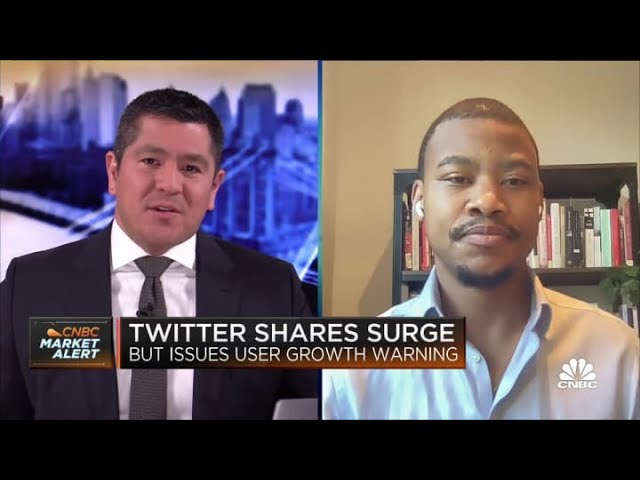
In a CNBC interview hosted by Shepard Smith, investor Kanyi Maqubela discusses how Twitter’s narrative is finally aligning with its underlying business fundamentals. He highlights several key developments: a markedly improved ad‑serving platform that now supports effective direct‑response ads; strong daily active user growth that outpaces rivals like Facebook and Snap; a burgeoning subscription and creator‑monetization strategy, especially for young professionals and content creators; and strategic acquisitions (Breaker, Squad, Social Review) aimed at building an audio‑and‑newsletter ecosystem. Maqubela positions Twitter as a potential “big two” social media player, noting its competitive edge in content moderation, bot removal, and a professional‑focused demographic, while also acknowledging risks from alternative platforms such as Substack and Clubhouse. The conversation frames Twitter’s recent performance as a turning point where narrative, fundamentals, and future growth opportunities converge.
Chapters
You know, there was so much pearl-clutching post-election about the disappearance of the former president from the platform and worries about engagement. Did Dorsey do a decent job at pushing back against that last night?
Oh man, what an unbelievable result. And Twitter is one of those fascinating companies where you can't help but think of it as one of the big three or maybe even big two of social media. But from a business standpoint, they've always just lagged. And I think the narrative is really finally starting to change. And ultimately, great companies change their narrative ahead of the fundamentals. But in this case, the fundamentals have finally caught up. So I think Twitter has done a tremendous job. And there's a couple of things I would quickly point to. They're a better ad server. So direct response ads— I don't know if you're watching the Super Bowl, but if you had Twitter as a second screen, you were seeing a lot of self-serve ads and direct response ads that were really good. Their daily active user growth has been tremendous, substantively better than Facebook and Snap and some of their other competitors. The subscription opportunity is really interesting. So there's a number of just product adjustments and then also monetization adjustments that they've made that I think are better representative of where they're headed in the future.
So when you think about Twitter, let's, let's pit them against Facebook, for example. I mean, in the old days, I think you could argue that the reputation of the platform was that it was a little buggy. Obviously, there were ad platform tech issues, but then they were aggressive in reining in content. Stripping out bots, stripping out hate at large. And I wonder now if that's turned out to be long-term or longer-term an edge against their larger rival.
Yeah. You know, generally speaking, if you can find a way to build a marketplace that can serve the largest possible audience, then I think you're going to be in a good spot. And one of the things that not only Twitter but a lot of the social media companies have had to deal with is the fringe or the vocal minority trying to drown out the majority. And so this is a case where the majority strikes back in some way. And I think that's actually tremendous. But the other thing that I'm really interested in about Twitter in particular is the nature of the demographic. And so it has creators, it has young people, it has, you know, probably in my opinion, the most productive professional network for young people. And so people are doing a lot of activity on Twitter that's building their professional cred. And the creator economy is manifesting as much on Twitter as it is on TikTok and Patreon and some of these other platforms. Platforms. And so I do think that as you think about the creator economy and the opportunity to monetize a creator suite, Twitter is doing a wonderful job of that as well as continuing to grow on the ad side in the traditional type of social media business.
Kanyi, I'm going to stick with this topic of Twitter's demographic because the company warned that they're going to have some very tough comparisons in the second quarter. There was such a surge of user growth in the second quarter last year as there were all these new pan—
Yeah, Kanyi, while we're trying to get Julia back there, she was, she was in mid-question. I do want to ask you about what you were saying about professionals, because there is LinkedIn and there is YouTube. And so far I haven't really been able to see an economy in content and in reputation really building on Twitter. But maybe there's the possibility of some of that in some of these premium services that they seem to be at least noodling with. What do you think the possibilities are there?
So you're totally right. And that's actually part of why I'm so bullish about it. And so if you think about two companies that are both private companies that all know, one is called Clubhouse, which is one of our portfolio investments. Another is called Substack in the newsletter space. If you look at a lot of the most vibrant creators on Twitter, a lot of them are journalists. A lot of them are that type of content producers, the anchors on this show. And then thinking about going direct to their audiences, Twitter is their primary channel today., but there's a risk of them moving off to something like Substack or moving off to something like Clubhouse. And so Twitter building infrastructure, they acquired a company called Breaker, they acquired a company called Squad, a company called Social Review. These are all companies that are helping them build a new audio and newsletter ecosystem to allow them to monetize those types of creators. And those aren't creators that are particularly on a YouTube, and they're also not really creators that are on a LinkedIn because they're content-driven and Twitter is the place for that content to really shine, especially written content. And so that's where I think there's a real opportunity for them and also a risk. And so they have a competitive pressure that's motivating them at this point.
Shepard Smith here. Thanks for watching CNBC on YouTube.