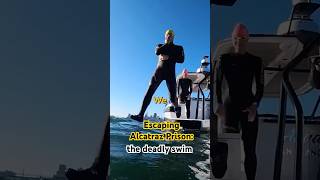
Nate Buchanan and a companion swim from Alcatraz to San Francisco to test if the 1962 escapees could have made it. They took a wetsuit, goggles, and a pilot boat, reached shore in 1 hour 10 minutes, and faced freezing water, ripping currents, and possible sharks. The attempt raises serious questions about whether the three prisoners actually survived.
Questions this video answers
Nate Buchanan (uploaded March 17, 2025).
Approximately two miles (Alcatraz to San Francisco).
About 7:30 AM.
About 1 hour 10 minutes.
Wetsuits, goggles, and a pilot boat.
Chapters
We attempted one of the world's hardest open water swims to figure out if the three prisoners.
Who escaped Alcatraz in.
1962 could have actually survived. The two mile.
Swim between Alcatraz and San Francisco.
Has ripping currents, freezing cold water. It's cold and Sharks. At 7:30 in the morning, we jumped in the water beside the infamous prison. Just minutes in, the cold and adrenaline.
Had me breathing.
So hard I could.
Barely put my head underwater.
It felt a bit like.
Being in a washing machine.
It was hard to see where we were going and it felt like I drank, drank half.
The San Francisco Bay.
It's pretty hard to fathom the prisoners doing this in the middle of the night and without.
Wetsuits. At the halfway point, the current picked.
Up and it felt like we were swimming in place.
The skyline was so far away that.
I couldn't tell if we were actually making.
Any progress.
And to make matters worse, if we didn't swim fast enough, the current would wash us out into the Pacific Ocean. At this point I was starting to question if I.
Could make it.
Much less those prisoners. But finally, one hour and ten, ten minutes after starting the swim, we washed up on the beach. I beat Nate. Just for the record, we barely made it and we had wetsuits and goggles on, timed the currents perfectly, and we had a pilot boat to make sure.
We didn't get run over by any ships.
Do you think there's any way the.
Prisoners in 1962.
Could have survived this swim? Let us know in the comments below.