Life Update (Diagnosed with Epilepsy)
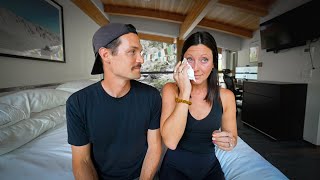
Kara shares her epilepsy diagnosis after a six-year health journey, including a major seizure in January and an MRI that found scar tissue on her left temporal lobe. She's started anti-seizure medication twice daily with no side effects so far and is scaling back her posting schedule to focus on her health.
Questions this video answers
January 5, 2024
January 26, 2024
April 17, 2024
Sleep-deprived EEG and MRI
Scar tissue on the left temporal lobe (hippocampal region) confirming epilepsy
Chapters
Okay, here we go.
You got this.
Oh, gosh.
How is this already happening?
I think we should start by saying everything is okay. We're in a good place. Clearly, you don't have to wait around to the end of the video to find that out. But we do want to fill you in on the health journey that Kara has been on for the past six years. It's kind of all, like, culminated and come to a head this year.
This is the first time we're publicly talking about this for a few different reasons, which we'll get to. But, yeah, we're gonna fill you in on everything and then just tell you, like, what this means for us in our life and our channel.
It's a bit of an unfair time for you to be filming this.
Why? Because, you know, oh.
It'S a more emotional time of the month than normal. We'll just say that.
Before we start really diving into things, I want to give my goals for this video and why we're making this video. First and foremost, I just want it to be a reminder that you really.
Got don't know what other people are dealing with, and you never know what's going on behind the scenes.
I was not expecting this so early.
I think that's really important for a couple different reasons. One, you should never judge your life based on what you're seeing somebody else post on social media. And also, you should probably extend more grace to the people that you see on social media.
And if you've been following our channel in all of 2024, you would have had no idea that any of this was going on. And that's for a few different reasons. I wanted to have a full story and all the answers before we put it out there because there was a lot of waiting and questions and unknowns.
Are we still doing goals?
Goal number three, in case anyone else is going through something similar again, this has taken us six years to figure out. If this video helps one person that's going through what Kara was going through the past few years leading up to this big one for the video.
Yeah, yeah. Anybody who's dealing with epilepsy or any other health issue, just know that you're not alone.
Should we post boat till tomorrow?
When we sat down, we said, everything's good. We're gonna bring positive vibes to this video. We don't want it to be sad.
I think you just haven't talked about it out loud. Was that all my goals?
Yeah, I think we made it through them. In case you were wondering. Kara made some notes for this video.
I just knew this was gonna happen, and I was just gonna be like. So I wanted to structure. It's going well. We're gonna get to the juicy stuff.
I want to just take you on my epilepsy journey, which, like we said, has been going on for several years now. But we're gonna start in January of 2024, about six months ago. We've made it kind of a yearly tradition to do a life update video at the very beginning of the year.
Year.
We like to reflect on the past year of travels and then look forward to the next year. We do superlatives, and it's a lot of fun. Happy day. This year's life update video we filmed in Nashville on New year's day of 2024. And I kind of opened up about the last year being kind of hard on me. Just stress and anxiety wise. Like, we just felt like it was time to slow down a little bit. And we shared that for the last three years leading up to this year, we had been posting every single Saturday the whole year. And Our goal for 2024 was to.
Only post an average of 3 videos.
Per month and just create a little space in our life. And Nate specifically said, I don't think.
We know exactly what we're creating space for. Turns out it was space for doctor's visits.
We filled the space, we figured out what the space was for. And I just could not be more grateful that we had kind of already made that decision. I think that made everything a little easier. Like this could have come at a time in our life where we were just full sprinting through this whole journey of traveling and YouTube.
And I think it's important to say that at the time when we decided to slow down to three videos a month, we knew something was going on, but we didn't know it was this. Like, this is not why we were slowing down on YouTube right in January. I think we both just thought that she was experiencing burnout because we've watched so many YouTubers go through it. Like, that was kind of our diagnosis of the situation.
I am so sorry to interrupt, but we have a very fitting sponsor for today's video. Thank you, Betterhelp, for always supporting our channel. I think everyone knows by now that I am a huge fan of taking care of your mental health. And I've had a lot of practice doing that over the last year. And let me tell you, if you are struggling, it is so, so worth investing in yourself. I don't know who needs to hear this, but take Care of yourself. I promise you'll be so glad you did. I'm going to try not to cry again. And therapy is a great way to do that, especially online therapy with better help. I can speak from personal experience. Better help could not be more convenient. Just in case you haven't heard, Better help is an amazing online therapy platform. To get started, all you have to do is answer a few questions about yourself on their website, and then they'll match you with one of their 30,000 licensed professional therapists who best meets your your needs and preferences. Then, once you're matched with someone, you can start communicating with them whichever way you feel most comfortable, whether that's a phone call, video chat, or messaging. But if for some reason you don't feel like it's a good fit, it's easy and free to switch to someone new. So if therapy sounds like something you could benefit from too, just go to betterhelp.com Kara and Nate. It's also linked in the description. Or choose Kara and Nate at signup to get a special discount off your first month of therapy. Okay, back to the video. Three days after uploading that life update video, we flew to Colorado.
We had said that we were going to take six weeks off, and we were like, where do we want to spend six weeks not working? Skiing in Colorado.
So that was the plan. So this is where. Yeah, things really just started going downhill. January 5th, after our first night in Colorado. Two hot dollars per.
I have a feeling you weren't gonna get through this one.
You good?
It wasn't supposed to be this way.
The.
The first morning we were in Colorado, I woke up to Kara having, like, a massive seizure.
For the first time.
Yeah, that had never happened before.
I feel like maybe this all feels a little.
Overdramatic. I've never seen anyone have a seizure before. I don't know if this is normal.
I don't really want to go into all the details, but it was three minutes long. She wasn't breathing. I. Ew.
So I was asleep. And the first thing I remember is Nate, like, sitting beside the bed and saying, do you want a cup of coffee? Which, obviously, Nate brings me coffee every morning, so I thought it was weird that he was asking. He goes to get the coffee, and he comes back, and he handed it to me, and he said, do you know where we are? Which was really weird of him to say. And I said, colorado. And I immediately just, like, saw the relief in his face when he said, you just had a seizure.
I mean, it's honestly one of the worst moments of my whole life. Just knowing that Nate had to go through that and it's still traumatized by it. Obviously, I was in shock. At first. I thought I felt normal, and then I realized I had this big, like, gash in my tongue that I'd like, bit through. So we get up and we drove to the er, which thankfully was right down the road. The bright side of things is we've been in a lot of.
Could have happened in a way worse.
Place, a lot of remote places over the years. Like, it could have been so bad. But we tell them what happened, and they did a bunch of tests and asked me a bunch of questions and did a CAT scan, and thankfully we pretty much immediately learned that everything looked seemingly normal.
I mean, we had to sit in the waiting room for an hour waiting on the results. And it was like, is this a brain tumor that's gonna change our lives forever? The doctor at the ER I don't think knew why it happened, but his best guess was something to do with altitude. So it's just like this is just like this freak accident.
Hopefully it doesn't happen again, which is unsettling.
He referred me to a primary care doctor, and the earliest I could get in was two weeks later. So there we were in Colorado, trying to just pretend like everything's fine for the next two weeks. Like there was nothing else we could do. But we tried to just go on with our lives. Go skiing. We're with some friends and family, and.
It was a two week roller coaster. There were a lot of, like, really high moments as well. I do think this is just extra emotional because it's not something that we talk about a lot. Like, most days we just try to go on with life as normal. And most days we can. Like, it's just the reflecting back on it that's like the hard part.
Yeah. So January 26, 2024, my appointment with the primary care doctor finally gets here. It's just this random place in Colorado. I don't know this person. I don't have a primary care doctor.
This was like a follow up appointment from the seizure. Like when you go to the ER for something, they just make sure you don't die. And then you go to a primary care doctor to basically, like, diagnose the underlying condition.
So we had filled her in on everything that we had done since the seizure. And she gives me a COVID test and it was positive.
First positive COVID test ever.
First ever who knew I had had, like, what I would consider a mild cold. The last couple weeks, I didn't have a fever. And she basically said the combination of having Covid and then flying to altitude is probably what triggered the seizure. But she didn't know. She told me the next step should be to see a neurologist. I don't have a neurologist. And for the last eight years, just in case you don't know, we haven't had a home. We kind of bounce around different, like hubs. Our parents are in Nashville. We spend a lot of time here in Colorado. So it took a few weeks for us to finally land on a neurologist. Ultimately, we ended up in Dallas, where my sister lives, because one, she was having a baby and I knew I was going to see her pretty soon, so it just kind of made sense. Dallas is a big airport. We knew we could keep traveling, pop in, see the neurologist. They would tell me everything's fine, it would all be behind us.
I didn't realize how big of a commitment this was at the time. I thought, like, where do we want to go? Have one doctor visit? Not this is going to be like our halfway new home, right? Health care system in the U.S. like, thankfully, we've been healthy the entire time we've been traveling. Our family's been healthy for the most part. It's so crazy to me that, like, you have something really bad happen and you need to figure out what's going on. But it's a six week process to get an appointment to talk to somebody to start the process.
I couldn't get an appointment with a neurologist in Dallas until April 17th. It was January 26th, so once again, there we were, just pretending like everything was fine, going on with life as usual. It was definitely in the back of my mind all day, every day. But there was no reason to worry about it because there was nothing I could do until I saw the neurologist. So for the next two and a half months, we just rode some trains.
Rented a Tesla, drove around Oman and a Unimog, ran marathon in Tunisia.
Finally, my first appointment with the neurologist rolls around. April 17. I was in a really good place. We had had a lot of fun. My sister had her baby. I'd been at her house having all the baby snuggles before heading to the hospital. And I meet the neurologist for the first time. I had no idea what to expect. I just pushed it out of my mind for so long that it felt weird that I was even still doing this. She comes in, I told her everything that happened. In January. Then she just started asking me all these questions about my life and my past, like, how did I do in school? Do I get headaches? And I started to tell her a few things that I've been dealing with the last few years. And here's why. I want to fill you in on those things. So I'm gonna pause where we are in the doctor's office, and we're gonna rewind back to 2018 for a minute. I'm gonna take you on the journey that I took her through, filling her in on some stuff that's been going on.
So if the story wasn't already long enough, we're now going five years into the past.
It's 2018. Young, vibrant, Karen Nate had been traveling for two and a half years pretty much daily vlogging that whole time, just going so hard and so fast. Like, we took advantage of every opportunity that came our way.
We were just running on pure excitement and adrenaline.
Yes. And sometimes in 2018, I started experiencing what I just started to call dizzy spells. Out of nowhere. I could be sitting up, I could be laying down. I could be standing. This feeling would come over me. It would just last a few seconds where I would feel, like, kind of dizzy, but really just out of it. Almost like a deja vu feeling. Usually I'm still pretty aware of what's going on. If you're talking to me and you're looking at me, you probably don't even notice it's happening. I might kind of zone out on what you're saying. Like, you know when you stand up too fast and you kind of feel like, whoa, that was weird. Like, it's kind of like that, except for I didn't have to stand up fast. Like, it would just happen, like, out of nowhere.
I still have a hard time understanding this.
I don't know how else to explain it. This started happening, and it was getting more and more frequent, and it would just happen at the weirdest times. Sometimes it would happen five times in one day. Then it wouldn't happen for a month. Then it would happen every day for a week.
But again, it's for, like, a few seconds, and then kind of like life goes on as normal. So should we be worried?
I know this sounds crazy, but, like, they would just come on so quickly, and they would be gone so quickly, and we were just so busy that we just kind of went on with normal life for a while.
We're really good at ignoring things and then being overly optimistic.
Then comes April 2019 in India. I have Been having these Disney spells for about a year now. They were just part of my life at this point. And we were there working with a brand, doing a commercial with a bunch of YouTubers.
I think it was the most we'd ever been paid for a brand deal. And we were with Fun for Louie, who we are now friends with, but at the time was somebody we had been watching on YouTube for years. And we were very starstruck by, like, we got invited on the same brand trip that Fun for Louie did. We just thought that was the best thing ever.
We celebrated holi the night before, had a great time. The next morning, we're standing out in the sun, hot sun, sweating. I was probably dehydrated, and I felt one of these dizzy spells come over me. And I remember grabbing his arm and saying, I feel dizzy. And the next thing I remember, I open my eyes, I'm lying on my back. And Fun for Louie is standing over me with all of his dreadlocks going, cara, are you okay? So fainting is scary. That never happened to me before, but it doesn't feel that crazy. And I was just like, oh, it's just, you know, I'm in India, it's hot. Like, it didn't feel that alarming. And we genuinely just went on with the day like nothing happened.
So at this point, you think we're crazy. It's been a year of these dizzy spells. Cara faints. But there was always, I felt like a way to justify it.
I don't think we can explain just how uncontrolled our environment was at all times. Like, we have so many variables in our life. Especially then. We were in a different bed every night. I was staying up all night editing all. I was always tired. We were always eating different foods in new countries and new environments. Like, there was always something to go, oh, yeah, well, I guess that's not that weird that that happened. So after the faint episode, we started realizing that my memory recall around the time of these dizzy spells was, like, non existent. And I'll go into a little more detail. Like, the first time I remember it happening after India is Nate brought up this Airbnb that we had stayed in in Amman, Jordan, like, a couple months before. And as he was talking about this Airbnb, I had no idea what he was talking about. I could not picture this place at all. And no matter what he said, it just was not coming back until, thankfully, because we were videoing every day of our life, I was able to go back and look at it. And then it all came back. But it wasn't until I pulled up the video that and we were like, that was weird. I guess it'll be fine. Yeah. But that became a theme around these dizzy spells.
Maybe not that extreme, right? Like fuzzy memory, but not just could not recall.
In hindsight, I should have been more concerned and I should have seen a doctor. But once again, like we didn't have a doctor, we didn't have a home.
Base, we were rarely in the US.
Once again, like, I know it's weird and if I could go back, I would 100% take care of it then, but with no knowing how long the process was now, even if we would have tried back then, I don't think I would have followed through.
It would have been too expensive. There are also multiple doctors in our lives who we had told about this. Now, in fairness, they are not neurologists. So looking back, I realize that there's a big distinction. But several medical doctors in our life who we had explained these symptoms to and no one had ever given us any reason to worry. So we felt like if they weren't concerned.
I had a little piece that, yeah, I've mentioned it to enough health care professionals that one day I'll figure this.
Out or it'll go away.
Deep down I think I knew that this wasn't normal and it was scary and I really hated every time it happened. So thankfully I had started a journal on my phone of every single time that it happened and then any detail around it, like how much I had slept the night before, what I had eaten, how many cups of coffee I had had, where we were, what time it was, what day of my cycle it was. If I had exercised like anything I could think of to to come up with some kind of pattern. And for the next three years there was zero pattern. I couldn't figure out anything that could lead to like why these were happening, at least any one thing. Maybe it was combo of all of them. Whatever. February 2021.
Oh, it took me a minute.
There was a drastic decrease in these dizzy spells because we hired our first ever full time editor, Brooke, who you met in the last video, who is still our full time editor, who I love so much. She's changed my life in so many ways. This especially as soon as she started editing our videos. I was sleeping like a normal person for the first time since we left. And one day I looked up and it had been several months since I'd had a Disney spell. And I was like, you're good, they're gone. It was sleep deprivation. Like, my brain was telling me I needed more sleep. It all makes sense.
And again, this feels crazy, but, like, we started YouTube in Prime Casey Neistat hustle culture. Stay up on I edit video. Like, that's what people we looked up to did, and that's what we did. And we loved it for five years. So getting help had nothing to do with, like, the dizzy spells? The dizzy spells decreasing just happened to be a side effect of getting help.
So unfortunately, that didn't really last. They were still there, just so much more infrequent than before it would happen. I'd be a little bummed, and then.
We would move on.
So that's kind of how life was until January of this year. All the Disney spells that were happening after the seizure were way more intense. The best way I know how to describe it is like a hangover, like, for the next, like, one or two days, even longer on some of them. I would literally just feel like I had this fog and I was tired and I wasn't sleeping, sleeping well. I was waking up in the middle of the night, like, feeling dizzy. It was clear that there was a big shift. So I'm sitting in the neurologist office explaining these dizzy spells to her, and before I was even finished with my sentence, like, beginning to explain how they felt, she stopped me and she said, you have epilepsy.
And Cara has explained this to so many people. Like, she's tried to explain these dizzy spells to everyone in our lives, to any doctors she meets.
And she knew exactly what I was talking about. I had a lot of emotions when she said that because, like, in so many ways, I felt so validated that I wasn't crazy. She was so confident that it was almost comforting that, like, there's a reason that these have been happening for so long and there's a solution, hopefully. But at the same time, like, epilepsy is a really scary word, and I didn't really know what it meant, but.
You know, I'm a total mess. She's trying to explain to me what epilepsy is, how it works. And the dizzy spells I was having are called focal seizures. I was aware I was awake. It's a type of seizure. There's tons of different types of epilepsy. It's not all just the full blown, like, seizures that you think of. She confirmed that having Covid flying to altitude, like, it kind of caused me to, like, go over the edge. And it developed into this full blown tonic clonic seizures, what they call it.
Basically it should have been one of the smaller seizures that she had been having on a regular basis, but it spread to another part of the brain and that's what caused the bigger.
After doing a lot of this to her, she recommended that I come back in two weeks, of course, to do some tests to confirm.
So I think at this point there was actually a lot of relief, but also a lot of uncertainty and fear. Yeah, relief. I don't know that that's maybe too strong of a word.
It feels weird.
It's nice to have some answers. It was true. Yeah. Because I think deep down we both knew something was wrong.
I think it'd been weighing on me way more than I thought. So just to know that something was in the works.
Yeah. But also still a lot of worry as to what the test would find.
So once again, we distracted ourselves. For the next two weeks. We went to California and hung out with a bunch of cool YouTubers for an event. We went to the British Virgin Islands with our entire Karen Nate Fair Drop Daily Drop team. Had the best week ever.
This is what we mean by you never know what's going on behind the scenes. Like, that was the last video we posted and probably one of the most fun videos we've ever posted.
But it was an emotional roller coaster.
Then back to Texas, our new second home for these tests. And there were two different ones that she recommended. The first one was called a sleep deprived eeg. Now, an EEG is when they stick a bunch of stickers on your head and they monitor your brain for however long. The doctor says A sleep deprived EEG means you don't sleep for over 24 hours before you go in. So we got a hotel room, we got a bunch of coffee, and we binged Netflix all night.
I thought I'd be supportive and stay up all night with her. And then around 4am I realized that was probably a really bad idea and one of us needed to be, well, one, awake to drive to the doctor's office. And two, one of us probably needed to be able to like retain information and have a healthy brain for the appointment. So I slept for a few hours.
So Nate drives me back to the neurologist. I go in for the sleep deprived eeg. I'm feeling a little crazy. She puts these stickers all over my head. Basically, the goal was to trigger one of these seizures.
I don't want to say we wanted a seizure to happen, but it would have been helpful for the doctors. They would be able to look and see where that started in the brain and get answers.
Fortunately or unfortunately, they did not trigger a seizure. So that was always the time. I think from there I went straight into my first ever mri. I slept through the whole thing. I think it was like 30 minutes. I have no idea. And surprise, surprise, they would not have the results for me until another two weeks. So we're really good at this, at this point, pretending like nothing was wrong.
This one felt different though. This one felt like, who knows, I may be diagnosed with a brain tumor in two weeks and this could be like my last two weeks to live a normal life.
It really felt that way.
And a friend invited me to Paris. So I'm going to go live it up for my last two weeks.
That's what I did. The Taylor Swift concert, I mean, it was.
So thankfully, that was a great way to pass the time.
Booked a first class ticket.
You'll see that in the next video.
Health puts a lot of things in perspective. And money feels not near as important when your health is on the decline.
Should I talk about the phone call?
Yeah, I think only to give people a full picture of like, what an emotional roller coaster this has been.
My follow up appointment was on May 15. I get a call on May 10 from the neurologist, like, receptionist. I'm still in Paris. I'm by myself at this point. My plan was just to fly straight back to the appointment and stay in Paris and have as much fun as possible. And the receptionist is like, hey, we just wanted to know if you could come in tomorrow instead of the 15th. And I was like, I'm not sure. I mean, I knew I couldn't because I was in Paris, but I was like, can I ask why? And she's like, oh, I don't know. Neurologist just wants to know if you can come in tomorrow. I feel like I'm gonna throw up because to me this means something's really wrong and we need you sooner rather than later. So we. I don't know. I didn't know what to think. I just did not think there was any way that this was a good thing. And I'd been trying to be so positive. And this just like.
I plummeted in this moment. And I by myself. So I call Nate.
I'm by myself.
He plummeted as well.
This whole video has been us being really good at ignoring things. And this was like, this tipped it over the line for us. Because ultimately Kara was like, I can't come in today. And she was like, well, when is the student she can come in. There was this weekend. And it was like, well, come in on Monday.
I flew home, try not to think about it, snuggled with my babies, and go in for the follow up.
The doctor was going on vacation, and that is why she needed to move the appointment up. But they couldn't tell us that on the phone.
So once that was out of the way, and I knew that it probably wasn't as bad as I thought, she said that the EEG came back totally normal since they couldn't trigger a seizure. And the MRI showed scar tissue on my left temporal lobe, confirming that I do have epilepsy. But the details around it are all still very fuzzy. The scar tissue, it's kind of like a we don't know what came first situation. Like, I could have been born with it. She thinks I was born with epilepsy and it's just like, appeared in my adult life. She told me she sees it all the time. I don't know if she was just trying to make me feel better or whatever else was triggering the seizures caused the scar tissue to be there.
So I think we'll do an MRI at some point in the future. And if the scar tissue has gone away, then that would mean that it was the big seizure that caused it. Otherwise, you were probably born with it.
The hippocampus is in charge of memory recall. And according to this article I read on the Internet, it's kind of like the librarian of your memories. So your memories are stored in a part of your brain and the hippocampus. When it's like, oh, I need to remember this memory, it's like the librarian that goes and grabs it off the shelf and it's like, here's the memory. And that explains a lot. When it comes to my memory issues.
I would say you're like 90% a normal person when it comes to memory.
Thanks.
Just to give some perspective, I mean.
It is just a weird social thing. Like, sometimes I can't remember conversations I've had with people. Like, if I haven't seen someone in a long time and they bring up something we talked about. Like, there's a lot of times where I just.
I would say it's actually the hardest part about the memory.
The social part.
Yeah.
Like, with you, I could be like, fill me in. I don't remember.
Yeah. Because I think people think you just don't care and you don't listen.
Yeah. And that really hurts.
Okay, so back to the. The brain.
The other side effect that she mentioned of these focal seizures and scarring in the hippocampus was emotions, which also explains a lot. Like I realized earlier in the video, we talked about, like, how hard we were working and hustling and stuff, but I genuinely think last year was not burnout. I shouldn't be saying this.
The part of my brain, yeah, that was having the focal seizures, I think was causing me to have these extreme emotions. And it just so wasn't like me. And I was blaming stress, but maybe it wasn't my fault. So we discussed medications for a while. Like, there's tons of different ones and they're all for different types of seizures and types of people. And she went with her best guess on what she thought would work best for my body. And she started me off on this really tiny dose. So that night I started medication. And after a week of the small dosage, she upped it to the next dosage that was a bit bigger. It's every day, twice a day. And she just had no idea how my body was going to react to it. So we decided we were just going to take this time to stay in one place and just kind of remove all the different factors. Like, I didn't want to wonder if, you know, I was jet lagged or if it was the medication or if I ate something bad or if it was the medication. Like, we just tried to put as much control in our life as well. Well, which meant coming back to Colorado and just trying to live a normal life for a little bit.
There could have been some pretty intense side effects that would have made it really hard to film well to live. But I think some people experience like, exhaustion when they start the medicine, mood swings, depression, like all the things that.
Just feeling overall really crummy. And I didn't want to have to pretend like I didn't feel crummy because I wasn't really ready to. Like, I didn't want to make this video until we just kind of had a full story. So that's why we've been a little slower to post. And if you've been following me on Instagram, you know that like, I've just kind of like disappeared a lot of days. And then you'll have like a random video of me cooking. And yeah, we've just been taking it easy seeing how these medications affect my body. And it's been emotional as well. Like, I'm one of those people who, I don't even take an Advil unless I'm like in the fetal position in pain, cramping. Like that's the only time so to like, accept that Like, I might be able to cage for the rest of my life.
But the good news is this is the positive part. So far, it's been, what, a month? Yeah.
So far. No side effects and no seizures.
I'm so thankful.
So we're in a good spot. It feels like the medicine's working. Yeah. The.
The last thing I wanted to happen was for this not to work and to have to start over again, but it's looking like.
And there's still a chance that that'll happen.
Okay. Yeah.
And if it does, it's okay.
Yeah. And now that it's all out there, too, I feel like I can just be so much more open about it, you know, like, if something else happens, like, I think we're gonna be a lot quicker to share it. It's just kind of, like, been this weird thing that we kept a secret for so long that, you know, like, imagine last week, we're in the British Virgin Islands living like kings and queens. If I would have talked about, like, feeling really crummy, like, it just would not have made any sense. No one wants to hear someone having this experience talk about, like. Like, oh, I don't feel 100%. It just never felt like the right time in any of our videos to bring it up. So I'm going back to the neurologist once more soon, and she'll assess how the medication's going, and we'll go from there. But really, we're just taking this one day at a time. We are going to continue this year with our goal of posting three times a month and prioritizing our health and our sleep, especially since we know that that's a big trigger. It's a little tricky with our life, what we do, but I think, like.
My biggest question right now is, what's working? Is it the medicine? Is it the consistent sleep? Or is it the combination of both? And do you have to have both? Or can we go back to, like, very normal care and Nate life with the medicine? And that solves everything. But, yeah, so there's just, like, everything's looking really good right now, but there are still a lot of questions. And there's a chance, like, there's 14 different medicines. There's a chance this one doesn't work, and if this one doesn't work when we're traveling, that another one could work. This could be a long process.
We really are in such a good place. I promise.
A lot of the emotions here are coming from one reliving some of the more traumatic parts of this and two, we've talked about making this video for a really long time. And so I think there's also some relief in getting it out there.
Thanks for being patient with us and for listening. And I don't know, I can't decide if I should ask if anybody else is going through this, if they have.
Any like advice or if you're going through this but not random advice from people's opinions.
Yeah.
Who are not medical professionals or not dealing with this person.
If you're a neurologist and you have any other opinions and you have a.
Six week vacation plan this year and you would like a new patient. Again, this was supposed to be like positive, good vibes. I don't really feel like it's gone in that direction. But I do feel like the biggest takeaway from this should be that like with all things considered, this diagnosis was probably best case scenario. Like given everything that she had been through for the past five years, the big seizure, now it's a treatable condition that you should be able to live with forever.
Live with. Yeah. Like I'll link website in the description that has given me a lot of comfort. Like I don't know one in a hundred Americans, 1%.
So over 3 million people in the US live with epilepsy.
I had no idea. Thank you for being here for me.
Like I'm the one with the diagnosis. Husband, stop.
You can't carry this.
Nate started to deal with a lot.
To thank you.
Wouldn't rather do life with anyone else.
Let's say something positive.
Okay. The next video that we post on this channel is going to be Cara living her best life.
Oh my gosh.
Hey.
It's out there. More emotional than I think we both expected.
That's right. Thanks for being here.










