2015 12 10 16 31 Kickstarting Your Potential as a Trader
Randy Howell explains why traders struggle with consistency: our brains are wired to seek control and certainty, not probability. He argues you need to rewire your beliefs and emotional programs to think like a trader, using examples from Charlie Brown and Inside Out to show how.
Chapters
Welcome, everybody. My name is Randy Howell and I'm with Traders State of Mind. And we are here to talk about trading and trading performance. But before we do that, I wish all of you happy holidays. Whether or not you are from a Christian community, whether or not you are from a Jewish community, whether or not you're from an Islamic culture, whatever culture, I welcome you and I wish all of you happy holidays. And here's what we want to do. Okay? What we're going to be looking at in this webinar is we're going to be really focusing on the most fundamental block to effective trading. It's got. This is not going to be as.
In depth about emotion as my others, but you're going to be able to have a much better, easier understanding of what generates trading problems. Okay? And we're going to get to the core problem. And I. I have an itch in my throat, so there may be a few. Couple times when I cough, I apologize.
So it's one of those things where, how can you have allergies at Christmas? But here I am. There are a couple things that I want to explain. One is that traditionally what we do is we hold questions toward the end, okay? And from there we answer them. But you are welcome to write in your questions, type in your questions, and if they're operational in nature, Dolores will take care of them right then and there. And if they're about really questions that are directed toward me about theory, about what literally what is really going on in trading mine, those will hold to the end and we'll answer them. Okay? So.
What I want to do is, what I want you to imagine is this. When you first got into trading, when you're first exploring trading, you looked at this stuff, you saw the possibilities. You saw how. Man, all I have to do is this is very logical. If I use reason, I can see literally how this thing can be ramped up. And I can. I can master this. Amazingly, what people don't do is they are not looking at the edge against them. They're not necessarily looking like, with real. Like, oh, these are the real numbers. These are people just like me. They're not recognizing that 5% or fewer of traders who actually trade, make money trading. They don't see that somehow they gloss it over that people approach trading as if logic could conquer trading. And what we discover is that logic.
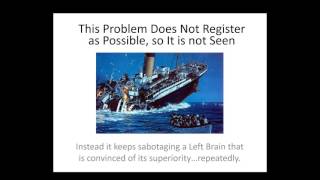
And its assumptions actually are producing a trap. People get trapped by logic, and they believe that they can use logic to manage probability, live trading. And what they discover is they can't okay, that's the big thesis. And a lot of people get into trading, they get really seduced by the promises, and they really. They really just go, okay, I get it, I get it. And everything in the literature, everything that said is, man, they just kind of minimize. They just kind of minimize emotions. They just put them off to the side and they keep you hooked on that dream. Look what's possible. Look what's possible. And it's like you're panting and you're going, okay, I can do that. I can do that. I can do that. All I need is the magic fix. All I need is the holy grail. And as a trader moves from trading, say like in simulation to live trading or sizing up, they hit barriers, okay, that they don't break through so easily. And they don't understand even why they're there. They say, you know, I've got the right success mentality. I'm thinking, right? Why aren't the markets behaving? You get it? And then what you discover very quickly is this, is that you know, what is actually separating the trader from nut, from who knows how to trade in theory from a trader who knows how to trade in practice in live trading. The point is, if you don't understand the nature of a brain on uncertainty, which trading is all about, traders keep sabotaging their performances. They keep believing that they know how to trade when in fact they don't. Because if you have not developed a mind built for probabilities, you don't know how to trade. You're stuck with an old mind and an old brain that is still trying to control outcome, and it's not going to work. You just like this guy in this image. You just keep sawing the limb right off. You just don't see. You don't see that. You don't see. Your ignorance doesn't allow you to see the ignorance of what you're doing. But it happens anyway, because part of the problem is this, is that trading is made to seem so deceptively simple. You know, just ignore all those. All those risk statements that everybody is forced to put up saying, you know, just what the claimers are. You know, just ignore that and they refocus you back on. Here's the stuff. Look at what you can do this. This is how other people have done it. You can do this. Yeah, yeah, yeah. And traders are warned about this difficulty of trading. Instead, the real problem is ignored. They think the problem is knowledge. The real problem in trading is not about knowledge, friends. It's about the Mind that you bring into a moment of uncertainty. That's what the problem is, okay? It's not everything else.
And everything is fine. Everything is put off. And performance psychology, it's just a footnote. It's not included. You know, it's just like, oh, yeah, well, yeah. And that psychology stuff, you know, we're not. We're not going to talk about that. At a recent industrial gathering of trading, there were 400 people in this conference. All of us. Are these people associated professionally with trading. You know, some are programmers, some are indicator people, some are trader trainers. The whole. The whole thing. Everybody's talking for two and a half days. Nobody talks about the mind that trades. And yet everybody acknowledges that despite all their technology, very few people make money in trading. But they ignore that themselves. And when they talk to you, the whole thing is they're not talking about that. They. That's just something that's not seen. It's like they don't see it. And the truth is, is you don't see it.
So performance psychology is pushed aside, as if no real trader worth its stuff would have psychological problems in performance. Instead, what's pushed a dream.
On steroids. So we get in this stuff and suddenly, though.
The deception really is with us, with the trader itself. Because the biggest problems really is the brain really does want to believe the hype. It really wants to believe that there's kind of easy money out there and all you have to do is this stuff and you have the Holy Grail and you can almost print money. You want to believe that.
But believing.
Is emotionally driven friends.
Really. Then an excuse or an alibi is made up.
By the left brain to cover the hole.
That you don't see is causing the problem with performance. Okay? And the traitor becomes entranced by Pied Piper. You see it all the time. Any one of you who either enters a conversation, call if only or what if. How many of you have sat there and talked about, you know, if only I'd done this. If I'd only done, you know, I got in and if I'd only done that, I got out, and I'd only. Blah, blah, blah, blah, blah. And they talk game. That's the Pied Piper. You're drinking the Kool Aid.
You see it in your trading account by blowing up accounts, by stagnant accounts are bleeding slowly. That's how you see it. Okay, so let's get this thing straight. This is really about believing and what you believe being projected. That's what's happening. And you're being graded by your trading account.
And ultimately logic is being distorted, okay? To serve misguided, emotionally charged beliefs about your capacity to be in control and right. And my promise to you, if you're human.
Your brain has a bias to be in control and to be right, okay? Even if it has to lie to itself, it's going to want to do that, okay? It is literally going to want to be correct.
Even though correct is leading you off the side of a cliff. That's what your brain will do to you. So you see that and you've done the if only thing and you realize that's the fish that got away. But in truth, the trader at some moment has to wake up and recognize that what they bought into and what they believe isn't working. And at that particular moment, they can either continue believing something that isn't effective, that isn't working, or start looking at the honest truth and saying, you know something.
In the three legged stool of trading, risk management by methodology, the platform making sure you have a machine and a system that works, those two legs work just fine. The leg that's missing is the psychology that drives the machine that gives the balance to it. Unless you have the psychology there, unless you have the beliefs there about the ability to manage uncertainty, it's all in vain, as many of you will prove. Okay? So ultimately then.
We are taught to believe.
In the supremacy of the left brain, logic so much that the traitor doesn't see the deceptive trap. Beautifully illustrated by Charlie Brown and Lucy. Every time Charlie is suckered into this thing for 40, 50 years at least, the question is how long can you afford to, to be suckered into the magic of believing that there is an answer out there. Once you can trade successfully in simulation, okay, that there is an answer out there that's going to solve your problems. The problem is inside about what's going on inside your brain, what's going on inside your mind. That's where the trap's at. But logic is so convincing, it's so easy to think, you know something, I live outside of emotion. And as you keep believing that the Titanic keeps going down, you keep believing that all I need to do is live without emotions and you keep blowing yourself up. Understand, the Titanic sank because of the arrogance of a couple of people who decided that they could take a shorter course and they could elude icebergs. They weren't going to be there that time of the year when people who had good sense were saying, no, no, no, that's really, that's really faulty logic. That's crazy making logic. There are icebergs out there and you're going to be lucky not to hit one. Well, they weren't lucky. So ultimately there are these false assumptions that are believed as true. Okay, I've had two guys trading side by side in a hedge fund. Both of them are working from different assumptions. They, they're good friends. They, they have the same signals, they have the same indicators. They, they have the same everything they trade in the same, the symbols, everything. But one is a very successful trader. The one's a marginal one.
Friends, that's it.
One has a view of the markets and believes something very different than the other one. One keeps getting the ball yanked from him and keeps falling down. It happens again and again. The trader runs around looking for a fix, but never looks at his psychology. Oh, no, no, no. The psychology that drives performances. And that's the problem. He's so hooked on outcome codes of controlling his future that he doesn't see that really he has no control over whether or not he's right or wrong in trading. What he has control over is the mind he's bringing into performance. And ultimately what you discover very quickly is this.
We are endowed, whether or not we like it or not, with a biological bias of self preservation in the short term, that creates a psychology. That's all that thinking stuff you have. Okay? The brain is biased to fear the unknown.
It will lie to itself or learn to lie to itself to avoid having to deal.
With the unknown. It wants to say, you know, I can control the outcome, I can predict the outcome. Or I can, you know, I can avoid loss through being right. I can do that. I want to be right. I want certainty. And yet, yet the markets keep telling you that there is no certainty. And until you change your mind, change the way you believe, change the way you see away from certainty to probability that you're stuck at some place on a scale of performance that does not allow you to produce a consistent income in trading. That's the whole key. So there you are.
At some moment, what you discover is that biological bias of self preservation and psychological belief become fused.
Now biology has set up a psychology, a path that cannot work with probability. Okay, now what does this look like in real action but outside of theory, how many of you have had a serious loss, A couple losses? And then you find that you're very hesitant to enter another trade. You can't pull the trigger. You say you find all sorts of distractions. That is the exact thing, the biological bias about avoiding loss because you can't control it, so you're going to avoid it. What happens is in the self preservation in the short term, that's a victory. Not letting you get into that trade is a victory because that self preservation bias does not see probability at all. Probability is something to be scared of.
That's, that's the human brain, my friends. That's the brain you brought with you and you thought was just going to waltz through trading. This has to be changed. The left brain does not see the influence of emotion on trading performance. And that's really weird because here's the deal.
They believe that knowing how to trade without risk is knowing how to trade.
Okay? The problem is.
Trading effective trading is knowing how to trade with capital at risk. Until you can do that, you don't know how to trade. You know in theory, but you don't know in the environment that you're going to be operating in. You haven't trained yourself to move from certainty thinking to probability thinking. And again, if, if those of you who sitting there and have been stagnant in your account, you know, marginal in your account for a number of years, this is where you're stuck.
This is the place you stay bottled up and you get trapped by what you believe is right. Even though you're not listening to the only thing that can actually tell you whether or not you're being effective or not. That's your trading account. You know, the one thing that I've basically come to understand is that I cannot believe myself. I know that my brain has been built to be deceived. I know that it will deceive itself. That's just the brain. Magicians have been doing it for a long time. If you've ever watched the program Brain Games, you see it all the time. You see how these guys scientifically understand that the brain is going to be deceived very easily as long as it thinks it's in control. So there you go and here's where a lot of people stay just like that guy stuck in a jar. And ultimately then you get a bunch of people that you're training with who keep telling you they know how to teach you to be successful, when in fact they don't know how to teach you to build a mind that can operate in this probability environment. And you discover that the blind are leading the blind.
This is where the training organizations begin teaching traders how to trade in an environment that the brain is not prepared for. It doesn't. It's just like in combat training. If you take a look at the US Army. The.1 of the reasons it's what? Well, in the Marines too. One of the reasons that that is one of the greatest military organizations that has ever existed on the world is the army and the Marines have figured out you do not train men. In theory, you train them under battlefield conditions. Until you train them to battlefield conditions, they're not trained. They might be able to do well in textbooks, but in the environment, in the heat of the moment, they're not trained. This is where emotional training they. This is where getting at the belief when dealing with chaos like on a battlefield is so important. So what you do is, you know, did you see that? What? Of course you didn't. Let's not see it. Let's not talk about something that we don't know how to deal with. Let's just keeping a talk. Start talking about something on the surface that if you could manage your emotions and manage your beliefs, then you would be able to do this if only. Do you hear that phrase again?
Ultimately to get past this you have to. This is where it really gets going is you have a left brain, you have a right brain as a way of describing brain function and that create a trading mind. The trading mind is something few people are born with. There are a few people who are born with the trading mind and most ultimately when you really get to know them, are high functioning autistic. They sound and look like a lot of fairly normal people, but the way their emotions are wired is very different than the normal human being. And as long as you're going to be human and as long as you're embodied emotion.
The emotional brain controls thinking when capital is at risk. If you're writing things down, write that one down because that's the, that's the crux of this situation. And the emotional brain is built on self preservation in the short term.
And will absolutely keep that comfort zone skewed so you can't get out of it. Whereas the trading line is built for probability.
If you can imagine the antithesis of what your brain was created for through evolution, it is trading. And you can see, you can see why you gut wrenches. You can see why you hesitate. You can see why you revenge trade, you can see why you over trade. You can see why everything when you understand that principle is that everything your brain was designed for is the antithesis of, of what a probability based mind has to work in. And yet you're convinced you can make the logic work. This is the way it works, friends. The emotional brain is driven by self preservation in the Short term, look at this photograph. What do you think this guy's doing? His gun's a little far away, isn't he? Okay, what happens at this particular moment without that gun in his hand, without odds stacked on his side, suddenly the illusion of control has vanished. This is what traders face every day. Staying stuck in the illusion of control is what you have to learn to step out of. Just ask your trading account if you want to believe that, that you're in control. If you want to believe that you can predict what's going to happen. If you want to believe that you can be right by not being wrong. Test that assumption, that belief against your trading account. It will tell you point blank whether or not that belief system is correct. If you hold the assumption that you're projecting your beliefs onto the markets, you're acting on them. And your barometer of effectiveness is your trading account, okay? Because ultimately, when you're in this situation right here and a lot of people get put in that situation of where that lion staring you in the face and your guns just a little too far away, suddenly what happens, this is where the thinking brain gets hijacked. All that logic that was so easy to access moments ago suddenly is gone. You trigger the emotion, the emotional brain, and it's biased towards self preservation. And this is what happens, friends. The rhinoceros just pulls off and takes you with it, okay? If you've seen yourself trade, you know exactly what I'm talking about. If you've ever just absolutely said, what in the world.
Was I thinking? What just happened there? The rhinoceros in your right brain has hijacked you. That's exactly what's happened.
So here's the deal, okay? And the truth is, is this. Once you get this thing, the greatest enemy of knowledge is not ignorance, okay? That you would be ignorant. That's why you're here. You know, it's learning to see around that. Ignorance is so important. It's the illusion of knowledge. That was some guy, Stephen Hawkins, that said that it's the illusion of knowledge.
That's the dagger in your trading performances, friend. Okay? Once you become more humbled and you begin to see, well, you know, well, I'm not so big, you know, what happens is trading ego I've got and all this bluster I have. The truth is, is it's not doing anything. All this fear, by the way, is not also doing anything. How do I start building a mind and recognizing, you know, where my ignorance is? Well, the ignorance begins right here. This is one of the best cartoons There is. What you're looking at is this. This is exactly what the brain will do every time. The brain prefers to fool itself rather than to have to change and reorganize itself for higher functioning. Here you have a reassuring lie being. Everybody's going to that movie. Everybody wants to see. They know the end, they know the prediction. They know that the good guys are going to win. They know everything's fine rather than inconvenient Truth is that nobody knows what in the world is going to happen. It's kind of like the US's plans in the Middle East. They do this stuff and they get into these things and it just becomes a can of worms.
So much for.
Simple dogmatic thinking. So there you are. This is the bias that you're going to have to overcome to trade effectively. You have to see that the brain feels better lying to itself.
Than reconstructing a new mind that can in fact engage probability effectively. It doesn't want to give up the illusion of control. Even though there is enormous evidence sitting right in front of his face and his trading account that you never had control, you had the illusion of control. And it keeps busting up. And then we need to. And when you really start saying, well, what do you do about this?
Well, it starts with this. As you begin to begin to understand the brain and the mind very, very differently. And it just so happens Disney Pixar has done us a wonderful favor. In the movie Inside out. The story is about a little girl who is uprooted and when dad is transferred to another town and she's going through change and things aren't going well. And what they do is they go into the emotional programs that are running in brain. And that's what these are right here. You're looking on the left, disgust. You're looking, looking. The next is fear. You're looking at the next really self congratulation. Then you're looking at sadness, Then you're looking at anger. This is a highly simplified sense of the emotional programs that live in the brain. But suddenly you begin to realize that these guys are duking it out for control of the way the little girl thinks and also the way the parents are thinking. This is the neural biology of brain producing mind. This is the emotional control that emotions have overthought. Okay, so there you go. Now you begin to see, okay, the emotional programs are actually controlling perception and thought and most of the time they are based on a belief and your inability to manage uncertainty, which you were taught in a formative stage of your brain. Okay, now you're beginning to see that. And you want to see the way this works. Let's take a look at this. We were talking about how easy it is to deceive the brain. Here it is. When you take a look at this image, it's one of the more confusing images for the brain to look at initially. You know, what happens is it keeps moving between a rabbit and a bird or a duck or whatever that is. It's a bird like creature. Okay. The thing is, is what you're doing is you're seeing how the brain is trying to map something based on its projections. It's looking at form and it's trying to make sense out of it. And it latches onto something and then all of a sudden it changes. Do you feel the confusion of not knowing? This is what has to be comfortable with the trading mind. You have to know that you don't know. You have to know that the brain is constantly much rather have a reassuring lie than the truth. And you know that the you you know, it's that way. And what you're doing is you're saying, okay, I am. Now I realize the task here is to become comfortable with uncertainty, comfortable with losing, and comfortable with winning. Winning really doesn't mean very much. It's not stroking your ego. It just means you landed on the right side of probability. That's all it means. Losing, once you have the system down, doesn't mean very much either. It just simply means that you landed on the wrong side of probability. Meanwhile, your brain is trying to decide which way you know, how are you going to see it based on your beliefs? How do you interpret the winning and losing? That's what the key is, man. So you're caught in that. You know, you're kind of caught in the act. The brain's playing games, tricks, and what you're doing, you're doing this every day. And ultimately believing is what causes you to see what you see. You're not seeing an objective world out there. Here your brain is trying to see an objective rabbit or bird and it can't decide.
Okay, that's exactly the way managing probability is like. And you begin to recognize this. You're in a virtual reality when you're trading. And fundamentally, the artificial intelligence that produces virtual reality is very similar to the way your brain creates a virtual simulation of the world out there based on certain beliefs and assumptions. You project that and interpret the market phenomenon through that. And suddenly you have beliefs. Suddenly you're looking at that, and it's all based Literally on self preservation meets probability based mindset. That's what it's based on. So you're not recognizing a world out there, you're creating the world out there. It's just that is it effective or not? Again, the only thing that you have other than if only the lie of if only is your trading account. It's going to tell you the brutal truth. If you're listening, it's going to wire you right down, man.
Okay, Fundamentally, every trader, every person lives in an observer created world based on the beliefs it's projecting on the world. It was Schrodinger, a quantum mechanics fellow, who said the very act of observing does in fact change the course of the experiment. So the observer that you're bringing to observe the markets is creating the probabilities and possibility of loss and winning as a possibility and a probability. Just like on the right, what you're seeing is, you're seeing these stick figures looking out over this, what could be stick figured land, but they're saying, oh well, you know, if you observe it in one way, what you see is you see grains. If you, if you're something else, you can observe it a completely different way. So now, so what we're beginning to recognize is this. And this is the piece that gets spooky and a lot of people don't can't grasp it, but when you grasp it, it's enormously freeing.
In this drawing by M.C. escher, a hand is drawing the hand. That's exactly what happens when you're trading. Your beliefs are drawing the markets, are drawing the story, the narrative that you use to either extract or lose capital into the markets. Okay?
You become the self fulfilling prophecy of that writing of the script that's in your head. This is what your experience.
Keeps getting you stuck in. Or as Yogi Berra said, it's like deja vu all over again. It keeps happening again and again. And what happens is you need to know what beliefs are writing your script. We already know. The biology is totally against you being a successful, successful trader. We know that it is self preservation in the short term and it doesn't want any of this probability stuff. It wants to be right, it wants to be alive in the next moment. And it can't even think in terms of the future.
What you have to build, you have to build a script. You have to build a mind that rewrites the way you see the markets, the way you see right and wrong, the way you see winning and losing, the way you see outcome goals versus performance goals, okay? So obviously down at the very core of this thing, the obstacle to successful trading is letting go of the illusion of control. Though the brain has evolved over at least 6 or 7 million years to do exactly that, okay? Your brain is biased to control. Your psychology develops out of that biology and experience into an alpha or a perfectionist, okay? That is seeking to control, either by being in charge, making things happen, or by not being wrong. And yet, the thing is, as long as you hold on to that belief that protects you from feeling uncertainty, feeling the unknown and dealing with it, okay? Only then when you recognize you know something. I have an inherent fear of the unknown. You and every other human being. But if you want to become a trader, you have to regulate it. You have to really change that. And this is the gap, friends.
Okay?
Okay. The obstacle to successful trading is not letting go of the illusion of control. Okay, There you go.
So here we are, friends. This is the gap that has to be bridged between right and left brain. Much like Einstein said his logic, the left brain is a wonderful servant to the intuition and emotion of the right brain. Unfortunately, we have it all wrong. We have made the serpent the master and we have pushed the emotion out. We have taken the intuition away and we don't know who we are anymore. We believe we are this logical, rational being when nothing could be further from the truth. What we are are emotional beings.
Trying to regulate emotions so that we are rational. We are not rational beings trying to not have emotions. The key is very, very clear, friends, and.
Fundamentally is you do. There is no such thing as freedom from emotion.
What you strive for is freedom of emotion and also freedom to remake belief systems that allow you to change what you see as possible in the world. Okay? So, so there you go. So we know that we're going to have to out of this. What we know is we're going to have to go, how do you bridge this gap? How do you take emotion and reason and put them in the same box and teach them to be partners? How do you start having reason recognize that it's only a servant?
And how do you redevelop the emotion so that the emotions that show up know how to use reason highly effectively?
That's what we're looking to do.
You have a biological mandate that has to be overturned. Okay?
Even if you think you're right, look at your trading account. That's what's going to tell you if you're right or wrong. And how do you create the brain developed, okay, for probability. We've talked about it a Little bit. You have to go in and start really re understanding what the brain is doing and how the mind's created.
And I'm not going to go through the full thing here, but go back and go to my website, go to other the webinars where I explain that more fully. Right now what I want to do is talk about how in the world you get control of this locomotive out of control that your ignorance has stopped you from seeing. The first very, the very first thing with this newfound emotional intelligence about the way the brain and emotion and mind really work, you get really clearly is, wow. The first thing I need to do is first acknowledge emotions and then I need to also learn how to regulate the intensity of the emotion. There is no not having emotions unless I'm dead. How do I go about.
Mastering the emotions I have and using them effectively? And what you discover is that emotions are biological. You are the embodiment of emotion. And suddenly you realize that emotions is biology that take over psychology. That's all that hijacking business that happened. What you discover is this.
Breathing and tension are elements of an emotion. And they're elements of what we call the arousal of the emotion. The way you breathe, usually you'll be holding your breath. Watch yourself tomorrow when you do this. And what you'll do is you'll start noticing the tension mounts. What you'll also notice that you start to become fixated on the screen and all objective reality starts absolutely flowing away. And you don't. You see nothing except for what really bad emotional states are telling you to do. Okay. You have to be able to manage that and you have to be able to see the signs of arousal. The have to be. And you have to be able to keep calm states of mind as a standard practice. Otherwise your ability to maintain and build a mind that can work with probability is severely limited. It's not going to happen. That's the first stage. The second stage is this. And by the way, this obviously is stuff that I teach in my courses. I am teaching you literally how you go about building a new brain that creates a mind that can in fact manage probability. The second thing is you want to produce mindfulness. You have to look inside the mind and you have to start discovering the host of rival programs that are given voice as your thoughts and recognize, oh my God, these thoughts are just not monkey brain talk going on in my head. This is a committee of various forces that has taken over. And these are not my thoughts. These are emotional programs who have taken over control of my mind. And they are absolutely duking it out. And the winner is creating the history. That would be your trading, that would be the health of your trading account. That's your history. What you're looking to do is you're looking to develop an observer stepping back out of thought and recognizing that awareness is separate from thought. You and your thoughts, you and your beliefs are not the same. And you begin to realize that this person you think is I. It's just simply one potential organization of a self that got developed before you even knew that you were thinking. And then you take that to trading and it doesn't work worth a darn. And then you're going, okay, well I need to reorganize the emotional programs just like in that Pixar Disney movie. And I have to produce a different emotional mix that allows me to think differently when I'm engaging the unknown. Yes.
Overcoming the evolutionary bias and then creating a totally different adaptation to the management of quantum mechanics. That's what you're doing, friends. And so here, what you're doing, this is where literally you have to develop an intentional and volitional mind. You have to change the dynamics of what the brain and the mind are doing. And you have to bridge this gap between the self preservation that your body's gonna do, okay? That's what its bias is. That's of course what it's gonna do. And you're going to have to reconstruct it.
To probability based.
And this isn't something where you go, okay, I got that, I'm going to check that. I am going to quote a mantra and tell me I'm probability based now. No, that's B.S. you know, that's just wishful thinking. No, you have to get at the very core. You have to turn toward your discomfort of your fears and you have to master those.
You don't. You don't try to out think.
That which looks at thinking a flake to be just tossed away.
And this is where you learn to let go of control and you start embracing the probability of success. This is what has to be mastered, friend. It's not going to happen before then because ultimately what you do is you live in an uncertain world, okay? With a brain built to control outcome. And you can get away with it. You can live in that deception. The real world time is so slow in this world that we live in. But the moment that you get into Trading Man, I'll tell you something, it's like instant karma that comes right back to you and before you know it, bam. You discover yet Again, it's an uncertain world. You never know what's going to happen. You have a probability of what could happen, but you don't know what probabilities, how it's going to show up. And you have to become comfortable with that. You know, it's kind of like this.
A trader gets instant feedback about the belief system he's projecting onto the markets and how effective it is. And if he's going to stay alive and prosper, he's going to change his belief systems. And the way he performs, okay, he's going to do it pretty damn quick, or at least as long as he has capital to lose. And then he's going to change. On the other hand, you get a, you get, you get the way it looks in real life. My dad smoked Camel unfiltered cigarettes for 52 years. Everybody kept telling him, you know something, Howard? That that's nothing, that's not good for you, you need to stop. And it was, oh, yeah, yeah, yeah, I'll do it one day. He didn't see the immediacy of the short term self preservation to stop. It was long into the future, but when the future finally arrived, it was too late.
It was too late. He missed the opportunity to think in probabilities, okay? And it cost him. So there you go. So now we know we live in a world of uncertainty and there's no way to control it. What there is is a way to control the mind that engages that uncertainty. That's the holy grail, friends. That's what you have to develop if you're going to be successful. So ultimately what you do is you have this comfort zone of what you would really like it to be. You get in these trade rooms and you all talk the talk and blah, blah, blah, blah. And you keep talking as if, even if only, if only, if only, if only. And you darn well know that only 5% in any trading room on any given day are actually successful traders. But there's a lot of testosterone going on.
They're bluff, they're blustering, they're scared, and they're trying to make themselves look like really brave tough guys. And the truth is, they're sucking cash. So anyway, where does the magic happen? Getting out of that, getting out of if only and recognizing that this is a game of probability. And until you're able to apply a consistently even process, standard price process to the invariable, the uncontrollable variable of the markets, then you're adding two variables, okay, into a cocktail that can't Win. That's what you finally realize that if only is ridiculous. You know what happens? You have no idea. You get out at a time that says, well, this is my target. And I hit my target. I'm getting out. Oh, that thing went up on. I went up more. Boy, if only. Or you get out and that thing's gone down, it stopped you out. And then you say, well, you know, then it came back up. Oh, if only. Nah. No, that's certainty thinking, finding its flaw. That's not probability thinking. You have to apply probability thinking. You have to train yourself to do it. So there you go. The current organization of the mind is not going to work. You're going to have to change the organizational emotional programs that actually can do that, because otherwise what happens is your job.
It's like this cat. You have a mammalian emotional brain dealing with games of chance and games of probability. The thing is, is he will never be able to make the hyper jump from certainty of preservation to probability of success. The cat's not capable, my dog's not capable, the human being.
Capable. And it really depends on whether or not you want to stay a really smart animal or if you want to transform the brain into something very new that moves from its origins to a very brave new world.
That's what it ultimately has to happen.
By mastering the emotions that give rise to mind to perception, you are controlling the one thing that you can control, the mind that you're bringing to performance, not the outcome. Well, I've got to win so many dollars today. No, what happens is that I have to make money now. No, if you're in that frame, man, you've already lost because you're already saying, I'm going to control, I'm going to make things happen. You cannot make wins or losses happen.
You live in a world of probability where the, the probability. And by doing everything right, you are giving yourself an edge.
About where probability ends up. You're not winning or losing friends. You're creating the edge that can land probability on your side. That's what you're doing. So ultimately, what we're really looking at.
Is a very different approach to developing internal strengths. Okay. You will always have historical dialogue versus intentional dialogue possibility within you. The historical dialogue is when you say, what was I thinking? Yeah, yeah, beat myself up. I don't know, you know, I'm too scared to get in. You're hearing the internal dialogue that you brought to trading. That's the one that you wound up with. That was your brain being born into a soup, becoming homogenized. In that soup and just going, I'm part of this world. What we're saying is, get out of that soup. Create a different soup to live in. Okay? Ultimately, fear and Chase are all hardwired emotional programs triggered by uncertainty at the same time. Those are emotional programs. There are other emotional programs. Discipline, courage, self soothing and impartiality that can become default programs. They can become the go to programs. But you have to develop an intentional mind, okay? And one of the best ways, one of the best ways I can say it is that these emotional programs take on archetypal symbols. You know, when you see. When you see the Lord of the Rings and you see these characters, you're seeing heroic qualities living within all men, all women. You're looking at a ruler who has lost rule, is regaining rule. You're looking at warriors who are protecting the boundaries of the kingdom. You're looking at nurturers who are calming the fears down. You are looking at wise people plotting great courses, and they are walking into an uncertain world.
Okay? What the difference is that there is a beautiful scene where.
Strider.
Is looking into this crevice where he has to go to meet the ghost army.
And it's very clear. Everybody's scared out of their gourd. And what he comes to is. He recognizes is that it is not them that I fear. I fear.
That I would not act to my role. And that's what takes him in there. You see the heroic quality of maintaining order under pressure. The warriors, those that the two guys hang out with him, they're protecting his back. They're pure warrior courage people. You start seeing some of the other folks in there, There are nurturers down to the woman who kills the unearthly thing because no man could kill it. And she kills it by saying, I'm not a man, but she was assigned by her father to nurture, to take care of a scared crowd. Then you see things like Gandorf, and you see other wise people, sage like people, and you realize that these are. You're looking at external qualities that live as a fractal within you.
Your job is to find those programs, learn to turn them on and nurture them and have them become.
Aware. Aware, okay. This can be done. I teach it. Okay? So here's the deal, and here's something I ask you to look at.
Do you want to become the change? Do you want to stay where you are and hope something happens?
Duh. Or do you want to become the change where you can say, you know something, I get it. I Know that I have a bias in both my brain and my mind to want to control the uncontrollable. And I know that doesn't work. I have to build a new bias in my brain that learns how to be a driver, being a manager of probability. Well, I'll tell you something. We have a group course coming up in January, okay? And it's powerful course. There are five sessions every 10 weeks where you go over literally how to do what I've been talking about. How do you create this, how do you do the emotional regulation, how do you produce observation, how do you find these internal conversations within self, how do you awaken these emotional programs that teaches you how to do it? Powerful.
You can either pay for it all up front and have access to the whole thing. So you really are ready. You can pay for it at 239, five times during the course every two weeks. You know, we're trying to make it there. But the thing is, is if you're interested, I want to say the course starts running. It assumes that you've already started studying on that first, on that first session. If you sign up through January, somewhere January 8th, I'm going to give you a $200 gift free. And the reason I'm giving it to you is because I want you prepared for the course. It's life changing if you really apply yourself, okay? That's the first thing I want you to look at. If you're really interested in change, if you're just still knocking on tires and don't know or whatever and you're still skeptical, go to my website, get all the free stuff, you know, get on the YouTube, start looking at the 60 something videos I've done, look at all that stuff and start really digging in and seeing where psychology fits or doesn't fit into the way you trade down. But then if you're very serious, I want you to really look at the individual course. The individual course is enormously comprehensive. It is highly personalized and what it really fundamentally does. You own all the stuff that you get. I mean you get these downloads. It's a basically a multimedia graduate level course is what it is. And I'm your teacher, I'm with you for 10 times during the course of three to four months, we're on Skype, we're talking literally eyeball to eyeball and we're just marching down, going through the curriculum and building these skills and helping you to build a mind that can generate probability. Powerful stuff. And if you're interested, you're going I don't know which one, Randy or you know, I need to talk more about this. I'm enormously interested. I'm not a flake anymore. You know what I'm really doing is I know that I'm making a commitment to becoming a trader and I realize that I'm gonna have to work on myself. If you're in that place and you're going, okay, how do I start working?
Ask for a free consult. You just go to our website and you hit contact us and you ask for a free concept. Dolores will find a time that fits us and we can be on Skype. I work all over the world so you know, we're very much used to working with global time standards and things like that. But this is what we can do, friends, this is what ultimately it boils down to this one glitch, this bias of self preservation that unless you learn to work with you will not develop the probability based mind that's essential for trading. And I'll tell you something, give yourself a Christmas present. That's what I would say. Friends, I want to thank you. I want to thank you for being here. And right now if you have questions, type them in. We will take a few questions and from there what I'm going to do is while we're waiting on those questions, what I'm going to do is just simply kind of tie it up and saying, you know, here's what we often get. Randy.
Here'S a good one to read. Let me get over here so I can read this. Okay. Only wish I met you to met you eight years ago. Just reading the book and watching videos has had a significant positive impact on my trading. Looking toward the course starting in January, I'm guessing to the in January. Thanks Randy and Dolores. Yeah, obviously this is the guy that's already signed up for the course. Okay. But the point is, is we get a lot of this and I, I want to use what this man or woman is saying as motivation. What they are saying, Randy, I wish I had found you eight years ago before I'd blown up enormous amounts of capital. I wish I had only done this. What I'm saying is get out of wishing, get out, get out of the self indulgence of wishing and staying stuck in the comfort zone and saying, you know something I need, if I'm going to be a successful trader, I need to develop this brain in mind for a probability based mind. That's the core, that's the thing you need to do. And here we have. Hi Randy, this is From John, what kind of goals do you suggest setting for trading? You know, there's lots of goals and what I would really like to do is separate outcome goals from performance goals. Outcome goals everybody is going to set up. They need to think through how much money do I really need to be making.
So you have that. You also have goals of how do I want to be spending my free time. And if you're really wise, you will be asking yourself, what goal do I have for giving away a portion of the money that I make from trading as I become successful? That's what some of the great traders do. Okay, those are the outcome stuff. And you're also saying the thing is, outcome is one thing. What I really work on more than anything else are performance goals. What I want my traders to do is to say, you know something, I have come to a moment of when I am trading, I am not an outcome. I'm not thinking of winning or losing. I am totally focused on the performance. I am in this moment. I want to have a goal of not caring whether or not I win or lose on any given set of trades. I want to know that I have performed the performance excellently. If you do that, money is going to take care of itself. You're going to have the probability setups that work in your favor. So the main thing I would say is what's missing for almost all people that I work with or they wouldn't be coming to me to work is that they do not have performance goals set up for them that will help them achieve their outcome goals. Without those performance goals, you're never going to be able to trade successfully. So start with the performance goals. How do you manage the mind that you're bringing into execution? Comment. And then a separate question. Okay, comment. Took the course, did find it to be life changing and powerful as Randy said. Thank you, Ian.
And.
There'S another.
Okay, okay, okay. Please can you give the details of the course again? I had a glitz with the sound. I thought you were going to say with the brain. Please can you say whether or not the course is at certain times individual and cost? Okay, first of all, the group course starts in January. I think it starts January 14th. That's when the meeting start. That's when the meeting starts. What happens? The course really should start at least a week sooner because you're going to be getting these downloads and I will have expected for you to have already been working quite diligently on, on the emotional regulation piece before you get into class. You know, I'm Very serious about this. And I'm expecting serious people to show up. Okay. That's what I'm looking for. We hit the run, we hit the ground running. And a lot of people will get in at the last second. And what happens is that you can do it. But what happens? Suddenly you have emotional regulation and mindfulness that you're going to be doing in two weeks. And it's a lot to do. Get in early practice. Yeah. And you meet five times every two weeks. Okay. And I do that simply because that is as fast as I can run a course and for the course to stick.
Rather than you just feeling good, going, wow, these are really cool skills. Look at me, look at me. And then it wears off, like seminar high. I am looking for the skills to stick. It's just like the guy who was just talking, he took the course and he's really. Is life changing. The thing is, is I'm doing it at 10 weeks. I know that. I know that that can happen. They're all recorded and they get recordings in case they're at. Good. Good thing. You know, obviously, when you work globally, you know, we have these things usually at 1:00pm Eastern Standard Time. Oh, this is 4:30 Eastern Standard Time. We're pretty much on New York Stock Exchange time. You know, when you work with people in Hong Kong, Singapore, Australia, then in Europe and then in California, then the east coast. We're all over the place in India and the Middle East. What we do is we also record the programs because we know that a lot of people just can't keep getting up in the middle of the night. Okay. So all that stuff's running, but you still have the ability of emailing me.
Yeah. And you're given a copy of each of the, of each of the sessions. And a lot of what a lot most people do is they study. They study those sessions like crazy. And then, you know, you have the, you have the, you have the MP4s and you have the MP3s and the guided meditations that you're using and stuff like that. But the thing is, it's very, it's. It's a really good course. And the cost is 1195 if you pay for it up front. And again, what happens there is you get all the keys at one time and you can be working at your own pace so that when you show up in January, you can be ahead of the game. And right now we have 10 people who are choosing to do that. Okay. And I mean, you're just looking at highly motivated people who really want to get a head start. And they really are saying, okay, I got it. Randy, you, you've got some stuff. And I finally have found a teacher who can teach. And I'm making the best of this opportunity. That's what we're looking for. Or if you want to make payments, it's 239. And what you do is you get the keys to the first session, which is the emotional regulation. And then every two weeks what happens is that you'll be rebuilt on the 239 for a total of five times. Okay? So that's what that is. The individual course.
Is constructed more over three or four months and it's built upon 10 sessions and they're all with me. And you don't have a virtual classroom. You're going to learn things. You're getting downloads to us and they are. It is like I said, it will take some time to download all this stuff. Okay. But ultimately what you get is you get an enormously comprehensive and personalized version. And most, what most people find, particularly as they're very serious about their trading and they recognize $3,500 is nothing compared to what they've already lost or what they've left on the table. Nothing. Okay. And they recognize I would much rather have the personalized instruction and mentorship than the group stuff. And it's an ideal way of going. And that can also be broken down into three payments of 1200 PER, per month for three months. The key is what fits you. Okay. And the major difference ultimately is that the individual course is coming with me. And a lot of the traders are doing that simply because what happens is when you start working with this very self defense deceptive mind that we have and brain we have, the one that would prefer the real cheering lie than the inconvenient truth, what you recognize it is very hard not to have a mentor when you know you're asking yourself to see stuff that you were blinded yourself to. And it's helped. It is enormously nice to have a mentor that helps you to see literally your own blindnesses. Okay. That's one of the bigger things. And particularly when it comes down to the orphan nature that lives within all of us, that fear based stuff, it is man. I'll tell you something. Most people, the last thing they want to do is turn toward their fear and learn to regulate the fear and to learn from the fear, that takes quite a bit that, that I'm going to tell you that that's not easy. You're not going to do that. With a magic wand. And it's nice to have a mentor to walk you through that. And it just so happens that I personally grew up in an enormously chaotic home and made myself through it. I know what it's like to be in almost any situation. Walk out. One of our last questions, and this is from Tim.
Does it generally take two weeks to take one lesson? Well, what I would say is that's what we allot in the group course.
What you'll discover is that you will see people, I think already who are talking have already taken the group course and they're taking you again. By the way, you get one free retake of the course after you do the course. And I recommend that simply because, man, I'm going to tell you something. First of all, a lot of this stuff that's going to be presented is stuff that is bewildering to the brain and it doesn't want to hear. And you go through it the first time, and the second time, you start getting. You start going, oh, this makes a lot more sense. I'm not just trying to cram information in my head. I'm beginning to see how it works. But the two weeks is the time scale that we would use to get the lesson up and started. Most people discover that.
It really takes about six months to a year to work diligently to develop the intentional mind. And, you know, the thing is, you have the skills and it's not magic, but you just have to start. You know, you're going to want to relapse and start doing it the way you were doing it. And then you go, I need to go back and I need to build this intentional mind again. I need to start. I need to go back to my discipline. It's the intentional mind that's important. Here's the question. Final question. Okay, this is from JJ to do the group course. What if you can't get to the live course due to work? Is it still worth it? Oh, yeah. We have a mat all the time.
Jj. What we do is we're recording all these things and this actually happens.
And you get copies of the recordings so you're not missing anything. Like, when we're processing, the only thing you're missing is the ability to ask me questions directly. Okay, that would be the thing you're missing. But we get a lot of guys, particularly in Australia when the Asian area where, you know, it's just unthinkable hours of the day. And then you get guys in different parts of Europe where, you know, I was talking to a guy at 5:30 my time yesterday and it was like 10:30 his time in Portugal. So the thing is, you're seeing that you have to be able to have recordings, you have to be able to use those things. And that's really the learning impetus. Okay. That, that really is. And what happens is when you're in the group course, you get to write me now. I'm not gonna. It would be a rare deal for me to have talk with you personally on a Skype call as part of the group course. That's not the price structure. Okay. But I'm certainly willing to return emails to you. Okay. So anyway, that's it. Friends, I have really enjoyed my time with you and you have asked some great questions. And I hope you really, I really hope that you really look at this and begin to say, you know something, I really don't want to be. I do want to come to change. I want to get out of my comfort zone. I want to break through just my, you know, that stuff that's holding me back and reach a higher place in my trading. At any case, what I hope for you all is a great holiday season no matter where you are and no matter how you practice those holidays. Take care, my friends. It's been fun. Take care.









