2Mastering the Connection Between Trading, Financial Performance, and Gambling
Randy Howell argues that traders fail not from psychology but from gambling instincts hardwired into our brains. He maps four gambling beliefs that sabotage trading, explains how emotion hijacks the brain, and teaches a four-step method to rewire your mind toward probability-based decisions instead of chasing wins or losses.
Questions this video answers
May 14 (year not restated in chunk; webinar date metadata indicates 2020).
Register by May 9 to receive the free gift.
$200 (stated value of the free gift).
2%.
5%.
Chapters
Welcome, everyone. My name is Randy Howell, and with Traders State of Mind. And we've got an interesting webinar for you today. Now let's start beginning. Let's make sure that you can hear me. Somebody please, out there. Type in a W in order to be able to say, I mean, Y. I'm sorry, a Y if you can hear me. Yep, there we go. We're good to go. Okay, thank you. Now, it's interesting. Is that a note about me? First is that some of you know that six weeks ago, a little over six weeks ago that I had a heart transplant. And now what I want to say is that I'm in really good shape. I am. I feel better than I've ever felt and God knows how long. And for those of you who wrote me and stuff like that, I thank you very much. And for those of you who didn't know, what I'll say is I want to tell you something. You really learn about uncertainty and randomness and your lack of control over basically uncertainty and the way the limbic system interprets uncertainty as life or death. You learn a lot about that when you go through a process that I've been through. And it's really edified the work that I do. And what.
We've got some stuff going, so here we go. The other thing is that you need to know is I hold questions toward the end. And what I ask of you, what I invite you to do, though, when you have a question as we go along, please write the question in and we can have it there when we finish. And I'll get to it right then. Okay.
And I want to tell you something. My promise to you is thank you for it is.
You know, I'm more than alive and well. I am incredibly thankful. And it is just. Just. I am really glad to be alive, I promise you. So what I want to do. What I want to do is go first here and ask this question. Have you ever experienced this whole notion of being almost there in your trading? You know, you can hold it together, and then right when it just seems like it should happen, it falls apart. And yet at the same time, you believe that all you have to do is try harder. You have this mental image of going, you know something, golly, man, I can do this. But I keep doing it. And yet I get so close. There just seems to be something missing that stands in my way to be able to get to that next breakthrough. And I just don't get it. I know how to think positively. I know how to think like A winner. Yet I get in there and I work hard and I know I'm close, but somehow I seem to stop right at the end just before I break through. And I don't understand it. We're going to be looking at that from a very different perspective today. And what I want to do is I don't want to dis traitor psychology because that's what I do for a living. But what I want to say is this, that we often try to coat problems.
Happening in our trading and try to say, oh, that's trader psychology, when in fact it happens. Before trader psychology, we start thinking, well, you know, he has a little impulse problem. You know, he jumps into trades, he over trades, he revenge trades. You know, he has that fear of missing out and all that kind of stuff. We do those. Oh yeah, we know those. We know those psychological trading pitfalls in trading and we're working on them. The problem is, is they're not psychology first.
They are biological. You have a brain prone to gamble, particularly if you're an alpha, if you believe you can win, if you, you're going to make things happen. And what I want to do is that we're so focused on other things.
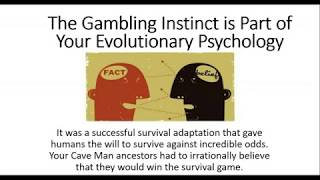
That we don't see what's right in front of our face. We don't see the relationship between our financial performances, our trading and the gambling instinct, or what would be called the gambling gene. And I want to examine that a little more because this is, this can be incredibly important because ultimately this trading instinct, I mean this gambling instinct, this, this gambling gene is a part of your evolution or psychology. I want you to under grasp how difficult it was for human beings to survive. They weren't big, they weren't strong, they didn't have big teeth, they didn't have big claws. But ultimately they developed a will to win. They developed an irrational belief that they could win this survival game. They could win against all odds. What I want you to understand is they had to have that belief to survive. And what it did is it finally became so prevalent and bred into the population so long that it became a state trait. We developed a certain belief, not rational at all. If you take a look at it, only 2% of traders become consistently profitable traders. Only 5% of traders actually produce profits. The 95% of the chances that you're going to fail in trading is the truth. Yet we hold beliefs that says, I can win, I can win. I look at that stuff and, you know, a friend of mine was telling me, Randy the other day, I was on YouTube and I was seeing this ad, and what happens is that the ad consisted of a big wad of money and a person saying, this can be yours. You can learn how to do this with a small account, no less, and you can build it up into something big, and you can become wealthy. That's pulling people. What they're doing is they're hooking into that gambling instinct, that belief that I could win.
It just so happens that your caveman ancestors really had to have that belief. And it was highly functional. It was necessary. That's what I want you to see. That's why it got wired in as a limbic learning or a limbic belief that drove. That drives your ability to act in the face of uncertainty. So we've got that difference. And then we go one step further. What do those limbic learnings do as they become hardwired as unexamined beliefs? Wow. This is where you keep believing that you're almost there. You keep believing, I push harder, I'm going to finally push through, and you start seeing success. And yet at the same time, you don't experience success. You know, you. You believe you're going to win, even when you're facing a random distribution of wins and losses with only a slight edge. Now, tell me something. If you really get to it, and if you have a thought that I can win, I can win, I'm gonna be the winner, I'm gonna be the exception, okay, this very exception is literally right here as you hold this unexamined limbic belief that says, I'm gonna survive, I'm gonna be the winner. I am going to be the superior race. And fundamentally, what it's exposing is because your trading account is going to tell you the truth. You don't believe what's running around in your head. What you do is you believe the truth that your trading accounts telling you. And the very first thing, the gambler's gene, that gambling instinct is rooted in a belief that there's a pot of gold at the end of the rainbow. And with effort, you can seize that. Now, you know, in the. In 1849, there was a gold rush there, Mark Twain, and hundreds and thousands of people fell into striking at rich mind. And if you've ever seen the photographs of them in Alaska, after they get rid of California, you begin to realize that a lot of these guys are going to die.
They're going through incredibly cold stuff, but they have this irrational belief that they're going to go over there and they're going to win while other people aren't yet. It's there. And no matter how much you expose it, it keeps believing that you can win. You keep thinking, I can win. It's there, okay? It's right there that you develop this notion that you're gonna strike it rich.
Really, when it comes down to it, while you're thinking against all odds, against all logic, I'm still gonna win. The casino is looking at it very differently. Okay? The casino knows that you're thinking about winning big and making all this money and, and seeing the growth of wealth and stuff like that. And they know something different. They know that this is a random distribution between winning and losing, where they have the edge and what they do. What they know is that if you sit down and play cards with them, over time, they're going to take your money and if you happen to be a card counter, they're going to get rid of you. But this is the key, this is the first big thing that I'm asking you to look at that you are endowed with the mind coming from a brain that believes that it's going to win the pot of gold at the end of the rainbow against all odds. Okay? When you look at the way trading organizations present trading, it's like, yeah, all you have to do is you follow this system and you just kind of leave belief. You just leave emotions at the door and you can trade Willy will push those emotions away. The truth is you can't. And if you, if you start looking at it from a rationalistic tradition, you realize that, wow, the odds are really stacked against you. What in the world would make you believe that you're going to be the one guy in thousands that gets by? It's this irrational belief.
The truth is traders can, once they get past the idea of winning and once they get past the idea that going to strike it rich and they start saying, what kind of beliefs do I really need to bring into the moment of engaging randomness and uncertainty? What are those beliefs necessary to build a probability mind? That's when you start beginning to doing something very, very different. But at first it starts with that notion of winning against all odds. And I love this graphic, this graphic you're about to see is that what you do is you start seeing through the eyes of money and you fall into this belief that you literally are. And yet at the same time, what traders really, what good traders really understand is that their job is to produce a standard practice of performance that they consistently perform.
Time in and time again. And they realize that there's randomness to the distribution. They don't know if they're going to win or not, or lose or not. What they know that's random, but they do have a system that has a slight edge in the randomness of uncertainty. If they follow that system, if they have the emotions to stay and follow that system, is they will extract more money over time than they give back in. That's what the professional trader knows. He's not looking to say, well, I'm just going to ramp it up and I'm just going to throw caution to the wind and I'm going to, I'm going to produce crazy risk and grow that account to where I can feel the excitement. No, what he's done is he's beginning to think I need to anticipate what the casino is thinking too. And so there you go. The whole key is what you're doing is you're taking, you're taking the irrational belief out of that guy's eyes. Or as the joke goes, do you know how to make a small fortune in trading? Start with a big one here? What we're asking you to do is to recognize you're coming preloaded with limbic beliefs that are totally dead sent, dead set against your capacity to win. And most people never wake up to that. And they finally say, you know, trading is a bunch of crock and all this kind of stuff and they burned out of their capital in three, maybe four years and they move on. That's the whole churning effect that you see in the trading industry, from brokers to teachers, is that they recognize that most people are never going to get past the gambling instinct. Okay? And to do that, you're going to have to recognize that traitor psychology is part of the problem. Yeah. But even more is the biology. The biological heritage you're bringing is against you. Also.
The second one, the second irrational belief that guides, that's basically a gambling part of the gambling instinct that you can control or predict outcome if you have the right stuff, if you have the right system, if you have the right thinking for the right teacher. And you come and you do that and all of a sudden what happens is you start realizing that.
The brain is programmed to control outcome, it wants to control outcome. And it will think, I can control outcome, or if I can't control outcome, I can predict outcome. Another way of controlling. And you believe in the early stages that there is a holy grail system out there, not inside you out there, that if you find that you're going to make a ton of money, but it's the system out there, it's not you. It's not the evolutionary psychology that's got embedded in you about this, about this enormous will to survive that translates into thinking, I can win against all odds. And it's not like you can't win. It's not that you can't become consistently profitable, but with that mindset of winning and not losing, the casino is going to take your money. They know that. This is not a game of football. This is not. This is not your will against somebody else's will. This is, this is randomness. This is the management of uncertainty. And it just so happens the casino doesn't want you giving up. They want you believing that you can find the trick. They want you to believe that, oh, yeah, I know how that slot machine works. You know something I can, you know, I know that, you know, it's okay, it's going to pay out, and I know that this is going to be happening. And you start saying, okay, that's what. It just so happens that slot machines are all programmed differently, okay? And what they're, they're programmed to do is to keep you there. They keep, they. And I've actually been in a casino where I'm watching people play five or six slot machines at one time. They're probably burning through, oh, several hundred dollars in a matter of minutes. And they're all, they're saying, well, you know, I'm shredding my, I'm spreading the odds. And they're still thinking, well, I can, I can win if I spread the odds. Do you see that the casino has those slot machines there because the edge is theirs. And that's what we really want to be taking a look at. So then the other thing, the third one.
How many people really enjoy the excitement found in trading? You know, you go to, you go to a trading room, people are really excited. Somebody's had a good winter and everybody's whipping it up. And you, you have this real excitement. And you don't find that excitement necessarily at home. You don't necessarily find that excitement in the, basically in just the regular fabric of your home life. But, you know, you get in front of that computer and, you know, the thing is, is it's exciting. And it just so happens that gambling problems, people do the same thing with. As they go to casinos, they go to different places where they're around other people and they're all gambling because they're looking for excitement in their lives, and they find it and they get hooked on the excitement. They get hooked on the Dopamine, they get hooked on the norepine. And what happens, they start looking like these people, they start going, I'm hooked on the excitement. I won, I won, I won. Of course, you don't look at how much money you spent to make that win or how much over time the casino actually took. The thing is, is that there is this belief about wiring winning and excitement together. And those are really, you know, you want your caveman, your inner caveman wants to win the game of survival. It just so happens that your inner caveman really there is part of him bred for excitement. You know, if you and six or seven other guys are hunting down a woolly mammoth and he's £13,000 and you're probably about 140, you know, you're going, wow, this is pretty interesting stuff. I need to be excited about the prospect, the thrill of the hunt. And that's what happens in, that's, that's what happens in trading too is you start getting into the thrill of the hunt. And the big one that costs money beyond belief is the belief that you can make up for prior losses.
You know, the first time that I ever came across this, I was living in another city and I was talking to a guy telling me about that his company had done.
A convention in Las Vegas. And while they were there, one of the guys at that company lost his house.
And he had to come home and tell his family that he lost his house gambling. But what he was trying to do is he started losing and he decided that I just have to make up for those prior losses. I just to come out. And ultimately what it did is it cost him, it cost him his house. God knows what kind of family problems it caused too. But there you go. What happens is that casino knows that it's just about impossible to make money back. What happens, you start from scratch and, and you start producing a mind that performs well. You don't try to make up for prior losses. What you do is you say, this is where I'm at. The only thing I can control is literally the mind that I bring into the moment of performance. You realize you can't control again, whether or not you win or lose, whether or not you can make up for losses or not. What you control is the mind you bring to performance. That friends is not a gambling mind, that friends is a probability based mind. And here you're looking at something where the guys, you know, he's, he's putting in a big chunk of change in the wild dream of making up for the Prior losses, you know, if he wins that.
It even gets worse because then there's a dopamine rush and there's the actual belief that forms that says, yes, I can make up for prior losses. And he starts, and he starts compounding his problems. So what I want to do, when you take a look at these four aspects, and there's more, but I think four begins to really, these four that I chose are very typical about what I see. When people come to me and say I'm having trader psychology issues. And we start really talking about it and what they're doing is they're having gambling issues. They're gambling issues before their trader psychology issues. The traitor psychology gives it really good dressing. Oh, it's traitor cut psychology. No, this is gambling instinct built on evolutionary psychology, okay? That's what you have to master. So we understand that it's not primarily a psychological problem. You inherited these survival instincts, man. It can't be beaten, but it can be mastered.
And the whole key is that mastering yourself is where true power is, particularly in trading. And the key is really, it comes down to it. Well, how do you do that? How do you begin to master, how do you begin to master your emotions? And it starts with emotional intelligence. And I hate to say it, friends, but people rarely understand emotional intelligence. They, they don't grasp that your thinking mind, what it really does is it produces alibis, fiction stories that support what the emotional mind has already said. And I'm going to give you an example from, not from trading, but from going to my local Lowe's hardware store. You go into their parking lot and what you'll see is a bunch of very expensive pickup trucks. And these pickup trucks, you know, they, I mean the good ones, they're, they're 50, 60, 70, $80,000. And then what you do is you see a man, a middle aged man with a pot gut. You know, he looks like he's in his 50s, 60s, maybe 70s, can barely get into that machine and yet the parking lot's full of these machines. And these are working trucks. These are like F250s. Even the 150s are big. What you realize is that those men don't need that truck. They want that truck. Because what it does, when they rev it up and they get inside that black pickup, they feel, they feel manly, they feel virile, they feel the testosterone. And the advertisers realize that they are not selling anything logically to the man who's buying those things. And the lot is full of these things. And you ask him, well, why did you buy that? He said, well, I need it. I might need it someday. It makes me feel good. What I want you to see is that making incredibly irrational decisions, they're making emotional decisions based on their need to feel power, to feel worth, to feel a sense of mattering, to feel adequacy. They're not doing it because they need it. I have an old pickup truck that I use maybe 15, 20 times a year and it doesn't look very good, but what happens, it hauls stuff. And that's all I'm asking pickup truck to do. You know, in advertising they discovered that there is this instinct that men need to feel powerful, okay? And nothing makes you feel more powerful than winning, accumulating money, power. And at the same time.
Until you really begin to have an effective understanding of your emotional nature, all the knowledge you've accumulated is for naught. There's plenty of people with great knowledge of trading who can teach. And that's the iq, that's knowledge based stuff. But they don't have the commensurate emotional intelligence. That's what's below, that's the part of the iceberg below the surface, that's the eq. That's the most important part because 95% of the decisions you make are made there below conscious threshold. And they're called implicit beliefs. And they're formed by the limbic system in a way to manage your survival when facing uncertainty. Okay? The effectiveness of those beliefs is not determined by what you feel or what you think in trading. It is determined by the health of your trading account. That's what you're looking for. And you're going, if you grasp 2% of people are consistently profitable, only 5% of people are profitable at all. And you're going, wow. Obviously they're not very being very much EQ to the game. They have great knowledge, they've been taught well, but they don't have the commensurate emotional intelligence skills to drive that knowledge. So ultimately what we're looking at.
You grasp finally that that gambling gene or your runaway emotions are instinctual. Friends, they're instinctual. They're not happening where you have access to them on a thinking level. They're instinctual, they're happening on a reactive automatic way every time you face uncertainty. And it starts with that first belief that there's a pot of gold.
And that you're going to win, that is a setup for failure because again, again, you're going to really good traders are fantastically good losers. They know that their deal is to keep the losses small. And the moment they see that, that this thing's not going according to their hypothesis, they get out of the trade and they go to trade again to live another day. And they're going to keep doing that because they know they have an edge, a slight edge that if they maintain the discipline of the standard practice, okay, they're going to be able to execute guess what, their edge. And that edge gives them a thing. But the edge also includes a reformulation of what losing is. Losing is only landing on the wrong side of probability. It's not about your manliness or your womanliness. It is literally about whether or not you're landing on the right side of probability relative to you or the wrong side of probability. It's not winning or losing that's driving here. That's what we have to rewire. That whole belief system that's happening on an emotional level. So.
I know that almost every one of you have tried in various ways to develop your capacity as a trader in some psychological way. Everybody's done some nlp, everybody's done affirmations, everybody's done visualization, everybody's done tapping, everybody's done all these things in an attempt to get a hold of that and to start building the mind. The moment you add stress after a particular moment, all that's thrown out, it's all gone boom. The emotional brain simply hijacks thinking and ultimately it comes down to how do you develop a relationship between your thinking brain and that heart brain, that emotional brain. That's the key. Because ultimately this is all about developing emotional intelligence. Being able to rewire the brain to move from short term survival emphasis which is the brain you bring to trading to a probability based mind that sees this as total probability. And they do not, they've uncoupled uncertainty with death. Your emotional brain can't tell the difference between a psychological discomfort and a biological threat. It sees psychological discomfort has the same saber toothed tiger causing you biological threat. So what do you think it's going to do? It's going to get confused, it's get vulnerability and then it's going to fire directly over to fight flight. So our ability to do, to change this, what I want to show you this, when it, when you see this graph, you see cortex, that's your new brain, that's your thinking brain. I should have input that it should cortex, thinking brain. These two other places where it's saying thalamus and amygdala, this is part of your limbic system. What you're looking at information is coming into your thalamus. That information is going to be preloaded because there's kind of like an air traffic controller at. In the thalamus that basically determines where the planes are going to land, who's going to get control, who's going to get. Who's going to get importance and stuff like that. And ultimately it happens basically on past experience. The thalamus gets there. The air traffic controller says, oh, my God, this is dangerous. And what it does is it just absolutely blocks information to the high road to the cortex, automatically hijacking.
That movement. What it does instead is it shoots the information over the low road, quick and dirty road, over to the amygdala. That starts the flight. Flight response. So when you experience stress, when you feel confused, when you feel vulnerable, this is what you're triggering. You're triggering the low road. And it's not conscious.
It's not like it's unconscious. It's subconscious. It's working on the level of the emotional brain. And later, once things have been acted on the high road to the cortex, the thinking brain comes back online and you go, what in the world just happened? Why did I do that? You've just had an emotional hijacking. And this is a great graph to understand what is continually happening. You have a set of beliefs on one hand that says, I'm going to win big. But then you get into it and you actually face the stress of uncertainty. And the caveman brain triggers and goes, oh, my God, this is the fear of biological death. I need to act right now, not later, not thinking right now. And it goes low road to the amygdala. And there you're off to the races and you're doing all that dumb, stupid stuff that we. That you don't want to be doing.
That's what happens, friend. It happens every day, day in and day out, and it's been tripped. So we get this thing and go, well, how do I do it? Well, it starts with learning how to emotionally regulate. Excuse me a moment.
It starts with learning how to emotionally regulate the self. What most people don't grasp is that emotions are not psychological. They do not happen in the mind. Emotions are biological. In neurobiology, we would say their biological action potentials that coordinate action between the organism, that's you, the trader, and the environment, that's you, the markets. And anytime there is a perturbation, anytime there's a change in status in the environment, it triggers by default an emotion, that emotion. Now that we Understand, it's a biological action. Potential has a process to it. The very first thing you feel with an emotion triggering is you feel tension in your body. And tomorrow, if you're trading, I want you to notice where you carry your tension. That's not tension, that's emotional arousal. What you'll also notice is that when you're inhaling air, you most likely you're stopping the breathing, okay? And in doing that, or you start breathing very shallowly. What you're doing is you are arousing an emotion that's already fired.
And yet at the same time, that arousal moves to the feeling state of emotion. Once an emotion has aroused to a moment, it trips a switch and it becomes chemistry. It's no longer revving up, it's pulsing through your body, through your brain, altering the way you think. Because, friends, my promise to you is all thinking is emotional state dependent. And breathing and muscle tension are part of the arousal component you hit. When you hit feeling states, you feel the emotion. You feel it like, you know, that pit in your stomach and stuff like that. That's the subjective experience of the chemistry of it in your body. And by that time, you're toast. You've taken the low road. Then at the same time, there's also something called emotional motivation. Once that feeling is there, that emotion is going to either want to take you to fight, to flee, or to approach. In trading, we want approach, but that requires a calm, disciplined, impartial mind to do, not the one that's just been hijacked by the thalamus. Okay, so we're sitting here and we're realizing, oh, my God, breathing and muscle tension are part of an emotion. Yes. And by learning how to do diaphragmatic breathing or belly breathing, what you do is you disrupt the arousal of that emotion.
You don't change the belief system, but what you do is you disrupt the arousal so that instead of being hijacked, you can get to the door of the mind. This is powerful stuff. And you also learn to relax the muscles because that also is preparing you to fight or to flee. That's the big deal. That's what happens with emotional regulation. And what I would encourage you to do is get a mirror, put it up tomorrow, or if you have a spare camera, put.
Have a video camera on you so that you can watch yourself during a trade. And you're gonna see, you're gonna see the tension, you're gonna see the holding of breath. You're going to see that you're not managing emotions, that they're managing you and you become a gambler. So that's the first thing. Step one, emotional regulation. Step two, this is when you start going, I need to generate the capacity to be mindful or to observe. Ultimately we have a faculty in us human beings that allow us to step back out of thought. And in stepping back out of thought, we begin to not identify with the thought and we begin to see, oh my God, I'm not having thoughts, I don't have thoughts, they're having me. This is when you begin to realize that you got programmed long before you're programming to the responding to uncertainty and risk long before you start got to trading. And unfortunately it's for survival instinct in the moment rather than probability. That's why the brain that you brought to trading is not going to work. It has to be redesigned. But you have this faculty of literally recognizing, wow. I can step back out of thought, emotion and beliefs. And basically what you learn is this, is that these are one potential organization of a self that got organized as a self. And you call it me, I, you. It got organized before you were even aware of it. And it's so much like air to you that you think it's you. No, it's not. It's just one potential organization of itself. Where does this really begin to manifest? It manifests first in the brain, but then the mind. If you conceive of the brain as a community of rival emotional programs that duke it out both competitively and cooperatively for control of the mind, the brain, the way it organizes relationship with the environment, you have an idea. Somehow in the miracle of consciousness, that brain creates mind. And suddenly what happens is you have a committee of the mind. If you've ever been in self doubt, you'll notice that there's at least two arguing. There's two. There are two parts of the self arguing with one another. There's a part that says, you know, you're not going to make it. You know, this is really, really dumb, stupid thing. There's another part saying, oh God, I have to make this. I have to make this. You begin to realize that there are different spheres of influence. That's what we call them in neurobiology. Or we can say, you know, in the committee of the mind there are different voices and who has control what happens. Right here you're looking at a metaphor of a meeting, a committee meeting, where you look at two alphas and their. You can see this, this is not cooperative. They're having a confrontation and everybody else is sitting on the sideline. Going, who's the leader here? Who's determining how we are to play this game? Most people, because the observer is not awake.
What happens is that a mutiny has been going on and destructive elements, what I call the inner critic. More about that in just a moment, has taken over a lot of the thinking process, but it's unexamined in observation. You begin to say, I can observe. I can really begin to observe the emotional content of thoughts now. And I can begin to see that there is a power struggle going on within me. There's always a struggle going on within the self. The key is who's showing up to engage that struggle. What kind of mind is showing up? Again, friends, that's what you control.
And that's what we teach. So ultimately, in step three, though, you become aware of this thing called the inner critic and the adapted voice living in this, this committee of the mind, that inner critic, friends, you'll know that inner critic is that judgment, that criticism of you. When you get into an argument with self and start beating yourself up after a trade, that's the inner critic doing the beating up. The adaptive voice is the one taking the beating or responding to the beating, okay? And that's the struggle that this man in this image is having. We all have these emotional struggles. The key is, can you develop through emotional intelligence? Can you redevelop the committee of the mind, the forces in the mind, so that you're pulling together.
Rather than having a mutiny? And parts of the mind are trying to go one way, and parts of the mind are going the other. The key is human beings have the capacity of retraining. And this is where self mastery becomes really important, because you begin to realize, oh, well, this is going to happen anyway, you know, and I can do all the positive thinking, I can do all the affirmations, I can do all the visualizations I want. But ultimately, when I hit that stress point of real uncertainty and real risk, what I realize is that air traffic controller in the thalamus is going to take over and it's going to route things. Unless I can regulate that, unless I can observe it, unless I can. I can put the players that I want in that trade of the committee of the mind rather than the ones that I came stock with from history, from my family, from culture, from circumstance. That's the third one. Step four is the great news for struggling traders, is that we can redevelop the potential in that committee of the mind to become an empowered self, to become the mind that can handle probability management. That begins to have a completely different relationship with uncertainty than the mind that you brought. Because understand the survival instincts of the emotional brain sees uncertainty as dangerous. It gets very confused, it becomes very vulnerable and easily takes the load road to the amygdala into fight flight. That's that all that over trading, that's that fear of getting into trading. That's fear of missing out and jumping into trades. That's a fear of missing out, of taking skinny profits. That's revenge trading. That's all that stuff.
The wrong committee players are there at the right, at this level of stress that you haven't learned to manage. And in the same way that there is judgment, criticism and temperament and fear and lust by the way, from the inner critic and the adapted voice, there are other powerful emotional programs that are disciplined. The ruler, courage, the warrior self, soothing, the caregiver, impartiality, thinking of the sage. These are elements of basically of the human potential that lives within you. However, that potential has to be reshaped particularly during stress rather than having the maladaptive. Well, at one time they were adaptive, that's the reason they're there. But they become maladaptive when you're trying to force a brain that was designed for short term survival and trying to force it to become a probability management brain and mind. Yet you as a human being are given this opportunity. Okay, it can be done.
And what I wanted to show you is I realize Tom Brady's not with the Patriots anymore, but I want to tell you something. I go back to the game that the Patriots played against the Falcons several years ago and the Falcons were up 28 points in the third quarter. I mean it just looked really bad for the Patriots. And on the Falcons side, you see everybody's prematurely, you know, they're overconfident, they blah blah, blah blah blah. And what happens? They quit playing their game on the Patriot bench. They're not cursing and stuff like that, but coaches are getting into players faces and they're saying do your job. That's all you have to do, do your job. They're not asking them to live in the future. They're not asking to live in the past. They're asking them to live in the present moment and do their job. Now I will admit it's really great having a guy like Tom Brady as your quarterback in a situation like that. Okay, but what you're looking at is the Patriots had organized a team that a team of players, a committee of the mind. And they organized them to simply do their job, not be prone to Anxiety or fear or overconfidence, the way the falcons were. And what happens is they. By doing their job, they were able to organize the team very differently. Quickly. Okay? They pulled together in a probability mind rather than a mind that said, I'm going to win. No, I'm going to perform. I can't control whether or not I win or lose. I can control the performance that I have.
And they started performing on a peak level, whereas the falcons dropped out of peak performance because they became overconfident. And the game's history now. But that's literally what we teach how to do. And what I want to do is this is very trainable. And I want you to take a look at this cougar. When you take a look at that cougar, you know, I look at that and I ask people about it, and they say, it's just being a lazy cougar. He's just. He's just a cat hanging out, doing nothing. No, he's not. He's hunting. He's looking down exactly where deer have a habit of crossing. And what he's doing is he. He's not acting like a stalker. He's not like an African lion where he's chasing things down, getting gored and getting kicked. What he's doing is he's acting as an ambush predator. He's waiting very patiently.
Hear that word? Patiently. He's actually being incredibly disciplined. He's waiting for the moment for the deer to walk into the trap, into the setup.
He's waiting for a valid setup. He will then spring into action, come off of that telephone pole. He hits the deer with his paw, snaps his neck, and the deer slams to the ground dead.
That's the struggle. He's a consummate ambush predator. And friends, that's what we're looking to build. We want to build a mine that becomes the ambush predator, not the stalker. Not making things happen, but what happens is we're waiting for things to show up and take advantage of them. That's what the trader's mind is. You might say, well, it's passive. What do you mean, I'm going to get bored? No, bored is a conversation in the mind about having to do something. Not doing. Waiting patiently, observantly patiently waiting for the deer to show up, for the setup. To show up to manage the trade is the job. Just do your job of the traitor, okay? The inner critic's not there. The fear of your adapted voice is not there. What's there is the discipline of the ruler, the courage of the warrior, the self soothing of the caregiver and the clear thinking, the impartiality of the sage. That's the mind that manages probability.
That's trainable. And the question really becomes friends. Do you want to train your mind for probability or do you want to be like that first guy that has believes that if he keeps at this and keeps at this, he's going to break through to the big money. And what happens is he gives out a capital or he gives up and finally decides that maybe he doesn't have what it takes. What we're looking to do is to take the emotional brain and the thinking brain and build a new partnership. And this upcoming group course that I'd like to spend just a moment talking to you about can teach you how to do that. The group course starts pretty soon. It starts May 14th. And if you sign up soon, what happens? You get a free gift. You get a free emotional regulation workshop that you know, if you go to our website, it's 200 bucks. Okay? You get it free. And we're not necessarily doing that to entice you to sign up now. We're doing it because I want you prepared for this course. A lot of people get into this course, they aren't prepared and they don't realize the first, the first session, we're hitting the floor running. I'm already assuming you have already been in the materials and you're ready and you, you've been practicing with emotional regulation. Then we move. It's a very fast paced course. What you get in the group course is you get the ability to learn the skills. You need to move from an instinctually LED brain and mind to a probability based mind. That's the big deal.
You learn the regulation, you learn the mindfulness, you learn about this inner critic and this adapted voice, the orphan. You learn about how to build the mind, the empowered mind and then you learn how to use it under stress. That's powerful, friends. And what's interesting about it, it's a virtual classroom where you have unlimited 24.7access. It also comes where each of the, each of the sessions are recorded. And we work with people through all the time zones, the world. So a lot of people can't show up for the, for the sessions. They'll get the recordings and they have the accident. They had 24. 7 access so they can keep up and they're ready for the next session. Okay. And it, it is a course that teaches the very skills that you need to transform this. And what you see is that link Right there. That will take you to that. And what I would, if possible, if you would put that into the. Yeah. And the key is that that's the course a lot of people start with and work with because they realize this is way. This is. This is something that I realize. This is the essential skills that I need. Now we also have an individual course for people, and that is different in that it's Skype based. You and I are meeting at least 10 times face to face, and we're working through a process that's more personalized and more comprehensive. So the thing is, it really comes down to.
Which course is best for you. A lot of people just simply come to a moment where they realize that right now they can't afford the individual course. And what they discover is that.
The group course provides them with what they need.
And it's something where we really encourage it. And if you're truly interested in being able to develop the mind that is effective in probability management, that you're going to have to have to be consistently profitable.
This is from a trader's lingo. This is a high probability trade. It's a high probability setup. Okay. And we are also considering and planning a summer 2020 class, but that will start in June. We're not so sure about that. You know, this heart transplant business, you know, it took me out of commission for a while. And what we're doing is we're trying to make sure that Randy stays as good as he feels right now and not overwork himself. And at the same time, you know, putting them so close together, we don't know if people want that or not. But the thing is, the one upcoming right now.
This is.
Yeah, we have a lot of people already registered for it, and it's going to be a really good class, and it's going to be from people from all over the world. And Again, you have 24. 7 access, and you're also going to have near permanent access to it after the. After the course to get the free gift, they need to register by May 9th. Yeah. And to register to get the free gift, you have to register by May 9th. Okay. And what I'm saying is you need to register and you need to be in class one already, you know, so when the free gift is an enticement for you to get your homework done before you show up. Okay. That's the whole key. And I want to thank you.
And we've got a few minutes left for questions, if you have any. And the white box. And we'll take My bifocals. And we'll get closer. Okay, I've heard what you said about the amygdala and so forth. What you say is consistent with my experience. So what do I do about it? My position is turning red. I know I'm feeling right to do panic. I'm feeling panic. And perhaps selling is still the right thing to do, or perhaps not. So what do I do? Exit or add to the weakness? You know, I have no idea. You know, you're asking me a hypothetical question, and I have no idea what your rules are. I have no idea. I do know that you're already saying that I'm hitting panic. I'm hitting this. So I'm already recognizing that you're bringing an old brain built on survival instincts.
Into managing probability setup. You're already at a disadvantage. So what I would say is that you're asking, there is nothing you do like flip a switch, and all of a sudden there's magical knowledge coming out of Randy's mouth that changes everything. No, this is about reaching. This is about changing neural networks, changing literally your beliefs about your engagement to uncertainty. When you're saying, I'm panicking at this particular moment, what you're saying is that I feel either inadequate, I feel as though I'm powerless at this moment. And that's no way to make a decision facing uncertainty. All traders recognize that no matter they find something that fits criterion. And if they come across a situation that they don't have criterion for, when what they do is they rebuild their system so that they have that criterion met. And they say, does it meet criterion? Is this setup? Does this set up meet my criterion as a valid entry you enter.
That's how your edge works. That's how a professional trader works. When you're working with a professional trader, they're having to hit at least 80% of the valid setups that appear to be able to make their edge work, they're not namby pamby about whether or not they get it or not. They're saying, does this meet my criterion? Or either an A or a B or a C trade. And, you know, with retail traders, we're talking a trades. Does it meet these criterion? If it does, you take the trade because that's your edge.
And as you take and as you start getting up and when you start first working with people, you discover that, oh, they're only taking about 40% of the trades, that there are valid setups. So I would say train yourself. You're a perfect candidate for this group course I'm talking about. Okay, okay. If I understand. Well, you differentiate the trading mind and the caveman gambling mind. Yes, I do. While the trading mind. Gambling mind.
While the gating. While the trading mind needed to be built while trading. Can the gambling mind be worked out with mindfulness out of the trading room? No. What happens is you're experiencing stress of uncertainty as you trade. Yeah. You're working to take that gambling mind and change the limbic beliefs about what that limbic system believes about the management of uncertainty. You're doing that. But the thing is, is that if you think you're going to do it in yoga studio. No learning takes place in the environment that you're going to be using the knowledge in. If you train in a classroom, then you go out into the real world, you discover it's completely different animals. So what you're doing is you're both doing the classroom, but then you're taking what you're learning in the classroom. You're applying it directly to, to the environment of trading where there is uncertainty, where there is no reset button. Okay. So it's really both. And is that you're working on one level and you're saying, okay, I need to start. And I need to start learning how to change the mind, how to work with the mind, particularly with the deeper beliefs about my ability to engage uncertainty. And then you start testing it and start applying it to the trading world because that's, that's where you need to be performing in. There's plenty of people who do like visualizations and all that kind of stuff and it's all fine. And then they go to the tennis match and they get under stress and all of it falls away. They no longer are visualizing victory and stuff like that. They start having second doubts. They haven't prepared the mind to perform in the moment of the moment. They've trained it to do it in a yoga studio. So I'm saying, no, you train for the, you train for the real world trading. Okay. If I don't feel ready for the group or individual course, but I would like to move forward, would you recommend the ebook or the workshop?
And what about the workbook? A lot of people, what they do is they get the. And right now, because of this COVID 19 stuff, we're not mailing books. It's the, it's the, it's the. We. We're doing the. Yeah, we're doing the, the audiobook and we're doing the ebook simply because, you know, we don't have to touch that you know, there's no. And if you've ever had a heart transplant, you discover is that you double down on the COVID 19, you know, rules is that I have a depressed immune system and we're not touching books. Okay? So the thing is, is that a lot of people start with that book. And I get a lot of commendations about people talking about how that book has changed their life. I don't, I have a bias is that I don't believe intellectual knowledge changes the Olympic system. But at the same time, I get enough emails saying that their trading has changed because they've read that book. That I have to recognize that that's my b. It's not necessarily supported 100% by facts. What a lot of people will do is they will get the book and the workbook together and then they will carefully select some of the retail guided meditations that are consistent with the book and the workbook. And they use that as a kind of a course. Okay. And it's a lot less expensive, obviously, and they use that.
And you know, some of these people will never be able to afford for whatever reason, either the group or the individual course. And what they're doing is they're. They're taking advantage of this work in the best way they know how. And most people also.
You know, I have over 200 videos on YouTube and it's very common for me to learn that people are watching those videos before they start trading. They're using them as, as ways of helping them kind of settle the mind. Okay. And they, if they're more. If they're more.
Reading type people, they start. They realize that almost all those videos are backed by an article that's on the website. And they, people, people will spend hours upon hours reading articles, watching the video stuff as another tool to be able to help develop the mind. And, you know, for me, it's part of outreach. I know that I give a lot away and I'm okay with that. You know, something there, there are plenty of people who recognize that they're going to have to. They're going to need a mentor that really understands how the brain is on uncertainty to be able to get where they need to go. And for a lot of people, that's not what they need, that's not what they can afford. And so there is this chunk of outreach material that.
Is there for you guys to take advantage of and use. And again, I get stuff all the time saying that this has changed my life. And I'm going, well, I'm glad. So If I couldn't do that, that's where I would start.
And you know, one person actually said, yeah, Randy, this is the, this is the poor man's course. And I've come to affectionately know it as the poor man's course. We don't organize it as a course, but, you know, that's what, in fact, that's what a lot of people have done with my materials. So that's something that I would, would offer. And it almost always starts with a book. Okay. Anyway, yeah, mindful trading. And most people, you know, they, when they get to memory enrichment and stuff like that, they say, oh my God, this is totally on a different level than anything I've ever read before. And what you can discover is I'm coming from this, from a very neurological, neurobiological access point, and it's going to stay that way, is that I understand the limbic system uncertainty and that's where, that's where it's at.
After the course is finished, I'll do this last one. Will the client have unlimited access to the recordings afterwards? Oh, you're sent the recordings.
Okay. You have access to the virtual classroom and you get the recordings from the, from the sessions and you have all that. And you know people, you know people, people use that virtual classroom for five or six years. We see people that we don't even remember who are and going, whoa, who is this? And we realize that they're coming back to retake, you know, use the virtual classroom to retake the course. They've got the recordings of their sessions and there they go. Like I said, it's a, it's a good deal.
Anyway, thank you. I really appreciate this. I love talking about the brain on uncertainty and I'm passionate about it. And if I can help you, I would, I would love to. If you're looking at the, the group course, please sign up by the 9th so you can be prepared when the first class starts. Because what's common is people get to the first class and they realize, oh, this isn't startup. The course started before the course started. They're already behind. We want people up. We want highly motivated people who are realize they're given, being given a great opportunity and they're going to take advantage of it. That's, that's the folks we're looking for. So. And if you're interested in a more individual, personalized relationship, give us a call. Well, email us and ask for a free consult. Any rate, I wish you well get that video camera or that are that mirror and look at yourself tomorrow and just look at the lack of emotional regulation going on and going. You know something? I can do something about this. Rather than just falling into this time in and time out, I can actually change the way my body responds to stress of uncertainty. So, friends, good evening. Have a great time. And, you know, may the trading gods be with you. Take care.
Hey, buddy.









