$329k Trading Profits in September | Full Break Down
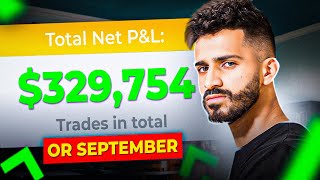
Omar (Kardec Trader) made $329k net profit on 30 trades in September with a 73% win rate. He breaks down his setup-level analysis, risk sizing, and why tracking R-multiples and tagging trades matters for building consistency.
Questions this video answers
$334,000 gross (displayed in Tradezilla screenshots).
$329,000 net profit (result after $376k gains minus $46k losses as described).
About 30 trades.
73% winning percentage.
Average winning trade ≈ $17,000; average losing trade ≈ $5,800.
Chapters
I made $329,000 in the month of September day trading stocks and options. And in this video, I want to break down everything I did that month, right? I want to break down how much risk I put in. I want to walk you guys through what were my setups, things I did well, things I need to improve, and just my overall rating. And I also want to walk you guys through how I basically recap a month and what I look for now. When a lot of people see this, they might see, oh, well, he made $330,000, which, which is great. Maybe he's putting on too much risk. Maybe he's, you know, trading inconsistent strategies. So what you want to try to understand as a trader is you want to try to understand, well, how was this achievable? Right now, obviously, I'm not trading with a thousand dollars. I'm not trading with 500. I do have more, a lot, a lot more capital than most people that are trading with. And I'll dive into that. But the main thing I want you guys to take away from this is not this number. I want you to take away the learning aspect that we are going to talk about, right? So here's my trading account. Just for transparency purposes, $334,000 gross, you guys can see from September 1st to September 30th. For anyone new on here, I have been day trading for over nine years. Next year is going to make it 10 years. So I have been doing this for a very, very long time, and I share that with you guys. Because the people that have been trading for two years or three years or even a year, that haven't achieved consistency or profitability, I want you to understand that it takes time for. But as it takes time, you have to do the right things now, implement those things now so you can get to a point of profitability, you can get to a point where you can sustain and grow these profits, right? So let's start off with the overall month and just break it down. So took about total 30 trades, didn't trade every day. That's another thing I want you guys to focus on. Every trade or every day was not traded, right? Took some days off. Now, starting the, starting with, you know, some of the more important stats, 17k was my winning trade, average winning trade, and my average losing Trade was about 5,800, right? Which essentially gives my average winning trade a 4x higher than my average losing trade. So for all the traders out there, when you guys are looking at your stats, make sure this is something you are paying attention to make sure your average winning trade is at least two to three times higher than your average losing trade. This will indicate that you are cutting losses. This will indicate that you allow your winners to run and you allow them to maximize it itself. So this is a very important metric to focus on. And by the way, side note, I'm using tradezilla to track my trades. Tradezilla is where I'm uploading this. There's a link down below. You guys can check it out now. Winning percentage, My winning percentage was 73%. This is not that important, right? I don't really care about my winning percentage. But what I do care about when I'm analyzing my performance is I start analyzing 22 winners. How did the 22 winners go? What could I have done better, right? What could I have done better on the eight losers? Were these real solid eight losers, right? Were these real solid 22 winners? Did I get lucky in a trade like what actually happened? Just so I can start breaking things down, then I like to go into my trades. How did my trading look, right? All right, I had a 39k day. I only had one trade. Maybe I had a 7k day. I had one trade, right? Maybe I had a 71k day and I had three trades. What were the trades? I like to start identifying those trades right now. Once I start identifying those trades, I like to go into my daily stats just to kind of get a glimpse of some of my trades, right? So when I go here, I started to get an understanding like, all right, 71k day. Okay, what was the size? How much did I make? What was my entry? What was my exit? I also like to go into my trades to see the full setup. So if I go into this trade, I would like to see, hey, where did I buy? Where did I sell? How much did I buy? How much did I sell? Just so I, for transparency purposes, for myself, can get a solid understanding, like, okay, I go through the trade, I'm like, okay, I made 17,000. Okay, what are some key metrics that I as a trader need to understand? One main, main metric is my R multiple. I made a 2.32 R on this trade, meaning I made two times as much as I risked on this trade, which is a good trade. What was my trade setup? Continuation, sell off. We broke the continuation level at. After seeing consolidation on the open, we started continuing on the downside. Where was my entry? I can see all of this on tradezilla. This is where my entry was. This is where my exit Was this was where my second exit was. Mistakes. I maybe sold a little bit early, in my opinion, and I left some money on the table. So once again, I'll show you this on a higher level, but this is what I like to do on each trade individually, just to get an understanding of how that trade looked, right? How it looked on a higher level and how it looked on a lower level. Right. After I do that, then I like to go on my trade log, right? If I go on my trade log, I start getting a good understanding of each individual trade for that month. Right? Okay, these are all the trades I've taken in September. This is how much I've made. This was my R multiple. This is my setup that I have taken for that month. And I start getting a good grasp of. Of how much I'm risking in terms of R, how much I'm risking in terms of cash and what my trade outcome and outcomes have. Have looked like, right? Just to go through trades individually. Now after doing that, I like to go through my reports, and once again, I will go through all of these and I'll answer these questions in a bit. And I like to start understanding some of my stats, right? And September was a good month. And I am focusing. I guess not. I'm focusing more on a good month. As of. As of right now, I will make another video talking about a bad month. I had a bad month in August and I had a bad month in July of this year. And I think I want to show you guys how it kind of came out of that slump. Now when I go into my. My detailed stats, I start seeing, well, what was my largest profit? 60k, largest loss, 20k. Right? Average hold time for winning trades was about 9 minutes. For losing trades, it was about 3 minutes. So I'm cutting my losers very, very quick, right? I go into my largest profitable day, 71k, largest losing day, 600 bucks. Once again, I didn't really have bad trading in September. August I did.
July, I did. And I bring that up because I don't want people to see, oh, well, to be a successful trader, you have to have no bad trading days. No. Like you're gonna have bad trading days. I've had. I've had a ton, right? And you're gonna have a ton. Like, even when. If I go to my September trading performance, I lost about $46,000 in September. I made about 376,000, which resulted into 329,000. Now, there's months where these numbers are very, very close, right? But the Question becomes, how well are you managing risk? Right? So now these are things I care about. Let's go on. Number one, what are setups that I focused on in the month of September? So every time I take trades and I upload them in tradezilla, what I personally like to do, as I mentioned, is I like to tag my trades. I like to tag every trade on what setup or what strategy was. It allows me to mentally see my trades a lot cleaner, right? Allows me to see, hey, what was the setup? What did I focus on? What didn't I focus on? Just so I can get a solid understanding of each single trade, right? So if I go to this trade on trades, I can put what the setup was, right, just because that setup has to align with my criteria. So now when I look at all of my setups for the month of.
September, I had blowing top, made about $56,000 in the blowing top setup. Had three trades, right? Had a continuation sell off, took 10 trades on that, right? Had about an 80% win percentage on that, made 93 grand. Low of the day, took one trade, lost money. Morning top reversal, had four trades, made about 70 grand. Now, the no setup was a little bit. You know, this is where I'm being honest. I want to talk about that, too. So there will be times, guys, out of your monthly performance, weekly performance, or daily performance, you guys will have trades that didn't have a setup. You got lucky. And you have to be honest, right? And you have to keep that discipline of telling yourself, hey, I got lucky with this. So, yes, I kind of made $39,000. And I spoke about this. This was on the FOMC day for September that I essentially just shouldn't have traded. So the 39,000, like, whatever, I'll cancel it out if you want. And then I had opening drive plays. I took three opening drive plays and made 81,000. Now, the cool thing about this is once you track your setups, and if I go to my opening drive setups for the month right now, I have all of my opening drive setups right now, essentially, the cool part once again, is when I go here, I can see all of these opening drive setups, right? And just to explain my opening drive setup and to give you guys an understanding of that, when I start recapping this setup for the month, I start having consistency. So opening drive setup for me is whenever I start seeing any sort of key level on a stock that gets broken with any sort of strength on the Open. So on the Open for Amazon, this day we got some strength. The strength didn't follow through, but about four or five minutes, we started seeing some movement from there. I started identifying the 12820 level. And I'm like, hey, if we start seeing a hold or movement here, I will start looking to size up on this trade. So hypothetically, I took a trade here once we broke the high of the day, you know, if you want to call the high of the day, or when I started seeing momentum, I added more, and then I started selling. So made about two are on this trade right now. What I want you to focus on here is see how this is called an opening drive play. When I go to another trade and I show something similar, you guys are going to see a similar action for price action, which is the amazing part, right? We get the strong open. Obviously, I'm not going to chase the open right away without a proper entry. Once we get a strong open, you guys can see 9:30am strong open. Start consolidating at 383 on spy. Once we start consolidating, I'm seeing strength in the market. I'm seeing strength in the stock. I'm seeing overall strength, which is causing me to take an opening drive play which fits my criteria. Scale in, scale a little bit out. And then once we start rallying, scale out, scale out made about a 2.3 R risk 5k made about 11 grand. Great trade, right? Now, if I go to another trade, right, you guys are gonna see same exact thing. Now, this is an opening dry play for me on the downside, right? Same exact concept. We open up, right? Right when we open up, I see weakness. Right? When we start seeing weakness right here, I get in heavy 500 contracts, and I start writing this wave down on the push towards the downside. Scale out, scale out. Now, once again, this is the same concept that I'm using for my opening drive play on the up or downside with the same set of rules, same set of criteria in terms of direction for my trading, right? So when I'm able to essentially track these trades, when I'm essentially able to track my setups, I start having a more clear direction of, hey, I was consistent when I traded my opening drive setup, I was consistent with this. There's times where I'll have setups that I wasn't consistent in, and my job as a trader is to identify that, right? So having your performance by setups and seeing what setups did you take, what setups work, what setups didn't work, very, very crucial. I do that on a weekly basis, and I do that on a monthly basis to get a good idea of my trading, right? Even if I go to my continuation sell off, I had 10 trades that, you know, I made roughly about almost 100 grand just off the setup, right? Even in our multiple wise, not the best starting off then I had a 3R trade. 3R 3R 2.3. About lost money, made 2.3 lost money, right? So essentially now, when the trade didn't work out in my favor, my question now starts going, why didn't this work out? What did I do here? Okay, well, I, I traded a continuation sell off, but there wasn't a continuation sell off here. There was too much chop, too much noise, right? So there was no confirmation on this. I had no confirmation. So I made a mistake, right? When I go to another, you know, setup, okay? Here I was able to get the continuation, get that little, you know, area where we got the rug pulled. Now when you go to another trade, the continuation request, you know, the continuation setup that I had here had a late entry, right? There was a continuation sell off that happened here. That has worked in the past. But here I start getting into a late entry. Now if I see some of my other continuation trades or continuation setups, you guys can see these start having good entries, right? So it's understanding those setups. It's understanding when did those setups work and when they didn't work. That's like the main important thing. Like if you guys are recapping any day, any week, any month, main thing to focus on is your setups, what setups, what strategies worked, right? Next, very important thing that I personally care about, I like to look at my risk, right? I like to see how I did from a risk perspective, right? So let's, let's just start looking at some of these trades, right? So I don't want to carry some, I guess, stupid mistakes over to the next month or so on. So when I look at some of the stupid mistakes, and if you guys don't understand R multiple, I think R multiple is one of the most important things you should implement in your trading in terms of risk, right? So if you don't understand it or have it implemented, I would highly suggest you go and implement it. Now. We have a lot of content on Zelli University on R multiple, implementing R multiple and things like that. So you guys can check that out. But overall, right, when you take a look at this, right? Or when I look at this, what do I see? I see a few red flags whenever I See any trade above a negative 1R, right? That to me is a red flag. So when I go above negative 1R, I see I have three trades here. So essentially what this means is this is telling me that there's three times I did not follow my stop loss. All right? Omar, why did you not follow your stop loss? What happened? Very important thing to pay attention. Now. If I get a negative one R, that means I followed my stop. That's okay. Maybe I can go into the trade and kind of analyze the trade and see what I can learn from it in terms of what the trade did after I sold, how did the trade respond after, and just see, maybe I could have adjusted my stop. Maybe it could have been at a better level or a worse level just to have better insights, right? Then when I go into my winning trades, I also want to see, well, where did I make a good amount of money? How many trades did I have above 2r? Because I don't want to be stuck in, you know, the 1R or 0.5 R phase. I want to try to aim for the 2R phase. I want to try to make two times what I risked on a trade. And the more I can see that on my trading, the better performance it is indicating to me in terms of risk. These numbers, guys, once again are irrelevant. If I am making 2R on my trade, that can mean if I risk $100, I am making $200, right? If I risk $1,000, I am making $2,000, right? If I am risking 10,000, I am making 20,000, right? So the 2R is what I really, really care about. So when I look at my performance in terms of R multiple for a month, it allows me to see what I need to improve, right? So when I do go into, let's say, August, right? There were a lot of times where I had like, look at this. I lost a lot of money in a two hour trade, a lot of money in a negative one hour trade. And my losers were far bigger than my winners, right? Ultimately leading me to a unprofitable month, right? So very, very important to pay attention to your R multiple. What is your R multiple telling you doesn't need to improve? Are you allowing your winners to run? Are you not cutting your losers when you're supposed to now risk size, right? This is very important. Depending on what stage you're at, you want to look at your dollar risk amount, right? You don't want your risk to be super inconsistent. So I did have two, three times where my risk became very Very inconsistent. One of the times my risk was very inconsistent. Started out, my risk amount dollar wise was very low. I slowly started increasing, which was okay. But there are times where I increased my risk too fast. In my opinion. What that means is if you take a look here, I'm going from risking $1,000 trade, $800 a trade, $4,200 trade, to immediately on every stage, I'm going up 2 to 3x. Now in my situation, once again, you, it has to be situation based. I have been trading for a very long time. I can adjust to increasing and decreasing risk depending on the opportunities, depending on my confidence level, depending on the market. Now if you are incapable of doing that, you have to be very careful because this can be destructive, right? Going from risking $1,000 a trade to 4xing that about to then 2xing that, right? And this, when you look at, look at it in terms of dollar value, you're kind of going up 88 times 800% in terms of risk. That's too high in an additional trade, right? Then the risk starts becoming consistent, then increases as well. Stays consistent, drops massively, drops massively, Increases consistent like very heavily, right? So that's something I really pay attention to and really try to understand right now. In some instances, the increased risk amount makes sense because I understand the opportunity. Opportunity. I have also built a strong cushion, right? Which allows me to basically be comfortable in terms of the risk I put out, right? So for example, if I do go on to some of my trades, right? If I do go on to some of my trades for this month, I can start seeing that, hey, I start building a cushion. As I start building a cushion and building consistency, that is now allowing me to slowly increase my size and be comfortable. So in some situations it's fine. But if you're not profitable, I would heavily, guys just pause and pay attention, right? Like lock into this. If you are not profitable, do not alter your risk size. Alter and focus on setups and strategy and keep risk consistent. Once risk becomes consistent, once your strategy becomes consistent and you become more fluid, then allow yourself to increase and decrease. Even my increase and decrease here was not sufficient. Like this right here, $26,000 risk, red flag this like red flag. I, I am upset at myself for that. That was terrible. And look, no setup. And I speak about that in one of the previous videos I did. But that was terrible, terrible, terrible, terrible, right? That's what we want to focus on, on the risk size. Then things I did well, things I need to improve on, right? So a few things just to kind of wrap that up and talk about my overall month. Things I did well, well, right? I handled my size very well, right? In terms of. Except one day, I handled my size very well. My execution, I believe, for the month of September was very, very good. I was able to act upon my, my setups. I was able to react upon my outlook on the market for the day. On what I was looking to trade, I had very solid trade game plans, right? So if I was to write things I did well, great trade plan, right?
Solid execution, right? Limited myself to.
Good trades. So traded less, right? With more size.
Was good.
At increasing, okay. Was good at increasing size slowly, right? So now that's like, hey, these are things I did. Good things I need to improve, right? Taking stupid trades. I had super trades. I'll be honest. I had three, four stupid trades. Another thing I need to improve, right? I need to allow my trade to marinate some mistakes I did make in the month of September. And that's despite having a $300,000 a month, right? And guys, in the past, I've had maybe I think three or four, seven figure months, right? And so when some people look at this from one perspective, like, oh, well, you know, you're putting, you made 329,000 and it's like, oh, my God, you made X amount. But all perspective, guys. And even, like, if I go into some of these trades, guys, another thing I want to show you, I didn't show you yet.
Where is it? What, the adjusted cost, right? So another thing I wanted to show you, like, if you look at these trades, I'm putting 33k, 76k, 98k, 96k, 163k, 76. Like, my biggest trade is what, a hundred and forty thousand. And yes, once again, 163k. Yes, a lot of money. I'm not sitting here and saying that's not a lot of money, but I don't want people to be thrown off like, oh, he had a 300k month, but he's trading with $10 million. No, look like my biggest size is 163k, second is 140k, right? So when you look at size wise, like, it's maintainable, then majority of my trades, percentage wise, I made 56 grand on a trade where I put 71k, so I made about 80, 80%, right? So don't get discouraged by some of the things you see like, oh, well, if he or she made X amount, I need a lot more capital. Not saying you can do it with a hundred bucks. But once you focus on the consistency, once you focus on the setups, once you focus on what is going well and bad in your trading, you can take that and leverage that to an extreme point, is what I'm trying to say. Okay, it will take time, but once you get there, you will have a solid consistency. Right? But you need to do these things that I'm talking about. You need to track, you need to journal, you need to go through your trading performance, you need to analyze, you need to understand. Right? So as I'm understanding, my thing once again is what do we need to improve going into October, Right. And even going into October. I'll show you guys October. I'm going to do a video of October. I didn't have a lot of trading data in October, made about 170k, not much trading activity, had a solid week and then kind of drifted away the remaining month. I'll talk about that in another video. But things that carried over from September flowed into that week. So what I mean by that is when you're recapping your month, you identify these things, in my opinion, very important. Then you go into carrying these things over what you're doing. Good, keep at it. What you think you need to improve, Take those things and start improving them. Right? And just finishing off with other things I need to improve, right. I need to allow some trades to come to me.
Entry becomes early. Another thing I did wrong and I left money on the table. I left money on the table. A lot of times is I sell too early.
In situations I should scale. And that's what I did in the month of October. Now when I give it an overall rating, I'll probably give my month maybe a 7 to 10, maybe 8 to 10, upwards of there. Because there are things I think I should have improved. I did build momentum going back into trading after taking some time off, which is something I was happy about. But I destroyed it again in October. So. Sucks, right? But anyways, that is all. Just want to leave you guys with a few more things. If you guys did watch the video until now, the last things I want to leave you guys with is just the following, right? Just stick with me here. So guys, wherever you are in your stage of trading and I'll make another video. And if you guys want me to make another video of this, just comment down below and let me know. I want to kind of identify what patterns or mistakes traders are making, right? So if you are having problems even analyzing your data, analyzing your trades, or breaking patterns. If you do know what the patterns are, let me know. And whatever those issues are, let me know down below because I want to start making more content around kind of providing traders insights and data points to help them improve, help you guys improve. Because I know traders are majority of people watching right now are great and analyzing great and maybe, you know, executing, but they don't know how to tie both things together. And I really want to try to narrow into the problems you guys have and just try to build off that. With that being said, thank you so much for watching. If you like the video, please give it a thumbs up. And I appreciate you guys so much. Thank you.









