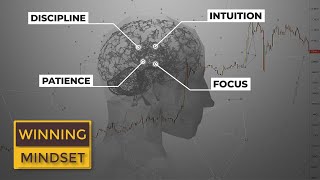
The video explains that every trader will inevitably face losing trades, and how a trader reacts to those losses determines future success. It outlines seven concrete rules that successful traders follow after a big loss to strengthen their emotional resilience and discipline. The first rule stresses limiting daily losses to no more than the average profit of a winning day, effectively capping downside. The second rule emphasizes strict risk management: risking only 1% of capital per trade and setting a precise stop‑loss before entering. The third rule warns against revenge trading, describing how emotional re‑entry can turn a loss into a larger loss. The fourth rule urges traders to accept full responsibility for their losses, analyze what went wrong, and adjust strategies accordingly. The fifth rule recommends taking a break from the markets to reset mindset and review the trade objectively. The sixth rule advises trading with smaller position sizes—often starting in a demo account—to rebuild confidence before scaling back up. The final rule encourages letting go of the outcome and focusing on the trading process as a continuous learning journey, turning mistakes into opportunities for improvement. Throughout, the speaker stresses that disciplined risk control and a growth‑oriented mindset are essential for long‑term profitability.
Chapters
It's impossible to trade or invest and not find yourself into a losing position. That's just the way things are. And a large trading loss can be devastating, not only financially, but emotionally. As defeating as losses feel, how you react to a big loss is more important than the loss itself. Inexperienced traders suffering a large loss can become hijacked by their emotions. Some may try to trade through the pain, often creating more turmoil for themselves. Some may withdraw from the market to avoid thinking about it. Others may try to trade in revenge, determined to recover the losses. None of these reactions are constructive. In fact, they can be destructive if you don't learn how to handle losing trades.
Whether it was an obvious minus in your strategy, a lack of discipline, or any other reason, nearly every trader will face a big loss or several in their career. After a losing streak or a big loss, you may begin to question yourself, which leads to the typical problems many new traders have, like getting out of trades too quickly, holding on to them too long, skipping trades with a fear of losing, or getting into more trades than you should in an attempt to get some winning trades.
One major difference between successful traders and failed ones is how they handle trading losses. Successful traders treat losses as an opportunity to learn and improve their trading. Coming back from a large loss is challenging, but success is never accomplished by ignoring trading losses. Losses, especially substantial ones, can be opportunities to become a more skillful trader. Here are seven rules successful traders take after a loss to become emotionally stronger and more disciplined.
First, never let a bad day cost you more than you make on an average win day. Knowing how to lose properly is a must in a long and prosperous trading career. If you average, let's say, $200 on your winning days, don't lose much more than that on a bad day. Control the downside. Knowing how to minimize risk is the most important aspect in trading. There are really only four possible outcomes to trade or invest A big win, a small win, a small loss, or a big loss. As long as we eliminate the big loss from our trading days, we can live comfortably with the other three.
Risk management is the primary cause for a successful or unsuccessful trading experience. A sound risk management can yield a steady increase of profits, while a poor risk management can wipe out an account in a very short period. If you follow the 1% risk per trade rule, a precise stop loss level presets that 1% value, and you'd know beforehand the amount you risk losing should your trade turns negatively. And this goes hand in hand with the second rule.
Know your stop loss level before you ever get into the trade. The stop loss is a simple tool, yet so many traders and investors fail to use it. Whether to prevent excessive losses or to lock in profits. Nearly all trading styles can benefit from this trade. Think of a stop loss as an insurance policy. You hope you never have to use it, but it's good to know you have the protection should you need it. So always use a stop loss and know its location before you ever get into the trade.
Also, never widen your stop losses when the market moves in the negative territory. Note that regardless of what happens, there is another trade around the corner. If your trading strategy relies on the success of one single trade, it's a very bad trading strategy. Remember that trading success is the accumulation of many successfully managed, both winning trades and losing trades.
3. Don't involve in revenge trading. A big loss causes all sorts of inner conflict, a need for revenge, fear, anger, frustration, self hate, market hate, and the list goes on. After a big loss, there's no way to trade with a clear head. There are more than 250 trading days in a year, so there is no rush to get back in there. If you do so, you basically revenge trading. Rather than looking to your strategy and make sensible decisions around the incident, you jump straight back in. This is dangerous for your account for two main reasons. First, it forces you to throw your trading discipline out the window. It shifts your focus from your trading process to trying to make enough money to recover your losses. Trading based on emotions and luck is not trading, it's gambling. It's also a lose lose situation. If you lose a revenge trade, you increase your losses even more with a trade that you had barely planned for. If you win, then you believe that trading on guts and emotion works and you're going to do it again. So don't do it.
4. Accept responsibility. If you suffered a large loss, be sure to own it. Don't brush it aside, hide from it, or blame the smart money from your loss. There is always an excuse for a losing trade, but as traders and investors, we must accept the risks. Until we accept that we are responsible for whatever happens with our orders, the same thing will happen again. Accept responsibility and figure out what could have been done differently. This will help reduce the chance of occurring it again. It is also healthier than blaming other factors from your mistakes. Blaming others is admitting that you don't control your own trading and if that is the case, you shouldn't be trading at all. If you control your trading and investing, then you can fix it. And it's always something that can be done. It May involve changing markets, changing your strategy, or your trading style. If you find that scalping the one minute charts bring you a lot of losses, then try swing trading. The solution is there. You just need to find it.
5. Stop trading for a while. Sometimes it's better to take a break to figure out what went wrong. Do those things so that you can get back to a better mindset in which you can refocus. After that, assess what happened by reviewing events carefully. Think about where you fell short. For example, did you take too much risk? Was the trade well planned? Were you mentally sharp? Or did you hold a losing trade hoping to avoid a loss? Taking a break from trading is one of the hardest things to do, but it's a smart move. Wait for the conditions to improve, preserve your cash, save your sanity and focus on other things. When the conditions improve, so will your results. Remember, that market will not disappear tomorrow. Nothing terrible will happen. On the contrary, during this time away from charts, you will likely come up with new, better ideas on how to improve your trading.
6. Trade lower position sizes After a big loss, confidence can be low. Not having a clear mind can cause you to skip trades, panic out of trades, or be overly aggressive. None of these things are good. Take a step back and trade in a demo account for a few days because it's not real money. There is also less pressure in a demo account so it's easier to focus on trading and not worry about the financial aspect of it. A few winning days in the demo account will raise your confidence levels and put you in a better mental space to take on the markets again with real money. So after a losing streak, start small. Don't jump right back to the same position size you were trading before the loss. In the first days back trade small position sizes. A winning day with a small position size will help build confidence and you can slightly increase your position size as the account balance goes up. If you have a losing day, losing on small position sizes is easier to handle than another losing day on full position sizes.
Even if you win a few days in a row, increase your position size incrementally. So it takes about a while to get back to your full position size. I know that after you have traded bigger position sizes, it's annoying to start back with a small position size, but it's for the best. Bouncing back from a losing streak is about getting back to basics and implementing a strategy well, not actually about making money. Money comes from implementing a strategy well. Demo trading and trading small position sizes gets you refocused on what's important so you can start building your confidence again.
Number seven and probably the most important one. Let go of the outcome and embrace the process. Realize that trading is a continuous process of learning. Most of the times in trading like in real life, you'll learn more from your mistakes than from your victories. Losing money should motivate you to look closer at your actions. Read more, better educate yourself, become more disciplined in your execution and so on. Next time you will have a better idea of what happened and where you went wrong and can open up room for improvement and start stacking the odds in your favor. As cliche as it sounds, putting your focus out of making money and into enjoying the process will keep you on the right track and you are more likely to end up in profit if you learned something new and found value. Leave us a Like to show your support. Subscribe to our channel and hit the bell icon to stay in touch with new uploads until next time.