A Winning Traders Mindset
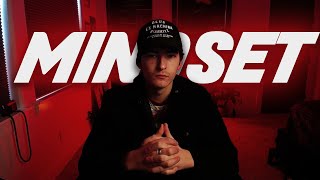
A monologue-style video transcript emphasizing the centrality of risk management, discipline, and habit-building for long-term trading success. The speaker urges traders to prioritize process over short-term profits, to recognize market regimes (e.g., all-time highs, choppy conditions), lower position size in low-probability environments, journal losses as learning opportunities, and develop patience to ‘take no trades’ when setups lack conviction.
Chapters
Risk management is one of the most important things in trading. Risk management is what is going to keep you alive in the market. When we're not having good opportunity, a lot of people come into the market every single day expecting to see the same things, and that's not the case. The market goes through seasons, we go through waves. There's times when the market will provide good opportunity, there's times when the market will not provide good opportunity. And it's being able to recognize those things in being able to make the decision to position yourself differently from those ideas. Going into this week, I have been completely de risked and I've told my community as well. And the reason is, is because the market is at all time highs, when the market is at all time highs, we need a lot of structure to validate and give us a confident and convicted bias to be able to take a high quality setup. Now, when you go into the market expecting the exact same thing every single day, expecting to see good action every single day, you won't see it. Risk management is in place to protect you from hurting yourself. In times like this. Being able to recognize market conditions, being able to recognize when to be offensive, when to be defensive, the market is always providing opportunity, but the opportunity is not always to make money. The way that I view the market and the way that I completely like to rewire people's brains, especially in our community and our members, is there's times in the market when you need to recognize when to stay away and when to be offensive. And in a day like this and in the market, you're constantly getting opportunity. What I mean by this is not opportunity as in trades, it's opportunity to work on aspects of your trading that you don't normally or would not normally focus on. And most of the time you need to be focusing on these things. But in a market, when we are slow, when we are chopping, this gives you the opportunity to focus on capital preservation, to focus on lowering your size, understanding and focusing on your risk management, being able to keep the losses small. I see so many traders that come into the day and they'll take a loss and it ends up spiraling into five other losses and then their account ends up getting blown by the end of the day. And the reason is, is because they're focused on not building good habits. They're focused on passing a funded, they're focused on getting a payout, growing their account. When you go into the market and you're constantly reminding yourself, oh, I have $500 left until I pass My funded account. Oh my God, I got. You're constantly looking for trading opportunities and those opportunities aren't necessarily good opportunities. When you start to switch your mindset and start thinking of the market as again, you are being paid for your decision making. Trading is not a time based game. You are not being paid to sit in front of the market and watch. You are being paid for your decisions. And until you start to realize that and until you start to figure out ways in which you need to be trading, when is the high quality opportunity, when is the low quality opportunity and how to position myself in those times, it's going to be very hard for you to see consistent growth. In this video I want to talk about just the importance of risk management in a longevity mindset and being able to focus on what the market is teaching you and ways to take advantage of growing different aspects of your game. One of the biggest analogies and the things I like to tell to my community is in golf, you have different aspects of your game. You have your short game, you have your putting, you have your driving long irons, short irons, right? You have this whole mix. And a good great golfer has a good rounded game. They're good at their long game, they're good at their short game. In trading it is the same thing. You need to be able to work on every aspect of your game. That means taking good trades, being able to have good leverage trades that you are confident in and have conviction in. And there's times when you need to also be working on your defense, which is capital preservation, practicing patience, practicing discipline only taking good quality setups, recognizing conditions. In this type of market, we are at all time highs. I'm constantly focused on recognizing when the market is going to provide good opportunity. And today was one of those days where going into this week I was focused on that capital preservation and defense. Because I know we are not in probable high quality market conditions. So there's no reason for me to be putting on my normal size, trading heavy, trying to make money, trying to pass a funded account, because that's not what the market and the opportunity that is currently giving me, right? So this gives me an opportunity to say, okay, what is the market doing right now? What should I be focused on? We're currently at all time highs. I want to trade lower size until we get the structure to really validate what the bigger time frame draw is. And I'm sure you guys have been noticing as well, when we're at all time highs, the market is going to be more unpredictable. It's going to be choppier action and less efficient action. So I'm using this opportunity to practice on my defensive game. Because if you are focused on longevity, right? If you plan to be in this game for a year or two years and you should be, I don't think you should be trading if you're not planned to be in a year or two years. At least. At least. But this gives me an opportunity to practice on that side of my game. Being able to come into the market and say, hey, I'm expecting lower conditions today. I'm expecting probably choppier conditions. We don't have any news today as well. And I focus on lowering my size, being patient, being disciplined, recognizing things in building conviction. After the day I go journal it and it's another day in the bank. The difference between the people that go into the market trying to make money and their goal is to make money. The habits you build with psychologically telling yourself that's your goal is the process of the habits that you are building end up going out of the window when that's your goal. When you're focused on passing a fund, it. I'm constantly taking bad setups because I'm going to take whatever opportunity is given to me because I want to pay out now. I want that satisfaction, you want that dopamine. And that is a very dangerous point to be in as a trader. Many traders are questioning themselves as why have I been losing? Why haven't I been, you know, having consistently recently? And it's all comes down to where your goal is psychologically in my community and what I constantly preach as a trader is you need to be focused always every single day that you come into the market, you should go into the market expecting not to take a trade that day. You should go into every single trade expecting to lose. And not only is this going to build your stress and anxiety, you're not going to be stressful because you've already accepted the loss. When you go into a trade without a plan and you are over leveraged and you don't want to lose, that is when emotion comes into play. That is when you start making irrational decisions and that's a dangerous place to be in. When you come into a day like this and you trade lower size and you are expecting those types of conditions, you need to be able to be focused on what the market is giving you the opportunity to work on. When we're in a point at all time highs, I am not focused on making money. I am focusing on continually building good Habits, which is having good risk management, only taking quality setups, practicing conviction. If I see an idea that I like and I see, hey, this looks like a good long, this looks like a good short, but we're in low probable conditions, your mind cannot stray to say, oh, this looks like a great setup, I'm going to take this with full size anyway because even if it looks like a good setup, it might not work because again, it's lower probable conditions. There is no higher time frame or higher time frame things that are aligning with that bias. So it immediately drops the gray down of the trade. Now the people also that come into a day, I see so many new traders that come in that are focused on passing their funded and they take two losses and end up blowing their account because they're focused on passing it quick. They're not focused on building the habits that are actually going to make them successful long term. So the point of this video is for me to sit down and talk with you guys and just, it's not going to be short, maybe a couple more minutes, but I want to talk about the importance of those things. I can come into a day, take a thousand dollars, two thousand, three thousand, four thousand dollars loss and be completely fine. Why is that? Because I am focused on longevity. I have conviction in my bias, I have conviction in my model. Every single day I come into the market, I'm looking for my model that I know works for me a high percentage of the time. When it doesn't work for me, I journal it and I say, okay, this was a setup that I think looks great. Let me go back and figure out what the problem was here. Was I emotional? Did I make an irrational decision? Was I over leveraged? Was the model that I was trading maybe not something that I could see at the time, Was I, was I overly biased? You know, what was the problem? And unless you are actually taking the time to look for these things and taking the time to actually improve.
Journal, go back, ask questions, figure out, was this something I should have taken? Many people don't do that. Many people come into the day, take a bunch of random trades, don't journal it, and then the next day they don't even realize what trade they took. They gain no experience, they gain nothing valuable out of losses. Losses are a learning opportunity. It is an opportunity for you to look back and say, was this a setup problem? Was this an a sizing problem? Was this a risk problem? And that's how you start to grow as a trader. And the market is constantly giving you opportunity to grow from wins and losses, from bad conditions, good conditions. But unless you're focused, if you're not focused on actually building those good habits, if you're not focused on actually improving as a good trader, it goes over your head and you're going to be stuck in a cycle. You're going to be stuck in a cycle. Another thing as well that I want to cover is the importance of being able to step away so many people. And a problem that I used to have is I would come into a day, take a loss early on, take another loss, try to make that back, and it would be so bad that I could not end the day red and I would either continue trading until I was back green, or I would continue trading until my account was blown up. And I'm sure many of you guys have experienced that same way. But I got into a point with my trading where you will never be successful if you don't have that level of discipline and that level of patience and being able to recognize when and when not to trade. One of the biggest things that I see hold people back from being successful that have been in the space for a year, two years, three years, and they're still not profitable is because they don't know when to recognize conditions, when to trade, when not to trade. In this market, there are always times, an opportunity to grow that might not be in what you want to see, that might not be in your account growth, but that doesn't mean you aren't growing. As a trader, the market is always giving you opportunity to grow, whether that be from losses. But unless you are focusing, if you're not focused on growing and you're not focused on building good habits, then you're wasting time. It's like you're going to the gym for a year straight, saying, oh, I went to the gym every single day this week, but I'm not seeing any progress. If you go to the gym every single day and you do 10 push ups and leave, you're not doing, you're not going to make any progress. You might be putting in the work you think you are. You think you're putting in the work, but you're really not because you're not focused on the things that are actually going to get to where you want to be. It is the difference between being process oriented versus output oriented. Many people trade and fail because they are output oriented. You get attracted to shiny things. You want to make money early on, you're not going to make money early on. I'm telling I'M sorry to tell you, you're not. You're going to lose money early on. And until you start realizing that and you accept that and say, hey, that's a part of the game. Every single trader loses. It is normal. It is a part of the. If you can't stand losing and your ego is that big, find another job, go to McDonald's, go to college, do something else. Because this isn't, this isn't the game for you. You have to be able to recognize those things, push your ego to the side. Use losing as an opportunity to learn. Use losing as an opportunity to grow and use every single day as an opportunity.
It might not be what you want. It might not be, oh, my God, my, my account growth, blah, blah, blah, I need to get this to get funded. Sometimes you're not going to get that opportunity. And you have to have the patience and the discipline to sit in front of the market, recognize and say, hey, there was no high quality setups today and that's fine. And take no trades. When you get to a point with your trading, when you can take no trades on a day is how you know you are progressing as a trader because you are building that level of discipline. You know what you're looking for. You have conviction in what you're trading, and you won't take anything else until you get that set up. And that is what you need to be like when you're a trader that's constantly looking for opportunity, even if it's something that you've never traded or you think, oh, hey, this looks good, this looks short, I think we can go here, I think we can go here. And you're just taking random setups off of intuition. You're not going to be successful. When I trade, I might think we're going to buy side, I may think we're going to sell side. If there's not a model, if there's not a clear understanding of an entry point or a model that I know I've done in the past, hundreds of times that I have the conviction for, why should I take that trade? Why?
Another analogy I like to use is imagine you're a banker. You're a banker, $100 million. Someone comes in the door and says, hey, I want to borrow $50 million to create a company. Now, this man is a businessman. You've worked with him before. He's made money for you in the past. You know, I'm going to give him some money because I have conviction in what he's going to do. A Homeless man walks into my my establishment and says, hey, I want $50 million to grow a company. Never worked with him before. He's homeless. He's never made me money before, but he has the potential to make me money. Does that still sound like something that I should be doing? You guys are feeding money to that person. When you are trading, you are overly obsessed with the idea that it could make you money, it could make you money, but it's not the right decision. It's not the the right decision to build good habits and end up building the where you want to be as a trader.
So reflect on this video. Ask yourself the two different types of people that I talked about in this video and who you are as a trader and who do you want to become. Use this as an opportunity to learn. Use the market constantly as an opportunity to learn. Every single day in this, in this market is an opportunity. It doesn't matter if you lose, doesn't matter if you win. If you are focused constantly on building good habits, that is how you should measure success. If I come into a day like today, I did everything I should have done. I lowered my size. I traded setups that I would normally would, that I had conviction in. And I'm down on the day that is a very successful day because I'm focused on longevity. One day does not mean anything in my journey. One week does not mean anything in my journey because I know the more that I focus on those habits and the time when the market gives me the opportunity, I'm ready to take advantage of it. And I know that I will always end up back on top because I'm not focused on making money. I'm now focused on getting funded. I'm focusing on the habits that I need to build to become the best trader I can possibly be.
Hope you guys enjoyed this video. If you did, please subscribe. Leave a Like wanted to sit down, have a little bit of a talk with you guys because I've seen a lot of people struggle with these types of concepts and I want to share where my mind's at and who I am as a trader and in how I continue to grow as a trader. Because even if I'm a mentor, even if I'm a teacher, I am a trader first and I am never, ever going to stop improving and learning and constantly growing as a trader. And you should not either. So hopefully you enjoyed enjoy the rest of your day. I'll see you guys in the next one. Peace.









