Adapt or Fail Building Your Mind for Success in Trading
Rande Howell explains how traders can retrain primitive survival instincts like fear and the need for control into a probability-based mindset. He outlines a six-step training process using emotional regulation and mindfulness to identify self-limiting beliefs and build discipline and courage.
Chapters
The broadcast is now starting. All attendees are in listen only mode.
Welcome, everyone. First thing, can everybody hear me? And is my volume about the right level? We have new mics, so put it into your question box. Yes, I can hear you. Okay. And I'm. And you can hear me loud enough. And we're in good shape. Good. Well, in that case, welcome everyone. What we want to do here is we want to be able to say, you know something, we're going to take evolutionary theory about adaptation and what we want to do is say, how do we apply it? How do we apply the wisdom of that theory to our trading? The first thing is understand.
Adaptation. It's not the smartest animal, it's not the strongest animal. It's the most adaptive creature that wins the game. Evolution. What you're looking to say is, can you adapt to a changing world? And the truth is that if you don't, in nature.
Evolution just kind of kicks you out, that the gene pool just goes on without you. However, in trading, it's really interesting is that we know that we're going to have to learn, adapt to be able to be able to work in this world that we're in. Yet at the same time, even though we get plenty of failure and understand friends, the brain does not learn from success. It learns from failure. The failure opens up a whole way of saying, oh, how do I adapt for the circumstances that I'm facing? We human beings have adapted weird ways of avoiding basic lessons of failure that again, we don't learn from success. It locks in the behavior. What we do is when we fail, it opens up the opportunity for us to adapt to changing conditions. So here we are. Now, adapt or fail, how do you build your mind for success in trading? That's where we begin. And it really comes down to something. You know.
I talk with many, many, many traders at various places in their evolution, and generally what happens is people get brought into trading when they see the potential. It's just, wow, all you have to do is pretty simple, you know, all you have to do is just trade your plan and plan your trade and just leave your emotions at the door and everything's going to be fine. And yet.
That'S not exactly what happens, is it?
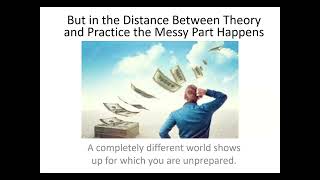
It's really easy to come to a moment of saying, you know something, well, what really happens? The moment that you move from paper to risking real capital, everything changes. Suddenly there is no reset button. You know, if you really, if you were being a video game and you lost and you got killed, you just hit the restart and everything goes on in trading that's like paper, but yet the moment that the money becomes real, something happens between theory and practice, and the messy part of trading shows up. Suddenly, what we thought was an easy game of just simply saying, you know something, All I have to do is plan my trade. I trade my plan, I stick with this stuff and everything's fine. And then all of a sudden, what you discover is somebody else, somebody deep inside you is a torpedo, has a. Is a submarine firing torpedoes at you. And you may cognitively think, oh, yeah, this is what I need to do. This is really easy. I can do this. But on the emotional level, on a primitive, instinctual emotional level.
Guess what? We end up being paralyzed by fear. We chase traits impulsively, we get angry, seek revenge, okay? And yet at the same time, when we're in a normal state of mind, we know all that, that's common book knowledge. Yet the torpedoes keep coming. And no matter what we do, it's just, you know, we're well intended. But when faced with the stress, facing the challenges of potential loss, our brain falls apart. When we engage the uncertainty of trading. Suddenly that brain, that was so, oh, yeah, I've got it together. Suddenly what happens to it? It feels vulnerable, it gets confused and it hates that. It doesn't want that. And suddenly it starts doing all sorts of things that no sane person would possibly ever do. And my question is, what's the missing piece of the puzzle here? If you could just solve this one problem, it'd be easy. Trading would be boring. At the same time, it's something missing here. You know, you chase solutions. You. You go from one trading pro to another. You get all this stuff, you buy all this lessons. You did this. And it's endless. As I have seen people's trading rooms just full of stuff. They've had that. It was the new best thing for a while. And then what happens is it lost its luster of whatever. It didn't solve the problem, and you're back into the chase. And what I really want to do is say what's going on here? And I'm going to quote the very famous Jack Sparrow here, okay, the problem is not the problem. The problem is, is your attitude about the problem. What do we mean by this? You know, the truth is you don't understand. Or if you do, you're waking up. Okay? Most traders do not understand what they have walked into. They really honestly think that their thinking brain can stay stable and stuff like that in the midst of the uncertainty that happens in Trading, what you're looking at is that's really not a problem in trading. Really good traders, profitable traders will tell you this is just. This is what you get used to. This is the new rules. Don't make it a problem. And.
What we find ourselves in is we find ourselves pitting our primitive instinctual nature for survival against this cognitive part that doesn't even know the emotional brain exists. You take a look at this slide, and what you're looking at is a good illustration.
You're looking at the space inside the guy's head. That's the mind. Then you're looking at a geeky guy. He's a hold of it. He's in control. He's steering. He's doing all like that. And everything looks like you're really, truly in control. Of course, he's not being tested. Then in the back seat, there is this caveman character. That caveman character represents the emotional brain, represents the mammalian brain, represents a survival instinct brain that doesn't understand money at all. If you gave caveman, that guy in the back, a million dollars, what would he do with it? He'd be puzzled by it. He might use it to start fires, but he doesn't see money as symbolically linked to. To power, to being safe, to controlling outcome, to winning and not losing, being safe. And at the same time, that caveman brain is built, the moment that it feels unsafe, particularly when it's power, it's money. Remember, power and money get linked in trading. When he loses money, he loses power. If he loses power, he loses his life. It's a biological threat. When you see a threat of loss to your caveman brain, that's a threat to his life, that's not. Oh, that's a monetary loss. We can get over that. So we've got a twofold problem, okay? The first is the biology of your brain and survival instincts. The second is, what are the psychological beliefs that you bring to the game? Not the ones you like to believe. You talk about, you know, I'm a discipline trader. I'm a discipline trader. No, the ones that are demonstrated.
Okay, in your P and L statement. The ones that are saying, you know something. What's really happening here? My beliefs are being projected onto the markets. And those beliefs specifically are about your ability to manage yourself in the midst of uncertainty, in the midst of challenging moments. And what you're discovering, it's what you say you believe and what you perform your beliefs from are separate from one another. And this gap has to get closed, friends, because ultimately, you're going to develop beliefs about your adequacy, about your sense of mattering, about your worth, about your lovableness that are going to show up in your trading performances. You can get away with it for a long time, but this is where it's at. Oh, and first and first and foremost, the one thing you need to really, really get is that your brain, that survival brain, that emotional brain back there, that caveman brain back there, hates, hates, hates, fears, fears, fears, uncertainty. And you think, what on earth have I done? I've got a part of me that just absolutely is petrified and just goes nuts about uncertainty because of the confusion, because the confusion leading to vulnerability, powerlessness. And all of a sudden, I'm there. I'm back to a much more primitive part of myself. And what you're saying is, oh, yeah, that's the way it works. You're going to have to learn how to learn to calm that down. You're going to have to learn to build a very different mind that engages uncertainty than the one you brought. Otherwise. You know, we human beings as a species are wired to have control. Okay? We're wired to be right. We hate to lose. And we will lie to ourselves to pretend we're in control. There's actually a group, it's almost like a sport within trading where people can trade paper and make buckets of money, paper money, but they cannot trade real money. But yet they get on the. They get on. They do these seminars and stuff like that, and they show how much money they're making. But what happens is that they're lying to themselves. They're not making money. They're making potential money. But it's not the money that shows up in your trading account. This is what we're talking about. All of us have this living within us. The question is, what are you going to do about it? So right up front, you bring a brain to trading that cannot acha achieve success once you really cut it down. And personally, what I have found is.
People are going to chase the holy grail, both in method and in psychology, for a long time, two to three years, until they finally come to the moment either they think that trading is hocus pocus and they got fill a bill of goods and they make up an excuse about, you know, they were lying. And I got. But also, other people go, you know, something about three to five years in, you start realizing that you know how to trade from theory, but you don't know how to trade in combat. And until you can do that, like you're taking a look at this guy looking at two roads on the left. Your brain is a negative assessment machine, okay? And it will anticipate a negative future. Don't get in that trade. You could lose. You don't, you know, take the money right now before, before it can be taken from you.
All that stuff at the same time, you know that that's what you're bringing with you from your genome, from your evolutionary psychology. And it's not going to go away. It's been very successful. And you're going to have to develop a strategy about convincing the limbic system, the emotional brain, to change core fundamental beliefs so that when it approaches something new, something uncertain, it can do it calmly, it can be disciplined, and it can have an impartial mind that engages all this stuff. That is what's going to have to happen. But you're not going to do that just simply because you want to, you know. So what we're saying is that you know something, your brain was designed for short term survival in a very dangerous world. And by the way, it did a really great job. You can't say the brains didn't do wonderful work. It allowed you to, it allowed you to survive. And when you were wrong, when you lost back then, you became somebody else's meal. It's interesting is we're watching a show on chimpanzees where these packs of chimpanzees are interacting with other groups and it's warfare. They're all after the fruit trees. And what you're discovering is that it is dangerous. They actually find members of their, their tribe dead, they've been murdered by another rival gang. And you're saying, oh man, a lot can go wrong. So your brain, in trading, you need long term probability mindset, okay? So you can take advantage of patterns and the randomness in the markets. That's not the way your brain's built. But you're going to, you're going to always trigger your version of fight flight in response to danger every time you put money, power at risk and understand your caveman brain. That guy that was sitting in the back seat of that, the geeky guy's car does not know the difference between losing money, paper and forfeiting your life. So your brain, survival instincts is seeking short term survival. That's exactly what it's supposed to. While in trading, your brain has to be retrained to look at long term thriving. Completely different animals, completely different animals. And guess what, if you take a look at this iceberg, you're actually Seeing the problem is the tip of that iceberg is your conscious mind where you have choice.
But below that, 9/10 of the iceberg is unconscious mind. Now, in today's world, since Paul Ekman kind of defined way emotions show up in the face and stuff like that, advertising agencies and marketers use tools that allow them to really look not at what the person says about something, but they're videotaping the eyes and they're looking for micro expressions that reveal what their emotional brain feels like. For instance, if you take a look at pickup truck marketing, it just so happens I have a very old pickup truck that I use for my gardening. And when I take it to Lowe's, I go into this parking lot full of 50, 60, 70, $80,000 trucks. What's getting out of those trucks? Middle aged guys, a little pudgy, kind of like me. And yet at the same time, you turn that engine on, it feels tough, it feels mean. And what they've learned is even the way the engine sounds is able to be a substitute for testosterone. And they will mortgage their house to own one of these things to make them feel good. That is beneath consciousness mind programming. What you're doing is just going, oh my God, that's what's down there. Yeah, prestige. That sense of power, that sense of all that stuff that men really want, yet at the same time it's being manipulated. And what happens in trading.
The moment you try to take those perceived beliefs of like, I'm a tough guy when I'm in this pickup truck and then take them to trading, it's all busted. You actually get to find out what the real beliefs are that you're projecting onto the markets. This is a. Understand your thinking brain is only creating a narrative, a story, okay, that supports whatever the emotional brain has already decided. That's the whole thing. And the deal is very simple.
The limbic system, the emotional brain's core implicit beliefs about your capacity to manage uncertainty have to change. Or as my shark friend is saying here, your beliefs are killing you. The question is, will you learn to turn toward those beliefs? That's that kind of that dark part of your nature, and learn to master them? That's the really question. And again, these are not the ones that, that you talk about. You're having, okay, now these are the ones actually being revealed by your P and L statement as you trade. That's the ones, that's the ones that we're really, really, truly interested in. Now what does this actually look like in real life? Now I want to show you a graph. And I use this quite a bit. And I want you to listen, okay? And it can really help you.
You know, ultimately.
All your senses turn some perception into electricity, and it goes down these neuron pathways into the brain, it goes up the stem, and it comes to something called a sensory thalamus. At that sensory thalamus, all these external inputs are coming in. Now, understand, the brain is sitting in a cranium where it is dark. It has never experienced the outside world at all. It's taking this data coming in and creating its best guess about what's out there. So that information comes in, and if you take a look at it as a traffic stop with a cop in the middle directing traffic, well, what happens that cop, when everything's just normal? Yeah, it's going to let that, that input come in. It's going to get to go to the sensory cortex, thinking, the thinking brain, and then good decisions are going to be able to make. That takes about a quarter of a second to happen. Okay. If everything's copacetic, everything's cool. However, let's just say that that input coming into the thalamus at the traffic cop level.
Is a fire engine going to an emergency. What that cop's gonna do is stop all traffic and he's gonna let the fire engine pass because it's really important. It's, it's, it's, it. Right now, your life is being threatened. What happens is that it takes the low road straight to the amygdala, which takes.003 seconds, gets to the amygdala, fires immediately, and you're in fight with flight response. And the thinking is hijacked, and there is no communication going from the thalamus, the emotional brain, into the neocortex. Boom.
So this is the problem that happens the moment that you look at something and it looks like you're taking a loss you don't like losing. And it's. Oh, it hits, it's coming close to that stop. I want to move it, I'm going to move it. And all of a sudden, you know, you're. All these instinctual survival strategies kick in. Thinking mind's gone, and that. And that response to that loss is in the bloodstream as chemistry in nanoseconds. Even if it got, even if the information got to the neocortex, the thinking brain, it would have taken a quarter of a second for it to light up and actually start trying to figure out the problem. Do you see how hijacking happened? So ultimately, what we're doing, you're always projecting your beliefs about your capacity to manage uncertainty, just the challenges of living all the time onto the markets. And this is why if you're going to evolve as a trader and not become roadkill, you're going to have to come to the moment saying I need to really want to find out the self limiting beliefs that are holding me back. And I need, I need to find ways of changing those beliefs so that I can have a much better engagement with uncertainty.
And by the way, when you get hijacked.
You start falling into stories like our good friend here, our narratives about those beliefs being you. You know, I'm just not. It's, it's always going to. The markets are out to get me. Oh, I'm going to show the market something. I'm gonna make them pay. These are beliefs about your invincibility, your powerlessness. And they're now being on display. And literally one may be asking for to be reasonable. The other might be saying run. The other may be saying fight. But the key is they're not you. These are different elements within the brain, within the mind. They become what is known as special interests. Different brain regions kind of get together and they form their own club and they become highly competitive and they want their, they want their brand to win, to take over the mind. And that's kind of what's been happening. So let's look at the story of a fear based trader. When you're taking a look at this guy right here, he doesn't want to hear all this stuff right here. But this is what I call the inner critic, living within you, you. And it's shouting, telling you about judging you as an inadequate trader. You don't really matter. You're never going to make it all that stuff. And you're sitting there going, I want to though. I want to. I want to. And what happens, you want so much want to prove that you can win, that you can just force your will. That's caveman brain. And you're looking at it and going, whoa, it's. And your psychology gets organized by these emotional forces, okay? And it creates, it really truly creates a story about danger and your need to avoid or attack that threat. That's what it's all about. And this whole idea of the Alpha, you know, the God who wins. Here's our James Bond guy. Now here's the deal. In caveman times, being an Alpha meant that you were willing to risk your life, you know, taking down a woolly mammoth with the other group of guys however, in doing that and having a kill there that fed, that fed a clan for a month or two, okay, all sorts of stuff. So they were highly rewarded for the, by, by being able to control outcome, being lucky in many ways. Okay. It's kind of like in World War II. My dad was a pilot and the deal about flying shorties over Germany at that time was that there was a 20% chance you weren't coming back. So about the fourth time you flew a shorty, you know, is catching up with you going, you know something, I can hold it at bay for a while, but, you know, I've got to do something about the reality that sooner or later I'm going to get shot down. The alpha would start, would create a story about being invincible, about doing this stuff, and then he's going to make things happen, he's going to make those bombs hurt, he's going to do that and he's going to control the outcome.
That's simply what alphas do.
And in many endeavors in life, it really works. Well, you take that same alpha who has been very successful in other pursuits, you bring him to trading and guess what? He gets bored after a few minutes because he wants to make things happen. He starts looking around and before he knows it, he finds something totally outside of his trading plan. He's jumped in it and he's begun over trading. And then in the over trading turns into revenge trading and he blows up accounts. Okay, that's the alpha. So you're looking at it going, oh, you mean the alpha is no good in trading? Not the alpha that wants to control outcome. You know, I like to talk about the African lion and the North American cougar, the African lion, both of them are apex predators, top of the top of the land. Yet at the same time, the lion has developed to take heavy losses and to reproduce and to keep the things going. The cougar, on the other hand, does not chase. What he does is he waits in ambush from a tree, waits to the. The deer gets in the trap. The setup and happens like that.
And the cougar comes down from 15, 20ft up. The deer never saw what was happening. If the deer doesn't get killed right then and there and gets up and runs, the cougar doesn't chase, it climbs back up the tree, accepts a small loss, knowsing that there's going to be something else. Now that's an alpha, but it's a very different kind of alpha. And we're trained to be this alpha right here that you're looking at and what we have to do if we're going to remain an Alpha, we're going to have to, we're going to have to move ourselves from being a gunslinger to being a sniper. So.
The key is how do you go about, how do you go about doing this? How do you go about taking the brain that wasn't built for success in trading and building it, remaking it into a mind that, that can do it? The deal is you have to take a certainty based, survival based mind, you're going to have to turn it into, at least for short periods of time, a probability, probability based mind that's built to work over the long term. That's what the edge is. And that's why, you know, you're taught to keep small, small losses and they're going to happen a lot. And then when you actually do hit the winning thing is you let that thing run. Because that's the whole deal. You keep your losses all and you let their winners run. Yeah, everybody knows that. But how do you build a mind that does that? Well, we have developed a system and this system is what we teach in our group course. Believe it or not, the very first thing, it's six step process and it is a process. You know, when people first start with me, they want to jump ahead, but they're going to do emotional regulation, they're going to learn about emotional intelligence and they're going to learn to produce mindfulness. Before, before we get into the kind of the sexy, exotic parts of the work. The very first thing is you have to come to an understanding about what emotional intelligence really is. You have to learn how to regulate the intensity of an emotion before it wipes you out. You have to become mindful, stepping out of thought, stepping out of identifying with thought. You, you and your thinking, you and your beliefs are not one and the same. Then you're going to have to locate kind of that dark part of yourself, that self limiting beliefs that drive all this. And you're going to have to say, oh, these are the very primitive survival beliefs that I developed in another time, in another place that helped me survive then, but now are holding me back. I need to change, I need to find them and I need to, I need to master, I need to master them differently. The fifth one is you have to start in going in and start developing the empowered aspect of the self. In the same way there's self limiting beliefs and self limiting ways of being in the world. Self limiting patterns, emotional patterns. There are also highly powerful elements living within you. That give you truly an edge in the way you engage the challenges of living. And then you start building that mind and by test, you test it by the challenges of uncertainty. That's what you end up needing to do. That's a six step process that we do. And it starts with emotional intelligence. And basically what you now you're looking at is another iceberg. And you're looking at rationality. You know that stuff that we're supposed to be doing all the time in trading and then going realize it's just a small little part of the human experience. But emotions, oh my God, they're huge. And what you find out is human beings are not rational beings. It looks like it, feels like it. What we are are rationalizing beings. We rationalize whatever our emotional brain has decided. Once you grasp the emotional intelligence of this and that emotions are biological action potentials that coordinate activity between changes in the environment, markets and the organism. The trader, you begin to go, oh my God. You become the embodiment of emotion. It's not like you don't have emotions. No, you are emotion. And then you're going, how do I get better emotional control? And how do you do that? You start saying it's time to learn how to to emotional regulation. And where it starts is with your breathing. Your breathing is directly tied and is an intimate part of an emotion.
Tomorrow when you're trading, if you take a video camera or even a mirror and watch yourself trade, you're going to find out something. You're holding your breath, you're panting. Rarely are you breathing in oxygenating the entire lobe of the lung because you're, you're engaging uncertainty. Uncertainty means vulnerability. Vulnerability means powerlessness and confusion. And boy that, that kicks you into fight flight. Yet at the same time, if you were to start diaphragmatically breathing, you would interrupt the emotions that it's trying to go to, fear or aggression. You would be able to calm back down and stay in a calmer state of mind. That's just how powerful the breath is on an emotion. The ancients, the Aramaic people, actually the word ruah in the Aramaic meant breath, it meant the wind and it meant the Holy Spirit. Really when you breathed they in their view it was animating you and you release, you let go of the toxins. That was the breathing going on. So you can even see back then from either the, the yogas of Hinduism or even the deep Jewish mystics, they already had that down. And so what they're doing is you're adding that to muscle relaxation and you learn to be able to disrupt the arousal, which you would probably know as heart rate. Okay, you'd start noticing that, you know when you start really when you're going, oh my God, I'm about to have to take a trade, oh my God, it's going against me. Your heart rate shooting up, that's emotional arousal that has to be interrupted by breath, by tension reduction real soon before you're taken away. Otherwise you lose emotional control. And God knows where that leads. You know, if you're listening to this seminar, you've guessed it. Oh yeah, some bad things happen. Absolutely. So we go from there and then we move into saying, what's the next piece that we need? We're now learning how to manage the intensity of an emotion so that it doesn't sweep us away. But that, friends, does not get you to the door of the mind. Mindfulness gets you to the door of the mind so that you can open it and really begin to peer what's going on inside mind under pressure. Now here we're going to. Well, how do you do this? The first thing you discover is that you and your thoughts, you and your beliefs are not the same. That you're a organization that your brain has shaped together to create itself that you call you. And it was done for short term survival. And what you're doing, you're saying, okay, it was successful short term survival back then, but I'm quitting identifying with those as who I am, who can I be? Because what you learn very quickly, there is no I. There is a construction of a self that has taken over the management of your life. That's what that is. So you get mindfulness. And with mindfulness, what you do, you can begin to observe all the crazy things going on inside the mind. This is where it gets really interesting because what happens is you take a look at these things, you begin to say, okay, I'm going to become mindful of the internal dialogue going on. All those thoughts running through your mind, those aren't me, those are thoughts running through mine. And I need to start really taking a handle. You know, is it tempting me? Is it, is it judging me? Is it criticizing me? Have I come to the belief where I don't think anything is going to be able to be possible? I have self doubt or I have grandiosity where I think everything's just going to go great, everything's going on. What you discover is all that stuff is based on emotions. You know, if you're just grandiose and stuff like that, you're moving into way too much dopamine in your system. You're feeling good. You don't. You're not allowed to feel good when you trade. The only emotions that you need in operation while trading are discipline, the ability to maintain order under pressure and impartiality. Clear thinking. Now, to do that, you're going to have to find. You're going to have to find this little fella called the inner critic. That's the part that has you convinced that you have to make money to matter. You have to make money to have power. You have to make money to be adequate. You have to make money to be lovable. The truth is, until you separate your performances.
From basically the truth of who you are, you're stuck. You are more than your work. You are as a social mammalian. You have value simply because that's who you are as a social mammalian. So you're looking at and going, ah, I can observe all this stuff. I can observe the inner critic that tempts me. And I can also observe what I would call my orphan nature. Okay? That northern nature is the one that it feels inadequate, unlovable, I don't matter unless I make money. All that stuff. Practically every Alpha I've ever worked with, you know, ultimately they didn't want to make money because they wanted to make money. They wanted to make money to be able to prove how worthy they were, how powerful they were. Money became a. As money became a way of proving that bad, bad decision. So once we get that, we start going, oh, wow, okay. Those two forces, that orphan nature and that inner critic part have been running your trading friends. What we want to do, we want to start finding and cultivating other forces within you. What we want to find is the discipline of a ruler. We want to find the courage of a warrior. We want the self soothing of a caregiver, and we want the clear thinking of a sage. The discipline, the ability to maintain order under pressure. Gotta have it. Courage. Gotta have it. You have to turn toward your fear to master it, not to beat it up. To master it, you have to have self compassion because you're gonna be taking losses, friends. And you need to be able to be compassionate about your losses. And by bringing a compassionate mindset to yourself, opens up the door to reorganize the self. Self compassion is the antidote to fear, not courage. If you want to change, at the very core of change is compassion. Okay, so you get that and you go, wow. So.
These are aspects of the ruling committee of the mind. And the way I break it up is I call the brain. I call it a neighborhood of emotional programs that duke it out for control of the self. Construction of the self. I call the brain, the mind. At the space where all those emotional programs are given voice and the mind becomes a governing committee. And what you discover in mindfulness, you wake up, you discover that you're having a mutiny. And you need, as the CEO or chairman of the board of this self, you need to reorganize it and reorganize it soon.
So there we go.
There's always the deal about facing the challenges of trading of uncertainty. But the key is.
You can stay in the historical organization of where the mind shows up in a particular organization to engage uncertainty and risk. That's the old school. Or you can build.
A mind rooted in the discipline of a ruler, the courage of a warrior, the self soothing of a caregiver, and the impartiality of a sage to spring to that moment where it engages uncertainty so you don't feel the powerlessness. And what you discover is this what you do. You never controlled outcome, Never. But what you did control is the mind that you bring into the moment of performance. Friends, this is the edge. This is the psychological edge that you're going to need to develop in order to make your method edge work. Otherwise you're going to continually get hijacked. But this is the breakthrough. This is the way you need to start building the mind to be able to actually do that. Now what's the result of all this self mastery? When you take a look at this boat, this is high competition. And you're looking at everybody on that boat having a job, having a function to do. There's discipline, there's courage, there's self soothing and there's clear thinking going on. There's a captain who's running this thing, making sure, maintaining order under pressure. There are different people doing different functions and they're all, they're all functioning as a team. The same way that your brain and mind can be taught to work as a very different team that can handle the storms of life, can handle the challenges of trading. And what you discover is, yeah, this is what it amounts to. You end up having, guess what? The emotional discipline to plan your trade and trade your plan. You don't have a backstory. It's clear. Is there ambiguity? Of course there's ambiguity. Can it go one way or the other? Look, most people end up gambling because they don't follow the rules. The key is in following your rules. It actually gives you the chance of Having an edge where you extract more capital out of the markets than you give back friends, that's trading.
So the real key is it really comes down to this.
And I have recently had a guy who was very enthusiastic about my work, came in and paid his money. And we got to about the fourth lesson and he stopped showing up. Not only did he stop showing up, but what he did is he wouldn't answer. He wouldn't answer, emails, wouldn't everything. Now, this guy paid good money. And it just so happens that where we were at that very moment was what I call the dark side of the internal dialogue. He was asked to engage.
That dark side of all human beings that nobody really wants to see, but they have to really, truly learn to master. He wasn't really able to do it. He wasn't willing. He wanted to stay with blinders on. He was a really nice guy, had produced a lot of wealth.
At the same time. If you want to train the brain for trading, you're gonna have to do some tinkering.
It's not determination. This is really about adaptability. Are you going to adapt the brain and the mind for the environment called trading? If you don't, good luck. I wish you well. But if you say, okay, I get it, Randy, I understand that, that my brain's not set up to work with the environment of trading, and I'm going to have to retrain it. Well, if you've done that, if you come to that moment, how do you start the education? Well, first of all, if you're a beginner trader, that's like two years less. Please explore my website, watch all the articles, the free videos and all that kind of stuff, and read my book, okay? Just kind of get an idea of what you need to be really listening to and learn. Learn your methodology well. Find a good teacher. Learn your methodology well, because you need that. Okay. As you need anything else. If you're serious, if you've been there, what I'm asking you to do is consider our group course coming up real soon. And it's something where it teaches you the how. You know, my work is about, basically my outreach work is about letting you understand what the problem is in a very different way than you currently understand it. Because I know that if you do that, you're going to say, most likely, Randy, I think you can help me. Yeah. And what I'm asking you to do, if you come to a moment where you realize that, oh, my God, I've been going around in circles for a long time here, and I Keep doing the same things over and over again and. And I can't seem to get out of it, no matter how hard I try. I ask that right? Then you find that warrior in you and say, you know something, I need to turn toward that. I need to turn toward that. Why am I resisting this invitation?
Yeah. To learn.
I teach the skills that you're going to need to be able to rebuild the mind and ready it for the challenges of uncertainty. That's what I do. And I wish you. I wish.
I wish you well. But the thing is, we have one starting here pretty soon. Okay, Next week, as a matter of fact. And it's. It's five sessions, group sessions over 10 weeks. You can either pay it up front and get access to all at one time, or you can pay it as you go. And basically.
Yeah, you make five payments instead. And again, what you learn at a pretty reasonable amount of money, you learn what it's going to take to build a mine. Okay. And what will also happen if you sign up now.
Friday at midnight, Dolores tells me, is you're going to get a free gift for signing. It's the emotional regulation workshop that you can buy on my website for 200 bucks or you can get it free for signing up. I want you to start drilling so that when you show up for this course, you're ready. Okay? So I want to. I really want to thank you for coming and I really implore you, is that if you wait for the markets to change for you, you're going to fail. If you recognize that you need to adapt to market conditions, to life condition, to challenges that your brain has never been exposed to. And if you don't adapt, bad news. However, one of the great gifts of being human, we can be in control of our adaptive nature. And this is an opportunity for you to take control of what you can control of yourself. You can learn how to build a mind built for trading. And I want to thank you. I've had a great fun. And if you have questions, I have one right here. Yeah, type in. Type them into the question box. And we have. I cannot hear you. I hear it. What other parts of life can this probability mindset help apart from trading everything? We are actually in the process right now. It's very common for us to have a trader who takes our course and realizes that this, this is really about life skills. It's not really just about trading skills. It's about the development of life to the point where we're now actually building a new website, a new company to Be able to address self development and it's an expanded version of the work that I do. More, you know, it's taken all the trade or ease out of it. But no, it is directly applicable to the rest of your life. Most people discover that what they learn. Well, actually probably the most frequent thing that Dolores and I hear is that this course has changed their lives. Okay, so yeah, that's a good question. I missed the start. Will this be recorded? Yes, and it'll be. It'll be.
Tomorrow sometime. It'll be up on the website. So you got. You can get there. I have never had any money.
I'm sorry.
Let'S see here.
I've never had any money. How does this help? Well, first of all, money and power.
They are symbolic to one another. And what this does is this actually teaches you what conversation you're having about money. That you don't have any of it.
That's the very first thing. And it's going to teach you the skill sets of being able to find out how you came to believe the powerlessness of not having money and learning how to build a more powerful self. That would be the way I would answer that. What other parts of life is probably. That's what I've already.
Are these problems, fear of uncertainty more prominent in men than women or is it pretty similar across the sexes? Both. What you generally see in men is an aggression that gets them into really big trouble. Blowing up accounts and stuff like that. With women, what you see is you see that, you know, they're built to build a nest and to make sure their young grow up. And they tend to be a lot less risk takers which is actually can give that. That estrogen can give you a really strong advantage.
This is Jonas Johannes. I'm sorry, will there be a group seminar after the one that starts soon? Yeah, there'll be one. There'll be one starting in September. I'm very busy within the next three months, but we'll probably be interested to participate in the one afterwards. What I would encourage you to do a lot of yes, sign up early. What happens is that the people we started noticing and it started out with a guy from Irania is the, you know, basically he missed it and there weren't going to be one for another three months. And he says I don't want to wait that long. I'll pay the whole money but I want the dang course. And what happened is that guy showed up really prepared. He had three months advance work he to get the breathing down, to get all that stuff. So when he got in the group, man, he was on fire. And he was far more prepared. And since then, we have encouraged people to sign up early. Two and three months. Okay. So that's what I would. Yes, we're having more. And so I'll see you then. Aslan, does the chemistry and connection with the coach yourself matters. Speaking for experience with therapists before, what is the best? Oh, oh, oh, let me, let me take that. Does the chemistry. Yeah, it does, it does. I.
A lot of people decide to work with me individually because they say, randy, look, I can take a group course, but I don't have access to you that. Not very much. However, paying a little bit more money allows me access to you. And it just so happens you're the guy, you're the mentor, and I want to work directly with you because that's the way I've always learned better when I have a master teacher teaching me. And I've come to the moment, I recognize that that's just kind of the way it is.
Oh, oh. And what I'll say about therapy is I gave up my license because it was useless anymore. You know, I'm not a therapist where I accept insurance. However, interesting thing for you.
Anything interesting thing for you is this. A number of years ago, a guy by the name of Keegan actually went in and said, I'm going to find the best form of therapy, and that's what we can start doing. So he studied all the different modalities of therapy. And what they discovered is this. And they figured out cognitive behavioral therapy was going to be the best because it's at changing thoughts and stuff like that. And what they discovered is the modality of therapy had no. It had no effect at all over the success of the therapy. For the client, it was the compassion, it was the empathy of the therapist for the struggle of the client that had the most impact as far as change. I know that what you guys are doing is just climbing up a mountain. You're asking, you know, you're going to have to change fundamental ways of understanding the world. It's not going to be easy. And out of that, I can have tremendous compassion because I know that it's a struggle. I know what I've gone through to become the human being that I am. So, yeah, it makes a big difference.
Just a sales pitch.
You know something, it's not worth even addressing that.
What is the best way to start with your website or navigate it? Sorry for creating a curriculum.
Sort of creating a curriculum to myself to Keep organized. I have ADD and usually overwhelm myself.
Add, Attention Deficit Disorder. Well, the way it's organized to be an information hub is that you go there, it's very content rich. And the major things is that most people want to get the free book. Okay, and then what happens? They're going to read all the articles and then they're going to find out that I have 240 videos on YouTube and they're gonna, they're gonna look at them and they're gonna go through that and they're gonna see. And a lot of people, to be honest with you, people get, they get better. They just on that. We get emails all the time about that. But the, the major thing is that a lot of people say, well, you know, what happens is I really want to know if I can trust this guy. I get that a lot. I don't blame him.
But I know that I've just seen what I do and I see that I'm working on an emotional intelligence basis. And the main thing is you get comfortable with my depth of knowledge and the kind of expertise I bring to it. And if you don't think I have a depth of knowledge and expertise, then I'm okay with that too. The main thing is in doing that, you discover its structure. And a lot of people will get the book and they'll get my workbook and then get some of the guided meditations and use that as what we call the poor man's course. They start working that program and eventually a lot of people, those people decide they want to move up and they want to have some better connection to me or at least to the kind of materials, the approach that I have, the process that I use to help create the mind. So that was a good question. That's it. Okie dokie. Well, I want to thank you for being here. It's been a lot of fun for me. I love to, I love. This is just part of my own personal outreach to people because believe me, originally when this work started, I did it for me, I didn't do it for everybody else. But then I realized that this, this has had this powerful change technology that can be harnessed in a personal direction or in a trading direction. So I want to thank you, it's been fun. And if I can help you check it out, check out the website, check out the, check out the YouTube channel and really get there and think about this group course, friends, is that sooner or later.
Unless there is a magical spell that comes over, you're going to have to do the hard emotional lifting, changing the mind so that it can work in probability and uncertainty.
Most people never figure that out until it's too late. I get emails all the time saying, oh, I wish I'd found you earlier, but I have no money now. And it's tough, it's heartbreaking. But at the same time is that you need to develop your own wisdom to be able to say, you know something? Can I do this myself? And how do I know if I'm succeeding at this? And when do I say I need help? If you've come to that moment, look at the group course starting soon and I will see you soon. And happy trails to you until we meet again. Take care.









