Blind Spots in the Trader's Mind
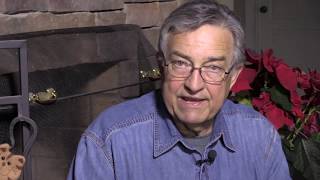
Kardec Trader explains how expectations blind traders to emotional signals. Your brain runs on action potentials that drive fight-or-flight responses beneath awareness. The fix: identify your emotional triggers, regulate them, and redesign how you respond to uncertainty.
Chapters
Most traders don't even notice that they hit blind spots, perceptual blind spots in their trading, and they just never recognize it. They go, what happened? I was okay one moment, and then, then something, something happened, and I don't. I was following my plan, and then I wasn't following my plan. And you go, well, what really happened here? What is a blind spot? And how does a trader learn how to deal with their particular blind spots? Let's start with one that everybody knows. The rear view mirror of a car. You know, you check over there, you look, and you're sure that you've looked back there, it's safe for you to turn over. And then you start moving over and you go 75 miles an hour. And all of a sudden, the honking, the blare and the jerking of the cars, and all of a sudden you realize, is that, man, I missed that car. It was there, but I didn't see it.
Now, with a car with a rear view mirror in a car, we know that there's something missing there and we have to compensate for it. But in trading, very few traders recognize there's something missing in their perception.
And they have to compensate for it. They have to learn certain new distinctions that allow them to see what they have not been able to see. It's kind of like this, the painting that I used to come into this video with. When you take a look at it, you see the koi, you see the fish, you see the bubbles. You look at all that stuff and go, wow, that's really interesting. But is there something else there? Take a look at it one more time. And as you look at it, can you see something more? And yet, if I tell you, suddenly, it'll be very obvious. In this painting, what you also are looking at is the bust of a Buddha. It's a statue and you can see its head underwater. But yet, if you haven't been told what to look for, you don't see it. The expectations drive you to see the koi and everything else, but not that thing in the shadows. Well, what we want to do in trading is learn how to see the blind spot that's been getting in the way of you developing your potential. And it's gonna happen, friends. Ultimately, we have trained ourselves, we human beings have trained ourselves not to see the goings and comings of our emotional brain. Our emotional brain is sitting there, much like the Buddha. It's just sitting there in the background, minding its own business and nobody would ever see. Doesn't think the way the Thinking brain does. It doesn't have a chatter.
Yet. It's designed to act on the environment when something happens. When there is a novelty that shows up, particularly if that novelty is considered to be dangerous, it's going to react.
Fight flight. Instinctual survival programs kick in, yet you never saw them. They were all beneath the radar of your awareness. We would call that the subconscious. What we want to do is how do we learn to see what we've trained ourselves not to see? That's the first thing. We actually have to start beginning to train ourselves to see the comings and goings of the emotional brain. It doesn't tell you anything. What happens is that it learns how to adapt to certain pressures in the environment and usually about survival. And when it triggers, when there is like a perturbation in the, in the environment, it reacts immediately, automatically as a familiar pattern. And it doesn't ask the thinking brain anything about consulting. It just does it. As a matter of fact, you are already in the emotion before thinking ever shows up. That's why people go, I don't know what happened to me. I just got sabotaged. I was sitting there knowing what I did to do, and then I don't know what to do. That's the emotional brain. That's the way it works. If you're going to become consistently profitable in trading and really make a career out of this, and a good one, you're going to have to learn how to work with the emotional brain and to actually see it, okay? Not that it's sitting there saying, oh, look at me, look at me, look at me. It doesn't operate that way. What you're going to have to learn how to do is say, I understand the goings and comings. I understand the way it works. I began to understand emotion and our coursework, the very first place is we start with a re education what you think emotions are. Emotions from our perspective are biological action potentials. They're not feelings, they're not thoughts. They are biological action potentials that trigger to keep you and the environment working together. That's what happens. Anytime there's a change in the environment, the markets, there is going to be an emotion that shows up that's within you. That's the trader. Those emotions absolutely compel thinking. Thinking is the tail that's wagging the dog, the dog, the big dog is the emotional brain. So until you learn to see that emotional brain, okay, in relief of like all this chatter going on in your brain that you don't see is being compromised, okay? That's that's the blind spot. You don't see it. Well, you're going to have to learn. That's the first part of our work. Then you're going to have to learn how to. Well, I need to be an intelligent consumer of emotions. I have to be able to calm emotions down so they don't take over mind. Otherwise that's exactly what will happen. But more than that, and more than emotional regulation, what you're going to have to become is the observer of the emotions that bill mind. I want you to hear that very clearly. You're going to have to be the observer, the designer.
Of the emotions that give rise to the mind that trades. Yeah, friends, it just so happens that if you bring the brain that you brought to trading to trading and expect it to work for you.
You'Re not going to make it past the gene pool. They're not going to. That's not going to go forward. What you're looking to do is you're recognizing. Oh, that's survival instinct. Yeah. And those emotions are based on that. What I have to do is redesign my emotional response to uncertainty. I have to build, move from an instinctual mind that is based on survival in the short term.
Okay, here it is. To a probability mind that deals with uncertainty and risk in a completely different way. Friends, that's the deal, is that you're no longer about winning and losing. You're about performing. You're about building the mind that performs consistently under the challenges of uncertainty and risk. That brain that gives rise to that mind, that traitor state of mind can be built. It can be designed to. It's not going to happen as long as you're just running into the brick wall of your blind spots, though. Come and learn. Come and find out about these perceptual blind spots like the ones you saw with the Buddha with the koi fish, like the rear view mirror. They're there, friends. And until you learn to deal with them, then what happens is your potential as a trader is deeply limited because you're only trying to harness what you already have, what evolution gave you. We want to go far beyond what evolution and natural selection gave us. We want to develop the mind to engage uncertainty and risk from a calm, disciplined, impartial state of mind that can be taught. Come and learn. Come and find out about the group course, the individual course, more of the stuff that's free on the website. Just really begin to educate yourself about what emotions are and how the emotional brain and the thinking brain can learn to partner with one another so that both are giving their best to create the probability based mind. Come and learn, friends. Thank you.









