Building a Wealth Mindset for Success in Trading
Randy Howell argues that traders sabotage themselves through dopamine hits on wins and fear on losses, which hijack decision-making. Success means separating your self-worth from trades, regulating emotions through breath and mindfulness, and building new habits that override evolutionary wiring.
Questions this video answers
January 15 (first group meeting)
Sign up by late December
10 sessions (10 weeks) for the deeper individual course; there is also a condensed 5-session offering noted
About $200 (website price)
About 95% of traders fail and about 2.5% make money
Chapters
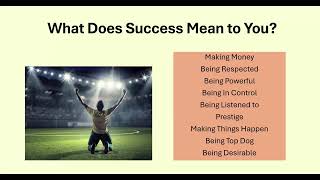
The broadcast is now starting. All attendees are in listen only mode. Welcome everyone. My name is Randy Cowell, trader state of mind. And I am delighted to be here with you right now. First though, let's find out if you can hear me. Always important, I don't like be talking out into the void. So some kind people just simply write into the question box a why I would greatly appreciate it. Okay, yes, good. Well, we've gotten that far. Okay. We are here to look at something that I see every day. And it doesn't seem for people that it's a problem until they really begin to recognize that we don't see objects out there in the world. What we do is reality is actually created in, inside our brain, inside our mind, by our beliefs, by our assumptions and our biases. And so what we want to do, we want to take a look at success. And let's start looking and going. Is the success mind that you brought to trading, is it going to generate the kind of wealth you're looking for? And what I want to do is start right here, is that I want to. It's not like I'm going to ask for observations, but you can. I really want to say what does success mean to you? You know, I've given a list here making money. Practically everybody I know there are two major reasons that people get into trading. One is to make money, to be able to have financial independence and also have personal freedom. Okay. But you begin to see that right up at the top one of the things that drives people to trading, they think, you know something, trading can produce a lot of capital and you know, I can make money. Okay. The other, the other is being respected. If I'm a really great trader, I have a Dolores and I have a friend who has made an enormous amount of money in the last several years, like $200 million type of money. And what happens is everybody just gets quiet when they hear his name and know what he's done and stuff like that. He has that respect. Also people get into with money, they get associated success as being powerful, getting what you want and being in control. You know, I can make things happen. I am in control. So being listened to prestige man, I got the money, I got the power, I can make things happen. And being top dog, being I'm the dude man and being desirable, believe it or not, you know, if I have a lot of money. I used to know a guy who back in a seems like lifetimes ago but drove one of those Mercedes sports cars and he called it a chick machine. Because it attracted. And he was very successful in it. Basically, it gave him a sense of prestige, of being desirable because, oh, he must make a lot of money because he drives that sports car. So there's lots of reasons, both you would know about and not. But what I want you to do is right up front, just write it down to yourself, okay? It doesn't really matter whether or not I hear it or anybody hears it, but what I want to hear is what does success mean to you? Because I can tell you that model of success is ultimately about making things happen, about hard work, about, you know, just being able to will yourself through it and push through something and not ever giving up. That's going to bring success. It worked in the past and you assume it's going to work in trading and that you bring that success model. Now, I come from that too. There are people who have called me a workaholic. I like doing what I do and I find myself, I have to be careful that I can truly get over there and just work too much. So I can see that hard work is also built into me being persistent. And you're going to make success happen. And the truth is, in many businesses and many walks of life, that's the truth. Okay, and then what do you do you think you know something, I'm gonna become a trader and I am gonna apply the same principles that I did and everything else that produced success. You follow those laws of success that you learned back then in other areas into trading, and guess what happens? You keep giving the money back. Oh, and worse too. Maybe you don't get into in the trades, but the major thing is you can blow up a lot of capital. I don't know if you've noticed that. And all of a sudden you go, well, I'm following these rules. I'm not giving up. I'm persistent. I have a positive attitude. I've got my affirmations, I've got my visualization, I've got all that stuff. It's all positive self talk. I'm doing it in my set, in my head. At the same time, what I want you to start noticing at some moment. Usually it's two to three, maybe four years into the game, you come to understand that the rules of wealth building and trading are different than in the ordinary world. And nothing you do is going to change this new truth. The real question literally becomes, am I going to take the image that I have kind of constructed for myself? I call it a mask, Am I going to challenge it and say, is this Mask is this ego is this structure of self that I've learned about how to produce success? Is it going to produce the kind of success that I'm looking and seeking for in trading? And a lot of people take 3, 4, 5, 10 years. And the problem really is that the laws of success are just different in trading. What works for you in the outside world does not work for you in trading. Why, friends, this is the first big thing I really ask you to really kind of settle in. Don't trust what I'm saying. But I want you to look at it and really start seeing it in action. The illusion of control. You know something? The illusion of control didn't start with you showing up in the world. It didn't show up in the last century or two. That illusion of control was called something different in caveman times. It was really the control of the environment. You know, we had a lot of really serious animals that, that looked at us as meals. And we had to have a sense of controlling the environment in order to be able to survive. Even though the actual control wasn't there, we had to believe that the control was there. And the thing is, it worked for short term survival for our species, become this really dominant species. But what we did, we started looking at ourselves and started telling ourselves stories about how we were control. And at the same time, we never saw that. Things kept blowing up. You know, in my own case, when I grew up from my home, it was very chaotic and stuff like that. What happened is I started creating that chaos if I didn't find chaos as an adult. And part of that would be blowing up business, doing all that kind of stuff. But I had this image of myself as a. As a. This young man of the town that I was growing up in. And I was like, I was a great. I was almost Superman. I was on the rise. And the truth is that I kept running into things that I could not see. Okay, I had the illusion of control, that I could control everything, but it kept blowing up. So here we go. We developed that image, but at the same time is that we are constantly checking our beliefs about our ability to dominate, you know, to be. To make things happen and all that stuff. And what we discover is this, in trading, what your trading account is actually doing is it is measuring with precision how effective your beliefs are about your ability to manage uncertainty. Yeah, that same stuff that caveman was having problems with and started creating an illusion of control. He pretended that he was in control of things that he wasn't. And all of a Sudden we discover that that trait is still sticking with us. And so, but it just so happens the trading account, it doesn't care about your feelings, it doesn't care about this, your ego that you're presenting to the world. What it's revealing is again, how effective your beliefs about money are such that you extract more capital out of the markets than you give back in. And what you discover is not many people have the beliefs that extract more capital out of the markets than they give back. Okay, now this is when the illusion of control is busted. Your trading account really is your best friend. It's telling you the truth, whether or not you want to hear it. And it busts all the rationalizations and the rationalizing that you produce because ultimately really, really comes down to it. At the very bottom, it's really you and your beliefs that are being tested and being shown, effective or not. And again, a lot of the beliefs around Alphas are really about winning, making money, being on top, winning at all costs, making things happen. And the truth is that is an incredibly poor way of making things happen. So understand, go forward one more time. Understand. This illusion of control has been around a long time. And somewhere along the line, that illusion of control, of environment got intertwined with our caveman brain. And then later it became intertwined with money, with capital. And all of a sudden money started becoming a symbolic representation of your power to survive. We had a common ancestor with the chimpanzee and the bonobo that split many, many, many millions of years ago. But we carry still the same brain, part of the brain, that emotional brain, that mammalian brain, all through these different stages, down to the guy playing on the computer with all the screens, looking at all these particular situations in the trading world. And that grade eight brain is there and it doesn't know about money. When it looks at the screenshot, it's thinking about, am I going to survive? Have I got what it takes to survive? And you know, that illusion of control gets busted pretty good. And all of a sudden, before you know it, you start having scared money. So you're looking at something that maybe may have been tweaked in your family of origin, in your culture, in your performances recently, like in your lifetime. But this is a very age old problem. And the question is, are you willing to solve that problem? Because it's not going to go away. We are primed to be terrible at trading. No matter how. You have a really great plan, you know how to do it, you have, you have everything, right? All you have to do is Follow your rules. But the truth is, I wouldn't have a business if people could follow their rules. The key is understanding this, is that caveman had no concept of money. This is caveman surviving. This is how they work. Somebody had to die in order for them to live. And they also could die for something else to live. There was an energy exchange. And it just so happens we bring that. We bring that short term focus of survival and have linked it to money with the power of surviving and thriving. The truth is our formula is money is equal power to live. Okay, we bring that and maybe we have all sorts of other ways of doing it, but we have come to the moment of going, you know something? I'm in trading now. And what I realize is that the stories I tell myself, it's not whether or not they're right or wrong, it's really about are they effective. And out of that, Understand, this is actually something that probably took place quite a bit. You know, we hunted the human species, hunted mastodons. But I want you to take a look at this dude. He's 30 times the size of the people fighting him. And this is a precision team. This would almost be like a paramilitary group. They're going after specific tendons, they're doing all that stuff. But look at the reach of those tusks. Think about what it would be like. Do you realize, cranked up, you'd have to get yourself to go and just really cranked up that I'm, well, we're going to take this animal down and everything's going to be sweet. Everything is going to be really nice. Man, I'm getting up on this. That's the same thing as jumping into a trade. Okay, so how do you prepare yourself for the potential of getting hurt or killed, which is what the caveman is going to think with. All of a sudden you take that loss is coming at you and you don't want to take it and because the thing is, you're looking at a saber toothed tiger trying to eat you. And you've got to capture that mastodon so your clan can feed for a month. And you take risks that no human being in their right mind would take. It's the same reason that when the military recruits people to enlist in the armed forces, they don't recruit 25, 30 year old men. They recruit 17, 18 year old kids. Okay? That's because they're still going through a process of brain formation and can't make. They can't really evaluate risk. They don't. They, they can See that, yeah, somebody may die, but not me. And it just so happens is that not me catches up with you. And it is this place right here, this illusion right here that you're going to live. Everything's fine, people may get hurt, but you're going to be okay. That, that is fueled by endorphins. That, my friend, is where it all works. Because, you know, the thing is, if you bring down that beast, you are going to, you are going to have a lot of respect, you're going to have prestige, you're going to have all that stuff. It's like buying today a Mercedes Benz. Everybody's going to look at you with prestige. And look what he's done at the same time, this challenging moment could have cost your life. They were rewarded extravagantly. Okay? They got leadership, they got status. They also had first breeding rights. These are powerful reports that rewards that shape human beings. And every time you ever trade, you are playing this ancient drama, okay? Now you can see right here how the alpha got put in prison here. He got trapped. Winning meant survival, it meant safety, it meant, it meant personal respect, it meant social status, it meant popularity with the opposite sex. The alpha's genes began to move into the gene pool. And that survival success that we brought ends up now when you add money to the equation, to the evolution, financial success. And yet, and yet you know, is this, is that when you win, when you win big. This happens with me all the time when people, they'll email me and say, randy, Randy, man, look at this, look what I just did. And they're all pumped up. And what happens is, I know that it's incredibly dangerous. Most people do not recognize how dangerous winning is to their future health, their future success is when you win, what happens is you get a little squirt of dopamine. That's cocaine. You're snorting cocaine. In many ways you feel good. And what you also do is out of that squirt of dopamine, you're in this la la land where, hey, everything's going to be good. I'm on a roll. I am there. You know what it's like to win. Interesting is a number of years ago I was in China speaking to a wealth management firm and they had, they had, from wealth managers, they had traders, they, it was very large corporation. And what happens is I made the statement to them that you're not allowed to feel good when you trade. One guy raised his hand and he said, and got up with great English and he says, but I like feeling good. And I said, you can feel good, but not while you're trading. You know, when you take a good win, you feel like whooping it up, go outside, go do something, but separate yourself from the computer. You don't want to get sucked into that, into that dream. He says, but I like feeling good when I win. And then he just got up and left the room. There's a big auditorium and a number of other people went with him. Two days later, there was a two point correction and suddenly he had blown. He said. And he came up to me and says, Mr. Howell, I now understand why you're not supposed to feel good. Because I was sitting there and I saw the deep need to get into cash. But I didn't do it. I just, I felt too good. I felt that I could handle this. And the 2% correction tore me out. So he's learning. But this is what the problem with winning does, is that it hits that dopamine and all of a sudden you get overconfident, okay? And you. And from taking down big game to winning a big huge trade is that you have to be careful. What I do. When people tell me they've won big money, what I ask is, how did you perform? And they'll look at me like, what? I said, no, how did you perform? And you know, they. A lot of times what you find out is they left their rules. And my view is this. The moment that you exit your rules, you're gambling. The only thing you have as an edge, both methodologically and also as mine, sticking to your rules, okay? And so all of a sudden you realize, oh my God, the moment I leave my rules, I'm a gambler, okay? The moment you leave your rules, the moment that thing turns against you and you're getting all excited and you're looking to like double down on it or give it more room, all that kind of good stuff. The moment you leave your rules, you're gambling. And whether or not it's from fear taking that loss or the euphoria of having one big, it doesn't matter. This is wired in. And that kind of delusional thinking from all that dopamine is going to be a disaster for you trading. So. But there's more to this timely stuff, okay? Is these are. These are from inside out. It's cartoon. I encourage you to really get up, particularly the first one. You know, ultimately what they did in making this cartoon, and it's a story about a girl who, her family moved from Minnesota where she had all these deep friends, where they played hockey to Palo Alto, where they were California people and stuff like that. And she was deeply sad, but her family did not allow sadness. You had to be happy, upbeat, and all that stuff. And it's a story where you're looking inside her and seeing these emotional programs, which is what's behind the little girl. And these emotional programs are constantly duking it out to get control of the girl's mind. Okay? That's exactly the way it works. Your brain is a community of rival emotional programs that are constantly duking it out to get control of the one thing that you can control, the behavior coming out, you know, to do something stupid or just stay within your rules. What you need to know about emotions is that all thinking is emotional state dependent. Euphoria produces a mind that believes the good times are going to be rolling on forever, okay? And the fear says, oh my God, what I have is going to be taken from me. So in trading, that produces over trading because it's the delusion that takes over the discipline. You're no longer. You've been conquered by that need to prove itself. So winning can be dangerous to your trading, because what happens if you win money? That's not the point. All that really, that means that you landed on the right side of probability relative to you. It doesn't say that it was all about probability. It doesn't say that it was a good deal or whether or not you were gambling. The thing is, you landed on the right side of probability and that's it. So you've got this stuff and you realize one big thing is that all thinking is emotional state dependent. And starting probably from Rene Descartes, that famous guy that said, I think, therefore I am bringing in the age of reason, humans have been led into the delusion that their thinking is separate from emotion. And what I want you to get is that all thinking is emotional state dependent. In this cartoon here, what you're looking at is a geeky new brain thinking he's in control of, driving the brain, driving the mind, driving the journey of the life. But in that is caveman just hanging around. Nothing's happening. But the thing is, Caveman is activated reactively, automatically. When there is a change in status in the environment. When something changes on your screen, there is automatically an emotional response within you. And most of the time, when you think things going really good. Yeah, yeah, yeah, yeah, that's dopamine. Or when things are really going bad, bad, bad, bad, that's cortisol. And all of a sudden you're realizing you Know you can activate that caveman part of you incredibly easy. And what you discover yet again is the thinking brain collapses because the emotional brain takes over in.003 seconds. Okay, that so you're going to have to learn how to calm down and domesticate that caveman brain of yours. It has a completely different agenda. It doesn't see money as wealth. It sees money as the power to survive. If it's being threatened, it's going to trigger unless well trained and less domesticated, it's going to, it's going to go the opposite direction. It's going to go reactive. Fight, flight. And then that thinking brain, the one that you really need there to actually trade, blown out of the water. This happens every day, day in and day out. And what I'm asking you to do is recognize it's all driven by a conversation about, you know, I've got success in my mind. I know how to work hard, I know how to push, I know how to never quit. And that is a kiss of death in trading. You know, in trading, it's all about probability. It's all about emotional control of yourself. You don't, you don't control the markets. You control how you react to those markets. That's what your trading account is telling you. So remember this. In the success mind, winning is everything. It solves all the problems. It makes you money. And by the way, when people come to me, and I want you to think about it when you're preparing your mind for the trading day tomorrow, okay, what I want you to ask you, what is your goal? What is your goal? If you say make some money, you are citing a goal that you have absolutely no control over. What do you think is going to happen? Okay, at the same time, what I teach traders is something different. I'm not asking you to control outcome. That's impossible. That's a delusion. What you can control though, is the mind that you bring into that moment of trial, of challenge that you can control. That's all about you. Instead of getting all bent out of shape and going, winning, winning, it's everything. Winning is just landing on the right side of probability. The real deal is this. You control your execution. And in that execution, if you stick to your plan, your rules, your edge is there working the program and your method edge, and your psychological edge become one the same and you increase your odds of extracting more capital out of the markets than you give back. That's the deal. And here's. Seems like winning is a bad thing, isn't it? You know, and the truth is, it's not a bad thing. It's just that it's just landing on the right side of probability. And in trading, what happens is you're going to win some, lose some, and some are rained out here. When you take a win, what you're ultimately doing is you get a dopamine reward. That's going to alter the chemistry of the emotional programs. It's going to alter the perceptual map. It also creates. The dopamine also creates habits, okay? And that's also the corollary with addictions is habits. Addictions are habits. They're just ones that piss people off a lot. So you get the habit form, or as Wilt Chamberlain said, be very careful the habits that you nurture. Because once you have a habit, it's going to create your life. And then suddenly that habit formation is going to seek reinforcement. And all of a sudden you're going to have automatic responses. And believe it or not, you're going to have cravings, even cravings to make money. And then you start seeking the thrill of winning. Yeah, money, money, money, money, money, money. Okay, go to the. That's what, that's what gambling houses are built on. And then you get the elevated moods while trading because of all the dopamine stuff like that. You can't think and friends, that produces danger for you. It produces. Not even gambling. It's just throwing your money away. So you're looking at it going, you have a lot of work to do, okay? Because ultimately you live under a false assumption. You have, you have brought together that winning and your, your being are equivalent with one another. Hey, man, I really matter. I've made a lot of money. Look at me. Look at, look at me. Yeah, and you get everybody strutting around and, you know, you get a bunch of traders together, they're talking like they've, they're making money. 95% of them are not. And you're going, okay, remember this from a quantum perspective. You exist as potential. The observer of that potential shapes the experience that you call you. It's taking the potential your beliefs are looking out, and you congeal that potential into a self and ego. And that is what you think and you identify with. What I'm asking you to do is if you want to come and create a wealth mindset for trading, you're going to have to separate winning or losing from your being, okay? You're not cool, you're not desirable, you're not the man. You're not the alpha. Because you win your, from my standpoint, conscious creation, your job is to wake up to that and realize that your performances are about your competencies. They're not about your being. Your job is to be able to come and grow that competencies. And you can do that because you're no longer trying to prove yourself. And here's a story, a true story. This is from a friend of ours who has made. This is a guy that I talk about who's made well over $200 million in the last several years. Yeah. And the deal with him is this. As I asked him, I said, you know something, how did you go about coming to this moment of where you were trading like this? And he says, randy, I can tell you exactly where it happened. He said, a number of years ago, back when three quarters of a million dollars was a lot, a lot of money to me, I lost that in one day with really some stupid mistakes. And I got scared. I didn't want to tell my wife. And I created all sorts of stories about lying to her and stuff like that and hiding it and blah, blah, blah, all that, all that stuff you talk about. And at the same time, I sat her down and I told her the truth. And I thought she was going to divorce me. I thought she was going to be so angry at me. And she got up, she walked over to me, she held me, and we cried together. We cried about that. We cried together with the losses and what it was going to mean for them. It was going to mean it. They were going to be running on a pretty tight ship. And he said, you know, out of that experience, he said, what I recognized is that I had wanted to win, to be respected by other people, be loved by other people, to belong, to be, to belong. That's what I wanted to win for. And what I realized is that come win or lose, I was loved, okay? That I was lovable, at least one person, and my lovableness was no longer at risk. I knew that. And out of that, he was able to work the mind he brought to the performance. He was no longer trying to hide. He began to do that. So what we're getting here is that you is not this person who wins or loses. You are this potential that you're going to have to learn to reorganize so that you separate your performances from your being. Okay? Now out of that, this is when you discover very quickly that trading really becomes a journey. That self discovery is. You start learning a lot about yourself. You learn stuff that you just didn't want to See, but the deal is, if you begin to look at yourself not like, as shame and saying, oh God, I don't want people to see this. I don't want to see this. I want to put it in my little basement in dark basement so nobody can see it. Maybe it'll go away and die down there. The truth is none of that happens. What you're really doing in this world is you're on a journey of self discovery and you landed in trading where it's impossible to lie to yourself. You know, you can lie like crazy to yourself when you're in other areas. You can project onto other people and you don't have to pay the consequences right now. But in trading, come hell or high water, that trading account is like instant karma. It's going to tell you right point blank whether or not your competency or yourself was workable. And so the deal is that if you're going to find yourself in trading, you're going to have to recognize one thing. You're trading your beliefs about your capacity to meet the challenges of living. Okay, how do you go about doing that? You're going to have to find the competencies that really need work and quit hiding from them and actually get at the core information and reorganize that. Okay. Because ultimately what happens is this. Money, power and the illusion of control got linked in the caveman brain. Nothing can be done about that. But the deal is, you do not have to stay that way. My dog will always dog around and he will never be able to become a different being. You and I, we can learn from our mistakes. We can actually become different people. That is what we have the option of doing. And out of that, you actually begin to reinvent your potential. You begin to re sculpt yourself and you use emotional intelligence. This isn't just highfalutin. Oh, I'm going to imagine this and I'm going to have my vision board, I'm going to blah, blah, blah, blah, blah. No, what happens is you're going to actually start being able to say, you know, with emotional intelligence, I can learn tools that allow me to go in to reorganize the beliefs that caused me to see and act the way I do in life. This is the wealth mindset. You're moving beyond the evolutionary psychology that you brought with you and understand, of course you did. Okay. The deal is, is trading becomes this moment of where you're going to have to be really honest with yourself and you're going to have to, you're going to have to build a mind that did not exist. It existed as potential, but it was not the one that was operating when you brought it. So you actually say I'm going to have to be my own sculptor. That's right. And it really begins by understanding emotions differently. And again, I go back to inside out from Pixar, Disney here that these emotions over on the left is anger. The one that's green is, what is that? Disgust. The one in the middle with the smile, that is joy. The guy, the really weird looking dude is anxiety. And the blue girl, that is sadness. Okay? And the emotion itself exists within a community. You are the embodiment of emotion. It's not like you can trade without emotions. You are emotion. The difference is you are a being that is emotional in nature and rationalizes. You're not a rational being learning how to manage these particular emotional programs. That is what creates the mind that you bring. And if you begin to understand that emotions are actually biological action potentials, if there is a change on your chart in the markets, there is an emotional reaction. The emotion is there to automatically respond to changes in status in the environment. Okay? Now that is what you. You are the organism, the trader. And the market is the environment. And friends, that is literally what you are up to do. And it just so happens that these emotional cocktails produce the mind that trades. So the first, the second thing is you're going to have to learn how to regulate your emotions. And I'm going to talk to you about this, but I'm going to also give you an assignment. If you happen to notice, if you were to videotape yourself tomorrow, here's what you're probably going to see. You're going to see yourself tense. You're going to see yourself not breathing. You're going to see yourself just absolutely fixated on your screens, okay? What you're looking at are emotions triggering. And when you're fixated, you're no longer in right mind. When you actually feel the tension, you're feeling emotional arousal. When you're holding your breath, you are also feeling emotional arousal. The deal is that emotion has triggered. It is cranking up, cranking up. And at some moment it hits a switch and then it is no longer cranking up. It is spreading into the bloodstream. It is in your brain altering the way you perceive reality. And friends, you have to manage that. And the first step, it's very simple. You learn to diaphragmatically breathe, you reduce tension, and you learn how to do that in front of the, in front of Your screens as you trade. And you are constantly regulating your emotional nature as you trade. Otherwise, you're going to get hijacked and get swept away into gambling. So that's the very first step. That's the second step. Actually, the third step is mindfulness. The truth is that probably the hardest thing to grasp in emotional intelligence is that you and your thoughts are not the same. You and your beliefs are not the same. And when you say I'm talking. No, you're not. A particular organization of potential created by an observer is doing the talking. That is a potentiality is not you. You exist far beyond that. You change the observer, you change the organization. It's not magical thinking. When I think of, like, mind ever matter stuff, I consider that magical thinking. But what you can do as you change the observer, you begin to see a completely different world, okay? And all of a sudden you go, wow, there was so much more here that I didn't see. And this is the deal is this is why in my work, what you're doing is one of the big lessons is learning how to produce mindfulness. Learning how to produce, where you become an observer of the self. And you even get to the moment of where you're asking and looking at yourself, trading and going, what makes this organization of self work? You know? And you begin to start looking for the emotions, for the beliefs that are driving your performances, friends. That's when you're using mindfulness to begin to retool yourself. And then you begin to recognize and accept the fact that they are just really destructive parts of yourself. Left to their own way of doing the world, they will blow you up. I grew up in a family that was incredibly chaotic, and I adapted to that where I felt as though I could control a chaos around me. I was tough. My nickname was Mid Mountain. And what happened, though, is that was an adaptation for me to survive in a particular environment. Once it hit habit, it began forming me. I left home, I went out into the world, and if there was not chaos there for me to try to control, I would create the chaos, okay? I spent my life like that. And when I actually remember when I began to wake up When I was 30, I owned a advertising agency. And I was looking at all the crazy people that work for me and just, why me? Why am I? All these great advertising really attracts a pretty interesting crowd, okay? And I'm sitting there looking, going, look at that. Why? Why? And all of a sudden, I realized something. Oh, my God. I hired each and every one of these people. And what I Recognized is I was the ringleader of this chaos. That chaos, that response to chaos, is something I learned long ago and my family of origin. And that's how it worked. It now was creating me. And that's when I said, you know, I have some work to do, because I can't go on working this way. I have to change it. Okay. And the way it's changed is the next thing is that you start developing an empowered mind. You had the internal resources. This all exists as potential since our caveman days. Exists as potential. And what I want to do is give you an example of Lord of the Rings. It is one of the most powerful archetypal movies that I've ever seen remotely in my life. What you realize, Oregon, sitting there looking at you, and he is a king that has lost his. Lost from the centuries past. And he's reclaiming the kingship, okay? And yet he's there. He has warriors that are serving him. He also has caregivers who surround him and help them all the way through. They also can think clearly. That would be Gandorf. Very, very clearly. And at the same time, there's always destructiveness, always destructive surroundings. There's always a struggle between the destruction and the construction going on. There's that journey, but there's also these internal resources. And within you, there is the discipline of a ruler that's part of you that can maintain order under pressure. There is the courage of a warrior not to be a thug and beat up people, but to recognize the real struggle is inside your head. The war is inside. And you realize that you have to turn toward your fears. Not to conquer them like a bad dude, but to master them. You also recognize that within you, there is also the self compassion, the soothing of a caregiver. And a lot of people have a hard time with that. They're really hard on themselves and things like that. And every time I ask them, well, tell me something. When is the last time being hard on yourself helped you as a trader? And they go, never. And what I'm asking of you is that you begin to have compassion for yourself. You begin to see that, you know something, that orphan nature of yours figured out some way of surviving and allowed you to become an adult. And now what are you going to do about it? And I'm asking you take that adult part and rebuild it so. So that you can be compassionate and self soothing and patient, so that you can trade. And it just so happens that compassion is the only emotion that can do that. If you do all those three, what happens? Is you free. What I call the sage, that person who can have clarity of thought to be able to do the work of trading. Again, what I want you to notice, part of the success of Lord of the Rings is it identified these particular archetypal forms and brought them forward so everybody could see them. And it just so happens that a lot of these guys did not know that they had it in them. Okay? But they did. They were put to the test. They had friends around them, they had love around them, and they were able to reform themselves for the test. Okay. For the test. So now we realize that isn't. Isn't about having more things to remember and more things to write. This is really more about building the mind that you bring to the challenges of trading. Yeah, These are the emotional programs. They exist forever, and now they come. You come stock with them, but you have to develop them. And I can tell you that, of course you can develop them. They are there. But you have to decide that you're going to feed that part of yourself rather than the destructiveness. So out of that, from this empowered mind, you truly are in a position to turn toward your fear and recognize that your fear is a teacher and that you have. You have to find it within you to have these. This heroic power to face that demon, to face that, and then to learn from it, to master it. That is what self mastery is all about in trading. Because a lot of people, when they get into. When they get into trading, they have no idea that they are on a journey of self mastery. You're going to have to master your emotional nature in order to find that wealth, mindset that brings the joy of trading home. So you've gotten that. And what I'm doing is I'm laying out the process that I teach and the group course that I'm coming, that we're going to be having in January. This is what you learn. You learn how to do this. You also learn how to face that orphan nature in that destructive part of yourself. And this time, though, not from fear. That's the big deal. Now the deal is also this trading truly does become a journey of self mastery. Okay? It truly does. And there will always be. There will always be noise. There will always be that. But what happens is that you can go beyond that. That destructiveness is going to be there. But what you can do is you can become. You can become a self freshly created, built for the challenges of trading, built for the challenges of uncertainty. That is what you can do. Now the deal, though, is that it's Your trading account, that's going to reveal to you, okay? And show you where to learn. That's the deal. It's always there. Use it. You can use it, and you end up. You end up where you really can be that successful trader that you can be. Then you build that mindset and understand that this time when you face that dragon, the object is not winning or losing, okay? That's not about who you are. What you have there is performance. You can control the performance, mind. Winning is just landing on the right side of probability. Losing is just landing on the wrong side of probability. The moment that you focus on winning and losing as what you want to do in trading, you put yourself in a bind before you can't win, okay? Because ultimately you do not control winning or losing, but you do control. You do control the mind you bring into that moment of performance. Friends, that is the key. And that is what produces. That is what actually produces that mind, that wealth mind. You break through the old patterns, the old habits that you learned and understand. They're not bad. They allow the species to achieve. They allowed you to have success in some other areas. But now you're asking for a different world. The trading world is very, very different. And you come to this moment of performance. The illusion of control is just not needed. Winning and losing are just potential outcomes. They're not you. Your job is to execute your edge in probability. That you can do that is self mastery. And the question is this. Whoops. Whoops. We need to go back. Okay, well, this is interesting. Okay, we're working on this, guys. Okay? The deal is, is that ultimately you can kick tires and look around and talk about trading psychology and read some books. I've got one you can buy. Okay? But ultimately, this actually is learning how to instill new habits. This is actually recognizing that you're going to have to deactivate old habits, build new ones. And we have. You know, if you just got used to my work, get my free book, you know, maybe get my. Get my book Mindful Trading and just kind of kick around and read some more. Read some more. Watch more videos of me. There's 300 of them. There's plenty. But when it really comes down to it and you recognize you know something, I get it. I can intellectually get this, but I actually have to do the heavy emotional lifting to rebuild the mind that engages uncertainty. That. That mind from my caveman days does not like uncertainty. It really doesn't want to lose. And I need to teach it a different way of engaging uncertainty. We Have a. We have an upcoming class, a group course. They're very powerful. They teach these very skills that I'm talking about. And the deal is, is that when is actually the course. The first group meeting is January 15th. I know that more than half have already. The class is more than half full right now. So if you're really thinking about it, I would encourage you to go ahead and sign up for it because we want you to. We want you to be prepared when you get there. I would have expected that you will have two to three weeks of being able to. To breathe while you're in stress. Okay. And to help you with that decision, I'm going to offer you something that costs. If you went to my website, you could pay $200 for it. But the thing is, we have Frugift. It's actually a. It's a condensed version of emotional regulation that I want you to be able to practice. You have to sign up by late December. Okay. You get the value and work with it so that when you show up for the class, you're ready. Because most people don't recognize this thing. It's like a rocket bleeding out. But that's what I encourage you. It's 10 weeks, five sessions. And the thing is, it's broken up into sections, teaching this very stuff. Other people look at the individual course. It is highly comprehensive, very deeply personal. And for people who really want to be be taught by me. Okay, if that's. There's 10 sessions on that, it's just much more deep. So what I want to. I would encourage. If this is where you're looking and you're trying to figure out how do I go about doing this, really think about that. And I want to thank you for being here and it's been a lot of fun. And I've got some questions and comments already. That's really good. So we're going to spend about five minutes looking at stuff. Okay. Hello there. Hope all is get the recording to replay. Thanks. Yeah, you do. It'll be. We'll have it on our website and on YouTube sometime tomorrow afternoon. I don't. I can't get to it all the time. Right up front. Okay, the next question. If trading is more about psychology, then what is your purpose of having an edge? Now it sounds like you're saying we can't control outcomes. I thought the purpose of the edge is to have an advantage in trading. It's for. Yeah, it gives you an edge. But the thing is that edge doesn't mean certainty. And it also doesn't tell you with the great timely that it's going to show up on time. And the edge is only in probability. The thing is, you may run into 10, 12 straight trades that your edge doesn't work. And it's hard as heck to be able to tell a mind going, oh, I've got the edge and stuff like that. And then this thing is cracking and you have an emotional brain back there thinking that it's being attacked by a saber tooth tiger. Thinking just makes no difference there. So you have to have a psychological edge. So to drive your method edge. There are plenty of people I love this thing is there's a group of people that clearly have an edge in methodology. They have these competitions where they paper trade, okay, and they just mint money. They're just making money. They're feeling so good, but it's paper money, it's not real money. They are demonstrating they have an edge, but the moment they put money into that equation, they can't duplicate that. They're just, they're just like everybody else. They're losing money. That's the difference. Okay, that's it. Tomas, thank you for the webinar and your, your time. Quick question. Have you ever met any traders with truly effective beliefs about money? Yes, I have beliefs that help make money, capital, almost not matter. Could you share something about that? Well, I would like to go back to the guy that I was talking about, Mitch. Mitch was a very good trader before he started just making money beyond belief. And he said, what happened when I lost that money, that was the three quarters of a million dollars. And he saw the belief was just sitting right there. He had equated him making money with him being desirable for his wife. And suddenly what happened is he saw that his wife was going to love him anyway. And he said out of that I was able to really separate performance from belief. And out of that he said, what happened is I really had to examine my beliefs about money. Now. Now the interesting thing about him as a trader, you know, he's, he and his wife live on Social Security. They live in the same house they did many years ago. But he also has foundations that he's funded and he's put the money to use very differently. And that's not something he would do. Ultimately, what you really discover about money is that we've been identifying it with our power when in fact it's a tool. It's a way of making things happen. It's not a way of defining who you are as a human being. Once you get that you begin to start realizing that money is a tool, it's not about you, and you start using it in very different ways. Okay. Okay. We learn what you teach, but why we keep repeating the mistakes. After a few weeks or a few months, the mistakes creep in again and I'm unable to avoid the same mistake repeatedly. That means you don't. Why? Because you fall back into the same dang habit just because you start winning. The problem with winning is very simple. It sets you up for failure. You sabotage yourself as you start winning and you're going to hit that dopamine reward system and you're going to start getting delusional. Like you'd spend you'd been snorting cocaine and you're not you. Hopefully you don't trade snorting cocaine. The thing is this, is that people fall into that trap. The first thing that, what people want from me when they first meet me is Randy, if you can, if you can get me to where I'm just not all scared and stuff like that, I'll be good. I'd be really thankful. And they do that. They work hard, they really take in seriously the tools that I teach and they start winning and they don't realize that winning is the second demon on the road and far more dangerous than the first one. A fear. What you have to learn is that winning is just landing on the right side of probability. It is no reason to start getting a big head the moment that you start feeling good. When you win, please break away and go exercise and burn out the stuff. Okay? Hi, Randy. I love your work. At what point in a trader's journey would they benefit most from your individual psych training? When they finally figure out that no matter how hard they try, that they are operating out of a habit that they are not going to learn to break by themselves. Understand? I cut my teeth with at risk youth things that are horrible to talk about. I also did a lot of post somatic stress work. Okay. And to do that, you have to be able to equip people with skill sets that they did not naturally come with. Okay. To be able to integrate a memory that their brain does not want to integrate. And it's the same thing here. Most people have to have two to three years where they've established that they have a methodology that works. They can win paper trading, but they can't win when the money's real. Okay. And then when they find out, oh, it's, it's, it's my beliefs about money that I want spend some time and find out whether or not you are going to master that by yourself. Some do. Or whether or not you need help doing that. About 95% of traders fail and only about 2 1/2% actually make money. Okay. And you're looking at something where once you find that, that would be the time going, okay, I see that. I'm not going to sol this problem no matter how hard I work. It is the beliefs that have to be trained. Last one, as a beginner trader, should I start with prop firm or live account? That's a good question. The deal is what I would say is this, is that I would start with a live account whereas me personally and I would, I would trade micros so that I can't do a whole bunch of damage to myself. And I actually ask people to go back to micros when I know they're having a lot of problems when they first get with me. And what happens is that as you go through the micros and you start seeing and it doesn't take much money, much skin in the game to trigger all this back stuff. Okay. And you know, out of that there you need to learn the methodology that has an edge in it. You really need to do that. And I like to do it with risk and I think with the prop firms, I personally think they have a very highly profitable, profitable business plan. But it's really, they also have a tight leash. I would rather see you with micros and get to the moment of where you haven't blown up 10, 15, $20,000 or however a lot of money is for you. But what happens is that you know, you've, you know, you, you've lost $25, you've lost $50 and you're seeing that, you're seeing the triggering of the emotional nature and you're beginning to find out whether or not you're going to solve that problem. I'm perfectly good. I have people that watch my videos constantly, day in and day out while they trade and they have become profitable. They'll write, write us and tell us about that. But the truth is I'm blown away. How did they do that? I have no idea. And they do a lot of my reading, they do a lot of the stuff that I put out there and that is their course. And the deal is do that kind of stuff until you find out whether or not it's going to work or not. And after it, after that I don't mind you checking out other trading psychologists either. I just know that I teach from emotional intelligence perspective. My work was rooted in working with populations that a lot of psychologists would never, they would not have chosen that road. So I want to thank you guys and I also want to wish you happy holidays. I hope you find this gift of what this magic in these holidays can actually mean. I hope you bring it up and I also hope that you take some of this stuff, particularly the breathing, particularly taking a look at yourself as you trade and see the emotions that are impending your process so that you can actually do something about them rather than wishful thinking and trying harder. Yeah. By mid each day this recording will be on our website. Yeah. Tomorrow and on, on our YouTube channel. So it'll be there and I want to thank all of you guys. It, I, this is kind of a, it's, it's a ministry for me. I want to help people wake up and smell the roses. So Merry Christmas. Take.









