Chasing the Rush Disrupting the Root Cause of Over Trading
Randy Heim explains why traders overtrade: dopamine-seeking and money beliefs like "my net worth equals my self-worth." He walks through emotional regulation, mindfulness, and deconstructing the scarcity beliefs that drive the behavior.
Chapters
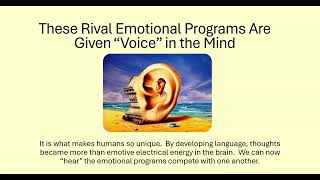
The broadcast is now starting. All attendees are in listen only mode. Welcome everyone. My name is Randy Heim with Trader State of Mind, and I am delighted you're here. And first, before you get started, let's just find out if you can hear me, if some kind people would simply put a check mark or a Y so that you can actually hear me. And that would be in the questions box. That would be. It would be greatly appreciated. Yep. Thank you, John. Thank you, thank you, thank you. Okay. Now the other thing of housekeeping is that I hold my questions till the end because I don't know when I start doing all the questions, what happens is I think I lose. I have a hard enough time keeping my mind directed and sometimes I forget where I am. That's kind of the rule that I have. So let's get started. What we're really going to be doing today is looking at the roots of over trading and how, how that works in. Okay. It's not like there's not other problems in trading, but overtrading for some reason. Right. Currently seems to be a really hot topic with the amount of clientele that I have. So we want to look at that and out of that we want to see what do I mean by chasing the rush. Ultimately, what over over trading is all about is excitement, about jumping and taking advantage of something. And it's really where what you're doing is. You're anticipating dopamine rush and you're wanting to hit that thing. And it's more the dopamine comes out the more and more you begin to look and you see opportunity where opportunity is not there. Okay, that's the big thing. And we're going to, we're going to start noticing is behind that rush, behind that dopamine reward chemistry, there are a set of beliefs that drive the emotional nature, that engages uncertainty. That's what we want to look at and what we want to do is say, you know something. Have you ever really thought about the power of your beliefs about money? How they are secretly shaping the success of your trading? Most people are going to at least show up in with me with a scarcity mindset. And that scarcity mindset, it's not bad, it's not good. And the truth is, is that you think about it. You know, success in a lot of American culture is, you know, you get, you get a job, you, you buy a house and you make sure you're paying that mortgage and you get a car and you have a, you, you know, you're paying for that loan. And before you know it, what happens is that you're pretty close to the end. It's not like. It's not like you can go out and just take risks all the time. And all of a sudden, sometimes you really want it, though. You're sitting there going, you know something? I have a fear of missing out on things. And I see them getting by and being a good person. I'm doing what I'm supposed to be doing. But suddenly what happens is seeing that missing out. I need that rush of, like, feeling good, a victory. Okay? And what we want to do is start saying, what is it about these beliefs? Okay, where are they coming from? How did we learn them? And what you're going to discover is some come out of our evolutionary psychology, they are genetically encoded into us, others are learned. And what I want to do is, I want to take a look at this really important thing, is that ultimately this brain of yours is remarkably undeveloped at birth compared to chimpanzees, compared to all other primates. And everything is that. Understand like a giraffe can run within three hours. A lot of animals can do a lot of really cool things pretty rapidly, but a human infant, ultimately the human infant, that which is going to eventually become a trader, is born with this remarkably undeveloped brain. And it starts. What it does is when it is born into an environment, it starts immediately hardwiring itself, live wiring is the word used, and starts developing its beliefs about trust and mistrust in the world. That's the very first thing it does. That's the first developmental moment that it faces. And. And the truth is, can you trust yourself? Can you trust the environment to help you through life? And most of us really recognize that life can be difficult. So the thing is, we are shaped by experience. The brain is learning on automatic. And we get born into a world, a broken world, a messed up, pretty messed up world. And by us adapting, particularly at this remarkably undeveloped level at birth, we get developed to survive in that broken world. And unfortunately, what happens is a lot of the beliefs that take hold there are based on basically that broken world, surviving in that broken world. So what we're doing is saying, wow, the first thing we know, our brain is a remnant from a very distant past. Where we were animals, we didn't have this remarkable thinking brain that we have now. But unfortunately, that thinking brain often thinks it's in control, when in fact, the emotional brain is what's in control. That thinking brain of yours that you go, you know, I've got my edge now, and you Know something, I can go in and I can, I can go through a stack of trades and I can see that edge work and I'm comfortable. I can think through this. And then what happens? The money becomes real and the emotions are firing on strategic short term goals like survival. Then suddenly that thinking brain is blown away. So we get it. The first thing is that developmental brain of ours, remarkably undeveloped at birth, is sitting there. It starts organizing itself. And it's not trying to organize itself for working with probability. It's working toward survivability, the guarantee of survivability. Do you see the problem that we've already gotten right there? We've got evolutionary psychology that is telling us that we need to have an anxiety based brain so that when we're looking out there and we're looking for trouble, and look, our caveman ancestors definitely ran into a lot of trouble. But all the lions, tigers and bears are gone now, but that caveman brain of yours is still looking for him. So the very first thing I want to do, what is a brain that trades? Okay, in neuroscience, what you learn is this, is that the brain's just not this glob of gray stuff sitting in your head. It's actually a community of rival emotional programs that are competing with one another vigorously to be the victor, to create the self that goes out into the world. And it is a struggle. They are competing with one another. And if you've ever been in an argument with yourself, if you've ever been in a place where you have self doubt, you are actually looking at different emotional programs that are duking it out with one another, trying to take control. It really depends on which ones that were learned and allowed to be in the working mind. Or when you get to trading, you discover most likely those are not the ones that you need or want. What you need to do is you need to start selecting and nurturing and growing different parts of your inheritance to become the brain, the mind that engages the kind of uncertainty that we have to deal with in trading. But here it's brute strength. Which one of these guys is strongest? Which one of us has the technique? You look at the guy on the right guys, his hands are like huge compared to the other guys. And so you begin to go, you know something? That's the brain that trades. It's not this God, it's. It is this community of very different, with different aims and motivations of emotional programs that are trying to duke it out to control the construction of the cell. And if you want to see this in Action. There is a movie from about 10 years ago, inside out by Pixar, Disney, that really demonstrates that. Where they actually show the models of emotional programs within a young lady's brain going at it and duking it out and just. And she's the battleground. So what ultimately is this the difference between you and I as human beings and say my dog sitting over there, lying there very patiently sleeping, waiting for this webinar to be over, is that we are the ones who can shape ourselves. It's not like we are born remarkably undeveloped in the environment. Shapes us as adults. As we really start claiming the natural strengths within the brain, we shape the brain that engages reality. If you begin to cry, if you get it, it's that you have the capacity of becoming captain of your own destiny. But what's going to be required is that you take charge of what emotional programs become the governing committee of the self. My promise to you, unless you win the genetics lottery, is the brain that you bring to trading is not fit for the task that is demanded of successful trading. You really, truly can't make things happen. You're not in that control. What you do really is you become very patient and you're willing. You watch and see what the markets are willing to give you. You don't attack the markets. You don't try to make things happen. And you do not know what the market's going to do. And get this. This is really important concept, okay? From a quantum perspective, you exist as potential, okay? It is the observer of that potential that brings forth the form that that potential takes. That's who you are. You are but one potential form structure of a self that might have been. And what we're doing is saying we know that the current potential that you exist as is not fit for trading. That's pretty easy. 98% of the people of the world are not born to trade. However, what you can do is you can say, you know something, but I am a human being. I'm not stuck in being a dog. As the human being, I can redevelop the potential that I am who I am under pressure. Okay, and what this course here is about, this whole presentation my work is about, is teaching you the skills required to be able to first to disrupt old emotional patterns and beliefs, but and reconstruct them to higher functioning. In the world of probability and uncertainty. Your brain wants certainty. And what happens is it has to learn with. Learn how to work with uncertainty. If you're going to be successful in trading and you're going to have to be able to learn how to lose. So we get it. These rival emotional programs are given voice in the mind. Remember this again from neural biology. What you discover is that the mind emerges kind of as a space out of the brain. So what you're looking at is that suddenly all these emotional programs that have been duking it out through electrical impulse are suddenly with our brain with its language centers and stuff like that. Suddenly they're given thought, they have voice. You can hear them in your head, for goodness sake. You may not want to acknowledge that you're hearing voices in your head, but what I would say if you do not acknowledge the voices in your head, you are crazy, because a lot of those voices are for your good, but a lot of those voices are for your detriment. That's just kind of the way there is both. There is both destruction and construction that exists as potential, as part of the human condition. And you, the guy who showed up as conscious, are the one who has to decide, how do I shape the mind, the construction of the mind. Who plays in my mind, who is in charge there? That's going to manage the uncertainty of trading. It's not going to be the construction of the mind that you brought to trading that we know. And this is what makes humans so unique. By developing language, thoughts really become more than the emotive electrical energy that runs in the brain. If you were to look at your brain and all these neural pathways, they're electrical circuits and that the behavior, the behavior of thought is electrical in nature. And it is literally going 225 to 250 miles an hour in your mind. We're having a disruptive dog in our, in our studio here, and he's now being let out. Okay, now he's being closed out. You have to do that sometimes. Sometimes you just have to throw out an unruly customer. Okay, so anyway, we've gotten this thing and now we're going, oh, what you're saying, Randy, is that I have destructive and constructive aspects of my potential. Yeah. And most likely you didn't grow up as a Zen Buddhist. And nobody ever taught you how to reconstruct the mind that you inherited from our ancestors. And it's time to that, because now we can actually hear the emotional programs compete with one another. And again, if you've ever tried to make a decision and all of a sudden you had an argument with yourself, you know exactly what these competing programs are like when they're arguing with one another. Those are emotional programs, and they will build Alliances, they will break alliances. And some of them just, they're just destructive in nature and others are highly constructive. And what we want to do is game that system so that we have a better chance at success in life by creating an edge, so that we have certain programs that are the dominant ones, creating perception and acting in that perception. So you can begin to see. It's pretty interesting. And you begin to really see that what happens is that you hear competing thoughts all the time. And that's the one thing I want to clarify here, and I'm, I'm inviting you to acknowledge that you have thoughts running through your mind all the time. You know, is that I have, I've been thinking, you know, we've gone through Christmas and stuff like that and we still have macadamia nuts. And I can promise you right now, even now, my mind, certain aspects of my mind, members of my mind are thinking about. As I finish this particular piece right here, I'm going to go in and I'm going to chow down on those macadamia nuts, okay? It's an argument. I also know that I put on a few pounds at Christmas and I really don't need all that. I need to be. I need to start losing this stuff. So you see, the competition, okay, that's exactly the clash of thoughts we're talking about. Now what these thoughts do is they expose our primal beliefs about who we are. This is really interesting because there's an assumption I use, is that, you know, ultimately when you look at your trading account, what you see is point blank how effective your beliefs are that you're projecting onto the markets for extracting more capital out of the markets than you give back. So if you begin to look at your trading account that way, suddenly that trading account can become a very good friend of yours. It's actually telling you, helping you to expose the beliefs that are driving your reaction to uncertainty. Because that's what you've got in trading uncertainty. And you're, you're engaging risk. You've got something of value that you have at risk now. And the beliefs about your ability to work with risk is being shown right there. You're projecting it all the time. So this is where you find out what beliefs are actually driving your mindset, okay, about how you can manage uncertainty. You begin to see, wow, I need to, I need to really start developing a sense of self mastery. And the thing about beliefs, beliefs are not true, okay? But they become your truth. They're assessments. There are things that are told to you about who you are. And they come unfiltered. They walk into your brain, set up shop, create neural structure, and all of a sudden, you no longer even question the belief. It's an assessment that has taken on the essence of truth. And all of a sudden, out of those beliefs, you start creating your life. A really good movie. I like Polar Express. And there is a section in there where there's a kid from the other side of the tracks and what he tells his two companions is that it just doesn't work out for me, okay? And ultimately, this is not true. And at the end of the movie, it works out for him. But the thing is, he holds the belief that things don't work out for him. This is not mind over matter. This is a belief blocking the observer that you are of life. And so what we're doing is saying, okay, I need to really examine my beliefs. Yes, you do. It becomes incredibly important because the deal is this. Your caveman brain does not see money. You know, we think money, money, money, money. I want to make some money day money. That's not the way the caveman brain, it doesn't have the language centers that your thinking brain has. But survival evolution binds money and the power to survive so that money is confused with your capacity to manage the uncertainty of risk. And all of a sudden you say, you know something? If I only had money, what would change? How better would life be if you had money? What I want you to notice is thinking that way is scarcity. Thinking is, in my own case, I grew up in a family that had lost intergenerational wealth. The generation before me and the macmillan's of which I'm part of, kept thinking they stole it from us. We got to get the money back. And I know that my cousin and I got into these crazy things about trying to figure out how to get the money back. I didn't know that the whole macmillan story was about getting the money back. But what I did know is when I grew up, I would get into businesses, and I was always trying to get the money. I wasn't trying to create value. I wasn't trying to create something that people needed. I was trying to get the money back. And it was devastating about what was done. Understand, this is the caveman brain and what it's done. It doesn't see money. It sees money as power. You know, if I had the money, I would have all this wonderful stuff and everything would be great. That's not true. The o' Connors who took the money ended up having, you know, they have not had good lives. They've got the money, but they haven't got good lives. Okay? It didn't work out that way, so we're getting it, okay? The caveman brain doesn't see money. It sees power. The power to survive, the power to thrive. And it somehow confuses them, so they become one and the same. And that beliefs about your ability to have power start showing up as beliefs in the world that you see through your eyes that have. Understand. These beliefs took root. I mean, these beliefs with me took root before I was born. They were just part of what it is to grow up in a. In a. In a family that had lost wealth. The generation before, they were blaming somebody. So we've gotten this thing. We're going, wow. But to your own inner. The inner caveman, understand, this is. This right here is the way these guys lived, is they have a pretty good. They have a pretty good pad. That's a nice piece of real estate. You know, it's highly desirable location. It's got. It's got a lot of protection. Unfortunately, the sabertooth tigers and the big bears wanted that joint, too. So there was constant threat. Okay, so you getting it? It's like, oh, my God. Money is your power to survive in a dangerous world that no longer exists. Friends, when your money is being threatened by potential loss, this existential loss, that caveman, for caveman, it was very, very real. It was very real, and for us, it's existential. It is that your life being threatened. It's not your money being threatened. It's your life. And you have a point in there and saying, oh, am I up to this? What if I lose? Okay? That's the place where it starts going sideways on you. Now, what I want to do is take a look at some of these beliefs, okay? The belief one, money makes me matter. Practically every Alpha you ever meet, he wants to make money to have power. He wants to make money to have prestige. He wants the respect. He wants the leadership. The money makes him matter. Unfortunately, for what he has also learned before he got into trading, what he learned, he worked hard. He just was a good businessman. He did all this stuff. He. He never gave up. He always was aggressive. He was all at that. But that was going to make him successful. And in fact, in this outside world, outside of trading, those traits are very. They work. So the Alpha comes in and says, okay, I believe that money makes me matter, even if I know that or not. And I get in and I discover something. It's. No matter how much hard I Try. The truth is I cannot control winning or losing, okay? That's not under my control. And they end up blowing up net worth. They want to control, they want to win to make sure that they matter. And before you know it, it's blown up. This happens all the time. And these are the over traders, these are the ones who want to make a bunch of money to prove themselves. And they don't recognize this isn't about making money money, this is about performing. A consequence of performing really well in trading is that you are more liable to extract more capital out of the markets than you put back in with a good strategy. So that's belief one. Belief two is my net worth is a measure of my self worth. If I only had money, you know, if I had money, I'd be on easy street, everything would be beautiful. And what you do is, what you'll discover about people is that one, they don't have control again, they don't have control over the winning and the ability to accumulate capital. The other thing though, it's suddenly your performance, your ability to make money or not make money, becomes an indicator of your worth as a human being. And what you're going to have to do, this is a very deadly belief. You're going to have to learn to be able to deconstruct that. And you're going to have to discover and separate the competence of being able to build net worth through trading and it's competence. There is a methodology you have to learn about managing the risk. There is a psychology that you have to learn, there is training you have to go through. There's all sorts of stuff that you have to do. That's all competencies. Your self worth is not about the competencies, it's about your being and people who. And it's, it's very common that a person will have a notion. I had a trader, a Swiss trader who every time he hit $150,000, he would lose back down. And the truth is, is that was his mother and father were academics and didn't have a whole bunch of money. And they really viewed $150,000, I don't know what is in Euros as basically that was the movement from being these academics to where they would have money. And what happens is it was $150,000. It sunk in that way. And every time, and this guy inherited it from his family, every time he hit the 150,000 range, he would lose back down. And that had been going on for quite some time when I met him. And it was only when he found this going, oh my God. And somehow my sense of worth as a human being was determined by how much money my parents thought they deserved. Okay, do you hear that? How much money they thought they deserved. I had another guy who had been trading with a high six figure account for years and every time he hit into the seven figures he would lose back down to the high six figures. This had been going on for 10, 10 years when I met him. And ultimately what really went down with him is that he grew up in a blue collar union family in Detroit. His father worked for Ford and Ford management and Ford labor were always clashing and father just was angry that these executives could make a million dollars a year. And he would just, he would pound the table at dinner and say, nobody's worth a million dollars. Well, here's this eight, nine year old kid just taking it all in. Grows up to be a trader and it's exactly what he ends up doing. He, he defined his self worth and his net worth at seven figures. The moment he moved over in seven figures he would lose back down. And it wasn't until he deconstructed that and started rebuilding a belief more about what in the world is stopping me? It's a belief about who I am that I inherited from my parents. It's not even real. And that is what allowed him to move beyond that. The third one, I'm not good enough. Good things don't happen for me. You know, if I, if I, if I, you know, if I started winning, I would have to give it all back. You know, I'd have to, you know, I win and you know, it's, you know, I just don't deserve this. I'm not good enough for that. I somehow I don't have what it takes that other people have. And the truth is, IQ is not that big of a deal in trading. The concepts are pretty simple. The ability to stay emotionally disciplined is the powerful problem. So they're even saying I'm not competent at the knowledge base. When in fact what they're not competent in is the development of emotional discipline. Do you see the difference? To get to that emotional discipline though, you have to be able to access this management team that runs your mind and you have to kind of like reorder that management team so it's more, more effective the next one, the fourth belief is what I have will be taken from me if I risk. That's the scarcity thinking model. Practically every American who lives in a subdivision lives in that world. You know, you Want to get that house, you want to have to have that mortgage. You're going to have the car payments, you're going to have all that stuff. And, you know, the thing is, is you can't risk saying, I'm just going to. I don't like this job. I'm going to go out on my own. I'm going to do. Oh, no, don't do that. God, what if you fail? What if you fail? Then you really be in trouble. You'd leave the house, you'd leave all this stuff. They've already created a catastrophic life. So what they do is they stay in unfulfilling jobs. And that's what a lot of trading is about. What happens is they have unfulfilling lives and they're looking for something better for themselves. You know, you get a lot of flack people saying, why in the world would you do that? That's gambling. And just. Just play it safe. Now, does any of these register with you? Okay, the last one we're going to be discussing here is that things just don't work out for me. That's that poor kid from Polar Express. You have this believing, no matter what happens, you know, I can start having really good days. I can have really good weeks. And what happens is what I. I know something bad's going to happen if good things start happening. I know that bad things have to come and kind of even them out. Either that or you start doing really well. You start having good days, good weeks, good months. And then what happens is you start feeling good. You start thinking, look at this, I've got this. I can really do this. You know, I really. Yeah, I got it. Yeah, I got it. The moment that you say, I got it now, Exactly. When you meet the second demon, the first demon's fear, the second demon is success is feeling good. Allowing yourself to feel good and confusing your performances with your being. Things don't work out to me is also what we call sabotage. Again, you start putting good times together and all of a sudden you blow them up and you go, what happened? If you take a look and get down and say, you know what? I need to go from the observation of this belief that says things don't work out for me, and go, wait a minute. That's an assessment. What is the belief lying beneath that that's triggering this emotional cascade that sets me up to blow up once I've started doing good? Yeah, a lot of that runs around in trading. What I want you to start doing is you're going to have to dig deeper. When you see your performances, that is a reflection of the beliefs that you're projecting onto the markets. Okay. And so the real key, if you grasp that and hopefully a number of you going, yeah, this is me. How do you know that? How did he see right into my mind? Because this is all human beings. This is every trader that comes in, okay? They are going to have to go in and they're going to have to do some brain surgery and get at these self limiting beliefs and rebuild the beliefs into higher functioning. So the real key is how do you go about breaking free of the grip of self limiting beliefs? And the truth is, what I know is there's a lot of misinformation running around in the trading world, in the poker world, and about what makes you know you can trade without emotions. No, you can't, you know, leave them at the door. You can't. Emotions are embodied in you. And at the very bottom of an emotion is the belief that's driving the emotion into action. Okay? Because understand this an emotion, something happens in the environment, the limbic system comes in, solves the problem, locks in a solution neurally, and then what happens is that the next time an incident shows up that triggers that boom, it's already there. There's an emotional response already there. And what we're saying is you need to become observers of that. Don't get sucked into it saying, oh, this is me. No, but this is what's stopping you from becoming the you that you need to be. So we know that we need to clean up those beliefs so that an empowered mind can engage the challenges of trading rather than one that is self limiting. Hmm. Now this is interesting. So what I want to do is. It's the one before that. There we go. What I want to do is share with you basically the process that we teach. Okay. Originally I was a clinical therapist and I spent a lot of time working with ptsd. I worked with really hardcore populations at risk. Youth. I had people, you know, I had referrals coming in from dss, I had referrals coming in from criminal court, from juvenile court. That's the kind of folks I cut my teeth on. And regular work, cognitive behavioral therapy, just didn't work. And ultimately I ended up in emotional intelligence. And then I found Carl Jung's archetypal way of understanding the mind. So ultimately, what we're going to be doing now is looking at the ignite process. And it's really more about self mastery. What most people discover when they do my work, it's not really about trading. It's really about life and what observer you are that you bring to life. And once you grasp there is both a destruction and construction that coexist. And it's really about which part of the self you feed. If you feed that destructive part. Oh, it's never in the cards for me. Oh, I'm going to make a billion. Billion dollars is you don't make a billion dollars. What you do is you perform at a high level and you end up accumulating more capital than you put back in. But what we want to do is we want to take how to re understand the survival strategies of our primitive emotional brain versus the storytelling of the thinking brain. This is really critical and it's something that you're going to have to domesticate your caveman, okay, he's wired for a world that no longer exists. And as long as he's not domesticated, you're not going to be able to work under pressure for lengths of time without buckling. Okay. I hope I don't have to tell you that because it's pretty. And where you start, it's the nature of emotion is emotions are not feelings. Emotions are biological action potentials. They are biological. They're about action. They're not about feeling. Okay. But the feeling that you have about emotions is the chemistry of the emotion in the body. And with that, you realize, oh my God, that's exactly what's happening, is that when there is a disturbance out there in Chartland, there automatically is going to be an emotional reaction from your brain center, from your emotional brain. That's what you need to understand. There is no letting go of emotion. You're going to have to learn to work with it and to begin to recognize that the thinking brain is a really good servant, but a terrible master. And what you're learning how to do is to take that emotional brain and take it out of the primitive ages that it came from and adapt it for life in this modern age. In doing that, the very first thing that you got to do, you've got to do is emotional regulation. Ultimately, if you grasp that all thinking is emotional state dependent, what you discover in trading is that most of the money out there in the market being at risk is actually scared money. And really good traders who are not trading from fear look at that and go, oh, what a joyful day. It's going to be a great day. So the first thing if we have to do is we have to learn how we are going to regulate the intensity of the emotion. So that it doesn't reach tilt. When it reaches tilt, it floods into the body. And the chemistry of that emotion is telling you what to do. The thinking brain is blown out of the water. And when the smoke clears, usually there's a disaster there. Either you've missed something or you've jumped in and you're not going to miss it again and you're going to get your money back, blah, blah, blah, blah. And it just absolutely takes you apart and you're gone. And then the smoke clears, you're there and you go, what happened? That's not good enough, friends. That's an emotional hijacking and you need to learn how to disrupt it. First step is emotional regulation. And the way you do that, by the way, emotional regulation, we teach it as breathing and muscle tension is the first thing you learn, is you learn to breathe diaphragmatically in front of the screen as you trade not in a yoga studio. That's useless. You have to learn how to trade in a diaphragmatic, breathe in a diaphragmatic way as you trade to be able to maintain a certain level of calmness that doesn't allow you to be hijacked. That's not going to solve the problem. But my promise to you, if you do not produce emotional regulation, you'll never get to the door of the mind. Open it up and look in. When you do that, though, you start developing mindfulness. And mindfulness I will define as noticing what you notice rather than going, what happened? You actually begin to understand yourself. And second order metacognition is when you begin to observe the observer. You step back and you're actually watching yourself perform. And you're saying, what on earth makes this guy tick? And you're looking at it from just. It's not either bad nor good. Everybody has this. If you're in the human condition, everybody has these five beliefs that I showed you. It's no secret. Every last one of us, I work with them every day. I see them every day in traders. So the deal is in mindfulness, you learn to step outside of thought and stop identifying with it. And out of that you start going, oh, my God, even my thoughts and my beliefs, I'm not. That's not who I am. I am the observer that observes the potential. So the deal is, how do you develop the observer? And here we go. And it just so happens that we have ways of being able to teach you how to produce observation. And then what we do is we start teaching you what to look for. If you're opening up the mind and running around going, what am I looking at? Most likely you have no idea what you're looking at. But there is a process to this. There is an organization to mind that all of us, because we're human, are going to fall into and they're predictable. And we can teach you how to look for what you have not been seeing. Then what happens with that tool? You do something powerful. You open the door of the mind. You look inside the mind and you begin to realize there is a lot of thoughts running around your head and they have very different agendas. Some are highly destructive. Some are basically not harmful. Others are very helpful. It is like a yin yang. You're going to have to be able to mind in mindfulness. You're going to examine the misinformation, okay, that runs through mine and you're just going to start checking it out and you're going to discover something. Is that most of what runs in your mind is what I call global assessments. It's like, oh, I'm going to lose. I can't. I'm not going to. If people knew me, they had knew that I'm a fraud. Okay, I'm an imposter. That's a big one. And the truth is, is that that's only an assessment. But you've been operating as if it's real. And you get this information, then you begin to ask the question, what's the proof? And what you discover, there's incredibly little proof to the negative assessment being made about you as a human being. It's about your performances. Maybe that can be changed though. But your being is a different order. So this is the beginning of where you go, oh, I know that I am a potential organization of the self. And then you're going to meet something that I call the inner critic. That's that judgy guy. That's the one that criticizes you. That's the one that tempts you to jump into stupid things, all that, and you meet your orphan nature. That orphan nature is how you adapted to the broken world that you got born into as a human being. It is not you, but it feels so much like you. It has not been observed. And you know, the thing is, is you're going to have to pull it up. You're going to have to experience it and not look away from it, but to look into it. In love, I might add, and begin to recognize that the big emotion for you being able to reorganize this is self compassion. You've got to have leadership, you've got to have courage, you've got to have a clear mind, but you have to have self compassion also. That is how you start working with what I would call these parts of the mind that are eager to try to make money really fast. And you don't realize this isn't about making money, this is about performing well. Okay? It's completely different. So now we've looked at the dark side. And at the same time, what I also want to do is recognize it's incredibly important. There is something that I call inherent worth. And this is a worth that is just driven either by your ancient human genome where a small group of people survived because everybody was valuable to the survival of the group. And also, depending on your walk with spirituality, you will discover that in my own case is, I see myself is a child of creation, okay? Now, it just so happens creation to me takes on the form of big Bang. It's not a magical story. And yet I would say big Bang probably is a good magical story too. The key is what you're doing is you're realizing that you have become somehow conscious stardust, okay, or beloved of life. And you begin to recognize that that is who your deepest nature is. And you start awakening it, you start actually welcoming it home and start recognizing that this is a part of the self that can be built. You know, you don't have to use it as just like, oh, I'm going to do some affirmations, I am lovable, blah, blah, blah, blah, oh, that just get blown out of the water. Now what you need to do is you need to be able to go in and touch that inherent worth and claim it. And it just so happens, of course, that we teach that, but that's not enough. What you also have to do is you have to recognize that you have a disempowering nature and you have an empowering nature. These are, you have internal resources that are there that just simply didn't get. They were not developed, whatever. Like, I grew in a home, grew up in a home, an Air Force home where my father was retired colonel and worked for the Department of Defense in retirement and he was boss man. And if you, if you, if you thought you could have a discussion with him, you were, you were sorely wrong. And what I discovered is a budding young ruler just didn't need to show up and try to have a conversation with my dad. So I push that leadership stuff to the side. And I didn't even know it was there for a long time. It was there. And through this work, I might add, I was able to bring that forward. And now that part of me is a regular resident of the mind that I bring to engage life. It just so happens that all of us have embedded into our deepest nature the discipline of a ruler, the courage of a warrior, the self compassion of a caregiver, and the wisdom of the sage and friends. These are the four archetypes, emotional programs that are necessary to create the trading mind. Okay, you have to be disciplined, otherwise nothing matters. You have to have the courage to face your demons and master them. You have to be able to treat yourself with compassion because that's how healing reorganization of the self occurs. You have to have clarity of thought rather than getting emotional tilting going on. And it is these that you learn to bring forward into working awareness as you are making trading decisions. It can be done. We've been doing it for 20 years now. When you got all this really cool stuff, there's still something you have to do. There's still an internal struggle. There's still an inner critic that is once. Look at this. How many of you ever felt this? You're being judged. And what happens is that if you don't have skill sets, if you don't have this new empowered mind, it's really hard to. It's hard to defend yourself against the onslaught of the inner critic. All that judgment, all that, all that blaming, all that stuff, all that setting you up for failure, making you feel you're really good and then falling down, all that. But this is the truth. Life is struggle. You're not going to get past struggle. You have to. We need struggle. That is how we learn. But suffering is optional. Okay? I can tell you I've had a heart transplant and sat on death's door for a year and a half, and it was a real struggle. My wife and I did not know if I was going to live. At the same time, I was not suffering. I made it my business to become heroic in my engagement of this struggle. And out of that, I went through very powerful insights and change about who I could be in the world. And that's a lot of what I teach now. In this process, you learn that life is challenging, that you are built for this struggle. This is how you learn to become your best self. Okay? The big thing, though, is what you learn. As this process goes well beyond trading, people will say, yeah, Randy, I. You know, the reason I actually signed up for this is because what I realized, this is about the rest of my life. And you were addressing things and you were showing that we can actually get at these things that we have been struggling with for how long? Or as I said, mastering others is strength. Mastering yourself is true power. This is what it's really all about, friends. It's about self mastery. It's about creating the best self you can and life trading in particular. There are. You go into this and you're going to run into this. You can't deny it, you can't leave it alone. You can't distract. It's right there in your face if you want to become successful. We're not in control of outcome, but there's something more powerful than that. We learn to control the mind that we bring into the moment. That, my friends, the big deal. So out of this, a lot of people are watching this. We, we have a couple different pathways. If you have, if this is the first time you've ever been hit by this kind of language and stuff like that, go to YouTube and I've got 300 videos up there. And people, people do Randy Owl weekends. They, it goes. And you can just. God, you can kick a lot of tires. But if you get there and you go, you know something? I'm beginning to recognize that what I need is. I need to learn these skill sets about how to do this. I would think about. You might. You could get my free book. You can also get Mindful Trading, which is not a free book that really actually addresses how this process that I teach, because I teach a process and finally people finally come to the moment where they realize that will, you know, ultimately this is about the group course and the individual course. We have. We have a group course coming up real soon. Okay. It's in January, the last, I guess January 15th. And if you sign up by Saturday, January 10th, we're going to give you free An Emotional Regulation Workshop. It's valued at 200 bucks. You can go buy it for 200 bucks on my website or you can get it for free. And the reason we're offering it is not really to entice you to buy the program is I want you to get there soon enough. Like right now we have two, maybe three slots open for our group course that begins January 15th. So if you want to, if you want to, if you want to move, you're going to have to act sooner rather than later. And what we're trying to do is we're trying to give you motivation to act now so that when you actually show up at the course, you started the course, you've been working with the Breathing, you've been establishing it as a new pattern or you're going to be behind when you first get there. Which that's what used to be the problem. And so now we do it this way. The individual course is for people who. It's deeply personal. And I'm your guide. I'm your mentor. And a lot of people just simply decide that what they want to do is they want to work with me. And if you want to look into that, go to the website, really research it. And Dolores would be willing to send you a series of literature about what it's like that you need to actually complete before you would ever talk to me. Okay. Because it's pretty exclusive. So anyway, the deal, though, is I encourage you to recognize that you have a choice here. You can develop the mind for trading, or you can sit with success from another domain and you can hope for the best. And I'm. I'm okay with both. And I wish you the best no matter what. Okay. Now, if we have a few minutes left, if you have any questions, I'm ready to go. And there's one kind of a question, and he's asking. Oh, there's more. Okay, okay. Okay. Do you believe. Do you believe that confidence is somewhat directly correlated to competence in one system and understanding of the system or methodology? I found in my trading that a lot, if not most, of my psychological problems vanished. I don't see the oh a Greatly diminished once I started to internalize and understand at a deep level the nature of my methodology. And it gave me a sort of confidence in that. Hope this makes sense. Yeah. I think, let's put it this way. You have to have a methodology that you believe in and that you trust. The thing, though, is when you start risking capital, it is also triggering deeply primitive fear circuits in the brain. Is that caveman brain of yours doesn't know about money. He knows about survival. And if you're risking capital to him, you're risking a life. So what I would say is that I know people who come stock with a good enough mind as soon as they finally get a real edge that they can confidently go out and trade. That's rare. What happens is that people learn a methodology and they can do it on paper. Okay. Really? Well, then they add. Then they add capital and everything falls apart. That would be more than 95% of the traders in the world. And what they need to do is they need to learn how to develop a whole new understanding of what winning is. Winning is not making money. Winning, from my perspective, is literally performing well at your best. That gives you the most optimum situation for your edge to actually bring home the bacon. But it's, you know, the thing is, is that you don't control outcome. You have to be. You also have to have a mind that can accept loss. And a lot of people just. I think the most quoted thing I ever hear from traders is I hate losing. And you know, the thing is in trading you're going to have to become a really good loser. You're going to have to not. You're going to have to say, you know something, I need to cut this thing. I need to cut bait and go and switch. So I can appreciate what you're saying. Next is it's a psychology issue. If one cannot trust the system during market volatility, can one. How can one differentiate whether it is a system edge or issue is psychological? Go to paper trading. You know, take paper trading from a volatile period and see how you trade. And then what you'll discover is can you duplicate that when you trade live with risk that will point blank tell you whether or not it's a systematic thing or whether or not it's a psychological piece. Okay. Because most people, there are plenty of people I know who can trade on paper and just, they can get rich quick. Okay. But when they add money to it, the whole game changes. Happens in poker too. Okay. It's. I was talking to. Reading was actually reading where this guy had been entering tournaments at 500 to $2,000 and he was used to that. Then he got, then he was invited to a tournament that the, the, the initiation fee was $50,000. Totally wrecked his psychology. Okay. So it's not. But the, the paper trading is a very good way to find out whether or not it's psychological or whether or not it's in your edge. Okay. That'd be a perfect way. Are there any books you recommend for your. Probably, Yeah. Or any other books we can read to help understand this more deeper. The Granddaddy is in the Zone by Mark Douglas. Okay. Is Mark. I am. Everybody needs to read Mark Douglas. Okay? He understood the problem really well. He did not know how to solve the problem. But his insights into what's actually going on are the best. And to be honest with you, I hate to say this, but the best book that I found is mine, Mindful Trading is that it's taking you the process. And I am understand, I am coming from an emotional intelligence therapist perspective. I treated ptsd. I've worked with some pretty stuff, pretty hard stuff. Is it supposed to say amygdala being hijacked? Well, it's the emotional brain, it's just not the amygdala. The amygdala is actually, you know, the thalamus has a lot to say what the amygdala is going to get and begin to act on. But the thing is, we like to say the amygdala is the emotional center. So it's a good way of saying that. So you can say, yeah, the amygdala is being hijacked. Because the truth is, by the time information gets to the amygdala, it's already hot. Okay, the deal is, can you cool down the amygdala? Can you cool that? And that's what all that emotional regulation stuff as far. And then also from being able to develop an empowered mind, what you're doing is you're giving the amygdala confidence that you can actually handle yourself under pressure. Okay, let's see here. Apologies. Any deep wisdom pertaining to the root of one's gambling compulsions? First of all, welcome to the human race. Is that gambling has been around for as long as there has been some exchange mechanism. In Roman times, they would use salt as what to bet on. It was used as currency. The thing is, is that if you ever work with a, if you ever played poker against a really good poker player, you would realize that he's not gambling. And if you're playing him, you're probably gambling. But the deal is, is that a really good gambler has tremendous command over a lot of different potentialities and he can, he can bring it and it's really, it's really powerful. So what I'll say is this, is that gambling? I've worked with a number of Chinese and there's that old wives tale about they have a gambling gene in them. I have not found that. But what I have found that you grew up in families. That gambling concept, throwing money away or getting rich quick, having all that money just rush, is that we do have that dopamine place that can get hit and it rushes by and suddenly you move. And that's really the main part of my work is that, you know, we're getting people to be able to disrupt the dopamine rush. Okay. Because once that's there, yeah, you're gambling, you're not going to be making, I mean if you'd snorted cocaine and started trading, that's pretty much like what a dopamine rush is. That's reward chemistry. So the deal is, is that. I actually the way I actually work with a lot of guys is I actually use an addiction model so that what they're doing is they're looking at the rise of a craving. Okay. And that craving really starts talking to them and they start getting fixated. And as they get fixated, they start seeing this glorious future and they jump into it. And I'm working to disrupt each of those moments so I can totally get it. This is Rachel. Hey, Rachel. Randy's course is very good. He teaches me to see something about me that I cannot see about myself. I am still working on a lot of my unconscious patterns. Thank you, Rachel. And that's a good way of saying it. Is that not saying that you're going to be the greatest world trader in the world? In working with me, what I'm going to do is I'm going to teach you a set of skills that allow you to dig into yourself and compassionately look at yourself and recognize you're just a human being. And you were born into a broken world and your brain did its job. It developed you. And to a person who could survive in this world, it just so happens that's not the world of trading. And you as a human being have the capacity of reorganizing that material. And Rachel's. That's what Rachel doing. Okay, so that's the whole point. Okay. Is your audio version of Mindful Trading the same as the free evo? No, of course not. So anyway, yeah, yeah. The free ebook is not Mindful Not Mindful Trading. It's. It's. Name something else. Anyway, friends, I really appreciate you being here. You. I really love it when people start asking really good questions. And no matter what, I only wish you the best in the new year. I hope that you. The sun comes up all of a sudden, you see this thing and you. You are able to organize yourself into higher functioning and suddenly that probability based mindset becomes real possible for you. I really hope and if I can help you, I'd be honored to help you work. So I want to thank you and some of you. I hope to see the 15th and the rest be well. Be well, my friends. Be well. Good night. Have a great one.









