Closing the Gap Between Potential and Results in Trading Psychology
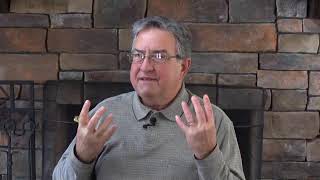
YouTube monologue by Kardec Trader exploring why skilled traders fail to convert knowledge into consistent performance. The speaker argues that an innate illusion of certainty and desire for control causes traders to ignore trading-account evidence; overcoming this requires emotional regulation and applied mindfulness to reorganize the brain to manage probability and uncertainty.
Chapters
That feeling of knowing that you're almost there, that you can literally feel prosperity is just right around the corner. If there was just this little thing that would happen that you would be able to go from where you're performing right now in your trading to the next level. But have you ever noticed that feeling of knowing is really a feeling of certainty? And here's the deal, it's actually an illusion. It's actually a stage that traders fall into all the time. They get to this stage and they think they're almost there. And they think, well, just a little bit more down the road, then I'll be there. But what they don't realize, that stage is not almost there. It is a place where they're stuck. In fact, the biology. Here's the deal. Here's the deal, friends. And this is the stuckness that happens for a trader. And the feeling of certainty. The feeling of certainty produces a sense, a knowing that you're certain that you're almost there. Despite that your trading accounts showing you evidence to the contrary, you know you're almost there. You can feel it. You know it, but you don't. The evidence, okay, from your trading account is saying there's, you're slip sliding away. It's not happening. The closer I'm getting to this, the more I slip, slide away from it. And yet there's that feeling you can't shake of knowing. That's the point. This is when two worlds collide, the world of knowledge and the world of performance. Because what's happened is that technically, after several years, you become technically a very good trader. You know how to trade in the classroom. But the problem is when you apply that knowledge under pressure of risk and uncertainty, you discover something. Is that the feeling of certainty, the feeling of knowing how to trade, suddenly disappears. In fact, you do not know how to trade under the environment that traders grade themselves on performance of their trading account. That's the big deal. So what I want you to hear is it's not really psychology, okay? It's below that. It's this need for humans to feel certain, to feel in control, that gets in the way. The brain would much rather believe a reassuring lie than to hear the truth. It will create this feeling. I know it's here. I know it's here. It's just right around the corner. When in fact it's not there.
Then that feeling state, okay, and it's one that's innate, it's inherent. It has been adaptive as a trait into our DNA for generations and generations and generations. The Key is it's also self deception, okay? It's that reassuring lie. And the traitor really has to break free of that reassuring lie because that feeling of certainty is not squaring up with the facts. Again, the only thing that you can really trust in your trading is what is your trading account telling you about the mine that you're bringing to trading.
The first thing that's going to have to happen for you to be able to get past this is to acknowledge that it's happening, notice that it's happening. Go back and just take a look at your trading and just start noticing that there was about a two year period that it took you to get to the point where you knew how to trade. Then I want you to see this period after that where you're a novice but you think you're an experienced trader or you may be an experienced trader, but you're not a professional trader. The professional trader has gotten past this sense of certainty, of knowing, the certainty of like, I feel like I know it should be happening. What they've recognized is that the mind coming out of this brain right here is built for certainty. It is built for the illusion of certainty even when certainty is not there. What the professional trader has done is they've moved beyond that. They have recognized that there is only an illusion of certainty. And that feeling of knowing has to be balanced against what the trading account is telling you.
That's the key, is you have to get past the feeling of knowing. It's really interesting in his book on being certain, a really great neurologist by the name of Robert Burton talks about this and he talks about how powerful it is and how literally it's getting out of that, getting out of that bias that's so incredibly hard in trading. There's no choice in real life, it's so slow. You can stay in that certainty and make up all sorts of narratives, all sorts of stories and explanations that supports it. But in trading, the truth is that it happens so fast that your trading account is telling you point blank whether or not the fiction, the narrative is actual, factual or not. When it's not, you're having to go, oh my God, okay, this is the certainty of feeling that I'm going to have to get beyond. Yes. Now it will manifest as psychological stuff, you know, like the feeling of certainty, the fear of the unknown, the fear of loss, you know, that I'm going to make it, I'm going to make it. That grandiosity, that overconfidence, the fear of missing out on profits, all that stuff, all that stuff, however, it's rooted in this inherent biological position of on your body, your brain, wanting to be certain. It rather feel the feeling of certainty than actually be competent. That's what you have to come and get beyond. When you do that, what you discover is you're going to have to regulate that feeling. You're going to have to regulate fear. Emotional regulation, literally volitionally managing the biology of the emotion is essential.
But that's only. Emotional regulation only gets you to the door of the mind. You still have to develop the tool to start saying, what is this certainty business? What are the beliefs in there? And what you look into is you discover mindfulness, or what I would call awakening the observer. You have to develop a tool that allows you to open the door of the mind and look in and actually see what's running the show. And what you discover is that the brain itself is. Is a community of rival programs that want certainty and they've duked it out and they've organized a self, okay? That's who you brought to trading. That self is going to be around certainty. It's not going to be around the management of probability. That's the key, friends. And that's why traders stay stuck. You have to develop a brain, a mind ready to manage engagement. Probability scares the bejeebers out of the organic brain, but it has to be cooled down. That's emotional regulation. Then you have to start searching within you for more inherent patterns, emotional patterns, emotional programs that can build a mind that can engage probability. And it just so happens they're there. That's what the professional traders have done. They have found how to take those emotional programs that have kind of been pushed to the side because everybody's been convinced of certainty and of making things happen. But when you go, no, that's not what happens. How do I manage probability? You reorganize the emotional programs through applied mindfulness that allows you to engage uncertainty. When you come to that moment, what you finally realize is this, is that you realize that the brain can be organized very differently for different purposes.
Initially, the mind you brought to trading was organized to survive in a whirl and to produce a sense of certainty. The mind that you're organizing for trading is different. It is being organized to be able to work with uncertainty and to think in terms of probabilities and let certainty go. So there you go, friends. What you're doing is you're building a mind that. You're building a mind that allows you to manage the probabilities within uncertainty and become comfortable with it. That's what a professional trader can do that an amateur trader can't. Take care. And if you want to learn more, go to my website, do some reading, look at more videos. There's lots of stuff there. Okay. Take care.
Sat.









