Cracking the Secret Code for a Disciplined Trading Mind
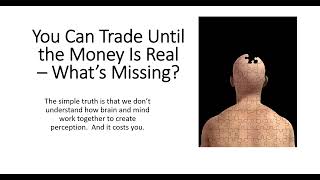
Randy Howell explains why traders crack under real money pressure using neurobiology: your caveman brain hijacks your thinking brain when stakes feel high. He teaches diaphragmatic breathing, mindfulness, and inner-part work to stay calm and trade by probability instead of fear.
Chapters
Broadcast is now starting. All attendees are in listen only mode. Welcome, everyone. My name is Randy Howell with Traders State of Mind, and I am delighted to have you here. First, let's take care of some business. Let's make sure you can hear me, okay? If people will go to the question box and type in, yes, sir, I can hear you. Thank you, Mitchell. Thank you, thank you, thank you. Okay, what we're here to do today is we want to find out, you know something, why is it that.
It just gets sticky. You, you kind of like know this game. You get the, you get your, you get your, you get that methodology, you get the rules down and you know to trade and then something happens. Okay? Now before we get started, also to let you know is I hold questions toward the end, but if you have a question, go ahead and type it in so that it's right there. And we won't have that pause between me saying, are there any questions? And having questions to answer. I'd really appreciate that. So let's get started. Here's the deal. And what is so prevalent, I see this every day, is you go, you know something I can trade, Randy, I can almost mint money. I'm just really good at it. And then the truth is, is, I mean, this even happened to me the other day with a client is that he said, you know, I didn't know. I thought I was still in sim. But what happens, I was really trading life and I did really well, Randy. I mean, I was trading five contracts and all this, it just went really great. And then, you know, after all said, and did I look back down and says, oh, my God, I wasn't, I wasn't in sim. Then he got scared.
There's code here. There's a code here that we need to learn to crack because a lot of people can trade well until the money is real. And then suddenly there's a missing piece that occurs. And.
Until you grasp that, until you get the difference between live money and play money, you're not going to get the psychological piece that's required for trading. So what I want to do is recognize that.
It starts with an understanding of the motivations of your brain. Understand your brain was anything but built to trade. And what you're doing is you're taking a brain that was built to do one thing. Its prime directive, survival in the moment, okay? And then understand that that bias predates your thinking brain totally. Your brain, your thinking brain is a reap, a recent arrival, okay? And what happens though, is that you don't know it is. And what I want to do is I want to show you something is that what you're looking at is a graphic that's been around since the 80s. And then it's our understanding of the way the brain structured has changed a lot. But this is a really good way of understanding it. That big glob of green you're looking at is the thinking brain. That is what makes us so human and so different than other social mammalians. And it's the part that. It's the part you want to be able to trade with because it can think in probabilities. It can hang out.
It can understand that losing is only landing on the wrong side of probability. Winning is only landing on the right side of probability. It can do all that. The problem is this. Do you see that yellowish piece of the brain? It's called the mammalian brain, the emotional brain. I call it the caveman brain. What happens is your thinking brain, that which makes. That's what you want trading, is a little tumor that grew out of that mammalian brain. And when it was forming, all these intricate, intricate communication networks are being established from the emotional brain into the thinking brain. Yet at the same time.
There wasn't much foresight because there weren't very many communication networks being developed from the thinking brain into the mammalian brain, the emotional brain. And ultimately.
Your thinking brain actually believes that it's separate from your emotional brain. But.
The truth is, all thinking is emotional state dependent. That means there's never a moment that you're not having emotions. If there's something going on in the markets where things are changing, you are triggered to emotions. The only question is which ones? And we want to say, you know something, the problem here is that if we were to sit down and design the human brain for trading today, okay? And not, not just a design build where you built on top of things and stuff like that, our brain would look very different. But that's not the way nature, that's not the way evolution had it. So the very true big flaw glitch that you bring is that you think that, that you can just. These emotions are pesky little things you can throw away. You are an emotional creature that rationalizes. You are not a rational creature who has a few problems with emotions. So we get that. And I love this graphic because it really, it shows what the problem is here. You're inside the brain, okay? And you notice that there's this geeky guy driving the brain. He's the thinking brain, and he thinks he's in charge. He does not recognize that control is an illusion. The control over outcome. And what's sitting beside him, I mean, right behind him, that he doesn't even know about, he doesn't even think about, is this caveman brain, that mammalian brain, that emotional brain that does not perceive reality the same way the thinking brain does.
Unfortunately, this Cape man brain, this mammalian brain, is making 95% of your decisions, 95% of your decisions. And you add stress in that has some real risk. And what you have is you have. You have an emotional brain that can just take over, wipe out the thinking brain. And you're sitting there going, wait, what happened? What happened? What happened? I don't get it. I don't get it. I don't get it. Well, you've just. You've just seen that the thinking brain doesn't know that the emotional nature is there and hasn't developed the skill sets to be able to calm that down and to be able to use it in a way that's productive for engaging uncertainty. This is what. Every time that you don't get in a trade, because I just. I don't know, I just need a little more confirmation. And then you miss a couple of trades out, then you're eager to get in. Then you have fear of missing out, or when you get to. You finally get into a trade, and it's going up and down on. Up and down, just beat you up. And it. It finally is profitable. You take that profit before it be taken away from you. That's also caveman brain. That's instinctual reactions to circumstances, and the thinking brain never knew what hit it. So I'm hoping you're beginning to see it. But at the same time, we want the thinking brain. We want it. The problem is your caveman brain was built to react instinctively to threat our opportunity. And that is the problem, okay, is that it's from another time in another place, but it's got all the communication going to the thinking brain. Until we learn to build a partnership with this aspect of our history. This is our ancestral brain. This is the one we bring to trading. That's loaded with. First of all, the brain is a negative assessment machine. It has a tendency to think negatively about future possibility.
Or impulsively about it. It also has the thing of where it doesn't understand survival in the the future. It only knows about survival right now. So you begin. Also, it is built to control outcome, even if it's a fallacy. It is built to think it can control outcome. That's what allowed our ancestors to become and involve into people like us. So we've gotten that. So we realize that that emotional brain is there whether or not you like it or not. And until you learn to deal with it more effectively, it's always going to cut you down. It's always going to be there. You're always going to trip it for survival and not for thriving in the future. So we're there now. What are we going to do about it though? Well, the truth is the thinking brain sees risk and reward with impartiality.
The emotional brain doesn't. The problem is the emotional brain really truly doesn't understand what money is. The emotional brain looks at money and what are you going to do with it? However, money has become symbolically related to power. The power to be safe, the power to control outcome. The power, the power to have status. And all of a sudden what happens is loss takes on a very different picture. But the thing is, the thinking brain, up into the moment of where there is risk, feels and looks as if it's in control of everything. And this is the deal. You want it there, but it's ill built to be able to be there when you're under stress. And out of that you're going, well, here's what, here's what the emotional brain's built to do right here. Think about it. Those big cats. This, this cartoon actually represents that cat, the saber toothed tiger. And he's about between 1200 and 1400 pounds. Those incisor teeth are 6 inches long and they, they is. There's enormous evidence that they preyed upon us. We were nice little gooey little supplements to.
To their diet. So now the caveman brain is scanning the savannah where it grew up for threats. The saber, the tooth tiger could be behind anything. An opportunity. Oh my God, there's a woolly mammoth. We're going to need to go get it. We have to get all cranked up. And here you're going, you know something?
Losses are simply not cerebral to the emotional brain. They are life and death. And what I want to do is I wanted to show you a schematic that really gives us a real good idea of what the problem really is. Okay, now here it is. We're having problems changing. You are looking. When it says sensorial input, that's what you see, that's what you feel, that's what you taste, that's what you hear. That sensory information coming into.
A system through your senses and it's converted into electrical charge and starts going in your synapses to the brain, where the brains can.
Interpret. Now, excuse me.
The very first stop when that signal reaches the brain is it's going to the thalamus, okay? This is a gut check. And what happens is it's going. If you saw the thalamus as a traffic cop at a really huge busy intersection with just all sorts of cars going back and forth, and he's got this under control, then an emergency vehicle sensory input comes up, and what he does, he stops everything to allow that emergency vehicle to come through. That's what the thalamus does. Then it's got a choice. When it. When it makes that critical appraisal, it's sitting there going, okay, well, there's no big deal. Here, I can send this. I can send this to the thinking brain. And.
That takes 24 nanoseconds, okay? That's the high road, and that's where you get all the logic that gets all the thinking and stuff like that. However, if that traffic cop in the thalamus says, oh, this is a dangerous thing, it's a. It's an emergency vehicle, what it does is it shoots impulse to the amygdala. Fight, Fight. And that takes half the amount of time. That's the low road. It's very easy. And it triggers. And all of a sudden, the reactive survival mind is in action. And all. You got that adrenaline running through your system, and you've got the fear running through it, and before you know it, it's just gone crazy. You would call that tilt. Okay? Even if both. Both are sent the good news and the bad news, understand that the bad news is there in half the time, and it's already in the bloodstream as chemistry, as emotional chemistry, altering the way you perceive. It's already there. But we need the new brain, the thinking brain, the neocortex, because it's got the reason and logic, and that's the probability mind that we need. The problem is the moment you throw threat in that really has teeth in it, like real capital, okay? Is suddenly what happens is that it is prone now to go over and say, oh, my God, I feel threatened. And again, caveman does not know about. No, this is a psychological threat. It perceives it as a biological threat to its being. Do you see the problem? Until you learn how to interrupt this and to reroute the biology of uncertainty, you're going to continue to lose trading.
Because your psychology will fail you under pressure. The psychology is the last part of the mind that figures out anything. If you understood.
An emotion as a locomotive, okay.
The Thinking brain, thought is the caboose. It's just along for the ride. It's doing, it's making up a story that supports whatever that emotion decides. Then the engineer driving that train, driving that locomotive, that's your beliefs. And what we are really looking at are the beliefs that trigger.
When you're facing uncertainty, whether or not you can engage that uncertainty successfully or not. And it doesn't lie. That's what happens. When you look at your trading account, the health or the not health of it. You're looking at a portrayal of the emotions, the beliefs behind those emotions being projected onto the markets. And you're finding out whether or not those emotions are effective or not, not right or wrong, effective or not. And that's when, if they're effective, you're going to be extracting more capital out of the markets than you put back in. But if they're ineffective, you're going to be putting in a whole bunch of money back into the markets. Now. So we're seeing this thing and we're going, okay, this is what's going on in my brain. And this is happening somewhere between 3 and 12 nanoseconds. And it takes at least 24 nanoseconds to get to the neocortex where your logic and reason is. Do you happen to see.
Why it is so necessary to be able to learn new skills that allow the neocortex, that thinking brain, that modern brain, to be able to produce the mind that can engage? Because it's already, it's bringing a brain that's built around fear. Okay, so now we've got it and we're going.
Well we begin to see, and here's the real problem is that once the brain invents a short term solution to deal with threat or opportunity over trading, it wires it into reactive pattern. Now here we have an example of real wires and stuff like that. Actually this would be organic, organic circuits, okay? You would be live wired and you literally through your beliefs, you are creating the wiring that fires rapidly. And again, it's already fired, it's already in the bloodstream before the thinking brain even gets knowledge of it. Again, that we have to slow this down and you can experience this, this tilt either as a fear where you're scared to get in the trade, revenge or over trading. You know, when you're, when you're getting outside of your plan and just how did I do that? Why did I do that? Because your thinking brain couldn't see it. And you're going to have to learn to be Able to do that? Yeah, that's what had happens. So the deal is this.
How do you, as successful as evolution built your brain to be able to deal with the complexities of even coming into industrial industrial revolution? What happens is that suddenly this for trading, the brain that you inherited from history is an evolutionary dead end. And what we want to say is, okay.
We know that trading represents a nightmare to the emotional brain. It, it doesn't. Uncertainty is a threat to its existence. Okay? And you will fight to the death. That's what happens when you revenge trade. And then what happens is that if you over trade, what's happening is that you're on the plane, you see the woolly mammoth, you get all excited because if you bag that animal, the clan's fed for a month. And you get excited and you're excited enough to go do something really insane, attack something 10, 20, 30 times your size, and somebody's gonna die. At least somebody's gonna die. But you get so excited about it that you don't see that you're over trading, that you're overextending your competencies. So the question is, how do we get out of this? How do we get out of this? What I want to show you in this next slide is where we need to really look. You see that appraisal? That's what that traffic cop is doing. And I want you to notice at first there's just an event that happens, then it goes through a quick appraisal in the thalamus. The emotion fires and action happens. So what we have to do is we have to find a way of slowing things down and getting at the appraisal. And a lot of that is instinctive. It's become instinctive, it's become reactive. And we're going to have to take it out of that mode. We're capable of doing this. That's the good news. We have a brain. When you were born, it was remarkably informed and it got organized by experience into the brain that you brought to trading. What we want to do is kind of open that back up and say, how do we need to reorganize that brain so that it can work with probability? And that is where it gets interesting. So what we really want to do, though.
We want to be able to work with that appraisal. We want to be able to slow it down so that it's not lightning fast on us. We can slow it down from like 225 miles an hour, which is the speed of electricity in your brain thought to about 50 miles an hour, which is the same speed that you have if you're talking your thoughts. That's how much you slowed down the brain. It gets you a lot more time, you gives you a lot more space. It allows you to start really rerouting and reworking with that appraisal. So ultimately what we're really looking to do is we're looking to recognize.
A very important fact. If you have heard that you trade without emotions, you are listening to advice that you will never be able to execute. If you're high functioning autistic, you'll have a different emotional architecture and you will be able to trade somewhat without emotions, not the ones that normal people like us have. But if you've just got normal architecture, what you're not going to do is you're not going to have freedom from emotion. However, because you're human and because you can, we are creatures that have, are really amazing. We have the capacity of having freedom of emotion. We know that the emotion itself is a biological action potential that triggers the moment. There is a change in status in the markets. So what we're doing is saying, how can I learn to be in charge of the emotions that arise when there is a change in status rather than the reactive one that's built around fear? What we want to do is we want to build one that's about approach. We want to be able to look at it, we want to stay calm, cool, patient.
So how do we do that? Well, it just so happens we have an answer. Okay. And the main thing is to understand this, why is this so important? It's this all thinking is emotional state dependent. Your thinking creates narratives, it creates stories, it creates alibis for what the emotional brain, the heart brain, has already decided. So with a little bit of control that we can have from the, from the neocortex back into the emotional brain, we need to start saying, hmm. If our job as becoming competent traders is not to stop emotions from happening, but to dictate what emotions are going to arise when you engage the challenges of uncertainty, particularly with risk involved, that's what we are out to do. And the very first thing that we're going to need to do is we're going to need to learn emotional regulation.
I want you to think of a time when you really got excited, you got really scared, you got really angry and I want you to look at that and I want you to start noticing the contorted face. I want you to start noticing you're holding your breath. Are you breathing really high?
Your breath? The Tension in your body are actually parts of emotion through emotional regulation. Bellows breathing, diaphragmatic breathing. What you can do is you can interrupt the emotion, say anger or fear by diaphragmatic breathing. Because in anger or fear, you're going to be holding your breath, you're going to be using the top third or sixth of your lungs and you're starving the brain for oxygen, and you're already at a deficit already with emotional regulation, with breathing, what you're doing is you are teaching yourself how to breathe in such a way that anger or fear cannot maintain itself. Or agreed, for that matter. Okay? And in calm state of mind, what happens is the thinking brain can come back online and can actually do what it needs to do. So that's what we're looking to do. Now, what would that look like? What would that look like? Well, in this, in this schematic, what you're actually looking at. And I want you to practice this and use your nose, if possible. I want you to use your abdominal muscles, okay? Your belly muscles. And I want you to pull air from the outside into your nostrils, down your windpipe into your belly. After you fill the belly up, let it rise to your chest just like here. And then when you release, you let your belly go and let it come back up and the breath go out your nose. So let's just do this a few times and I want you to see what happens to your mood. Okay? Pull air into belly. Expand to chest, hold, release. Slowly let the tension drain, drain, drain like honey flowing slowly out of a jar until you're loose and limp. Loose and limp like a sleeping baby. Let's do it again. Pull air into the belly. Expanded chest. Hold.
Release. Slowly let the tension in your body drain, drain, drain. Until you're loose and limp like a sleeping baby. One more time.
Pull air into belly, expanded chest.
Hold.
Release. Let the tension in your body drain, drain, drain. Now.
What do you notice about your mood, about your calmness, about your patience? Now, before you started the exercise, I want you to notice that ultimately breathing and tension are part of an emotion. That emotion starts with understanding that it's a biological action potential that's going to trigger when there's a change in status. And the first thing that happens is the emotion starts arousing. That's getting ready for action. That's all the tense muscles, that's the holding of the breath. And then what happens is it becomes at some moment of feeling, that's the chemistry now in the body. It's no longer revving up the feeling, the chemistry of the emotion is in the body altering thought. Then the other piece is that it has emotional motivation. Attack, avoid, approach. What we want to do is we want to have the emotional motivation of approaching uncertainty rather than attacking it or avoiding it. And then below that is meaning the belief, the belief that you hold about your ability to engage uncertainty and do well. The last piece is genetic predisposition that I don't deal with. That's totally past my pay grade. But I want you to notice, okay? I want you to notice what happened when you do this. This is, this is only the first step in the process that we use. And it's not going to. The truth is it's not going to solve the problem. Er, by itself is not going to solve the problem. But if you do not build emotional regulation into your process while trading, you're never going to get to the door of the mine. You're going to constantly get on tilt, you're going to get hijacked, or you're never going to see why all these things happen. But the thing is, is when you get to the door of the mind, we need something else there. And that something else is mindfulness. And what I would rather say, it's really waking the observer. Have you ever noticed that there is always a witness, okay, that witnesses things independent of doing them. And ultimately, as you awaken that observer, as you learn to awaken it and start recognizing that you and your thoughts are not the same, okay? You and your emotions are not the same.
You do not have emotions, you do not have beliefs. They're creating your experience. And by the way, you don't have beliefs. No matter how certain you believe you do. What you have are assessments about the world that have taken on the, the certainty of a belief. But the truth is, is you believe them because it's just simply the way the body makes sense of things. And now we're going. And when you look at the health of that trading account, you're looking at the results of guess what? Those beliefs, those beliefs and actions. And you know, out of that, by the way, for those of you who've never seen me, that's actually me, and doing a photograph of what observation would look like, okay? Now when you learn to observe and you recognize that you and your thoughts are not the same, this graphic really gives you a real sense. Most people I know, I was actually working with the guy today, he says, randy, I just don't know what happened. And you know, I just, it just happens. And I didn't even See it pass. And he's practicing the practice of mindlessness. That's on the left. He's identifying with thought, okay. Not recognizing that, no, you and your thinking are not the same. You are separate from thinking. And then on the other side, what you see is a person who's developed observational skills where he recognizes that all that talk and stuff is still going on inside the mind, but it's not you. You do not have to like, oh my God, oh, there's a horrible thoughts ringing and you're going, oh, look at that. What's running through my mind? That's really great. The good news is I know they're not me. And what happens is I can step back out of them and I can say, well, where did that come from? And that is exactly what we do. We develop that observing self, mindfulness. So you begin to see that not only are you not those thoughts, but you can actually alter the beliefs that thoughts are given life from. And that is when you can truly, truly begin to develop the mind that trades. And this is something that most people I know honestly are doing everything there can to avoid looking at their problematic thinking and behaviors. They stay away from it, pretending it's not there. And denial or projection onto others just doesn't work.
It becomes, it's not your fault that you're just human. This is a human condition, but this is your responsibility. I don't want you to see that it is your responsibility to develop these tools. The likelihood of you becoming a successful trader without these is fairly small. Some people slug through and they finally get through it, but they develop these things independently. What I'm saying is you can, you can make the road a lot shorter by simply saying, you know something, this is what's required to go in and take a look at what makes me tick and to change what I need to change so that I can have a mind that can be consistently profitable. So we've gotten that. And so what we really then want to do when we develop, when we actually develop the mind, the observing mind, what we want to do is we want to open the door of the mind to look in and start looking at that inner commentary. Have you ever noticed that there are thoughts raging around your thought? You could just be walking down the sidewalk in a city and stuff like that, and you've got opinions about everything. Just thoughts are flying around. Those are unconstrained, undisciplined thought action. And here's the deal is, as you develop this understanding of mindfulness and beginning to realize that there's an inner commentary going on. You discover that your brain itself is really a community of rival programs that are duking it out for control of the construction of the self. Listen to that. I know. That's a full bunch of them. You need to learn more about it. And the mind is a space where those emotional programs have been given voice. As a member of the ruling committee of the self, the trading committee, and what you discover is that the chairman of the board of that trading committee that's making all these governing decisions has been asleep at the wheel and desperately needs to wake up. Because these thoughts are going to run in your mind whether or not you like it or not. And it really depends on you as to which ones take dominance, which ones take control. Right now, the ones that trigger with uncertainty, because are simply the ones that were trained, were there, and nobody noticed, and they were already locked into pattern. And what we're saying is no. And this, and by the way, this is also me, is that the truth is that you have, as Martin Heidegger said is, man is born with a thousand voices, he dies with only one. What we need to do is we need to develop these aspects of the self, these inner resources, so that we can build a mind that engages uncertainty from a much more powerful place than.
The one that you thought about. And one of the things that's really difficult and why people have such a problem with this, you get the idea. Oh, there's a lot of these different in neurobiology, they're called special interest areas of the brain and Jungian archetypal stuff, they're called the archetypes. They're called the inner critic. It's what I call it. You have different parts of the self. And the truth is, if you don't hear voices in yourself, you are crazy. A lot of people don't want to hear voices. And somebody might think I'm crazy. Well, the truth, if you don't realize how complex it's going on in there, you're sitting target for parts of the self that are up to no good. The ones that keep blowing up your trading itself. So.
It'S really dangerous. And what, what are you looking for? Well, the first stop is you're going to have to acknowledge there is something that I call the inner critic. That is that part of you that stops you from being your most compassionate, best self. It's the part that judges you, it's the part that criticizes you, it's the part that sucker punches you to get into trades. It has a come on, come on, get in, get in. You make the money, you can really make money. Oh, God. Oh, you could lose. What if you lose? What if you lose that part? And I have a little picture of him here on the left and it was actually a drawing, my inner critic. And he, even when trying to draw him, he's saying, you drew me all wrong. But the thing is, is all of us will either have that judging and particularly if you come from a high achieving family that, you know, performance, performance, performance, you have to do, you have to do better than better. I mean, I have a client who is a veterinarian and her mom and dad are disappointed in her because they're specialists and doctors and they see the veterinarian as kind of, she could have done better. There's always that higher, high, high expectation or things can get more brutal where you never get a. You never get a. You never get really cared for without, you know, without a kind of a deal. Okay? There's lots of different ways that that develops. But, but this is the part that you're going, that inner critic is going to have to be confronted, have to be brought back. You have to master that part of the self and you're going to have to take that orphan part, the one that's shrugging in this thing. You're going to have to build that part of yourself up. Okay? Now.
Every time you hesitate, every time you revenge or over trade all that stuff, the inner critic's there. You have this part that's been left by itself again, the adaptive voice or the inner critic that really needs help. It needs mentorship. And the deal is whether or not you like it or not, if you're going to build the brain that can trade in uncertainties, you're going to have to become mentor to the brain that you got from history. You're going to have to say, I need to be a mentor to it. I need to develop it. And this is where it gets really, really powerful, okay? Because ultimately.
This is.
This is a depiction of monkey mind. This is all those chattering voices going on in the mind all the time. And what you're looking at is me. Again, believe it or not, everybody's getting a good look at me today. What you're looking at, though, is a person that's no longer identifying with those elements of the self. You're no longer channeling them into your decisions about trading and maybe even your life. What you're doing is you're finding other inner resources that you can pull forward.
This is where your inconsistency happens in your trading is that you have to learn to recognize a really big thing, that.
The price of freedom is eternal vigilance about who shows up in the mind to engage uncertainty. Okay? Because if you don't bring the right mind, the one that it can actually deal with uncertainty, and if it takes a loss, it's only landing on the wrong side of probability. It's not something about me. And if you win, it's not about you either.
No reason to. No, it's just you landing on the right side of probability. It takes winning and losing to a completely different level. That's what you're going to have to do. But the noise in the background, it will stop you. And why is it, why is trading so different than the rest of the living? Right here is that, you know, you can get away with a lot of stuff and you don't get splashed on. But in trading, what happens is that your trading account is like instant karma. It's just going to. It's going to hit you and it's going to reveal time and time again the opportunity for you to look at the beliefs that are driving your performances and to do something about them. As long as you deny it. Black Swan moments like this are going to happen if you really, truly look at it. Your trading account is the only friend you have in your head right now. It is telling you point blank. Because in trading, the time, the time compression is so great that you cannot sit there and lie to yourself anymore. You have to go, oh my God, I need to. I need to find out what makes me tick and I need to go in, I need to reorganize it. I need to work through that embarrassment and get to the point of where I realize this is really important. If I want to become a successful trader, I'm going to have to reorganize the meaning that I brought from all these years, from evolution, from my family of origin to circumstances. And I'm going to have to build a different mind. This is how a trader grows, friends. This is how a trader grows. Now.
This is where in trading you have to adjust your response ability to growth. You're going to have to recognize that there's no fault, nobody's at fault here. The human brain just is not built to trade. Now you can say, oh, well, but he made a lot of money. He made a lot of money. A lot of those people who are making a lot of money also are high functioning, autistic, okay? They have a different architecture, emotional architecture than us. And you wouldn't necessarily want to be married to them. And there are other people who have learned to redefine money so that it's no longer a source of their meaning, a source of their mattering, a source of their likability, a source of, you know, whether or not their. They have respect or not. Money is just simply a tool. A tool to be able to organize and to do things with it. Like Richard Branson said, money's for making things happen. He has a very different perception of money. And ultimately, you're gonna have to reorganize your beliefs about money, okay, so that winning and losing doesn't make a difference. And you're gonna have to reorganize your beliefs about winning and losing. You do not have control over outcome, but what you do have.
Is control over the mind you bring into the moment. This is where you can break the chains of pattern and can create a completely different world. The deal is, in order to get that world out there to work, you're going to have to do the work in there. You're going to have to produce the mind that recognizes that, come win or lose, you're okay as long as money has the ability of holding you hostage. About your mattering as a human being, about your worth as a human being, about your likability, your lovability.
It'S going to be. You're going to be slave to that master. The deal is, what I'm asking of you is to recognize that this is what can be broken. And the change that has to happen is in there, right between your ears. It can be done. It can be done. And it's something where obviously.
The way we do it is that we teach. In this particular image, this is Lord of the Rings, one of my favorite of all time movies, and one of the reasons that I'm so fond of it is that it is built around what is known as an archetypal hero's journey. Everybody in there is struggling, you know, they're struggling against the negative, the destructive quality of living. And what happens is they together come together, and they find qualities within themselves. Like Gandorf is the sage, he has wisdom. Eragon is the king, the ruler waiting to come and claim himself. You find that there's. You find there are warriors that are protecting the king. You find that there are caregivers who are helping to heal, helping to love and stuff like that. And at the same time, what happens is they have the courage to face their enemy. That enemy, for you, is really about self mastery. Your job is to produce that self mastery. My promise to you, though, is that within you, within your internal resources, you do have the discipline, the ability to maintain order of a ruler. You do have courage to face your fears. Okay, that is the warrior within you. That's an inner resource. You do have the ability to calm yourself down and to recognize that you are conscious creation and that it is a gift somehow, and that your job is to take responsibility and to grow that part of yourself so that it can really truly express itself. And then if you do those three things, what you do is you get the impartiality, the clear thinking of the sage that lives within you, and that's who you want trading. That's the part of you that can do the impartiality, who can do the.
Probability.
And the uncertainty and recognize it's just, okay, this is what's necessary. The caveman ancestors couldn't do this. We have evolved at the moment that you can do this. At the same time, you have to do it. You have to make a decision. You have to decide to wake up.
By the way, the sculpture is called the Awakening. And ultimately.
You'Re going to have to awaken what you can be. The possibility of. You can be the potential that lives within you. The potential is there, friends. But as long as you're locked into your beliefs that limit what you can see, then you're not going to find this awakening. And when you start waking up and a friend of mine who's made a phenomenal amount of money, 2,300 million dollars in the last several years, said Randy, I think the most important thing was one is that when I took a really serious loss early in my career, I thought my wife was going to leave me. Instead, what she did is she held me as we cried together. He began to understand that he was loved whether or not he won or not. And that helped him to grow. But then he said, I really had to rethink money, what money was used for. And if you look at him now, he's building, he's become really a philanthropist, and he's really developing programs that will exist far beyond his life on earth. You're seeing the conversations about money change, the beliefs about money and what money can be for you. And I'm with Richard Branson. You know, it's money's for making things happen. It's not about you. So this is things that you literally can develop in yourself. And the real question is, do you want to do it? Are you willing to go to the work, the effort to do that? I know That a lot of you have put in the effort, have done the 10,000 hours, have taken the courses, have bought the stuff, but there's still that single puzzle piece missing. If you're interested in that puzzle piece and putting it together so that you end up with a method edge, being driven by a psychological edge so that you truly can extract more capital out of the markets than you put back in. My invitation is a couple things. One is take a look at our group course. We have a summer one coming up. It's five group meetings with me and it goes and teaches you the basic skills that you are going to need to be able to build a mine, the trading mine. And the deal is, is that when you're there, we realize that time zones and we have a virtual classroom. It has 247 access access. And it teaches these skills all the way through. Okay, then if you sign up early and the reason it's really, we'll give you a gift emotional regulation workshop for less than $200. And it's something where you really need to get in early to this thing. We already have a number of people who've signed up for our next course and it's going to be when is it? September. Because what they're doing is they realize, okay, learning the emotional regulation sections of this thing takes about two to three months to really lock in.
And some people say it's important to me to do this. It's important for me to learn emotional regulation before I take the first class. That's the deal. Other people become really interested in wanting to work with me individually. It's highly comprehensive and it really gets into the deep stuff. Okay. And it comes with 10 sessions with me on Zoom. And it's a powerful multimedia course where.
You'D be surprised how much information is there. But the major thing is people choose that because they wanted to work directly with me. If you're not ready for that kind of stuff, at least get my free book. Okay? Go to the website, get the free book or and if you're really interested, go ahead and get my book, Mindful Trading. But then why not go to YouTube and watch 200 plus videos that I got out there for you to really dig into this thing and start really looking. That's what's holding you back. And then you'll also find articles and stuff like that. So there's lots of different ways you can kick a lot of tires. And as you become serious, there is a progressive way of going, you know something, do I trust this guy to really be able to do this thing. And the truth is, is that you're going to have to find that I want you to really engage it, take a look at this stuff and decide whether or not you're really willing to confront the self, really willing to take the bull by the, by the horns and say, I am the one who needs to reorganize the mind that I bring to trading. That's the missing piece of puzzle. That's the piece. Okay, so I want to tell you, I really appreciate you coming here and we've already got some questions and I'm going to shift around with my eyes and try to get this. This is Hugh. How long does it take with practice to move from a survival results mindset to a probability mindset? Well, I'll answer to you this way. I have seen people do that in two months. I mean, it just blew me away. I don't like people to do it in two months because, you know, what happens is we still have. They go through the course in two months and I still have another month to concern myself. I've also seen people take, they never do it. They're, they're really locked into their victimhood.
And what I would say is my success rate is around 30%. You go, well, that's not very high, but if you hit.300 in baseball, you'd be in the hall of Fame. So the key is, is that my course, particularly the individual one, lasts between three and four months. And that really gives you an idea of how long it takes to go in and take deep seated beliefs and to change them. The group course lasts for two months, but what I do is I give you access to the programming on their. Virtually forever until we stop being what we're doing. So that's not as. I can't pinpoint it other than more than that. It really depends on the two guys who did it in short order. Man, those guys were motivated and they were fearless about looking inside themselves. They were very focused. Okay, let's see here. This is John. Oh, good. If you have the available time, please elaborate more on the concept of negative assessment. Will you consider. Oh, that's different. Okay. Negative assessment. You know that our brain.
Is constantly assessing information coming into. Okay. And as that source, oral information comes in, it's converted to electricity, it goes to the brain and it's assessed. And unfortunately, we have a bias toward negative assessment. And that bias is rooted when we, when our ancestors, our ancient ancestors were coming down out of trees on the African savannah, they were, you know, 4 foot 5 that kind of stuff. And it just so happens that they were, they were sitting ducks for the big cats, the big bears and the big dogs, the canines that were around. And what they did is they developed a way of looking across the savannah and, and looking at things with a negative intent. You know, there was always. And if you've ever seen anxiety, you know, anxiety is foreboding about the future. Fear is about imminent biological threat. And you can begin to see that worry. And what happens is that it keeps us from moving further down the path, but it also keeps us safe. And we. So we have a biological bias toward it. And most of us also learn negative bias in the family of origins and the cultures we grew up in. I mean, think about it is that if you happen to be a girl, okay, in America and growing up with all the kind of stuff about having to be thin, having beautiful, you know, first of all, I wouldn't want to, I wouldn't want a daughter that looked like a model in the first place. Okay, but you're looking at it and you're saying, I see that. Okay, I get it, is that I'm already having negative assessment. I'm not pretty enough. I'm not pretty enough. And those negative assessments begin to lock us up. What we want to do is to confront those negative assessments and find out. A principle is that there is an inner critic that's always going to be negatively assessing you no matter how well you do. And you have to be able to step out of that negative assessment. That's my answer right now, John. Okay, this is Jim. Would you consider creating a 10 minute audio tape that puts the trading day into perspective? That by listening to it it will help me sleep and also prepare the trader's mindset for the next day. Thanks, Jim. Well, that would be in my group course and in my individual stuff. That kind of stuff is done. Okay.
I'm pretty free with what I give away, but I can't give intellectual property away. Okay, here's from John. Okay. Noticeably less muscle tension, which acts as a clamp on my forehead. Yeah, you've gotten the start, John. I had an insight that we are just thoughts inside a bag of bones and muscle. Any thoughts and thoughts are illusions. Well, the quantum mechanics people would go even further than that. They would say that all reality is simply potential and that the observer that you are of that potential is what gives form to it. That is basically where you would see that I'm from. Okay. So I do consider.
The brain, understand the brain.
Is taking in information and Making its best guess, having never been out there and experienced the real world before. It's in a dark cavern. It's never seen, it's never heard, it's never done any of those things. And yet it's making up stories about who we are in the world that is illusion. Okay, so there. Okay, last one. Is there a limit to the number of board members that contribute to the mind's decision making or just the recognized archetype? What I've done is in the, in the archetypal journey of Carl Jung, there are 12 archetypes, okay? And I use four simply because those are the minimal needed to produce an effective trading mind. But as people grow, there are other habitual, habitualized trait, traitorized traits that do form the archetypes. And there's more. There are definitely more. But even in my, Even in my individual course is that I'm not looking to get them beyond these basic four. These are the basic four, along with the inner critic and the. Or your orphan nature that can produce the kind of success that you see as possible in trading. Okay? So. Okay, are there any other questions? Because otherwise it's actually right at quitting time. So if there's no further questions, then what happens is I just simply want to thank you for being here. And if I can help you, let me know. Okay? I'd like to. We can talk about it. And the deal is, if you want to talk about the individual course, be serious. You know, it's. We get people all the time who want to have an hour of my time and shoot the breeze and think I'm going to impart some sort of knowledge to them and we just can't do that. Okay? So I want to thank you. And no matter what, what I want you to do tomorrow is the exercise I did on relaxation. I would like for you to practice that before you're trading and during your trading. And then I want you to start noticing. Oh, that's just the touch button. That's just scratching the surface. Okay? But until then, happy trails to you. That's from Roy Rogers many years ago. And that was his sign off after he'd beaten all the bad guys and was going off with his girlfriend Dale Evans, off in the sunset and they would sing the song Happy trails to you until we meet again. Thank you for your time. Goodbye.









