Discovering the Hidden Strengths that Transform Your Trading
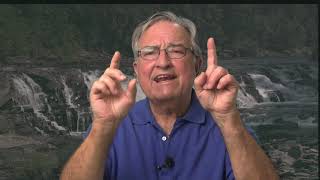
Rande Howell explains why traders sabotage themselves: an ancient brain that treats losses like physical threats. He teaches emotional regulation through breathing, mindfulness to separate thoughts from identity, and self-compassion to decouple self-worth from trades.
Chapters
You know that there are hidden strengths living within you. You can see that potential in your trading and you can see the strengths that you bring in play. Occasionally you see the talent, but they haven't become a skill yet. And what we're really looking for. How do you go about closing the gap between what you know is possible and what you're seeing in your trading account and in your performances? That's the big deal.
To get to there, there's a couple of things that are going to have to happen. The first is you're going to have to acknowledge that you're actually having a problem in trading and that you, you are literally the weakest link in your trading system. Nothing's going to work until you come to that moment and have that level of self honesty. There will always be something to seek. A new teacher, a new system, a new this, a new whatever. Until you finally quit chasing the holy Grail, you're not going to find what is in here. These deep abiding gifts that can transform your trading into literally where you have an intentional mind that you designed to bring forward and engage uncertainty with, rather than the mind that you inherited from evolutionary psychology. And that's where it begins right there. The first is acknowledging you have a problem. The second is understanding the problem and a way that becomes actionable to you most. They want to try different things and do this, but they don't understand the problem. So they're just shooting off into different directions and they never find what literally is allowing them to produce the skill sets they need. Now, when you finally get to the moment of where I understand the problem, and I'm going to put it to you this way, we are an emotional being.
Who believes that we're rational. We're not. We're an emotional being that rationalizes whatever the emotional brain has already decided. Now, that's what I call caveman brain. The very first stop here is to understand that a chunk of your brain is from the caveman days. A long, long time ago, life was very different than it is today. However, when you're trading, that's exactly what you're bringing to the game. You're not bringing this sophisticated theoretical mind that you're taught. No. What you're bringing that drives that sophisticated thinking mind, you're bringing a brain with you that evolved around fear and good reason. We were truly preyed upon and we had to learn how to react instinctively to perceive dangers in the environment. So good were we. We could see at a distance, we could see trouble coming, and we could Avoid it. Now, today we call that worrying, or we call it anxiety, but back then, it was a valuable skill. Do you see now how the caveman brain that you brought to trading, no matter how good it was, it's no longer good. Now, even the brain that you bring, if you produce success in a particular domain of business or corporate, you discover that winning attitude, business, that perfectionism that drives all that. What you discover is that you no longer have the control that caveman has to have. You no longer have the control over whether or not you win or lose, which was absolutely indispensable for your caveman. Winning meant I prevailed for the day. Losing meant I became somebody's meal. So now you take that brain that you bring to trading, and what do you think it's going to interpret? The potential of losing.
Yes. Potential of death. You're going to trigger. You're not going to want to take that loss. You're not going to know. I'm not going to do it. No. You're fighting the same as your tiger in your emotional brain, in your thinking brain, you're working with probability. Until you can align those, you're going to be just in a tough place because you're going to have the mind right when you're not under stress. But the moment the stress shows up at winning and losing, the more you add money to the equation. There you go. Because money is the equivalent of life and power and safety from the caveman brain. So now you begin to see, oh, this is what I'm dealing with. Yeah, that emotional brain of yours is the locomotive that drives the train. Call you the thinking brain, that highly doubted thing that everybody promotes and stuff like that. Oh, just leave your emotions by the door. Just trade. Trade what you see, not what you feel. Well, you can't do that. That emotional brain is the caboose.
It's the caboose on this train. And the engineer of that train is your belief systems about your capacity to manage uncertainty. This is the brain that you bring to trading. You don't have control over outcome, which it's built for. You don't have control over winning and losing, which it's built for. And it's also built to be able to predict outcome. Where the market takes a turn or where the deer shows up in the trap. All that stuff it has no control over. It has guesses, but that doesn't make it true. It just makes it a guess that may or may not work out. That's what you bring. And when the brain experiences not working out, confusion Vulnerability. Well, guess what? It flips out. And all of a sudden, what you swore you would do, plan my trade, trade my plan, you can't do anymore. It's totally gone. So there you go. Now you have the problem, and how do you go about solving it?
That is literally the evolutionary psychology that you bring to the game. You're not going to change that it's there, but you have to produce a kind of workaround that allows you to get around the instinctiveness, because your instincts, your survival instincts will kill you. In trading, okay, on the African savanna, up until 10,000 years ago, absolutely, you had to have them to survive. But now in the trading world, that's all probability. There are no lions, tigers, and bears. But your emotional brain doesn't know that. It can't know that. You're going to have to learn how to work it differently. And that's actually a problem because you've already got this thing about bringing that emotional brain in, and that's tough. I mean, you're trying to turn around ships and going one direction in 6.5 million years. But your personal psychology about your mattering, about the meaning, about your competency also comes into play. Most of the traders I work with, at the very core of it, they're scared they're not going to make it. They don't know if they're good enough. They don't know they're joking. They hear a voice inside their head that says, you're not going to make it. You can't do that. What were you thinking? That's common. That's just not you. That's. The vast majority of the trading world, they have not trained that instinctive brain to do otherwise. And what happens is, with wanting to win and not losing so prevalent in our culture, what you get is, oh, my God, you know, if I win, to the caveman, that means I prevail. If I lose, I become somebody's meal. So you can see that. You can see it. You can't lose. And also, that prediction stuff, you know, the thing is, you may or may, occasionally you're going to get one of those nice sweet spots where you predict what's going to happen in the markets. Don't take it like the truth. Don't take it like, oh, this is a skill set. I have always. No, it's a guess you made that was accurate. And hopefully with your system, it's accurate a good bit. However, now we see the problem in a very different way, and what we realize, oh, my gosh, yes, my survival instincts are killing me. Is there hope for that caveman emotional brain to transform itself into a mind that can truly trade? Yeah, it is. And where it starts is recognizing that first of all, emotions are not psychological. They take over your psychology and direct it. Whoops. Saw it a lot. But they're biological. They're biological action potentials. And it's so built that when the emotion experiences a change in the environment, say a trade going against you or a potential setup coming, it triggers to automatically build the belief and project into the future what's going to happen. And we're negative thinkers and we may have that optimum bias, but it's going to get us in trouble. It's a bias, it's not the truth. So the first point is to begin to train that emotional brain into regulation. Emotional regulation. If you go to my website, if you look at my stuff, I place an enormous amount of importance on your ability to breathe diaphragmatically. Bella's breathing in the midst of stress. You've got to do it. You've got to be able to feel the tension in your body and release that tension. That's the emotional arousal. And it's about to do a knockout punch. Your job is to slow it down so it never reaches the threshold, flips over and becomes chemistry in your body. When you cool that down, you have a chance in mindfulness. Another skill that I teach, what you're fundamentally learning is that you and your thoughts are separate from one another and that actually your mind is really more like a committee of various forces, aspects of your being, of your humanness that are duking it out to be able to organize the potential self that you are. And friends, that's why you can't achieve the potential that you see as possible. You're locked into a very old pattern. And until you learn to be able to disrupt that and to build a new pattern under stress, you're going to trigger back to there. So there you go. Now we've gotten to the mindfulness, but we also talked about those powerful strengths living within you. You do have the discipline, the ability to maintain order under pressure of a ruler or a leader. It lives in your genomes.
By none other than natural selection and evolution, you have the courage of a warrior that lives within you. Not no, but really the capacity to turn toward your fear and to face it. You also have the capacity of self soothing, self compassion of a caregiver. And it's actually one of the hardest, most lacking of the emotional programs that traders start with. Without compassion, you cannot change the old beliefs you have about your ability to manage uncertainty as measured by your trading account. So you have to develop that and bring that. And you realize, okay, I'm going to start having self compassion for myself as I take losses and I calm myself down about wins so that I'm sitting there and I become patient. I don't have to prove anything to anybody. I, I have inherent worth living within me. That's the trick, friend. Winning and losing no longer is material. When you discover that inherent worth that comes from having self compassion and you build the trading mind around inherent worth because then you calm the fears down. And what you have there is, you have these strengths becoming the intentional mind rather than the one that you inherited from history.
Now you've got something cooking. You have the ability, okay, I have inherent worth. I know that I am just that I am. I know that I'm not defined by my performances. And yet my performances really truly do not tell anyone anything about my inherent self worth. It's just competence at that time. Competence you can do something about. It's not about you as a human being. You pull all that together and what you discover is it's a completely new mind that is rooted in the emotional ground of discipline, of courage, of self soothing and impartiality that rises up to meet the uncertainty. That's the trading mind. It's not natural, but it can be taught. And what I've done is, I've explained the system I teach. It's pretty simple in thought but. But it's hard to change that locomotive. You have to really work on it and I encourage you to learn more. Okay, this thing's not going to go away. You can wait for as long as you want. You can play the game with the trading account and what you believe all you want. When it comes down to it, you really come to understand that I am the one that has to change the beliefs that I am actually performing. Not saying I have, but actually performing by virtue of your trading account. And I'm going to take responsibility for them. I'm not going to project blame on anybody. I realize that I'm capable of this. The strengths are there.
I have to decide. I'm willing to reorganize the self that I am into the potential of those strengths. Friends, that's when you start cooking. That's when you start really trading from the trading state of mind. Intentional mind. Come learn more. Go to my website www.trader stateofmind. Read the articles, watch the videos on YouTube. There are hundreds of them. Really start seeing what it takes. Okay. And until we meet again, friends, I wish you well. I wish you well in trading. And really, take a look at yourself while you train. Start noticing that the potential is there. All you're looking for is someone to help you develop that potential into a reliable skill set. Come and learn, friends. Come and learn.









