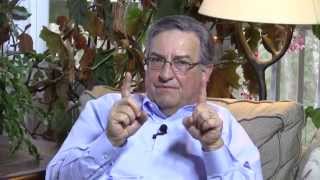
A single-speaker YouTube lecture (Kardec Trader) arguing that emotion is inseparable from thinking and critical to trading performance. The speaker explains that ‘rationality’ is itself an emotional state, that putting capital at risk activates primitive stress circuits which distort perception and behavior, and that expert traders learn to recognize and regulate arousal to reach a narrow optimal zone of cognitive readiness. The trading account is presented as diagnostic feedback revealing underlying beliefs (adequacy, worth, power) which traders can learn from to develop discipline and impartiality.
Chapters
What does emotional intelligence have to do with performance in trading?
To start with, let's take a look at what emotional ignorance does.
Everybody's heard the term, hey, trade what you see, not what you feel, or trade what you see, not what you think. In emotional intelligence, what you discover is that can't be done is the truth is what you see is built by what you feel. Literally the very thinking that you're capable of is coming out of the chemistry of the feeling state of an emotion. So right there, what the person has already done is they have said, you know, if I'm being of a rational mind, then I'm not in an emotion, I'm not feeling. The truth is rational is just simply one emotion, an entire category of emotions. It's just that it's also really valuable in trading. But most people mistake being rational impartial with not having emotion. That's just not true. Being rational is a powerful emotion that's used in trading, okay, but it's contaminated by fear all the time. So let's take a look at this and go, well, what was it? I really need to trade. Well, ultimately you begin to understand that the brain, emotion and mind are deeply interlinked. And the moment that you try to take them apart, you start failing in your performances and trading. Ultimately, all thinking is emotional state dependent. So really there is no escape from emotion, but there is freedom of emotion. The skillful trader, the expert trader, the one that's really making all these dreams come true that you read about and that you want. Those are the ones who have figured out how to use their emotions effectively. It can be done, but the first thing is you have to learn to not ignore them. Otherwise what happens is, you know, it's being in stress is the problem. When you're not risking capital, when you're not risking the unknown. You really don't have any skin in the game. And it's easy to produce an emotional state, say rational, and all of a sudden your performances in simulation are great. The problem occurs when you put skin in the game.
When you put capital at risk. Suddenly everything changes. Suddenly the dynamic tension and the struggle between part of your brain wanting to produce a safe environment where everything is predictable, particularly outcome is in cahoots, is in massive conflict with another part of your brain that has to be able to learn to manage, to manage probability, to manage the probability and the vulnerabilities.
Of not knowing. That's what the great traders know. You see this dynamic tension between the two, and here's the point is that when you're under stress. If that can't be managed, that's your blood pressure, that's, that's your heart rate variability, that's your skin conductance cranking up. What's happening is your brain automatically is reverting to older, more primitive emotional circuits that fire and produce behavior. You see it every day in your trading. You see it when you hesitate even though all the criterion of a setup are made. Or you see it when you jump into trades and the setup's not even there. You imagined it's there. But when you, in hindsight you see it wasn't powerful. This is all emotional intelligence because what the brain is really doing, you have never seen the markets, you have never seen information that is correct in the absolute way. What you are seeing is your brain taking sensorial modalities, organizing that modality into a particular perception. And it's called a virtual simulation based on your beliefs about your ability to manage the unknown. That's where it gets tricky. This isn't about what you say you believe. This is about the actionable beliefs that are actually occurring under stress of performance. That's when you begin to see what are the beliefs behind the emotions. Do you actually believe that you can prevail or have the probability of winning when managing the unknown? Your trading account is going to show you every time. If you begin to look at your trading account not as oh my God, there's my P and L statement, is it going up or down? But if you take a look at it as oh, this is actually giving me information about what beliefs, emotional reactive beliefs that I'm bringing in to the performance of managing the unknown. Trading the uncertainty of the unknown, you feel the vulnerability. Most people try to push that away. Dangerous. Instead what you do is you turn toward it and you go, well, what is this revealing to me when I take a loss? What is the trading account revealing to me and what you discover? It reveals the self learning belief that's driving the emotional system.
Ultimately. If you took a look.
At peak performance, the physiology of peak performance and the psychology of peak performance, you would see a bell curve. And on one side you would see, you would see what was known as the rest digest where you're calm, you're cool, everything's collected. Unfortunately bad state for a trader to be in. You're not ready, you're not prepared, you don't have, you have to have some arousal. On the other side of that bell curve is the fight flight syndrome. That's all of a sudden where you start feeling the tenseness you start holding your breath, the motions revving up, ready to trigger under stress to reactive solution that's already been there. Dangerous for traders. But somewhere in the middle is an optimal zone of where you have a lower level of arousal. That gives you cognitive readiness, preparedness. You're ready, okay, you are focused. Boom. You're alert, but your body is not triggered. That's a very narrow window, and most miss it. The moment that you start seeing arousal symptoms, you need to be regulating them. You need to have the emotional intelligence to regulate them. Here what we're saying is it starts with arousal. Then you begin to say, what beliefs? Once you calm the arousal down through emotional regulation, then you say, what beliefs am I projecting onto the markets? You use your trading account to help you find them. And it'll be about your adequacy, your mattering, your worth, and your sense of power. This is where you become the teacher. You turn toward the emotion, not avoid it. You turn toward it and say, this is my teacher. And you're learning to master the fear. You're learning to master the euphoria that causes revenge, trading or over trading. You're learning to master the emotions that you bring to trading. You become emotionally intelligent. You discover that, yes, emotion has to be. You turn toward the fear. You calm the fear, not breaking, Beat it up. You protect yourself. And then all of a sudden, you realize that there's this powerful level of discipline available to you and this impartiality that creates the trading mind. Those two emotions, discipline, impartiality. Those are the ones that you want to view the data from. That gives you the kind of read that allows you to become the winning trader, to become the consistently profitable trader that you're seeking.
Thank you. I hope you've gotten this, and I hope you've really been able to use this and build it and your ability to trade into the unknown and to be able to manage the emotions you bring into the moment. Thank you. Have a great day.