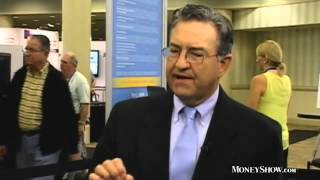
A short interview with Randy Howell on managing the emotional impact of trading losses. Howell emphasizes retraining the brain from seeking certainty to thinking in probabilities, separating self-worth from trading performance, and using breath and emotional awareness as practical starting techniques to manage fear and improve trading competence.
Chapters
How do you handle the emotional component of trading losses? We're talking today with Randy Howell. Randy, that's a big question facing every trader. What should we be doing?
There are two distinct things. One, you actually have to train the brain because the brain is biased to seek certainty. It wants to be right. It's survival value that's been built into our system for 6 million years. And ultimately what you have to do is you have to retrain the brain so that it's more probability based, so that you're no longer looking, you're actually managing uncertainty. You have a mindset that manages uncertainty to be able to build probability rather than to look for certainty. Completely different animals, but people hate to be wrong.
So how do we retrain our brains to look for probability?
Well, people have to change the way their minds work if they're going to become a competent trader. Is that, you know, our brain grows up with its bias. It grows up in families, it grows up in cultures and, and we're even graded in school about taking losses. You know, we want to make the best grade, we don't want to have any losses. And we get trained like that and we take that mind into trading and it blows us up because you are no longer working with certainty, you are working with probability at that time.
Now, isn't it the case that people kind of confuse their identity with their trading performance?
Oh, absolutely. What happens is that a person, I actually call it the difference between net worth and self worth, is if you are trading and you're trying to prove yourself by your performance in trading, you're already six feet under the ground in trading. One of the best things that happens is that you find a deep inherent worth within the self that is not negotiable.
When you plug into that, you realize that trading is a performance.
It's not a condition of who you are in the world. And when you free yourself from it being your identity and suddenly all you're doing is you're looking at it. This is competence in a particular domain of performance. Suddenly the whole world opens up and you can focus on competence in a domain rather than trying to prove your worth.
Now I realize that developing this kind of emotional competence in this sense would be a process that might take some time. But what are some tips to get, get started.
It all starts with breath. It's been done for 5,000 years. And you learn how to manage the emotion, the triggering and the growth of an emotion by your breath. And they're directly linked. The breath is an element of the emotion with fear. You alter the breathing, you alter the way that fear can show up. Then you look at the feeling of an emotion. You start saying, okay, ultimately what happens is fear, for instance, is an emotional state that believes in the certainty that bad things are going to happen. And what you're doing is you're catching that feeling long before it erupts because a feeling is actually the chemistry in the body. That's what you feel. And when you feel the emotion, it's already distorting thinking. So what you're doing is you're calming the system down and you're beginning to create a very different subset in your mind about who's trading. It's no longer fear. It's from discipline. And these are inherent, indwelling resources in the mind and you can easily learn to bring them forth and to develop that mind.
Well, some great insights today. Thank you so much, Randy.