He Makes 7 & 8 Figure Traders With This Simple 5 Step Framework - Inside A Top Prop Firm
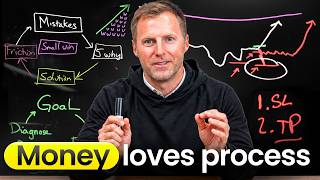
Jeff Holden from SMB Capital explains how traders build wealth through a five-step playbook framework. Start with one solid playbook for a small win, then expand to four as you develop. A+ setups get bigger position sizes, but baseline trades keep you consistent between the rare high-conviction opportunities.
Chapters
We've had hundreds of traders do this and they almost always can get clarity on what the real issue is. And so this is the diagnosis part of it for traders that are not consistently profitable. We want them to start with the smallest win they can possibly get, and that's usually one playbook.
The reason for that is this man consistently makes 7 and 8 figure traders.
Introducing from SMB Capital, Jeff Holden.
The big thing for our goals as a trader is to take your P&L curve and it needs to look something like that. You have this process that you have to use in order to get to a much more effective solution, and even then you're going to run into friction. What do you do when you experience that friction? Well, ultimately what winds up happening is—
Jeff is the head of trader development, and in this Chart Fanatics episode, he breaks down the exact framework that he uses day in, day out with all the traders at SMB Capital.
All the research shows if you try and work on two goals at the same time, you're probably not going to get any of them very far. So we encourage everybody to start with the most important one. So in this case, it would be stop loss.
You will learn the mental framework necessary to become an elite trader. All this and so much more in this special episode of Chart Fanatics.
How traders are starting to utilize AI within their trading. A lot of people describe in trading that click moment. Would you say that a lot of people's looking for that one thing? Do you find there's maybe a bit of friction or hardship when you see traders first start to implement this?
So we had to look at this model from our best traders that are developing the fastest. How are they doing that? What we found is—
Welcome back, everyone, to Chart Fanatics, the go-to channel for all of the very best trading strategy and concept breakdowns with some of the very best traders in the world.
Talking of which, today we are back in New York and today I'm missing out on the opportunity to be on the S&P floor. The energy is unreal when we were there last time. But we had to do this to be able to do Chart Fanatics. So you already kind of got a hint of who we may have with us today. But today we're going to go through the process and I'll let him explain it himself. But it is the one and only, the head of development, the one and only, the head of trader development, Jeff Holden.
Very happy to be here.
It's my absolute pleasure. I know we got to do our roundtable just over a year ago.
Can't believe it's been a year. Crazy.
It really has. But it's been a crazy time in the markets as well. And we've been meaning to do this for a while, so I'm so happy to be here again, missing the energy on the floor. Yeah, we'll make sure we'll give insane value today. What is your plan for today's session?
Well, so in our trader development meetings, we really think about things over a 2-week period. So when you asked us to do this, this show, we had to think about what could we do that usually takes about 2 weeks and synthesize it down into about 45 minutes that we can really add value for everybody. And one of the models that we use on the desk is something we call the Momentum Model. And it's different than what a lot of people think. So we're going to walk through the 4 elements of it. And within each element, there are little subsets that we really want to make sure we're hitting appropriately. But at the end of it, it's a model that we usually teach over 2 weeks. We're going to try and do it today in 45 minutes. We'll see if we can do it. And hopefully it's something that every trader can use because it's something that we see developing traders use. It's something we see experienced traders use. And when they're using this model, they're building momentum in their trading. It's kind of separate from your P&L. You know, the big thing for our goals as a trader is to take your P&L curve and it needs to look something like that. That's what everybody wants, right? And people starting out will tell themselves all sorts of wonderful stories. If I can just make $500 a day, do that in perpetuity, I'm going to be perfectly fine. $1,000 a day, you know, whatever it is. And they want that straight line. We can't say that we consistently see P&L curves that look like that. A lot of times people's P&L curve unfortunately will start to look like that and then kind of wiggle around and not really go anywhere. So we had to look at this model of from our best traders that are developing the fastest, how are they doing that? And it's a model that's kind of this process that you need to be doing every single day. There are 4 elements to it. Within those elements, you know, there are a couple of steps that you can do, but it's really something anybody can do on their own. And if you're doing it, you're really going to kind of start to experience that momentum that leads to your P&L looking like this.
So what would you say the first step is then?
So a lot of people start their year with, with setting goals, right? Like, you know, when you start out as a trader, you set a goal and the thought is that goal is where I want to be. Well, what's the first thing that you experience when you set a goal? Well, one of the first things that we see people experiencing when they set a goal is they run into what we call friction, right? Friction is you have this wonderful plan, you write it out in this really nice statement, and then as soon as you start acting on it in real time, the market slaps you in the face. You make mistakes, you, you know, you run into challenges. And unfortunately, what happens to a lot of people is they blow that up and then they try and come up with a new solution. And I think especially in trading, it's really hard because you can say nothing's working, I need to start fresh. And essentially what you're doing is going right back up and setting a new goal. Now, that process doesn't really build a lot of momentum because what you're doing is kind of blowing things up, starting over, blowing things up, starting over. I think a lot of people have been there in their trading and unfortunately it winds up with I failed this challenge or I blew up this account or I did that and I kind of have to start over. Yeah. For traders to have that momentum and that growth, we realize that that's not a sustainable model at all. So we kind of had to think about and really observe from the traders that are developing fastest on the desk, how are they actually growing? What are the steps that they're using? So we kind of scratched all this out.
It's actually interesting you mention that because the timing of this release will probably be at the stage where people have maybe just hit that. Yeah. Right? The new year right now, we're at towards the end of January when recording this. And by the time this comes out, people probably have gone through one cycle of exactly what you've explained. So I'm guessing next we go onto what the actual process should be.
Well, that would be a fun thing to do, right? So what we've found is, and it's not, this isn't a process that we think you have to do, it's just what we have seen work. That's why we're sharing it today. Again, we're trying to get it down into 45 minutes. The way we do this is every day over the course of 2 weeks. We teach it, we reinforce it, we give people steps to do. And so we're trying to get it down to as short of a time as possible. What we found is if you start with your goals, that's a really nice place to go. But there's the old Mike Tyson quote, everybody has a plan until they get punched in the face or whatever it is, right? So what you really need to do is you need to have these goals. I think goal setting's a great thing to do. But one thing we ask people to do within their daily report cards— and I know you've probably talked with Lance and he talks about daily report cards. We're big on daily report cards. One section of your daily report card should just be mistakes. And what we mean by that is not I'm such a bad trader or anything like that. What you really want to do is admit to the fact that You make mistakes as a trader. We all make mistakes. Actually, some of those mistakes are things that can turn into tremendous opportunities for growth. They can turn into tremendous trading opportunities because you thought you saw something, but you were missing a key piece of information. So we're not really afraid to make mistakes on our desk. In fact, the people that make the most mistakes, as long as they're doing the right things after that, tend to experience the most amount of growth. The people that hide from their mistakes or avoid their mistakes tend to just stay very stagnant and then get into that really negative cycle really quickly.
Do you think there's a misconception within trading, especially with sort of newer traders where they assume you cannot make mistakes as a trader and therefore whatever they do happen, they end up kind of putting themselves down a lot more than they probably should be and actually doing the opposite of what is necessary?
I think that's true. I think that there's this idea that in trading you want to be perfect and I can tell you from everybody that trades on our desk, none of us are perfect. We're always striving for more. But I think that goes into a little bit of the mindset shift that you have to have as a trader. You know, you have to have a growth mindset. I think if you're trying to be perfect, unfortunately what can happen is as a trader, you will hit a P&L number, you will make a really good trade, whatever it is, and then you'll be satisfied with that. And as a result of that, you're not focusing on the market, which is this opportunity-generating machine. You're focusing on yourself, which is really limiting considering the opportunities generated by the market every single day. That's what we're there to do is just capitalize on the opportunities generated by the market every single day. One of our core beliefs is that the market is an opportunity-generating machine. So for us, we have to admit to the mistakes that we're making so that then we can move forward.
Trading education is completely broken. For years, the industry has been purged and poisoned by bad actors, fake results, and strategies hidden behind paywalls. But in every industry, every once in a while, there comes a catalyst, a moment in time for change. Now imagine a world where elite trading education was entirely free. Education with no hidden agenda. Verified trading results, and real profitable strategies, all for free. Welcome to Chart Academy. Chart Academy is the world's first all-in-one platform for trading education. Chart Academy is free. No catch, no upsells, no strings attached. World-class trading education completely free.
Hi, My name's Randy Howell, and welcome to my Chart Academy Masterclass.
This is completely revolutionary. The biggest change in trader education in 20 years. My name is Carmine Rosato. I'm a verified 7-figure trader. I've been trading for 10 years now. The reason why a lot of traders fail is because they— Ultimately, this work is about self-mastery.
Trading education will never be the same again.
Browse hundreds of hours of content in forex, futures, stock, options, and crypto from the best verified traders traders on the planet, all in one platform. Experience a completely personalized trading plan tailored to you and your goals. Reach milestones, redeem points, and earn rewards with a massive global community. Whether you trade Forex, futures, stocks, options, or crypto, Chart Academy has something for you. Join the waitlist now and be part of a movement that is going to change trading education forever.
The next step in this process. So you're going to take your mistakes and you're going to have a little section within your daily report card and you might list out 3 or 4 mistakes. I sold too early. I didn't respect my stop, whatever it is. Like, it doesn't really matter as long as you admit to it. You never want to like go past your stop. But if you go past a little bit, that's a mistake, right? If you, if you, you know, didn't hold the position long enough, that's a mistake. Don't just sit there and say, I made a mistake. That sucks. I hope next time I'll do better. That's not really the right thing to do. So we ask our traders for one week, write out the mistakes that you make at the end of the day. Just write 'em out. Don't judge 'em. Don't look at anything else. Don't try and solve 'em right away. Just write them out. And then we adopted this process from, I think Toyota was the original people to do it. And I don't know, have you ever heard of the 5 Whys?
I haven't.
Okay. So, You take these mistakes, and at the end of a week of making them, you probably have them down into a pattern of maybe 2 or 3 actual big mistakes. You have these themes that evolve for everybody. If you're tracking them over a week, you're starting to see the same ones over and over. You then prioritize, okay, what's the number one mistake that if I fix this, I can move forward in my trading? Yeah. Okay. So we're going to draw our P&L curve back up here because I think this is an important part of why we keep this process the way we do. Okay. I don't want to be squiggling along on the bottom line. I want to be seeing my growth, you know, kind of follow that trend. So once I have my number one mistake, once I have my number one mistake identified, the thing that I absolutely need to fix, right, that becomes the primary focus for me to work towards a small win. I need a small win to keep growing. And if I can stack small wins, I can get momentum, right? It's different than goal setting. They can be within the context of the goal, but you have to kind of get that small win as your primary focus. So the very next step that we're going to use is something that comes from Toyota Motors, and they originally, when they were trying to get really efficient with their production and everything else, they used this, this idea of 5 Whys, right? So all they would really do is they would, they would take that mistake and they would ask why 5 times. Okay. Why did I not respect my stop? Well, because I thought maybe you would come back in my favor. Well, why did I think it would come back in my favor? Because it has before. Well, why has it before? Because I was actually in a really good trade. Well, why was I in a really good trade? Right. So you go down that line and you, you ask why 5 times. We've had hundreds of traders do this and they almost always can get clarity on what the real issue is. And so this is the diagnosis part of it. You don't start at the mistake and say, Okay, here's my solution right away. You actually diagnose it using 5 whys. You ask why 5 times, you write it out in each one. We actually have a ChatGPT prompt that we can share with you. I'm sure it'll be in the links or whatever that somebody on our desk and in our community kind of created. And it helps with this process. But that diagnosis part is really important because you can't look at a mistake and then come up with a solution right away without diagnosing it.
In terms of the Five Whys, when you see traders first start to implement this, do you find there's maybe a bit of friction or hardship to, to dive into the five? Like they might be able to do the first one, maybe two, but then getting beyond there can be a bit difficult because they're not used to diving that deep.
Yeah. And that's why the second week of this entire process is literally just working on those Five Whys because it's it's unnatural to think that deep. And there's a lot of psychology about, you know, having to get to that next level. And a lot of the research shows that the solution isn't presented until the 4th or 5th why, sometimes even further down the line. We found that 5 tends to be a happy, happy number for a lot of people. But you're right, most people stop at 1 or 2 and they're not actually coming with— they're coming up with a solution that solves the problem, that, that can help them move forward from this mistake. So that's the diagnosis part of this. So, you know, that's the second component to this. Imagine you're just looking at your mistakes for a week and then after that week you're spending time each day doing the 5 Whys. You're building your skills with that. The ChatGPT prompt actually helps a lot because it's sort of trained to get to the solution faster with you, which is really cool. That's one of the ways large language models can help us a lot because they can do that.
How's that been in terms of— I know it's not a podcast, but just the AI theme is very fascinating within trading. How have you guys noticed the implementation or use? Like, here's one prime example, but have you noticed it's been quite interesting to see how traders are starting to utilize AI within their trading?
Yeah. I mean, anything that you can think of, it's becoming the greatest research assistant, the greatest trading support that you could do. For us on our desk, since we have such great data because we have so many traders within our universe, we're able to do really interesting things and guys are able to explore edges a little bit faster. People are able to make little process adjustments faster, something like this. You know, it's not changing everything about our trading at all, but it's just allowing us to do things that we would have just sat around probably talking about anyway, like, oh, that would be really cool if— now we can go do it in a very short period of time. Right. So I think having that is a great resource for everybody. But, you know, I don't know where it's going to go. There are all those wonderful videos about I made, you know, hundreds of thousands of dollars with this, you know what? And maybe those people are actually doing that. That's great. But for us, we just like to use it as a, as a way to improve our process, a way to kind of be like a little bit of a side coach for us. Okay, so once you have those 5 whys, coming back to this, right, the next thing you really get to— typically these 5 whys, these 5 whys lead to a very, very clear solution. And that very clear solution, you know, is because you've appropriately diagnosed the problem. So if you, you know, we can go back to the I didn't respect my stop. You know, maybe you're not respecting the capital that you're allocated, period. Right? Like, that's a big thing on our desk. We get all over people if they're not respecting the capital that they're allocated because it's the firm's capital. If it's your own capital, you should be even more respectful of it. But it's really hard to at times as a trader. So, you know, you have to come up with that real clear solution of am I going to respect every single dollar that I have? And if I am, I'm definitely going to take my stop or at least going to respect that stop a lot more. If it's something like maybe we work through the 5 whys of, of holding a trade until your profit target, right? Maybe there's a breakdown in there because maybe you don't actually know. You've done all this work to study the entry, but you don't actually know the way the trade is supposed to play out. Well, if I don't know how it's supposed to play out, I don't know what the volume is supposed to look like. I don't know what, you know, the price action is supposed to look like. I have no idea really what the tape is supposed to look like after I enter. If I don't have any concept of what that's supposed to look like, how can I expect myself to hold it to target? Because then I'm just kind of guessing that it's going to go there, right? So there are all these little things that, that break down as we figure this out. But if you work that process, what we found is people find really clear solutions. What's the very next thing that I need to do, right? Once you have that solution, it would be lovely if that was the win. It would be amazing if that's what you had to be able to move forward with your trading. Unfortunately, trading doesn't really work that way. And what we find is as soon as you have that solution and that becomes your primary objective, right?
Futures traders, it's time to hear about Apex Trader Funding, the largest futures firm in the industry. They have completely changed the game with their new evaluations. So far, they've already paid out over $600 million to traders around the world, just like me and you. And not only that, Apex actually holds the record for the largest payout to traders, which is of course with Jade Cap, no stranger to Chart Fanatics, with $2.5 million in a single payout. And the person before that was Trader Kane with $2 million in payouts. Now, what sets Apex apart? Apex, you can get up to 20 accounts, which no other firm offers. Now, not only that, they have extremely clear rules with their revamp. There's no MAE rule, no 5:1 risk to reward rule, no hidden rules, no gray areas, clearly defined drawdown models. So you have two options now: end of day drawdown and intraday trailing drawdown, which means no payout denials, no payout reviews, no discretionary decisions and no surprises. What sets them apart as well? Traders receive 100% of approved payout requests, up to 20 accounts, as I mentioned, and one day to pass. Now, the other thing that I love about Apex is not only can you get 20 accounts, but there's different account sizes.
So they have $20K accounts all the way to $150K accounts.
So you can get 20 of any of the account sizes that you choose. Not only that, you have various trading platforms from WealthCharts to Tradovate to Ribmic. The choice is yours. So make sure you use the code CF to get up to 90% off on evaluations right now using the link in the description below. Trade at Apex today.
Let's get back to the episode.
Then you're going to run into something that you just already mentioned. But you're going to run into friction, right? You're going to try and implement that solution and you're going to run into all sorts of friction. You're going to be exposed. You're going to be challenged by the market. It's going to be difficult. It doesn't matter how easy or complex that solution is. You're going to be tested. But that's where the growth occurs. You notice we haven't said I make a mistake and I come up with a solution and then I try and implement it.
Nope.
You have this process that you have to use in order to get to a much more effective solution. And even then you're going to run into friction. What do you do when you experience that friction? Well, ultimately what winds up happening is you wind up making mistakes again, right? Once you have worked this process a couple times, you know, maybe you kind of stay in this loop one or maybe two times, what winds up happening is if you are staying consistent with this, you do generate a small win. It doesn't feel like a lot, but it's a small win that you generate. It's something that you get to move forward with. Okay, I've actually solved that number one problem. It doesn't come easy and it's not right away, but I've actually used this process and I've actually solved that problem. So I get a little W over here, right? For some traders, unfortunately, what happens is they solve that small win and they think, all right, I'm going to be way up here on my P&L curve now because I've solved that. If you look at a trader's daily report card, the way that they're talking to themselves, the way that they're thinking about their trading, you can start to tell very quickly if somebody is really having a growth mindset or if they're really outcome-focused. Because if you're really outcome-focused, you get a small win and you feel great about yourself. But if you have this growth mindset, you get a small win and it's just, okay, on to the next small win. Yeah. And on to the next small win. And I think people don't realize how quickly these small wins compound and how quickly they start to build momentum.. And some of the traders in our desk, they might be making, you know, a couple hundred bucks a day when they start out or, you know, $50, whatever it is, the numbers don't matter. You can see it very early on if they are using this process and they have a growth mindset. Are they just implementing this process over and over and over again with consistency, or are they getting a couple small wins and then having this process break down? And what's fascinating is let's say you get 5 small wins. Your P&L curve doesn't usually—
Yeah, hockey stick.
No, no. But as you start to compound on these wins, the wins come at higher and higher levels. And so you get less small wins that take you higher and higher and higher. And then all of a sudden your P&L curve looks the way you want it to look, and it doesn't feel like there was ever one big giant moment that you needed to step into that took you there. It's just this consistent process that you used over and over and over again. And the research behind all this stuff is really fascinating. But, you know, we're really focused on our desk and with this process of how do I get the next small win? And it takes a lot of the pressure off of us as individuals because we're not trying to say, how do I make my next stop bump? How do I get my next big payout? How do I— you know, you're just focused on how How do I get my next small win? How do I eliminate one of these mistakes that's really holding me back right now?
Would you say that this is obviously based on the historical data of all the traders that you've seen come through SMB and trade at SMB, but then have you noticed as well that building that momentum, as you say, and, and the whole concept of this is building that momentum as a trader, is that not having that growth mindset and I would imagine a longer-term horizon on their trading, it normally means that they won't be willing to go through enough cycles. And when not going through enough cycles, you're not going to really develop the, well, essentially the solution to then try and implement. A lot of the time it'll be very surface level, as we talked about. So maybe only one or two whys. And it always comes down to those who are willing to go through that momentum and the repetitions. Yep. To build that momentum in the first place. So would you say there's a lot of the time when people haven't got that longer-term horizon on their trading, it's hard for them to implement something like this because they'll keep probably slipping up when it gets to that friction stage?
I think there's some truth to that, and I think everybody gets what they want out of the market, right? So some people just want to be participants in the market. They, they say they care about their P&L, but they just want to be players, right? And, and that's okay. There's room for those participants. The people on our desk, you know, we want to build our desk surrounded by great traders, people that want to be great. Everybody has a vision to be the guy or the girl, right? Everybody wants to be that person. On our desk, we have to build things that allow us to actually move forward and not say you're the next person in line, like you're going to be great. Just say, how can you move forward a little bit? And so there is that, like, you have to have that longer-term horizon like you're talking about of I can get there, but you have to kind of forget all that stuff on a day-to-day or week-to-week basis and put all your emphasis onto where am I right now? And this process is used for experienced traders. It's used for new and developing traders. It's used from day one of people starting out. And so As much as there's the opportunity for everybody to use it, I think you're right. It's a challenge. And for anybody that hasn't done this, hasn't tried this process, I encourage you to try it. I encourage you to stick with it for at least a month and just see where it gets you. Because the alternative is you're going to be in the same place in a month that you were, and you're probably dealing with the same shit that you did. Sorry, but same shit that you dealt with previously. So why not go through this process and actually come up with real solutions so you can get a small win, so you can move forward? It never looks like this big moment of growth that everybody talks about. You know, I leveled up and all that stuff. That stuff comes from your trading, right? That comes from all these small wins. And then all of a sudden you hit something because the opportunity was presented to you. But if you're not ready for that opportunity, you're never going to be able to step into it.
So would you say that a lot of people, as you mentioned, are always looking for that one thing, the— as they, a lot of people describe in trading that click moment, right? Oh, it suddenly clicked, the light bulb went off. When in reality it's the focus on that day-to-day process. And, you know, very interesting point you make actually in terms of that long-term horizon. It's quite easy to feel, oh, I'm that person and think about the long term. But a lot of the time you have to be present within your trading as you're mentioning, like the only way to identify these mistakes is to be present. The only way probably to get to that 5th, 6th level of the wise is to be present. If we spend too much time thinking about the future or what we want to achieve, then it's probably much harder to go through this process. But yet this process, when we talk about the, the click moment, it's the repetitions of building this. And eventually when you look back, you realize, oh yeah, it makes sense now because of that, as you say, momentum. Which leads to that consistency.
It's fascinating because in a monthly review we can sit with a trader and they'll say, and we've heard this before in monthly reviews, I want to be the best trader on the desk. And we can look at the input variables of what they're doing on a day in and day out basis and get a clear picture of if they're going to be one of the best traders on the desk or not. I would assume the same is true for any independent trader. I would assume the same is true for pretty much anybody anywhere that you could probably, if you were honest with yourself and worked a process like this, you could understand how likely the probability is that you could achieve even the very next goal that you set, right? Because if you want to say, I just want to achieve it, that's fine, that's lovely. And that's the best thing about markets is they're open to everybody, they're accessible to everybody. You can take advantage of the opportunities presented by the market, but we're always playing a game with really big prizes and we have to earn the right to participate in the way that we can to play for those prizes. And so we have to have really strong principles, and then we have to have really good processes that we can use. And so this is something that, you know, it's a silly little diagram, I get it. You know, it's, it's right there, but it's something that has been really powerful for a lot of our traders.
No, no. One thing I want to ask about to dive deeper is say you have gone through the process in terms of identifying mistakes and you're trying to use the, the 5 Whys in order to, to identify something. And in the end you end up with say 2 main mistakes that stick out.
Yep.
One might be stop loss and the other one might be, take profit, right? Yep. And exiting your trade. What would be your mindset if identifying two mistakes, would it be a case that a trader should focus on one first? Because I think one thing that traders are guilty of is trying to work on everything at once. Yep. So if let's say this was a process that was going through and a trader identified two things that really stand out as a recurring theme, what should they be doing? Should they be looking at both or should they alternatively focus on one?
Well, all the research shows if you try and, you know, work on two goals at the same time, you're probably not going to get any of them very far. So we encourage everybody to start with the most important one. So in this case, it would be stop loss. There's no question about it. If you can't manage your risk, you're not going to be in the markets for a very long period. You're not going to be generating the P&L that you hope to generate month over month. You might get short-term bursts, but you're not going to really grow the way you want to grow. We always start with risk, but you have to kind of commit to one thing at a time and we can actually go through it if you want to. You know, let's say you were having trouble. We'll just, we'll try and use an example from something that we've seen in the past. A trader was having trouble respecting his stop loss and he, it wasn't that he was going way over a stop because his sizing was in check, right? But even if he graded it a B trade, right? So a B trade on our desk, we grade all of our trades. An A+, you get up to 80% of your daily stop, a B, an A, you get 30% of your daily stop that you can allocate to that. And we talk about things in daily stop terms, which I know is a little weird sometimes, but just go with me. So a B trade, you can get 15% of your daily stop and a C trade, you can allocate 5% of your daily stop, right? So let's say a stop loss was an issue on something you identified as a B trade. So you could risk 15% of your daily stop, right? Let's say you lose like 16 or 17% or maybe 20% of your daily stop. Is it going to end your trading career? No. But the reality is you didn't respect your stop. So you have to go in and this is where this process gets really challenging but really rewarding at the same time. Did you have your stop in the right place to begin with? Was your stop too tight? Well, if it was, that's a different path that you have to go down. Than if you had a loose stop and didn't respect it anyway. Right. So this is where it gets really nuanced into what you are doing. So let's assume you put your stop loss way too tight. Okay. Why did you put your stop? Why did I put my stop loss too tight? So you're on your second why already. The first one was why did I make this mistake? I put my stop loss too tight. The second one would be why did I put my stop loss too tight? Well, maybe I, entered the position and was thinking about risk, but I didn't really define a stop on the chart, right? I didn't have the structure of the trade appropriately defined. So I entered the position and, and kind of thought arbitrarily my stop went here, but the price action didn't fit, right? So why did I do that? Well, then I probably was looking for some sort of momentum burst, right? I didn't really have a clearly defined stop in the right place because I was expecting this trade to just work right away. So I didn't put my stop structurally and we can just draw this out. But yeah, right. So a backside trade is really simple. So let's use this from the context of a trading example. All right. So let's say you make a simple trade that we do on our desk is the backside trade. And that's a trade where, you know, let's say from the open there was a sell-off and then we came in and put in a low and then we put in a higher low and then we put in some sort of little consolidation right there. Right? You're playing— we use intraday VWAP a lot, volume weighted average price. So in the backside trade, you're trading— that purple line could be VWAP— you're trading for a move where you're looking for the sellers to essentially be shut off and them to need to cover. And then also buying coming in and driving the price action back up towards VWAP. It's essentially people get a little overeager. They get offsides. Maybe it's a little bit of a challenge because they're thinking it's a short and then it flips to a long. So it's usually a pretty quick momentum burst trade, right? We'll see this all the time where maybe somebody is not respecting their stop loss because they're entering here. You know, that's the appropriate entry right there. They're entering there right when that consolidation breaks to the upside. The appropriate stop would be where? It's not just below this low. No, no, it's below the higher low because it can bounce around here for just a couple of minutes or even a little bit of time and still make that really good move higher. Yeah. Well, if a trader is expecting that momentum burst, how easy is it to be like, I'm going to oversize and I'm going to be right here with my stop and it's going to be really close. And I'm an— oh man, I know my stop's supposed to be down here, but I'm going to put it right here. Yeah. And then it comes down and gets below your stop and then you don't actually sell it until all the way down here. Right. So you're sized inappropriately. You're sized because you're saying that your stop is right here. You don't actually stop into that until that maximum pain threshold, which is where you knew you were supposed to take your stop anyway. Right. So if that is an issue that occurs where you're really trying to cheat the stop, sort of, you really need to ask yourself those 5 whys. And the first why would be, why did I cheat the stop? Right. Well, because I thought that this was going to be a momentum burst and I really wanted to oversize it. Why did I think it was going to be a momentum burst? Right. Because I saw some buying on the tape or I saw something that I thought was really important. Okay. Why did I— think that was really important? Well, because I've seen it before, right? So that's the third why. And you would want to identify the example of where you saw it before, right? I saw it before in XYZ stock. I saw it before in this exact play or something like that. Well, why did I see it before in that exact play where I could get away with my stop right there? Well, I saw it before because maybe there was a specific situation like a short covering rally that occurred. Or the market was in my favor on that same trade. The market was doing the exact same thing. Right. And then so we're on our fourth why. And then our fifth why could be something like, well, why, why was all that lined up in the right way? And it's like, okay, on that day I was actually making a market trade versus just trading the individual stock. Okay, so now you're on to your solution. So it's not saying I made a big mistake, my stop was in the wrong place, I missed it. And this is where you really are down the rabbit hole, actually coming up with a solution. What I hear is you can probably get away with making that exact trade with that exact stop as long as the market's on your side. So you need to have a specific playbook that says I can execute on that. Yeah, that's a solution. Saying that you, you know, need to be tighter with your stop or looser with your stop or, you know, I was oversized or all that stuff. Those are really short of what the actual solution is. And a lot of times the solutions aren't about us at all. They're actually about opportunities that are generated by the market. So you have to kind of go through that process to understand it. And then when you actually get to the real solution, you have something to move forward with. Okay, maybe there is this opportunity that I can take advantage of. Think about if you can get away with risking a lot less or, you know, risking a much tighter spot in certain, certain circumstances.. But you know exactly what those circumstances are. Yeah. You're going to have a lot more confidence in your trading moving forward because then you can swing the bat a little harder when you actually see it. It doesn't change the grade of the trade. It doesn't change the setup. It doesn't change the opportunity. The only thing that's changed is you and your perception of what's happening.
And then your awareness of if this is actually correct or not, because then using the similar example, let's say you ask that why. Why, why did this sell before? Why did I take this before and it work out before? Maybe you realize actually out of the 10 times I've done that, and this is where obviously the work and the repetition is so important, out of the 10 times, actually only twice it worked out.
That's exactly what happens. Yeah. Yeah.
And you go, okay, well maybe I shouldn't take this, right? Or vice versa, like 8 out of 10 times it has, but those 8 out of 10, I actually did my market prep. It wasn't a rush. While today's, I rushed in. Just because of the time and the sort of pull of the market, I hadn't actually prepared for this sell. So then once you start to ask these whys, because I think a lot of people in this scenario is that they will take the loss, they'll go, ah, this loss because of this reason, and then they'll just move on. And then hope that they remember that, hope they remember the details or never go into the details and just accept that one line as like, oh, this happened because of X, Y, Z. I'll move on. I'll make sure I won't do that again. Yeah. But through the repetitions is what slowly will make you a better trader. And do you think it's that almost, that's more, this is how you develop your self-awareness as a trader through doing this process, asking the 5 Whys, which forces you to become more self-aware, try and force you to identify deeper levels of thinking and reasoning. Yeah. That knocked onto the actual real-time impulse.
Yep. I think that there's— we think about, we sit around and spend a lot of time thinking about if we could have every single one of our traders not trade this specific way, but be this type of person, what would make our desk have the most fun? And it's almost always if we can get to better conversations about what's happening, we all have a lot more fun. I think trading in general, it's really easy to kind of gloss over the really important details because you kind of assume it was a mistake that you made. You assume that there was some information that you just didn't know or whatever. But when we're having the most fun, it's when we're really in tune with what's actually happening. And I think that's true for all traders. When you can really understand what's actually happening, you're having a lot of fun doing this job. You have to kind of be willing to dig a little bit deeper to understand what's actually happening. And when you can do that,, then you can start to have a lot more fun. And I think you're a lot more fun to be around too, as a person.
I can imagine.
36 seconds. That's Hola Prime's fastest payout on record. Not 36 hours, not 36 minutes. 36 seconds. The average payout time across the entire firm is 34 minutes, and 98% of their payouts clear in under an hour, which has been verified by Deloitte. That's exactly why they just won Fastest Payout Prop Firm at the UF Awards. Most firms make you wait weeks and you still have to pray and see if you'll get it. Hola Prime CFDs pays you before your coffee gets cold, and that's why you should trade with Hola Prime for your CFD accounts today. You can get a massive 30% off using the code CF at checkout, so make sure you go check them out with the link in the description below. Now let's get back to the episode.
And it's interesting you mentioned as well, this isn't just a framework for, say, beginner traders and starter traders. This is for prominent traders as well. Yeah. And it's interesting, I think the markets have, for a lot of traders, been quite difficult to trade over the recent months. Again, recording this end of January, but from what I'd been seeing on X, literally yesterday actually, I think Bella put out a tweet giving some advice over, you know, how to have a 10-year career and not just a successful 1 or 2 years. Yeah. So this is a framework that people should be looking at really if they've been struggling over the last 2, 3, 4 months. Yeah. With the current market conditions.
And that's why, that's why it came up. That's why we structured it in the way we did. We plan to have every person that joins our desk be there for 10 years. If you— I think Bela says it really well. If you're there for 10 years, you can have 2 years where you're rewarded way beyond what you ever should expect. You're going to have 2 okay years and you're going to have a handful of like somewhere in the middle. But you have to be thinking about that lens a little bit and you have to want to be the person who's going to be in your seat for 10 years. If you're gonna be in your seat for 10 years, you're gonna be okay. Yeah. I think in general with trading, even if you've been in your seat for 10 years, think about where the next 10 years are gonna get you. But over a 10-year career or 10-year time, you're gonna have a lot of success if you can follow the right processes.
And that's the interesting point that I, we got to pick up on our roundtable and my interview with Lance as well, is that a lot of people think the home runs are what we always should be seeking, when in reality those home runs happen very few and far between. As you said, the small wins is what builds the consistency.
Yeah.
And when you have that consistency, that builds your confidence and a bit more clarity as a trader and puts you in the position to find the home runs.
Yep. Right. And, and this stuff comes because of our work with Dr. Steenbarger, who, you know, helped us with the Daily Report Card initially. It comes from our work with Lance, who helped us with that small wins concept. All this stuff has really interesting research if you want to read about it. But all of these things just kind of come together. And then the only thing we get to do is kind of say, how do we create this model, this momentum model for our traders to build momentum so that they can be here for 10 years?
And let's just think about the audience for a moment, right? Because a lot of audience, uh, right now and traders out there, they, they just trade by themselves.
Mm-hmm.
So going through this process, have you noticed that due to the, way that you set up your pods at SMB and just generally the culture you guys have developed and built. Is an element of the success of this because of the pod experience as well, being able to reflect and bounce off other traders, or is this something that really, of course there'll be benefit just doing this anyway by yourself. Yeah. But just thinking of from the audience's perspective, should they be looking at trying to sort of create their own pods to be able to facilitate this at a deeper level?
That winds up being one of the mistakes people make at some point. You know, I'd like to say that this is beneficial for everybody. We've just seen it ramped up in the positivity and in the growth when people are working together. And it doesn't have to be this giant pod. I mean, most of the traders start off by working with one other person. You find one other person that, you know, maybe you have to go through 3 or 4 people that you don't like working with, and then you find somebody you like working with and you kind of work this process together and it allows for more efficiency. Efficiencies. It's a lot of fun in trading to kind of be a pack hunter, you know, and what, what I mean, what we mean by that is like, it's a lot of fun to be looking at the same idea, to see it starting to set up, to recognize that opportunity, and then to trade it together. It's like one of the most wonderful things as a trader. And it's hard when you're independent, but it's not impossible. And if you're doing really good work in general, other people will find you. That has been something we have seen across the board is if you're doing really good, high-quality work, there is no doubt people are going to find you and be attracted to that. You're actually going to have to keep people away because you're doing such good work and it's taking so much time. You know, so many people will be reaching out to you, but you'll get to choose who you want to work with. So, you know, again, it's that input variable, not the output variable that you're looking for. If you really want to get on a team or you really want to work with a pod, just start doing the best work you can possibly do. Start doing your daily report cards, use this process, post it online. People will find you. They really will.
Because people can resonate and see when someone is putting in that effort.
Yeah.
And I think due to the nature of trading and people kind of not really knowing other traders in real life, but they are, they have access to X in particular. Which is very community-driven, especially with this space. I think it's being able to align in that way, like making sure that you're the person that you're seeking first versus just trying to always seek without being that person.
Yeah.
Because it has to be that collaborative effort, right? And I think the interesting thing as well is that you don't need to find someone who trades exactly like you. If anything, you don't want that, because you want to have different perspectives. You want to be able to sort of bounce those ideas from different angles versus— I think a lot of people fall into that mistake of thinking, oh, I need to find If I scalp like this particular way and this particular strategy, I need someone like for like, one-to-one. When in reality you want someone who's probably got a different time horizon, a different style, so that you can then have that comparable and almost a soundboard, you know, of accountability.
And just on our desk, you know, today before I left the office, it's fascinating because I'm sitting there and the person to my right and the person to my left, we're all in the same trading opportunity, but we're all trading it differently. You know, we're talking about what we're seeing in that opportunity, but we're all executing on different timeframes and we're all executing in a, in a way that makes sense to us, but we're still communicating what we're seeing. And that's what you, what you said is really true. The goal of a team or a pod or a group shouldn't be to all execute the exact same way, but you have to understand the opportunities that you're looking at together. And there can be a lot of growth that occurs just even at the very beginning level by just working together. Some of our fastest growing teams are new developing traders that just said, we're going to work together and they're working really hard. I mean, they're there from 6:00 in the morning till 8:00 at night every day. But the joy on the calls, you know, I was able to sit and listen to them the other night and they're just having a lot of fun talking about the nuances of trading and working a process like this. And that's where it kind of makes such a great experience. You know, they're gonna start to make a little money and then they'll have a little more fun and that'll be a really nice thing. But you know, that's really cool to hear. And so yeah, anything that you can do to just have more fun as a trader is a great thing.
One thing I'd love to ask you, and it, it goes in line with this process because this process I think takes that level of insight and that want to achieve better and more. And one thing I've found is traders who I've noticed, especially the new developing traders, quite young as well, I've really noticed that when people have that— obsession might be the wrong word, but they are really, really focused on trying to learn as much as they can about the markets. They have a real passion you can feel and sense. And as you say that, you, you listen to the calls, you'll, you can feel that passion for the markets. Have you noticed a real clear difference between those who really find success? They all kind of had that passion. They all have that want to grow and learn. And it's not about having, you know, just acquiring knowledge. Yeah. But they just enjoy the process. They really enjoy trying to figure out where their mistakes are. They actually enjoy that process, even if there is friction still. Even if the implementation of it is hard, they just actually enjoy it. That's the challenge for them versus how do I become profitable? How do I make my first million?
I think that those parallel each other, that desire and then that commitment to, I know I'm gonna run into all sorts of friction. I've seen from our desk some of the fastest developing traders look forward to those moments of friction. They really do, because that's where they're going to identify the next mistake they make. And they're just really focused on eliminating mistakes over time. You know, they're playing to their strengths all the time. And we could do a whole nother discussion about playing to your strengths, but that's not really what we're talking about here. But they are eliminating mistakes. And what it is, is you're kind of doing what you want to do but you're just trying to do it better every single day. So they actually— it's frustrating to experience that friction. It's really, you know, it challenges you at times. But they all will say this is where the growth comes from. As long as you come up with an effective solution, that's where the breakdown occurs. Because if you just want to be great and just want the P&L, you're not going to come up with an effective solution for that problem. You're going to go chase P&L. If you actually want to be great, or even to the next level, you're just going to be building your skills the entire time. And so you're open to that friction, you're welcoming that friction. It's sort of that mindset of if I want to be good at this, yeah, it's going to be hard sometimes, but I can keep working this process. I can keep getting better when I experience friction. That's just information back at me saying I have an opportunity to grow from here. And if you look back through daily report cards year over year, the number of small wins generated over the course of the year will dictate the success that you have as a trader. And it's fascinating to see because some traders will have these big goals and no small wins and they don't really ever achieve the big goal. And some will have, you know, really good goals, but a ton of small wins. And they look back and they go, That year was better than I expected it to be. And so it is that small win mentality. And this process is exactly what you do in order to work towards those small wins and stack them up.
So now we're going to go through just kind of the same example that we covered on the whiteboard, but just actually on the chart and just follow the same mindset, same process, just to visualize for those at home how they should be sort of recapping or reviewing that trade through this process. And again, it's a 2-week process, but we're going to cramp it down, which I love.
Okay, so we're going to talk about a trade that was presented to us this morning. You know, Microsoft's been in a downtrend. It started to turn a couple of days ago. Today it had a really just strong move off the open. So this is a little bit of a different trade than we kind of drew out, but it's a trade that we use on the desk a lot. So we'll talk about it from the lens of kind of the other mistake that you mentioned, which is selling too early, right? This is an example that you could look at and you go, man, I sold way too early. But we'll break down this process. We'll try it out through the lens of actually what's happening and we'll kind of make a— make a determination on, on how we would move forward next time. Because just saying I want to hold it for more is not the appropriate thing in a lot of cases. So the trade itself, we had a little mini hitchhiker and that's a trade we make on the desk. But most importantly, we have this 9 EMA continuation trade, right? It breaks the hitchhiker to the upside. You have increase in volume. You know, you can notice that. And we're right up into this interesting level. And if you look at a higher timeframe chart, which I'm sure we can just kind of throw in there, uh, $4.55 was a really interesting level of resistance. So we're looking at how does the price action respond to $4.55, right? This is what gives us our idea for the trade in general. The first time it went up to $4.55, it got sold. But look how quickly and aggressively the buyers bought it right back up there along that 9 EMA, that blue line, right? That's showing us that there's momentum, there's urgency on the part of the buyers. So if this breaks to the upside, Enrique, one of the traders in our desk, loves this trade, right? If this breaks to the upside, he's looking for that to just continue higher. He's looking for that momentum to come in. So all of these little steps are coming together in this one opportunity for him. It's not an A+ opportunity from a risk perspective, but it's a good solid B opportunity. His risk point would be down here where those buyers had stepped in, right? So he's calculating his risk off of if it breaks this $4.55 cleanly or the high of this little consolidation, I'll buy it and my stop will go just below the lows of, of that wick where I saw the buyers come in. All right. Pretty normal, straightforward trade. Everybody understand? You think we can move forward? Okay, great. So let's watch the price action as it plays out. We have the break. You buy it. Your stop goes down here. Now, this is where you can look back at your trading and say, okay, it's not really going anywhere. It's not acting the way I wanted it to. But is it not doing anything? Is it doing anything wrong? No, it's absolutely not. You can see the volume sustaining. You can see the buyers are stepping in. You can just start to trail your stop using that 9 EMA and just let the price action work for you. This is a trade where it's doing everything right. If you're selling at any point right now, it's because you're selling out of what possible fear that maybe this isn't going to be what I thought it would be. You know, maybe I've been in this trade before and I had to sell too early because it's come against me. But no, the reality is this is doing everything that I want it to do right now. The buyers are acting with urgency. You can see it on the tape. You can see it in the price action. Every time that the price action comes down, every time it tests lower, the buyers just step right back in, don't they? This is what a real institutional buy program looks like. So if you're trading this, why would you ever look to sell it? If you would have sold it way back here, that would have been a mistake because you were projecting out that this was too much and look at what you would have missed. But for Enrique, you know, he wasn't making that mistake. He's made this trade a bunch of times. He understands that, no, this is what should happen. You can see the acceleration and you can almost feel that like, I got to take some profits, right? No, no, no. You just stay in this trade and let it stop you out. You just keep trailing your stop up. With that 9 EMA the entire time, and you have no idea where it's going to go, but that's the beauty of this trade. You've put on the same trade because it was a really good level and the market was strong and everything was giving you checks in your favor, and you just stay with the trade. If you've sold at all, you've made a mistake already. Mm-hmm.
When you said institutional buy program, what would be the thesis behind that? That concept?
The thesis behind it, the price action. You know, people are acting in a— we call it not price sensitive. So if you're really price sensitive to this and it goes up to $4.55 or something like that, you're going to let it come in a little bit before you buy more. This is just— nobody's waiting for it to come in. They're just buying more. They're buying more. And look, this is the first time it's even touched the 9 EMA since then and you didn't get a close below the 9 EMA. So this is really aggressive buying all the way up.
And would you just be trailing your stop below that 9 EMA?
So what you're looking— yep. So for this trade, you are— you're just going to trail your stop all the way up, but you're using a close. The first close below the 9 EMA is your reason to take profits. It's your reason to exit the trade.
So like here, for example.
Yep.
Is another place where you could imagine people starting to maybe scale out if they're making that mistake, right? It's like, oh, we've seen 3 or 4 down candles, we're slowing down, this could be the turn, let me get out. Or even, you know, earlier than that. And again, it's following that process and the rules. So do you think at this point a trader may have made those mistakes prior and therefore gone through the why process and the, the process that we've covered today, and really the goal is to get to a point through going through that process where you start to hold. Those small wins start to add up of holding properly and following the ruleset.
Well, it's a confidence game, right? Mm-hmm. Because think about holding that entire move. How much confidence do you have to have in yourself to be able to hold that entire move? I mean, I can tell you there have been a lot of times in my trading career where I would've sold right here. I would have been like, that's great. Look at that. It works so fast. Let me get out. Or I would have sold, right? Look at the volume, right? Like, like, or I would have sold here. Oh, it's extended. Or here, it's extended. Or here, it's extended. Right? But the reality is, when you work this process or when you stay committed to it, all you're doing is forcing yourself to be the best version of yourself you possibly can be. And so many times as a trader, we will see traders make this mistake early on in their career. Then they won't fix it and then they'll make the same mistake a little bit later and then the same mistake a little bit later. So if you're talking about struggling to sell too early, you really need to understand what your reason to sell is. And in this case, your reason to sell is when it closes below the 9 EMA, because that means the momentum is slowing.
I have a question for you. What if you had an AI that watched every trade you made, studied every decision, and took told you exactly what's been holding you back. That's TradeZilla, the one platform built to make traders profitable with an AI copilot that works for you around the clock so you never have to guess again. Your AI automatically logs every trade the second it closes, syncs straight from your broker or your prop firm account. No manual work, no gaps in your data. Then it gets to work. It replays your trades tick by tick tick by tick, spots the moments discipline slipped and shows you patterns you've been too close to see. It backtests your strategies against years of real market data so you know your edge is real before you risk it. But most importantly, it guides you trade by trade, session by session. It tells you what to stop doing, what to double down on, and exactly how to build the consistency that creates real profitability. Hundreds of thousands of traders are already letting AI do the work. TradeZilla, built for the trader who's done guessing. Now, if you want that AI copilot and see your trading excel, the link for TradeZilla is in the description below. Use the code CF20 for 20% off your yearly subscription, or CF10 for 10% off your monthly subscription. Let's get back to the episode.
It's hard when you're up a lot of money to be like, no, no, no, I'm slowing myself down and listening. But that's just part of that friction that you're going to experience over and over again. Yeah. So this is a really crazy example because the entire time on the way up, I'm feeling myself almost yelling at him across the desk, hey, where are you going to be out of this trade? Where are you going to be out of this? And him yelling back like, 9 EMA, close below the 9 EMA. I know this trade. This is doing what I want it to do. And that's one of the things that's fascinating about this process is you really just work this to be the best version of yourself. And you don't even have to have a vision of what that really looks like or a grand plan. You can just kind of do it at every little step along the way. And if you keep doing that, you're going to walk into situations like this. The market didn't tell you anything about this trade not working. It just told you it was going to work. But how many times do we tell ourselves this really crappy story of Oh, you know, I sold it too early because I was up so much, or I sold it too early because of, you know, whatever. We invent reasons to exit. But if you just stay committed to this process, you can walk into situations like this. You don't have to do anything different. The market's just going to hand you more money than you expected.
Definitely. I think it's that work, that consistency of doing so. And really, as you say, getting to a point where you you do start to trust yourself more. And that chaos of thoughts, I think it's a reality that they will always be there. Yeah, but it's being able to do those repetitions so that when they do present themselves, you can observe or recognize them and say, it's okay, let's follow this process, let's follow the process, we've been here before. Yeah, versus as going back to the point we made earlier, is if people recognize a mistake but kind of just move on without doing the process we've talked about, so therefore they move on expecting, I'll do better next time, of course I'll remember this trade, out of the hundreds of trades that, you know, have also happened and then probably different nuances to them. But through doing this, it brings that awareness to the specific scenario. And again, those thoughts of wanting to get out, whatever it may be, and sometimes they're good thoughts in terms of the foundation of them. It's not like, oh, you know, you're trying to be greedy. It's actually the opposite. You probably think, I'm up enough and I'll be happy with this. But then that takes away from your long-term trading and that's where the P&L changes, right?
Correct. That's where your process remains the same. And I think people get it wrong. They think really good traders are very systematic and sometimes they are in their executions, but for the most part they're extremely systematic in their process and extremely systematic in their mindset and their approach to trading. And they're really allowing the market to fit their system. Yeah, they're not sitting there and saying, I'm systematic in every exit and every entry for every single trade. No, no. They have the right entry and the right exit criteria for each trade that they make. So each individual trade has its own structure because each individual trade has its own trading plan. So, you know, for a 9 EMA continuation trade, this is the trading plan. You hold it until it breaks, closes below the 9 EMA, right? And I don't even want to show this because I think it keeps going way higher. So then people will say like, oh man, you sold too early. But The reality of the situation is you followed your plan. And if you follow your plan, you're going to build a lot more confidence in your trading. You're going to move forward in the next steps of your trading. And if you look at any of the great traders that you've had on the podcast, that interact on X or anywhere else, they are so systematic in their approach towards the markets. They're not rigid, but they're very systematic in putting themselves in the position where they can consistently do the thing that they want to do when they show up in the market.
So I wanted to ask actually, just going off the process we talked about and similar to the topic I talked about earlier, when it comes to traders sort of building their playbooks.
Yes.
What would your thought process be in terms of, should they be looking at focusing on one playbook at a time or what are your suggestions when it comes to that?
Yeah, it depends on where they are in their development cycle. Certainly for traders that are not consistently profitable, we want them to start with the smallest win they can possibly get. And that's usually one playbook. Just get one playbook done the right way. And the reason for that is you have to have the structure in place to build your other playbooks. It's like laying one brick perfectly, right? So do the best job you can with one single playbook. Playbook. And it's interesting because we run these meetings through Inside Access, um, which I'm sure there'll be a link for or something like that. Mm-hmm. And Bella runs a playbook meeting every single Wednesday that anybody in Inside Access can listen to. And you know, he'll, he'll provide feedback on these playbooks. And if it's a developing trader, the feedback is almost always so nuanced into, you need to make sure this is in every single one of your playbooks. Because if you're trying to build 4 at the same time, you don't have a clear model of how to structurally approach a trading opportunity. So you really want to start with 1. Now, once you've established 1, the gap from 1 to 4 is actually pretty easy to bridge because you have a clear process. You understand what you're looking for and you want to get to at least about 4 as a developing trader. We found that because markets shift a little bit, different opportunities are presented in different ways for the time frame we trade. All of our traders need to have about 4. Experienced traders have 18, 20, 25, something like that. But, you know, for the most part, as a developing trader, you want to get one right and you want to do the best job you can with that one. And then you want to get feedback on that one and you want to make sure that other people see it in the way that you do. You never really need to reinvent the entire wheel in trading. You usually are making modifications based on your personality. To what other people have done. And so you can take really any model from anybody, and if it makes sense to you, don't just copy what they've done, make it your own first and start there.
And off the back of that, would you say it's a mistake to only have one playbook?
I don't know that it's a mistake, but you better be really good at that playbook. You better really understand everything about it. And I think even in a couple of your guests have said this, They have one playbook, but it's really 4 or 5 versions or 6 or 7 versions of that same thing that occur over time. And that's what we see from, from a lot of our best traders. If you have one playbook, is it really one or is it like you can make modifications within that? If you only have one thing that you do every day, you better hope that that one thing shows up every single day or enough times with enough size that you can actually make a career out of it. So I don't, you know, if you only have one, you better be really, really good at what you do.
The reason I mentioned that is 'cause I see a lot of traders unfortunately only have one playbook and it works for a period of time. Yeah. And I think that's where it comes into is like market conditions change. And even if you have variables, are traders doing themselves a disservice by only thinking one playbook is enough to have a, as we talked about earlier, a 10-year see in the trading career or beyond?
Yeah. And, you know, one is a great place to start, but the idea is that you're going to— you're building skills, right? This is a skill-building job and you're looking for opportunities to put your talents out there into the trading world. If you're doing one thing, a lot of times what will happen, at least my experience of what I've seen on the desk, people will come in with one play, one playbook, and they aren't really interested in doing other things or learning that much more. And they're holding onto that one playbook so tight. It's like, we call it protecting the crumbs, right? Like they just, they know that this is a really good thing and that's, that's great. But there's so much more trading opportunity for you that's out there. Just take advantage of what's being presented every single day or take advantage of, of the opportunities in, in an elite level way. We want our traders and we ask our traders and we expect our traders to be the best in the world at what they do. That's it. I know it's a crazy thing to think about, but if you're going to do this job and get very well rewarded for it, you have to be the best in the world at what you do. And if you're the best in the world at one thing, that's wonderful. But if you're the best in the world at a couple of things or you're striving to be the best in the world at a couple of things, you're going to have a lot more trading opportunities. You're going to have a lot more fun.
Do you find as well, like, but going from one playbook to additional, it's almost a part of that cycle that we talked about. The friction will be there. You, you master one and you'll have to kind of almost go backwards into that friction cycle to build 2 to 3. But to your point earlier, putting that effort into building that first one allows that expansion from 1 to 4.
Yeah.
To be much smoother.
It's, it's fascinating because it might take you a much longer period of time to get to that first one. And even more importantly, it's really challenging once you've scaled your first one, you know, so you build your playbook, you understand the opportunity very well, and then you can start to scale it, meaning you can allocate more risk effectively based on the opportunities, right? So you understand what an A+ opportunity is and you can risk 80% of a stop in that versus a C opportunity where you're risking 15% of a stop in that, or 5% of a stop in that, sorry. So once you can start to scale by effectively allocating your capital, that's really where it gets easy to go to the next opportunity and the next opportunity and the next opportunity. So it is a two-step process. It's build the first playbook and get your risk allocation where you can scale it, and then everything else seems to open up for traders in the world. So I really think that if you can do that, you're going to experience that friction. You're going to run through that model so many different times that it's going to be frustrating at first. But you're going to be building and stacking these small wins along that way. So then all of a sudden it's like, I want to add a new play to my playbook. Okay, it's— I've done this before. I know what I'm doing. It's— I can take this and I can take this thing that I heard from somebody and I can adapt it into my own thought process and the way that I want to trade it. I have this structure to fill out and complete. I can pull the examples really easily. You know, it's actually funny because you can use large language models to do a lot of this now. Where you can say, I want to look at every trading opportunity that was X, Y, and Z. And like with a little bit of work, you can kind of pull that stuff together. So it's becoming easier and easier to build those, but it's still very difficult to execute on them. And so if you can start with one and then scale it, it can be the easiest transition to 4 that you could ever imagine.
Have you ever found friction within traders when trying to start identifying multiple playbooks within the market? So as I mentioned from this example we were talking about, it went from the hitchhiker to the next one. Have you ever found that, especially in the developing when they're sort of new to trying to see multiple playbooks within the market at the same time, if you will, in real time, have you noticed there's a bit of friction there when first trying to have this viewpoint of trying to keep these playbooks in mind in real time?
Are you talking about like almost like, what's it, paralysis by analysis? Analysis paralysis.
Exactly. Yeah. That sort of friction that comes with first having this implementation of multiple playbooks.
Yeah. And, and I probably should have slowed the example down because I'm just talking through what I'm seeing and I'm like, oh, it looks like this. Oh, it's not this, it's that. And like, that's the way a lot of our trading works and a lot of our minds work. Once you have kind of a handful of different things that you can do in the market, you're kind of playing an if-then game all the time and pattern recognition where you're just thinking, is it this? Okay, it's not this because of X, Y, Z. But what would be the next logical thing? And okay, the next logical thing would be this. And so then you're looking for that next opportunity. It's sort of something that occurs and it's kind of a cost of building a lot of playbooks over time. I'm constantly on our team call or whatever, talking through, is it this scenario or is it this scenario or is it this scenario? But most of the time it's because you're seeing these things occur. So there is that little bit of a challenge, but What we find is when things complement each other, that's when the best opportunities show up. It looks like this, but it's not quite that. Okay, now it's that. Okay, now I understand what's actually happening because I have two checks in my favor for the most part. So it is a, it is a little bit of that. Like, what is it like? I don't know. Maybe it's this or maybe it's that. And especially for developing traders, I see that and I can respect how challenging that is. But again, that's a point of friction, right? Like if you really understand it and you've done the reps, like I can't imagine how hard it is to be, you know, a Formula One driver and like, like, do I go inside? Do I go outside? Like, whatever. Like the entire Momentum model we initially built off of the idea of— it was called a pit crew model. And so it was built off of the idea of Formula One. And it's like somebody was joking on the desk, like they were like, well, you don't if the driver's struggling with the car, you don't yell at the driver to just drive faster, right? You actually come in and fix the car. Yeah. And so it was like, okay, how does this model get built off of the idea of stopping and fix? And then we realized it's actually just showing the small wins, which is momentum. But the reality is like you need to understand how quick some of the decisions need to be made for your playbook. And if you're not a fast thinker, then go to a longer playbook. Mm-hmm. You know, go to a playbook that allows for a little bit more of that introspection and that, that thought process that allows things to develop. You know, that's the great part about trading is you can trade on any timeframe, you can execute in any way. We're really proud of the way we execute.
Mm-hmm.
And if you look across our desk, we have a lot of fun doing what we do where we're identifying these nuances and taking advantage of it. But we're very respectful of that's not the only way to make money in the markets. There are a ton of ways to make money in the markets.
I love that. Just to finish off, I'd love to just lean on, as we talked about these frustrations that a lot of traders from developing to even, you know, long-term consistent traders are feeling over recent months. Again, this recorded at the end of January, probably come out around March time if NASA's speeding up, hopefully. But, um, I imagine, fingers crossed, maybe the conditions get better, but if they haven't, regardless, like what would your, advice for the general trading community be when it comes to, you know, recognizing changes within their trading, right? Whether it's struggling with these conditions or having had success, you know, maybe in 2024, 2025, and then things start to change. What should their mindsets be? What should they be looking towards to sort of get back on track and, and see that momentum come back in?
Yeah, just look for the next small win. I think that's, that's a big challenge that a lot of people have, especially when you've been rewarded with the great markets that we've had. You know, you'll see the traders that, that start to big game hunt a little too much, especially in a market like this. You know, they're looking for the next really big A+ tremendous opportunity and they'll start to struggle because they're, they're not focused on those small wins, those things that stacked to get them there. We've seen traders on our desk have really good months recently just because they pulled out their, you know, I know Lance talks about the barbell concept, you know, your baseline. And we do it, we call it a little differently. We, we do A++ baseline equals career. So A+B=C. So your trading career is built off of your baseline and your A+ opportunities, which are two a little bit different playbooks, which again, we could talk the entire podcast just about that. But, you know, a lot of our traders that have pulled out their baseline playbooks are doing quite well. It's the traders that are only looking for those A+ opportunities Those have shifted. The participants have shifted. So our job as a trader is never to just say, I'm going to do exactly what I did. It's to do what the market is doing. It's to take advantage of the opportunities presented by the market. And as those have shifted, you know, it's okay to go back to your baseline, build that momentum again. And then, yeah, over time, those A+ opportunities will show up again. But they have been different and it has been hard and it's really, really hard to sit there and do as well as a lot of traders have done in our desk as well over the last 2 years and then kind of go back to just baseline trading. It's really hard, but it's something that we always think about and I always think about this and hopefully it helps somebody out there struggling. You are building a baseline so that the next big opportunity, you want to have all the momentum on your side. You never want to be on your heels when a big opportunity comes up. And you never want to be too on your toes when a big opportunity comes up either, because if you're forcing all your effort and energy into it, it can get really, really challenging and you can kind of run into way more friction. So if you just think about, all right, what's the very next small win I can get? And just start to stack those small wins. A lot of times the rest of it sort of takes care of itself.
Would you say there's also an element of, as you said, sort of follow what the markets presenting. Recently we've seen a lot of rise and, and potential in the metals, for example. Yeah. And therefore traders who may be used to trading different assets start trying to shift or take advantage of these opportunities. Would you say that's something that should be done delicately because assets have their own sort of, yeah, ways of moving and making that drastic change even as an elite trader or someone who does perform, it's still something regardless you have to take with some delicacy.
Well, I remember I joined the desk right before the first, or right during the first big Bitcoin run, right? And so none of us had traded Bitcoin before that. I mean, there were guys on the desk that had bought Bitcoin and like, you know, they've done really, really well because of it, you know, but none of us had really traded Bitcoin. And I remember the first time we really started trading it and it was the same sort of thing. This is a different market with different participants acting in a different way. Mm-hmm. And there is a little bit of a learning curve to that. Now, as really good traders, that's what you work to do. You work to learn the way that product is trading. You don't try and impose your playbook in the exact same way on that product as you would an equity or a different story. And so that's been such a fascinating thing for us to see those parallels of we had never traded Bitcoin before. And those opportunities got presented to us. We have never traded metals before. The entire time I've been trading, I mean, you hear about these gold bugs that are like permabulls, right? And now they, they must be so excited, right? Like, like, you know, anybody that buys silver is like, people are like, I'm going to find all the silver I have and sell it, right? Like, you know, like, like they're any of these metals are going just they're really fun to see. But it is— there is a learning curve to any new market and you have to be very respectful of that learning curve because they act differently. There are different participants with different priorities. And so you have to kind of make adjustments according to that. Now, usually when we say that, you know, within a couple of weeks there's enough participation that it starts to trade a little more cleanly. We don't know if that's going to happen, but certainly this has been a very fascinating market to trade recently.
Definitely. And to your point, in terms of a lot of traders really focusing on A+ setups, and I'll finish with this, 'cause again, as you said, we could keep going. Yeah. Yeah. Hopefully we'll do this again in the future. But just to finish on that, as we talked about having one playbook to begin with, would you say it's a wrong mentality to start with an A+ playbook as the first playbook you try and develop?
It's tough. I could see that as being a very effective solution if that A+ gets presented in a consistent way. What winds up happening is your— for, from my experience is you really do want to identify an A+ opportunity. But that's a total— A+ opportunities are totally different playbook than baseline opportunities. So for our traders on our desk, we have them study both, but we have them build a baseline playbook first so they're aware of those A+ opportunities. You know, there are guys on our desk that went back and studied. I think there were like 30-something A+ opportunities from 2025 that they like broke down granularly and all that stuff. All those guys already have baseline playbooks that they're building. So A+ are so special because they're so far on the skew of all market events. You know, they're so far down in the low probability of this actually happening. That you kind of need to have your own playbook for that. But you have to be very respectful that they don't happen very often. So you have to really be careful about taking something that you're like, this is just like an A+, but it's really just an A or a B and set and trying to apply your A+ playbook to it. So it kind of— it's a tough thing to answer because I know there are traders who make their living off of A+ tradebooks. And a lot of our traders really see a lot of their growth from the A+ playbooks. But all of that really starts by their baseline building, getting those small wins along the way, and then those A+ show up and they're ready for them.
Exactly. Yeah. It's like the ring rust. If you just only wait for A+, who's to say that your mind will be ready and sharp enough to execute it to the level it needs to be executed at?
There are some people that seemingly can do that. And there are. It's amazing to see.
It's wonderful to see, and I'm so happy I normally notice that being the case though, when they've already had a career. Yeah. Say such as Lance as a good example versus someone who's a developing trader, just go straight in for that and then be able to execute it. I'm sure there's an anomaly out there for sure, but for the most part, that's what I've noticed so far.
Yeah. And you know, it's, it's a lot of fun to see. Mm-hmm. But in general, a lot of what I have to do is understand where traders are, where most traders are. Where traders who want to be elite, we have to meet them where they are and we have to help them get to that next step. And that's what we try and do at our firm. That's what we try and do through Inside Access and allow people to see what that process looks like because we're really proud of the process we have. We're really proud of the results that we get. And we sit around working to help our traders get better every single day.
Yeah, we see that. And thank you for being here for our audience as well. Yeah, to Jeff's point, the links for SMB and the prompts that we talked about as well. So please do not attack us. They'll all be in the description below or in the pinned comments. So go check those out. But drop a comment with your biggest takeaway from this episode and give us your feedback when you've looked to implement this process. But check out those links. Other episodes are on screen and we've been Chart Fanatics. Until next time, take care.









