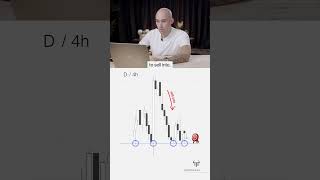
A trader explains a contrarian short-selling strategy: sell into higher-timeframe support levels where most traders buy, targeting the stop-losses of retail traders above lower-timeframe highs. The method flips conventional wisdom by treating buyer accumulation zones as profit targets.
Chapters
You get funded by selling into a level everyone else is buying. And I know that sounds backwards, but the reason most traders lose money is because they're on the wrong side of the exact setup. Put simply, most traders are taught to find a key level on the higher timeframe and buy it when it holds. I do the opposite. When I see a level holding like that on the 4-hour or on the daily, I'm not looking to buy. I'm marking that level as a target to sell into because every time price bounces off that zone, more buyers enter, and every one of those buyers places a stop loss just below it. Now I go to the lower time frames and I look at the other side, the highs. And what you'll usually find is price tapping into the same high over and over. Every tap is pulling in sellers who think the high is going to hold, and their stop losses are building right above it. So now I have two levels: a low on the higher time frame and a high on the lower time frame. The market is going to sweep one to reach the other. Once that happens, I have my entry. I sell right there. My stop goes above the extreme, and my target is the level on the higher timeframe that everyone else is still buying at. Key levels aren't places to trade from. They're places the market builds up to take.