how to master your emotions | emotional intelligence
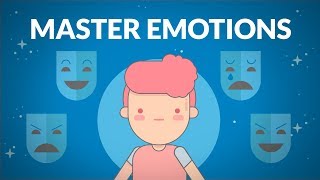
Kardec Trader argues emotions come from learned worldviews, not just circumstances. Two characters see the same homeless man but feel different things: Alexander feels anger, Joseph feels compassion. Expanding how you think changes how you feel.
Questions this video answers
Kardec Trader
January 15, 2019
Dr. Lisa Feldman Barrett's theory of constructed emotion
The Great Courses Plus; over 11,000 videos
"The Big Questions of Philosophy" by Professor David K. Johnson
Chapters
This video was made possible by the Great Courses plus click the link in the description to get your free trial emotion. It's sometimes referred to as the Spirit or the breath of life. It prescribes our action and colors our world. The one who can master the emotions can master actions. And the one who masters actions is the master of all future realities. Today we look at the stories of two different men, two different worldviews, two different goals, and ultimately two different paths.
This is Alexander. He believes that there are two kinds of people in the world. The conquerors and the conquered.
If you want to be great, you.
Have to become a conqueror. It's a dog eat dog world and.
Only the fit survive.
You have to determine who will conquer with you and whom you must conquer. Alexander read a lot as a kid. He fell in love with Greek heroes who displayed the highest virtues, courage and bravery. They were leaders, not followers. He didn't have much as a kid and had to work hard for everything that he had. This led him to believe that a person's life is the outcome of their actions and that they must take complete responsibility for what happens to them. Physically and intellectually, he held himself to incredibly high standards. There's no one he wanted to conquer more than himself. One day he encountered a homeless man. The man asked him for some change. Alexander knew what he was seeing. A conquered man. How could this man let himself be conquered so badly? How many mistakes must he have made to end up in this position? Why doesn't he take steps to dig himself out of this hole? Instead, he's taking the lazy way out. He is trying to take from those who worked hard for what they have.
Those who make good decisions should not.
Be punished by those who make bad decisions. Alexander knew that if the man wanted to eat, he needed to learn how to get fish and not have fish given to him. He became enraged by the man's weakness. This man won't get a penny from me, he thought to himself. That would only enable his destructive behaviors and poor attitude towards life. By suffering, he'll learn or he'll die. That's the way the world works.
This is Joseph. He believes that there are two kinds.
Of people in the world.
Those who can help and those who.
Need to be helped. His father taught him that the highest good is to serve those who have nothing and to lift them up.
Life is difficult and those who have should serve those who have not. Joseph read a lot as a kid. He fell in love with very spiritual leaders who loved all and lived to serve. He grew up Quite well off and.
Always felt indebted to those who didn't.
He felt lucky to have everything that he did.
One day, he encountered a homeless man. The man asked him for some change.
Joseph knew what he was seeing. A completely underserved man.
This man had been abandoned by society.
Joseph felt like weeping.
Imagine how much we have failed as a society to let someone get to this point.
He thought to himself.
Life is so difficult and full of suffering and based on luck that any one of us could end up in his position. He grabbed some money from his pocket and handed it to the man.
And with that, both stories end here. Both men had unique worldviews shaped by their past experiences. They both perceived the same man in a different light. Where one saw a weak man, the other saw a forsaken man. Their perceptions led them to feel different emotions. Their emotions were heavily affected by what they thought they were seeing. In actuality, both men knew nothing about the homeless man and they have no idea what led him to this position. This is often the case in real life. From a young age, both men were surrounded by an invisible structure referred to as culture or environment. The knowledge they grab from this structure allows them to navigate the world. Alex grew up in a structure of personal responsibility, of strength and weakness. He can only see people in this way. It's all he knows. Joseph grew up in a structure of collective responsibility of the needy and the fortunate. He can only see people in this way. It's all he knows. For both men, emotions are tools. In Alex's world, anger is a useful tool that allows him to become strong, his highest ideal. In Joseph's world, compassion is a useful tool that allows you to become a giver, his highest ideal. One might wonder if you could change the invisible structure that surrounds these men.
If they reversed the books they read.
Or the family that they had, would they perceive the world differently? If they perceived the world differently, would they feel differently? The master of emotions, then, is the one who can alter the invisible structure around them.
This allows them to gather a diverse.
Set of concepts which allows them to see the same scenario in different ways. They would be neither Alexander nor Joseph. They would be both. They could become either one depending on the circumstances. Take a look at this image. What shapes do you see? You'd probably say a bunch of three quarter circles and a square. Technically, there's actually no square there. It's simply a byproduct of how the three quarter circles are arranged. But that doesn't change the fact that you'll always see it there because you're familiar with the concept of a square. If you never learned what a square was, you'd never see it there in the image.
There's a layer of meaning hidden in the negative space.
Emotional mastery is about perceiving multiple layers of meaning in the negative space of life. It's about seeing all of the potential realities that could exist. It's about looking at a homeless man and seeing that his position could be a byproduct of his personal decisions or. Or it could be the byproduct of a cultural failure. What I'm not saying is that these men can think different thoughts and change their emotions in the moment, but they can experience a different worldview now, so they see differently in the future. They can find new ways of seeing or interacting with old things. And all they need to do is listen. Listen to the world in its many forms. Had they listened to one another's perspectives, or asked a homeless man for his perspective, they might have seen the whole situation in a new light. As we conclude, let's return to this image. You probably think that there's nothing more to this image than the three quarter circles and the square. But what if I told you that this is actually just one shape? A rectangle with 4, 3, 4 circles removed from it. It's called a fit rectangle. Just by listening, you now have a new way of perceiving these patterns which was invisible to you before. A new layer of meaning.
So how does one master the emotions? By listening. But more importantly, listening to points of view that they haven't heard before or that are contrary to their own. To feel differently, they have to see differently. To see differently, they have to gain knowledge that they don't have. And to gain knowledge that they don't have, they have to experience new things. I think Joseph Campbell said it best. The very cave you are afraid to enter turns out to be the source of what you are looking for.
This video is based on my best understanding of Dr. Lisa Feldman Barrett's theory of constructed emotion, which I talked about in another video. I put a link to that one in the description. Hey guys. One of the most important aspects of your educational journey is making sure that you have a diverse range of high quality teachers. Thanks to the great courses. Plus you can get a free trial that gives you access to top notch lectures and courses from some of the best professors in the world. They have a huge library of over 11,000 videos about nearly anything you can think of from science, philosophy, cooking and even photography. One of my favorite courses is the big Questions of Philosophy by Professor David K. Johnson. If you're unfamiliar with studying philosophy, it will expose you to a lot of new concepts that will change your worldview and really make you think. You can get access to your free trial by going to thegreatcoursesplus.com freedom or clicking the link at the top of the description to take you over there. As always, thanks for watching and I'll see you soon.









