How to Stay Disciplined When the Money is Real
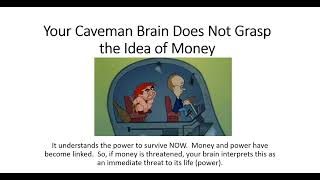
Randy Howell (Traders State of Mind) presents a webinar titled “How to Stay Disciplined When the Money is Real” addressing why traders who perform well on paper fail when trading live. He frames the problem in evolutionary-psychology terms: the emotional/caveman brain treats threatened capital as life-or-death, hijacking the slower thinking brain and producing behaviors like revenge trading, overtrading, avoidance, and scarcity-driven profit-taking. Howell outlines a remedial process focused on emotional regulation (breath, muscle relaxation), mindfulness/observer training, identifying internal parts (inner critic, adapted self), and activating constructive archetypal programs (ruler, warrior, caregiver) via memory reconsolidation and symbolic representation. He closes by describing group and individual courses (start Aug 30–31, sessions biweekly through Oct 26) and encourages continued practice and vigilance.
Questions this video answers
August 11, 2023.
Randy Howell (Traders State of Mind).
August 30–31 (start dates mentioned).
October 26 (last session date mentioned).
Chapters
The broadcast is now starting. All attendees are in listen only mode. Welcome everybody. My name is Randy Howell with Traders State of Mind. And we're at this webinar called how to Stay Disciplined when the Money is Real. And before we get started, we just need to do a little bit of housekeeping. First thing is I need to know whether or not you can hear me. So some kind people will just simply put into the question box. Yes or a Y. Yep. Okay, thank you, thank you, thank you. That's what I needed to know. And the second thing that needs to be known about the way I do webinars is that this is a presentation. And after the presentation I'll answer questions. But if you have a question as we go along, please type it in. Okay. Because I would love to be able to have a few questions to begin with. And that allows people to kind of start. Yeah. At the end of the presentation. So anyway, with that, let's get started. And my question here is to you.
What is this about discipline? Why after all your training, you go through this work, you know how to trade, you can talk trading, and if you were doing on paper, you would be a millionaire, a billionaire, yet at the same time, when the money comes real, everything changes. It seems so simple and yet it's interesting. Number of trading companies, trader trainer companies. And by the way, I just got back from vacation where I got food poisoning and I'm a little under the weather and I'm still having some problems. So you may hear that. And I apologize, but I'm trying to keep my voice trying to do all that stuff. Okay, so there are several trader training educational firms that literally they cost a lot of money and you cannot trade live until you finish their coursework. Okay. It's almost like if you do all this work, then you'll be there and you're entitled and you'll know how to trade, trade. And then they get there and everything goes live and something dramatically changes. And what we want to do is say, what is that something? Because, you know, ultimately most trader training is taught on a way of like feelings turned off, turned off. You just leave your feelings by the door and everything will be fine. That's all you have to do. But the thing is, what actually makes trading live, where you're really, truly risking capital that there's not a reset button on compared to paper trading, where there is a reset button, where the risk.
Is in many ways not real. And certainly what you've learned is you've learned how to plan for working with uncertainty. You Know, it makes all the difference. You plan your trade, and then you trade your plan, and then everything should be fine, and everything is fine until you come to a moment, until risk, threat, and reward become real to the point where you can't do anything about it. What we want to do is why? Why does this keep happening to us over and over and over again?
It's very common for me. When a new person talks to me the first time, they think their problems are unique.
They're not. If you're a human being and have an evolutionary psychology that you've inherited from your caveman days, I can guarantee you you're going to have problems with trading. I guarantee you. And we want to go. Well, but look, but, Randy, I have. I know how to plan my trade, and all I know that I need to do is to trade my plan. That's all I have to do. If I do that, I'm rich. But for some reason, I know what I'm supposed to do. But it is that very thing that I know that I'm supposed to do that I can't do.
And we're going. Okay. Wow. What happens? Well, it really starts with something fairly profound. No, you're too far.
We're missing a slide here.
There we go. The first big deal.
Is there is a deception that we human beings with our big, huge, giant brains do. We live under the deception that we believe that you're a rational human being.
It makes sense. You know, almost all cells, you know, you're a rational human being. And what happens is that you discover that human beings are not rational human beings. They are emotional beings that rationalize whatever decision the emotional brain has made. And the part that's doing the rationalization, not being rational. The rationalization is the thinking brain, your thinking brain.
If you were to really look at the emotional brain, the thinking brain in context, if you were to imagine that your emotional nature is a locomotive, it's going up a mountain. That locomotive is the emotional brain. It's powerful strength. The caboose at the end of the train, that's your thinking brain. It's not really. It's just along for the ride as far as, like, really seriously risk type things. And the engineer driving that, Driving that train, Those are the beliefs that you have about your ability really to manage uncertainty. And the truth is what you discover is that thinking.
Follows emotion.
It creates the perception that you're being rational until it's hijacked by something far stronger. And what we want to do is go, well.
What happens? What happens? And the truth is this.
What we are, we human beings, we are in a genus called Homo sapiens. Homo sapiens are a branch of the great apes. So this traitor that you are all very highly sophisticated looking like this little geeky type of guy driving the brain. We like to believe that we're in control, that we can out think, we have this reason stuff and we can do it. What the thinking brain cannot do, it cannot turn around from that seat and turn and look and recognize that the emotional brain is sitting in the back seat. Okay, it may be calm, the beast may be very calm that moment, but the thing is that emotional brain is built very, very differently.
Than the thinking brain. And what happens is that when the emotional brain is activated, it can easily short circuit thinking and move an emotion from like a triggering of a triggering into action in nanoseconds. Meanwhile, that thinking brain requires at least a quarter of a second for the information to get to it before it starts trying to crunch. This has great survival value in that when we were, when we were put to the test, when we were really challenged, is that we automatically knew how to fight or flee. We didn't have to think about it. Precious time gone away. The problem though, is that we don't live in a world of blind tigers and bears anymore. We live in a world where, where it appears as though the thinking brain is dominant. I mean, Rene Descartes said, I think, therefore I am. Actually, Spinoa was much more accurate. He understood that emotion happens first and mind follows. But now we're getting into this thing of going, okay, now I get it. The moment that your capital is threatened, not at. Put at risk, I want you to hear the difference in the word, is that when your money is threatened, your brain interprets this as an immediate threat to your life, not to your capital.
Not to your capital. So why is this? Well, first and foremost, what happens is that your emotional brain does not see risk and reward logic. You know, all that stuff where you're doing all this analysis, where you're going, oh, here's my risk, here's my reward, all that kind of stuff. So I'm going to, I'm going to do my plan like this, and this is why I'm willing to risk this much, blah, blah, blah, blah, blah, that's all rational. What happens is.
Your brain, that part of the emotional brain called, and I'm calling the caveman brain, does not see in terms of risk and reward. It sees in terms of threat and opportunity in the here and now, not in the future, in the Here and now. And so you're looking at it and you're going, whoa. So this is not about risk and reward. No, those are theory. It's about life and death right now. Because understand this is what's important for you to understand is that your emotional brain cannot tell the difference between capital and power. The power to be safe. The power to control your future.
If you gave Caveman a ton of money, he wouldn't know what to do with it. It's a concept that's alien to him, but he sure is shooting. Knows what to do with threat, okay? He also knows what to do with opportunity. And we're going to come to that in a moment. But let's just take a few examples of this so that we take it out of. Take it out of theory and actually talk about things that happen to you right here.
If your emotional brain registers threat, that means that trade goes against you. That means that you're sitting there and you want to enter. It's a valid setup, but you keep seeking more confirmation, okay? What's happening is that.
This is not a threat to your capital. Now, this man is posing. He's got money, he's holding it, but what he's really holding is his life. He's trying to hold on to his life. And so from there, you begin to realize it's not risk, it's threat to your life. That happens when the trade goes against you, when you start doing all this stuff, and then it's going to automatically.
Run, hide, avoid, attacked as part of the survival instincts that just simply are there so that you don't have to bog down the mind and thinking when in time, you need to be escaping. So the first thing is understand this. Your emotional brain registers threat, not risk. It registers threat to life, not threat to capital. That's the big deal. Then let's take about. Let's. Let's just think about revenge trading for a minute. Under this new way of viewing that I'm sharing with you today is revenge trading is about your life being threatened. What happens in a revenge trade? You know what happens. You have all these good and hope things, you've got a plan, and you're going to follow that plan. You've really talked yourself into it. You're all high, and then you know what happens is you place your order, it's filled, and suddenly you're in the trade. And darned if it just doesn't go off. You know, it doesn't do what it's supposed to. Go off to its target and make you feel good. What it does is it turns against you. It starts heading toward your exit. Now, what's happening there? Your caveman brain is sitting there going, oh, my God, my life is being threatened. I might as well be attacked by Saber the toothed tiger. Of course you're going to fight to your last breath. That's why revenge trading is so powerful, is that you're looking at it, it's being taken from you. Your life is being taken away and you're going to fight back. You're going to get all that money back, you're going to get all that stuff. And yet you are now under revenge. The emotion has totally dominated the ability to think clearly. That, yeah, you're going to take losses, of course trades are going to go against you. And your job is to be able to manage the kind of losses you get so that you don't do a catastrophic loss. You get these small losses. And when things do go your way, you're able to get all that back and you're able to be able to get something where you become consistently profitable. But here, understand.
It'S not about the money, it's about the emotions of survival. But let's go from there to overtrading. Now this is really interesting is in overtrading, it's all about opportunity. You start seeing opportunity and you get all cranked up about that opportunity. You go in, in a really high risk situation and all of a sudden you go, oh, my God, what have I done? I want you to take a look at this print. You're looking at a woolly mammoth, big animal, 10 times the size of an African elephant. And you're looking at a number of humans that have got all cranked up because what, what happens if they bring that woolly mammoth down? They feed their, they feed their village for a long time. They get all sorts of stuff. They also get enormous prestige, okay? They get favor, they get leadership, they get all this stuff. They also, they also get first dibs at the females. The thing though is what they're doing is facing, they're facing death and they have to get themselves so cranked up that they see the opportunity there, okay, slim as it may be, and they go after the woolly mammoth. Now that woolly mammoth, obviously this is a high risk, high reward situation. But the thing is, is what you're looking at is they had to get cranked up. They had to get into this euphoria that we're going to do this. Yeah, yeah, yeah, yeah. Before they actually got in and did the Combat of bringing an animal like that down. And understand caveman was very good at taking these animals down, but it came at quite a cost. In order to be able for the body to be able to build a reward system, it had to crank you up enough so that you.
You did stuff that you would not normally do in the same. Same thing with over trading. You know, you shouldn't do it, but you want to win. The exhilaration of winning overcomes, and all of a sudden, you're. You're out there in nowhere land. Now, as I'm talking, does this relate to your trading? We're not talking theory now. We're talking about how this. How this theory that I've been talking about actually applies to your everyday trading. Now, let's take another one. Let's say you've got your plan, and you know that a professional trader needs to enter about 80% of his valid setups in order to be able to. Have. To be able to have his edge there. Otherwise, it kind of starts falling apart. But what happens is that you're sitting there, and all of a sudden you realize, oh, my God, you know, if I get in this trade, I could lose. I could lose capital. Okay? And before you know it, particularly if you've lost capital on recent trades or you've had a catastrophic loss, you're pretty. You're pretty. Oh, my God. What happens is that it's valid. But the thing is, now I'm scared about a potential loss. And what will happen in these particular situations is the trade will finally get away. You've asked for too much confirmation. There's a tiny moment of relief. Huh? The emotional brain, the caveman brain has won. If you do not get into that trade and risk capital, you're not risking life. So caveman wins. Yet if you're following this, if you want to be a trader.
That'S not going to work because you're not getting in valid trades. You. You're not getting in the things that could work out. You're. You're just. You're moving past, and you're past that. So what happens now, though? Well, let's just take one more who of you, when you finally get to profitability, suddenly yank that. Yank that skinny profit and book it, and then you see that trade go to target how many times at the same time? What happened is when you're doing that, when you're doing that, what you're recognizing is, is that. Is that you have a fear of what you have being taken from you. Yeah. Now a lot of us. Another way of viewing this phenomenon is scarcity thinking, where lots of people stay in dead end jobs, jobs that really aren't going anywhere because they fear that, well, you know, if I went out and did something, you know, what happens is, what if I lose? What if I lose everything? So you begin to see how this works. So that scarcity thinking is going, I better take the profit that I have right now before it gets away from me. And yet, you know what you're scared of? You're scared the money's gonna be taken from you, in which then that's a loss. And there you go. So you're beginning to see how this works. You're seeing the demonstration, and the major thing that I'm asking you to really grasp is this is. This isn't about risk and reward. This is about threat and opportunity. Caveman knows that emotional language, the moment that you go in, your brain, is built to control outcome. Now, in caveman times, that would have been called controlling environment. And what happens is that it will actually produce deception beliefs that it's in control, when in fact it's not. It would much rather have the comforting lie about being under control rather than the truth, the inconvenient truth of that. You do not control outcome. And what's missed in this opportunity is recognizing that you never had control over outcome ever. People want to do that. They want to, particularly alphas. They want to control, they want to win, they want to make things happen. And what happens is those are the guys who go and really blow up bad. So you're looking at it and you're going, oh, I get it. And this, my friends, is in your DNA. This is what you bring in to the trading brain from our past ancestors. The reason it's there is because it was highly successful back then when it was truly a dangerous world and we needed to be worried about threats and opportunities to feed our tribe. Now it's working against us. And remember, this is evolutionary psychology. This isn't what happens to you. And you know, basically in your family of origin, where your brain is adapting you to survive in a particular family system. So now.
Let'S take a look at this. What I'm hoping you grasp is that at the very bottom, that the brain that you brought to trading is not going to be the brain that's going to produce success in trading. It's not like there's anything wrong with your brain.
Over millions of years, it has produced an incredible, incredible survival rate. And then you're asking it to change. No, actually that's the problem in trading initially, until you start waking up, you're just assuming that the model of controlling outcome is there and that you can do that and you can make things happen and that you don't want to lose and you want to win. And you're not recognizing that that is an artifact. That is a very dangerous artifact to hold on to. So the key is you can't change by wishing and hoping. And out of that, what you have to start really doing is saying, well, how do I go about doing this? Now understand what is so difficult about changing the way the brain operates in an uncertain environment is that it has been enormously successful. It has avoided danger like the plague reflects. Remember, we as cavemen were pretty small people.
We were nice little tasty morsels, and that we had to learn to avoid threat. And so what happens is that we develop anxiety as a way of seeing out into the future and seeing bad things happening. And it's not negative thinking. It's literally just simply genetic encoding. And what we're going to have to do is we're going to have to change or at least shift, reshape the way your evolutionary psychology interacts with uncertainty, because otherwise.
Your evolutionary psychology looks at uncertainty as a threat to life. Okay? And as long as it's doing that, the moment that you start losing money to when the trade goes against you, that emotional brain of yours is going to just go. It's going to hijack thinking brain, and it's going to work from survival instinct. So the key is.
We know that evolutionary psychology is going to have to change. But then what we also recognize is that we human beings.
Go through a developmental process, we call it childhood. We grow up in families that are mostly really well intended. And you may grow up in a scarcity thinking community where, you know, what happens is, you know, don't risk it. You know, you're safe right here. Don't, don't, don't, you know, don't go out there and you know, God knows the devil you meet on the road is a lot worse than the devil, you know. Or you may grow up in a competitive family where everybody's really fired up, you've gone out and done a lot of really good success in a lot of areas, but you're competitive, you want to win. You're learning how to matter by your winning, by being able to not lose. And you're also going, okay, well, what's the problem here? It just so happens that any belief that you have about controlling outcome, about winning in Trading, again, you do not control outcome. You control the mind that you bring into the moment of the challenging of the challenge. That's what you control. If you manage that, what you end up with is you end up with an edge that supplies your method. Edge to be able to pull more capital out of the markets than you're giving back. But again, in our families of origin, what we do is we learn sometimes not to buck the system, sometimes to, you know, be larger than life. There's all sorts of things. But then we bring those beliefs that have been so successful, maybe in business and corporate stuff, we bring it to trading, and it turns against us and eats us alive, and we're going, okay. What it really boils down to then is that.
In the world that I live in, I don't see deepest fundamental truths. What I see are the beliefs that you hold about your ability to manage uncertainty. Basically, manifesting a truth that you created and accept is like, think about, think about. There was a football game played a number of years ago between the Atlanta Falcons and the New England Patriots, and it was a Super Bowl. And it just so happens that the Falcons jumped on the Patriots, and into the third quarter, they had a huge lead. And what you looked at on the side of the Falcons, everybody was jubilant. Everybody, yeah, I got it. I'm a winner. I'm blah, blah, blah. Over on the other side, the Patriots were not getting and shouting in people's faces. What they were doing is they were locking in on their players and say, just do your job. What happens is they knew is that Belichick knew that you cannot control outcome. But in professional football, if you do your job, you give the whole team the edge in performance. And what happened is they got them focused. And of course, it's nice to have a guy like Tom Brady. But the thing is, the beliefs never altered. They believe that if they just did their job, they had a chance. And by doing that, they won the game. But my promise to you from there to quantum mechanics, that in quantum mechanics, reality is seen as potential. It's not seen as solid stuff. And the observer of that potential brings forth the form. So the observer is seeing through its beliefs, its biases. Okay, so you're beginning to say. Well.
You're. Are you telling me that my. Are you telling me that my trading account is actually a window into the beliefs that I hold that I'm projecting onto the markets? Yes. The best friend that you have, maybe not the. Maybe not the one you want to visit with all the time, is your Trading account, the health of your trading account. Because fundamentally.
If you have a set of beliefs that are highly effective at extracting more capital out of the markets than you put back in, you're going to, you're going to be a consistently profitable trader. However, most traders don't do that. They don't have beliefs. They have beliefs about winning and losing. You know, I'm a, I have to be a winner. You know, I hate losing. You know, I played football in high school and we had a sign over one of our dressing rooms that said, winners never lose, losers never win. And it was really interesting is when I played at that time, the team that I played for was one of the worst teams in the conference. And a new coach came in immediately, took that saying down and had a more life affirming believing that you can become a new person. And within two to three years he had a championship team on his hands. So we're looking at this going, hmm, So I can look at my trading count and I can see how effective my beliefs are about managing uncertainty. Yep. That's where you look. You don't believe the lies coming out of your brain. That's one thing you don't do. Okay. Because they will lie. So now what I can tell you this is that for all of you have been there and use visualization, affirmations, positive self talk, all that stuff, what most people find is that they don't work under pressure, they don't work by themselves. Okay. All of a sudden you're trying to use the mind to control matter. It's not going to work that way. Okay. However, under the pressure, under the pressure of uncertainty and threat, these techniques fall apart even though they make you feel good. You know, when you're visualizing success, you get into this. Yeah, yeah, yeah, yeah. And you're affirmation. I'm a mass, I'm a master trader, I'm a disciplined trader. Positive self talk. I'm not going to have any negative talk going on. I'm not going to, I'm not going to really critically assess my stuff. And like I said, it makes you feel good, yet it doesn't teach the brain how to respond to uncertainty in a different way. So what we want to do is say, hmm.
My beliefs about my ability to manage uncertainty are being revealed in the health of my trading account. Yep. And what we want to do is start there. Because fundamentally I teach a process. I don't teach magic. I teach a process that equips you to be able to reshape the beliefs that you hold about managing the mind, you bring into the moment of challenging. It's not about winning the day. It's about performing in such a way that winning the day is a very strong probability.
So this is how do we evolve, change, how do we do that? And what I want to do is my work is deeply rooted in emotional intelligence. And again, understand this. You are an emotional being who rationalizes. You are not a rational being who has emotions. This is the ground floor. The second part of the ground floor is an understanding of emotions that, that starts with recognizing that emotions are not psychological. Emotions are not.
They are, they're not feelings. They are biological action potentials that coordinate action between the environment. That would be the markets and you, the organism, the trader. And what happened is when, anytime that there is a change in status in the markets, by definition there is going to be an emotion that emerges. It just depends on how well trained you are about what emotions are emerging in that moment. What we want to do is say, how do we take advantage of that? How do we go about. How do. How do we go about doing that? And when it really comes down to it, my invitation to you is to reimagine the brain and the mind and the connection between brain and mind. I personally do not see a separation between biology, psychology and spirituality. I think they're all happening at one time. Fundamentally, what I'm asking you to grasp is that the brain can be best defined as a community of emotional programs that are out to control the construction of the self, okay, is that it is highly competitive with one another. You will see that different brain regions, they will invade other brain regions. They would do. It's a really wild, crazy, wild, wild west event in the brain. But the thing is, you discover the emotional programs are really locked into struggle for dominancy to take over the construction of itself. And if you want to see this demonstrated really well, there is a late 90s movie called Inside out by Pixar Disney that describes that shows emotional programs in conflict with one another, trying to learn how to cooperate with one another and just messing up a girl's life. Okay, but the question is, okay, if we sit there and say, I need to reimagine the mind, the brain, as a community of rival programs, well, to extend from there. When mind emerges from brain.
The mind is a space.
Okay, where these emotional programs are no longer just electrical activity going on in the brain, they have voice. Linguistics shows up in the brain and suddenly these emotional programs have voice and they have a space that I call the Governing committee of the self, where they duke it out, where you realize there is a mutiny going on and no one's taught you how to deal with this situation. And what I want to do is take you through our process and say, this is fundamentally what you're going to do, need to do, whether or not it's with me, whether or not it's somebody else. But on a basic thing is the moment you take biology and psychology away from one another, and then when you take your sense of worth as a human being and you tie it to performance, what I would call spirituality, you've lost is that the trading gods are pretty cruel about that. Your sense of worth needs to come from a different ground of being that we work with in this course. The first thing that happens once you grasp these basic things about the brain is you have to learn to slow it down. And fortunately for us, the Hindus, yogas did this about 4,500 years ago, they began to understand that emotional regulation had a lot to do with breath and muscle tension. They discovered that if you were to take a look at yourself tomorrow and looked at yourself trading, you would start noticing how much tension, how much you're holding your breath. And what you're doing is you're accelerating an emotion to take over and blindside your mind. So like anger or fear requires either really high breathing or just no breathing at all. Relaxation, calmness requires air moving into the belly, expanding to chest, holding, releasing. Now, that's alien because that particular emotional state, air into belly, expanding to chest, holding and releasing, is associated with calm states of mind.
Literally. You can train yourself as you engage uncertainty and you feel it cranking up on you. You can go to your breathing, control your breathing, and you can stop the emotion from expanding and taking over mine. That's the first step. Now, is that going down? Is that going to change your trading? Is that going to make you the consistently profitable trader that you always wanted to be? No. However, unless you learn to manage the emotions that arise through emotional regulation, you're going to continually get swept away.
Okay. And I'll show you the ignorance. The other day, I'm working with a guy and he says, randy, my problem is that I know what to do. And since I'm sitting there at setups and I'm looking at the setup, I say, that's a valid setup. I need to be there. And then before I know it, I just kind of freeze and it just goes away and I miss the setup. He's been doing this for five years now. He's Saying, I just don't understand what's going on at all. I said, well, you have no idea. Because your thinking brain is trying to take advantage of, trying to take, you know, it's trying to be the one doing all the stuff, when in fact this is all on automatic, is what's really happening is that his brain is sitting there seeing a potential setup rise, recognizing that they have to risk capital, risk life. And then what that emotional brain's doing is kind of polluting the mind with thinking, well, we'll just let this pass. And what he had never noticed is that there was this. There was a relief, a sigh of relief when it passed before he started beating himself up. This is a technique that allows you to do that. It also takes it so that the tension you hold in your body, okay, is when you release that tension, like anger, fear requires your big muscles to get ready to run, fight, or hide. And what you're doing there is you are volitionally, you are volitionally calming the tension down. You're letting it go, thereby taking the rheostat of emotion, calming it down, Calming it down so you're controlling the intensity of the emotion so that it doesn't hit this switch where it moves from arousing to flooding the bloodstream and the brain. That's when you get hijacked. So the first thing in the course that we teach, our group course and our individual course course is we teach you to produce emotional regulation. We start training you, saying you've been doing this bad breathing and bad tension holding for decades. And you're going to have to have some time of training to be able to start fixing that, to habituate a new way of interacting with uncertainty. Because when you're seeing the holding of breath and you're holding and attention and stuff like that, you're seeing fight, flight. That's what you're seeing. Then you're going, you do that.
You realize that nothing's really changed here. I'm calmer. What you have done is you have gotten to the door of the mind. That's what emotional regulation can do. Unfortunately, what happens in it all started in India. Believe it or not, the Buddha is the one who invented mindfulness. So what happens is that as you begin to awaken this thing I call the observer of the self, you come to a profound recognition that you and your thoughts, you and your beliefs are not one and the same. The truth is, you aren't even having thoughts. They're having you. This you that you claim to be is just simply A construction of potential that was already there before you ever developed a mind who could observe. And so one of the powerful things that has to occur is that you have to be able to develop the capacity of observation. And of course, we teach that as a way of being able to say, you know something? I get it. The main thing is there is no permanent self. What there is is a historical construction that happened while you weren't looking. And it's taken over. And you assume that is you when it is only a construction.
And what you do with observation, you begin to say, oh, I can step out of this construction of the cell. I can begin to see how I'm pinned. I can see that I can become something very different than what I am now. Friends, this is powerful. And next. So now we've gotten the two basic skills that are necessary. Emotional regulation and mindfulness. Now we have to go look at that monkey mind. And by the way, for those of you who've never seen me, that's actually me, okay? And that the back photograph is actually an image I took in Australia. And I just found that it's a great monkey mind. And this is what's possible, is the monkey mind is going to be crazy. And yet at the same time, you can come to be at peace with it. But the thing is, when you're beginning to develop the observer, the next thing that we teach is you're going in and you're looking for the historical internal dialogue in there. What you'll discover that there is a conversation going on between what I call the inner critic. If you've ever beat yourself up when you've made a mistake, you know, the inner critic, that's not you beating yourself up. That's the aspect of yourself called inner critic. That destructive part of the self taking over the mind, beating up what I would call the adapted self. And you begin to recognize, oh, my God, I have been living from this internal dialogue from the inner critic. And the orphan is what Carl Jung would call it my entire life. And what happens is that I've assumed it's me. I thought it was me beating myself up. I thought I was being hard on myself. No, what happens is you've been sucker punched. This is kind of the deception. And what you're looking at is a pattern that has solidified, and it has become so familiar, so ubiquitous, that you don't even know that it's just a pattern. Yet in being able to take the observer look around, what you begin to do is you realize, oh, my gosh.
These aspects of myself are going to always be there. It doesn't mean that I have to identify with them yet. That's what every trader I've ever worked with does when I first meet them. Now, the 4th step, the 4th step, the fourth step is, you know, just recognizing the inner critic and the adapted voice are running shipshot in your mind, and you're the committee of the mind. What you have to do is you truly have to learn to awaken your empowered nature.
You have to learn that within you are incredibly powerful emotional programs that Carl Jung would have called archetypes that can be taught to arrive at interacting with uncertainty rather than the historical ones that just came to be while you weren't looking. So this is it. Within you is the discipline of a ruler, the ability to maintain order under pressure. You have the courage of a warrior. You have the ability to turn toward your fear and not conquer it by force, but to master it. You also have the self soothing, the self compassion of a caregiver, which a lot of people have a hard time with, and they go, no, I can't be kind to myself. Well, well, if you want to rebuild the mind so that you're successful in trading, you better. Is the self soothing. The self compassion of the caregiver is what takes a neural pathway that's embedded in beliefs, detangles it, and is able to start reshaping it into higher functioning. Yeah, it's kind of like a number of years ago, a guy by the name of Keegan, researcher at Harvard, wanted to know what the most successful kind of therapy there was, and they assumed cognitive behavioral therapy. And they went this long research thing, and what they discovered is that the modality of therapy, the kind of therapy that was being used, had absolutely no impact on the outcome of the client. The impact of the therapist, empathy, compassion for the struggle of the client is what actually did the change. So you're beginning to see is that if you want to rebuild the mind, you're going to have to be really good at producing the self compassion of a caregiver and directing at that, particularly in times when, in times of trouble, you need to keep that orphan nature of yours, the one that is triggering to threat or opportunity.
Under management. So you've gotten that thing. Now we teach this process both from a process called memory reconsolidation, where we're taking memory as a time when you have been really challenged. Okay. And yet at the same time, what you discovered is that you got through it pretty well, but it's not the way you remember it. Okay, and out of that, though, is that you're actually looking at access to powerful emotional programs through memory. Now, what happens is that I also teach that what you're doing is you're also learning how to use a term called symbolic representation of where you're finding very powerful symbolic representations of, of these archetypal energies. Like, for instance, one of my favorite and one I use is the movie Gladiator.
Maximus is an archetypal form, and I cannot tell you how many men have just been triggered by that. And what happens is what you find. You find the discipline of a ruler, you find a person who could truly manage three or four of the armies of Rome, and you can begin to awaken that. Actually, a guy I was actually working with today is that one day he just didn't want to go to work and so he called in sick and he just on alert, decided to go see Gladiator. This is a while ago. And it changed his life to the point where he named his kid Maximus. Max is what he's called by. But the thing is, you begin to see these things and these elements of the self are all there.
And even though they're there, there is a saying that I have from Thomas Jefferson that I use as the truth. And that truth is the price of freedom, is eternal vigilance. If you're familiar with the Lord of the Rings, what you realize is Gollum at one time was a forest creature and not a bad dude just yet. He got seduced by the destructiveness of that ring. But what you recognize is taking back the mind requires these elements that you develop from the ruler to the warrior to the sage, all that comes together and it becomes like a completely different committee of the self. And that is what you engage the mind with. So that you're no longer using historically how the mind triggered to uncertainty. What you're doing is you are changing the way the mind engages uncertainty. And that, my friends, is when you no longer need to win. Because what you know is the edge is building the mind that allows you to perform at peak performance in the clutch. That's what you're looking for. Now.
The key is this. What I really, truly want you to understand in this is that it's not like you're going to go out and you're going to go model this thing with John Luc Picard. And the whole thing is ultimately, you have to develop the skill sets to be able to face your fears. It's the major thing that stops people from becoming the traitor they can be. They really don't want. They want a trick, you know, they. They want a secret. They want something like that rather than saying, you know something, I need to turn toward my dragons.
They're there for me to master. I have to learn to do that. And the people who win in trading, what it really boils down to is they learn how to master themselves. They learn how to say, okay, I cannot control outcomes, but I certainly have learned to control the mind that I bring into the moment of performance. That's the deal. Particularly when you're faced with the dragon. Oh, my God, I'm going to lose. I'm going to lose. What am I going to do? What I'm going to do? And I have a. I have a friend who Dolores. And I have a friend who is one of the most successful traders alive today. And interestingly is I asked Mitchell, how did you do this? How did you move from not flinching? And I've literally seen him drop a quarter of a million dollars and him not even bat an eye. Okay? And this is a guy who's made 2 to $300 million over the last several years. He said, randy, I'll tell you exactly when it happened. I lost in another time when money was tighter is I lost three quarters of a million dollars. And I had to go to my wife and I had to tell her that I had really bundled. I had really blown this, and I just. I knew that she was going to leave me. I do. And all this kind of stuff. And what happened, instead of being angry at him, his wife held him and they ended up having good cry together and stuff like that. But what Mitch said is, randy, what I learned in that moment is whether or not I win or lose is immaterial. The truth is, is I'm okay. I'm loved. I know that now. I have nothing to prove.
Okay? And my friends, this is the deal is what do you have to prove?
And now the question really becomes, where do you go from here? Many years ago, I used to think that I was going to change people's lives. What I discovered is I teach tools, and a person has to be able to recognize, oh, my God, this guy actually has tool sets that I've never seen before. And he's saying that these tools can help me build mine. That's where I'm at. My job is to find people who recognize that I have the keys to the kingdom in my hand. I need to learn how to use those keys.
Most people, to be honest with you.
They'Re not going to do anything long Term. It's kind of like the. There's a parable in the Christian Bible where the master gardener goes out and he starts throwing seed everywhere. Some of it just ends up on hard dirt, rocks and stuff like that. And it never goes away. It's never heard others other seed go on.
Little better ground. It sprouts and everybody's going, yeah, yeah, yeah, yeah. But it dies because it can't get root structure. Then other seed are spread into weeds and they're choked out. So all the dealings of life get in the way and you go, you know something, I really don't want to do this. I have better things to do. I can take another course. I can learn a better and better strategy than dealing with myself. There are other times when that seed falls on fertile ground. And it's that that I seek is that some people who hear my words recognize, oh my God, this guy is offering a way that allows me to build a very different mind than the one I brought to trading. Those are the people that I encourage to take next step. And out of that is that we're having a group course. We have them about four times a year. And the next one starts August 30th, 31st. And out of this.
Oh, the first meeting, Dolores, is trying to get me to understand that is the first meeting. It starts right, right the moment that you said I need to start this. Because fundamentally what happens is I want you to prepare for this course. And what most people do is they want to sign up late and they don't get to do the emotional regulation work. And then they get hit with this enormous steep hill they have to climb. So what we're encouraging you if you're considering this. And I know that I think we have eight or nine slots left today. And it's, you know, and up into two weeks before.
August 31st, if you go ahead and sign up, you're going to get a free something free from it. It's a, it's an emotional regulation workshop that helps train the emotional regulation stuff because I want you really fit when you show up. Because this course is not for wimps.
Stretches you. It gives you a lot to do and you need to be prepared for it. Okay, so the deal is it's five group sessions with, with me. Okay. And they're recorded so that everybody from Australia and China and every place else that you can't come to our 4:30 meeting, they're always there and you have Access on a 24 hour basis.
In those five sessions. We cover everything that we've covered here, particularly the process that I teach. That's exactly what we teach. We actually teach you how to do it. We're not explaining it to you. I encourage, and I encourage you to come if you're ready to do a little work and really challenge yourself. That's what we're truly wanting you to look at. But there are other people who listen to this and go, you know something, Randy? I like the sound of your individual course because it is highly comprehensive and very personal. Okay. It gets to the meat of what's holding you back. Okay. And it's a multimedia where you have all sorts of stuff that's helping to teach. It also comes with 10 sessions with me over a period of three or four months. It's powerful. Okay. And if you're not ready for that, what I ask you to do is get my free book, go to. Go to Trader State of Mind. Get the free, get the free book, start there, start with all the videos that most likely you've already been looking at and then read the articles and start really looking around and saying, you know something. Does this speak to me? Well, I hope so. And what I want to do is I want to thank you for being here, I really do. And if, if you have some questions, we have a few minutes and I would be happy to, to answer them. Okay. Okay. Doris is trying to get through some of this.
Here's Andrew. I did your winter group course but. But it's been more recently once I pull myself out of the emotional storm that I was really able to use what I learned. I found I have so many wounded parts of me frozen in time. And I can see the script.
I can see this.
And how to act. Do you have any advice on how to help heal these individual parts? Well, people who do that go through my, my individual course because it's. That's exactly what kind of stuff that happens. The if you discover otherwise, if you start really a good therapist is also something else. I personally where I started many, many, many, many years ago with is with John Bradshaw and all of his books about all in the family.
Healing, shame, all that stuff. It would be a very good place to start because the major thing is what I'm encouraging to look at is to recognize that this is not you. Okay? This, this truly is an organization of the self that your brain doing its job organize you for short term survival. And what I would also really encourage you if you, if you, if you're a past group member, then audit the course if you haven't already. Audited again. A lot of people do that because they realize that course goes at them at 150 miles an hour. And after they kind of get the gist of it, go over it again, they will. They will audit again. And it makes a lot more sense. And also understand this is that you have.
You. You have. You have access to this material 24 7, virtually forever. So I would encourage that.
Do you have another course after this one this year? Group course? No. This. This. This will be. Yeah. What happens is, you know, after. In two months, we're going to be entering the holiday seasons, and it just starts getting way too crazy. I love this question. Let's see. Well, we'll start there. Hi, Randy. I hope you're feeling much better.
I should tell you this, is that Dolores and I went to Alaska and we flew into Anchorage. And that night, what we did is that very first night there is. We went out and ate. And ultimately what happened is I got food poisoning. Okay. And I have had. I have had vertigo beyond belief. I have. I have not been able to hear stuff out of my ears, and I am feeling much better. Okay. I really am. But, yeah, it was. It's quite a challenge.
You use famous and historic individuals as examples of specific archetypes. Do you think there would be anything wrong with a trader just using individual specific that they know on a personal basis? I think that's a great idea. But have the attributes that you describe in individuals that are much better known?
Yeah. A lot of grandparents happen. A lot of people. The guy that I was working with today uses his mother as caregiver. So, yeah, that. It's very common. And you're right, I do use historic figures because, yeah, everybody can relate. They can't necessarily relate to the mom and stuff or the grandpa or stuff like that, or to a personal friend who really helped them through a tough time. So, yeah, absolutely. Ms. Chasten. Randy, would you say that if you don't have a solid plan, strategy and ways to see opportunity in the markets that relate to you, that is a huge key to regulate emotions as well. What I'll say is, if you have a solid plan.
What you've got is a solid plan based on a calm period. The problem is, a lot of people have solid plans, but when they get into the risk, they get into the threats that just flies out, flies out like that, and they lose that. I will say this. If you do not have a solid plan, no amount of psychology is going to help you. What I'm looking for is people who have already Been trading for several years and have figured out that they need to master the mind because you have to have a plan.
Like, could a person be better at regulating their emotions with probability and just need the plan and setups and knowledge of the markets? Well, there, there have been some genetic windfalls that. Where people just simply showed up with the right mind to do that. What I find in this business is that 95% of the people are not going to win. They may have moments of winning, but what happens is they just can't get their psychology and their methodology together on the same page. In this group course, what happens is that at the very end, what we're doing is we're actually building a trading plan, a psychological trading plan that dovetails your methodology with you, with your psychology. We want that psychology to appear at certain times.
Hey, Randy, have you had any students that made the change quickly share some insights? I've had two guys that this is a couple years ago and they were, they were, they were highly motivated. They went through my course in my individual course in two months, which is unheard of, and both ended up basically being able to negotiate with profit firms for a really good. Where they were able to trade their own money and trade the firms too. We get a lot of consistent profitability. We also get a lot of people who fall back once they, once they get out of the kind of. The spell of a course is they start going, I don't really need that. I don't really do that. And this is really about, this is about vigilance, friends. There is no. You never have it. You have an evolutionary psychology that's not going to change because you can chant a few words and you're just going to have to do that. Okay.
How often the five classes.
The five classes. When. Well, they're four times the there. Okay, here's the question. How often are the five classes and when will it be complete by. Okay, well, Dolores is pulling it out.
The Last one is October 26th. Okay.
And they're every other week basically beginning August 31st. And it'll go two weeks. Two weeks, two weeks. And you can see by the time you hit October 26th, you are beginning to get into the holidays and everything just kind of goes crazy after that. Okay, now I that said, I have one other one that I wanted to do with. Go back up. I want to do this.
A guy asked me.
Go up. A guy asked me are do you only talk about the problems or you actually teach how to deal with. Deal with them. The truth is, is Most people have no idea what problem they're actually trying to solve. So my outreach is about that. Okay, is I am a capitalist.
And I teach how to do this stuff. That's what my courses are about. I believe that. I do plenty of outreach people. I get emails all the time talking about how much impact just all the free stuff has had on their trading and stuff like that. So the deal is this, is that if you're in trading and you haven't figured out that the mind that you brought to trading is not going to work, then that attitude is going to poison your trading. Okay. And most people finally come to the moment where probably the greatest refrain that I have is, Randy, I wish I had found you years ago, but now I don't have any money, I've lost it all. And my. Well, I'm sorry. So.
Friends, I've really enjoyed myself and thank you for putting up with me today. I think I did okay.
And my hope, if you're really into this and you're beginning to say you know something, do I want magic to happen or do I want to recognize that I actually need to stand up and become responsible for the mind that I bring into trading, it's not going to happen by itself. Personally, that's when I look for teachers. And I have been blessed that.
I ended up as a photographer initially and then in advertising and I was blessed that I ended up having to work with a true old master. That taught me during college and every time that I have really wanted to.
Produce exponential change, I've looked for the teacher. The emotional intelligence work here comes out of Steven Stosny.
The neurobiology comes out of a guy from Stanford. These are just top notch people in their fields and are geniuses and I look for a teacher who can show me the way. That's what I look for. Okay? So I want to thank you guys, I really do. And I hope that you really consider this. Think about it and if you've got it in you, sign up for that course, get started and get, get ready for the ride of a lifetime because you will be learning how to do what we've been talking about. I thank you very much. Take care. Bye Bye.









