How To Treat Trading Like A Business...
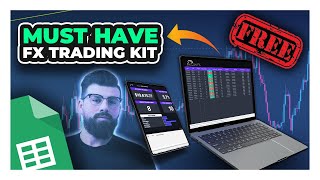
Mark Hutchinson (Falcon community) argues traders should "treat trading like a business": adopt business-level thinking (quarterly performance perspective, structure, routines) rather than obsessing over monthly gains. He recounts personal anecdotes (learning guitar, learning to drive) to illustrate patience and subconscious skill-building. He presents three pivotal components that changed his trading: (1) a performance analyzer to track numbers, (2) visual review of trades/charts to identify recurring behaviours, and (3) daily goals (a five-goal routine) to set clear expectations and clarify the trader's "why." He stresses ownership, clarity of purpose, and incremental habits as the root drivers of sustainable trading success and offers downloadable resources for implementing these practices.
Chapters
There's so many things in which that you need to treat trading like a business that you need to learn. And you can only learn that by either trial and error or learning from people that do treat trading like a business. It's really, really that simple. And it took me many, many years. And the pivotal moment were these three things that I can really track back to.
Hello guys and girls, and welcome back to the Falcon YouTube channel. Hope you're all doing really well. And today we're going to be talking about a very, very crucial, important topic, which is why you should be treating trading like a business. Now, in this episode, I'm going to be sharing a bit of my story of when I wasn't treating trading like a business. And actually what was the pivotal moments that change to help me start treating trading like a business. Now, although when it comes to treat trading like a business, what does that exactly mean? Well, that means something different to everybody because every business owner will treat their business different. But what we can all agree on is all great, successful businesses follow certain sets of principles. So although they may do certain things slightly differently, intricate little details, what they will make sure is they have great structure, great routines and great processes. And what I'm going to be sharing with you today is after this. If you stick around at the end of the episode, you're going to be able to download some resources that I've created for you that is going to help you on your way to treat trained like a business. Now, although there's going to be other components that are part of that, I've put together three really important key resources that regardless of how you're trading, whether it even be crypto or stocks, it's going to put you on your way to start thinking like business. Because essentially it's not just about doing the things that are involved in treating trading like a business. It's more so business level thinking. So for me, when I first started learning how to trade, it was actually in stocks, which was in 2008. 2008 crash. Right before that, when I was 15, 16 years old, I was already involved in starting my own business. So I already had business level thinking. It was naturally instinctive to me to be able to think right. Anything that I do, I need to treat this like a business to start finding different things. But for some reason when I got involved in trading, that kind of went out the window. I still had it in me a little bit, but I did lose my way a little bit because I started focusing more so on the money, rather than focusing on processes, because that really wasn't sold. What was really sold was the idea of learn the technicals, master a little bit of psychology, and as long as you stick to risk, then you know what to do. You can make money. But it's not as simple as that. It's a lot more difficult. And when I started to realize that, hold on a minute, I'm not actually doing anything of what I learned instinctively of being very business minded from a young age. I'm not doing any of that. I'm just focusing on how do I make X amount, how do I make money, how do I do this, how much money will I make if this price goes from here to there? And I realized I was just focusing on money and then not making any. So it was only when I shifted that mindset into actually treating trading like a business, it was huge for me. You got to think of it like this. Ask yourself, how do you measure your performance? Do you measure your performance monthly? Because if you do, think about it, what business owner looks at their business sales and goes, right, this month wasn't great. I need to throw in the towel or I need to completely change the whole entire model. Would they deviate? Probably not. They just see it as it is what it is. It's just a month of sales. Maybe sales didn't go that way. Maybe they didn't go well that month. Would they judge themselves on a quarterly basis? So the this was the level of thinking that I already realized. Investors business level thinking, they focus on quarterly, which is why we talk about this in Falcon a lot. This is a term treat trading like a business that I introduced to this space and to more so the Falcon community quite a few years back. And I think this term has really elevated people to a new level. If you think about it from a business perspective, the reason why we look at quarter by quarter is because it gives you enough time to look at the data. You can't make the relevant tweaks and refinements and that you need to make on such a short time frame. So for you as a trader, the quickest way that you know you're not thinking like a business is you're asking yourself, oh, what did my month go like? Oh, I had a bad month. But what does that mean? How did you have a bad month? Because one month not it doesn't define you. It doesn't make or break you as a trader. So you got to think about it from that perspective, that if you start now thinking more business level thinking it's not just the processes. Remember, it's the mindset involved in that that I'm going to start now looking at Q1, Q2, Q3 and Q4. And an average Q1 does not determine my whole year. The same way an average Q1 of someone's business doesn't determine whether they have a successful year. They don't look at it that way. So why should that be any different for you as a trader? Remember, start thinking business level. And even from things that. If I think about what has helped me treat trading like a business, what would we say from a business level thinking, what does it all great entrepreneurs have to have? Patience. So where can we learn patience? Well, a little story of how I learned patience was actually when I started learning playing an instrument. It was actually in music. I've shared this story before. One of the very first songs and any of you musicians out there, you'll totally relate to this, that one of the very first songs I learned to play, which is hey there Delilah. Hey there Delilah. And I was getting used to, you know, your fingers. When you first start learning to play the guitar, your fingers really hurt. You know, you're pressing against the strings and your fingers, you haven't built the callisters yet to be able to, to do that. So it hurts when you're playing and it can be frustrating when your fingers are not used to going to the right threat board, the right chord, etc. Or when you're finger picking, especially from hey there Delilah. And I remember being constantly frustrated when learning to play that bit of that piece of music. Hours and hours and hours and hours. It took me about a month to learn it. Now after a month in, I literally remember going from not knowing how to play it to then how to play it within like three seconds. It was almost magical. It was almost instant, instant that I went from not knowing how to play it to how to play it. And I thought, what's going. I'm just playing it. My fingers are just getting used to it. And you could almost look at it as well. You just learned how to play that overnight or in a minute. I didn't. It was all of the 50, 60 hours that month that I applied learning, playing the same bit of, same bit of music constantly, over and over again to eventually learning how to play it just like that. But it's the same thing as the, you know, the 10,000 hours type thing. It's subconscious. So again, I was able to look at that and realise that in my trading career I remember what it feels like to be really frustrated following the same process, doing the right thing on the guitar and not getting the outcome to eventually, boom, suddenly I know how to play it flawlessly. And it's the same thing in that respect. You can go from not knowing how to trade, not being consistent, to consistent. Well, what changed? He was doing very similar things the month before, the week before. It's a state of mind and it's doing the thing over and over again. And then you break through. It's not one thing that happens is multiple decisions, incremental growth over and over again. It compounds just as powerful as numbers, the compound of knowledge. So all these things that we do, it's the same. And then we start doing these things subconsciously. So you've got to put the groundwork in. So again, business level thinking, patience. I learned it from music. So then I was able to translate that to if things didn't go well in my trading, I realized, well, I know what it feels like to be really frustrated and then knowing how to do something. So when I got frustrated in trading, if I didn't get something or I didn't understand a particular entry type that I was learning, I would think, well, it's just temporary. I know I will be able to overcome this. So again, language that I'm using, I know I'll be able to overcome this. I can do this. It was always positive forward thinking in order to be running your business as a. As a trading entity, if you like as successful as possible, you want to be on the autopilot level. How do you get to the autopilot level? Well, autopilot comes from again, hours and hours and hours. And you want to feed the right programs into your subconscious. So you're doing that flawlessly. We all remember what it's like to drive. Remember that when you first start learning how to drive. Thinking about changing gear, thinking about reversing, thinking all these things, looking left, looking at your mirror, you're looking at all these different things. It's quite overwhelming. You're constantly thinking about it to. Then you get to the point that you just change gear without even thinking. You just do it when subconsciously and then you even slow down for speed cameras. See, the subconscious is a very powerful thing. And this is all part of this business level thinking. Essentially, your goal as a trader is to program your mind in the most efficient way possible and follow in the footsteps of successful people. Success leaves clues. So rather than just focusing on who's got the biggest return, that's not the goal. That's Actually not going to sustain you in trading. There's lots of traders that I know that actually can yield a very big return, but yet they're not business level thinking and they don't sustain it because they don't actually know how to treat trading like a business. They don't put these things in place to treat trading like a business. They've got no accounts, they've got no structure in place, they don't know how to structure an investment. There's so many things in which that you need to treat trading like a business, that you need to learn. And you can only learn that by either trial and error or learning from people that do treat trading like a business. It's really, really that simple. And it took me many, many years. And the pivotal moment with these three things that I can really track back to number one, which is performance analyzer. We actually have a performance analyzer within the Falcon community that you can use. It's very, very enjoyable to use and it really helps you figure out the tweaks and it highlights them. So you know what mistakes you can overcome and kind of what you're doubling down on, what you're doing well. So you know what to double down on and what to improve. So it's about tracking the numbers. You need to track the numbers. Secondly, you need to visually see that as well. You can't just be looking at the numbers. You need to visually see what you're doing at the same time. So that way you can see from a statistic point of view, oh, right, I'm doing really well. Okay, so what does doing really well actually look like visually on your screen? What does that chart look like? So you want to look at reoccurring behavior. Let's say, for example, you've made 20% that month over, let's say five trades. You want to then look at those five trades in, let's say January. Let's say you replicate that and you make 20% a month on five or six trades in, I don't know, June, you want to be able to cross reference those, pull those screenshots up and say, right, this is my trading plan in January when I hit this percentage and in June when I hit this percentage. Are these trades similar? Am I taking things that are similar? And is there a reoccurring theme in things that I do really well and am I able to replicate that? So these are the things. So you can only see that once you've got it visually. So if you got it statistically, then you got it Visually. So what's the third part? The third part is the part that just everybody misses because they don't appreciate the fact that we grow incrementally. And it's daily goals. And this is going to be one of the resources that I structure for you, that if you follow these three things, you will be able to manifest this level of thinking into your trading, which is being able to do the simple, simple things. Five daily goals. You can structure it this way. And the reason why this last step is crucial, if not more important than the other steps, is because it's your expectations of the numbers you get statistically and visually for those two resources. So what do I mean by that? Let's say, for example, you have, I don't know what you would call an average month. You finish on -2%. You've got your numbers there, probably not feeling that great about it. You've then got your visual representation of your screenshots, your before and your after your advanced self review. So you've got a write up of how you felt emotionally, why you took the trade, if you felt you made a mistake, whatever it may be, how well you stuck to your plan, you could look at that and get very disheartened, just like most traders. Why they give up because they don't know what to do with that. Why do most traders give up? Is it because they've just had an average month? No, because people generally are a lot stronger than that. I want to give people the benefit of the doubt. People are not that weak where they just look at one month of results or two months of results and decide that something's not working. I want to give people more of the benefit of the doubt. I don't think it's that. I think it goes deeper than that. It's the root of the third part, which is they're just not clear on what they want. They're not clear on the bigger why of why they're doing trading in the first place. Apart from just making money, which I've been there and you don't make anything, let me know. If you've done this for years, you're still not making money. Why is it I can almost guarantee if I asked you, show me your list of goals, I bet you've got nothing. I bet you've got no goals. To show me is because you're not clear on your why, you don't know what you want. Remember, making money is not a big enough incentive to make money in trading. Becoming consistent is not a big enough incentive and if you're doing the break even dance, if you're going round in circles and feel like you don't know what you're doing, even though you have all the resources, all the strategy, from how you're trading your current education provider, whatever it may be, it's not down to the strategy, it's down to you start learning to take full ownership. It's normally down, you're just not clear. And the reason why this part is arguably more important than the other two parts is because it's a very, very different conversation. From someone who's very clear, who's finished on -2% on this hand, from someone who's clear on their why. Because someone who's clear on their why will look at that and say, right, what do I need to improve on? I hit minus 2% for the month. Will that make or break me? No. Will that define me? Will I think about it in the next five years? Probably not. Is there any lessons I can learn from this? Well, yeah, let's dig into the data. So you've got one person who's clear on their why and they understand long term business thinking. And you've got another person who's disheartened, looking at it and gone, well, I'm not making any money, maybe I should give up. Well, as Henry Ford said, you know, whether you think you can or whether you think you can't, you're both usually right. Well, if you think you can't, well, then you think you can't. You've convinced yourself the power of the mind is something. It cannot be ignored or underestimated in that sense. And I think this is where people go wrong. It's not normally strategy, it's not trading psychology, it's the individual. They're not clear on what they want. Because once you really know, right, what are you going to do after trading? What investment do you want? How are you going to structure it? You start thinking like a business entrepreneur. It gets exciting, right? You start thinking, wow, I want to trade it. The number is not that important. But let's say, for example, I've got a goal to trade quarter of a million pounds, half a million pounds, whatever your goal is, or 100k, and you're thinking, right, once I do that, once I'm making on average, let's say, 7 or 8%, the outcomes are relevant at this stage, but once I'm consistent, what am I going to do with that money? Oh, I don't know what I'm going to do with that money. Well, you probably won't make any. It's a strange thing in the universe. You need to know what you're going to do after the matter. And that is where people struggle and they can't get the initial results because something happens in the universe gets out of your way when you're really clear on what you want to do. And I've seen this time and time again from people in the community that have gone from struggling for a whole year where they've just not taken it seriously. They're pointing the finger, they're blaming, they think the market's against them and they finally get their head out their ass, essentially, and they actually figure out, wow, I can take full ownership of this. I can actually treat this like a business. What have I not been doing? What are successful people in the community doing? Let me replicate that. Success leaves clues and then what starts to happen? They start thinking about, right, once I've actually got my trading underway, what am I then going to do? Oh, I'm going to invest a little bit in property, I'm going to acquire this asset or I'm going to do this, or I'm going to start this business that I'm passionate about. And then suddenly, miraculously, their trading starts to perform. Why is that? It's because they're thinking about, from a business perspective, an entrepreneurial level of thinking. It's a different frequency that you're putting out into the world of self worth because you've got to understand the universe gets out of your way. When you believe that you can do something, it goes back to the quote, like I said, whether you think you can or you can't, remember, you're both right, so which one are you? And then the universe gets out of your way because you know exactly what you're going to do after you've got it. And then you start thinking business level because now you're thinking about different income streams and suddenly you start thinking about things differently. You stop judging yourself every single time you Q1 doesn't go well for you. What kind of mindset is that? That's not going to get you any success. It's more important that the mindset, the habit that you build of a winning mentality rather than giving up, because if you do that, you'll just create a habit of giving up when something gets hard somewhere else. Remember, challenge doesn't go away. It's always going to be there. You just get stronger and you find better ways to deal with it. This is just a process that I followed and I've looked at, right, what are successful business people do and how can I learn from them? Oh, so they have great structure, they have great routines. They don't judge themselves every day or every week or every month. They look at Q1, Q2, Q3, Q4. So why didn't I start looking at trading like that? That was really a powerful thought to me. And I think that was the moment that everything changed because then I stopped looking at, oh, I had an average month because in January I hit under 2%. Within February I hit over 20%. Does that mean I had a bad month in January? No, because I don't think like that. All I care about and my investors more so is what is my yearly performance. Nothing else matters. It's you versus you. No one's going to trade your capital for you but you. So you need to wise up as an individual and start treating trading like a business. Now, there's going to be lots of different things that you learn. But I can assure you this, if you follow these three things, these three resources that I've put out for you, you're going to be laughing, you're going to be putting yourself in a position for success. But it's so easy to do it and it's so easy not to do it. And I can almost guarantee there's going to be a huge portion that still don't do it. Even the resources, they'll download them, they'll see it. It's all there for you. I've even done the hard work for you. I've laid it out. Yet you still won't do it. So don't be that person that has everything in front of them, but they still procrastinate. Why do we procrastinate? It's because you're not clear on your why. And if you can get clear on your why and use these three things that I'm telling you, that has been a crucial element towards my success and many others in the community. Virtually all successful traders have followed these similar processes. So just know that those success have already left the clues. And all you need to do is make a decision. And make a decision, as I've just said, to follow it. It's a decision and that's all it is. And the great thing is we're in control of our decisions, good and bad. Start making good ones and ask good questions, guys and girls. I could talk about this topic for hours and hours and hours. And I'm sure I'll do a part two. I'm sure I'LL implement more resources for you all this is something I go into much more depth within the Falcon community. But what I wanted to do is to give back to the support and the love that you guys and girls have given us to the channel. We really do appreciate it from all parts of the world and we understand that not all of you are in a financial situation where you can invest into your education. And I really, really appreciate that. So what I wanted to do is just give you these simple resources and these tools to a get clear on your why, which is the most important thing because you'll go through any hurdles and you'll persist until you succeed. And then the other two things is just to track it statistically and visually. And that way you can figure out what you're doing right, double down on that, and what you're doing wrong and what you can improve on. And that's a very, very powerful process. So, guys and girls, I really hope you've enjoyed this episode. Let me know your number one takeaways and make sure that you do download the resources. Go through it. You can absolutely love it. And let me know your thoughts. I would love to know how you get on. See you in the next episode. Guys, take care.









