ICT Failed the Robbins Cup... This Guy Didnt.
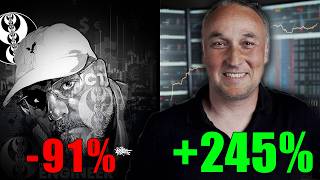
Jonathan and Patrick Nil compare ICT's failed Robbins Cup attempts with Patrick's repeated leaderboard wins. They discuss validating discretionary trading with data, managing a portfolio of 100 strategies across 300 assets, and handling drawdowns up to 50% in a month.
Chapters
ICT the inner circle trader Michael Huddleston tried to join the Robins World cup training championships for four times and failed. We're talking about the same competition where legendary trader Larry Williams achieved probably the world record performance of 11,000% performance in one year. And this year as well. ICT joined the competition promising that he would beat that performance, but he still didn't appear in the leaderboards. What do you think? Do you think he'll be able to make it? Let me know in the comments.
I'm curious.
In the meantime though, Patrick Nil, a German trader from which I've been able to learn over the last year, has been in the leaderboard for nine times, seven, six times in the podium and two times in the first place. And these are all of his track.
Records throughout the years.
So there might be something you want to learn from him. And after showing you my experience at his trading floor and a one hour interview today, we're going to go even deeper on his approach to markets.
So enjoy the video. Welcome to the podcast, guys.
Thanks for inviting us to Prague.
Nice to see you again.
Nice to be here.
So I would like to start since we know all the story, we know all the background, a little bit of the background of the team and if you guys didn't see the podcast, there's a link right here to see it. So I would like to start for a question for you, Patrick, about the role of fundamentals in your trading strategies or in the overall trading approach. Because we talked about market profile, about macros, about volume profile, so I wanted to get a little bit deeper into fundamentals. How do you use fundamentals and does geopolitics play a role? And a little bit more on that.
Fundamental analyst team there. Unnew.
Yeah.
Day trading on the wake spin. Is this for Michnikan? So relevant.
In the intraday swing style, if during a day there is a news release, are you considering that in your plan or in the analysis that your team makes, Is it part of the process?
Yes, I understand it. Yeah, it's a soda.
News handle.
Okay.
But you don't trade news. Correct.
Both in your team or in your personal trading, does statistical analysis and data analysis play a role in the analysis?
Yeah.
So you're.
So yes, data analysis, of course is a role. First, the data currently updating, like when you have, like when you track a team's performance, you need to evaluate who's the best analyst, who's the best trader. But also when you develop or qualify a strategy, you need data, you need at least a Hundred of samples more. 200, 300, 400. And it's work that's not fun, but you still need to do it. So I think the last session we did about testing a strategy and quantifying the strategy was two months ago, where me and like three other colleagues.
Just sacrificed a couple of hours each day just.
Putting in numbers into an Excel sheet and quantifying the data. And yes, there is software where you can quantify parts of it, but not all of it. And also, if you want to get a feeling for the strategy, take screenshots. It's different if you test strategies by yourself and invest hours in it than just running some algo. Because you see stuff in the markets when you test it for yourself.
Yeah, yeah. So in the, in the process of, you know, evaluating the discretional strategies, is there, or have there been through time an edge refinement process or an optimization process?
Yes, there is. There's always an adaptation. What works best? What works best works not so good. You have different market phases, like some sometimes we've already talked about market cycles. Where are we in the market cycle? There are phases where it's clear to define in which cycle we are, and there are phases where it's not that clear.
And yes, it is adaptation because markets behave different. For example, if you look at markets when the volatility index is very high, you need to adapt your discretionary strategy. When the volatility is very low, you can adapt it as well. And those things you need to check, and you can check them if you just look at periods where those market phases have been high volatility, low volatility, a lot of geopolitic risks, not a lot of geopolitical risks. And then just test your discretionary style of analyzing and trading and just put it into data.
Yes.
So as of now, you are a portfolio manager, correct? In.
That's correct, Yes. I manage for wealth management. One certificate.
And so how is the. Because people know you for the World Championships and you know, in the world Championship, it's all about making the biggest performance and being the top of the leaderboards, you know, so the risk management approach must be completely different. So yeah, more or less, let's say per trade, for every single trade, what is the average risk for your World Championships account or with the professional part of trading.
Certificate off?
See?
Yes. And about the maximum drawdown that, like the total in the total account, is there a maximum drawdown and which one it is for the professional part and the championships.
What was the maximum loss or maximum drawdown that you have experienced personally?
Good question.
When I'm young, I, I crashed some depots but it's, it's long, long time ago in the last years.
In the championships as well.
Yeah. 50% water on a month.
Nice. So when I came to the trading floor and I met all the team.
I, it was cool because you know, there was, there's different kind of traders, there's Calpers and intraday and what I think Jonathan or Serge told me is that you have the guts to leave position running, running, running without, you know, too much emotional attachment to the traits. How do you do that? And what, what would you suggest to a person which has a like hard times letting position run? What's, what's the secret behind it?
And I think also there's less emotional connection to a trade if it's a trade of the team. Like Patrick prefers intraday swings, but if it's a trade analysis, a swing trade from somebody else in a stock or in the index, there's less connection to the trade. So it's easier to let it run. Yes.
And how much do you think in the, let's say in the, in your performance of the championships in a, I don't know, in a percentage points, how much is your traits versus the team traits?
I think 50.
50 could be nice. Nice. So the team is, is like I, I, that's probably the, the, the thing I love the most about the experience we had of all the team because usually being a trader is a lone wolf kind of game. But with you guys it's, it's a, it's a team.
So it's for me it's important because I'm not all time on the, on the office. And so it's perfect if Jonathan or somebody else tells me, hey, here it's interesting. Look, have a look.
Yes, yes, yes. And you can also trust each other because you know what the idea is? It's not just a signal, let's say buy yourself, you know the strategy, you know everything. So I think it's really good and it's also good for diversification. I think inside of the, of the, of the team. In your let's say portfolio of strategies is there also algorithmic trading and systematic trading.
And.
More or less like how many assets do you trade or how many assets are managed in general?
And by the way M since.
Assets.
By the way m since Novenig assets.
And it's by the portfolio for Waldung 500 assets.
So in the, in the asset management, it's. You want to have diversification and what we've built over the previous month or Patrick has built. Mainly you want to diversify and scale big. And if you want to scale big, you can adjust. Intraday ducks gonna be difficult with liquidity. You're gonna like your edge is going to decline the more assets you have. So if you want to go go big, you want to have a lot of assets. For now, there's a very close partner we're working together with.
And he has for now 100 different strategies. So 100 individual strategies trading on over 300 assets. For now, I think 60% are American stocks. But there's also volatility futures in it, currencies in it, bonds in it. So it's diversified through the markets and also through global economies. So that's the state where we are now. But we still continue to develop new ones and expand the diversification. And we are also working very strong on trying to automate as much as possible our discretionary edge. The fundamental stuff is going to be very difficult. But from the technical side, the way we analyze, we try to automate the most. We're not final there. So we're still in the process. We don't know if it's going to take one, two months, maybe two years because we don't know what problems will occur. But that's the like the current state there.
Do you also have an allocation for buy only assets like, I don't know, you buy bonds and get the yield or stuff like that or I don't know, just buy a stock. For the long term, do you have a position sl long term trading also?
No.
So, so if there, if there is that capital, it makes sense to not just store the capital somewhere to buy something, but most of the time we use the margin we actively trade, so it makes no sense to do it.
What do you think is a good performance, good trading performance for.
A company that manages money or retail trader? What is a good yearly performance.
To.
I'm not.
And I think one of the most important questions over there is what's the risk for that percentage to gain? So if you make a gain, how much levels? Definitely.
And if you, if you make a gain, what is the relation to risk like profit factor or.
You know, which one is the, the best or the maximum drawdown to profit relationship?
That is really good.
I think everything above two is awesome. Goal is to be above three. Yes, yes.
Yeah, we were talking about this before because now you're traveling but also you're trading and I've tried that as well. And it's not really optimal. I would say it's actually kind of stressful. So what's your experience between with the idea of the traveling traders that you know goes on the beach and trades and blah blah, blah.
Yeah. Also you're more focused when you're in one place and you know, you have your computer, you have your Also Internet connection, by the way, is a big thing. Like when you go around the world, especially if you go in Africa or and you go wherever, it gets really tough.
Also.
Oh, it's the same with me. You're not focused when you're traveling. Internet connection is not that stable and sometimes then you want to change your position and then the Internet's off and then it's back on and then it's loading and then you're getting angry because it's loading longer than in the office or at home. And then you have like an emotional dysfunction or not emotional damage. And then you should become an emotional neutral when you trade. And that's not a good condition.
Definitely, definitely about leverage because a lot of retail traders today are using huge leverages like 500, 205, 2000 leverage. What's do you think the, what do you think? It's a, it's a good leverage for retail traders. And also in the professional part, do you use leverage?
So it does not really depend on the leverage. Like you have a fixed risk per trade idea that you're going to risk. Of course there can be slippage and so on, but you have a fixed amount and it doesn't matter if the leverage is 1,030 or 2.
When you crash your can crash your whole account in one trade. Most likely the leverage is going to be too high. Yeah, but otherwise it doesn't matter on the leverage. If you have low spreads, low commissions, just the risk portrait you're willing to accept.
What are three tips that you would give to a beginner trader who is starting his journey in trading?
I think one thing is to get people to talk about like don't be just for yourself. Talk to others. Like is it a mentor or other people that are learning. Yeah, but don't try to fall for the shiny object hunting and switch all the time. Focus, focus on one thing. Get a mentor. And the third thing.
For me.
Yeah.
For me, don't put, don't be in a hurry. Don't be in a hurry to have profits. Don't be in a hurry to get the results. Take the time that you need. Because if Patrick Neal took one year to become trading champion or to you, it Took I don't know, three years to become profitable. You know, it can vary so much and some people are even trading for five to 10 years without seeing any profit.
So.
A lot of young people nowadays, they're seeing these models of, you know, very successful young traders. So they put a lot of pressure on them. Like I'm late, I have to do it in one year do. But just take your time. It's so personal that, you know, it putting the pressure on something that it's already stressful. I think it's not wise enough. Not wise? Yeah. About the psychological part of trading and the emotional part of trading. What was the hardest thing for you on that side of trading?
So for him it was always easy because he had like a company before where I think have had to be right on the right point and need to. To be delivered. And so he had the discipline before that. So it was easy for him.
Yes.
To take this into trading as well. Yes.
Do you think that having having also a mentor or having you know, someone who teaches you trading and an objective way of trading helped you with this?
Yeah.
As a mentor.
Do you think that if you didn't have a team you wouldn't have become a trader?
I said.
On Obichtad Angelkom where Wojpin Wherewith.
So it definitely was faster with the team. He doesn't know if he would be in the position he is right now without a team, but definitely helped.
Do you need all six of the screens?
No, but it's cool if you have it. Yeah, I like it.
Yes, of course.
But so one is only for Facebook, WhatsApp and Skype.
Yeah.
Right. Yeah.
The rest is just for. Just for the beauty of it or for checking more things.
Yeah. You see all markets, it's good but you really don't, don't need it.
Yes. And usually like in a normal day, you trade one asset. I've seen you mostly trading US or oil. Right. So you just like in your screen do you keep just one 30 minute chart or you have more time frames? How is, how is the charts that you're using?
I have oil. I think I have six times. I have daily 30 minutes, 5 minutes, 1 minute market profile footprint. I also have open.
Order book.
Do you also have the order book?
It's now it's.
When you take a trade what like before take. Taking that trade was your process. What can you share about the. The process of taking a trade for you.
When you in your trading style, do you have a specific take profit and you forget about it or when you exit the trade, is there some discretion?
Yes.
And about the, the stop loss, do you have.
Like, do you have rules of, you know, you can move your stop loss to break even or trailing? Do you use those things or you just place a stop loss and you forget about it?
I sometimes trail a stop loss, but only if the trade is in far profit, if it's a really, really fun profit or my entry is really, really good. Sometimes you have the entries where you think like, oh, that's nice. Then I sometimes trade it to break even or slightly below break even. But I don't like to trail too often because I just analyze it. Very often I get just stopped out at the.
Wet master shaft of entry.
This is.
Yeah.
So in the championship, he's trading more often the stock because the risk is way higher. Yes.
Yes, it makes sense. Do you use indicators at all like moving average, macd, rsi. Do you use any of them.
Moving averages?
What's your, your favorite tool?
That cyclic market profile as it is best in finish.
Like a. So I just, I think it's funny.
Because when he's trading on his phone, there's always a moving average and an RSI because it's the. I think it's a basic setting of Metatrader and everybody's thinking he's using this. It's. It's just on there and he's ignoring. And I was, I was thinking in the beginning as well. I saw it like. Like what? But on his, on his desktop. It's not there. Why is it on his phone? And then. Yeah, it's. It's just there.
With your trading style, more or less. How many trades do you open in one week?
Is there a lot of days where you don't open a trade at all?
Can you translate?
So he's. It's more and more of days where he's not trading because he's focusing on other stuff and so he's focusing less on actively. Actively trading. So that's why it's.
Has that, has that changed throughout the years? Like maybe at the beginning you were more.
So when you're not trading, active, actively trading.
What's.
What's your day like? What. What do you like to do aside from trading or what, you know, professionally and non. Professionally.
This is. Yeah, this is my name. Yeah.
Nice.
Do you have any other hobbit?
Oh good.
Do you.
Like. Do you feel that physical activity is improving in any way or form? The. The trading part.
Like so you can't see this.
Does it have an influence.
Or. I Don't know when, when you are having some troubles outside of trading say in your personal life and you have you're angry for something, does that impact your trading or you prefer to stay away from the charts.
So yeah, definitely is an influence when you have private family problems. Whatever.
Yeah.
Because you take this into trading and you take this into your decision making.
Yeah.
Do you consider yourself more of a trend following trader or a reversal trader?
Reversal trader. So friend following this.
If it's the end is a suburb as a counter trader. Tuition toys.
More of a counter trader. Yes.
Yeah. How about you?
Same. Yeah. Right. I think if it's a normal trend, I'm also good at it. But those very extensive trends like you had previous month and for example Dax or. Yes. Or some meme stocks where it's just about buy high, sell higher. Very difficult for me. I think for most of us in our office like if we just have very irrational rallies where you just buy every morning there's opening. You just buy, just bite.
Yeah.
I think nobody in our team is good at this. We cost one person.
We have. He is the. His trend. Trend followers.
With natural gas. Is it with natural gas?
No, no, no. Stocks.
Stocks. Yes. Yeah.
Makes sense. When you are in a winning position, do you add to the winning position?
Yeah.
Portfolio handle.
Pyramidation.
Yeah. Pyramidation.
Yeah, yeah, yeah. And reverse Martingale.
Yes.
Yes. Nice.
Sometimes it's also scaling in and losing positions. But it's more rare than scaling into winning positions. Yes.
But when you make it controlled, it's okay. When you. If you fix stop loss and you double the position in front then yes. You have a mega risk. Short respect.
Yes.
A lot of people have been asking me about the experience we had in your. In your trading floor because it was really amazing and.
Jonathan told us most of the stuff and he was really, really good at dissecting all of the strategies and all the part of the strategies and you know, I think he's a great teacher. So if.
Yes.
And so if, if people want to learn this and have the same experience with you, what should they do or what's your plan in the nearest future?
This coach Nicole name.
Yeah. So my parallel choice, if I wouldn't got deeper into the trading space would just get a teacher at a regular state school. For real. This was my, my first choice after school was to get a teacher.
Yeah.
Because I needed to choose what to study and I like teaching. I like to have one on one contact with people. I had a lot of fun with you guys. When you've Been to the office. I still have a lot of fun when I meet you today. And I like it when they're eager students that try to learn or improve stuff. I like to, like, support them in their way. And I think all of the stuff that's going on in the. In the office or in Patrick's head, like, if you have spent so much time with people, you understand the way they think. It's like in a long relationship, you know, what your. What your partner likes, what he doesn't like, how he thinks, how he analyzes. And I think it's the same with us. So Patrick's gonna have less and less time because of all the investment stuff, because it's just more scalable. It's more scalable. So he's investing way more time in that. And yeah. Yes.
Nice. And little spoiler. We're probably gonna do something together soon. So if you guys want, there's a waiting list down below. You can subscribe to that and be notified when the next news about this come out.
So. So you. You guys are taking the team around Patrick out of the cave, the dark cave, seeing no sunlight and bringing it up like. Yes, exactly. Here's something to present.
Exactly, exactly. Yes. And since we've done it also in Italy, we have the experience to, you know, provide a nice educational service so that you. You guys can follow. You can follow, you know, focus on the trading part, you focus on the teaching part. And so we, we will. We will help with the infrastructure, and I think it's going to be really awesome. So stay tuned, guys.
So, yes, thank you so much for this second episode of the podcast. I think it was really good. We got some really very interesting insights on your. On the trading style. And so thank you again.
Thank you for having us here in Prague spontaneously.
Yes. And soon also, a podcast just with you will come out, probably. So subscribe to the channel if you haven't yet, and we'll see you in the next episodes. Thank you very much, guys.
Thank you. Thanks.










