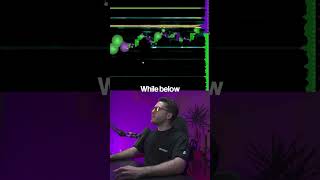
A trader explains why targeting the recent low fails: price ignores that liquidity pool and climbs toward the large liquidity zone above the recent high instead. Price moves liquidity-to-liquidity until it hits a massive sell wall that forces reversal.
Chapters
Price just swept a high and created a break of structure. If you think the next target is the most recent low, you're probably using retail concepts that everyone knows. Let's see how that would unfold. You would be right for a couple of minutes, but immediately after, you would see price going against you and going again to that high. And as we're approaching this high, once it's taken out, you would expect price to revert back. But what actually happens is that price actually continues to rise for the entire This doesn't happen because you're looking at the wrong information. It happens because you're looking at half of the information. So in a situation like this, if you had a heatmap, you would have clearly seen that there was a huge level of liquidity right above here. So price naturally gravitates toward this. And as soon as more liquidity areas are presented in the book, price will go after it one after another. While below here, there was really no interesting liquidity to go and take. So as you can see, price moves forward, takes the liquidity, and ultimately the next ones as well. And only when a wall this big occurs of sellers showing their teeth, that's when price actually reverses. And again, when sellers show their teeth, market drops, but then ultimately seeks for liquidity and rebalances that exact level. This type of trading is also known as liquidity to liquidity trading. If you want to know more, comment liquidity and I'll send you a free guide on how this works.