Maintaining Emotional Control When the Money is Real: The Challenging of Moving from Paper to Live
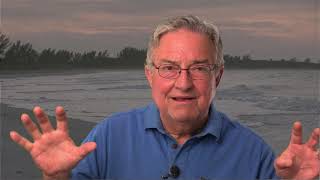
Rande Howell (Kardec Trader) explains why traders who perform well in paper trading often fail when they switch to live trading: a primitive emotional brain (limbic system) reacts to real money as a life-or-death threat, hijacking rational decision-making. He argues money is interpreted by that brain as symbolic of power, safety, and status, and recommends emotion-regulation practices—especially diaphragmatic breathing—and learning to observe and partner with emotions to make trading performance outcome-independent. The talk closes with a call to explore further resources (website, free book, videos, courses).
Chapters
Foreign's been there. You know, when you're learning, you do a lot of paper trading. And what you're attempting to do is to get competent, to get really good at being able to do that, because you know that you're learning the methodology. And what you want to do is you want to make those mistakes without all the pain. And there's always that reset. You can go and you can over and over and over again. But that natural day comes when you have to start switching between paper trading and live trading. Suddenly, a new phenomenon set sets up and everything's different. Even though you have been showing consistent performance, okay, in your paper account, it's double, tripled, all that stuff. And you know, you know, I know how to make decisions. I can do this in almost in my sleep. I can teach this stuff. I've gotten so good. And then, boom.
The treads at full speed hit the road. And suddenly what you knew, the knowledge base that you knew and developed was no longer there when you were live trading. And you know, you go berserk, you go tilt, you get hijacked, and you really done stupid things. And suddenly all that knowledge, all that thinking brain knowledge that you had.
Is suddenly gone, disappeared, nowhere to be found. What happened? What happened? The deal is, this.
Is you don't know that you have a silent partner. But underneath this thinking brain that you have, there is a very primitive, very primitive emotional brain that's been around since our caveman days and even before. And it's a brain that we share with other social mammalians. It sits underneath, it's often called the emotional brain, the social brain, the mammalian brain, all that, the limbic system. And it does not think like the thinking brain does. You would think it does because it's sitting there silent. You're in control, and you know the beast is there, but it's so calm. And then the trade starts going against you. And all of a sudden that limbic system is no longer calm. It takes over. You didn't even see it. You didn't know what happened. Friends, it's because you don't know what you're looking for. That emotional brain was built, oh, as humanoids, we're six and a half million years old. But that social brain has been along around for a long time.
And it's not built to have language. It's built to have action. It's built to do things quickly. It's built to respond to changes in the environment. Bam. Just like that. It's not built to wait around and see if there's a threat out there. It's built to say, oh my gosh, the saber toothed tiger's coming. I have to act right now. It is short term survival interests. And what you're doing is you're asking that brain with that much history behind it to do something completely different. You're asking it to think in probabilities. You're asking it to go, oh, well, you may lose, okay? And that's okay. No, it's not. That's not what it's built to do. The other thing that is really confounding in trading is that we think, okay, this money thing, and we're just going to train the subconscious, blah, blah, blah. No, you're not.
That emotional brain of yours does not understand money. It doesn't have a concept. It doesn't know about legal tender. What it knows about is life and death. It knows that if something's at risk and you could be taking a loss, it sees money as a symbolic representation of power.
Of safety and of status. That's what it was in the clans. I mean, if you really were truly powerful back then, you're the guy that brought down the mastodon. You're the guy who was there and did all that work and you kept other people safe and there were predators after you. We were hunted down. And so you can see that. And also, if you were successful, if you were a winner, okay, you also got first dibs on the females. That was really important. That's how you project a species into the future. So your highly primitive emotional brain is sitting there in the background.
When you're doing paper trading. It's not alerted, it's not focused. There's a reset button and there's no fear of death. Because what the emotional brain is saying to you is that when you're risking capital, you're risking the power. You become powerless. You're risking whether or not you're going to survive or not. You're risking whether or not you're going to lose. And understand losing back then meant that you were somebody else's meal. So, yeah, if a loss is going against you and it's real, of course you're going to fight like hell. Of course you're going to fight like your life depends on it. Because to this brain, to this mammalian brain, it does. Well, friends, this is what you've brought into trading.
That brain does not understand money. It understands life and death. And it sees fear. It sees risking capital is risking life.
Now can you see the reason why when you're, when you're using play money that the limbic systems on, it's okay. The moment that you add particularly significant risk, all of a sudden threat of life is there, imminent threat, and it goes tilt, it goes wham. And you get hijacked. This is the way it is. The question is, what are you going to do about it? Now, what I see most traders doing is they push harder and harder and harder and harder. They do it again, they're going to do it in. And they seem to be expecting the emotional brain to react differently, but they keep doing it and pounding their head, pounding their head, pounding their head, as if expecting a different outcome. Now, Albert Einstein called that the definition of insanity. I don't. I call that normal. What we do not want is the normal mix between the emotional brain and the thinking brain that you brought to trading. It's a disaster. It's not its fault. It's just not designed for the environment that you're asking it to operate in. So we understand now more about money and what it actually is represented by, by that deep, primitive, instinctual mind called the limbic system.
There's no money, but there is. There is life. There is like avoiding death, not getting in the trade or seeing a rig opportunity, jumping in all feet and dangerous. Same thing that's hunting the mastodon. So we're sitting there, we're going, well, what do we do? Friends, this is where you're going to have to decide whether or not you really want to be a trader. The mine that you brought is not going to work. Do it for 10 years, do it for five years. Do it for as long as you see that I keep doing these things and ignoring my emotions. I'm doing exactly what most a lot of the groups teach. Leave your emotions at the door. Well, you can't. You can't. You are an emotional being who rationalizes. You're not a rational being who has some problems with emotions. So the deal is, if you understand that our body is the emotion, an emotion for me is a biological action potential. And what they're there to do is to coordinate action between the organism, the trader, and the environment, the markets. That's what it does. And they're automatic. It'll bypass mind in a moment. Particularly with this stuff, what we're talking about, where you're risking stuff and it gets really intense and stressful. Boom. Thinking mind never had anything to do. It's an afterthought. It's the caboose on a train, and that locomotive is the emotion, and you.
Are the conductor. The engineer of that train. And what you're looking at is your beliefs about your ability to manage uncertainty. So what you're going to have to do is find some humbleness and recognize that you're going to have to learn to breathe very differently.
Your breath, it's about regulating emotion. The very first step, you want to stop it from getting hijacked. And all that intensity of the emotion comes and takes you out. By breathing diaphragmatically, you can actually change it from having the capacity to hijack you. You can calm it down, you can maintain water. Without that, nothing happens. Then what you're going to have to do is you're going to have to learn to partner with your emotional brain. There are powerful resources, inner resources in that emotional brain that you need to really nurture, to bring forward and to develop into the traitor you can be. Because ultimately.
Your thinking is emotional state dependent. What we're looking about doing is actually building an emotional soup from which thinking arises and engages uncertainty. That's what we want. We want to become emotionally intelligent consumers of emotion. Not the one trying to fear that, oh my God, what if an emotion passes? What am I going to do? No, you're going to learn them, use them. And you're going to really go in and find your beliefs about your ability to manage uncertainty. Not the ones you talk about, not the ones you have written down, but the ones that are being revealed all the time in your trading account and its health. That's what you're looking for. They're easy. It's a sense of mattering. If you feel as though if I made a lot of money, I'd matter, you know, if I make a lot of money, I'll finally, I'll finally be happy.
You're giving the trading gods way too much power. Your worth. Some people really don't believe or believe that they're worthy of this other. Your competence. I'm never good enough. Scarcity, oh my God, I better take that money right now before I risk anymore. Or maybe I just won't get in that trade and I, you know, if I don't get in the trade, I won't lose. Or powerlessness. If you've ever been in a trade where it's gone against you and you just really kind of lost yourself, that's powerlessness. And that's the one that tilts us like crazy. So you're looking at it and going, we have to examine those beliefs. And finally what we're doing is we're really getting back and saying the Difference between the transition from paper to real money is really becoming an observer yourself. Being able to look and find out what beliefs, what emotions are structurally building the mind that you bring to the engagement of uncertainty. It's there that you learn to be able to just tweak those beliefs so that your winning and losing is not about outcome. It's about your performance in this moment. That's what you can control. Friends, this is the journey of becoming a trader. Very few make it okay. They don't want to really want to change. They want to keep their winning formula even though they find out that they're on Mars. It's a very different environment there. We better be equipped differently. You can learn. I see people do it every day. Come to our website. Start exploring. If this is the first time you've seen a work of mine, get the free book. Really get on YouTube and check. Check it out. There's over 200 videos. Check it out. Learn about what you're going to have to do to build the mind that allows you to engage uncertainty and risk and not activate that caveman brain of yours.
That's the ticket, friends. That's where the definition of money is found at a very primitive level. Power, safety, status, okay?
That's what you have to work with. Richard Branson, a really very interesting guy, made the statement. His money is for making things happen. And in trading, money is the currency of making things happen. It's not about you. It doesn't define you unless you really let it. What it does is it gives you the opportunity to make things happen in the markets. So learn. Come and learn. Watch more videos. Really take a look at this. Look at our courses.
This takes quite a bit of effort if you really want to become a good trader. Good luck. Take care.
Sa.









