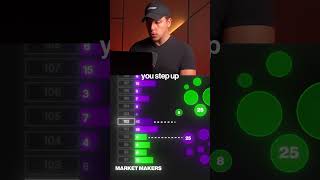
Market takers use aggressive orders to buy or sell immediately, consuming liquidity at whatever price necessary. Market makers provide passive liquidity but risk not getting filled. The core trade-off: you can have price certainty or execution certainty, not both.
Chapters
And you have always an interaction of two forces. You have the aggressive market orders, bubbles, and the passive liquidity. These two match together, so the aggressive liquidity is matched with the passive liquidity, and this is how the market moves. Market takers, they are the bubbles that eat liquidity level. Market makers, they offer. Now, if you are in this case, 25 aggressive market orders arrive to meet the passive liquidity order at 101. Are these 33 enough to meet the demand of the 25? Yes, they are. Let's say that the market participants get more interest in getting into position and you get 75 contracts. They hit the first level, you have still 67 contracts missing. Then what you have? You step up to 102. Is this enough? No, not yet enough. You still need to go to the next level to meet the full amount. So the main takeaways you can get from here is that you buy and sell at the price you want, but you don't have a guarantee that you'll get filled. This is the perspective of the passive order. So you have price certainty, but not time certainty and not execution certainty. You don't know if they will fill you at the level that you want. The aggressive market participants are the one that say, fill me now, I want to be filled now. So you buy and sell when you want. You'll pay a worse price. You pay for the spread because you have the necessity to be filled in your order now.