Mastering the Mind You Bring into the Uncertainty of the Moment
Randy Howell explains how survival instincts wired into your brain drive trading decisions that don't fit markets, then walks through his Ignite/Spark curriculum for emotional regulation and mindfulness. A trader named Mike shares how the program reduced his tilt and improved his confidence.
Chapters
The broadcast is now starting. All attendees are in listen only mode.
Welcome everyone. My name is Randy Howell with Traders State of Mind. And I am delighted that you're here tonight. And we're gonna have a special little thing that I've never done before. It just so happens that a client from Canada decided to have his left last session here. So we actually have a client who's gone through my process and has worked with it that I'm going to allow him to tell you in his own words about what, what it was like, what it took and you can ask him questions.
Oh, the individual program. Yeah, he's with the individual program. So before we get started, let's find out. You can hear me. Okay. If some kind soul would just simply write in a Y in that question box, I would greatly appreciate it. And let's see here.
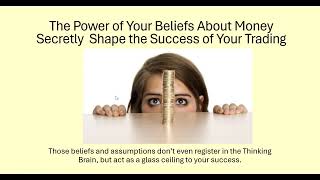
Can you hear me? Yes. Okay, that's great. If you're having problems then you might just get in, get out and come back in and see if it's there. But we can hear you. Good. Okay. In that case. The other thing that, what happens here is that I'm going to be going through a presentation and I will not take questions as I do the presentation because I. That doesn't work well for me. However, if you go ahead and put in your questions, I'll have questions. Start with. Even though tonight we're going to be talking, you're going to be talking with Mike and you may have questions for him. I would rather him and it might, and it just may really help you. So let's get started. What we're doing today is we're beginning to say, you know something, what I really get is this thing about trading that seems to be so different than the rest of life is you come in with a particular brain that has been organized to be able to survive in a particular world and it's done a good job. I want you to give it credit. Yet what happens is when you come into trading, it's like walking into a completely different world. The same rules don't apply. It's like, it's like big particle physics and little particle physics. You know, the rules are different. So you do that and you go, well, and how, how does this work, that this all comes together and what am I supposed to understand about why I can't trade the way that I need to be trading to be able to be consistently profitable? Well, where we're going to start is we are going to start literally about the power of your beliefs that are secretly shaping the Success of your trading. Okay, you probably. Your idea of a belief and my idea of a belief are probably different. I look at belief as an element within an emotion. It is the part of the emotion that carries the meaning. The belief about your capacity to manage the uncertainty of the challenges that are coming forward. That's what a belief is. And what we want to really do is we want to say, okay, I get it, that also the beliefs are actually assessments that a very primitive part of your brain that I generally call the emotional brain, the caveman brain, that it comes to an assessment about your competence, okay? And what happens is it becomes locked in. It's no longer an assessment. It becomes a belief that feels like it's true, feels like it's certain. And we'll walk around with these beliefs, and we discover in our trading, in our account. What we do is we discover how effective those beliefs are for extracting more capital out of the markets than you put back in. That's a big deal. And what I'm saying is this, is that you may not know the beliefs that are actually running your trading. We're going to be getting into that tonight so that you can begin to see it. But the deal is often capital money gets built into your capacity to survive in the short term from your caveman brain. And what we're going to have to do is we're going to have to learn how to retrain it. The key, though, is this. The brain. Your brain is remarkably undeveloped at birth. If you were to compare it to, say, a chimpanzee, you would be nine months behind the chimpanzee at birth. It would take you an additional nine months of experience working in the world to catch up with the chimpanzee at birth. You know, then it just goes crazy. But the deal here is most of evolution has produced a brain that already has. Already has instincts set up and that they can, like a giraffe, within an hour of giving birth, it can run. You're seeing things that humans just can't do. We're helpless. We are really remarkably undefined. So we get organized, and it's these organizations that are happening at specific moments in time that lock in a belief. And you wouldn't even know that the belief is there. That's the deal. And we want to take a look at this, say, well, how does this all work, Randy? How does this all work? Well, first of all.
What is a brain? What is a brain that trades what it's actually like? I use David Eagleman's understanding of the brain and he's one of the most famous, powerful neuroscientists around today. And what he says is that a brain really is a community of rival emotional programs that compete with one another to construct the self. That self is who you think you are actually, but who you really are are just simply a particular construction of potential. And it is literally, you might say, these emotional programs, they really are out to win, okay? And the deal is the winner creates the self. That's the brain that you bring to trading. And if you just happen to have a perfect experience where you learn to work with uncertainty and stuff like that, you're lucky. Most are like these guys right here where they are learning to compete with one another. And what you don't need in a brain that trades is a brain at war with itself, a brain that's conflicted with itself, where the power is trying to take over. And what you want is cooperation. And that's something that we're going to have to learn how to produce. So now we're going from there, and we recognizing, okay, what happens is they also create alliances. Now, this I want you to understand, this is your brain we're talking about. And we're talking about different emotional programs that will work in alliance with one another to be able to get a competitive edge and being able to control the self, this construction of the self. And if this doesn't make sense to you, you need to learn to make sure it makes sense. Because fundamentally, you're going to have to go in and reshape, remold the mind that emerges from this brain in order for you to become consistently profitable. That's what it's going to take. So if you'd see it, and this is a very powerful thing to understand right here. What you're looking in this image is you're looking at a sculptor.
Moving and shaping clay into a particular form. You can see that. And that's exactly what's happening with your brain. So we're going, hmm.
What's probably vital for you to understand that you are not you. You are a construction of potential. From a quantum perspective, all reality exists as potential. There is neither mass nor energy. There is potential. The observer of that potential is what brings forth the shape that you experience as me. Okay? Now, the chance of you actually recognizing that and saying, oh, yeah, Randy, I knew that from a long time is rare. But what happens is this is when you recognize I have been shaped by forces into a construction of the self called me. And it just so happens, unless you got very lucky, that Particular construction is not going to work for success in trading. It will have worked for short term survival, success, okay? And it locks in that formula. You bring it to trading and you find out it doesn't work anymore. So we've gotten this. You exist as potential. The observer of that potential is what brings forth the form of the potential. And this is vital in trading because we're going to have to reorganize that potential into a very different shape.
So.
There is a big shift that occurs.
From that community of rival emotional programs that constitute a brain and a mind. That mind is literally what happens is that mind is that these emotional programs given voice in the mind. You would just look at it, oh, these are my thoughts. No, you do not have thoughts, as weird as that sounds. They're having you. You are born into a soup, into a history. And that undeveloped brain is organizing itself in this soup to survive. And it just so happens that these emotional programs are then as mind emerges, they're given voice. You hear them as your thoughts. And this is what makes human beings so unique in the animal kingdom. By developing language.
Thoughts are a lot more than just emotive electrical energy running around in the brain at 225 miles an hour. Now we can hear the emotional programs that are competing with one another to create you, the you that you bring to trading, and the you that's going to have to get reorganized into higher functioning. Now, I realize that this is for a lot of people when they first hear this. It is like what this is in neurobiology. What a neurobiologist would say is that you have never experienced reality. What you have experienced instead.
Is.
The assumptions, the beliefs that you have about what's out there.
Is influencing the feeds coming in, all that electrical stuff and going to the brain. And the brain organizes all that neural feed coming in, all that information, that data coming in, and takes a best guess about what it's seeing out there. When you look at your charts, this is exactly what's going on.
I have a friend, I have a client actually, that was working with me. Not because he needed to work on trading, he was actually working on his intuition. He trades with an eight figure account and can shake markets a little bit. And one day he and I are talking and working and we're on zoom. And he pulls up, he pulls up a chart and he says, randy, what do you think I see here? And I looked at Christopher and I said, christopher, I don't know, you tell me. He said, I'll tell you what I see. I See blood. You see this right place? This place right here in this chart? This is a bunch of retail traders and I'm going to shake them a little bit, I'm going to scare them, they're going to jump and I'm going to suck all their blood.
That's a very different observer observing other people's voices interacting with the uncertainty of trading. But that's what is so powerful about us. So we're going from there and then we go, okay, now. And what happens is, this may seem weird to you, but I'm asking you to say, tell me something. Have you ever had self doubt? Have you ever thought, well, I know, do it this way. No, no, this way, no, this way. All that, all that, those are clashing thoughts. Those are the emotional programs now given thought form in the mind of the human being. And what they're doing is they're competing with one another, they're clashing. Two different emotional programs want to take the self in very different directions. This is what you find when you engage the challenges of trading. When you may have yourself convinced that you control outcome or that you're a rational human being, which by the way, you're not. And you might have that convinced. But the moment that you engage that uncertainty with no control over outcome, that's when you discover.
The belief structure behind all the clashing thoughts that is holding you back. So that's where we're at. And now it's these encounters with these emotional programs that are so vital, is you're going to have to learn what these very primitive, very primitive beliefs are. That happened a long time ago, before you could think, while the brain, remarkably undeveloped, is still organizing itself. And what we're going to do is we're going to have to start going out. What are the beliefs driving the way I manage money, the risk of putting capital into play. So this is what we're actually wanting to do. We're wanting to find what beliefs.
Drive your trading.
When you're looking at uncertainty with no control over which way that trade goes, that's what we're looking to do. And out of this, what I want you to understand, this is the very powerful thing, is that beliefs are not true.
But they become your truth. Ultimately, beliefs are assessments that are made and they lock in and take on the force of truth. Like for instance, my dog and I like to take walks. And we often, we often will be walking and he sees a squirrel, he sees a deer and he chases. And the deal is my dog, oh, and rabbits, what he's Discovered is he's non competitive with rabbits. And what he's learned, particularly he's an elder statesman now that he just simply won't run at him even if the rabbits only 10ft away from him, he's not going to go for him. What he's learned is he can't get it now from Buddy. What you see is he'll walk past a rabbit. He doesn't have a story, he doesn't have a language. He doesn't have thoughts about not getting the rabbit. You and I do, though. This is where the assessment will make. My dog made the assessment. He can't get the rabbit.
The human goes one step further. He can't get the rabbit because he's not good enough. He's not fast enough. He's not this. I'm. Whatever. What happens is suddenly what you discover is that beliefs have become true. They're not assessments anymore. And this is what we have to do. You have beliefs that you talk about that you bring to trading that you don't even know you have. And these are the ones that we need to ferret out. They're the ones that expose themselves as you trade with capital at risk.
Now.
And here's a big, huge shift.
A long time ago in a place far, far away, we did not have a thinking brain. We were hominoids. We were not even yet Homo sapiens yet. But what happened is that that caveman part of us does not see the money. If you put money in front of the caveman, it doesn't recognize what money is. But what it does recognize is that.
The money is about your power to survive. It's all about power or not power. It's about safety to survive, or the power to go in and make a pot of gold. You kill a large animal and suddenly the clan is fed for a month. It's that kind of stuff. That's not the greed, that's the lust that drives a lot of people. Alphas who like to get into trades they don't have any business in. And the fear base is sitting there going, you know, I've come to believe that I can't do that. So here's the deal. Survival evolution binds money and the power to survive so that money in the mind becomes confused with your capacity to manage the uncertainties of risk. That's what we really need to understand. That is probably one of the most important things there is. Because, you know, ultimately.
In this illustration.
You'Re looking at an early human, probably between 50 and 75,000 years ago. And what Happens is they've got a fairly safe place, they've got a cave, they've got a lot of things going. But what happens is when they hear something, they are automatically assuming negative assessment. They are assuming they're coming right off the savannahs of Africa where we originated. And they started looking out across the savannah. They saw these bushes. They made the assumption that it saved the tigers behind every bush.
With that assumption, that became belief, that became bias. It allowed them to survive better. But the thing is we began to have a negative assessment machine called a brain and a mind. And what we've discovered is it had negative projection. If you've ever gotten into the thing about are you sure, are you sure? Are you really want to do that? That's exactly it. You are built from 6 to 8 million years ago. Actually more than that. Mammals arose at about 125 million years ago. So this has been part of the genetic movement all this time. And then you think I'm going to go make some money in trading. And you have no idea what you're walking into. So now we get it. Is that the caveman that is activated when you hit challenging moments. Is to the caveman, money is not money, okay? It's the power to survive. That is the connection between your money and you flipping out. And what I want to do. I'm going to, I'm going to talk to you about the biggest self healing beliefs I see day in and day out in trading.
If you no longer have these beliefs, you have become a very competent.
Trader. Most as they learn trading, this is the internal struggle that you're going to have to learn to master the belief. One, money makes me matter, okay? If I win, if I make money, I have power, I have respect. You talk to any, any alpha and what you discover is that they want the money as a way of mattering. You know, they want the power, they want all that stuff. And it works really well in certain environments, okay, like the environment of business. They take that same success formula. They bring it to, they bring it to trading and discover that they don't have any power over winning and losing. But the thing is, they don't want to lose because that says to the caveman, you're dead. You've just given your energy away. But also a winner doesn't want to be a loser. At the same time he wants to be a winner. He wants to be the one that gets respect. He wants the one to be the leader. He wants the status. Okay, that's the first and the truth is Is that if you ever, if you've ever had this come out of your mouth, okay, I'm going to make some money today. You've already set yourself up to lose. You do not have control over whether you win or lose. You have control over the quality of the mind that you bring to the engagement of uncertainty. That's what you have. If you learn to have a disciplined, impartial mind as you engage the uncertainty. If you have an edge in your methodology, your psychological edge is delivering it. And you're going to extract more capital out of the markets than you get back. But for the alpha, that's by the way, that's the guy that gets in over trades. He gets bored because you know, he wants to be doing something. You have to be doing something to be doing something. And before you know it, he's doing a little, he's looking around and he goes, I'm just going to check this out. Before, you know, he's jumped into a trade that is unplanned, unwise, and he blows up. Okay, now let's take the second belief. This is a big one too. This is, this is what limits more traders than I can imagine. Belief too. My net worth is a measure of my self worth. Okay. I actually have worked with guys who. One, the one that's just shocking to me is I worked with a guy who had been trading with a high six figure account for 15 years and every time he went over into seven figures, he would lose back down into six figures, six figures again. Now he was making money. But the thing is, is he's trying to grow his account and he's hitting this threshold.
He'S hitting this glass ceiling, bumping it, falling back down. And he had been there for 15 years. Ultimately, in the family that he grew up in, remember the brain is remarkably undeveloped. It develops through experience.
In his home, it was in a blue collar labor family. And it just so happens his father adamantly believed that nobody was worth a million dollars. Nobody had slam his fist into the table to make that point. Well, it just so happens this client grew up thinking that nobody's worth believing, having a bias that he's not worth a million dollars. So every time he hit that seven figure, he would lose back down. That is how the hidden belief is influencing his trading decision making. Okay, so we've gotten your net worth being a measure of your self worth. I have a lot of money I've got, man, I'm worth it. I'm, look at me. Yeah, but at the same time, if you're losing, you're going, oh my God, I have, oh I can't do this. Horrible low self worth. Now let's go to the third one.
Let's go to the third one. I am not good enough to win at trading. I don't know, I'm just not fast enough. You know, I'm not adequate. I haven't learned this stuff, I don't know why, but I'm. And I have this belief that I'm just not good enough. I'm never going to make it. The truth is if you happen to be a human is you are born into a very broken world. I don't know if you've noticed that, but take it from me, we live in a very broken world. And what your brain is doing it is organizing you to survive in that broken world. By doing that you get pretty dinged up. That's the brain that you bring to trading. What we want to do is these are natural things. I had plenty of people who feel inadequate having grown up in a particular family not because they were unloved, but just simply because their parents never showed them they were good enough. And it comes locked in and it becomes a self fulfilling prophecy. So we've gotten that. Now let's take the fourth belief.
Whatever I have will be taken from me. This is scarcity thinking and it is taught in our families. You know, the truth is, is that I remember my parents, they bought a house they had. Finally they repaired themselves from a major financial meltdown. They bought a house and they kept looking at better, nicer houses once they were really well accepted. I mean my dad was the chief aeronautical engineer on the C141 cargo jet during the Vietnam War. He was a really well compensated guy. He easily could have afforded the home of their dreams. But the thing is they would look at him but they were always thinking, what if the money's taken from us? Like it was, they stayed small. We grew up in things like that too, you know, oh, be safe, you know, get a safe career, make sure that you're okay. Don't do risking crazy stuff. And what happens is that that just absolutely comes and blows you away when you get into trading because what happens is that.
The money can be taken from you and that you don't have control over whether or not it's taken from you or not. But you again, you do have control over the performance line. And again to move from gambling to trading is to make sure that you have a mind that is organized, that can handle itself as far as performance goes. While trading, he's not looking to win or lose. He is looking to perform. Now let's take the next one. Now.
This is something people will call this poverty conversation. This is victimhood, is things just don't work out for me. Yeah, I see it working out for other people. They're making a lot of money, but somehow it just doesn't work out for me. I don't know why. I look in the mirror and I go through all my big positive affirmations and I'm convincing myself, I'm faking it while I'm making it. I'm making it while I fake it. I'm doing all that stuff. But the truth is, you know, at the very bottom of it, you know, I know that things just don't work out for me. Now we have just gone over the five biggest self alooning beliefs.
That I have been working with for the last 17 years with traders.
Are they true? No, they're assessments. They may have lots of evidence to support the assessment, but the truth is they, they're not true. They may be a well grounded assessment and you may need to be able to change that assessment to a more empowering way of understanding your competency and working with life and the challenges of life. But the thing is, it's not true. It may feel truthy, but it's not true. So what we want to do, what we want to do is we want to break free from these traps. We want to break free from the grip of these particular beliefs and understand having done this for 17 years, this is something you see every day, day in, day out, day in, day out. Okay. It's just kind of the way life is. So we want to, hey, how do I, how do I break out of these things? Because ultimately what you're going to find about your mind, if you think the politics in the United States has a lot of misinformation, you ain't seen nothing yet. When you start learning to observe your mind. Lots and lots of misinformation that is going to try to hold you back. So what we're looking for is that I'm going to talk to you for a few minutes about the ignite process that we use for self mastery. We teach this, yeah. And this is individual program, but we also teach the same skill sets in our group program. And Mike's gonna be sitting over here and taking over and telling his story. And what you will discover is he has gone through a process. And by the way, it's gonna be a never ending process. This is Something that you keep skill sets up. Keep skill sets up, you fall down, you get back up, you keep the skills going and going. But what we want to do is say, what is this ignite process that Randy teaches? The very first part is after you learn to understand emotions very differently. It starts with emotional regulation. You have to be able to take an emotion that wants to charge and just break through things. And what you're going to do is you're going to learn to regulate the emotion by using your breath. Who would have thought that breath is part of an emotion? It's the accelerator to the emotion. Like for instance, tomorrow when you're trading, take a look at how much tension is your body. Notice the way you're holding the tension. Notice how your heart rate is, and then also notice your breathing. If you're in a fearful or in an aggressive mood, you're going to discover that your breathing stops or you breathe with the very top lobes of your lung. You're going to also find tension. Tension, just like here, tension. And you know, when you have a bald fist, the chance of you not getting aggressive are pretty small. Okay. And so we're looking at it going with emotional regulation, with learning how to do bellows breathing, release of tension. What you do is you take the accelerant out of the emotion, you calm it down, and you have a chance. Is it going to solve the problem? No, there's more. The DLO is emotional regulation. If you cannot regulate emotion, you're never going to get the door of the mine. You're going to get tilted and swept away before you do there. Things may be going well and boom, they're gone. The next thing that you're going to have to learn if you're going to be a successful trader is mindfulness. You're going to have to be able to accept that, oh my gosh, my thoughts and I are not the same. My beliefs and I are not the same. I stand outside of that. But the observer that I am has fused to those beliefs, and that is what is creating my destiny in trading. So with there, what you learn is we're going to learn to step back out and realize that there is a witness, an observing self that does not judge. It watches and watch. As you develop that aspect of the self, you're going to start discovering some very nasty players in your head. You're going to have voices, thoughts.
Influences that are really highly destructive. And you're going to find that there are other more powerful ones. It is with mindfulness that you open the door of the mind and really, truly begin to re. Educate yourself on how you build.
Completely different mind than the one that you came to town with. And my promise to you is, I grew up in insane asylum. I grew up with two alcoholic parents, with my mother who was bipolar, and it was crazy all the time. My. My siblings did not do well. I learned to become mindful, learned how to reconstruct itself and build a completely different life.
Life.
And I promise you, if I can do it, so can you. But when you have that observer, finally, one of the very first things that you're going to have to do is you're going to have to find the dark side of your human nature. In my work, I talk about an inner critic. That inner critic is the part that judges you.
That criticizes you, that has you gullible in taking really dumb, stupid ideas. The good times are going to roll. We're going to be there. Yeah, yeah, I've got it. I've got it all. That. That's not you. But the observer that you are becomes so fused to that that you collapse into this one structure for self. And it's driven by the inner critic. Okay? And by the way, with an Alpha, you know, he's made all this money, he goes in, he starts trading, does great, and then blows up. And all of a sudden, the criticism, the judgment happens after. After falling into the trap, getting suckered in, suckered punch. Then what you discover is, oh, yeah, you can do it. Yeah, yeah, do it. Go, go, go, go, go. And then when you fail miserably, what happens? Inner critic starts the judgment again. So you discover that's not. It's not negotiable. There's also another part of the self that I call the adapted self. That is the part that has organized you into the human being that you are now. And what you are definitely going to learn to do is you're going to find in my work, I have a section called Inherent Worth. What I want you to do is to find out that there is a part of you that is beyond judgment, that is beyond performances. You begin to recognize that your performances are really about your competence. They are about, as a trader. They have nothing to do with your value as a human being. I find it very important for a person to be able to access this part of himself or herself, to know that at the very core, that in my view, that you are conscious creation, that life wanted to be in relationship with you so much that.
It created you through evolution to a point of where it could be in relationship with you. That's the power of this. And that's by the way, the current thinking in quantum mechanics. Okay, so we've gotten that. And then what you're going to do in order to be able to accomplish that, you are going to have to find your empowered nature. You're going to have to find that within you is the discipline of a ruler, the ability to maintain order under pressure. Within you is the courage of a warrior protecting the boundaries of the kingdom. Within you is the self soothing, the self compassion of a caregiver. And in you is the critical thinking skills of a sage, the wisdom of a sage. Those exist as potential in the same way that self limiting beliefs exist as potential. This can be done. You can learn how to start living actively from these empowered emotional programs rather than the emotions that came your way just simply because you got born into a broken world. So that's the shooting match. Except once you build that, it is now time to turn toward the internal struggle going on with you. That judgment and master it is you no longer don't have the skills. That's the whole point for me is that what you're learning in my process is the skills that you need to be able to reorganize the human being that you are not just into a successful trader, but into.
A much higher expression of the self. But this is the thing, is you're no longer having to fear fear. You're no longer having to avoid the discomfort of this weird stuff that goes on in your mind. No, you know, exactly. It's the internal dialogue. And you, your job is to go in, to reorganize it into higher functioning. This to me is the gift of being human. Now.
What you're going to discover, this process that I teach goes well beyond trading. Yes, I want you to become a successful trader. But what I really want is for you to claim the power that already lives within you and to organize it into much higher functioning. As Lao Tzu said, mastering others is strength. Mastering yourself is true power. So your success as a trader really is about self mastery. It's not about running from.
Stuff. It is turning toward recognizing that it really has no more power over you than the power that you give it. And what I want to do is. I'm gonna make this short because I really want, I really, I really want Mike to speak to you because this is a guy just like you. But the deal is, if you're interested in this work and if this is the first time you've run across it, go to my website, get the free stuff, get the free book, just watch the videos, go to YouTube and get on my channel. There's well over 200 videos there. I want you to kick tires and I want you to start saying, does this guy make sense? And.
What can I do about it? Then what you discover you get. I have a book you can buy. But more than anything, you finally get to the moment of going, okay, there is, there's a group course and there's an individual course. People get into the individual course. They want to, because they want to work with me individually. They've, they've said, no, I want the, this is the teacher that I want, I want to learn from the group course. It's a highly efficient way of getting these skills. It depends on you for the change. You're not going to be in relationship with me. Powerful course. But the deal is this. My hope is that whatever you do with your life, that what you discover is you're going to have to master the self. And as you do that, you're going to find the gift that is beyond any measure. You're going to find the gift of life and come to the moment of going, wow, wow. This was given to me. So what I'm going to do.
I'm going to go on mute for a moment and then what happens is that, and by the way, we have a summer course right now that is half full. So if you want to, if you want to take advantage of.
Yeah. Now is the time to register and if you do that, we'll give you a $200 gift. I just want you to register, have enough time to be prepared when you get to the course because it's fast, it's very fast paced. So what I want to do is I am, I'm going to give this to the way he described this is Randy, just call me Mike from Canada. So what I'm going to do is I'm going to get the headphones over to Mike and let him sit in my seat. If you'd like to. And I ask you to welcome Mike.
Yeah, I'm just finishing up Randy's individual spark ignite course and it's just been such an incredible journey to realize what is going on in my mind, the mind that I was bringing to trading. And Randy's given me the tools through all of the coursework and meditations and one on one calls to identify what's going on and build the committee in my mind so that I can deal in the probability of, of trading. So I'm confident with the Tools I have as I finish up the course tomorrow, I can go on to have a successful sustainable career in trading. And the bonus out of all of this is that it's been given me so many gifts that I can just take into life in general, like Randy was saying, like into my parenting and how I view life and just getting to, to that purpose of self mastery. Because for me that's what trading is really all about. Obviously we want to make money and be a profitable trader, but it's about the personal journey of self mastery and building that strong committee of the mind realizing that trading is solely about a performance, not about forcing an outcome.
And does anybody have any questions about about that or questions from someone who's taken the course?
And you can just type in those questions and we'll do our best to get to them.
The truth is they may have any questions.
So.
Yeah, so I have the first one. Someone from Canmore, Alberta says how manageable the course is. The beauty of the working with Randy is, is he works at. He has kind of a framework with the schedule that he wants to work with. And after each call we discuss when we'd like to do the next call. And it allows you to have the time if there's other stuff going on with your life. Like not all of us are full time traders. Some people are adding it into stuff that's already going on with their life to complement it. So I found it very manageable over the last few months to work around to have enough time to absorb the course. We'll go to the next question from Albert. How does the individual program look and what are the goals to achieve during the individual program? The goal for me has been to recognize the triggers that cause poor performance in my trading and, and then building that committee of the mind to slow the moment down, to stop the trigger before it happens and bring the good performance in the moment that we all need to have profitable consistent trading.
And then what do we have next?
So question from AQ Jones. How long did it take for you to see yourself in a different state for trading? How did you like the meditations? What was the most challenging part? Working with Randy.
So diving into the course you start to notice a different mindset and how you look at trading and other situations in life for pretty on early in the course. The meditations are incredibly powerful and helpful tools to just start viewing things in an appropriate mindset that you need for trading.
The most challenging part working with Randy was really narrowing down those personal triggers and self limiting beliefs that you bring to trading.
And.
Okay, so Don. So was.
So yes I was.
I. So I was an unprofitable trader before and I am confident with the skills as we finish up that I can get to becoming a consistently profitable trader.
And then from Bob, how long did it take to embrace the committee of the mind? And do you still have moments where you go on tilt or how long before the tilt is no longer an issue? So for me with probably like most of you, trading's not like a linear thing. So it's been an improvement over time. There is still times when tilt can be an issue, but. But the frequency is less than before and it allows you to slow down the reactive nature of the mind from those triggers in trading.
Okay. And then kebs from Bristol.
What did you mind were your early triggers and how do you heal when you initially discovered them? Not sure if I fully.
Not a question for me. No. Randy is. Is not a trader. He's a trained psychologist by nature and is a professional trading coach.
I was not paper trading prior to starting the course I've been trading with. Have you been trading real money through the course or paper trading and what constitutes the proper timing to switch from paper to money in the program? I have been trading real money the entire time throughout the course. So I can't really speak to answer that question for you.
Aspen says I have some very bad, destructive trading habits. Habits. Can it be overcome? I mean, we are all on our own personal journey with this. I have had some bad trading habits as well that I'm confident with the skills that I've learned with Randy and building that community of the mind that I can overcome them and make trading a viable part of my income going forward.
So what did I find were my triggers early in the course? I had triggers relating to taking a loss and the self limiting beliefs around that. So it allowed me to identify why I have that specific trigger and then slow down and then implement that good framework to deal with that.
All right, thank you very much. And. And I'll switch you back to Randy here.
Well, hey, I just thought that if you heard from a person actually going through the challenges of how do you equip yourself to become a very different human being in the midst of uncertainty in their own words.
Last question. Aspen, were you in group or private training? He was private training. He was in the ignite course. Okay.
And by the way, you can ask me questions too.
That was it. Okay. The major thing is this, is that you were born a human being and that you adapted into being a successful Surviving human being.
Is to be honored. Okay. It just so happens that trading requires a mind that is very uncommon, and it's no small wonder that very few people can become successful in trading. It's something where I work with a woman from Romania, and.
She'S just finished up, and she's actually produced consistent profitability, not on a large scale. The next part of the journey would be learning how to size up appropriately and healthily. But she said, randy, what's really changed for me is that the people I used to trade with, I finally come to a moment where I can't trade with them anymore, is that they keep making the same mistakes. I keep telling them that they can learn how to do this, but they stay stuck in a particular place that they can't escape from. And that's the whole thing. There's nothing wrong with the mind that you brought. Okay? It is an adaptation that it's worked, and it's there because it did work. It's just that trading requires a very different kind of brain and mind than other things you do in your life. It's no small wonder that people have to go through training. My work, by the way, is I.
My work developed because I was working with a lot of ptsd, post traumatic stress disorder. I was working with groups where my referral base was criminal court, was juvenile court, and was.
Not diva. Another just. I worked with populations in my early career that most people just simply didn't want to. And what I discovered is that the kind of training that I'd had simply did not work. Okay. I could not help people find the tools for change that allowed them to be able to get beyond the kind of scary world they were in. And I eventually found emotional intelligence and neurobiology. And I began to recognize, oh, my God, this is why people are having problems. This is why I had such problems in the early part of my life. And being able to organize it into the human being I am now, it's very different. What this Romanian woman said is this. The thing is, it requires work, is that.
If you don't accept that the brain you've got isn't working and that you can work on it, then I don't want to be around these people anymore. They're looking at me going, what's happened to you? And what she said is, what I'm doing is, I. I have a set way of getting my mind into a solid place, trading, and then recognizing that I need to step back out of trading, recoup myself, get my mind reorganized, and go Back in. And he says it is work.
But the thing is, what I discovered is I got tired of the wishful thinking, okay?
And what I wanted was change. And. And.
She'S a force to be reckoned with. And once she made a decision, she was going to change, she was going to change. So what I want you to do though is tomorrow when you're trading or the next time you're trading, notice yourself.
Notice just the chain of thoughts running through head. Notice the heart rate, notice your breathing. Notice all that stuff. And recognizing this is all that is emotional nature. All of it is emotional nature. And what I hope for all of you is that you guys really find it in you to find the way of reorganizing self for higher function in trading. Now.
If there are no other questions, then we will sign off and I will. My wife and I will have a couple glasses of wine and Mike doesn't drink, so there's more for us. Okay. But I think that's it. Okay. Oh, I'm being told.
Okay.
When will the following group course after June.
It'll be in September. With the group course for June, do we get access to the following course? You get, you get, you get access to the group course. It's.
Materials in a virtual classroom. Yeah, materials in a virtual classroom. And you will have access virtually forever. You know, I figure when I die, you won't get access. I'm not, I'm not having any plans like that. But no people. I want people, particularly with a group course, I'm looking for people. The first time people get a hold of this material, it's like, Whoa, it's going 150 miles an hour. And so with the group course, you're also given a free audit so that if you want to come back and take the course again, you can free of charge. But you also have access to the materials. So that I'm looking for you to have continual learning. I want to make sure those are there.
So, Randy, do you do in person coaching?
That's what the ignite and. Well, it depends on what you mean by in person is that I have had a heart transplant and I have a depressed immune system. And before then I was traveling across the world and stuff like that, but I was beginning to slow down. That kind of. I don't, I don't really like going and doing a lot of traveling. We are now contemplating doing more places where I show up and stuff like that. But. But now they would be speaking engagements and things like that. But the.
One on one for me is on zoom is that, you know, I'm looking at you, you're looking at me. And what happens is that, you know, you're you again. I teach a process. It's not. I'm not going to open your brain, put in some pearls of wisdom, and then you're changed. No, that's not the way organic transformation takes. You actually have to learn to lay down, lay down new neural pathways. And it takes a good bit of repetition, but it also takes the understanding of what you're doing. And that's what this course has done.
And the recording of this will be on the website tomorrow. And out of that, friends, I've really enjoyed myself. Thank you for your time. And, Mike, thank you very much. We've never done this, and I was really amazed. Good questions. And they're asking questions that made a lot of sense. So, friends, I wish you well and.
May your dreams come true. And remember, that group course includes five group meetings with me. Okay. And you end up with all the recordings, all that we're used to working all through. All through. Across the world. Yeah. But registered now because it will close. Okay. So I thank you and it has been great. And we will sign off. And until next time, take care.









