Opening Your Eyes to Mindful Trading Seeing the Hidden Obstacles to Your Success
Randy (Kardec Trader) presents a webinar arguing that traders fail largely because emotions shape perception: the emotional brain (adaptive programs) creates a short-term survival lens that filters market data, producing fear-driven behaviors (trading not to lose, outcome control) that destroy performance. He contrasts certainty-based minds with probability-based minds, explains biological and neurobiological roots (emotional programs, memory encoding), and prescribes training: breathing/tension-relaxation, applied mindfulness, observer development, and memory-restructuring to choose approach-oriented emotional programs (discipline, courage, impartiality). He identifies four self-limiting beliefs (not good enough; not mattering; undeserving/deserving; powerlessness) and closes with practical course offerings and Q&A on timing, fast intraday trading, age, and anxiety.
Chapters
Welcome, everyone. I am delighted that you're here.
I'm also just excited. This is a really interesting program that I'm going to be presenting today, and I just want to thank you for being here. And if for those of you who have never been at one of my webinars, what I want to do is I'll make sure there's a. There's kind of a little bit of housekeeping in that. I hold questions toward the end. Okay. That doesn't mean you can't ask questions. You can type in questions, and Dolores is taking care of those. And if there are questions about programs or something like that that Dolores can answer, she'll answer them. If they're more about stuff, then I'm going to hold that question toward the end because we just found over the years that it's so much. Often the questions are answered by the time we get to the end. So what I want to do is welcome. We want to understand how to open your eyes to mindful trading. How do you see obstacles that are sitting right in front of your face? Why don't you see them? Okay. You know, you're a smart guy. Why don't you see them? Or gal. That's right. Dolores has reprimanded me. That's true.
Traders really have no idea what they're getting into when they get into trading. You know, it just seems like this is a learnable thing. And like in this picture, you know, you look at it and you go something, you know, yeah, that makes a lot of sense. I can see how that. But then you recognize is that, you know, they're sitting down, you know, about 14ft of water, and nothing makes sense in that. And if you were to do that, you know, at first you think, hey, I can do this all day long, man. Then you realize that's a lot more difficult. Okay. And, you know, the truth is, is when trading is first presented to people, it's not really. People aren't. People aren't saying, you know, this is one of the toughest things you're going to ever do. Learning how to shift the way your mind sees information, sees data, interprets data. It's going to be. It's going to be mind. Mind blowing to do that.
Unfortunately, reality does set in. Still, few ever understand. The problem.
Truthfully is at first, the trader just simply tries harder and harder and works harder and develops more knowledge, believing that knowledge will set them free. But it doesn't. Something else is missing that they don't see. There's some mystery box and they are really looking for it. They go through teachers, they go through programs, they go through different styles, they read books, more books and more books. And again, they become very learned. Yet at the same time, when it comes to trading, trading is littered with knowledgeable traders who cannot produce success in trading. Okay? And these are not stupid people. These are people very smart, often very accomplished in some domain of performance. But when they take that knowledge and that skill from that other domain and apply it to trading, something falls apart. So ultimately, what we do is we. What we're going to do. This is what's going to be different about this particular presentation. I usually focus on emotions, and I am going to focus on emotions because emotions are about perception too. But this time we're going to look at the limitation, a literally, of what we see when we're seeing it. It's this blindness.
Of not seeing what's in front of our face with a distinction that allows us to use that knowledge more effectively. That's what keeps your potential bottled up. Only you don't see what's hidden right in front of your eyes. You go, what in the world is this? Why can't I get out of this? Why do I keep doing the same stupid things over and over again? I'm a smart guy. I work hard. Why can't I do this?
The truth is, it's because traders just don't understand the impact of emotions on perception. Okay? That's the ignorance that almost all human beings bring. And in the last 15 years, last 10 years in neurobiology, our understanding of emotion has just radically changed. We no longer look at feelings. You know what we're looking at? We're actually looking at adaptive responses. Literally, we would actually call them emotional programs now that are constantly interacting with them with, well, I was going to say the market, but with the environment and are triggering to produce particular emotions that create a particular kind of mind.
That sees things. And unfortunately, what happens here with us is traders all have their own brick wall. They all have their blindness, but few learn to see that they're blind. And few learn how to see, how to see effectively in trading. Okay, that's the ticket here. So ultimately, what you're beginning to recognize, what I hope you recognize is this, is that really good traders see a very different world than struggling traders.
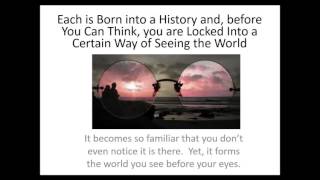
They may have the same data, they may have the same information, but the world that they see based on that information is very different. They have a different frame of reference from which to observe the markets. Okay? They don't see what you see. The key is to learn to see through different eyes. This is the mark of what a really good trader has to accomplish. It's not just emotional control, it's not just having the knowledge. It's also recognizing that you're stuck in a paradigm of view, you're looking through a lens and that biology is in fact biology. Emotion and adaptive response create a perceptual map that you see the world out there through, like in these glasses that we're looking at here. You do not see what's out there.
You see according to, to how the brain has organized perception. This is big time in trading. I could guarantee you. It's very interesting is that I calculate around two thirds of traders are actually trading not to lose. Imagine taking a perceptual map says, I'm not going to lose, I'm going to trade not to lose. What do you think they're seeing when seeing through a mine that filters everything through not losing? You get a problem, that's what you get. You get a person who can't see the opportunities, who can't see the opportunities within the risk very well.
In this little illustration here, what you're looking at, well, it's a dog, but imagine it's two people, they're walking out and one is just filled with thoughts in another direction and they're not really present, they're not really there, and the other one is there, present in the moment. That's what happens with traders is they end up setting outcome goals where they're looking at, they're looking at, oh, I have to make my daily quota, I have to do this, I have to do that. And what happens is, oh, I have to make up, I have to make up for that because I have to make this quota for today. And what they don't realize is that they are trying to control something that they can in fact not control outcome. They set themselves up and they keep bashing themselves into the wall trying to control outcome when it was never controllable. Never controllable. To give you an idea about this is that.
I worked with a small hedge fund that had four or five traders in it. And there were two of them that were basically the money behind it and the force behind it. And one ended up being a really good trader, the other pretty good trader, he was profitable. And ultimately, though they were best friends, they had the same machines, they used the same everything, the methodology, the feeds, everything. Yet they looked at data, they looked at what they saw out there on their charts, on their feeds, they looked at it through different eyes and they saw different things. One saw, oh my God, I could lose, I need to protect the other saw. You know, there's a high probability here and it's okay, you know, the truth is I can't control the outcome. I can only control the mind that I bring to performance. And ultimately, one was a very good trader, the one who stayed focused on executing performance. And the other finally learned to trade, as he might add. He started working with me. But the thing is, what we're seeing is what glasses are you seeing through. Because ultimately the glitch for the trader is that the emotional brain is going to keep you alive in the short term. That's what it sees. It does not see long term benefit, no matter what. The trading mind requires a long term approach.
Okay, this skews what you see when risking capital in the short term. This is the powerful thing. And again, remember, two thirds of traders are trading to win money on that trade, which they can't control.
A small amount of traders are not thinking about their P and L. They're not thinking about whether or not they're going to win or lose this trade. They're totally focused on how well they're performing in the moment.
They know that if they do that, their methodology does in fact have an edge over everybody else. They're no longer gambling, they're no longer taking their edge and making it less edible. They're honing it and honing it and honing it. And that's the deal. Because ultimately what you're getting very clearly.
Is the brain is going to try to control its environment so it can stay alive. It's going to do that in the short term. That's its frame of reference. It does not see long term. This is where you get the idea that the brain that you brought to trading was built for another time and another place. It may have been very successful in that other time, in that other place. Obviously from the African savannas, from where our species had its origins. That brain focused on controlling environment was enormously successful. It migrated from Africa to Europe to Asia to North America to South America, and became a dominant species. Yet when you take that very same brain, so successful, and you move it into trading, it blows up. It loses money. In the same way a lot of people, particularly control freaks, alpha type folks, when they move from their business where they've had control, where they've been able to create control, they have this, they bought into it and they go, wow, you look at me, I've done this, I can do this. I, I, I, when they get into trading, they discover that I doesn't work there anymore. And they have to, if they're going to become successful, they're going to have to change the mind that interacts with the uncertainty. That's the trick. Friends, okay? And when you put into, when you put it in trading, it just has difficulty in functioning in this new world. That's because no one has taught it how to operate in this new world.
Then unfortunately, the short term bias of the emotional brain toward uncertainty for you to be able to perceive in this dangerous and threatening world, that's what it's built to do. That's short term survival is at stake. And what happens is the trading mind simply doesn't work that way. It becomes overwhelmed. And the truth is it's a short term survival bias, dominates long term probability benefit every time. Unless you trade it and train it differently. This is historical. It is both biological, it's historical and it becomes psychological. It becomes the mind that you bring to trading. This has to change because ultimately what you're seeing, you're seeing a world in terms of short term survival when, if you're seeing that way, you cannot trade effectively when you need probability and long term benefit. Did you see that connection? That's the power of this stuff.
The key though is once the brain solves the challenge for its survival, the reward centers in the brain lock in that behavior into pattern, okay? And anytime change occurs, that pattern fires, it becomes reactive. So imagine in trading, here's this brain wanting desperately to control outcome, to control that it's going to stay alive. And it doesn't like change. Change makes it feel vulnerable. Vulnerable is uncertainty. Uncertainty creates, you know, this whole sense of not knowing. Not knowing produces fear and anxiety. Well, there you go. What happens is that's what you brought to trading. There's nothing wrong with that in my brain, okay? There really isn't. It's just, it's not functional in trading. If you're trying to use that old brain in trading, it's not gonna work. That dog, as Bill Clinton would say, that dog don't hunt. So in this confusion of not knowing and you don't know in trading, whereas you can fall into the deception of pretending to know in real life, okay? And that happens all the time. So you're in this situation, you have this confusion of not knowing and not being in control. Just can you imagine fight flight response just going nuts right now? The trader experiences vulnerability which triggers the fight flight program. Okay? Now does this sound academic to you? It can Sound real easy. I talk every day to traders and you know, talking to a trader today and he's sitting there going, randy, you know, some that this, you know, this is such boring trading. I get so bored during the summer here. It's just, you know, the volume's not there and all that kind of stuff. I get bored and before I know it, you know that. And all of a sudden I find some myself impulsively getting into a trade. I'm going, what am I doing? The truth is, is he's sitting there bored and he wants to do something. Okay? And then he starts, then he, the brain wants this. I gotta be doing something. I gotta be doing something to be doing something. And he gets crazy at the same time. He gets into trades and he finally gets into the, and gets into profitability and he jumps out. He's got fear of missing out of profits. It's short term orientation vulnerability. What if that were taken away from me? What if I lose that? And this is a profitable trader. This is not as if this guy's blowing up cash. He's making, he's making a decent income, but he realizes he's leaving an enormous amount of money on the table. And it's all about, what if the money's taken from me? Do you see the short term orientation there? And the confusion over that? So ultimately, there it goes. You know, if the brain's not in control of the environment, oh my God. Suddenly pattern has to be different. Once so successful, now is locked in and fires. Okay, I used to be very successful. I'm gonna keep doing them, keep doing them. And you find this repetition compulsion. You do the same thing over and over again. It doesn't work, but you keep doing it. Somebody needs to retrain the brain, friends, that brain is just doing exactly what it's supposed to be doing. It's creating a mind that's doing the same thing that's been successful over and over again and it's not working. Somebody is going to have to step up and say, I need to learn more about the brain and the mind and emotion so that I can halt this stuff and make it work. Okay? That's why you're here. Okay? And by the way, this over and over, this repetition compulsion is why you can't trade your plan. Once you get under stress, you know, I'm going to trade my plan. I'm going to trade my plan. I'm going to trade my plan. That's what you're saying on your left brain, logical side, you haven't talked to your emotional side of your brain about, well, what am I going to do when I face uncertainty and I get vulnerable? Well, we're not going to have vulnerability. No, we're not going to do. Yes you are. Yes you are. In trading, you're going to have vulnerability. And depending on your orientation how you see vulnerability, you are either going to fall right on your face because of vulnerability or you're going to say, oh, vulnerability, I need to bring. This is telling me I need to bring a very different set of emotions into this moment than the ones I'm experiencing vulnerability with right now. I want you to hold on to that because that's really important. So.
Here it is. The brain is on the lookout now for threat. Just like this guy, you know, he's walking across this swamp with a bunch of gators who want him to fall down so they can eat him up. That's what your right brain's looking for at the moment of vulnerability. At the moment of sitting there going, oh, it's really uncertain. And uncertainty means the threat of death. That's what it means to the emotional brain. Do you see why traders have such difficulty in managing emotion when they don't understand emotion? Emotions are not logical. Logic is just simply an emotional state among other emotional states. The truth is reason simply produces explanations for what the right brain, the emotional brain, has already decided in that moment. You have to learn to control and manage the emotion. Step back out of that forest and learn to see the big picture and work with it. Otherwise you're stuck in this particular trap of playing this game over and over again of as threatening as threatening. Yeah, I'm risking capital. I'm risking capital. There's risk. And my promise to you is your emotional brain is going to think that there's a biological threat when in fact there is only a psychological discomfort that you need to learn to deal with rather than to deny.
So.
So here's the brain that you brought to trading. Okay? You buy at the high, you sell at the low and you repeat to your broke. This is the mind that you brought to trading. Knowledge will never be enough.
Self knowledge, emotional intelligence is a necessity. A certainty based survival mind has to be converted into a probability based mind that can take losses and become a very good loser. You know, you think about it, most people do everything they can not to lose and they don't want to be losing. I don't want to lose. And yet at the same time, if you're going to be a really great trader, you had better learn to be a Very good loser, okay? A very good loser. When you see the loss, when you see that your hypothesis is not working, a really good trader is not going to stick around. They realize that they're gambling now and if they could win, but most likely they're going to lose, but they're not going to listen to all the what if scenarios of Monday morning quarterbacking. They made a mistake, the hypothesis didn't work. They're getting out and taking a small loss rather than trying to make up for that loss. That's part of trading. So we've gotten that and all sudden what we really come down to is this. What I want you to do is to see that graphic, okay? And I want you to relate it.
Specifically to trading, but at the same time generalize it. Because this is the way all biological systems work. Whether or not you're a social, mammalian, at the top of the apex order the human being, or whether or not you're an amoeba, there comes an activating event that produces uncertainty and produces an uncertainty about.
Is this biological system going to stay together, Is it going to stay a closed system or is it going to get ripped apart and becoming part of the environment around you? It is designed to stay closed system and stay together. However, under threat, under risk, under risk of capital. That's the threat, friends, okay? It will produce uncertainty, will produce vulnerability. The real question, particularly for manly men, is what do you do with that vulnerability? Around here, where I live, all these middle aged guys who are overweight buy these $60,000 Manly pickups that have never seen work, but man, they look manly in them, they look good. What happens is they are not intrinsically looking within the self and building up the power living within them. They're doing is they're producing stuff around them that makes them feel in the moment, powerful. Do you see the difference? Feeling for a moment a sense of power or actually knowing the internal strength living within you? And interestingly, I come out of the advertising industry and the one thing that we didn't want have is people starting to really understand themselves. We wanted to be able to sow to our product, associate our products and services with major breakdowns in people's lives. We wanted them to think of that pickup truck as manliness. They didn't have to change the internal workings of their brain and mind. They could just buy this enormously expensive machine that could make them feel manly until somebody scraped it anyway. It comes at that vulnerability and at that moment there is going to be the truth consequences. It's going to go down one of two ways. The untrained mind is going to go down threat to survival. And you're going to activate the fight flight.
Response, the sympathetic response that the autonomic nervous system has when there is a change in status in an emotional environment or.
Or in vulnerability.
The trader is going to regulate the emotion and approach that uncertainty and that vulnerability. You know, it doesn't feel good, okay? With disciplined curiosity.
That'S called approach motivation. And suddenly what happens is out of that you start building a really good trader. Because ultimately fear and uncertainty are linked biologically. You're going to have to unlink that. You're going to have to have uncertainty and vulnerability linked to curiosity, linked to discipline, not linked to fight flight survival responses. That's the real deal. Okay? So we've looked at that. And ultimately the thing is this, is that emotions aren't optional, friends.
These things where you say just stuff your emotions or leave your emotions at the door, just get, just get tough, get tough. Get emotionally tough. That's all bs, okay? Emotions are not optional. There is no freedom from emotion except death. Okay? Then you're free of emotion. Emotions drive the biological organism to be in attunement with the environment. They are necessary. They're going to happen. And out of those emotions that fire, that is what creates perception, that is creates what you see. So what you're trying to do is not freedom from emotion, but you can have freedom of emotion. Our deal is to train the emotions that appear to engage uncertainty rather than letting the historical default programs do it. That's what traders don't learn. Emotions drive people.
People drive performance. Okay? That's the piece that if you get, you can, you can take that and you can learn to trade highly effectively. Okay? Now.
You know.
Emotions drive what you see and you don't see.
Okay? And we've already talked about how insignificant rationality really is. The truth is what you do is you rationalize what you feel. You might say, well, I'm not feeling anything. The truth is, yes, you are. The whale at JP Morgan who evaporated a couple billion dollars did not feel his, his emotions yet at the same time. And he was rational about it. I'm not feeling anything. He was rationalizing being on testosterone and dopamine and being incapable of rational thought. Okay? So ultimately what we're doing.
Is all reason is going to do is produce an explanation. That's what you need to get. The emotional brain has already decided that's the thing. This is perception. This is why some traders look at information and they See effectiveness of what other people are doing. Other people see that same information, interpret it very differently. It's from the root emotion that they're perceiving from. That's the key. Ultimately, this has to come under management. There's. There's really no way around it, as otherwise you're going to buy highs, sell low. Excuse me, buy high, sell low. And then what you're going to do is repeat and you're going to burn all of your capital. Happens every day. That they're just the debris feels pretty big here in the trading world. Ultimately, that first step, emotional intelligence, is understanding what really makes you tick and being able to change it. But the thing is, you have to be willing to look at what makes you tick and just from a biological standpoint, not from a psychological standpoint. You already have a brain that's not designed to do what you're asking it to do. It has to be retrained whether or not you like it or not. Add psychology on top of that, and then you got a real problem. But the key is what you're looking to do.
Changing the mind does not happen until you can regulate emotion. Okay, either fight, flight, take your choice under pressure. But those are not going to get you. That's. That's not going to get you anywhere. What you need to do is you need to route those emotions through approach motivation rather than fight or flight motivations. That's where we're going. And this is where, when you start working with me, you discover that I'm really into the relaxation response where you learn how to breathe very differently than the way your environment taught you how to breathe. You learn that breathing and tension, muscle tension, are in fact parts of the biology of an emotion. And you damn well start learning how to alter that in order to be able to, to maintain emotional sobriety. That's really important, friends. You don't get anywhere. You don't get anywhere until this first step is taken. And a lot of people, when they take my work, they say, randy, this is pretty boring. You're having me breathe. And I said, yeah, you know, until you learn how to breathe and get this tension under control, you're not. There's no reason for you to even think about changing what's going on inside your head. You can't get to the door of the mind. So this is where it starts, friend. The second thing is that you're going to have to develop a sense of mindfulness. You're going to have to be able to step back out of thought and come to the recognition that, oh, my God, I am born into a history that predated me. And the truth is that history organized me into the being I am. I'm not having these thoughts. I. I'm not having these beliefs. I was born into them. Then add circumstance on top of that, and all of a sudden you realize that, man, you were already formed into a particular self before you could think. And, friends, you're bringing that default programming into trading. The mind that organized from your family of origin, from your culture, from circumstances in your life, that's the one you're bringing into trading. And if you're a really good athlete and you've really been to really want to be competitive and you really want to do that, don't trade if you're a really good business guy who wants to be competitive and win, don't trade if you're a perfectionist who wants to do everything right so you won't be wrong, don't trade.
If you want to become a trader. That's working with probability, though.
Mindfulness becomes interesting because you step back and you observe and you go, oh, my God. I'm beginning to realize that this is just one potential organization of a self that's happening, and I can actually begin to get control and management of all this crazy stuff running around in my head, all this noise in my head. You can do it. Yes.
Ultimately, one of the biggest things that neuroscience has taught us.
And when I'm talking about this, I want you to think about the Pixar Disney movie Inside out.
That ultimately what the brain really is is a community of rival emotional programs.
That has organized you into a particular self. In that rivalry of emotional programs, what you see is you see cooperation and you see competition.
If you go back to the movie Inside out, this little girl, what's being depicted is the neural biology where you see emotional programs and very simple, only five of them showing up in the screen of her mind. And you can see them trying to cooperate. Some are cooperating with one another and they're pushing sadness out of the way. That one right there is competitive and being pushed out. And what happens is they ultimately find out that the organization that she was in when she moved from Minnesota to San Francisco was not going to be the organization of those emotional programs that was going to produce success in San Francisco. The same thing with you. The brain is a community of rival programs that gives rise to a mind.
Okay? That's the miracle of human beings. How that mind comes to be, we don't know. But that mind becomes A committee of the self where these emotional programs are given voice. That's what you're hearing, is your thoughts. You're listening to emotional programs who have taken control and they have written the history of you. And it just so happens that history is not going to be the one that produces success in trading. You're going to have to wake up the observer, the self, and you're going to have to learn how to rebuild the mind that trades. It can be done, friends, it can be done. Otherwise what you're going to get is this, you're going to get kind of this mutiny that you're looking at here. Have you ever had self struggle? Have you ever had inner conflict? Have you ever had self doubt about what to do in particular moments in trading? Well, this is what your mind looks like. Because you have not got management of the forces going on in the mind. You don't have control that you have emotional programs. You have control over what emotional programs are going to show up to engage the uncertainty and risk of trading. If you don't do that, you end up with an inner struggle like this. So you get it. It's often the current organization just simply is conflicted and doesn't work. You end up as a horse and a buck, a bucking horse in a burning barn. You blow up accounts, you don't go in trades, your finger is frozen on the trigger. You get out of trades, you try to take back, you try to make up for prior losses, you try to beat up the markets. Really crazy stuff, crazy stuff. Rather than establishing an emotionally stable mind.
So ultimately, here we go.
This vulnerability that you've been avoiding actually exposes four shuffling beliefs that you darn well need to know about. There is. No, there's not. There doesn't have to be anything really fancy and rocket science about understanding mind and beliefs. What you really truly have to understand is there are four self limiting beliefs that drive performance in trading. Okay? They're not negotiable. The first one is a sense of not being good enough, of inadequacy. I'm just not good enough to do this. I'll never make it. The second one is a sense of not mattering. And you're going, you know, something to matter. I have to make a lot of money. You know, if I go in here and I make a lot of money, people are going to see me and they're gonna know that I'm special. You take that kind of mind into trading and that's just that that's a revenge. Trader's mind okay, the trading, the trading markets are just so vast that it doesn't care.
The next one is a sense of deserving or not deserving. A lot of people only believe that they deserve money if they work really hard for it and they have to struggle for it the American way. Okay? Other people believe that they really, truly don't deserve to make money. Other people believe that they deserve everything and that it should be given to them.
All these beliefs that if you project into trading, just absolutely are just the pathway to destruction. The last one is a sense of powerlessness. If you've ever been in a trade and it's just going wacky on you and you're being just helter skelter one way or the other, and you feel like you're just in an ocean of waves just pounding you, that's powerlessness, friends. That's powerlessness. You thought you were powerful. You've said all your affirmations. You visualize all this stuff. Then when you get into the real thick of it, you discover that all breaks down and you don't have the basic tools of getting at the incredibly powerful forces living in the mind, living in the genome. This is what we want to do. We have to reconstruct the narrative that runs in the mind for empowered performance. This is to do this, though, it's not like you just talk a talk. No, you turn toward your dragons and you master them. You master yourself.
Or you could be like little Calvin here. It's not denial. I'm just very selective about the reality I accept.
Recently, a trader I work with who has gone through enormous improvements that, you know, Randy, I've been so pleased with working with you and what's happened with my trading that I started talking with this guy who I talk with every day, and we talk about trading every day. And I was talking to him about, you know, and I know that he's struggling. We talk about that struggle too. And I said, you know something, I've just had tremendous improvement. I've really finally gotten to know myself and I've gotten to know what inside of me is causing the problem. And I've worked. It's not like it's going to go away, but I know how to work with it now. And I've made enormous strides. Why don't you, why don't, why don't, why don't you, why don't you look at emotional, you know, mastering your emotions? He says, uh, I'm not going to do that. I'm not going there. This man would rather stay in denial stay unprofitable for five plus years. Than to say, you know something? I need to turn. I need to break my denial. I need to turn toward the dragon and I need to master the dragon. The trading account is very different.
Than your real life, you know, real life you can live in denial because the consequences of life decisions don't catch up with you for a while. My dad smoked Camel unfiltered cigarettes for 52 years. People were constantly telling him, howard, you got to stop doing that. It's going to kill you. He didn't see himself dying right that second, so he was able to deny it. When they finally caught it, he was nearly dead. It was too late. Denial, you know. So ultimately.
There is this internal struggle. There is a collision course between your brain's need for control over environment, for short term survival and the mind that needs to be rebuilt for probability management. And until this struggle is over, until you realize this has to happen. I get it that it's like these two rams, you know, the thing is, is that you will never have control over outcome. These two rams are trying to determine outcome. Whoever wins that. That whoever wins this gets to do the mating. He has to control. He wants to control environment, he wants to control. He wants to control the outcome. He gets the babes in trading. That's not the way it works.
You do not have control over outcome. You have control over the mind that you bring into the moment of performance. This is the big deal, friends. Ultimately.
Once you recognize that and you give up on the illusion of control and you realize, you know something. I've lost enough money. I finally figured out that that dog does not hunt. And I need to find what does work. You're using this observer that you learn in my. In my courses. And you recognize something, is that observer has been focused on criticism, judgment, fear and aggression. Literally, it's potential in the mind and what you're doing. You're saying you know something. I can take the observer and I can find different emotional programs to work with. I can find discipline. I can find courage. I can find self soothing. I can find impartiality. I can build a mind from those emotional programs and friends. They're on your genetic genome. They're there. And I have a highly specialized way of being able to get at this. In neurobiology, it's called memory restructuring. Where we understand that the brain encodes experience into memory based on observer and emotion. And what I do is I get people to go back into experience of when they've been challenged and we're able to muddle through and get to higher ground. And what we do is we get to reconstruct that memory. That gives us access to the emotional programs that didn't create the mind that performed.
That requires work because functionally what you discover is this emotional intelligence means intentionality. Selecting the emotional programs that you're going to engage uncertainty and risk with. The challenges are always going to remain. But what you're doing at this point is you're choosing what emotions you're bringing forward into vulnerability of not knowing. Rather than having the default programming, which is not going to be good in trading friends, you're bringing in a group that can manage probability rather than short term survival. That is the ticket here. In much the same way, the army goes to great expense to train their soldiers to think calmly and evenly under combat chaotic conditions.
They do that because they know that if they don't train the mine for that environment that they're just going to go in and get killed. The same thing applies in trading. How people can possibly believe that they're going to go into trading, learn that's knowledge and go and be a wonderful trader is crazy to me. It's a very different world. It's a world of probability thinking that the trader in the beginning has absolutely no experience with. If he does not train himself for that and know how, how to train himself for that, he's going to create the debris field that you see with traders. Understand, 90, 95% of traders are losing money. Traders.
Blow out their accounts, blow out their capital in three years and just struggle on or get out. That's how effective the kind of thinking that I can do this alone, I can create a probability based mind from a certainty based mind is folks, the odds are way against you. Probability thinking is just saying, no, it's not going to happen that way. But what if you begin to reform that mind? What if you start building a mind for the trading environment? Friends, this is where the, this is where the fun is. This is what excites me about what I do. You come to a moment, this is what has to happen. You move from a mind trying to control what is not controllable, okay. To a mind that is comfortable controlling itself.
That's what the master traders know, my friends.
You rebuild it step by step. You start with the emotional regulatory, well, you start with really developing emotional intelligence knowledge. Then you, then you go to emotional regulation that's getting the emotion so that it's cooling down. You then develop the observation skills. Then you develop those observation skills. In a way that I call applied mindfulness, where you start recognizing there are lots of emotional programs that could be very useful if you learn to observe them, nurture them and bring them into working mind. That's the reconstruction of the mind that we're talking about. And this is where you build a mind for managing probability.
This is also the biggest thing that happens is that it's really amazing as you start realizing, oh my God, I start on this thing and I start realizing that as I let go control over something I didn't have control of outcome and I begin to accept the thing that I do have control over, the mind that I'm bringing into the moment. What I realize is that it's not just my trading account that's improving. It's my life. I've been trying to control outcome. I mean, you've got a brain, right, that's evolved to do this and suddenly you realize that there is higher order of thinking that's possible with humans. You have trained your mind to engage in certainty with a disciplined, courageous, patient, impartial mind. This is the mind that does not see itself in biological threat. It sees itself going, okay, the control I have over here is the mind that I bring to the performance of my execution. If I do that, then what happens is my edge is really present in my trading. I don't have to be lucky, I don't have to second guess. All I have to do is stay tuned, attuned to these emotional states that allow me to develop a probability based mind and not fall back into the old mind that is survival oriented. In the short term, this is what happens again. What I want you to recognize.
This simply is not the way your brain was designed. This new mind is going to be something that has to be forged, okay? Yet like Einstein said, the mind that opens to new ideas never returns to its original size. You become a very different person.
As you trade and you begin to listen to the trading account. It's exposing where you need to look. This is really cool stuff, you know, and I really.
People really don't grasp, they finally understand. You know something, who would have thought that trading would become one of the most powerful self development avenues that you could ever engage in. Yet that's what it is. But ultimately you also have to decide how do you go about doing it? And ultimately with us.
Here'S what I encourage, depending on how well you know us. Okay. You know, if you've read all my articles, if you've read my book, if you've read, you know, if you've done all that stuff, and you've gone through my 70 plus videos on YouTube. You've done that. You kind of got that part done and you're going, well, you know, I need to. I need to. You know, I need to. I need to take action. I need to move. How do you really engage ultimately, when it comes down to it?
It's either the group course of the individual course. That's with all the. Besides all the other stuff that you can. I have guided meditations. I have all sorts of stuff on my website. But ultimately, you finally, finally figure out that you have to really learn how to do this rather than just saying, oh, well, I have knowledge about what he talks about. No, it's in the courses that you learn how to rebuild the mind. Okay? And ultimately in the group course, it's very powerful. It's five sessions where you meet as a group. You have a virtual classroom where you go into and you. All the. All the lectures, all the guided meditations, all the materials that you learn to rebuild the mind are there. And I take you through this process over a period of 10 weeks. It's $11.95, or it can be broken down into $239 every two weeks, and there's five payments. And ultimately, we want you to get there early because this course starts, man, it starts at full speed. I will have expected you to have already done the breathing and get that stuff down before you show up for the first lesson. You know, trying to cram all this stuff in was not easy. A lot of people don't do that. And suddenly they get caught with learning how to do all these breathing exercises and the mindfulness exercises, and they have two weeks. You start early, you get a free bonus. $199 free bonus thing. Just because I want you to be prepared. Because, man, I'll tell you something, this rocks and rolls, okay? The second thing is the personal course for people, you know, for the truth is it's always good to have mentor. It's always. The personal course is much more comprehensive, and it's much more. It's much more personal. You end up with 10 consults with me that are through Skype, where we're looking at each other, we're working with each other, and the programming that you get is much more comprehensive. It's got more stuff in it, but it's for the person who says, you know, something, I need. I want a teacher, because this is the best way to learn, and I need to create this mind. I'm in A place where I need to either do it or not do it. I'm tired of just sitting here though. That's what it's for. And if you're on the. If you're sitting there on the fence of any way and you're going, you know something, what would it be like? You know what you know, how does this apply to me? Well, the best thing to do is just simply ask for a free consult. You go to our website, you get your free gift, you get the. It's a free consult and Dolores will arrange it for you. And we meet, we talk and we decide, you know, or you decide. We decide. One whether or not this is something that is. That speaks to you and it also, from my standpoint, whether or not you're ready enough for these programs. It works really well. I invite you for all these things and I. We have the group. We have a group course coming up in September. It's about time for people to sign up for that, to start getting ready for the course. The individual course is always there. So friends. And the free consults there. So friends, I really want to thank you for coming. I want to. I've enjoyed myself. If you have questions, please write them in. And it could be that, hey, I've answered all your questions, you know, but we'll have, we have enough time for a few questions. If you have them, be happy to answer them. And let's see if I can get close enough to even see.
Well, hello, Randy and Dolores.
Okay.
Question. What is short term and what is long term? Short term is your brain is designed for. I'll put it to you this way. If you're in a situation where a person, where you're, let's say we're 10,000 years ago and you're in a clan of people sitting in a cave, suddenly a saber toothed tiger shows up and threatens the group. There is an interval between 30 seconds and about 10 minutes where either that tiger is going to be repelled or somebody's going to die. That's short term. Short term in trading is where it's almost immediate. It's actually in microseconds. Is an emotion pops up and all of a sudden you're looking at it and you're saying, you know something. Okay, the trade's warming up. It's confirmation here, confirmation here. And suddenly what pops up in your mind is saying, you could lose, you could lose. Get more confirmation, get more confirmation. Short term there is about five or 10 seconds. Okay, that's short term. Long term is recognizing that any one trade is really not that important is what happens is your job is to maintain a particular mind performs. And what you're doing is you're, you're looking at blocks of trades of 30 or 40, maybe even a hundred. Okay, that's long term. Does that answer your question? But no, it's a. The short term is immediate. Long term is you, you see trends and what you're doing is you're proving that. Okay. Anything else?
Well, I don't see anything. Wait, here we go.
Well, here's a.
Okay. How does this technique work for day traders and very volatile trades that occurs in seconds? It works really well. What happens is that emotions work in nanoseconds. Okay. And a traders work who's working in really these fast whether or not they're scalping or whether or not you're actually intraday. But you know what happens? It opens and closes in 10, 15, 20 seconds is I'm working with a guy right now and we're actually working on the issue of sizing up. And ultimately what he's doing is once he's entered a trade, what we discovered is that he also has a, he has five three minute time frames that he's looking at where he knows by the third to fourth time frame whether or not that trade fits his hypothesis or not. Okay. And ultimately when it hits that third thing, he's either in or out of that trade. Boom. Just like that. So the training is happening spontaneously. It is, it is. He's trained him. It's just like this is almost like soldiers in combat is he has trained himself so that as he hits that, that third three minute marker, what happens is automatically a mind shows up that's ready to deal with that situation. Now he's trained himself to do that. It didn't happen because gee, I think this would be a good idea. But that's happened, that's happening in a matter of seconds and he's in and out of that trade. Wham. Like that. He doesn't use his absolute stops that often because what he recognizes is that once he hits that particular time frame, if it's not if again if the, if the, if his prophesis is wrong, it is, it is just simply not high probability that it's going to be a successful trade. It's happening literally as he moves is happening in real time. It's happening as flow.
This is from Timothy. Do older people have time left to benefit from long term discipline? Of course they do. Geez. A lot of the, a lot of the folks I work with are.
Folks in their 50s, 60s and 70s and they, they, you know what happens is that, you know, they realize that they're caught in this crazy economic stuff that in the United States where they realize it's not like they're going to go get a job outside of Walmart greeter, they have a nice next edge and they're trying to figure out how they can sustain a living because you know, 2008 was rough for a lot of people. The thing is what they're doing is that you have to make a commitment to retraining the brain. This oldest stuff about old age and change is just all bs. What has been shown in neuroscience is that the brain remains neural plastic.
They'll take guys in their stroke victims in their 60s and 70s and they will reroute circuits, get them back doing things and having high functioning lives. The same thing happens. They're discovering, particularly with knowledge based stuff, they're teaching that the brain does not have to start entropying. They can simply. You keep, you keep it in learning process. You keep the circuits, you keep circuits forming. You learn. That's what learning is. You actually see it as circuits. What happens with older folk is that they're going to have to learn a lot of their patterns are set and they have, they have to really work at this stuff. I have a client. It's actually one of the most, one of the biggest miracles I've seen in my life. And he had a, he had what I would call a lost childhood. And all he had really known about his entire life was losing things. And when we started working and he's profitable now, okay. And.
What he had to learn to do is he had to really learn how to reconstruct.
Nurturing mind. Okay. This is like a 75 year old guy. This is not some spring chicken. This guy's doing it now. Has he worked? Oh yeah, he has worked about as hard as any person I've seen working this program. But he's gotten to profitability. Okay, so ages just throw that.
Age really has more to do with your perception of your age than anything else. The neuroplasticity is there and it can be worked with. This is from Christine. How do you deal with someone genetically predisposed to anxiety? First of all.
Not sure what you mean by genetically predisposed. What I get is this, and I do acknowledge that people can be genetically predisposed to anxiety. What I also know is that brains are born into families with history of anxiety and they learn anxiety from the families that they grow up In. So it's a learned, it's a learned anxiety. It's not a genetically predisposed anxiety. The second thing is human beings are in fact predisposed to anxiety. It is what allowed us to start out on the African savannas that we were so anxious because we weren't big, we weren't tall, we weren't fast, we weren't tough, but we were smart and we could look into the field. And we developed a trait that allowed us to make an assumption that there was a saber toothed tiger behind every bush out there.
Anxiety. Projecting negative consequences for the future, when in fact only one saber toothed tiger was out there at all.
That trait wired into us and it's still quite prevalent today. It's in everybody, it's in every human being. So what I would say is if you have predisposition, you ultimately what you will have to do is you are going to have to really rigorously train yourself in both breathing and tension relaxation. You're going to have to get, I mean, when you're having an anxiety attack and you think your heart's, your heart's palpitating, it's doing all that stuff. You know, ultimately.
I have taught people they have anxiety attacks, they're having panic attacks, really, and they realize, oh, okay, this thing's going to be here for 20 minutes. I need to pull off the road, I need to go back to my breathing, I need to do the tension. In 20 minutes, I'm out of this thing. The emotion's already triggered. You're going to have to do that. You're going to have to become a keen observer, the committee of the mind. Because what I would call the orphan and the inner critic, that critic perfectionist in you and that fearful part of yourself are big time. And you are going to have to learn to calm them down and develop a committee that does that. I've seen plenty of people that have plenty of anxiety. They have to commit themselves to emotional intelligence and emotional regulation. But it can definitely be done. Will there be, Will these. Yes. What happens is Dolores, once we get through with this, Dolores is going to render it and I will put it on YouTube. We will send you information. It will be embedded as a second video down on my homepage. So please use this as a resource, looking at it some more, really study it and think about it. Okay, that was a great question and it was a great question to end on. I want to thank all of you folk. I've thoroughly enjoyed myself and I loved your questions. And my hope is that we see each other in the future. But no matter what, my wish for you is prosperity. Okay?
My emotional mindset is wide awake, hungry for trip. Well, Godspeed any rate. The thing is I thank each and every one of you and what we're going to do is we're going to close off and my hope is you've had a wonderful summer and I'm hoping you're getting really ready for the fall. Okay? And you're ready to make some movement and you decide you know something. I need to seize this moment. I need to seize this day. I need to rebuild that mind I have. It needs to be rebuilt. This guy can help me and yes I can. Okay? So I wish you a good evening. Have a great life. If I don't see you again, if I see you again, I look forward. I look forward to sharing, sharing the trail with you. Take care.









