ProAct Dedicated Traders Mind Group Course Preview
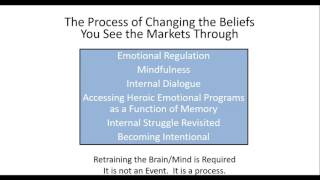
Rande Howell teaches a ten-week group course on the psychology of trading, covering emotional regulation, mindfulness, memory work, and building a trader state of mind. The course costs around $1,200, includes biweekly meetings and 24/7 access to meditations and journals, with a $150 discount if ten or more people enroll.
Questions this video answers
10 weeks
Every two weeks
Yes — 24/7 access; recordings remain available with no time limit
Just under $1,200 (full); $1,045 with discount
10 or more enrolled participants
Chapters
Listen, only mode.
Welcome, welcome everyone. Actually welcome one, Bernard. Right now you're the only one in the room. And I know this was, it was very quick and.
It was hastily put together. So I thank you for, I thank you for showing. What I want to do is that. I don't know, I know that we had a number of people register and right now you're the only one here. If you would like. Do you have microphone? Bernard, I need you a chance where literally we can talk. Just talk to this like one on one rather than me doing a presentation. It might be more meaningful, meaningful for you. So let me know if that works for you.
So just type it in and let me know if you have a microphone or not.
Or not.
Okay.
Well, I'll tell you what, what I want to do then is this is. I want to talk about literally the process that this group course is put up on. Okay? Fundamentally it's built around emotional intelligence and it's fundamentally built around the concept of the mind that you're bringing to trading is not going to be the mind that brings success in trading. It's nothing wrong with the mind that you brought to trading. It's just that it's not built for trading. A lot of people in trading come into trading from basically with a lot of technical skills. They are very technical thinkers there. They are IT people, they're programmers, they're engineers, they're airline pilots, they're accountants, they're that sort of folk. And they come in and they think, okay, you know, I've done very well with basically managing my career and stuff like that. But it's been done from a technical point of view. Then they're moved over into trading and it's much like moving over to management. Suddenly, you know, the skills that got you, just being a superstar.
In a technical field does not necessarily translate to working with, to working with emotions, with working with groups of people. And that's a very huge learning curve. And it takes mentorship to be able to get there. People invest a good bit, companies invest a good bit of time and effort into taking that technical guy and taking him up to the next level, to management. That's the big thing. The main thing is to see that the skill sets that you developed, no matter how good they were in another area, don't match up with the skill sets needed in trading. That that trading requires a probability based mind. Okay? And what has to, what you have to learn how to do to be able to build that probability based mind is to be able to say, first of All I need to be able to turn off this part of my brain. This fight flight response to uncertainty. And you would have experienced that. If you have fear of trading, if you have a hard time getting into trades, you've seen that avoidance, you've seen that fear. If you revenge trade, you've seen that fear of a different sort. If you trade impulsively, you've seen it also. You're attacking, you're attacking the issue. So anyway, what, what has, what we have to learn how to do is to calm that part of the system down. And we have to be able to promote this part of you that can literally learn to think in probabilities and accept probabilities. That would be the difference between short term solutions. That would be your limbic system. That would be the way you're set up as a human being. To really being able to think of long term solutions requires a different mind. What we want to do is that. Go to the next slide, Doris, please. What we want to do is focus on, well, what are you going to learn?
Well, you're going to learn first off this whole notion of emotional intelligence. You're going to learn what an emotion is and how you have to learn how to work with emotions. Once you learn that, the very first step, and this is class 101 and I'll show you the, I'll actually show you inside where the virtual classroom is in a moment, is that what you're doing is the first thing that has to be done is you have to learn how to emotionally regulate an emotion. And most likely you come in from where you came from and really don't understand emotion in a way that allows you to regulate it. Because ultimately most people come in and think, well, yeah, emotions, you know, they're like feelings. No they're not. You are the embodiment of emotion. You don't have a life without emotion, literally. Emotions are biological action potentials that coordinate action between you and an environment, between circumstances in that environment. That's what emotions do. And they are, they're built to fire reactively, automatically and unfortunately for survival, not far, not for probability. So the first thing is you have to be able to say, how do I regulate an emotion? And we break down an emotion into a couple phases that makes it much easier to understand. The first phase is arousal. That's when you're revving up. Like if you are trading Monday.
When you're trading, I want you to literally spend some time and just look at your body, feel your body and notice where the tension in Your body's at. When you feel that tension, you're actually feeling the arousal of the emotion. And most likely it's fight flight. If you're feeling tension, okay, so you're already getting revved up. Then what I want you to do is to notice what's going on with your heart. Notice how it's beating. It's. Is it skipping a beat, is it staying constant? Or just what is it doing? If it's accelerating, you're again noticing that you're moving closer and closer to that fight flight response. And if that happens, you're cooked.
That's what you cannot allow to happen when trading is you can't allow that. The instinctual modalities that move to fight flight, survival instinct kick in. The last thing is the way you breathe.
Most traders discover that holding their breath, or they discover that they're breathing high and rapidly. What they're doing is literally fanning, fanning the coals of fear or aggression. Okay? And ultimately in the first exercise, you were learning how to use breathing, relaxation, muscle relaxation to produce a relaxation response so that you can start feeling, you start sensing the buildup of the emotion and you start regulating it. And most people are blown away. They have absolutely no idea once they connect the dots between, oh, an emotion is biological. It takes over mine. And I can feel the emotion as tension, as my breath and that's heartbeat. I can do that. And all of a sudden you realize, okay, if I alter the way I breathe, then I also alter the intensity of that emotion. First thing that has to happen.
In the same way, you can produce relaxation of the muscles. And ultimately what you discover is fear and anger can only exist with a particular signature of breathing intention in the body. That's the first thing that you learn. Does it solve the problem of your trading? I have seen that done, but it's very rare. What emotional regulation does is it gets you to the door of the mine. That's where all the fun's at. Okay. Without emotional regulation, basically your emotions are hijacking you before you ever get to the door of the mind. That's the big piece. Okay. The second thing that you learn in this group course is mindfulness. I teach mindfulness as a way of learning how to step back out of thought and recognizing that you and your thoughts are not the same. You and your beliefs are not the same. As a matter of fact, all those thoughts and all those beliefs are just one potential organization of a self that the brain has produced.
Most people are so fused to that one potential organization that they see it as them or I. And in mindfulness, what you're learning to do is stepping back out of that and recognizing. No, that's just one potential organization. And I can step back and I can start tinkering with that process of how the brain organized the identity or the thing called self. That's critical. That's the part that you begin to start saying, okay, now I'm beginning to see.
How I can go back and reorganize the mind for higher functioning and trading. That's the interesting thing. But with this new skill, you've kind of opened the door of the mind you're looking in. And the very first thing that you're going to be learning in the group course is spotting the internal dialogue. And this is also done in class 102. Ultimately, what you're doing here, it's really cool as you begin to say, okay, I'm on the lookout for something called the internal critic and the adapted voice. What you're looking for. This is when you've actually been able to step back and you realize that I am not beating myself up. It is the inner critic aspect of myself beating me up, doing all the yelling and the name calling and the character assassinations. And you're beginning to recognize that, okay, that inner critic voice, man, it's powerful. And what's happened is that I've given it enormous amounts of power because I have not recognized it operating in the background of my mind. That's the big deal. Then the second thing you're doing is you're also spotting this next part, what is known as the adaptive voice. That's your brain going in and adapting you to survive in a particular environment. That environment includes your family during formative period, the culture and the community that you grow in, and circumstances that happen to you. So ultimately, you're seeing this, and all of a sudden it tends to be a childlike part of the self. And it's where your fear is at, it's where your aggression's at. And ultimately, you're beginning to see this dance going on between the inner critic and this orphan part of yourself. And you're beginning to go, oh, my God. That's the historical internal dialogue that's been running underneath the radar. And it has been absolutely playing havoc with my trading mind. That's the key. That is the key you recognize, okay, now I see it. But what in the world do I do about this? Okay, the third thing that happens, the fourth thing that happens is you begin to actually learn to access the heroic Emotional programs. Okay, this is powerful. Is that your brain? From a guy like David Eagleman, really a genius neurobiologist, made the distinction that the brain is really a community of rifle emotional programs that has duked it out and through both rivalry, through competition and cooperation have formed a self. And what you're doing is saying, okay, I can learn how to access emotional programs that got pushed away and were not part of the party that won. I can learn how to produce those and have them in working awareness.
And what you learn in here is that I use a highly specialized process and it's proprietary of ours. I haven't seen it in any other place where we actually go in to an event, an experience that you had where you were in fact challenged and you were fearful, you didn't know the outcome, and yet somehow you managed to keep it together.
Land pretty darn well. Ultimately, what the brain has done, it has taken that experience and encoded it into memory based on the observer. That's the mindfulness piece and the emotions that are triggered. So it's a highly biased memory. And you discover that all memory is highly biased, even eyewitness accounts. So what you're realizing is this.
Is that the brain was just simply trying to create a particular memory. It didn't make the best one for you to view. And what we're doing is saying if we find a challenging memory that you were able to prevail in and get to higher ground, we know that discipline, we know that courage, we know that self soothing, self calming, clear thinking had to be present for you to be able to work through that. The thing is, the brain just didn't encode it that way. So what we're doing in this exercise is we are actually going in and deconstructing the memory from the way the brain originally encoded it. And we're reconstructing it based on looking for the discipline that becomes the ruler. We're looking for the courage that becomes your warrior nature. We're looking for the self soothing part that becomes your caregiver. And we're looking for that clear thinking, that impartiality that becomes your sage. This is where emotional programs and archetypal archetypes come together. And it's the use of this memory that allows you to actually go to real, honest to God experience rather than make believe. And this is really important because visualization and.
Talking to yourself, you know, you just, this is one of the things you say, but it's all make believe, it's what you wish would happen, okay? Affirmations and Visualizations. And what we're doing is something very different. Are we using visualization? Are we using affirmations? Yeah, but what we're doing is we're not using the wishful thinking of what we would like to see. We're actually looking at something that did in fact happen. That's an emotional program within the cell. And you have actually seen trigger. So you know it's a fact. You know it can be done and the inner critic can't take it away from you. We teach you how to pull that up and build a new mind. And build a mind that's capable of withstanding the rigors of uncertainty, the rigors of not knowing what's going to happen. Because instead of fear or anger or overconfidence guiding you through an engagement with uncertainty, what we have is we have a disciplined, heroic, self soothing and impartial mind that's showing up to engage the uncertainty. Perfect for the probability of trading. That's powerful. Okay. We don't stop there though. Once we have that, we start showing that you can use it during trading. We know that there's an internal struggle going on within, within you anyway. To be human is to have an internal struggle. You know, whether or not you call it the human condition, whether or not you call it your existential angst, whatever way you say, whether or not we were born into a broken world, what happens is there is internal, internal struggle. What we want to do now is recognize that we can't ignore that internal struggle. We can't avoid it, we can't turn away from it. In fact, with this new mind that we're developing, one that's based on probability management, uncertainty management, what we're doing is returning to that, okay, we're turning to that event, that internal struggle. And most traders will have that as self doubt. They will have it as impulse trading where they become overconfident. What's happened is we know that struggle is there, however, we don't come with it. With the old mind, you learn literally, particularly after you've gotten the taking, the memory enrichment and the archetypal work where you are learning how to pull forward a very strong working mind that's very different than the mind that you brought to the trading, you turn toward that internal struggle. You turn toward that part of the mind that's that inner critic part of the mind that's saying you're going to fail, it's not going to ever happen. You might as well give up, you know, jump into this trade. Come on, prove yourself. Prove yourself. Feel Like a man. Feel like a. Feel like, feel tough. And what you're doing, you're saying, no, what happens, I realize that's either temptation or that is something even more dangerous. Okay, so we look at this and go, okay, now we're going. We can turn toward that internal struggle, okay? But the challenge and the challenges of trading, you're going to have that sense of vulnerability when you face the unknown. However, what you will have learned at this point, you have learned how to pull forward and what I call the heroic mind. Okay? It's actually a different mind that's built around these emotional programs. And what you're doing is you're engaging the uncertainty of the moment from that empowered mind. And that is the difference. That's the biggest difference. Most traders have already lost before they begin.
They really haven't taken a look at their internal dialogue. They're trying to ignore it. They're pretending it's not there. They may have bravado, or they may have fear of dread of going in, but the thing is, they don't deal with that internal struggle one way or the other. They ignore the internal dialogue. This time, though, what you're recognizing is that, no, this is the holy grail of trading, is that you build a very different mind, and the parts are already there. I mean, this is all sitting on the human genome. It sits in the emotional programs that's in your human repertoire. You're just learning how to access them, pull them up as feeling states. And it's the feeling state that actually governs the way you think. That's all the chemistry of either fear or overconfidence or disciplined mind. And what you're doing is you're actually learning how to produce the chemistry of the disciplined mind. That is really cool stuff. So when you walk and you turn toward that internal struggle and turn toward the challenges of uncertainty, knowing that, well, the truth is there's probability of loss and profit here. The truth is that if I stay and trying not to lose, having to win, I know that what ultimately happens is I'm trying to do something that cannot be done. I cannot control outcome. But what I can control is the mind that I bring to the management of uncertainty. You can control process. You can control literally the mind that you bring into the moment of performance. That's what you're learning here. And you become, okay, I no longer have to win like outcome. I have to win by producing peak performance. So that after a trade, you look at the trade, let's just say you lost. You would say you Know something? I did exactly what I was supposed to do, and probability just landed on the wrong side. It's no big deal. This is a mine you can build, by the way, in the same way, when you win, all that yay, yay, yay stuff doesn't happen.
What happens instead is that when you recognize that you and your system has simply produced a decision that landed on the right side of probability, okay? And suddenly you real. What you realize is that I have built a mine that is ready for the rigors of uncertainty and probability. Powerful, powerful stuff that's done through the first four for classes. This, the last thing, probably most powerful is you become intentional. And one of the ways you become intentional is, you know, when you do this work, you end up learning a process, learning a ritual that gets you into the state of mind that what I call the trader state of mind that you're ready to trade. If you're not in that state of mind, you know better than to trade. Okay? And it's. It's remarkable. You know, the thing is, you realize that now you've got it. You got to be doing something to be trading. You have to be trading to be trading. No, that's not true. You have to be doing something. You have to make things happen. No, you don't. What happens is you are an ambush predator. You're not a stalking predator. You're not the African lion chasing prey. You're the American cougar waiting in a tree for the forest to conjure up a deer. And you wait. You ambush. You see what the forest is going to give you. You're still an apex predator, but you change what that apex predator is doing. You're not chasing, and you're certainly not the deer anymore. You're not living in fear. What you've done is you very calmly, coolly, patiently waiting to see what the setup's going to give you, what is the market's going to give you. That's becoming intentional. And ultimately, you come to the moment, you realize that, you know something. I have to produce this intentional mind. It's not like. It's just like something I read in a book and say, oh, this is what the mind's supposed to look like, therefore, I'm going to have that mind. No, you train yourself to produce that mind for peak performance. If that mind's not there, you don't trade. That's being intentional. Okay? That's the process. Let's go to the actual classroom. Okay? What I want to do is this is a.
We're gonna Go to the actual classroom here in a second where you'd be going, this is the actual landing page. And literally what you would do is you. This is like, this is the virtual classroom that you're looking at, okay? And people can get to this. They can watch the video, but they can't enter you actually, you actually have to have. You have to have the. You have to have the passwords to get in here. And what's interesting, understand, is while you're in the course, this is where your study is going to be. This is where you go to work, okay? And the first thing is you see the welcome Traders. That's where you are right now. And then you see an overview. Then you see on the third one, you're actually seeing an introduction. What you're doing is you're looking at a video that was done on a Wall street firm, that done with a Wall street firm. But the thing is, then it gets into the meat that's the 101. And what you discover is, okay, you go, oh, gosh, okay, here is the classes that I'm going to be. These are the lessons. And you go, okay, there's breathing part A and breathing part B. What you're learning how to do in there is you're getting the theory behind breathing, and then you're getting the practice of using breath and relaxation to calm the emotion down. It's used as guided meditations. And you drill yourself, you drill yourself, you drill yourself, and then you start using it in application, actually, while you trade. So you translate it from the classroom to actually practice. Then you go to the safe place where you're going in and you're. And you're learning how to basically not just use breathing and relaxation to produce a calm state of mind, but you're using visual imagery to help you find that. And a lot of people, safe place. Like, you know, if I were to start talking to you about a wonderful mountain stream, and the water's beautiful, and the sky's beautiful, and you hear the water murmuring in your ears and you could smell the mountain air. What you're doing is you're building. You're building the pathways to produce calmness, both in your imagination and validity by.
The breathing and the relaxation. And then very important is the warrior inoculation is where you're actually going into places where you have trouble. And what you're doing is you're actually setting up. You're setting up a neural pathway where you've been having problems working, like, say, entry, okay? And then what you're doing is you're setting up a parallel pathway where you're learning and you're learning how to full. You fire both of them at the same time. And ultimately in the inoculation exercise, you disrupt the old pattern. Powerful stuff, particularly for impulse type traders, people that over trade. Then you go to class 102 and we start working with automatic assessments. All that stuff running through your mind.
And all of a sudden you realize there's a lot of garbage running through your mind all the time that you haven't checked out. Then we start talking about awakening the observer, the self there. What you're doing is you're saying, okay, I'm beginning to recognize that the observer literally is just simply part of my humanness. It is a skill that lies within me. And you may know it better by the way. It's mindfulness where you notice what you're noticing and you're beginning to recognize this is a faculty within you that can be developed. Okay. Why it's not taught from the first grade on, I don't know. In advertising, you certainly don't want people to become self reflecting observers because they wouldn't need to buy most of your products. Okay, but then the second stage, when you go to the B section, you're actually doing the guided meditations that teaches you how to do this. You actually are beginning to teach yourself, how do I step back out of with thought all the time? And you start de identifying with your thoughts. And you start recognizing that there is an awareness that's separate from thoughts and that you start learning how to slow those thoughts down. And you start having, you start asking them questions. You start really beginning to recognize, oh my God, this has been running underneath my radar. They've had negative assessments about me and I haven't even questioned them. But in mindfulness you're beginning to question them and all of a sudden you realize, wow, there's a lot of garbage, a lot of lies running in my head. Then the last thing that you notice is that something that we call.
The. This is when you get into the internal dialogue and you start actually noticing. Go back to awakening the observer, please. And you start recognizing that there is this internal dialogue and you start learning how to slow it down, turning toward it and beginning to listen to it and to see it and to feel it. And this is very powerful because this is when you begin to realize that you do have an enormous amount of control over what you think, over what you do. You may not have control over the outcome of trade, but you certainly can Control. Instead of just drifting in this historical conversation that you got born into, you begin to learn how to say, I see that as one potential conversation. But then what you do is in class 103. This is when the empowered self starts going on. This is when the power where you begin to recognize that the brain, with all these emotional programs running in it, is something that you, as you awaken this mindfulness observer within yourself, you begin to realize that you can start designing the way the mind responds to uncertainty rather than just having it work on survival traits. What happens is you develop this mind to be able to work literally from what I would call your heroic nature.
So we begin to see that this is something where, wow, okay. What I'm looking at right now, what I'm hoping you're seeing is that once you get into this classroom, what you realize is that this is not a chaotic situation. What you're doing is you are step by step taking and learning a process. We've broken the process down into these essential steps. It starts out where you've got to control the emotion first. If you can't do that, there's no way of getting it. Mind. Then you go, okay, now we've got that mastered. It folds into the mindfulness where you're beginning to recognize, I can step back out of thought. I'm not defined by thoughts. And then what you discover is, because you've been fast asleep, is that your thoughts and beliefs have been creating your experience. And that's the problem in trading, is that historical dialogue is creating your experience in trading. And what you need to do is you need to start redesigning it. Then when you get to the 103 class, this is when you start learning through memory enrichment. And again, memory enrichment. The power of this is that we're going into memory of something that's already occurred. And what we know the brain does, it doesn't record a video memory. It records an experience.
By sensorial modalities and by the observer that you currently are. Were in the. When that memory was encoded and the emotional state you were in. And it just so happens that the memory is pretty flaky. And you go. And you recognize, wow, that's not a good. You know something. That was not a good performance of constructing a memory that was good for me. And you realize, you know something, I can go into this memory, deconstruct it, and I can find these essential emotional programs that allowed me to perform on a higher level during this particular memory. And by accessing them, you learn how to produce the Feeling state.
It is that feeling state. When you have a feeling state, it's not an emotion, it's part of an emotion of you actually feeling the chemistry of that particular emotion pulsing through your body and in the synapse of your, of your brain. You are creating the emotional state from which thought emerges, from where the mind emerges. This is the powerful thing. You're taking control of that process. No, you don't control outcome, but you learn to control what mind, what construction of mind is going to meet the uncertainty of a trading situation. This is what the master traders know. So you've gotten to this thing where you've gotten the memory enrichment and you've got it together and you begin to see, I can practice this, I can summon it, I can invoke it into current working mind. And then you start practicing it in trading where you start generalizing the skill of a past memory and bringing it up as a skill in present experience. That's the powerful thing. Then the next one, this is when it gets really interesting.
This is when you recognize, well.
Ultimately what you're going to be learning to do is to produce an intentional mind. And it's like I said, the one thing you learn in this course is that if you drop out of that intentional mind, you have no business trading. You're gambling at that particular time. You're not playing the odds, you're gambling. So in this intentional mind, that's that thing where literally you have a disciplined as ruler, courageous as warrior, a self soothing as caregiver, an impartial, as clear thinking sage. You have this intentional mind that you're bringing to the game. Okay, you're no longer thinking from fear. You're no longer thinking from the past mind that got created while you weren't looking. Okay, we've gotten that. But then also I work with.
What you will discover is I'm also doing something called Child in the Desert, where what we're doing is we want to establish. What we want to do is establish that.
Your performance is not a reflection of your being. Okay? Your performance is just simply about your competency at that moment. Competency can be improved. Your being is a different thing. And one of the skills that we have is we have you actually experiencing this core inherent worth within you that is outside of what you can do, outside of your performances. And it makes a huge difference in recognizing, oh my God, this isn't about me. This isn't about proving myself in trading. And one of the things you learn very quickly in trading, at least, at least for me, I would not have a business if it weren't for a bunch of guys at different age points trying to prove to someone, usually their dad, that they matter.
That they're adequate. And unfortunately, they are trying to perform in trading to prove that. And the trading gods are awful like that. The thing is, if you already have inherent worth down, it is about your performance. It's not about your worth as a human being. Big deal. But then what you learn to do is you enter this internal struggle where you realize now when self doubt occurs, when overconfidence occurs, there's no reason to turn from that, there's no reason to be scared of that, there's no reason to be seduced by that. What you're doing is you're saying, the truth is, I'm going to turn toward that historical dialogue between the inner critic and the orphan nature of mine. I am going to turn toward that from this new intentional mind, this high performance mind. Again, you can't control the outcome, but you can definitely control the mind that shows up in the moment of performance. You get a lot of confidence and what I would call humble confidence, by the way, not the arrogant confidence, but you get a lot of confidence because what happens is you turn towards your discomfort and you master that discomfort. You master your fears, you master your demons. That's the power of Class 104. Then what happens is the trading plan. What we also do is we develop a trading plan that is one, a psychological trading plan where it literally shows you, you know, literally you develop a process that allows you to get the mind in the right place to be able to perform at peak levels. The analogy would be when you see a really great hitter and you see him on the on deck circle, you will see him going through a ritual that he has used since little league that has allowed him to get into the state of mind that can hit the incredibly fast ball from the pitcher. And then when you see him get into the batter's box, you see him having a. An abbreviated version of that same process. It's intentional. The mind that he's bringing into the batter's box in the same way that your mind. If you're going to be a consistently successful trader, profitable trader, you're going to consistently have to produce an intentional mind that you bring to the act of trading. That's the only way you're going to win. What we do is we go through that process, but then what we do is we say we got to do more than that. We need to do more than prepare you for trading, we also need to prepare you for particular critical moments within the trading process, particularly where you have trouble. You end up practicing those particular events so that you learn how to go into those events proactively rather than reactively, so that you go, okay, I have a tendency, just like a hitter will know the tendencies of the pitcher, what he's going to throw at a particular count in a particular situation in a game, you're going to have a tendency to say, you know, I know under particular situations, this is usually what I do. And what happens though is before I get sucked into that behavioral pattern, what I'm going to do, that behavioral habit, what I'm going to do is I am going to proactively bring this intentional mind into that moment rather than my reactive mind, the one that I inherited from history. That's what you learn, friends. It is absolutely powerful. Okay, so let's go, let's go to the next slide, Doris. So you've seen that. And by the way, if you have questions, ask them, okay? I'd be more than happy to answer your questions, give you the mic and we can talk in person. Whatever you'd like to do. Okay. The key is.
Here'S.
It's the next one. There you go. Ultimately, this is what we're hoping for, okay. That it's a proact, dedicated group course. If that doesn't work, we're gonna still have a course. Okay. But the thing is, what you're gonna have is that the virtual classroom that we just left, you're going to have 24,7 access to the trader State of mind virtual classroom. All the guided meditations, all the journals, all the videos, all that stuff, that's your classroom, that's where you go and you're going to meet as a group. We're going to meet every two weeks. Okay. And ultimately, and these are, and there's one three week thing depending on how things go and what you also discover. That's time where we have, you know, you've practiced something, you've had two weeks of practice and then we discuss it, go over it and you know, hopefully that you're going to have questions that you and I are literally talking. Okay? And ultimately what you also discover is all these meetings are recorded.
And they're sent to you. Because ultimately what we found a long time ago is that there are, you know, we work with people from all over the world, same way that Scott works from people all over the world. You know, we'll be, you know, working with a person in Perth, Australia. We'll have a person in Germany, we'll have people in the United States and the uk, all over the globe and Singapore, blah, blah, blah. What happens is there's no way to show up, you know, all the time to these classes. And what happens by recording them? What you do is you get the class discussion. There are people who just do nothing, but they take the group course but never show up. They want, they want that, they want, they, they want the structure of meeting every two weeks to make sure that they do their homework. They have all that. They have their motivations. And what happens is they get that and they have, they have the recording so they can go over it, over it and over it and over it. And a lot of people, they will go to the classrooms, but they will also go to the, to the, the recordings of meetings and they will listen to them and listen to them and listen to them until it becomes second nature to them. You also have access to me via email. Email with your questions and things like that. I don't generally, it's not like we're going to have a Skype conversation that that's the individual course. This is a group course. And here's the deal is that, and this is, this is something we don't know if we're going to achieve with this group. Last time we made the same offer in Scott stuff, we had 25 people in the course. I'm sorry, 27. Well, if 10 or more people register for this course and like there's two people have already registered right now and there's three people in this course, so we're not seeing the kind of numbers we're looking for. But if 10 or more get in the course, we're going to be offering $150 discount that would be given on the final payment. Okay, so the cost is right little under $1200 without discount and 1045 with discount. And we have the payments of every two weeks. And what we encourage people to do is get the first payment done so that you're in that first class. Because what people don't recognize about this course, it doesn't start with like, oh, how are you? And stuff like that. When the first day you show up, it will have assumed you have been practicing the emotional regulation skills for a while and you're ready to move on to mindfulness. And by registering early and start really working the program, you don't get crammed because in that first 101 at the end, mindfulness is also being applied. So you just start and we really encourage you to get in and start working the program because particularly the emotional regulation, it is about rote training. You need to learn to change the way that your body has learned to breathe and to hold tension. It's going to take a while to do that. You're not going to talk yourself into changing those kind of biological patterns. You're going to practice your way. Okay, so the course content is right here. And I'm at. Is Dolores gonna type that in? I'm gonna put it in the chat box. Okay, Dolores will put that in the chat box. Okay. Now the thing is, is that what we're also doing? Is that there any other questions? Now what happens? And by the way, there's also a registration link and also what happens if any questions you can ask. And the way it works here is that Dolores gets the technical questions about like money and schedule and stuff like that and I get the questions more about content. Okay. That's the way we divide it up now. So things are there. And what I encourage you to do is one, if you're thinking about this, I really ask that you talk with other people within proact, okay. And create a buzz here because.
This is, this is a very powerful course.
You know, people. And it's not just about trading, but that's the major thing. It's really about keeping your act together under pressure. Okay. But it's also about the rest of your life too.
The thing is, is that it can be life changing if you work the program. That's the whole point. You get serious about it. You get really just motivated on it. So talk about it. And also, are there any questions that I haven't covered that you'd like to ask? And you can either type them in or you can just say, let me have a microphone and you and I can talk either.
It's lonely when you sit here and do all the talking and you don't have somebody to talk to. So I really.
I like people to take the mic. So do you have any questions?
And I will. I know it might take just a few moments for you to type in something or there may be no questions.
Ultimately I do thank you for coming and I hope as a student of trading you've come to a moment where you realize that knowledge will never be enough. It's basically in the same way that you develop a knowledge base, you have to develop your human potential for trading mind. Trading really does require a very different mind than most people are possibly prepared for. Okay, here's a question. Good.
After the 10 weeks are finished. Do we still have access to the course materials? Yes, you do. We have not put a time limit on that. People. This course has been running for five years and we have. People have been, have been able to go and access 247 the classroom materials for those five years.
And we have no intention to change, you know, so the thing is, is that what we would encourage you to do is immediately after finishing the course is do it again. You will have all the recordings, you'll have all that stuff and you can go back and you can do the course and just basically the first time through. What we've discovered is that the ideas are so blasting that you don't get very much of the course and you do a lot of the practice and stuff like that. But when you go back and do it the second time on your own or hopefully with a group, when you get a study partner that works the program together, learning is a lot better that way. You see a lot more of the course and a lot more of it sticks. And the third time is the charm. It actually starts going, oh, I get it now, I get it now. And you actually see why.
I make it too. Mutts log rather than, oh, we're just going to meet every week. No, I want you to have enough time to practice to get these skills that you're learning to become habitual. So yeah, you're going to have, you're going to have access to it for a long, long, long, long, long, long time. So that's. That would be it.
Any other questions? Okay, I don't see any. Well, most likely we will be sending this out to everybody. But what I do encourage you to talk this up and to, you know, if you are looking to develop the mind for trading, this is a really good start. This is the place that I encourage you deeply. So my. I hope all of you have a great time and I hope you have a good weekend. It's going to be, I hear it's going to be beautiful here in North Carolina, near Charlotte and wherever you are. I hope it's going to be wonderful too. So I hope to see you in the group course and meanwhile.
Have a great time. Take care. Bye bye. It.









