Rebuilding Your Survival Brain for Probability Management
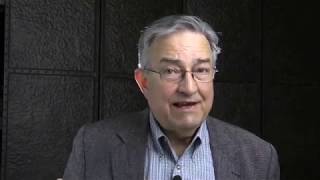
Randy Kardec explains how traders' emotional brain hijacks decision-making under uncertainty, causing overtrading and revenge trades. He shows that suppressing emotion backfires, and instead recommends recognizing physical signals like breathing and heart rate, then retraining your response to uncertainty with discipline and self-soothing.
Chapters
You know, trading is a lot like boxing. I want you to imagine a boxer, knowledgeable, knows how to box, but gets in the ring with a left hander, okay? Not the typical right hander. Suddenly what happens is he's getting hit blindly. He doesn't understand how the other can land punches like that. He literally is blindfolded in many ways and can't see what his opponent's doing. Trading is a lot like that. We walk into trading and we blindfold ourselves and we get whacked and we keep doing it over and over again and, and we'd understand why.
Here's the deal. In trading we try to deny emotions or try to control them, force them into submission, when in fact what happens is we really begin to understand something. The emotional brain doesn't work that way. If you look at the model, the brain called the triune brain. The emotional brain sits below the neocortex. And the neocortex is that thinking part of the brain that we all want trading. That emotional brain is that ancient primal brain that we bring from the African savannas. We bring from well before we were these human beings that we are today. And that is an emotional brain. It responds to the environment emotionally. It doesn't respond to the brain or to the environment through anything like thinking. It wouldn't know thinking and yet we have this Persona where we're observing far thinking. We don't see it, so we don't know the emotions there. The emotional brain doesn't have a language like that. It has an emotional language. And traders by and large really don't take the time to learn that language to understand the interrelationship between emotional brain and, and thinking brain. The truth is, is that all thinking is emotional state dependent. And what your emotional brain decides, your thinking brain literally makes up alibis, makes up fiction, stories, narratives to support what that brain's already decided. Let me give you an example. I got an email today and trader's saying, Randy, I need help. When I get into the trade in controlling emotions, I don't know what happens to me. The moment I get in the trade, all bets are off. What he's doing is he's using to trying to stiff arm the emotion and pretend it's not there. Push it down, push it down. That's the way I'm going to master the emotion. Yet all that's happening is you're building that emotion up to a level and suddenly it pops and it takes over. Thinking mind, that's what he doesn't get. That's the Boxer walking into the ring blindfolded or not understanding how a left hander functions compared to a right hand world. And this is what we have to learn. We have to begin to go, well.
What is the emotional brain all about?
Otherwise it's going to keep just absolutely sabotaging our efforts. It's about control, it's about controlling outcome. It's about being right and everything not being wrong. And when it experiences uncertainty, okay, that which is uncontrollable, it produces vulnerability. Vulnerability flips out the emotional brain and it is primed to go directly to fight flight to aggression, overtrading, revenge, trading or to avoidance. That would be not getting into trades or taking things fomo taking the money before it's hit targets. And you see this, you go, wow, this is what's happening in my trading. Yeah, you're trading in essentialness, is that you're trading blindly. Without understanding how the emotional brain works together with the thinking brain. We all think, oh, I think therefore I am. And Rene Descartes was a great guy, but we also don't recognize Rene Descartes. I think therefore I am guy recanted. He began to realize at the end of his life he was wrong. It was about emotion and emotion leads thinking. Or in neurobiology we'd say that all thinking is emotional state dependent. So what we're doing is we're saying first of all we have to come to a new understanding of emotion. It's not feelings, feeling is a component of emotion. But really emotions are really more about literally your body having action potentials that drive the body into action now, not later, now. And what it's doing is it's scanning the environment for threats and risk when it sees one in the environment. And I want you to think about in trading is that here you are, this organism, the trader, and you're working in an environment.
The markets, and you see risk.
And you're putting risk on and you realize it's uncertain. And what do you think your emotional brain is going to do? Do you think it's going to sit down and say, oh yeah, this is fine, I'm cool. That thinking brain really has its act together and I'm just going to follow it? No, it reverts under pressure, under stress, under the challenges of potential loss. Back to that brain you had on the African savannas, our ancestral brain. So you're sitting there going, whoa, what do I do? The first thing is recognize there's nothing unusual going on. It's doing exactly what it's been programmed to do. By natural selection over millions of years. It's you, my friend, that have to decide. Am I okay with my emotional brain working in a primal way that sees uncertainty as dangerous, sees vulnerability as a reason to jack up the fight, flight response? Or do you want to learn to cool that brain down so that it doesn't hit a trip switch and flood and take over the thinking brain?
Do you want that so the thinking brain can stay there present but from a disciplined, impartial standpoint? Or do you want it flipping out to its priming, to its primal priming? This is the choice. And it's not, it's not a. Unless you've won the genetics lottery. It's not really something you have a choice about if you're going to produce effectiveness in trading. Because understand you are forcing the brain, the emotional brain with that need to control outcome, okay, that loathing, uncertainty and risk. You're forcing it and right in the face to engage risk, to engage uncertainty. And then you're saying, well I'm just going to ignore that, I'm going to ignore that left hander over there. And it punches you hard either by not getting into trades, revenge, trading over trading, or leaving money on the table. That's how it's punching. All that is responses to the uncertainty that the emotional brain is experiencing. And you're sitting there trying to force it.
To get out of this place. One, you have to really understand the relationship that all thinking is emotional state dependent and that the truth is the thinking brain produces alibis, produces stories that support what the emotional brain has already decided. So it's enormously important to be able to start managing what that emotional brain is experiencing. It starts with emotional regulation where you're using, you're recognizing. Oh my God. An emotion is biological, it's not a feeling, it's biological. And you start recognizing, well, if it's biological, it's got a signature breathing, heart rate, muscle tension. And you start manipulating those particular aspects and calming the emotion down. But that's not enough. That's going to get, that's going to take care of the emotional hijackings. But to go to the next step, you have to go to mindfulness of where you begin to step back out of thought and recognize that you and your thoughts are not the same. More than that, in deeper levels of metacognition, what you're beginning to recognize is oh my God, this person that I say that I am is just one potential organization of a self. And most likely it was organized before I could even think what the Successful traders going to have to do is go back in and say okay, that's the mind that I brought to trading. And I realize it's just not, it's not up to the task, it's not a problem with it, it's just simply it's not right for this task of probability management. And you're going to have to go in and redesign the emotions.
That you call forward to meet the challenges of uncertainty, not the ones that you came stock with. That's fight flight, that's from the ancient emotional brain. What you want to do is in this miracle of being human is use the thinking brain to affect the emotional brain and start training it to say, you know something, when I meet uncertainty, what I'm going to do is I'm not going to go the way I'm primed, I'm not going to go to the ancient primitive brain. What I'm going to do is I'm going to train myself to approach, to engage that uncertainty from a position of discipline, of courage, of self soothing, very important and impartiality.
That's the footings, that's the moorings of the probability based mind. You can't control outcome, you control the mind you bring into that moment to manage the uncertainty. Yeah, that's the ticket friends, we teach that and I invite you to come and learn. Read from all the free articles, the videos, but then go beyond that, really take a look at my book, but go beyond that, start looking at it and go wow, you know something, he's got courses where he goes in and actually teaches the skills and tools you need to be able to redevelop the brain and the mind for probability management, not for fear based survival management. That's what's going to have to occur friends, you can do it and it takes training. Come and learn, come and learn friends. Have a good one.









