Retrain the Brain for Success in Trading
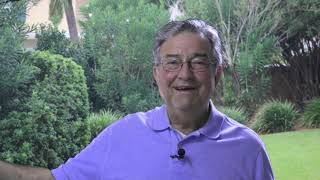
Sam Kardec explains why traders struggle: the brain evolved to seek certainty, but trading is probabilistic. When uncertainty triggers fight-or-flight, emotions hijack your thinking. He teaches a belly-breathing technique to calm your nervous system and retrain your brain to accept probability instead of fighting it.
Chapters
Do you really understand the problem you're having in your trading? Most likely not. We don't really understand really, what's going on inside the brain when you engage uncertainty. The brain that you brought to trading is not built to deal with the uncontrollable nature of uncertainty. You have a brain that's built to control outcome, to be right, and to be able to predict consequences. Find that bottom, okay? That's what it's built to do. It's been built for the last six and a half million years to do that. And yet what happens is that we finally get it to trading. And what we discover is that those very traits that made us an incredibly successful species turn against us. Because in trading, what you discover.
Everything'S wrong, is that you can't control outcome. You're probably not going to be right very much of the time, and you have to really control the losses. And you want to be right and you want to be able to predict, and none of those things you control. You start really frustrating the brain. You confuse the brain. You make it vulnerable, and it flips on you. It starts hitting a particular place. And just like that, an emotional hijacking happens. An instinctive emotional brain takes over, and the thinking brain is just lost in the dust. That's the way it works. So understanding the nature of the problem really is the beginning. This is where we want to start. And ultimately, it requires a quantum leap between your instinctive, emotional brain, its reactive friends. It's got a bunch of habits that have been instilled into circuitry. That fire, as soon as it sees a stimulus out there, it sees a cue to fire. And, boy, I'm gonna tell you, it's built around fear. That's the mother of all emotion. And death is a big one. To our caveman ancestors, this was a really big deal.
Not so today. There's no lions, tigers, and bears left. But the old brain is built for that. What we have to see is that we need to be able to build a new brain. The thinking brain has to turn into a probability state, and it has to be able to regulate the impulses, the instincts of the old brain. That's what we're talking about. This is the quantum leap that all traders have to make. And to make it kind of like an analogy, it's the difference between classical physics, known as Newtonian physics, large object physics, and quantum mechanics. Small particle, what works in the big particles simply doesn't work in the small particles. They're two completely different animals. And what I want you to Recognize is the world out there that you live in before trading is not the same world that you engage while trading. It's a completely different animal. It's literally the difference between Newtonian physics and quantum mechanics. And that's the thing is you have to get recognizing that you have an instinctive brain that runs on operations automatically without having to consult thinking. And what happens is when you hit uncertainty and you have risk involved, it triggers that as if there's a save tiger on your door.
Your brain wasn't built to work in probabilities. It wanted certainties of survival in the moment. And that's the brain that we have to develop on uncertainty. It's not going to happen by itself. You're going to have to make it. This is where the old brain with its certainty based mentality has to be retrained into a new brain that can accept probability and accept randomness. This is the big deal.
So it has to be retrained. And we want to start two different areas.
What you believe, the expectations that you bring to the day. You know, the thing is, I'm going to make some money today. You don't have control of that, friends. Your brain wants to be in control of outcome making money. It wants to be right, it wants to win those trades and it wants to be able to find out where that bottom is. It has this need to predict what, what's going to happen. None of those work in trading. You have a hypothesis, a good guess, but you get in it and you may or may not be wrong right there. To the caveman brain that you have, man, that's an alert. That's oh my gosh, it's going to be met with, it's a threat. It's going to be met with aggression or fear. And that's why you keep doing those dumb, stupid things. You have this area in your brain, the thalamus, takes this information coming in from all the sources and it literally sits there and says, oh, is this emergency? Is this really important? If it is, I'm going to route it without sending it to the thinking brain. I'm going to route it to the amygdala in the fight flight response because we can get into action, otherwise we'll be dead. That's what it's built to do. Even if it does send the information to the sensorial brain, the problem is is that information on the low road to your emotional brain is literally is there in.003 seconds nanoseconds going to the brain. It takes 0.25 seconds. The emotion's already kicked, activated. It's already chemistry in the body before it even gets to the thinking brain. That's why you get hijacked. And that is the first place you have to decide that it's going to change. You have to say, I understand what the brain was built to do. I need to retrain it. I need to retrain the brain so that it accepts probability and uncertainty. That, friends is understanding an emotion and understanding that breathing is part of that emotion, tension is part of that emotion. You begin to say, you know something. By managing my breath and by managing the tension in my body, I can alter my emotional response to uncertainty.
Wow. How do you do it? Look, it's pretty simple. If you take air into belly, you take it to the belly, expand to chest, hold, release. 1, 2, 3, 4. You're producing what is known as belly's bellows breathing. It's what I teach as a first step. If you do that, you're promoting calm, patient mind.
If you hold your breath, if you like that pant, shallow breathing, you promote a fearful reaction with the unknown or aggressive responses to the unknown. That's the way the biology set up. That's the way your brain was initially trained and adapted. By changing that volitionally, you change the emotional response. Now, does that solve all the problems in the world? No. However, if you can't calm the emotions down, you'll never get to the mind where the beliefs are, where the expectations are that have to be altered to be able to manage probability effectively. So do this tomorrow. Use a mirror and watch yourself, trade. Watch yourself. Where you hold your tension, how you hold your breath, how you pant and go, oh, I'm losing emotional control right now. I didn't know that. I just thought I had a tense body. I thought I was just holding my breath. Or if you even knew it at all. No, you are in the upheaval of an emotional hijacking at the moment. Breathe this diaphragmatic way I just taught you and find out what happens. You can do this. This is how you start to retrain the brain for success in trading. It's just the start. It's not the really cool great stuff, but it's the part where if you don't control this, you never can build the mind. It's hijacked anyway. That instinctive emotional brain of yours will hijack and the emotional brain will demand that the thinking brain produce an explanation, an alibi, sports, whatever he believed or what it believed in the first place. This is where it starts friend. You want to know more? Read the article associated with this, come to the webinar, come to my website and start learning about what this is going to take for you to retrain that brain for success in trading. Good luck, friends. I wish you well. Really use that breathing. Find out what happens. Take care.
Sam.









