Setting Trading Psychology Goals that Really Work
Randy Howell explains why standard goal-setting doesn't work for traders: your reptilian brain hijacks rational thought during trades. He teaches emotional regulation through breathing and mindfulness, building discipline and courage instead of chasing outcomes.
Chapters
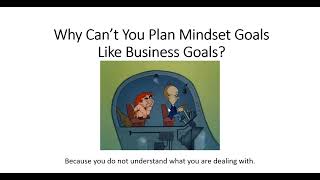
The broadcast is now starting. All attendees are in listen only mode. Welcome everyone. My name is Randy Hamill with Traders State of Mind. And the very first thing is let's make sure people can hear me. Okay? If some kind people would look into the question box and just type in why or yes, I would really greatly appreciate it. Yep, good. Thank you, Howard. Thank you. Thank you. Thank you. Well, we are here today because over the holidays, a lot of traders, as you probably are aware, pretty much really slow down during Christmas time or the holidays. And what they do is they start doing a lot of their planning, they start really looking back over what's happened and they start making plans about how they're going to evolve themselves over the coming year. 2024. And I'm always amazed at how people use the same kind of logic and the kind of rational thing when they start thinking about trading psychology goals. You're gonna be able to do this, you're gonna be able to trade at this particular level and you're going to, you have the goal of being a disciplined trader. And my question was, well, how are you gonna do that? Because ultimately there's a great divide that occurs between setting programming type of goals about what your system needs to be doing, what you need to be doing, how you're gonna begin at directing your life, and also the goals that you have about your ability to perform under pressure, they're very different. And so what I want to do is we're going to be looking at this, and I'm just telling you up front, is the kind of thinking that you give to business goals and stuff like that is not going to work with the emotional brain. And don't depend on me for the answer. That saying, oh my. Randy Howell said that. Well, I want you to look at your own experience. I want you to take a look and say after all that planning and all like that, you come down to the moment of where you're risking your precious capital and it could be taken from you and then see what happens. After all that planning, you still find yourself, you having missed the mark about, well, what is it I really need to be doing? How do I go actually and set a goal that's actually doable with my trading psychology, to be able to produce a mindset that can deal with trading on a level that I'm not able to do right now, even though I'm doing odds planning. So we've got that. Oh, and by the way is I hold my questions toward the end. So that doesn't mean you can't write questions. I would really like that because we're sitting here after a presentation and we're all sitting around waiting for somebody to answer ask a question. It'd be really nice, folks, if somebody primed the pump a little bit so that we have them. So you just type them in. Yeah. To the question box and we will get to those. But first, what I want to do is I want to start laying this thing out very differently. Is that what is actually going on here? What is actually going on is why can't you plan mindset goals like business goals? And the truth is this because you have no idea what you're dealing with. You think you're dealing with a rational human being, and the truth is that you're not.
There is a need in business.
For you to be able to say, you know something, this can be very rational. I'm just going to zoom in on what's really important. I'm going to push emotions out of the way. I'm not going to deal with them because they're not that important. And what happens is that what you don't grasp is that there is an emotional underpinning to every decision you make. When you have risk involved, you can say, well, I've got my risk management. I have my strategy. I know what I'm doing. Yeah. That's on a cognitive level. And I'm going to get. And we're going to be looking at the triune brain tonight. We're going to be taking a look at and saying why this just looks like it ought to work. It makes sense, but it doesn't work. But first, what I want to do is I want to go back to the first slide.
That one. Yeah. This is the dilemma that every one of you is going to have to learn to master. This cognitive brain of yours. That little geeky white guy looking out the brain window. Okay. As he steers the course into a consistently profitable future. What he does not comprehend, he has lost connection to his backseat driver. Behind him is the emotional brain or even the brain stem, often called the reptilian brain. We'll be talking a little bit more about that. He doesn't look back there. As a matter of fact, that neocortex of his doesn't have the ability.
It'S forgotten to look and turn back at the emotional brain. Because ultimately that emotional brain.
Is making decisions under the conditions of threat. Okay. And. Or opportunity lust jumping into trades or hating to lose and ending up in revenge trading. But this is the deal. What I want you to grasp this is the dilemma that very few people figure out. I mean, this is not just in trading. A long time ago in a place far, far away, I was a practicing therapist. And I was. I did a lot of groups for where the criminal court sent them, juvenile court sent them, DSS sent them. And my job was that they had to go through a career curriculum that allowed them to actually get their kids back or get better. And ultimately, though, is what I discovered is all the cognitive behavioral stuff that I had learned didn't work at that level. And I started asking myself, what am I missing here?
The problem is that in cognitive, behavioral and in Life. Thank you, Mr. Rene Descartes. But we think that thinking makes me exist, when in fact, an emotional intelligence theory, what you discover is thinking is the caboose. It's just kind of an afterthought. It's a behavioral output, okay? After a very long chain of automatic responses get together and decide what direction that the human being is going to go. And what I discovered when I moved over to emotional intelligence, that is saying that all thinking is emotional state dependent, I got very different results. And it's the same thing in trading is it's still a cognitive behavioral thing. And then all of a sudden what you discover is you still have to do with these gooey, gooey, gooey.
Emotions. So we've taken that one more step forward, please. And then what happens is the real key is this, the tragic flaw is that you actually think you're a rational being. Is I want you to right now, if you can, if you have a mirror, if you have a phone that you can look at yourself in, like, you know, taking a photograph of yourself or anything that you can look at yourself in. I wish you to put it. And I'm asking you to take a look at your reflection. And what I want you to do is answer this question. And matter of fact, I would really appreciate it if you would actually feel these. What do you see when you look in the reflection and you see yourself? What do you see?
A reflection of yourself. Right? You see you're looking at yourself, right?
You know, if you ask me, when I look at a human being.
I do not see a human being. I do not see this fancy geeky guy that we saw driving the brain. I see an animal.
I see a biological creature.
That only emerged as a human being 6.5 million years ago.
And besides that, before then he was a mammalian brain, a social mammalian brain that dates back to 125 million years ago. And the mammalians didn't come the superior group until about 60 million years ago when this big huge something or other collided with the earth and the dinosaurs died. But what I want you to hear is the brain from 125 million years ago. Somehow, about 6.5 million years ago, a tumor started growing on that brain to where we had a neocortex. Neocortex. That thinking brain that we pride so highly and that we think that we talk in and we do all and we plan in and all like that. But what I want you to recognize is that late comer to the show is plugged into a brain that's 125 million years old. Pretty primitive stuff. And it occupies a chunk of his brain. It's known as the limbic system. It's known as the mammalian brain. It's known as the emotional brain. But let's not stop there, friends. Let's step one step further and the triune brain, which we'll be looking at a little sooner, as a matter of fact, let's go there now. Just move one side. This is the triune brain is a great invention for teaching. But the truth is, is that our brain is deeply integrated with all over the place. So it's not like this is like a 1950s, 60s, 70s snapshot. But that human brain, 6.5 million years old, that's what gives you the illusion that you can outthink the markets. It gives you the illusion that you are, you're a rational human being. Underneath that.
Okay, is the mammalian brain. That mammalian brain is an enormous advancement. That's where emotions emerge, like emotions, like where you felt chemistry inside the body. When I, this, this summer, I. I have a number of snakes on our property and I will catch them, I don't kill them. But I also have a copperhead that frequents our property. And I will catch that copperhead. And what happens is that when I take my snake loop and take it and pick him up, he strikes it. That's an emotion.
That's the body's response to a breakdown in the environment. Okay? That's the reptilian idea of an emotion. Now, if you go to the mammalian thing is that all of a sudden you can actually see my dog get fearful. You can see him starting having joy. You can see that's an enormous advancement. But that reptilian brain that you're looking at right now.
Goes back over 600 million years from where animals started emerging out of the ocean. What I'm asking you to recognize is you're looking at the human neocortex that green thing there. And you're looking at that going, yeah, but it's so cool. And what it's rooted into is the emotional mammalian brain from 125 million years ago. It's rooted into the reptilian brain. That goes back as far as 600 million years ago with the emergence of life on Earth. All. All those brains had. One idea, is to adapt you to be able to survive in a particular environment. Obviously, that. That copperhead that I was talking about has a very different emotional response, okay? It's. They don't have feelings, they don't have stuff like that. And then, you know, what happened is that 6 point, well, 125 million years ago, the mammals started rising. 6.5 million years ago, you get this highly sophisticated animal, okay? But what I want you to understand is that all the information about danger flows through the reptilian brain and the mammalian brain long before it gets to this neocortex that we're calling the human brain, the thinking brain. So what I want you to recognize is this. You're not a rational human being, and you're having the illusion that you are is in fact something that stands in your way from being a successful trader. We're going to have to learn to cool the mammalian brain. We're going to have to learn to work with reptilian brain. And we can do that because actually, the human brain, the thinking brain, the neocortex, can really do some cool stuff if you understand it. And its place among the organization of this brain we have, particularly when we are subjecting that brain, you, to what the brain considers to be a threat. And my promise to you is this, is that your caveman brain? And by the way, you had that one probably about 100,000 years ago, and you started really thinking in language probably 40,000 years ago. Do you see what a little baby we are? And we still are controlled by the mammalian brain. The deal, though, is this is you're getting there and you say, okay, this is quite a picture, you know? Now what I want to really understand is take it one step further. Okay? Now we're still looking at this, and all of a sudden now we're looking at it in a different way. We're saying that mammalian brain, I mean, that thinking brain, that neocortex, is executive suite. It just. It's the learning brain. It can do this, it can save more. I can plan, I can do all this stuff. I can. Blah, blah, blah, blah. But the problem is, for most folks, the thinking brain does not realize that it grew from is still embedded in the emotional brain, the limbic system. And that limbic system has a high priority of staying alive in the short term. Now we're social mammalians, and what binds social mammalians together for survival is love. You know, everybody, everybody has deep value in a clan because they all work together for group survival. The deal though, is that thinking brain emerges out of that emotional brain and out of the brain stem, that reptilian brain. So the deal is, how are you going to, to work this? Because the deal is when you are sitting there and I'm going to, I'm going to use taking a loss because, God, it's a huge problem with traders is people don't want to take a loss. You know, part of it is psychological. They grew up in competitive families and winning was how you proved yourself and you got status and you feel good about yourself, blah, blah, blah, blah. But even deeper than that, to your caveman brain and beyond the reason you don't want to take a loss, a monetary loss is not because of the money. Your caveman brain has no clue what money is.
Yet it understands very well survival in the moment. If it takes a loss to the caveman brain.
That'S a biological threat to its existence. Might as well be a saber toothed cat jumping at you with big huge 6 inch incisors coming down and just going right, piercing right through your shoulder blades. Yeah. What happens is when that trade goes against you, and particularly you've been preloaded, you've already taken some losses, and then it goes against you, you are looking and going, oh my God, I have to fight for my life. To the, to that, to that emotional brain? Absolutely. To your caveman ancestor. Absolutely. What do you think happens to the executive function of the neocortex when that happens? It's gone. All the plan gone. And suddenly what you're doing is you're reacting the way our ancestors did tens of thousands of years ago to 6.5 million years ago, to 125 million years ago. We'll give it some slack after that though. Now, in caveman, understand, caveman does not know about money. It sees that as if I'm making money, then I'm getting status, I'm important, I matter, blah, blah, blah, I have worth. If I don't make money, I'm taking losses. And therefore I have biological threat to my existence. Yeah. That's what I need you. And that's why it's so powerful, man. You just get.
It just flips the trip switches Boom. And your thinking brain is there one time starts going against you and all of a sudden bam. You're a. You're a bunking bronco in a burning barn. That fast.003 seconds. That's how fast the emotional brain activates emotion in defensive cell versus 0.25 seconds for that information to have gotten to the thinking brain for consideration. This is where the problem's at. Okay? And we're going to have to figure out a way to deal with it. So.
Oh, and by the way, Happy New Year. I forgot about that. And the truth is I'm meeting people today and I'm going, my gosh, it's even hard to talk about the new year. It's like already. We've already begun.
What I want you to grasp if nothing else is this is that understanding your emotional dates, your nature is the foundation to building a performance psychology for your trading. Okay? When you take a look at this graphic and you look at these guys sitting on top of their brains and they're in management of their brain. Well I'm going to tell you something that would require a lot of emotional intelligence. That would require a lot of understanding the way the brain functions and works. Particularly under stress, under the knowledge of you don't know what's going to happen and you can't control what happens. So what we're going is saying.
The big takeaway here is you don't have emotions.
They have you. And the only time you don't have emotions is when you're dead. And that's not what we. That's not an outcome that we want. Yet. I brain remember this isn't that 21st century guy who's living in an artificial environment no longer even connected to you know, the woods and stuff like that of his, what he grew up in. But the deal is what we want, what our psychology wants on the ground floor, everything is built around.
Wants control over uncertainty. It wants control over outcome. It wants to be able to have that much control. Because understand we were little critters when we were just coming out of trees and we were getting on the African savannah. And ultimately what happened is that we had to. We built an anxious state of mind because for us to assume that there were 72 tigers behind every bush that you could see on the savannah actually was great survival value. And so it got bred in and before you knew it that we started having anxiety. Okay? And that anxiety could be not being able to get into trades. That anxiety could be wanting to take profits really early because it might get Taken away that anxiety, particularly with men, may turn into anger if a trait goes against you and you, you, you react back and you want to kill what's threatening you. Okay, These, these are the motives, this is the stuff that's going on. And at the bottom of this, friends, at the bottom of this is this need to control outcome. Okay? Now as a trader you're going to probably call that winning and losing risk management and you really want to win at the same time is that.
In trading.
You'Re going to take a lot of losses over a lifetime. In fact, if you're going to be a consistently profitable trader and a successful one at that, you're going to have become really good at taking losses. Really good. So you're going to actually have to re engineer what evolution has set up in you as a successful strategy for short term survival. Do you grasp why people come in? I work with a guy who at first, when he first met me, you know, he said, okay, we're going to come on board, you're going to take the NGO course. And he says, Randy, I said what I was going to do is I was going to take this course, I was going to become a great trader and I was going to make a lot of money and blah. And he's not. At the same time what happened is that what came to me was a client that I find out that has complicated PTSD from a lot of abuse growing up. I have a client who has, has Crohn's disease and had part of his gut removed. I have all this stuff going on and he, and he has a fear based way of interacting with the world now that is going to have to be mastered. He, he doesn't have control. He actually, the problem is, is that in his view of the world he's powerless and he's having to learn power. A lot of people are like that. They think they're going to come in, they're going to learn some cool Randy Howell things and then go out and just knock it dead. What we are looking to do is to build an emotional base, a very different kind of brain that responds to uncertainty very differently. And what we're going to do is one of the very, on the ground floor is we're going to let go of the need for control of outcome. Powerful stuff. And yet that's the way it works.
Because ultimately what trading requires and what I just let me know if I'm talking to the wrong people. Have you noticed folks in trading that you do not have control over the outcome and have you gotten comfortable with the uncertainty of trading? Because until you take that really success oriented mind that most people bring to trading. I used to think it was just Americans, but you know, I work all over the globe now and it's very clear that practically everybody I meet from all wakes of life and cultures, they have a very competitive spirit. Now we get that from our caveman ancestors. We, we had to be competitive, we had to believe we were going to win and to dominate. Okay, but the thing is, is now what we've got is we've gotten this brain that's very success oriented for the short term survival, and we are taking it and plopping it into a world of trading where success is not measured by winning and losing. Success is measured by managing the mind that you bring into the moment of uncertainty. That's where your brain supplies a psychological edge to the method, edge that you have found between the winning and losing. Because ultimately trading is a game of where you want to extract more capital out of the markets than you give back. There's a lot of losing, there's a lot of winning going on. You have to develop a mind that is comfortable with taking losses and not getting excited about wins. They're just landing on the right side of probability relative to you rather than landing on the wrong side of probability, which is what I teach losing is. So we've gotten this thing and we're going, okay, now what we're saying is we've got a brain that was highly successful for survival over the last 600 million years and as a mammal for the last six and a half million years, and it's a modern man for probably the last 5,000, 10,000 years. Okay, understand we still had saber tooth tigers hanging around with us 10,000 years ago and we exterminated them. So we figured out how to control outcome. So now what we're saying is, okay, because if you do not learn to be able to take the brain that you brought and rebuild it into this newfangled thing that handles uncertainty, it's going to be a long ride for you and your fantasy of, oh, there's this guy who makes a lot of money all the time, I'm just going to be like him. Well, I'm going to tell you, he may have won the genetic slaughtery in terms of like having a mind that deals with uncertainty very differently than the rest of us do. That's called emotional architecture.
Or he may have learned how to do this, how to really learn how to control what he can control the mind. He brings into the moment. But what we really want to do is we want to say, okay, until we train that brain, this is what you got, friends, is that you're going to experience the powerlessness, okay? No matter how manly you are, you're going to experience the powerlessness of not being able to control outcome. And.
I get messages from alpha males who have been very successful to me all the time, and they want to know, well, what is the problem here? The thing is, I just don't want to lose man. And I blow up accounts what they're experiencing. Understand, an Alpha goes out and it's corporate, we're in the business stuff. He goes out as a warrior and wins. He makes money, he accumulates power and he begins to believe that he is that power, okay? And then he gets into trading and find out that's all an illusion. The control was an illusion. And he's going to either have to retrain his brain or he's going to have to stay stuck where he's at. The deal is the uncertainty is not going to change. The Alpha before trading has lived in a small enough world where you can exert a lot of power in the markets. The markets are vast, the markets are incredibly diverse and it's just swirling around and it's impossible for us to really know and to control. So you've gotten this thing. Now, ultimately, when you experience the powerlessness, you know, it might be after a string of winds, you feel so dang good and then all of a sudden you re experience the powerlessness. You're trying to have power over something that you do not have control over. What I'm asking is that in that you don't have control over outcome, you have control over the mind that you bring into the moment of uncertainty. And friends, that's the edge that as you are planning your psychology goals that you want to produce, you're not going to be the king of the mountain. What you're going to be is a disciplined, patient trader who waits for the market to give completely different animal than the alpha. So we've gotten that and then go, hmm.
If the markets are unforgiving and if I have a brain not set up for this.
What do I do? Do I just give up and quit trading? And no. The good news is your brain is ultimately an adaptive organism that is, that is constantly readapting. When it finally learns that it needs to. It needs to relearn something, it needs to come to a better understanding, it needs to acquire different beliefs. What we want to do is we actually want to use emotional intelligence.
To begin to train the brain to be able to be comfortable with the environmental conditions of trading where you do not have control over outcome and there is a high probability that you're going to be taking losses. And you have. And again, you're going, well, even if I grew up in a really healthy family, most likely I either grew up in a competitive family where winning was really important and all of a sudden you can't control winning and trading, or you grew up in a family that was really scarcity, thinking minded, where you had a house, you had a home, you had a job and you didn't want to grow, you didn't want to risk anything because you might lose your house, you might do that, and so you stay stuck. That's the way most of us work. Okay, so we want to start saying, how do we use emotional intelligence for me to learn to drive that brain in a very different way to produce a kind of mind that is radically different than what I've gotten used to. And here's where it start is what you want to control.
Is in fact.
What you can really control.
You're looking at what is known as the historical internal dialogue here where you have.
The devil really representative of the dark side and you have this angel on.
The light side. And ultimately I would consider that the Cherokee Indians of southeastern United States had it right in their spiritual philosophy. They believed that man's mind was composed of two wolves instead of critters like this. One was a dark, destructive wolf, the other was a light, constructive wolf. And what happened is that there was a continual struggle within the man's mind for control of that mind. What the Cherokee believed that was so radically different than other cultures was that.
The wolf that won destruction or construction was in fact the wolf that the man, the person chose to feed.
This is powerful. And what happens is most people discover they've been feeding the wrong parts of the brain, the parts of your human potential. And so what we really want to do is say, hmm, I can control the emotions that give rise to the mind when engaging the uncertainty of trading. That I can do. That's the edge. That's the psychological edge. You need to drive a method edge. And at the same time what happens is that, okay, I can control this internal dialogue. Yes, you can. Once you learn one that you really have no choice but to master it. And it doesn't really, you can shout and scream at it and you can be fearful. The truth is, is that you're not going to man up on this thing. What you're going to do is you're going to learn to master yourself, okay? You're going to master the beliefs that you hold about your ability.
To engage uncertainty. Truth is most people, most people really in trading, discovery that with a truth meter called your trading account.
They are face to face with their beliefs about what money is, how their ability to manage the uncertainty of living, not just in trading, but in the rest of their lives, too. So what we want to do is gain control of the dialogue in the mind that engages uncertainty. That, my friends, is powerful. Now, how on earth do you learn to control the mind that you bring into the management of uncertainty? How do you do it? If you take a look at this image, what you discover is the first thing you do is you calm the mind down. None of this distraction, running a thousand miles a minute and blah, blah, blah, blah, blah, blah. Know what happens is you come to the moment of being able to calm that body down, and you do it through emotional regulation. Now, it just so happens that, you know, we teach that emotional regulation as diaphragmatic breathing or bellows breathing. What we're doing this is. Let's just go to the next slide because, you know, ultimately the way you breathe is actually part of an emotion. If you tomorrow look at yourself while you trade with what's likely, if you're like the rest of the human race, you're going to notice that you're holding your breath a lot and you're panting with just the top part of your lungs. Now, when you hold your breath, you're cutting off oxygen supply to the brain. Suddenly it can't think if you're panting. What you're doing is you're fanning anxiety and fear. That's what you're doing. So you're setting yourself up for an emotional hijacking.
Traders do that all the time. They carry a bunch of muscle tension, they carry the way they breathe, and they never see it as part of an emotion. They never see it as trouble. You need to be able to look at it and say, I need to produce diaphragmatic breathing. Where on the left on the model, you are seeing air being pulled from the nostrils down into the lower lobes of the lung with the abdominal muscles, okay? Diaphragmatic bellows breathing. And what that does, that breathing signature just so happens, is tied to calm states of mind. Now imagine if you see a trade coming against you and you've trained yourself, just when something like when there is a perturbation, when there is a change in status on your screen that you have taught yourself to go back to diaphragmatic breathing immediately. What you do is you take the ability of that emotion from triggering, and suddenly the breathing would be accelerating the hijacking. No, you're doing the exact opposite. You're actually slowing the breathing down, doing it deeper so that you're actually promoting a calm state of mind. It just so happens that fear cannot stay in the presence of diaphragmatic breathing. It requires the holding of breath, it requires the panting in order to exist. Because ultimately, first of all, an emotion is a biological action potential that coordinates activity between you and the environment, between the trader and the markets. And anytime that there is a change in status in your looking at your looking at your screens, there is automatically an emotion that rises, and they're rising really rapidly and hijacking you quickly. And this is where you're going, oh, I have to be able to produce a calm state of mind. Yeah. I teach that you need to learn how to do. This is simply the new normal way of breathing while you trade. Okay. It's actually an excellent tip if you want to be hearing. So you've got it. You're going, okay. First thing is you learn to breathe to be able. Because breathing alters the way the emotion can express itself and you're producing it. So that with diaphragmatic breathing, you are producing calm states of mind. Good for creating. Then what happens is that you're also beginning to recognize that. That when you feel tension in the body, that's called emotional arousal. It's telling you the emotion has already triggered. It is building up, and if you don't do something about it real soon, it's going to hijack your mind. Like most people who have anxiety, they find out that they just have lots and lots of muscle tension in their necks, in their foreheads, between their legs. They're all sort. They hold fists. Okay? That's the emotion already there. You're already behind the game, friends. So what happens in emotional regulation? You're learning how to breathe differently. And you're also learning, you're learning how to drain, drain, drain.
The tension out of the body. And you know, in my training tapes and things like that, people joke with me all the time. There's a line that you hear 10,000 times in my work.
And it's then let attention drain, drain, drain like honey flowing out of a jar until you're loose and limp, loose and limp like a sleeping baby. Now, people have listened to my work so much that that's on. That's Just simply in their brain all the time while they're trading. And they're using that as a way of being able to maintain calm states of mind so they don't get aggravated and do something stupid. So now, okay, we've done that. We said, okay, emotional regulation. I get it. That's really interesting. Okay, I'll try it. My promise to you is this is. Emotional regulation is not going to solve the problem. Okay? What happens is without emotional regulation, you're going to get swept away by emotional upheavals all the time, and you're never going to get to the door of the mind. But if you train yourself diligently in this training yourself, like in our group course, people have already started the course. It starts in this month sometime, I think. But the key is, is that people have already been studying and practicing with the breathing and the tension reduction for two and three months. They're serious and they recognize, oh my God, I need a lot of time to be able to teach myself a new habit about the way to breathe in the presence of stress. That's it, friends. Once you do that, though, there's more.
You're going to have to sit there and you're going to have to open the door of the mind and to look in. Instead of trying to avoid the mind because it's just uncomfortable, you're going, I need to develop a tool that opens that door so I can see in. And that's called mindfulness. And what you discover is this. This is the most powerful thing for a lot of people. People have always looked at me funny and going, you're serious. You and your thoughts are not the same. Okay? And self is just a construction that the brain has organized with competing emotional programs for short term survival. There is no you. What there is, is. There is potential. There's an observer of that potential, and it brings forth the form. And what you're discovering is that the typical way that you're brought into a form, a structure of the cell, isn't working with trading. And you're beginning to go, I need to change the observer, change basically how I engage.
The uncertainty. But what happens is that here's where the cutting edge of, well, this isn't cutting edge. It's about 15 years old. That the brain is actually considered to be a community of rival emotional programs that duke it out to control who constructs the self. This thing that you think is you, that's being, has been created outside of your own awareness. And then you get clobbered and you don't Understand why. And in the miracle of how the brain creates mind.
Those emotional programs are given voice as your thoughts. And you had better know who these emotional programs are. They are very powerful. Emotional programs are very powerful forces. You felt them every time you've been hijacked. You felt them every time you saw an opportunity that you just jumped into. Those are emotional programs. And what happens is they are not the ones that you want to be in control of. The mind of a trader. So the first thing though is you grasp this whole idea of who I thought I am. And by the way, that's me in front of a mirror.
Doing that mindfulness thing. Okay.
Now, so you're sitting there and you're going, I need to develop this tool. And what you discover is that we human beings have an observing self. We have a witness that can be taught to emerge and to watch without fusing to thoughts. And as you learn to do that, you realize I have to be very careful about what thought streams. Emotional programs that I allow my observer to fuse to. Otherwise I'm not going to make a really good trader. But I need not the historical emotional programs that gave rise to the mind that I brought. No, I need the emotional programs of discipline of a ruler, the emotional program of courage, the ability to face my fears of a warrior.
The self compassion of a caregiver. You're going to have to be very compassionate. Beating yourself up has never made a better trader. But being able to find out that self compassion is the antidote to fear, you begin to realize that you're going to have to develop the capacity to be compassionate toward the self. You can be taking a lot of losses. You better honor it. If you pull those three emotional programs up and they're running and actually working, the active awareness of looking out and seeing charts, the ability for you to be clear thinking of a sage, that's who you want. Trading becomes present. You have calmed down those very primal instinctual survival skills. And you are actually allowing that green stuff we saw in the beginning, the new brain, the thinking brain, to actually do what it can do without being wiped out by the reptilian brain or that mammalian brain that, my friends can be done. And you develop that ability to step back out of thought and to begin to say, okay, sometimes it's uncomfortable listening to these thoughts in my mind. Now you're going to learn to look at them. And not only that, you are going to learn to identify them. And this is crucial because otherwise, if you've ever worked with Eastern thought.
There is the notion of Monkey mind. What happens is you have a very highly unorganized mind.
That really needs a lot of work. You need to reorder the trading committee of the mind, where all these voices are there and you're looking at a whole bunch of yelling and screaming and stuff like that going on yet again. That's a photograph of me. What happened is, despite all that stuff going on, what you notice is the person is calm, centered.
He no longer is identifying with.
Thought streams, emotional programs that do not serve him well in managing uncertainty. This is the. This is when you learn to master the internal dialogue.
You're basically learning to master, work with the circumstances that you got born into, that you brought from your ancestral mind, that you brought into the world, that you got trained from your family system in and your culture in. And you're going, yeah, it was a good lie while it lasted, but it's not working in trading. I. I have to find a new truth. And out of this, you're going, okay, I get it. I'm going to have to learn to stop these thoughts, to examine them and discover that a lot of them are misinformation. A lot of them do not serve me well. And then you're going to discover that other emotional programs have been waiting there for you to start championing them, to build them up so they become part of your working awareness as. As you engage uncertainty. That's the power. But even there, the one thing that I teach in my work is that you really, truly need to be able to access what I call inherent worth. Inherent worth is your value as a human being, as conscious creation.
Up and beyond your performances. Most Alphas, in particular, what they've learned is that if they make a lot of money, if they do really, really well, then they matter. People have respect for them. People love them. People say, well, boy, he has worth. But what happens is.
You have put your value as a human being into winning and losing.
Winning and losing are performances, friends. That's all they are. And trading, you don't have control over winning. You don't have control over losing. You have control over the mind. You bring in the moment. And if you're sitting there having to win to prove yourself, you're going to lose here. What you're seeing is that there is this moment where you can get connected to this deep inherent worth, and you can start building it so that when you recognize, and I'm going to give you an example, a friend of mine, friend of ours, is undoubtedly one of the best traders in the world right now. Mitch has made somewhere between 2 and $300 million over the last several years. And I was talking to him about it and I said, how did you learn.
To disconnect from winning and losing and recognize that it's not about winning and losing, it's about performing? He says, randy, I'll tell you, it was a number of years ago and I had lost three quarters of a million dollars. And he said back at a time when a 3/4 of a million dollars were really a lot of money to me, I lost it. It was gone. And I knew that I had to tell my wife. Thank God he had self honesty here to do that. And what happened is he went and told his wife and he expected her to just hit the ceiling, go crazy, divorce him and all that kind of stuff. And what happened is that she took a deep breath, she walked over, held him, and they cried together.
What Mitch got out of that was that come win or lose, he was lovable, he was okay. And suddenly winning and losing no longer was about his worth as a human being. Winning and losing was about his competence and performance. And friends, it's a lot easier to get to the, to that competence in performance when you are, when you are just weighed in. You're connected to that sense of inherent worth. And it's not, it's not really stuff like that. No, it is a deep sense of abiding, recognizing that for some reason you have been given this gift of being conscious creation. It's a heck of a gift, friends. And what are you going to do with this gift? For me, particularly coming out of a heart transplant, I have enormous gratitude and I practice gratitude that I'm in second life, friends. Okay. And I have deep gratitude for whatever this was. Circumstances, luck, blessing, fortune, whatever doesn't matter to me that produce this ability to have second life and to recognize that you know something, I'm inherently worthy. Somehow I was chosen to live. What I'm asking of you is that you have to find that element. And of course what we do is we work with that to help people access that part of themselves so they can start identifying with that rather than the need to win and not lose as a way of building your sense of worth. Okay, so.
Where do we go from here? What I've talked about is still not enough for any fan of Lord of the Rings.
Lord of the Rings is one of the most powerful archetypal films ever created.
What you do is you realize that these are these archetypes, from Frodo to Gandorf to all those guys, these are representations of different emotional programs that are simply part of the experience of being human. And what's happening in this movie, it's good and evil and they're clashing. And at the bottom of it, everybody has to find their heroic nature.
This is a film about fantasies of finding their heroic nature. There are other people that find their heroic nature in very different ways. They help people that don't even want to be helped. They find it and they find that they have the discipline of a ruler, they have the courage for warrior, they have the self compassion of a caregiver. And they have the clear thinking of a sage. And that what they do is they realize those are the archetypal energies, those are the emotional programs that need to be in resident and active as part of the working mind. It so happens that it can be taught. It takes some work. I mean, you know, you have God knows how many decades of drilling yourself that you're something else. And then I'm saying no. There are these empowered elements of the self that anybody can choose to work with and pull forward and start creating a very different kind of destiny from the engagement of uncertainty. You no longer need to be fearful. So the thing is, is that the challenge still is there. Ultimately. You still have to face your dragon. You still have to conquer yourself.
You do is whatever chink there is.
Trading will find it. Avoiding the dragon is just fairly stupid in trading. I mean, you get away with it for a lifetime in regular life. I mean, my dad smoked Camel unfiltered cigarettes for 52 years. He, he didn't see himself dying until the doctor said, get your affairs in order, Mr. Owl.
You'Re terminal.
And then of course he got all scared righteous and it was too late. It's way too late. What we want you to do is to say, what are the dragons that I need to master? You don't fight them and kill them. You master them because they also have an enormous gift. So ultimately, when you master those dragons, you learn to control the you that you bring to trading. That's the deal. That's what we teach in our group courses. That's the whole. Basically this is the whole, this is the process that we teach for transformation of the self. And what most people discover is that this isn't about trading. It's about you're engaging the forces of life. Okay, so.
What happens here if you're actually in a moment of where you realize that you can think about this and you can kick the can for a long time, Nobody cares. The trading gods certainly don't or you can decide that you know something. I need to become the change that I want to see in myself.
If you come to that moment, I encourage you to look at our group course. That group course comes with five group sessions with me. Okay? The webinars are recorded. We work all of these time zones, and we have to do this. You're going to receive copies of the recordings. What happens, though, is you're brought through this very process that I have described here. You were taught the tools to be able to develop that. Okay? And that's done over the five group sessions.
Now. And what happens is that right now we give a free gift that's worth a couple hundred bucks for people who will sign up early and get busy. In this case, it's by Saturday. Okay? This Saturday, and it's done. Be honest with you. It's just. It's to your advantage. And we want to encourage you to. Particularly this emotional regulation section. It takes work. It's not going to change because you do a couple stupid diaphragmatic breathing exercises and then face your dragon. And it not being a solid habit, you need to do it and drill it till it becomes instinctive. We also have. And also it's right at twelve hundred dollars. Or you can break it down into five payments. Okay? We try to make this thing affordable. And people, people.
People really unlock themselves and realize they are getting the tools they need to rebuild a self that can engage life very, very differently. And yes, we also have an individual course. Those are people who are highly motivated and they are highly comprehensive and deeply personal. And they come with 10 sessions with me. And it takes the group course to another level. Okay? But the thing is, what happens is right now, where a lot of people are, they need the group course because they need at least exposure to the tools that they need an understanding of actually the way their emotional nature is put together to produce cognition, thinking. So I invite you to the group course. Okay? And with that, we have a couple minutes. And if you have any questions, I would be honored to answer them. But if not, I'll go have a glass of wine. Okay. Let's see. No, nothing so far. So what I'll do is say this, okay. As we. As we've gotten through this, is that this. This will be available. This recording will be available on our website tomorrow. I can't say really early in the morning because I don't. I don't like to do that. But the thing is, it'll be there, and I encourage you to watch it several times because people have people watch my videos over and over and over again. They. A lot of people just have to watch it to be able to dig down and to recognize.
What they really need to do and to become. So let's see. Is that a question?
Okay, let's see here.
Let's see here.
Oh, congratulations on my second life. Thank you. I actually appreciate it. You are a fortunate dude to be alive in this time of history of mankind. I believe that. I really, truly believe that.
On your website you offer a free ebook. And I took up your offer. I downloaded the ebook and partially read it. I have never been able to find the ebook again. To continue the reading, I just get another one two or three times. I have registered again in an attempt to finish your ebook. However, I have never been able to obtain a copy of. Of the ebook. Oh, that's because. Yeah, that's because you probably.
Yeah, email Dolores and we'll take care of you. Okay.
Yeah. Doloresraderstateofmind.com okay, that'll take care of that. I think I missed an idea you were sharing. Did you say diaphragmatic breathing isn't sufficient to address issues in trading? They're a part of the solution. But the thing is, is diaphragmatic breathing is an aid to emotional regulation. You need to be able to regulate your emotions so that you're able later to be able to stabilize the mind and build a mind. But diaphragmatic breathing, bellows breathing is not going to solve the entire problem. That's why mindfulness becomes such an important tool because of. Eventually you have to get to the beliefs that are driving your performances. Okay. In the face of uncertainty and risk. That's not done through diaphragmatic breathing. That's done through some inquiry and beginning to turn toward what's uncomfortable and mastering it. Okay. So. Okay. That's it. Cool. Well, friends, I have really enjoyed myself. This is our first one of the new year. And what I ask of you is to really, truly think through this and recognize that trading is just simply a quantum leap compared to what you were doing before. It's going to require you rebuilding the brain and mind for a world that your brain and mind was not built for. And I really, I wish you the best. And my hope is that we will see each other one day. Take care.










