STEAL This $100 Million Dollar Trading Strategy (Used by Market Wizards)
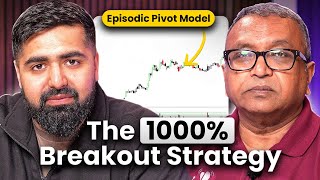
YouTube interview (Chart Fanatics) with Pradeep Bonde (aka Scotty) explaining the Episodic Pivot (EP) family of trading setups. He describes the classical EP (catalyst-driven: earnings/sales growth), and several expanded variations — delayed-reaction EP, volume-filtered “EP9 million”, thematic/story EPs, and a tracked subset called “sugar babies”. He gives examples (SMCI, ROOT, ANF, HIMS, Mobileye), concrete process elements (daily pre-/post-market scans, watchlists, use of AI tools), trade management rules (market-on-open/OPG entries, initial stops moved to breakeven then trailed to lows), and performance anecdotes (e.g., SMCI ~189% in ~28 days; other moves 300–400% in 14–15 days).
Questions this video answers
Classical EP (catalyst/earnings-based): ~5–10 trades per year; full EP playbook (stories, EP9M, sugar babies, delayed variants): ~100–300 trades per year.
Stocks trading 9 million+ shares in a day (abnormal volume used as a catalyst filter).
Market-on-open orders (called OPG in Interactive Brokers).
At the low of the day of the entry (he moves stops to breakeven once favorable, then trails to subsequent day lows).
SMCI: ~189% gain within about 28 days (entry at the open on catalyst day).
Chapters
Good thing about this is it can move your account in one trade in increments of 20 to 50% at times even 100% plus in one trade I used to put all my account or even more than one account like I put 170% on one trade because you see what is the catalyst, you have the conviction and you can put in large size if you hesitate on an entry. If you don't get in in the first few minutes, most of the time it doesn't give you ability to get in later in the day. Basically because it just me for the pod.
In this episode, Pradeep covers his episodic pivot strategy that has been used by market wizards and seven, eight and even nine figure traders.
This particular stock went on to make such a big move in a short period of time. Within a span of like 28 days, it went up 189%.
Is there a process that you're doing to have them on your radar?
Yes, so I have a daily process every day. This is like what starts these moves.
He shares exactly the same setup that you should be looking out for in order to have the largest hedge in the markets.
This is the total playbook for ET now. So when you use this total playbook from what I used to get five to 10 trades in a year, you can get 100 to 300. I don't argue with the market when I see a stock which has a float of say 10 million and it trades 100 million shares in a day. So there must be some reason why share trades that 100 million shares.
Proddy reveals his playbook like he's never done before, showing every variation of the episodic pivot. Welcome everyone back to Chart Fanatics, the go to channel for the best trading strategies and concept breakdowns with the best.
Traders in the world.
Talking of which, today we have an.
Incredible trader, the founder of Episodic Pivots. He is actually a mentor to some incredible traders, future market wizards and 7890 bigger traders. It's the one and only Pradi Bonde, aka Scotty.
Thank you, thank you for having me.
It's my absolute pleasure. Thank you for being with us today. I'm very, very excited to get into this playbook, the episodic pivot. So as we just were talking just before we started, like this is a, a concept and a playbook that many, many traders out there have used. Now, after you obviously graciously put it together and even started to share a lot with the trading community out there.
Where do you feel is the best place to begin, first place is to understand like what really is an episodic pivot. So in order to understand an episodic pivot or EP for a short is essentially it's a catalyst based method. Like there's a catalyst and it works on a stock which has been neglected. So the most important thing which is like you have a stock which is neglected for a long period of time. So let's say like you have a stock which is like say doing nothing or like in its near low and doing nothing and then suddenly a catalyst comes in. And when the catalyst comes in on that particular day, the stock starts going up. Because there's a catalyst which has got some sort of a game changing nature which can be either earnings, it can be a story, it can be some new product launch, it can be a new order, CEO change, whatever. And then the start, just like in a quickly within a quarter goes up 50% plus. That's what I am looking for. So you are getting onto a stock with the catalyst on the first day of the move. And if you can write, sometimes these moves are 50, sometimes they are 300%, sometimes they are 1000%, but they happen very rapidly. So this entire move will happen in less than sometimes. Like this entire 300, 400% move will happen in 14 to 15 days. Yeah. And so you get a very good risk reward and you get a very good entry also because you're right at the beginning. You buy them in the morning near the open, so you have a very close stop and you get substantial risk reward.
Hey guys, before we get into this incredible episode, I want to say a massive thank you for all of your support so far on both words of wisdom and choice. Chart Fanatics we have grown immensely and are still the fastest growing channels in the trading industry. Now a way to get back to every single one of you. If you want profitable strategies completely for free, go to chartfanatics.com the links in the description, put your email in and every single week we will send you a free PDF with a profitable strategy of the guests that we host as well as on the website. You can go straight there and you can go through the library of of strategies completely for free. Just input your email. On top of that we launched a Chart Fanatics free discord community that has already over 10,000 members of traders across the world. We have our live traders from Chart Fanatics live in there. I'm documenting every single one of my trades in there. And we have exclusive discounts, massive giveaways, and so much more just to give back to every single one of you. Let's not forget updates on every episode and things that we are bringing to this industry that's going to change it forever. But for now, the links for that are in the description. Let's get into this episode.
Do you find that with this one, would you say that these moments and these sort of events happen few and far between or they're quite frequent within a year.
So what happens is like, and if you're looking for something which is based on earnings as a catalyst, then you are going to find fewer of these in a year. So you might get five to 10 trades in a year. Right. But over the years when I discovered ep, I was only trading the eps which were based on catalyst, which was either a sales growth or earnings growth. But now what I have done is I expanded this concept and today I trade EP family of setups. So the EP which is classical EP, which is based on earnings or sales growth, right. And then I have this new variation of EP which is delayed reaction ep because when I started trading this particular setup that time, if a stock had a catalyst, it used to gap up 8%, 9%, 10% at best, like say 12%, right. Nowadays if there is a catalyst, the stock will gap up 20%, it will make another 20% move in a day. So 40% move, 50% move often happens in the first day itself. As a result of that, the stock tends to pull back after that it doesn't really immediately shoots up and goes up. So what it does is it like and it comes in big move happens 40, 50% in a day and then it like kind of basically pulls back and then after a delay you get a second move. And so I created this another setup which is a delayed reaction. So in addition to this, the third thing which I have done is earlier the EP classical was based on just earnings and sales. But then I discovered that the market doesn't really. The market does care about earnings and sales, but it more interested, it is more interested in stories. Yes, stocks really go up based on stories or themes. So I have like now stories or themes. So when you look at these classical EPs, you're only going to get around 10 trades in a year. But once you start adding stories and themes, you can have 100 to 300 trades also depending on the market conditions. And these stories are just like something which is the market catches fancy about say like quantum computing or the Bitcoin treasuries currently or AI, these companies may not have earning Sales, they will never become profitable, they might never be able to be successful, but in the short run they make 300, 400, 500% move. So stories. EPS is the third category of things. And then there's another setup which I developed because this was again a limiting thing in terms of like how much you can find. So I have developed a setup which is based on volume. So I call that EP9 million, which is like a stock which trades 9 million plus volume of shares. So those are the stocks which I assume that if a stock trades that kind of a volume and it has never traded that kind of a volume, there is some sort of a catalyst and that's a big catalyst here. So I'm going to take a trade based on just the volume which has come in. And, and again, once I developed this, I created a variation of this which is delayed EP9 million now. And then on top of this all these, I have another setup which I developed based on EP where I found that there are certain stocks which continuously, for whatever reason, the market catches fancy of those stocks or those stocks are the most popular stocks in the market. So they tend to have these lot of 40, 50% moves of short duration, five to six days in a year. So I call them like basically sugar babies, which is a variation of basically the same EP concept. But this is like I track 25 stocks which have shown continuous tendency over the last two years to make this 50% move in a short period of time. And then every time they break out or every time they give you a pullback opportunity, I get into them. So this is the total playbook for EP now. So when you use this total playbook from what I used to get five to 10 trades a year, you can get 100 to 300.
Incredible. It just shows how the concept of the actual playbook is the same, but it's just working out the variations and different ways to identify. And so for example, the EP9 million for example, is a great standout thing to be able to say is like it's not going to be a random stock and a random moment where they get 9 million in terms of volume. There's a specific reason for that.
Yeah, and sometimes like when you look at the reason for it, it may not be like any something which you logically think the stock should go up. But I don't argue with the market. When I see a stock which has a float of say 10 million and it rates 100 million shares in a day, so there must be some reason why it share trades that 100 million shares. Right. So I'm just going to go into it definitely.
And then the DEP 9 million, is it just the same concept?
Concept? Because increasingly what happens is on the day of the EP or EP 9 million, the stock makes such a big move that invariably it pulls back. So if you keep holding the position, what happens is it might take out your stop or you might lose like 30, 40% of the gains which were made on that day. So I have like an I trade that has two trades. Now ep, the day one trade is more like a day trade nowadays because you make so much money that it is better to just lock in. Otherwise you will have a stop which is get hit or you'll end up giving 30, 40% gain which you have made in one day and then look for a delayed entry. And on the delayed entry you get a better risk reward. Because on a delayed entry you're watching it, you're anticipating. So you get a very close stop, you can put a larger size and you get more money. Even though it may not make 50, 60% move, it might make just 20, 30%. But you know, what is the catalyst? You know that there is a good entry here and you can put in 60, 70, 80% of your account on a delayed entry.
I understand. Yeah. So this essentially is creating an A plus scenario, especially if you get the original trade, gives you sort of a buffer for that secondary trade where you can even then risk more because it's given that confirmation.
And also like say what happens is like delayed reaction ep, once you add both of these, when you add this delayed reaction ep to the equation, you sometimes get 2 to 3 trades additional delayed entries. Right. And basically so this gives you like the same amount of money as the EP would have with a very close stop. While in this one you have to get in early in the morning, you don't know where your stop is going to be. Many times like you get shaken out while in a delay dp, you have a control over the trade. You can put in a lot more size and you have better understanding of the catalyst. Because a lot of time you, you see that the catalyst is there in the morning and you anticipate the market to react positively or negatively to the catalyst and the market does exactly opposite of that. So then you get like in a stopped out while in a delay dp, you're just like in a coolly waiting there watching. Okay, now you make your move.
Definitely. And where do we go from here? Should we go over the pros and cons of the Strategy, up to 6.
Million in futures funding. That's only possible at one place, Apex Trader funding, you can get up to 20 accounts. And at Apex, no other futures firm offers anything even close. And that is why Apex pays out the most out of any futures firm. Already have paid out over half a billion dollars. Half a billion dollars so far to traders just like you across the world. They're no stranger to the podcast or chart for Natics. We've had some of the record holders of largest payouts in prop firm history, obviously only through Apex. With Trader Kane who did over $1.9 million in a single payout. And Jade Cap who's also done over $2.3 million in a single payout at Apex, not only can you get up to 20 accounts, but also it's only a one phase evaluation. There's no daily drawdown. Up to $25,000 of each payout is 100% yours to keep and 90% profit split thereafter. And most of all, there's no profit cap. Now don't forget you can get a payout at Apex every 8 days. So you can get either their 25k account all the way up to their 300k account and you can get up to 20 accounts. Now make sure when you're getting an account at Apex, you use the code CF for up to 90% off at apex Trader funding. The link is in the description below. Use the code CF get up to 6 million in futures funding today. And let's go back to the episode.
So let's look at like an approach and look, let's look at like an if cons of this strategy and just.
For everyone at home, cons is less so a bad thing. It's more something to be aware of.
Like what is the risk or what are the things which you have to be aware of when using this strategy. Basically. Right. So the pros is basically what you get. Like you get an entry right at the beginning of the move. Yeah, right, entry, right, basically. But the stops which are required increasingly because the stocks are gapping up so much like if there is a catalyst nowadays, sometimes the stock will be gapping up 40% and still it will make 20%. So you have to use a wider stop. Right. And here the con is it's wider stop is required for this thing now. Right. And basically and that's why delayed entry solves that problem. Right. And basically the good thing about this is it can move your account in one trade in increments of 20 to 50% at times even 100% plus in one trade. That's the biggest.
It can be quite a high risk reward.
High risk reward. Right. The cons is like it doesn't happen frequently if you are just looking for the real catalyst. Once you look at stories it happens very frequently.
Would you say hesitation is something to be aware of. If you hesitate on the entry, if.
You hesitate on an entry, if you don't get in in the first few minutes, most of the time it doesn't give you ability to get in later in the day basically because it just the one which is going to shoot it just going to go like a rocket and it becomes very difficult to enter it like that way. Right. Con is also you need good, very good analytical skills in order to do this. So this is not a mechanical. You have to see the news, you have to try and understand the news. You're trying to figure out this is the news, how much will this stock move based on this news. Right. So plus you need to have understanding of like various kinds of sectors in the market, which sectors react, how to a news and what happens. Right. And basically so it requires lit a lot more analytical skills and which is not easy for a new trader to develop. Instantly you need to see 4, 5, 6 earning season. By that time you get a good handle on how this works and why certain stocks go up a lot and why certain stocks don't go up. Similarly, in order to trade your stories you really need to now know how stories work. So which is it's like this is a higher order skill basically more than that. Right. And the cons are always there. Look, you can grow a small account. Significantly by using a strategy like this and which is what likenet traders have done, right? They take a small account and they put in all their account. I also in the initial years I used to put all my account or even more than one account. Like I put 150%, 170% on one trade. Because you see what is the catalyst, you have the conviction and you can put in large size. So that's the thing which is there in terms of the cons and pros.
Definitely. No, love that. Well, let's go on to the the charts now. We're going to see some examples of the EPS and the different variations and we'll take it from there.
Okay, no problem.
So now we're going to go over.
Actual examples of EPS and the different variations on the actual chart showing you what they look like and how you would go about managing these sort of positions.
Okay, so let's look at one of the best one which happened last year beginning in January, which was smci. So when you look at SMCI on this particular day, which was the day on which this stock had a catalyst, right? And they pre announced that they are going to have a very good sales and the sales which they pre announced were like really of the magnitude that they said that they're going to double their sales and for the next two or three quarters they're going to have 200%, 140, 300% sales growth and sales growth. What I discovered after trading many EPs is sales growth is the biggest driver for big moves. Earnings may make a stock go up, but earnings really don't matter. The market likes stocks which can increase sales growth at 39% plus if it is triple digit, it is very good. So on this particular day you will see that like this stock had this particular kind of a pre announcement and that pre announcement happened in the pre market or in the aftermarket. And that day, on the day of this particular earning itself, the stock went up 35%. Right. And basically the entry on this one was right at the open. When I see a stock which has this kind of a catalyst and when I looked at the information which was available, I thought this stock has the potential to double. So as a result for entry I just entered it on the opening price guarantee or what is called as a market on open kind of a trade where you just put in an order before the market opens. These orders are called OPG in interactive brokers. In other brokers they are called market on open orders. So these orders needs to be created before the market opens and then they guarantee you the opening print or the price at which the stock will open basically. And then here if you see this particular stock went on to make such a big move in a short period of time, just like within a span of like 28 days it went up 189%. Wow. Right. So this is one example of a stock where the catalyst was clearly the earnings growth. Now last year was very good for earning sales related EPS where they had these catalysts which were like sales growth. And as a result of that they made this big explosive moves and most of them happened in the first quarter. And if you see this particular stock root, this is second example of the EP which I captured last year where the stock had gone nowhere. So it was neglected for a long period of time, almost for six, seven months. There was no news on this stock or there was no reason for anybody to be really interested in this particular stock. And then on this day, if you see this was an earnings. The earnings was announced in the night and the earnings was blowout earnings. If you look at the earnings on this particular stock, you will see that it is like it had 56%, 173%, 264, 287. That's the sales growth which it was projecting. And the stock was a very small stock in terms of capitalization was like just 100 million, 200 million capitalization stock. So based on the sales growth and what kind of a sales it was having there, right. When I looked at this stock, this stock had a capitalization which was so small that like I was looking at it and it was having a sales growth or it was having a sales per quarter which was larger than its capitalization. And in the next four quarters it was going to have sales growth which will make around like 500 million or almost 1 billion in sales. Now typically stocks trade multiples of sales. Even small businesses trade multiples of sales. So my thinking was, look, this stock is at least going to triple kind of a thing or it has the potential to double triple kind of a thing. So here, and you'll see that in less than like an basically 17 or 16 bars, the stock went up 358% before stopping me out. And after that it went up another like 55%.
So in terms of stopping out there, so are you, are you trailing your stops per day?
Yes. Not necessarily. When I see a catalyst like this, what I do is I put in an initial stop and once it goes in my favor, I make the stop break even. And then I had a clear analytical thing on this stock where I thought that this is going to make at least 200% to 300%. So once it started making that kind of a move is when I started moving my stop. So I moved my stop here, then I moved my stop here to the low of this day. Then I moved my stop to the low of this day and then next day it just stopped me out kind of a thing. Right? Basically. So this is like an aspect example of a kind of an EP which is a growth EP where you can clearly with your eyes see the growth figures are so phenomenal. When you see something like this, there's not many times you're going to see figures like this where the stock has come out with earnings which are triple digit. It's also saying next two or three quarters we are going to have this kind of a sales growth. So you can like say looking at the sales growth, 200%, 300%. Sometimes you get like stocks which are 800, 900. You can just make a guesstimate that this is going to double, triple or go up 400, 500% and then you want to give it a room to run.
I think this goes back to your point of like, this is why when the stock hasn't been touched for so long and you consolidate for that period of time when something drastically changes quite quickly, that's what creates such volatility and movement. And then back to your point about, you have to be analytical because you take that information as alongside earnings and sales growth and projections and then make a educated decision on how far can this go. And then as you can tell from your management of the trade, you're saying could double, could triple. So once you got to that point, then you're managing your position.
So in the beginning, you manage it less aggressively because you think that there's a potential and they start reaching that potential. Then you start aggressively managing your position and that's what happens. So this is one kind of a catalyst, kind of a stock where you have a clear growth eps. So whenever I look at eps, I have two types of eps, right? One is a growth where there is a clear growth story, which the market has been caught by surprise because the market was not paying attention to this stock. There was no reason for anybody, 100 million capitalization stock, no analyst discovering there is no reason for anybody to pay attention to. And then the stock surprises the market. When the market gets big surprise, then everybody, like, it's not only the retail investors, but it is the institutional players who are piling onto this stock. And you can see that when this particular, this thing came in, right, only 43 mutual funds were owning this particular stock. So it was so small, right? And now 249 mutual funds own this particular stock. Similarly, if you see that example of smci. So the mutual funds is like not really the retail traders which drive these kind of moves. You see like 746 funds own this stock and now like almost 1700 at the peak own this particular stock. So they want to buy and more and more they keep on buying because they know these things. Things, right? And retail investors may not know these things, but institutions and funds buy stocks for their earnings powers or sales growth. So when they see a play like this, they're going to be like, and they have millions of shares to buy. So they keep buying for 10 days, 15 days, and that creates that continuous bid in the market. So the Stock just like keeps going up and then the buying exhaust and the game gets over basically. Right? So there is one kind of growth as the catalyst here. There is clearly a stock which has not been growing and suddenly starts growing. This tends to happen in stocks which have IPO'd recently or after IPO, they have some time it takes for them to catch up their business or to grow their business or something happens in the environment or new products get launched or new technology comes in. Right. But there is a second kind of EP which also makes a very big move and that's a turnaround. So if a company is in trouble or it has some problem for a couple of years, sales growth are going down, or there might be some issues with the company in terms of management or the product line or competition and then it manages to turn around that particular thing. So good example of a turnaround ep. Two examples I'll show you from again last year is like Abercumbian Fitch, anf. Right. And so what happened in the case of ANF is like basically here you'll see that this is where they came out with earnings and that E indicates earnings and they had a turnaround. And this turnaround Almost for a six months, seven months, the stock kept going up, it went up 240%. So if you look at this Abercrombie and Fitch example, what was happening is that they had a series of scandals. CEO left, he had some affair with somebody in the company and their products line became like an dated and things like that. And then they got a new CEO. And when the new CEO came in, you see that like the new CEO came in and there was this turnaround in profitability which you cannot see here because this was even before this particular quarter. So they had this big 244% profit growth where they turned around everything. And as a result you will see the stock went up from 23 to 200, which is almost a 700, 800% move as a turnaround. And it kept on going up. Turnaround EPS tend to last for a longer period of time compared to growth EPS because lot of growth EPS growth companies, they grow rapidly for 2/4 or 1/4 and they can flame out because competition enters or something happens. It's a very competitive field. Technology companies, while in a turnaround kind of a situation, if a company fixes its problem, that problem is over for multiple quarters, sometimes years. And as a result of that, there is like this move which lasts for a longer period of time. Plus what happens is if a company goes into Trouble, the company gets beaten down so much that people really make it very cheap in terms of valuation and things like that. So as a result of this, if you see here, when this particular thing happened, the capitalization on this particular stock was around 1 billion. So it became very cheap and the sales were high. So as a result it made that kind of a move. So turnaround if is in my experience have like a larger Runway to run for a longer period of time. So this becomes important from how you manage the trade in terms of you don't really start aggressively moving your stops and all because you know this has the potential to run for two to three quarters also. So this is one example of a turnaround kind of repeat.
So depending on the playbook that you're using. So in this case a turnaround, it will then differ the rules of management for the trade as well.
Yes.
Let's take a break for a minute there guys, because I want to tell you about the best CFD prop firm in the entire industry. Funded Next. Funded Next is a proud sponsor of chart fanatics and they have been leading the CFD prop firm industry for many years. Literally a top three prop firm. Now why is that? Let me quickly just run through all the incredible things that they do. First off, they have challenges for every trader. Whatever you're looking for, they have, they have a one step challenge, they have two step challenges and now industry leading instant funding. You get on demand payouts, you get instant access to funding, you get a no daily loss limit and for every 10 you make on the account, it doubles your account size. Mind blowing. Absolutely crazy. Now let me tell you though, the trading conditions, they are the best in the market when it comes to raw spreads. And there are no slippage when it comes to trading platforms. They have MetaTrader 4, MetaTrader 5 and Ctrader as well. Well, something unique to FundedNext is that on every challenge type you can get, Once you've achieved 10% on your funded account, up to 15% of the profits during the challenge phase given back to you. In addition to that, you can also get a reward bonus equivalent to the same amount as your subscription fee on your first payout. And just in case that's not enough, there's no time limit on most challenges. News trading is allowed. There's no imposed limits on instruments or position sizes. They have scale up plans that can 10x your account size and something that they did first. If you don't receive your payout within 24 hours, you will receive an additional $1,000 compensation. Now if that doesn't tell you that they're for traders, I don't know what will. Now make sure you use the code CF to get the best offer available at Funding Funded Next. Right now the link is in the description below. Make sure you join Funded Next today. Now let's get back to the episode. Hey guys, before we get back into the episode, a massive update from funded Next US Traders. If you trade CFDs, you are now welcome at Funded Next. They have special pricing for the US traders that is better than the entire global market on their stellar one step and stellar two step accounts. Prices are are on screen right now and not only that, the Brand promise at FundedNext applies to you as well. If you don't get paid out in 24 hours, you will get $1,000 as compensation. Now on top of all that, use the code CF at checkout to get the best deal possible. As always at fundednext. US Traders, welcome to fundednext. The link is in the description below. Now let's get back to the episode.
What is your process of knowing when these trades can take place? Because as you mentioned, like some may be just stagnant for a long period of time. Is there a process that you're doing to sort of have them on your radar because you have to move quite quickly once once they do begin to move?
Yes. So I have a daily process every day. This is like what starts these moves is a new information is released, right? So new information is released in terms of the earnings for a press release, Right. Basically. So this information is released by most companies after hours or before the market opens. So I have a process every day I look at stocks which are going gapping up in after hours certain magnitude and certain volume and then I go and start looking at what is the news, what is the catalyst and then identify the stocks either in the night, some in the night, some in the morning and then before the market opens I will have a list of stocks which I'm going to be entering or sometimes I enter them first thing in the morning or like I enter them after they open the first five or ten minutes looking at how they react kind of a thing. So there is a daily, there is a detailed process step by step. I have websites which I monitor for other things, websites which I monitor for news. And nowadays with this AI coming in, once I find a series of candidate or once I have a probable candidate, I use the AI tools like Perplexity AI, Claude AI and Gemini AI and some of these AI tools to Then ask them to analyze. Look, what is the news on this? Is it bullish? What is the bearing, which funds are holding it and all. So there's a checklist process and if it meets my criteria, then I put it on my radar, basically.
Perfect. So you're able. A lot of the time the news is one planned, but then two, it will be coming before the market opens. So it gives you that window of time to be able to then put together a thesis and decide if this is a trade you're looking to take or not.
Yes. By 8:30 I have my list of candidates which I'm going to target. Now what happens is this is where I have another setup which I developed which is like more a day trading setup. Nowadays finding an EP is like trying to find a diamond, right? When you go to find a diamond, many days you're not going to find a diamond, but you go to find a diamond and you find a rupee so you don't throw it away. So many times I go to see. But I know this stock is not going to be one which is going to make move for multiple days or multiple months, but it is going to move today 20%. So then I call that stock in play and I trade that just for a. Because even five, six trades like that is almost equivalent to doing an EP, 10% or 12% in a day. It all adds up, right?
Definitely. And then those trades almost can provide more capital for when your EPS come along.
So I will show you another example of a turnaround which happened again in the last one year, like an A rail. Right? And basically if you see here, this stock went up in like 266% in two and a half months. Wow. And again if you see before this, this stock was neglected. There's nothing to get excited about this stock. Nobody was interested in this stock. And what happened is their earnings came in. And this is a company which makes the rail wagons or things like that, right? And basically and then they had this kind of earnings turnaround and as a result the stock just like an event up like basically. Right. 99%, 66, 83%. So this is a cyclical industry. In a cyclical industry, when the cycle is bad, the companies really have low growth rate or sales growth go down and then when the cycle turns suddenly, they will have a big move. So this is two types of ep. One is a growth and the other is a turnaround kind of an ep. Now there is another kind of an EP which I am nowadays more focused on, which is delayed reaction Kind of an episode. Yeah. So for a delayed reaction, let's look at an example of a delayed reaction ep. And that is. Which I did just like a month ago. Hims. Right. So now Hims and hers is a company which has been. It's gone up a lot also, like a couple of times it's like IPO'd and it's made a big move. But this particular company had gone down almost like this stock had gone down 62%.
Wow.
And the reason why it had gone down was because this company basically gives you this Vigovy and all these drug loss or weight loss kind of drugs without going to the doctor. Basically, that's their model. Right. And when there was a shortage of all these Ozempic and Wegovy and all these stuff, they could compound their own medicine and sell it. And they were making big profits doing this. And then the shortage of these medicines, the weight loss drugs, was over. And as a result, FDA told them, you can't do compounding. So the stock was down and this was the overhang on this stock. And then on this particular day, on this particular day, the news came in that like they had tied up with Noa Nordisk, which is the manufacturer of Vigoe and Ozempic, that they will be officially allowed to prescribe and sell this particular medicine. But that day the stock actually didn't react like it opened and then closed lower. Right. So, but like I was very convinced that this particular catalyst is a valid catalyst, even though the stock market really didn't immediately go up. So I put it on my radar. And also on that particular day, if you see it traded like an almost 152 million shares. Right. And that volume was the highest volume it has ever traded in its lifetime. Right. So I said, no, this catalyst is still valid. What I'm going to do is I'm going to wait and I wrote down the catalyst there. I'm going to wait for a delayed reaction. And on this day I entered the position, right? And then the stock went up and made a big move, basically. Right.
In terms of entering that position there, where would you then look to place your stops for this?
Whenever I enter, I put in my stop at the low of the day of the entry, basically.
Okay.
Or like, and in this case I put my stop on this particular, this thing, right. And I was anticipating this. So my entry was very good. I entered like when it was, it opened negative for the day. I was watching it. Like when I have these delayed reaction eps, I have a watch list and I am watching them like a hawk. And the moment intraday it went from being red to green. Then I bought it. So I got a good entry and then it went on to make a big move. So these delayed reaction entries are like in a lot of these I've been doing it nowadays I no more try and fight on the first day because on the first day many times the stocks invariably just like in a they have a catalyst but they will sometimes have a negative thing and then later they give you a good entry. Similarly I did Netflix as a delayed reaction here. So in the case of Netflix they had this earnings on that day and they said like they were getting a lot more customers and they had like a lot more new sign ons but the market didn't really react positively. It opened, gapped up and it spent rest of the day going down. But I was convinced that this catalyst is good. So I entered this trade on this particular day and now this is a big stock so it doesn't make crazy moves. And the market itself went down. So it went down after that. But I entered it as a delayed reaction here. Yeah, so delayed reaction EP is like an increasingly my entry of choice because on the day like see here is another one which I did Reddit and in this case of Reddit what happened was like on the day of earnings it had such a big gap that like went up 41% and then ended up giving up the gains. But the catalyst was valid so I entered here and then it went up. So delayed reaction gives you a much better risk reward and most people, they are interested in that stock on the day of the earnings then they drop it and that's when you get an opportunity. Right. So I keep on watch list of like delayed reaction for at least one month. So after the catalyst for one month I'll monitor, I keep watching and I get it. And on the short side, because EPS work on the short side also for short side, 99% of the time I only enter on a delayed reaction because what happens in the shorts is like if the stock gaps down there is a tendency for the market participant to buy it saying oh worst is priced in and it like rallies for few days or something and then the real move starts. So for shorts I always do delayed reaction because it just allows you to get very good entry.
Yeah, and it provides almost like a confirmation based trade versus just taking that first initial move.
And also like can I see here like and I did this good trade on delayed entry on Mobileye right on your. And sometimes I Get stopped out on the day when the negative this thing is catalyst is like see here mobileye on this particular day came out and said like their sales growth is going to be terrible. Like they guided down that their sales growth will be minus 44%. Right? And then the stock gapped down because it gapped down a lot. There is this tendency to buy back gap downs, right? And it rallied and I was watching and I was watching and this day I shorted it and then it went down around 20%. So delayed reaction EP is like such a less stressful way to trade these big moves and gives you multiple opportunities. Sometimes you get two, three shots in the same stock.
Would you say that a large part of this? Because this is in its nature, it's simplistic in terms of how to the actual trading element of it. But regardless though, the most important thing to do this successfully will be your process and your ability to decipher information. And off the back of that create your thesis, your plan of what you expect the stock to do, how far it can run, where to start managing your trade, where not to manage your trade and let it play out. So the real emphasis is more so on that process to do this successfully.
Yeah. See, EP as a concept is in public domain. Like once many people like Christian is one person who's popularized it a lot when he made money. But before that also there was another trader who was a member and he made big money trading that particular idea. The idea is very simple, right? But the age is like in the process, the age is in having the right kind of technique in terms of entering, exiting, keeping track of them. And that's true of many of these things in the market, right? And age has to be created through execution. Age has to be created through managing the trade. Age has to be created through sizing of the trade. If I find a trade which is like SMCI or Root and if I just put 5% of my account, I'm not going to do justice to the idea, right? So these are what creates uniqueness or like, you know, what will differentiate between two traders trading EP as a concept and somebody making a lot more money is how much they are risking on it. Basically and especially on these. Nowadays you have these thematic EPs or story EPs which are making such a big moves. And many times I personally find it challenging to put a big amount of money on these thematic story eps because I know that this is a con. This is a complete useless piece of shit company which is making this ridiculous like claim. Right. Basically. So I hesitate to put in a bigger size. But I have stockby members whom I trained and they don't hesitate. They put in 100% of their account and they make more money than I make because I find it very difficult to put more than 20, 25% on something which is just, you know, is fugazi. It's like there is no way this vertical plane is going to take off, right? And they're just like selling you some shit. But if you can take big sizes with the same exact idea and enter with a bigger size, the returns you get is different.
Let's take a break for a minute there guys, because I want to tell you about our incredible sponsor, Tradezella. Tradezella is the number one trading tool in the entire trading industry. Tradezilla allows you to become a more profitable trader, allows you to make immense progress as a trader, no matter if you're a beginner or an advanced level trader, because it makes journaling easy. It makes journaling something that is fun and enjoyable and something that is interactive. So no matter if you're a crypto trader, no matter if you're a futures trader, no matter if you're a forex trader, no matter if you're a stock trader, all you have to do is select your broker, your platform of choice, and connect it to Tradezella and it will automatically sync your trades and pull all of that data onto the dashboard. Making journaling and finding your edge and adapting your edge so easy. In collaboration with Tradezella and chart fanatics specifically, we are actually getting the playbooks from the episodes that we're filming with these incredible verified traders and adding them as playbooks onto Tradez Seller. So you can actually go on there and see the rule sets already predefined. So make sure you check that out as well. Now you can actually get 10 off your monthly subscription using CF10 on TradeZella right now. But more importantly, I would say CF20 for 20 off your yearly subscription with Tradezilla. The links for Tradezilla are in the description below, so make sure you go check them out. UCF20 get. Get 20% off your yearly subscription. Come a better trader today. Now let's get back to the episode.
You know, in terms of being able to handle that size and well, one, you know, start to develop a playbook around ep. What would be your suggestion to traders out there in terms of, do you think they. The best thing to do is kind of what we've gone over today where you go back in time and sort of understand and visualize and see how these stocks have reacted, you know, how long they were stagnant for. What was the catalyst? What sort of percentages are we talking about? Is that the process that traders should be doing when looking to one? First observe and sort of understand eps.
Yes. Like what? It's like you have to go back into history and study many moves. And I would not go back like five, 10 years. You can just study last two years. There are so many big moves like this has happened in the last two years itself. That's. And then start analyzing. Look, and what was the catalyst? What was the news and what was the sales growth? What was the earnings growth? Or if it is a story stock, what was the story? Was there other. Because these story stocks moves in herd. So currently like AI, the crypto treasuries and something to do with anything to do with robotics and all is moving, right? And basically, but during COVID 19 time you had like work from home stocks going up and you had like this all different categories of stocks. So you have to know what is the theme which is operating, right? So one thing is to like can I do it by using a deep dive kind of a thing on the past. But the best way to learn also even once you do some homework is to on a weekly day to day basis, see if a Stock is up 40% today, right? I want to find out why it went up 40%, analyze, see the news and then next day morning see if I can find a stock like that. So once you keep doing it for two, three quarters is when you become good at understanding what news is likely to move.
Which year would you say? Was there any examples of the 9 million volume?
Yes. So 9 million EP is my main EP. Things nowadays like an HI always use 9 million EP. Basically almost everything which is like nowadays is a story stocks kind of a thing will be a 9 million EP, right? So whenever you see like in this particular case Oklo, which is like a. Which makes this small nuclear or it claims that it is going to make these small nuclear reactors, right? And basically so I started looking at this stock or it came in on my radar when it traded some like 15 million shares and it had like this particular move, right? And then I started monitoring and then I traded it here, here again it had a 9 million breakout. So if there is a 9 million breakout and if it is at a start of a swing, I just like going to go in because I know that the 9 million volume itself is a catalyst for that particular move. And what I do then is Like I have a simple scan which I run and which is where I'm looking for like stocks which trade more than 9 million per the day. So this is like I just like see stock which are traded and I don't trade stocks below 3. So if any stock has created that kind of a volume, right. I will put it and I will start analyzing that as to why like yesterday fat now traded 53 million shares, its float is 59 million. That's like there's a catalyst there, some drug approval or something from fda, right? So this stock now if I, and I didn't read this yesterday because the news came in I think in or something. So it will go in my stocks to watch for a delayed reaction in case it sets up and then I will go and do it.
So almost the 9 million is like a. It's a filtering process.
It's a filtering, it's a criteria which like you are saying that look, and if abnormal volume itself is a something which is an information, right? Yes. Why did this stock trade more than its like you see, sometimes stock will have a float of 5 million and it trades 50 million. Right. One of the best trade, which I did during the COVID 19 time where I don't, I didn't even understand what was happening was on a sticker called spc, right. And this, this stock has had a reverse split. So the past chart like and I really don't show the volume right. And all but like what happened was I was just looking at this particular stock and that day Donald Trump was the president and he announced that he's going to have like basically a Space Force.
Yes.
Right. Now here is how market operates, right? And we are going to launch Space Force. So everybody goes scrambling around to look for some company which has space in its name, right? So this particular thing had spc which sounded like space, right. So it traded more than 9 million shares. And I said like and it sounds interesting. Who am I to argue with it? And the Stock went up 134% and I had no idea, right. And again like after some days there was like another news item some months and then 97 million or some shares of that stock traded. And I said like if 97 million shares traded there should be something here. I'm just going to put 5% of my account on it. And it went up like an smart 100, 200%. So a lot of time I iterated these 9 million EPS just because there is volume. That's it. Yeah, yeah.
Because especially because if it's you know, not been seen for a long time or ever. That's just telling you there's so much people stepping in. Evolved since you're just like, you know.
Following the crowd, right? Yeah. And it works. And especially when you do delayed reaction after that. Like you know that there was so many buyers and this stock didn't go down, it has gone sideways after that. So there are fresh buyers which are going to come in. I love that.
And if people were interested to learn more and sort of start to dive deep into these setups, what would you recommend to them to start doing or to do first?
I think basically most of what I do is in public domain now. Like there are thousands of ex Stock B members and people who have gone through Stock B site and I have a YouTube channel. I have like site and on Twitter and there are a lot of people who are doing this and they also talk about this. And so there is so much information available for people to learn this. This is retail traders. If you say EP today, they all know EP or they trade a variation of EP nowadays. So it's in public domain. And I would say that look, and just look at even Kristen Kula. Maggie has like a bunch of resources on his side where he has talked about ep. There are other Stock B members who have done this on Twitter every day you will see people giving examples of this kind of trading. So that some of the things like my recent work which is like EP9 million and sugar babies and the variations, delayed reaction is not so much in public domain because I not really talked so much. I don't do so many interviews or things like that or like I've not been. I've been just lazy. I don't do YouTube videos and all I do a lot nowadays I don't do it. But information is available. I think the information is not the problem. What you have to take the information and convert it into a process. There is always this gap between information and converting into a real process and converting into an age which is sometimes difficult or it is easy or difficult depending on your personality, depending on how systematically you go about doing it. Basically none of them, the market are not easy. They're constantly changing. I've been doing this for 25 years and I can tell you that it is not easy still for me also you still go through phases where you struggle. The market can be choppy and things like that. So yes, information is available. To make it work for you, you need to put some effort.
Definitely no. Well, Pradeep, thank you for being with us today. I know, as you mentioned, having done many interviews, etc. So we really appreciate coming and sharing this time with us. Everyone at home, drop a comment with your biggest takeaway from this episode. Any questions on what you've seen or any of the concepts, drop them in the comments below. Myself and Pradeep will take a look.
At that, but links to Pradeep and.
Stockpeat will be in the description below, so make sure you go check those out right now and hit.
Like hit.
Subscribe.
Other episodes are on screen and this has been Chart Fanatics. Take care.









