The Harder You Try, the More Success Slip-Slides Away - WHY?
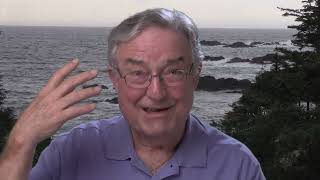
Rande Howell says traders fail when they bring a hard-working, control-oriented mindset into markets. Success requires emotional intelligence, not just rationalism: regulation, mindfulness, self-compassion, and a probability-based mind.
Chapters
Have you ever had one of those moments where you wished that you knew back then what you know now? Yeah, of course you have all the time, particularly if you're a trader. However, I want to pull you into one moment. It's very typical that a person enter trading and start a career in trading with a mindset that, you know, my whole thing is I know how to work hard, I know how to make things happen. I keep plugging it, I don't give up until I get the results. And they think that they have applied that to their ordinary world and it's proven successful. Then they get into the world of trading and all of a sudden it backfires on them. And after that, this rationalistic tradition where you've separated mind from emotion, you start realizing at some moment, usually about two years in that mind that which you want to be trading, an emotion that which you want to push away and, and not have enter the trading mind, are inseparable. And what you've been doing since the 15th century through Rene Descartes, I think, therefore I am, you have separated mind from biology, mind from emotion. And what happens is that traders come to this moment of where they realize they can't use that rationalism. They think, you know, I'm going to be rational about this. Yes, I know this is a numbers game, and I'm going to do all that stuff knowing that it's a numbers game, and I'm going to be able to kind of tampen down those emotions because I know that I've got an edge. Yeah, I think I have an edge. And I know this and everything's fine. And I'm just going to think my way through trading. And what they discover through trial and error, they get an edge. They work on that edge. They go to different teachers, they do all this stuff, and ultimately, somewhere in that line, this journey into trading, they discover something. It's not really about the methodology. It's not really about your trade strategy. It's not even really about the technology that you use to trade what it really is about. And believe me, I'm not discounting your strategy, your edge or the technology is essential. However, the key is what's driving.
Your trading mind. That's the key. And Renee Descartes was wrong.
Thinking does not mean that you are. Thinking is a byproduct from a neurobiological standpoint. It's an electrical output, electrical behavior that's rooted deep within emotion. So ultimately, what you discover really quick is what you have been thinking, what you have been doing, what you thought would model success is in fact creating disaster in trading. Because ultimately trading, you have to really begin to look at your psychology. The same psychology that produces success in the ordinary world is not going to produce success in the trading world. I've had plenty of alphas who've made fortunes before they got into trading, lose fortunes because they realized, they finally came to the realization that the way they had produced success in the ordinary business world simply did not work. It was detrimental to them. And so they had to start rethinking, well, what is the ground that actually start building.
This psychology of mine that can trade? Well, first of all, understand at the very core of this, the very first thing you really need to know is that you and all other human beings are not rational creatures. No, Descartes was wrong. We are not rational creatures. We are emotional creatures that rationalize. Yeah. What you discover about that thinking mind, the one that's going to do all this work and has the edge and can out think and really do all that stuff and it's going to produce all this money, is making alibis explanations for what that emotional brain has already decided. Now, I call that emotional brain, the caveman brain. He hadn't developed this really significant thinking capacity that we modern humans have, but he's got the emotional brain there. And what happens is decisions are instinctual. He's not thinking through things nearly as much as you and I can do. Yet at the same time.
We didn't know that we were acting instinctually. The truth is, is you have a bias built from your evolutionary psychology days that has you saying that you know something, if I work hard, I'll survive. Not only that, you have a bias that says I can control outcome. Now, to your caveman ancestors, you had to or you would die. It was a dangerous world back then. Not only that, though, even though it wasn't true that you could, you could control your environment, control the outcome, winning and losing, you had to believe that in order to survive. So you developed a bias. I can control outcome either by brute force or by seduction or whatever way your brain developed the capacity of thinking as a bias, that means you don't know anything about it. It's just creating your world without you even noticing it. It's an instinct. And so you're bringing a bias about your ability to control outcome. And then you go into trading and you know intellectually that you don't control. You don't control that outcome at all. And yet at the same time, you keep going, I'm going to follow my Strategy. I'm going to follow my rules. I'm going to follow my rules. And there you are, at some moment, something happens and you're no longer following your rules. That's the bias, friends. And until you can master that, and it's not going to ever go away, but you can come to the moment of where you can actually manage it for the duration of trading and stuff like that, that's what has to be done. That's the first thing. The bias of thinking that you're in control of outcome. No, it's a bias. It's not the truth. There's no evidence to support it, yet you continually look to say it's true. One of my favorite cartoons of all times is two theaters side by side. They're selling tickets to two different movies. One is a reassuring lie, and people are lined up for blocks to get in there. Over at the Inconvenient Truth one, the one you have to wake up to in trading, guess what? There's one person. So you can begin to see all these biases are just stacked against you and you don't even see them.
What's typical is I work for a couple of trading firms and when they do strategy meetings, man, they are populated like crazy. Everybody's looking for the easy fix, particularly that you would not have to look at yourself and change anything there. But then the psychology sessions that we have, maybe half that many people show up, okay, all of them. The, the trading group preaches trading psychology, how important it is. But even they preaching it get large chunks of people showing up for strategy sessions. Much lower populations in psychology sessions, yet they fully acknowledge that trading.
Success is really about the psychology that you develop.
And it's about 80% of whether or not you're going to win or not. And the big thing is you have to transition from this whole notion of I'm in control of outcome. I can figure out a way where, even though statistically it says that, yeah, I'm going to lose some stuff, but I just blow past that I can control outcome because it's a bias. And what you have to do is you have to recognize that's a very dangerous bias for an aspiring trader to hold on to. You have to start working with it and getting out of it. And the question is, how do you begin to do that? First thing, understand your caveman brain, that emotional brain, that mammalian brain that is part of the triune brain. It was there before there was a thinking brain. The thinking brain literally grew out of it. And ultimately, as it was growing from the emotional brain is that complicated communication networks were being wired into the thinking brain. However, for some reason, evolution did not wire back communication networks back into the emotional brain. What you got there was like two little 19th century telegraph lines going in to compete with this very sophisticated communications equipment of today's brain. So you've got so much against you. So ultimately what we need to do is say, well, how are you going to be able to work with that? How do you go about doing it? The thing is, if you grasp that you're not a rational being, you're an emotional being that rationalizes and that rationalizing will make up all sorts of excuses or all sorts of alibis and all that stuff to maintain what the emotional brain has locked into pattern, the current self. And until you recognize that current self is not going to cut the grade and you have to start reorganizing it, which your emotional brain is going to say, no, I like this pattern. It has short term survival. I don't want to evolve into what you have to do.
A probability based mind. There is no certainty of winning. There is probability and you have to build a mind that can do that. How do you do that? You know, everybody gets these things where, you know, they, they got the emotional regulation stuff. They say, yeah, you need to breathe and blah, blah, blah, Then say, oh, you need to be mindful, you need to be, you need to be able to notice what you're noticing. I teach those as remedial parts of my programming.
Remedial, why? Because.
You have to be able to calm an emotion down or it will wipe you out. Remember, all thinking is emotional state dependent. If you cannot manage the emotions that are giving rise to cognition, you're in real serious trouble. But here, what you're saying is, okay, the first thing is I need to be able to calm emotions down. The ones like aggression, fear, those, the greed, all that stuff, the fear of losing, you have to calm those down so they don't take over the thinking brain. Got to have that. But that does not solve the problem. Then you have to have, you have to have the ability to observe, to step back out of thought and to recognize a powerful truth. You and your thoughts, you and your beliefs are not the same. You are not having thoughts.
They'Re having you. You don't have beliefs. Beliefs are constructing your view of the world. When you take a look at your P and L statement, what you're looking at is a document that's telling you how effective your beliefs are about your ability to manage uncertainty. Uh huh. And most of the time you find out they're not. It's not pretty. That's why people don't want to look at that. They want to, they want to find some way around all this gooey icky psychology stuff and emotional stuff. But the truth is what you're going to have to do is you're going to have to say, you know something, the deal here, if Randy's right here, if all thinking is emotional state dependent, your job is to become emotionally intelligent enough to construct a mind out of your emotional nature. At the bottom of those emotions are meaning are the beliefs that drive your performances, my friend. And what happens is you're going to have to learn to build a cocktail. And the ones that I do is discipline. The ability to maintain water under pressure, courage, the ability to turn toward your fear instead of run from it. The ability to self soothe, to self calm, to be self compassionate. That's the one that does all the work of transformation. And then if you do those three emotional programs well, what happens is the ability to think clearly, to have clarity of thought arises and that can actually do the trading and number crunching that you want. That's how it's done though. But understand this, those two tools of emotional intelligence, emotional regulation and mindfulness are not going to, they're not going to solve the problem. They are tools that you use to create and build forward really empowering elements of your emotional nature that allow you to trade into disciplined, impartial and patient mind that can be taught. I encourage you to go to my website and start exploring and saying, oh, this mind can be taught. Yeah. Are you going to have to do some heavy emotional lifting? Yeah. If you want to make the freedom, personal freedom and the, the freedom of financially independence that this can give you, that trading can give you, you're going to have to do some emotional lifting and you're going to need to get used to it, build tools, start looking at those, read the article, see more videos, start liking, get my free book, then get Mindful Trading. That's my book about really where I lay out my process and recognize. I teach process. I'm teaching you how to become emotionally intelligent so that you can bring forward the emotions that give rise to the mind. All thinking is emotional state dependent that you engage the uncertainty and risk of trading with friends. That's the secret to success in trading that nobody is looking for. Okay. It's right there in front of your eyes. You just don't want to see it. But you're going to have to sit some work if you want to be able to build consistent profitability as a habit into your brain as it engages the markets. Sounds pretty good, doesn't it? I welcome you. Thank you very much. Come see me. Bye. Bye.
Sa.









