the harsh reality of trading
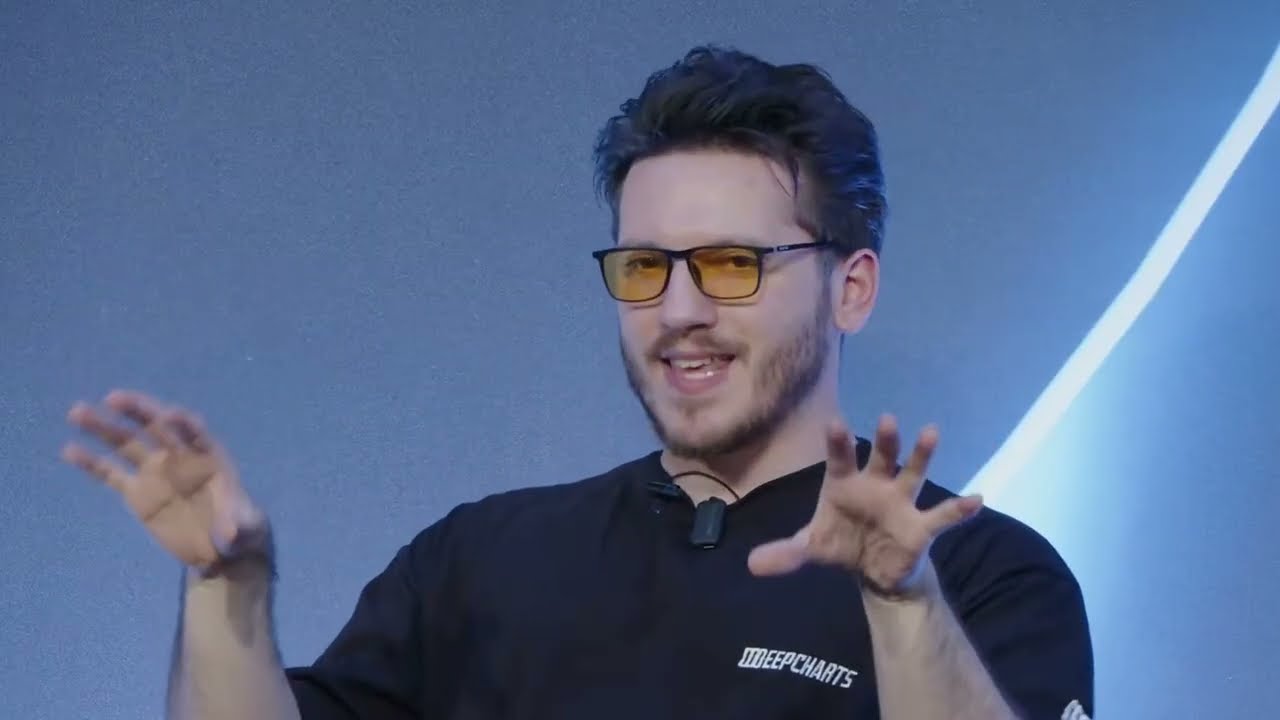
In a Q&A at the Prop Firm Expo, Andrea shares the hard‑earned lessons she gathered while training under multiple world‑champion traders. She emphasizes that top traders are still human and feel emotions, but they prevent those emotions from influencing decisions. Rather than treating trading as a quick path to wealth, champions view it as a tool to grow existing capital, focusing on risk‑adjusted returns that beat market benchmarks. Continuous learning, adapting to regime changes, and maintaining a diversified set of strategies and asset classes are portrayed as essential. Andrea discusses the “keep it simple” mantra, arguing that simplicity comes from experience and selective focus, not from naïve minimalism. She outlines the prop‑firm mindset: choose reputable firms, respect strict risk‑drawdown rules, and complement prop‑firm work with a personal account. Mechanical, data‑driven strategies, rigorous back‑testing, and a strong performance metric (Sharpe ratio > 1) are highlighted as hallmarks of success. Finally, she warns against the myth of a fixed “destination” in trading, urging realistic expectations, disciplined work ethic, and leveraging the advantages of small‑scale retail traders.
Chapters
Thanks for being here again. Nice to be here. We want to go straight into it. Obviously, we talked about strategy, we talked about order flow in particular, trying to be visual with the whiteboard, but now that we're sat here, I want to— you know, one of the intros I did for you was in regards to training under world champion traders.
Right.
Right, and you've done not only one, we're talking multiple champions here, and I wanted to ask you what are the key principles from those world champion traders that you've picked up been able to identify as key things that allowed you yourself as a trader to really excel, and what allowed them to perform as champions themselves?
That's a great question. Um, well, first of all, uh, just like all of us here, uh, deep inside they're all degenerate gamblers, okay? Um, but, um, but in a good way, as in this is something so counterintuitive. I thought that the best traders in the world would be so exempt from emotions. Yeah. And just be cool, you know, like, hey, I'm a fucking world champion trader, I'm just gonna click and not care, you know. I'm a guy— nah, none of that. They're emotional, they're human, they're very human. So if there's one thing other than the technical part that we've talked about that I have that really struck me and really opened my mind is the fact that they don't try and control their emotion. They don't try and, you know, force their psychology to not exist. You know, you can't just stop that from happening. There are some things that as a human you would respond to when you see your P&L going up and down, right? So they're very human. The difference is they don't feel these emotions so very deeply as, let's say, a new trader, but also they've learned how to not have them interfere with the decisional process. So it's not, I'm controlling my emotions and forcing it and trying to hold it on. It's like, I have it, I feel it, I let it out, I get angry at the chart, I say, fuck you, Nasdaq, okay? And I move on with the next trade. It's just as easy as that. I'm just not gonna take a decision that's gonna fuck up my trading account based on that bad feeling. I just don't act upon it, but I still feel it, so it's fine. Like, it's just a matter of how you— if you let that emotion, let's say, sprout into something extremely bad. But other than that, they're very human. What was the question again? Like, what was the main takeaway?
In terms of the principles, yes.
Yeah, I mean, well, that's the first one. The second one I would say is— —so I guess a lot of people here, they're trying to make a living out of trading, right? Most of the traders here might, you know, have that as a goal. Most of the big traders I've met from the professional space, rather than using trading to make money, they're trying to use trading as a way to grow money, right? Because as a trader, you have to remember that you're in the riskiest part of finance, right? Finance is already a, it's all about risk and reward, risk and opportunity. So I would say that the way they approach it is more of a, hey, I have a lot of money and I'm gonna make it grow at a faster pace than buying S&P 500, right? 'Cause, you know, as traders, what a good strategy is really is anything that has a better risk-adjusted return than investing in the stock market, right? That's what we're all trying to do.. We all try to beat the benchmark, we all try to perform on average historically more than 10% per year, and when the market calls, we are ready to answer, right? And so that's what we try to do regularly, and there is no pressure in these traders of, "I have to make a living out of trading this month, otherwise I won't pay my bills, otherwise my life won't change, and I have to become a millionaire because I'm fucking broke." There's none of that. Like all these guys, they have slowly built their wealth, not only through trading, most maybe they had a business, then they sold the business, they started trading. Or they had a job, they saved money, and then they started trading. But a lot of these, you know, a lot of new traders just start with the wrong assumption that trading is gonna be your gateway to massive wealth in a couple years. That's not gonna happen, guys. Like that's genuinely not gonna happen. You have to build it through time, it's a marathon, it's not a sprint. And the other main takeaway I had from these guys is that they are so good at trading that money comes to them. They've opened their little hedge fund or their little certificate, which is not as, let's say, as costly and as bureaucratically dense as a hedge fund. So like AMCs and these kind of legal structures that are very light. And then they have amazing performance. They work on the skill, and then they become the prop firm, quote unquote. Like they start raising capital, there are some investors, and blah blah blah, they regulate it, and they just focused so well on the skill that if you become a good trader yourself, you don't even need to have and put in the capital yourself. You can audit your track record, take it to a hedge fund, and they'll fund you. Or with prop firms as well. If you have a good trading performance, a prop firm that is a good prop firm, will maybe, you know, put you onto a live account, like a lot of these, you know, partners are doing. And so it's all about focusing on building the skill, building it for a couple years, study, study, study, research a lot of edge, and know what the hell you're doing. This is also the very— the last thing I would say is they know what the hell they're doing. They're not trying to read a bunch of charts and say, "Mm, okay, based on what a guy told me on YouTube, I'm just gonna buy because there's a breakout." Yeah, it's a little bit more than that. They know a little bit of macro. They know a little bit of fundamentals. They need a little bit of statistical analysis. They know the deep plumbing of the markets and order flow and options and all the stuff that we've been through. And they never stop learning. They never stop learning. The top traders in the world are eternal students. They don't assume that they've got it because every year the market changes. The regime shifts, the volatility, how a directional day stays directional throughout the day and how, let's say, wide are the swings to get to the target. You know, all these things changes, right? We've seen the last few months in the market, it was all about the next Trump tweet. No one was prepared for that. You know, these guys have been trading for 30 years, but they still managed to make a lot of money in this period. I personally didn't. I had a great beginning of the year and then March took away most of the profits from that, from that, from that first month. Because I have never scalped through order flow the ES during a Trump presidency, a Trump situation. So, you know, it's about being able to adapt yourself to how market evolves. And if you choose trading as your main source of income, as your main profession, just know it's not gonna be easy. It's not something that you just learn once and you have forever. It's nothing like that. You need to constantly study, constantly research, find new edges, find new ways to adapt to the market. And the last thing I would say is they don't just trade one strategy. Most of these traders have multiple strategies. And maybe part of them, they run it automatically with some trading systems. They might have a part of their money managed with, you know, active investing. So maybe they have a little bit holding of Bitcoin, little bit holding on S&P, little bit holding on bonds, you know, and they kind of turn around investment, passive stuff as well, which is great, you know. A lot of traders don't invest at all. Like, I mean, you're a trader, you're a finance bro, and you're not investing. It's a little bit, it's a little bit, you're leaving a lot of money on the table. And just relying on one single strategy for the rest of your life, it's risky because that strategy could stop working, you know. We've seen that happen with so many strategies. —so the most, one of the most important things is that diversify. They diversify, they have maybe a swing trading strategy, an investment part of their portfolio, some into day trading, some into swing, or they build teams also, right? This is also the craziest thing, you know, most traders are just lone wolves. Doesn't have to be that way, guys. Doesn't have to be that way. You can find some common-minded trader and build your own little trading floor and everyone is specialized in some different things and you diversify the entire trading team, you could think of something like that. So yeah, these are the main—
To your point, you know, observing and speaking with Fabio quite consistently, one thing I've noticed with him is he is constantly speaking to other traders, you know, whether they're on the team or not, like he'll reach out to traders, understand their edge, have conversations like— Totally. And that's someone who's already an incredible trader, but he's always, as you said, staying a student of the game and always developing and sharpening. One question I had off the back of that is, you know the term you hear in trading a lot, keep it simple. Yeah. What would your reaction be to such a statement?
I somewhat agree, but you know, how you make it simple is the real question. Like, 'cause if you think about beginner traders, they say trading should be easy. In the middle, you have all the traders that say trading should be this and this and this and this and that, and you need to put this together, and you'd like to complex a lot,, and then you go back to the professional and they also say trading should be easy, trading should be simple, right? But how do you get to simplify? Like, trading should be simple, but how simple? What do I simplify on is the real question. Because these great traders, they know a lot of stuff. They know about— there's so many information you could choose from, so many strategies, so many markets, you know? Forex is just one, but there's so many markets, so many strategies.— and they know how to keep it simple because they've tried a bunch of different stuff before. So the trying a lot of stuff is part of the process, because you cannot know right away if one strategy is gonna be the right strategy for you. Scalping is the thing for you, you know, you could, you know, be better off swing trading and you might not know it. You might not know that it's a better fit for your personality to, you know, not be a super active scalper, but because you have, I don't know, ADHD, it's better to do swing trading, I don't know. You know, it's like, it's so, it's so, like, it's a multivariate kind of world. It's very heterogeneous, and you know, it's very important that the trader realize this, yeah.
Seeing as we're at Prop Firm Expo, my question to you would be, I know obviously you traded prop firms in the past. Yes, I have. I'm not sure if still doing so now, but, Based on obviously your interaction within the community, I'm sure there's tons of traders that you speak to who are trading firms. Like, what would you say the correct mindset to trading prop firms is, especially when you come from such a professional environment as well? Yeah. There's a path where I think a lot of the, you know, the new traders, the retail audience if you will, they're going to go to prop firms. That's going to be the start of their journey at the very least. Totally. What would you say that long-term mindset for a prop trader should be?
Yeah, I mean, The most important thing is to go with a prop firm that is solid, that pays out, and that you feel that can, if you want to for the long term be in the prop firm space, then go for it, you know. But just know that you're gonna have to choose very well. You're always gonna be sticking to some rules. So I would say not just go full on with prop firms like for the super long term, but also have your own trading account. I think that's a very smart idea. And always diversify, right? Always diversifying is a wise choice for traders. Then on how to approach prop firms and how to actually be successful at prop firms, I have done some discrete money with prop firms. The guy that I've seen most successful with prop firms is like here in the audience somewhere. It's Gianluca, and he's been milking— I mean, he's been really doing a lot of good payouts from prop firms by using the same exact very mechanical strategy. That he knows has an edge, right? And regardless if it's with prop firm or with normal brokerage accounts, the only difference between these worlds is the approach to risk, right? 'Cause with a normal account, you can be more free and more elastic and more, let's say, adaptive to market conditions with your risk management. But with prop firms, you need to stick to some rules, some drawdowns, some maximum drawdown, like all these rules. And his model was so good that he was able to, you know, both win the World Trading Championships and the Robbins Cup and also be massively successful with prop firms. And a lot of new commerce traders that I see are, that are very good with prop firms, they're also very mechanical, are also very, also much into a lot of data analysis, right? 'Cause if you crunch the numbers, if you know how to crunch the numbers, you can fine-tune your strategy based on data that you're basing your data on something that have proven to work in the past. And this is something that a lot of traders don't do. They don't do a lot of backtesting, they just jump in the markets and hope for the best. And that's a good recipe for disaster. You know, 'cause it's, if, 'cause a lot of people then say, yeah, but you need to learn by doing. Yeah, and they say backtesting is bullshit. Yeah, it's not. Okay, I'm just saying you right now, it's not. Past data is not a guarantee for future results, but no past data, it's a guarantee of future failure. So you need to get your data on, you need to crunch your numbers, you need to know what the hell you're doing.
Well, that leads me to a good question in terms of, you know, what is the reality, regardless of being a successful prop firm trader or just a successful trader as a whole, what is the level of work, the level of detail, the level of input that a trader has to do As you mentioned, like, a lot of people are watching YouTube videos, watching content creators, finding their information online, which is no problem with that. But in terms of the reality of actually being a successful trader, because, you know, we know that successful trading can be marketed in a very incorrect way. Oh yeah. So what is the reality of actually starting to perform, finding your feet, actually even long term? Because I think there is a misconception where people assume there's a destination. I know I had that. Early in my career. I thought, you know, once I'm consistently profitable, I'm consistently profitable, and then that's it. Then from there it's easy and I've got it down and I hold the keys and, you know, what I can do, what I want from then. What's the reality?
Reality, I mean, you could become a guru.
You have that choice.
You have a choice, you know, uh, you can start making content. It's awesome. No, but for real, um, if you want to be massively successful trader, you need to understand what— first you need to define what success is and, and what's your goal, right? Because if your goal is Lambos and travels and, and girls and then getting laid and like, that's, that's not trading. Trading is a boring office finance job. You're staying in front of a chart and trying to do the best to be better than anyone else in the world. Okay, so what— how do you, how do you measure your success in trading? Do you measure it with how much money you make every single month from prop firms? That's a very bad metric. Most successful traders think in terms not of what they make this month, not the next trade, not the next 3 months, not what I make in a year, not what I make in, you know, this trading window. They measure it on their average risk-adjusted return. Does anyone know what risk-adjusted return means? It's how much, how much you get paid per unit of risk. And there's a specific metric called the Sharpe ratio. Write it down. If you guys haven't been into trading for more than 2 years, write down Sharpe ratio. Look what that is and aim at having a Sharpe ratio better than 1, which means on average, uh, for every dollar I risk I gain $1 more than just lending the money for free to the government and get free money back. So what we're trying to do really as trader, for trading to be worth your time, I mean, think like everyone now, let's do this experiment. Think about the trading performance you've had over the last year. Okay? Keep that number in your mind. 90% of people will probably have lost money, right? 10% of people might be somewhere around breakeven or maybe a little bit profitable. A very small percentage is likely to be profitable. On the other hand, if you invested the same amount of money you invested trading in the S&P 500 one, exactly one year ago, or in the NASDAQ one year ago, you would have almost doubled your money having spent zero time in front of the charts having spent $0 on commission and 100% of the time being successful and doubled your money. So in order for making, for trading to even make sense to you guys, it should be at least historically possible that you outperform buying and holding. Because if you can perform better by buying and holding, why would you put all of this effort, this stress and this huge effort that you're doing to try and make this trading thing work If you're not even sure you're gonna get there just because a guy told you on YouTube, guys, that's, that's, that's, that's a very risky bet. It's a very risky bet. You're not here to be a degenerate gambler trying to make maybe some money. That's not what trading is, okay? It's finance. You need to know what you're doing. You need to be prepared, and you need to know that the approach you're having will beat systematically on the long term S&P. Otherwise, you're better off investing. Okay, because trading is very risky and there are strategies. As a retail, you have one advantage: you're small. You don't have huge capitals to pour in the market. Okay, that's why 8% a year is the benchmark, because huge institutional investors pay a lot of money to trade because of transaction costs, because they're so big. Because you're small though, you can take advantage of edges that institutional traders cannot take advantage of because of their sheer size. So you're small enough to milk a little bit of money out of this huge breast of financial markets, but in order to be able to do that, you need to be prepared, you need to be tough, you need to be resilient, and if you manage to do that with strategies like the Opening Range Breakout or with post-earnings announcement drift or with systematic premium harvesting, all this stuff that is a structural edge, you can have a profit factor, you can have a performance better than buy and hold. You can. There's a small window of chance for all of us retail traders to succeed, but it's not gonna be probably in the way you're doing it now. So you need to study more, you need to get prepared, you need to look for information, you look— you need to look at every single episode in Chart Fanatics and Chart Academy, because finally we have a place where not just random gurus go, but people that have actual knowledge. And so thanks to people like Riz, you can have access to the best education in the world. So you should go through that. Specifically, that's who you're learning from. Now let's fucking go. I paid him to say that.
Yeah, thank you, Andrea. You know, appreciate it. It's a pleasure. Thank you for being with us today, and









