The ONLY Scalping-Video you will EVER need
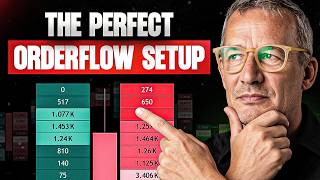
Thomas Foreld, a world-champion trader, teaches order-flow scalping using the S&P futures order book. He shows how to spot institutional orders, read volume nodes as equilibrium or rejection zones, and identify two scalping setups: slow bounces between high and low volume, or fast moves into low-volume areas where institutions push the trend.
Chapters
The real scalping strategy from the Trading World Cup champions. What is the real reason to use order flow scalping or other tools behind the scalping? A lot of people teach people scalping strategies like technical breakouts or anything else, but this is not the real way. If you will become a real order book scalper, a real scalper with institutional background, you have to use this session. You have to understand very deep what I explain you today. Who I am? I'm Thomas Foreld. I'm the world champion maker. I build people like Patrick Nill, the 2 times World Cup Championships of trading leader, or Christoph Radeker. All these guys are people I teach my way of trading or help them in other cases. And you can listen today what is the real competition to learn order book scalping for yourself.
Yes, as announced in the last video, I promised you I'd show you what's going on here. And look, let's jump right over. Right now in the S&P order book, which is here, we can clearly see that these prepared big orders were played by major market participants. And look, here we have another one. The market is currently striving upwards. I've explained in great detail that big orders simply mean there is liquidity What else do I need in addition to that? I need market speed. That means I need to see interaction that plays in my direction. And when I have both and see both, it gives me great information on whether I'm right about this big order being filled, or if front-running is being played and the whole thing reverses. This is something you absolutely have to learn. And reading order books means it's essential to first learn which order sizes associated with the product are exciting for me. Second, I must be able to scale the exact key figures 100% so that I know what to expect at which points. Third, low volume nodes or high volume nodes, meaning where there was a lot of liquidity in the past or little liquidity in the past— what information does that give me? It's really top tier if you can do that and want to play this game in the order flow for yourself. And I'll show you that now and explain it to you in great detail. So what do I need to consider now? The first thing I do when I look at the books is take a quick look at how liquidity has been played so far today. Where was there high liquidity? I get that information from this intraday volume profile which was created today. I'll just draw it. Little, little— oh, it's getting more and more here. There's a lot of liquidity, and then it goes back down. So what I'm doing now is I can very clearly and easily locate areas of low volume. Low volume As you can see, here's the last low-volume spot, and then after that, there is high volume. I am just identifying these low-volume points and then noticing when the volume increases significantly. And there was also a higher volume in between here. So what information do I have now as a result? Here and here, I know the market was in balance. Here, market participants traded larger positions over a longer period of time. That's an assumption because I didn't actually see it. But it's an assumption of equilibrium. Here the market had little desire to stay for a long time, for a longer duration. What does that mean? Rejection. So, and now comes the game, and I absolutely must understand this game. If the market now does the following, that means here in the book, remember, here is the big order. Yeah, that's where the market could go. If the market now just ticks along comfortably here in the book, yeah, with numbers like 5, 7, 9, 3, 8, and so on, what happens then, do you think? Nothing. But if it ticks down here now and reaches a price range, and this price range is such a low volume level where I actually assume it will go through again, and now it goes below that and does nothing and stops and starts going up again, how does that help me? Quite simply, it will run back to the high volume. That is lethargic back and forth scalping, which any of us can easily do. But of course, it's not always like that. So now comes the variant with a bit more speed. Now the market goes down here, reaches the low volume area, and has a constantly high speed. What does that mean? Large market participants are ready to interact. And when they interact, there's a high probability that they simply want to trade the current price levels downwards because they're keeping the downtrend stable.
Why?
A bit more selling pressure than buying pressure. It's not a massive move, but rather interaction in one price direction. What do I need to see here now? Here I need to see the market slowing down. Is it slowing down? Again, the possibility that it goes up to the big order, to the liquidity. But if the market goes to such a level and continues to interact, well, what does it do then? Quite simply, it will continue to run, because here where the market zipped through last time, it had no interest. If it gets there and is lethargic again and had no interest, then it goes back to the interest. That's the logic. And please, I'm telling you, this is something that is Essentially necessary to understand. Most people involved in scalping don't even know that it's about market speed at the corresponding price ranges. And that's the edge you have if you learn this correctly. That's really cool. But what do you need for that? First, you need to know which key figures are actually large in the ES and which are small. That means which orders traded at market are large and which are small. You can see that here. The second thing you need is, can you really define what is fast and what is slow? What is fast execution and what isn't? That means you absolutely must learn when the speed is high and when it's not. Not just, oh, my gut tells me something is fast right now. When it tells you that, it also sees that both correlate with each other, namely that high liquidity is also present, or if it's low Have you ever asked yourselves that question? That's the edge that comes out of it. You absolutely must put it into context. And now comes the most crucial part: Where is this happening, and what should I expect there? Based on the supply and demand logic I explained in the previous video, is a reversal really to be expected there? Or is it more likely that the market will break through? Am I in price ranges of high past liquidity, meaning acceptance, or am I in price ranges of low volume nodes? Even there, watch out. As I just showed you, the market might stall and pull back. You absolutely have to learn that, and then you have a real edge. And then you have the opportunity, as I showed in the previous video, to connect all these things and then move into simplicity and across the different markets where you know the key figures where you've learned the market speed, where you've seen that big orders are big orders when they look like this in the ES, for example, and not blocks of 80 or blocks of 60. That means learning to trade sustainably is hard work, and that means you have to prepare and always use the models correctly for yourself. Look here, one big order, second big order, third big order, they've all been eaten up. That's easy money for breakfast when you see something like that pre-market. And you can see, is the game being played for me? What are the guys doing right now? What kind of speed is involved? You simply have an edge when you act like this, and you can practice and learn that. This is a proper way to learn it. And if you do the same thing in gold, for example, the figures are completely different. If you want to do that in the DAX future, which I absolutely don't recommend for order book scalping due to the extremely thin, uh, liquidity. Still, take a look at the Euro Stoxx. It gives you great information. And that's how you can learn to define and time breakouts for yourself. You can learn to time counter trades. You can learn to enter markets precisely when you have ideas from the bigger picture. For me, this is the best way to conduct your business in short-term trading with very high hit rates. And if you liked this and you say, "Hey, that was some really great added value," then leave me a like. Because I'll tell you one thing, that was some huge added value today. And for those who don't understand that, and for those who say this is just old news, no, then watch the video again and again. I've given you an edge today. I wish you a wonderful day. I enjoy explaining all of this to you, and I'll say see you soon.









