The Secret to Developing a Patient, Disciplined Mindset
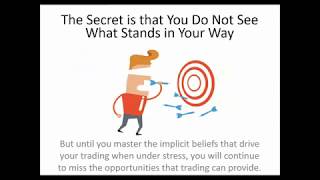
Randy Howell explains why traders fail: emotional learning in the limbic system overrides rational plans under stress. He describes how the amygdala hijacks decision-making and recommends breath work, mindfulness, and memory reconstruction to build a disciplined mindset that actually holds up when money is on the line.
Questions this video answers
June 7, 2019
About 5% are profitable (including marginal); about 2–2.5% are consistently profitable and make a living trading.
Inadequacy; not mattering (need to win to matter); unworthiness (not feeling worthy of making good money); powerlessness.
Group course: just under $1,200 (payable in five payments over 10 weeks). Individual course: $3,500 (payable as three payments of $1,200 over two months).
Chapters
Welcome everyone. My name is Randy Howell with Traders State of Mind. And before we get any further, I just want to make sure that you can hear me. If somebody will just simply type in yes and let me know that we've got a connection here and everything's copacetic. Thank you very much.
Thank you.
And the other thing is here in welcoming you, what I also want to say is the only ground rule I basically have is that I hold questions toward the end and I go through the presentation and then I answer questions. That's just the way I kind of do it. And if you have questions along the way, I encourage you to go ahead and type them in so that the question is there. And today, today we're going to be doing something actually quite different. Usually I really break down emotional intelligence and neurobiology and I put it on just an emotion level. Today we're going to actually step back from that. We're going to step back and ask the question, what's behind the emotion? What's behind the anger, what's behind the fear, what's behind the anxiety, what's behind the impulse? That's what we're going to be doing today. And where we start is right here. Have you noticed that there is a gap between what you know is possible with your trading and the results you get in your trading? And you go, you know something, I've spent all this money, I've done all this time really training myself to be able to have the know how of trading, but yet somehow, you know, I can mint, I can dearly mint money when I'm trading in sin, but yet, you know, when I go live, when it's real, when the money's real, something happens. And what we want to do is realize what is that gap that has to be bridged between simulation and the reality of risk and uncertainty that just so baffles you. And we're going to say, you know something, it should be straightforward, but there's something I'm not seeing. There is a secret, friends, there's a secret and nobody's holding it from you.
You know, the trading trainers, the platform guys, all that, some of which are friends of mine, okay, they're not holding it back. They may not, they may be selling you stuff you don't need, but the truth is the secret is really your limbic brain. And you wouldn't know what stands in your way because the limbic brain produces a learning.
And it just so happens that it's on an emotional level under stress.
And it does not correlate to thinking. Your thinking mind would have no idea that it's there. And this is the. We're going to be calling these implicit beliefs implicit biases and limbic learnings. We're going to slur those together. And. And we're going to be taking a look at that today. And we're going to say, well, what is this and how does it work? Because it's rather profound. Because my promise to you is this. If you have ever been in a situation where you know how to trade and then you get into the thick of it, into the heat of it, and you keep doing the same stupid thing over and over again, you know, you're face to face with Olympic learning that you don't see. I had this happen to me today. I'm working with a client who she. She's trading in such a system that she watches the setup form. Then she gets the confirmation that there's an enemy. There's. There's. That. That it's going to be now. It's going to be really soon. The distance between that setup and her need to take action can be seconds, rarely more than 15, 20 seconds. Somewhere in that time, her mind falters. She starts doing something like, should I get in? Should I not? Should I get in? What should I do? I need more confirmation up into that moment of that setup forming. And with just a tiny distance between the setup forming and her need to enter, something just goes off the loop. And she says, you know something? I have no idea what's going on. I don't understand why I can't do this. I know how to do this. And again, she can't see it, but she has smacked right dab in the middle of an implicit belief. And this is the thing that happens with traders that is really unbelievable. They have no idea what they're getting into. This graph you're looking at has been around since the 1890s, measuring stress and performance. And what you'll do is you'll look at this thing saying, you know something? Yeah, I see that thing in the middle. It's optimum performance. And there is a level of stress there, but at the same time, the performance keeps going up. And then somewhere along the line, you add a little bit more, just a little bit more stress, a little bit more severity, a little bit more risk, a little bit more uncertainty. And all of a sudden you start seeing the performance, the optimum performance, beginning to degrade till it falls apart. This is what's happening in your trading right here. As you engage the Challenges of living. It's called stress. And the key is in trading what's happened is that you do not control outcome. And what you're doing is you're forcing the brain to be exposed to a lack of control when it's built to control and what happens very easily, particularly when there's risk involved and short times like the trader I was talking about just moments ago. What you do is you produce a cocktail. You produce a perfect storm for an emotional hijacking. And that's what we're looking at. Okay, how many times have you done this? You remember the Charlie Brown thing where how many times have Lucy done to this, this guy, he keeps on doing the same stupid thing. And what I ask of you, what I ask of you, all of you.
There's two primary beliefs that run that have us believing that we're going to do well in trading that don't work out from the outputs perspective. I'm going to win. I'm going to make things happen. I've got a winning attitude, man. I can do this. And at the same time, you bring in a winning attitude into trading and you're going to over trade, you're going to revenge trade, you're going to trade compulsively. You're going to go, what just happened, man? I was successful in other business. What's happening now? Why do I keep falling for the same thing over and over again? It's that winning attitude. It's the, it's the limbic learning you have about winning. It's not that you don't want to win, it's just that you can't control the outcome and it puts you in a bind that the brain cannot tolerate. On the other hand, you can be a perfectionist that says, you know something, I'm not going to lose because I'm going to do everything right. Well, you bring in that attitude. And if you've been an accountant, I want my airline pilot in particular with that really perfectionistic type thing. I really want him that way. At the same time, you bring that same mind into trading and what you discover is that they're doing everything, making sure they're lining up their ducks so they won't lose, yet they keep losing.
Augh. This is what we're talking about here. So what I want you to look at and realize that. Do you have implicit beliefs that are operating outside of the conscious threshold of your mind? You take a look at your. Don't ask yourself that. Look at your trading account and tell me, can you trade when the Money counts or only when the money doesn't count. The implicit belief about your ability to manage uncertainty is being revealed. When the money counts. That's what we want to take a look at.
And this is where if you've been around me for very long, you realize that I have a saying, the brain you bought to trading is not going to produce success interest trading, you're going to have to build that. The key is that your brain is built for short term survival.
Milliseconds it operates that fast trading requires a long term perspective. That's not the brain you bring to trading. It can be developed. But the thing is as you bring particularly under stress, where there is uncertainty and risk and short duration, day trading is what you do is you get yourself in a situation where the survival instincts of the emotional brain are taking over. And guess what runs that emotional brain? That's those limbic learnings. Whoa, now we begin to see there's trouble. And what I want to do. This is also another thing, is that everybody in their good left brain symposium sits there and says, you know something, I know about the two legged stool trading, I know about trade, the trading system platform, I know about methodology, man, I've got the rules down, I've got all that. But you know, in trader psychology, nah, that's not a problem, I've got it. I've got a winning attitude. You know, I know how to, I know how to learn from my mistakes. I've got it. I know, I keep telling myself this is about probability. No one trades means anything in one. And yet at the same time what you discover is this. You neglect developing the trading psychology. Specifically what you neglect is developing the emotional brain for the task of managing uncertainty. It's been developed by evolution and natural selection.
To work with survival in the moment. You're asking this brain something completely different, something that's not been designed to do. That's the trouble with the trading psychology that you bring and you just think my vine is fine, you know, and I want you know something and it's not focused on winning, you know, I've got that man, I've got it. I've got to be making money, I've got to be making money. How many times have you said that? And tell me something, when you focus on making money, which by the way, you do not control what happens. You get that urgency, you get that stuff, you get and you go, I got to make money, I got to make money. And that's not the kind of mind that trading needs to be able to Manage the uncertainty and risk of trading. So we're sitting here and going, wow, okay, that trading psychology. Maybe I ought to look at that. And literally, most people, this happened the other day. Guy finally calls me. He's dropped, I don't know, 15, $20,000 in the last several weeks working with a trader trainer I work with. And, you know, what happens is he got really upset. He was really kind of like getting all unglued. And what happened is Jeff sent me and we started talking. And once he figured out what I did, and he said, you know something? I had no idea there were people like you out there.
What's interesting is very few people make it in trading.
You know, the story is 5% are actually profitable, but that includes the people that are marginally profitable. There's only about two, two and a half percent of people who are consistently profitable and make a living out of trading. And you're beginning to say out of that, you're going, you know something? If that's true, boy, there's a lot of psychology that really needs to be retuned. And you're right. What we need to do is to actually find the resistance that we have for change, and change that resistance. And here's. Here's one I want. I really, I want to throw at you, okay? We often believe, you know, I'm really certain, you know, I've got that, I've got that. And we think that certainty makes it true. It's like a fact. I want you to. Actually, I'm going to read this to you.
The feeling of certainty.
Can be triggered without the need for facts or reasoning.
You can use a probe and produce an electrical current to a specific area of the brain, and it produces the need that really. The sense of certainty. So what we're doing is we're realizing that you can feel certain, you can feel sure of yourself.
But the truth is, that is simply a feeling. It's the feeling of certainty. And that can get you into a lot of trouble. Okay.
You'Re believing a biological feeling of an emotion is actually.
True. Okay? So we've gotten that. We're going, whoa, this is pretty interesting. And then what your brain has really done.
It doesn't see reality, it doesn't see certainty. What it does is it creates a virtual representation of the reality out there that feels certain to you. Okay? Your trading account tells you a very different story.
Essentially, that virtual representation is built on these limbic beliefs, this limbic learning on the assumptions and the biases that wire the brain and create that Virtual representation and what you're doing, what your trading account is doing, it's telling you whether or not that virtual representation is actually effective or not.
It's not telling you the story that you're telling yourself that, yeah, I'm a winner, I'm a perfectionist, I've got it down, I've got a system that works. All I have to do is follow this and blah, blah, blah. No, what it's actually telling you.
Is how good the virtual representation your brain has created, how good it is at extracting capital out of the markets. Unfortunately, you begin to believe that that virtual representation you have about your projecting on the markets as the truth. And what I'm telling you is that truth can be stimulated by a probe going to a specific area of the brain. That's what I want you to hear. Friends, this is important. So we come stock with this.
And.
All of a sudden we realize, oh, my God, this is about evolution. This is about our ancestors growing up in conditions where we needed to be able to act enormously quickly in a very dangerous world. And that would short circuit and not even use thinking. It did wonders. From our very humble beginnings of coming down out of trees on the African savanna to modern man, you know, what we did is we, we built this ability to think from a logical perspective. However, you bring to trading the primitive caveman brain every time you trade.
It is there. It is absolutely there. It will not stop following you. Okay? That's the point. It will under stress, it will always deviate, going back to default programming. And that's why you have the problems like the client I was talking about that was having a problem pulling the trigger there. Whether or not it's revenge trading, where you're punishing the aggressor, the ones causing you pain, or you see an opportunity, you take advantage of it, you jump into it because you're going to make things happen. Yeah, that's all that, that's all. Ancient brain Prince. That's limbic learning about what the limbic system has decided it knows and does about uncertainty. That's what it is. And it's telling the thinking brain what to do. The thinking brain is just making up alibis and explanation for what the limbic system has already decided. Whoo. Isn't that. That's kind of frightening, actually. So here we are.
The key about to understand about limbic learning and implicit beliefs and biases is this. I'm going to illustrate this. Recently there was an experiment done where they took Trump detractors and Trump loyalists really really like him. And what they did is they told him the same story.
With the same fact, the same everything. Each side, whether or not you were a loyalist or a detractor, used that to deepen their beliefs about what they already believed.
When they did, when if there were facts that were disputed, the loyalists and the detractors simply became more entranced. The beliefs and their opinions that hat that's, that's the implicit belief, that's. So here we go. You can get away with ignoring the facts and a lot of the realities we have. Who's going to really, who's going to know the difference? There's only one fact that really matters in trading. Ultimately, it's your trading account. It's telling you whether or not what you're doing is effective or not in extracting capital. Going to give you the evidence. The deal is this, is that it's difficult.
To dispute the evidence in trading. It's costing you money, you know, whether or not you're far against Trump. It's just, it's just an argument people blow off steam with. Big difference. It's not costing money in the short term, okay, get that, that's the point. In the short term, in the long term, who knows? But the short term brain sees it a different way. So here we are, we're realizing that, oh my God, we're like an ostrich burying its head, is that we're not, you know, we're not necessarily looking at the facts that the trading account is telling us. That's driving our ability to trade and work with uncertainty. And it's like this.
If you take a look at this simulation of an iceberg, what you look at is you start seeing, okay, here are my conscious beliefs, we would call these cortical beliefs, okay? And the neurobiology of it all. And those are the ones you know you have. Those are the ones you talk about. Those are the ones when you're trading, swapping stories, you talk about talking to talk. The ones are the subconscious implicit beliefs down below. Notice that there's a lot more of them and they are much greater part of the iceberg than the top part. Those are the ones you don't see.
And they're the ones organized around the brain's need to be in control and to be right for short term survival.
This is where we get really messed up. Because ultimately what you're doing here, you are this fancy 21st century man and he's trading or woman, and you're trading, you're having a good time and you're thinking it's all left brain. But then you got this guy in the background, this caveman guy, that's your limbic system and he's got a set of beliefs that under stress that would be defined as uncertainty with risk involved and the speed that's going to happen of that trade, what happens is that at some moment that is flipped caveman flips and suddenly that modern man is no longer in charge of directing the traffic. That's the way it works. And then we have this illusion of certainty, this illusion of control. And what we do is we really, you know, we get all these indicators, we get all this stuff and we're getting, trying to get closer and closer and closer to where we can predict with near certainty what's going to happen in a trade. And what most people discover is that all that extra goop just simply takes a lot of time and effort to use and you're not present in the trade. And as people get used to recognizing that, oh, I don't control outcome, I control performance, what they do is they simplify their system because they realize that all the other junk was not really adding that much to their ability to make effective decisions. And uncertainty, okay, we're looking at these, we're looking at these biases working below conscious threshold because they're the ones that just simply hijack, hijack the mind and blow everything away. And this is a.
Graphic where I'm trying to express this is that when you feel uncertainty, when you as a human being experience uncertainty, automatically the brain experiences vulnerability.
Now at this particular point, with a short term survival instincts, vulnerability is directly hot wired and linked to the fight, flight or fear. Okay, that's the way it goes. You will experience that every time that you don't pull that trigger. Every time that you just absolutely get hijacked and you wonder what in the world happened? This is what's happening. And this is where it's going to take courage to actually want to see what you have not been seeing. You actually have to say, you know something, I need to be able to look at it. I might not like it. It might be pretty distasteful, you know, really, you know, I might feel a little bit of embarrassment here, but I have to have the courage to turn toward that vulnerability, turn toward.
That sense of like, oh my God, fear so that we can learn to master that fear. Because what's really happening, this is a graphic that is very simple and it shows it. On the left side you will see this external input and that input is going into the thalamus, the sensory thalamus. If you viewed the thalamus as a traffic cop directing a whole bunch of traffic, a big, huge intersection, and he's just going and going, what happens? That traffic cop decides what's going to happen to that stream of cars. Also, the traffic cop with all this information coming to it is going to decide based on instinct, based on prior experience about how dangerous the input is. I mean, it's a saber tooth tiger. You got a problem. But if it's a setup that's getting closer and closer where you're going to have to take action, what you're doing is you're triggering saber toothed tiger to the primitive brain and it's going to. And that thalamus is going to say, whoa, this is too, this is too hot. And I'm going to send it to the quick and dirty low road, to the amygdala that triggers fight flight response. That takes nanoseconds, friends, faster than the blink of an eye. If, however, you have trained that thalamus, that traffic copy, to slow everything down and to say, you know something, what I'm going to do, I'm going to cool down thing and I'm going to send this information.
On the slow road that goes to my neocortex, what this is calling sensory cortex. And it takes a lot of time. It takes microseconds. It's the difference between nanoseconds.003 seconds or a microsecond 25 seconds. But when you get the cortex involved, that's when you get the left brain involved. And then you have a completely different decision tree. This is what's happening every time you get hijacked every time. And what's at the below there with that thalamus, it has biases.
Built into it that you don't see. They're held in secret from you. And the only thing that's keeping you from them is you, your desire not to see what the performance belief is that the limbic system has actually done. That's what's happening, friends. And this takes training. You know, it's not something that you're going to say, okay, Randy, I got it. I've got the specialized knowledge now. I've got this graph and I see this graph. I'm going to integrate it. And I'm copacetic, man. I'm going to go and everything's going to be just copacetic tomorrow morning. No, that's just not. That's the height of arrogance in working with the emotional Brain. So what we want to say is how do you work with a brain that's going to have to go through some fundamental change? Now understand this fundamental change is its nature. From a short term survival position where it wants control, it wants to be right, to a probability mindset where it's comfortable with uncertainty. What we're going to be doing is we're looking at a process that I use to teach this and it's something that's been going, I've been doing it for over 10 years now and it's been really successful at this. At the same time, understand.
A lot of people just simply do not want to give up the feeling, the need of control and the need of certainty. And I've already demonstrated that there is no control. And certainty is a feeling that can be stimulated by an electrode in your brain. So what we're going to do is we're going to look at this process and the first place we're going to start is beginning to understand what in the world the brain is doing. Take a look at this. Do you possibly think that Hunter has never felt so far away from his gun as he does right now? Probably so.
The thing is, is that in this situation, my promise to you, he's not thinking straight. He's thinking from fight flight. That's the short term stuff, the need for control. And suddenly that gun gives him so much control it can gun down a 600 pound lion. Now not. So what I want you to recognize is this.
Your brain and the emerging mind coming from it is just simply not what you thought it was. And getting this recognizing that, oh my God. I'm going to have to learn how to manage an ancient survival instinct brain. Yes, you are. How do I slow down? This bias, this prime directive for short term survival because those instinctual emotions responding to threat, like that guy with the lion, yeah, it's there, it triggers. The very first thing is emotional regulation is about the way you breathe. Every emotion has a particular style of breathing associated that emotion. It also has a certain style of muscle tension or relaxation associated with that along with your heart rate. If you were to disrupt an emotion, you disrupt it from these points.
By your breath. That's what's being taught in yoga. You're getting into an asana, it hurts, you don't want to do it and you breathe with it. What happens is in the breathing you begin to allow the body to, to adapt to that position and also adapt to a new way of thinking. So you're getting there and say okay, that's the whole point, if I can regulate the emotion, it will not take me into fight flight. Bingo. But more than that, in what direction do you want to do it? This is Herbert Benson, the very famous Harvard cardiologist, research cardiologist that studied yogas. And what happened is, at first these yogas were saying they could control things like respiration, but rate heart rate, blood pressure, a lot of things that western science at that time, in the 80s and early 90s said, no, you can't. Herbert, being the good scientist that he was, is he brought him into his lab, he hooked them up, and he found out, oh my God, these guys can really control all this stuff. They can control stress. And what he did is he discovered that it was breathing, intention, relaxation, the muscle tension, the relaxation there. And. And he created something called the relaxation response, where he would train people to experience a stressful situation, but trigger to the diaphragmatic breathing into muscle relaxation. This is the disruption of the emotion. And this is what I teach. This is the first element of what I teach. It's not enough to cure the problem, but the thing is, if you cannot manage the emotion, you never get to the door of the mind where all these implicit beliefs are. That's where we're going next. Let's say you've done that. Let's say that you've learned.
To regulate the biology of that emotion so that it doesn't sweep you away. Well, then what we need to be doing is looking at the supplementing beliefs that are generating your performances. This is your implicit beliefs in your mind and somewhere in your brain, this is where they're housed. At the same time, you're going, well, how am I going to do that? Well, what we're going to do, we're going to develop mindfulness. This is what I teach, where you're beginning to recognize that mindfulness is really the key to opening up the mind and reorganizing the biases, the assumptions and implicit beliefs that have you doing what you do. Now.
In trading what we want in mindfulness, you discover that there is no single self.
The you is a plural. And what you're really seeing, what you're calling yourself literally is just one particular organization of your potential.
You're calling it you because everything just kind of consolidated and you never question it. In trading.
Most people discover they really have to question, truly question.
The structure of beliefs that organize them into the being that trades. And then what you discover very quickly is this, you discover that you and your thoughts are not the same, even though they Say, well, this sounds like my thoughts. No, you're not even having thoughts. They're having you. And this, friends, is the problem. Have you ever been self critical of self? Have you ever fallen self doubt? Have you ever fallen into arrogance and done stupid things? Of course you have. Those are not just thoughts randomly running through your head. This is a consistent organization of a mind that you have not really examined very well. And this is where the next thing in mindfulness you begin to understand first that the brain is really a community of rival programs. If you've ever seen the movie Inside out by Pixar, Disney, where you see these emotional programs running around in the little girl's brain and they're always in conflict, they're always seeking conspiracies and organizations that can take over the mind. And you see what happens with a little girl. But.
In the same way, when the brain produces mind, that mind becomes a committee where those programs are given voice as your thoughts. Whoa. Now, there is a powerful, powerful piece of understanding that if you grasp, gives you an enormous amount of capacity to reorganize the mind that you bring to trading. For instance, this is literally something where there is a mind and that you have been asleep, the observer that you are, this mindfulness has been asleep at the wheel. And the rivalries in that mind, in that committee of the mind are just going crazy. You need to take control of that mind. You need to reestablish authority, discipline, so that instead of the ones trying to produce destruction, the ones that are constructing a new reality, the ones that are given the read. So we get into this, we go, ooh.
We take our mindfulness. And this is where it starts getting interesting. In my work is we want to find the historical internal dialogue. And what you discover is that there is an inner critic and an adapted voice that had been running amok in your mind under stress. You've heard it. You've heard it. What are you stupid? Get in, get in, get in. What? Get out, get out, get out, get in, get in, get in. Yeah, that one, that critical, that judgmental or that tempting voice in you is called the inner critic. It's highly destructive. You don't have a choice about whether or not it's going to be there, but you do have a choice about the way you engage it. And most people try to ignore it and just push it to the back, which gives it enormous, enormous strength. Then with my friend Homer here, we also have this adapted voice. It's adapting to its beliefs about its ability to manage uncertainty. Some of those Are fear based Trading not to lose, not being able to get into trades. Fomo, you know, fear of missing out on profits or aggression. Revenge trading, I'm gonna make things happen. Impulse trading over trading, giving back what you learned. Yeah. These are the adapted voices. This is what is known in my work as orphan. Okay. And so when you experience the self doubt, the overconfidence, the aggression, the fear, this is what's behind that emotion. This is what's behind the fear, the anger, the aggression, or behind the criticism and judgment and temptation. Now you're beginning to find and get close to the implicit belief that's driving the show. And what you discover is this. Your caveman brain, its beliefs sitting on this on Olympic level, they're killing you. Survival instincts will continue to kill you in trading because they are built for short term survival. You know, when you freeze on a trade, you can't enter to the Olympic system, that's a victory. It stopped you from getting in and potentially taking a loss. That's short term survival to it. At the same time, to the higher order brain, you're looking at it and going, you know something, I need to be in this game in order to be able to execute my edge. And over time I know that my edge is going to extract capital out of the markets. Well, that's just an explanation that you tell that to the.
To your limbic system, your emotional brain, and it's just going to laugh at you. So we have that, we know that your very beliefs have to be re examined.
And really what you discover is this.
This image is about uncertainty. It's about, you know, the dangers of uncertainty. That's lightning and stuff like that. Something so far beyond your control. And what you're also discovering is this, this is really about the old brain versus the new brain. You know, you have a modern human being here who's taking an umbrella out here and what he recognizes is that that's not a God up there throwing down lightning bolts. That old belief system has been challenged and a new belief system starts arising, going, you know something, this is really about polar charges somewhere in a cloud and finding a ground on the earth, a completely different thing. And you're moving from experiencing uncertainty as a threat to experiencing uncertainty as probability experience. And I want you to hear this through discipline, patience and curiosity. Okay? That's, that's the emotional brain that you want to develop versus the emotional brain that you came stock with into trading. This is where you begin to realize, I can't change that. There's going to be Vulnerability, okay, For the brain. I can change the emotional response to that vulnerability though, from the old fight flight response to the new one rooted in discipline, patience and curiosity. That's called approach motivation. And now you're cooking. So what we want is to become the designer of the brain and the mind that you bring to the game of trading. You do not want to stay stuck with what evolution gave you. And you learn how to bring forward emotional states from real experience that give rise to the trading mind, to what I call traitor state of mind. And it just so happens we have a very specialized process that we use to do that. We don't use affirmations by themselves, we don't use visualizations by themselves. What we realize is under stress, those avenues are going to simply get blown away by the emotional brain. What we're looking for is to develop the memories that you had when you were stressed and somehow are able to work through something. We want to reconstruct the memory from experience all over again so that you have access to the ability of maintaining order under pressure. That's the power, friends. That's the real power of all this. And this is the shift that happens when you let go of the illusion of control. Quit focusing on that because you can't control outcome. You can't make a little money today. You can perform well then and that will give you an edge with your methodology and your platform. That extraction of capital from the markets can in fact occur. When you're looking at a situation like this, you're looking at a sailing boat in competition in heavy seas. You're not looking at people living in fear here. And yet at the same time, if you put me on that boat, that's probably where I would be. I would lose it. Everybody has their job, everybody knows their rule role and everybody knows that captain's maintaining order. Everybody there. In the same way, your mind has to be built so there is a disciplined leader there and everybody else. All the other aspects, the courage of a warrior, the self soothing of a caregiver, and the impartiality, the clear thinking of a sage, all have to manifest as roles to run that mind in turbulent waters, just like it's happening right here. That's what can be trained.
You just don't look into it. You train yourself into it. And ultimately what you do is you master your fears.
You don't conquer your fears, you master your fears. When you experience the fear of whatever you have, or the impulse to blow out your rules and do stupid stuff, what you're looking at is Saying, okay, I can learn from this. My implicit beliefs are right there in front of me. I need to master them. Yeah, you need to be able to create new implicit beliefs, not by mumbo jumbo, but by serious work that allow you to say, you know something? I no longer fear uncertainty. I know there's going to be vulnerability with uncertainty. But the truth is I don't have to fear the uncertainty. I can engage it with a very different mind. I have mastered the fear. I have mastered the implicit beliefs behind the fear. That is where the work goes, friends. And so the real question is this. Are you ready and willing to change the way you engage uncertainty? You know, if you're not, I would encourage you to get out of trading. Find something else. I have. I've worked with people who said, randy, this is the best course I've ever heard, I've ever had. And I want to thank you. And I now know.
Okay, how does, okay, here's a question. How does a person go about identifying the self limiting beliefs specific to them that keep them from being able to trade under pressure? Well, the truth is, it's not rocket science, okay? And when you hear the voices in your head talk, you'll be able to get to it really fast.
They're one of four beliefs. One is a sense of inadequacy. I'm just not good enough to do this. The second one is a sense of not mattering or saying, you know, I have to win to matter. I have to prove myself to someone. The third one is a sense of worthiness. I know people who literally do not feel worthy of making money, good money. I know people who do not feel worthy of making beyond a particular level. Also the other, the fourth belief is about powerlessness. If you've ever gotten a trade and it's gone against you and you lost your, and you lost your composure, you understand the brain on powerlessness, Those are the four. And what you're looking for though is you're looking for the belief that's being revealed. Listen to your conversation, listen to your self doubt, listen to your arrogance. When you get all strung out on euphoria and all of a sudden you think you've got it and the good times can roll on forever. That's a match point for a sense of not mattering and all of a sudden getting performance and a feeling of certainty of your power that some electrode could have fired in you. But the key is it's those four. You don't have to make it. You don't have to make it. Rough I mean, everybody, every human being has them. It's just that they're really exposed in trading and you can't hide from them.
Okay, Akira, your program tries to develop the frontal cortex. Yeah. You know what I would also say is that what you're also doing is you're actually going in. This is specific, you're going in to the thalamus. And what you're doing is you're changing the limbic learning that the emotional brain has made in response to uncertainty.
The frontal cortex, what you're using about it is you're learning how to regulate emotion. It's very essential. But ultimately what you're doing is you're going in and you're changing the limbic beliefs within the limbic system, the emotional brain itself.
That's the self guiding prophecy that we have to hook up how that's done. Obviously you're going to have to use the thinking brain to get at that, but you're going to have to learn how to use the thinking brain in a very different way than most people use it. You're not going to force the emotional brain into change. You do that and it turns into an 800 pound gorilla. Okay, but that's a good question. This is from Andrew. You mentioned a memory reconstruction method where you conjure, conjure up, where you maintain control under stress. Can you describe this a little more? Yeah, I can a little more. But this is also intellectual property. Okay. What you're doing is you're taking advantage of the way the brain creates memory. And the brain does not create memory. And that's the truth. No. The brain observes experience, then embeds encodes certain parts of that experience into working memory. Okay. And often it will edit and it will leave out chunks of what happened in the totality of the experience as it encodes into memory. What we're doing in the work that I do is we're going into memory of where you have been faced with some serious challenges and you have experienced fear but were able to work through it. And then what we're doing is we're teaching you about how to deconstruct that memory back into experience and then to reconstruct the experience back into memory. That allows you access to the emotional programs that had to have been there for you to have done what you did. And people feel it. And ultimately what you're doing is you're actually getting feeling, you're manipulating the feeling from memory. And it's that feeling of the emotion that generates the kind of mind that you engage uncertainty with. Okay. And I can promise you I have a much more sophisticated way of teaching it. But that's one of the, that's one of the big things that. Or I cannot understand why people who teach nlp, who teach the affirmations, who teach, who teach all that visualization stuff, they do not recognize that the limbic brain doesn't care. The moment that you add stress to it, that stuff is going to get blown away. Follow up. Is it in the book? In detail. In more detail than I've given here. Yeah. And there are some very smart people who read my book and read my materials and what they do is they say, okay, I can figure this out. If you. I used to debrief victims of violent crime and the reason they did that with me is because I could extract memories out of victims that were able to be maintained under court conditions. Notice I didn't say that they were the right memories, but they were memories. They were constructed memories that were able to manage a defense attorney. Okay. And not blow up. And you're looking for the ability of being able to build a memory that gives you access to the emotional programs that give rise to the trading mind. But yeah, you'll find a more detailed. And you know, there are people who, who've done it themselves. So.
But I can tell you this, is that if you really.
If you want to learn the process, take the courses. Because ultimately this isn't about just memory reconstruction. This is really about how do you get, how do you rebuild a mind that's built for probability. It's a, it's, it's an amazing thing. Okay, let's see here. Hello and welcome. Is it.
Actually, I was wondering if you do anything like a refresher course. I feel I just need someone to talk with about what's going on with me right now, what I would, you know.
I. Quite recently, A guy lost $52,000 the day before, and he called me and just wanted to talk to me. And.
He was a, he was a guy that had a very high risk tolerance. But the $52,000 was right, was right at the edge. He just wanted somebody to talk to about, you know, going through when he had problems. I left my therapist days 10 years ago. I spent many years as a clinical therapist where I did a lot of talking to people. What I do now is self development. I understand the problems of the brain, uncertainty, and I understand that you're just not going to talk through a few things. If you were to look at the individual course, you realize, oh my God, this is like this is like a high level graduate course. It is. And it's something where, what I would encourage you is that you can get a free consult and we can talk about your specific situation. And then, you know, depending on whether or not you're a do it yourselfer or cheap or whatever, can't afford it. You know, you can look at, you can look at different ways of constructing and then you can say, well, you know something, what if I can, you know, I've gotten around you enough, Randy. I realize, you know, nobody, nobody's talking this game that you're talking. And, and it makes sense because all of a sudden realize, oh my God, this is, this is, this is evolutionary brain.
Just being shot by hyperspeed into the future and it's having problems. And the real question is, how do you go about adapting that brain to the conditions of trading? And.
The group course is fairly inexpensive. To me, the individual course is too cheap. You know, there's, there's people who get the course. I could have charged them a lot more. But the thing is, I want to make it available to regular folk. So Doris and I get caught in that space and I prefer working with highly motivated people who want to learn. So.
I would get the free consult. What's the pricing?
The group course is just under $1,200 and can be broken down into five payments over 10 weeks. The individual course is $3,500 and can be broken down into three payments of $1,200.
Over two months. And it's just.
It comes down to look at where you've invested your money. Okay. And how many gadgets have you got? How much junk have you got? I've actually seen trash cans full of stuff where people were throwing away that, throwing away 20, 30, $40,000 worth of stuff. And the key is, is when you finally come down to it, you recognize that without the development of the emotional brain, you're not going to get anywhere in this game.
Okay? There is a very fine trader trainer in the audience tonight, David Dube. He's a friend of mine. He's, you know, he's earned his wings. Polaris Trading. And he's taken my course, he's taken my group course, and he's taken my individual course. It's not like David needed to learn something from me that would made him a successful trader. He's already that. But what he was asking the question is how do I develop myself for a higher level? Okay. And this is really more about peak performance. And it's really a question is, do you want to produce the peak performance mind for trading? It's not what. It's. It's. It's different than what a salesman needs to learn. To be able to take rejection and to be persuasive and to be able to close deals. It's a very different game. Okay. So my encouragement is that if you're in that place and you want to explore it, ask for the free consult. Is that I'll be happy to talk to you, but it's not, it's not like I'm going to talk to you every so often about your trading woes. I already, I understand the brain on trading and I know that 98% of traders who attempt to trade will, will fail. And I know it's because they refuse to look at, at their implicit beliefs. And they want to find some other explanation, other, some other route so that their organization itself does not have to change. And I'm, I'm good with that. Okay, so we're done, folks. Thank you very, very much for being here. I hope you have learned. I know I have enjoyed the opportunity to talk with you and to be with you on this journey into trading of yours. And if I can help you.
We'Re here. Okay, let us know. Take care, my friends. Good night.
That's why David shows up at these things.









