This Is How I Became a 2-Time World Trading Champion
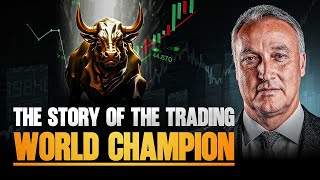
Patrick Neal, a two-time World Cup trading champion, left his 30-40 person business to trade full-time after 2017. He keeps it simple: a few technical setups, 0.5% risk per trade, and two trades a day. His worst loss came during the COVID oil crash when prices hit negative $40 a barrel.
Chapters
From running a company with 40 employers to selling all and become a two times World cup champion. This is the insane story of Patrick Neal, the man who turned discipline and counter trading into world champion titles. Most traders dream of financial freedom, but.
Very few ever get closed.
Patrick risk everything, his business, his reputation, even the trust of his family to prove he could master the markets. People laughed at him. They called him a gambler. But when he stepped onto the world stage at the World Cup Championships of trading, he silenced everyone with results that nobody can ignore. In this video you will discover how Patrick went from struggling entrepreneur to consistent top performer in the shortest trading competition on earth. You will hear the truth of his biggest failures, like the oil trade that nearly broke him and the exact mindset shifts that allowed him to come back stronger than ever before. If you want to know what separates the 95% of traders who fail from the few who become trading legends, stay tuned because you are about to see what it really takes to become a world Trading champion.
A very good evening to everyone today. My guests here at the House of Trades, the traders, are Patrick Nil and my friend, colleague and multiple time trading world champion. He has twice won the World Cup Championships of trading in Forex trading and has consistently been among the top three for the past five years. It's truly fascinating to see how he does it all. I met him in 2010, but in 2017 he decided to join us at the Trading House Trades a Traders and to get to know our tools. But the truth is actually a bit different. He had already done quite a bit before that and I think he can tell you about it best himself. A warm welcome to you, Patrick. So go ahead and tell your story and I'll chime in from time to time.
I bet you will. Yeah. So in 2010 or maybe 2008, something like that, that's when we met and I already found what Thomas was doing really fascinating. Of course I kept asking him to explain things to me and I tried out a few things myself, experimented and got involved. Sometimes it went well, sometimes not so well. But it kept getting better. I was trading quite a lot on the side, but back then I still had a business with 30, 40 employees and I just couldn't manage to juggle both things at the same time. Either I managed the business well or I focused on trading. And in 2017 I decided to sell my business and just trade. Since 2018, I've been coming to Thomas's office and soaking up everything he was able to teach me. Everything he knows.
Patrick is always so modest. But that's not entirely true. So Patrick had already learned quite a bit from me in the years before, and certainly not just from me, but he also kept his eyes and ears open out there and had already dealt with a number of topics in stock trading. But really fine tuning your skills in day trading is very difficult to achieve if, like Patrick, you have to work straight through the whole winter for 14 to 16 hours a day and then only get some breaks in the summer or maybe in the spring or fall. And I think that's when it's possible to really focus and build more substance during such times. But the really interesting story is why did you decide to participate for the first time in the World cup trading championships in 2017? No, that was 2018, right?
2020.
Oh, 2020. See, that shows you how long he practiced beforehand. But the real truth behind why he did it, I think that's really exciting to find out because the motivation is different from what many so called gurus out there might think or try to establish. The story is just really wonderful.
Well, as you can probably tell, I'm from Swabia and around here people don't really know much about trading. So when I explained to everyone that I wanted to stop being an entrepreneur, that I just didn't feel like it anymore, that I was going to sell everything and become a trader, everyone just laughed at me. I was mocked as a gambler, told to just go to the casino or do something else because apparently that's better than trading for. So I thought to myself, what should I do now? And how can I get people my environment, which was important to me to actually believe me? Well, there was this challenge, so I decided to take part in it and it worked out great. In the first year I actually came in second. After that, only about half the people laughed at me. And the following year people started to be amazed. That's how I ended up taking part in it.
I think it's just really interesting to know that it was never about doing marketing or anything like that. At Trade2Traders, we always enjoyed guiding just a few people along the path of learning the trading profession. And we don't pretend to have all the answers. For us, the big stroke of luck was that Patrick and I, in terms of our fundamental approach, are pretty similar in how we think. So what I showed him and the additional structures and strategies I shared with him just fit really well. But unfortunately that doesn't work for everyone. So it was an exciting time to realize what other people actually need in order to learn trading For Patrick, it was very quick and clear that he really enjoys counter trading because he's someone who always goes with the crowd and does what others expect of him. Or rather, no. His nature is actually very similar to mine, and that's why it worked out so well. Nevertheless, he also made a lot of adjustments for himself, which certainly simplified all the complex things I always try to teach. And I think this simplification and that's what was the game changer for you. Just making things simple and then with your absolute impatience, just letting the trades run in peace, that's the real art. I think it's interesting for you all to hear how he completely simplified this craft for himself and what kind of trading style you actually follow. Maybe you'd like to talk a bit about that as a true counter trader.
When you're always watching trading, it's like you see something up there, something over there and here and here, footprint and this and that. It's all just too complicated for me. So I simplified it a bit for myself and just picked out the setups that work. For me personally, I really like using your technical analyses because. Well, that suits me.
But why do you trust the technical analysis?
Because I've done it a thousand times.
Exactly. And that's maybe what's so interesting. Either you develop routines by doing something a thousand times, or you have to really deeply understand things. And that's where we as people are just very different by nature. With Patrick, for example, he does it a thousand times or 800 times or 1200 times, and then you don't even ask yourself anymore whether it might not work. You just do it. And that's where we get to the topic of trust in what you do. So where do you get this trust that you just.
I can see it in the numbers.
Numbers, data, facts, it's all based on that.
Absolutely. I honestly don't care why things are the way they are, but. But if I do it dozens of times and it works, then I just keep doing it.
What would you recommend to someone who says, I want to learn this path of trading? What should they do? Really, from your perspective, not mine, not from trades to traders, but what would you say? How should they start? The way you started was your own path. But how would you tell a third person what could be a way for them to get started?
I think for me it was pretty simple. I basically learned everything and then picked out what suited me. But I think the shortcut with aid awareness, what you do there, I think that's a great thing because everyone has their own characteristics. For some, one approach fits. It's obvious that swing trading doesn't suit everyone, but with a awareness, that's really a fantastic thing. It's a great way to figure out what suits you and what doesn't. You can really take a nice shortcut with that.
And if someone is wired like you, I'd say there are easily 20 to 30% who are more like counter traders by nature. They have enough patience and enough discipline to hold trades for a while before they can really take off. What would you say is the greatest skill when establishing such a trading strategy for yourself? In other words, sticking with it. What's the biggest challenge there?
For the vast majority of individuals, the primary obstacle they encounter is often a profound lack of patience. Therefore, this particular aspect is not truly a significant or insurmountable challenge that needs to be overcome.
That's exactly what's fascinating, and it's so exciting to see that people who simply do something that suits them do it all with ease. And yes, this ease is only there when something is tailored to your personality. At TradeTheTraders, we simply said that we need to convince these different trader avatars, like breakout traders, swing traders, scalpers, and also counter traders like the two of us, that a strategy needs to suit their personality. And once you've understood that you can achieve results like Patrick does, would you say that the results you achieve are very difficult to attain or. Or do you find them actually quite doable?
Actually, it's quite simple. It might sound silly, but yes, that's how it is. I have to say, at the beginning, I tried everything. I scalped, I traded breakouts, I did it all. And I wondered why I sometimes felt so tense while trading. Then at some point, I met Christoph and he told me, just leave that out. Does it really help you? I said, well, maybe a little. And then I started focusing on what I actually enjoy. And since then, my performance has improved a lot and I feel much better.
That's the crucial thing. If you take away phrases like less is more or work is hard and exhausting, everything has to be highly disciplined and I'm never allowed to be creative. What would you say is the most accurate for you?
Yeah, two trades a day are enough.
No, it's exactly what you just said. And that's the thing. When you subconsciously live out these patterns. Yes. And only do the things that are actually beneficial to you, then it really is true that you can achieve much more with less effort. You just have to have the right mindset integrated for yourself. That you have to let the trades run, otherwise you won't make any money. And if you've done that often enough, then the synapses up there just wire themselves in the right direction and then this path just becomes easy for you, and that's where you have to get to. And that's what we all wish for you. And maybe also we still have Karsten, Serge and others with us, and they're completely different personalities. And here at TradeZoo Traders we also occasionally share trading recommendations. And it's really interesting, if I pass something on to Patrick that's not really his thing, and he tries to implement it, it always goes wrong. And if Serge does it, same thing. But if Karsten, for example, does it, then it often works out quite well, right?
Yeah. Karsten often thinks in a way that's contrary to me, but the thing is, we know exactly where we think differently and that actually ends up working together quite well.
Could that be due to the dynamics, to the speed at which some people change their opinions? Or would you say it's really more about the tools Karsten uses compared to what you use?
Well, we actually use similar tools, so the levels at which we approach the market are actually quite similar. But since I like to be the counter trader and he's more of a breakout trader, I go short and he goes long, and it's basically the same position. Sometimes mine works out better and sometimes his does.
Yeah, and that maybe brings us to the next topic. Risk management, money management, and all those areas that are just totally underestimated. What would you say is a normal account size? That should allow someone to make a living from it. Let's just take the US dollar as an example. You achieve performances at the World cup championships somewhere between 80 and 250% returns. What would you say? How much risk in percent would you advise someone else to take per trade in the market?
Well, it depends on the strategy, meaning what hit rate it has. But it really shouldn't be more than half a percent. To be fair, I have to admit that I don't quite stick to that during the championship. You just have to take on more risk there, otherwise you won't reach 300%.
Yeah, but even there you don't just go and throw in, say, 5% risk per trade. Yeah, and I think that's really interesting that you just have to understand that you should never set the risks too high. And for example, that's where Carsten in our team is just fantastic, because he's always calculated all of that for us, many, many years. Ago, long before you were around, showing us what level of risk you should actually take. And when you're working with a lot of different people in a team, it can sometimes be exhausting. But overall it's actually very effective because you get to know the diversity of personalities and all these different tools. And would you say today, would you tell a retail trader who's just starting out to do it alone, or should they look for a group or maybe an individual? What would you say is most beneficial?
Well, I like trading on my own, but for a beginner, it's definitely good to have a group of like minded people to exchange ideas with.
And what do you think? Why do so many traders fail? Why can't they make it work?
A lot of people have their egos and especially we men. We always have to be right, be the best and show off. But that's really not helpful when you're starting out in trading, when it comes.
To always wanting to be right and so on. Have you ever paid the price for that? What was the worst thing that ever happened to you in trading?
I can already see it in your grin, my beautiful. Oil trade. I don't really like talking about it anymore, but it was definitely my worst trade. It happened during the Corona period. We wanted to go long on oil and thought, wow, oil has gotten so cheap because it was always between 30 and 40. And then it dropped to 20, 18, 15. So we decided, wow, this is a great opportunity, we have to go long because I mean, oil will still be needed tomorrow. So we took on the first contracts, but then it kept dropping. Risk management is important, but I thought, well, if oil is basically free, you can make an exception, right? So at 87, we increased our position a bit more. Then we got on the phone and thought about what to do. The result was that we closed everything and it was a really, really expensive trade. But on that day, oil actually dropped to minus 40. I think that was just completely insane. What happened there. That was definitely my worst experience.
And how was it for you afterwards? Were you able to just keep going as before or did you need to take a break first?
I didn't trade oil for at least a month after that.
And I think that's really an art to not try to immediately force everything back and recover your losses, but instead to really keep calm in such situations. I believe your temperament as a Swabian former entrepreneur is just fundamentally different from that of a very young, youthful trader who often brings a certain dynamism and youthful recklessness. What advice would you give to Someone who is very young and perhaps just at the threshold of saying, I want to learn this profession. What are at least two or three pieces of advice you would give them to help them learn the path and the profession of a trader?
Well, first I would look for a strategy, something you can stick to, and then trade it on a demo account for two weeks or so, however you like, see if you can follow through consistently, if you stay true to your own rules or if you end up cheating yourself. That way you can develop a routine. If all of that works out, then I would look for a coach. You have to admit there's so much out there on the Internet, but it takes forever to sift through it all and find what's right for you. There's just so much out there these days.
And if you had to make a definitive decision today whether you would choose to take this particular path again, what exactly would you do differently?
Yeah, I would have started 10 years earlier.
But when you look at the profession of a trader and what's possible with it, would you say that anyone can achieve this or. Or would you say it's only possible for a very small, limited number of people?
No, absolutely. Anyone who is truly reasonable and consistently logical can certainly learn it. Yes. Without any doubt. Yeah, if I can do it, then almost anyone can.
I wouldn't necessarily say that. And if you look into the future, maybe the next five or ten years, where do you see yourself then? What is it that you want to achieve? Because in the end you've already accomplished everything that can be shown publicly in the field of trading. Do you want to keep doing this or is it more like you find it boring and want to look for new challenges?
To be honest, I'm really not sure yet where I actually want to go. I always wanted to live on an island and do a bit of trading on my laptop, but I honestly don't know where I want to be in five years.
Yeah, exciting. We'll see what happens. Maybe even that. And that brings us to the topic. Sometimes it's good to just go your own way and not be so narrow minded. That's also very valuable in trading. Not setting yourself such high goals right away, but just getting started. There's nothing good unless you do it. That's a saying with a lot of truth to it. Sometimes the paths are just the way they are. And one thing I've learned, and I think you have too with this oil trading, is that things always turn out differently than you expect. All the probabilities and everything we imagine is sometimes just nonsense and irrelevant. But now, if you had to tell someone out there how great we are at trades to traders, what is it that's different about us compared to the usual out there? We're here right now at a seminar with friends of ours who are also involved in trading coaching. Would you say we do something fundamentally different or just speak openly for the people out there? What would you say?
The biggest difference with us is that everything is real. We actually live it. We really trade. We live it, we do it.
You can never do enough further education. No matter how good you are, no matter how big or accomplished you think you are, if you ever reach that point, then at the very latest, you should start learning again. Can you relate to that? Every time you do something like this, that passion comes back. When you suddenly see others doing this or that, it always brings so much joy.
Yeah, you can always adapt something to your own trading style. There were quite a few things that caught my attention, and now I have to try them out over the next few weeks to see if they add value for me.
So in the end, it's also about simplifying the processes for you, right?
Definitely.
In the beginning, it's often the case that you just have to learn an incredible amount. That's part of it. Because you also have to recognize when things are different from what you planned, then it's about streamlining things more and more to be as efficient as possible. And that's really the case in any profession. And it's the same in trading. Yes, yes, thank you very much. In any case, do you have any questions for me? Is there anything you feel you still need to get off your chest or are you happy for now that we've done this here and you were able to share your story?
I'm really happy that I was able to say everything, you know. No, but actually, I just want to share something. I didn't mention this before, but the other day I saw an interview with Tom Cruise and he said something really nice because, you know, he does all his own stunts and everything. And he said, yeah, but when I came into this world, I crawled first, then I walked, then I jogged, then I ran, then I ran faster and eventually I jumped out of an airplane and covered distances. And it's exactly the same with trading. Everyone thinks that if they go to a seminar after three days, they'll be a super trader. But you have to start at the beginning, and it takes time until you can do everything, until you become profitable. He also said something else. You have to. I'M not sure exactly how he put it, but you have to reset yourself like children. When you look at a child when they're little, they're always happy about the situation they're in right now. When they're learning to ride a bike. They're not just happy when they can do it. They're happy in the moment. My daughter, for example, last week, she tied her shoes by herself for the first time. Made the knot the bow. She was so happy. And that's the thing. Kids can still be happy about the state they're in right now. And we adults sometimes have a hard time with that.
So your message, I think, is kind of that we should appreciate these small steps much more and value ourselves instead of always wanting to achieve the big thing right away. That's what you meant, right?
Yes, that's what I wanted to say. You summed it up well.
Yeah, it's just like that. When you're learning a real profession. I always like to use the example of a painter who wants to become a master painter and maybe start his own business. That just takes seven, eight, or even ten years, and only then do you start making really good money. And it's no different in trading. It simply takes time. But just getting the tools that actually work in the first place, that's a whole different story in trading compared to other traditional professions where you might not have the same opportunities to earn such huge amounts of money later on, even if you follow all the disciplines and master all the topics properly. I think you share that view.
Absolutely, yes.
Well, Patrick, then I would like to say thank you very much and yes, we're looking forward to seeing you all in the future, and I hope that we'll see more Patricks in the near future. And yes, thank you so much. And a big thank you to you, Patrick.
You're welcome. Thank you and goodbye.










