Traumatic Memory and the Trading Mind
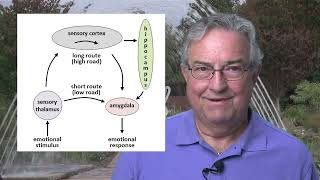
Rande Howell (Kardec Trader) explains that unresolved traumatic memories—often experienced as powerlessness from abuse, bullying, or war/immigration—frequently reappear in trading, impairing decision-making such as taking losses. He estimates ~50% of traders he works with have this issue, and describes neurobiological mechanisms: traumatic memories resist integration by the limbic system, sensory input routed via the thalamus can trigger the amygdala's fight/flight response, producing powerlessness in trading situations.
Chapters
There's a hidden barrier to success in trading that traders have a very hard time time seeing, much less recognizing that. How can that be? Part of my problems in trading.
And what I'm talking about is trauma, trauma from the past that has not been worked out. Showing up here in trading happens all the time. At least 50% of the traders I work with have this exact problem. We like to believe that, no, all that stuff way back then, whether or not it's from our family of origin, whether or not it's just the unluckiness of being born in a war zone and being an immigrant, or whether or not it's societal. The thing is, is what happens is that often what we do is we bring historical trauma that our brain has adapted us to into trading, and it shows up big time.
In powerlessness. If you've ever had a trade go against you and you can't let it go, you can't take the small loss and it goes on, it's because you're feeling powerless. And the thing is, is that's exactly what traumatic memory does, is that it's when you're exposed to a situation that you are powerless in. You, if you've been bullied, if you've been abused, if you've had that happen to, you know what powerlessness feels like and you think that you can neatly keep it in the past and bury it and it's not going to get anywhere. Then you get into trading and you find out that there are certain areas.
Particularly with things like taking a loss, that it rears its head. Anytime that you feel that powerlessness that comes out of trauma, when someone overpowered you one way or the other, and no matter how powerful you were at the time, you weren't powerful enough.
The limbic system is looking at that as trauma. It cannot integrate the experience that it was having into memory. So it stays traumatized. Okay. Now, I also come from a long history of working with ptsd, post traumatic stress disorder. And I also find that a lot in trading, maybe not to the point of ptsd, but a lot of that subclinical nature of facing a trauma that you had no control over and it overwhelmed you, showing back up in your trading. How does it happen? Well, it happens pretty well once you begin to understand how the brain makes memory and uses memory to gauge responses to uncertainty. Let's just say that you're in a situation, very common one for me working with traders. It's that you had an abusive parent and what happens is no matter how much you tried no matter what you did, what happens is that you were of no competition to the abusive parent. Whether or not it was really, truly getting hit or being paddled or whatever. What you discover very quickly is, guess what? That traumatic memory, guess what? You could not manage it. You could not. The brain could not integrate. It takes on a life its own. And what I want you to do is take a look at this particular illustration. What you're looking at is central data coming in. Say like you're approaching, you're in a trade and it's kind of approaching, you know, where it could stop you out and all that kind of stuff. It's a soft stop, stop. And all of a sudden what happens? You start going, oh my God, oh my God, I could lose, I could lose. I'm being overpowered, I'm being overpowered. And all of a sudden that rebel in you charges up. That's the sensory information coming in. It's going to the thalamus. It's kind of like a traffic cop in there deciding which is going to get the preference treatment of all the traffic coming in. All of a sudden a red hot memory shows up of trauma, of a place where you were overpowered, where you were powerless shows up. And suddenly it just absolutely gets routed directly to the amygdala to fight flight.
Nanoseconds. Meanwhile, you think, okay, I'm rational. That happened in the past, it's not happening now. How can it be? That's using an alibi. That's the thinking brain using an alibi. It takes so much effort for the brain to say, okay, I've got that. The thalamus has taken a look at it. It's going to send it to the thinking brain, which you want in trading. And it takes a quarter of a second just to get there, much less cogitate on what you should be doing. Meanwhile, that traumatic memory stored in the hippocampus is there, alive. Boom. And it's already in behavior as chemistry before thought shows up. And friends, that's how it happens. And like I said, I work with it all the time. I see it all the time in trading. And it's only when you go in and decide to resolve that part do you get the freedom back to be able to manage the self during these tough moments in trading. How do you do that? Well, first of all, if you've been around my work for very long, you realize that emotions are biological action potentials. That's why they can overpower you when you feel powerless, okay? At the same time, because of that they also have a biological signature. Anytime that you're going to integrate some bad news, bad memories, and start bringing it so that, okay, I can integrate this, I can heal it and I can move on, is you're going to have to slow it down. That's what you're breathing. The bellows breathing that we teach here, that's what that's all about. That's the first step. You've got to release the tension because understand, once it's been considered, once that traffic cop says, oh, this is an emergency, the brain lights up, it's ready for action. Cognition is just knocked offline. And all of a sudden you're moving from a stimuli out there to a triggering of emotion in response to it, of a time you were powerless. Of course you're going to have to either fight or flee. And you're going to have to do it then, not think about it then. So that's what that emotional regulation can do. The second piece of mindfulness, you're able to step back out of the event and recognize that it's not you, it's not your thoughts, it's a memory, it's not you. And stepping back there begins to allow you to see a different mind in action. When you look in there, you start realizing that this adapted self that I talk about in my business, this orphan nature, all it knows is fight flight. And when it's being overpowered, it has a choice of basically fleeing or fighting. And in the case that I'm using here with not wanting to take a loss, it's fighting back, it doesn't want to be overpowered. It's bigger now, it's stronger now. And what you're doing is you're saying, oh, that's the orphan. And there's also an inner critic part of you saying, it's power. You're powerless, you're powerless, you're done for, you're done for. That's the inner critic. What has to happen is you have to learn to bring an empowered mind in that moment. You have to bring the self compassion, the self soothing of a caregiver to soothe the balm, to soothe the fear, so that you can begin to get control of it. The second thing is you're going to have to pull up the discipline to maintain order rather than going bonkers and going to fight flight, then going to have to have the courage to face that fear, to be able to say, I'm big enough, I'm strong enough, I'm willing enough, and I can take care of myself enough now that I can heal this, I can integrate this so that it's no longer a triggering time bomb waiting for something to go wrong. Friends, that's the way it works. You begin to understand it that it's not going to go away. And then you recognize, well, okay, it's limbic in its nature. I have to calm it down and then I have to become mindful and I have to recognize the players in the mind that are being activated and I have to bring forward a different team of myself to be able to deal with that situation much better. But in truth, your brain has to learn that it can now integrate that traumatic memory from the past into the present moment. Then the power is taken away and you can become the trader that you can be. Friends, this is serious business. My hope, if you've had that a lot have remember over 50% of the people I work with. This is the area that you have to really look at and begin to heal so that you can transform the mind into a probability based mind that is very intentional. Okay? So good luck friends, and take take a look at this because this is something that holds a lot of traders back and it can be. You can work with it. It's workable. Come do it. Take care.









