Understanding How Habits and Addictions Play with the Trading Mind
Randy Howell explains how traders' habits and addictions hijack decision-making. Addiction is a habit where craving for the reward overtakes the original purpose. He argues patience and process matter more than hard work, and teaches breathing, mindfulness, and self-observation to rewire the trading mind.
Chapters
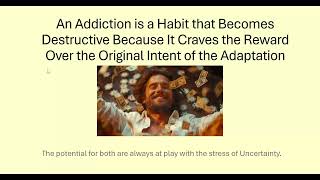
The broadcast is now starting. All attendees are in listen-only mode. Welcome everyone, my name is Randy Howell with Trader State of Mind, and we're here to take a look at this month's webinar. And what I want you to do is we're going to be doing something a little different. Oh yeah, yeah, yeah, yeah. Can you hear me? If some kind souls would simply type in and say yes, That would be a great thing. Okay, into the question box. Thank you, thank you, thank you. We're doing something a little different here is what I wanna do is shift a person, shift a way of viewing your behaviors in trading and start looking at it and say, let's extrapolate it and let's look at it from a different perspective that allows us to see it in new light. Fair enough? Okay. And by the way, as always, is that I make a presentation, at the end I take the questions. However, I do appreciate when people start writing questions in before the end as they go along, because there— this is going to be some stretchy stuff because a lot of this stuff, you know, you don't usually talk about addictions and compulsions in trading, okay? At the same time, we're gonna— we're gonna be using a common language Okay, and at the same time, we're going to be able to say with two definitions, we're going to be able to tweak the way our understanding of what we're doing while trading. Okay, particularly when things get out of hand on us. So let's get started. Let's get started. And where I want to start is right here. Um, what I want you to grasp, if we're going to use a definition for a habit A habit is an adaptive response coordinating action between organism and environment. You might say that is like, you know, the thing is, is that if you were to take a look at a big, huge cat like a cougar in hunting, is that it has a habit of climbing up a tree, establishing itself, waiting very patiently for the deer to walk into the setup, into the trap, OK? And then it comes in and closes the deal. That is a conditioned response. That is a way of that lion adapting to the environment. And then after it's successful, it gets a reward. It gets a dopamine reward, which is something very similar to cocaine. So it's something that makes you feel good. And that is how that organism, its brain, is constantly adapting the way it responds to environmental cues, both good and bad, and it allows it to work automatically without thinking. Okay? So, and when successful for short-term survival, it gets locked in. It's a process called myelinization, and it becomes automatic outside of thinking. This is both good and bad. Ultimately, it's the dopamine reward system that does the business of habit formation. Or as Wilt Chamberlain once said, be very careful about the habits you form, because after you form them, they will be forming you, the way you respond to the world. And that's the main thing that I want to really start getting into here, is taking a look at this and just buying in, saying, oh, OK, a habit is simply an adaptive response generated by the brain. And it's something that you use daily. I mean, if you were completely bombarding your brain with all this stuff going on, it would be really clogged up. Instead, what it does is it has these habits that trigger automatically with outside of thinking, and all this stuff just goes on like a dance. Okay, so we've gotten that. Now let's move one step further. Let's move from habit to addiction. Okay, now an addiction is a habit. It's very important to understand is that there is a— there's often a way of— when you start trying to make addictions and habits the one and the same thing, they're not. But an addiction is a habit that becomes destructive because it craves the reward over the original intent of the adaptation. Like right here, you're beginning to see this guy, he's really getting off on winning as a feeling rather than winning as a way of being able to say that I can maintain a particular way of managing myself while trading. Okay, that's just what you wanted. So the thing is, is what I want you to understand The potential for both are always at play as long as there is stress of uncertainty as part of the package that that brain is organizing to. Because ultimately, this game is about uncertainty. Is your brain, from long before it became human, long before it became complicated with a central nervous system, it hated uncertainty. OK, it doesn't want that. It wants to be in control some way. And so all of a sudden, you can begin to see habits. What happens when you get there and you say, OK, it finally works, it myelinates in. And all of a sudden, it's automatic. The problem is that, again, in the addiction, is that you crave the reward. Chemistry, okay, rather than the object that you started with, okay. But the point is, it's an external reward, okay, rather than internal reward. That's a big deal. Now, so from there, we're trying— it's okay. So here, okay, all folks who have come to trading have experienced both of these before. I mean, take a look at this guy right here. Can you feel the exhilaration? Can you feel it all? Just all at once. And ultimately, they have learned aggression, making things happen and seizing control over outcome. And it appears truly like, golly, they have control over outcome. That's the success. That's it. But the problem is this. Is that control over outcome, over uncertainty, is in fact an illusion. What you're looking at is a person who is now moving from winning being a goal within itself to the exhilaration of winning. That's the movement between a habit and an addiction. He starts chasing the high. Okay, in the same way as a lot of traders, particularly the overtraders, when they start seeing the money and how it grows, it's going to be all this. They start, they start chasing the high. They're not looking to trade well, they're looking to get the high, and before it blows them out. So here we go, we've gotten this. So this time we're going to say, okay, how, how How has this thing gotten successful? Remember, all these wires you're looking at the back in here, and metaphorically what you're looking at is all, all the training, all the adaptation that has gone on that allows the human to be conscious but not paying attention to everything going on around him, which by the way is actually dangerous in trading because what happens, you need to be aware of what's happening within the brain and what it's doing outside of conscious control, you have to become emotionally literate. So the key is, is that the very success model that we tend to think of in terms of like, okay, success is hard work, okay? And if I have that and I'm a really never give up, I never give up and I'm going to learn how to do this and I'm going to conquer it. At the same time, if you understand uncertainty, You recognize that you're constantly working with the environment uncertainty and realizing that at any moment you don't have control. And your job is not to control outcome. Your job is to control process. You actually need to find a different way, a different reward system. Instead of a reward for winning, You actually need to start saying, I need a reward for performing. You know, what I teach is that if you're doing really, and if you perform really well, and if it happens, shows up the wrong way and it becomes a loser, that is a victory. That is something that you're saying, I need to reward myself because I followed my plan. And it just so happens that particular moment it didn't work, but I get it. It's that the job is to have a plan that works for uncertainty. And again, I want you to understand is that we have to open our eyes to basically how uncertainty works with us because our biology from the past has us believing that we can control outcome, which we can't. That's why it's uncertain. We're going to have to change that We're going to have to rewire all this stuff from the way it got adapted originally with success formula hard work equals success to basically more like, hmm. What you're doing instead is you're saying, I can actually manage a process that gives me the best option of winning. And when a win happens, it's not necessarily a time to celebrate, to get a reward. It's a time to say, it landed on the right side of probability. Did I perform well? I know plenty of people who say, well, Randy, I just won so much money. And actually, they had been lucky. They'd been gambling and they got lucky. And they got that, whoa, look at that. I've done it. I've done it. Well, they can't do it consistently. And the moment that you move out of your plan, You're gambling. Your plan may not have you taking all what looks really good at all that, that, but what happens is it's a proven way, an edge that allows you to consistently pull more money out of the market than you put back in. Meanwhile, if you're looking at it from the addiction model, you're saying, yeah, I want the rush of winning, and all of a sudden you jump in and What if you get lucky? Well, you win at the casino. The casino is happy to pay that money. It's setting you up to take your money. And we set ourselves up to lose money. So this is probably the hardest thing that an alpha can ever learn, is that making things happen now is not part of success mind in trading. The truth is, is that you do not make things happen in trading. What you do is you develop the skill set of patience, and what you do is you wait to see what the market will give you, then you take it. But you do not make things happen now. It gets people in a lot of trouble because they think, oh, it's there, it's just— I'm gonna take it. It If it's not within your rules, you don't get it. Okay? And it's quite opposite. The, the mindset leads to poor trading, you know, this kind of success model, because in trading, again, you don't control outcome. You control the mind you bring to performance. That's the piece that we want to really look at tightly here. Now, as we're doing this, what I want you to also recognize is that this— When you're looking at these two, this old legacy tale about the hare and the tortoise, what you're looking at is fast, fast, fast, slow, slow, slow. And a lot of people like that speed. I know people who get bored and they want to do stuff and stuff like that. Friends, in this new way, that is a kind of habit that does not serve you well. It leads to an addiction because you want the rush. Okay, it feels so good, it feels so good. That's the rush. You're no longer, you're no longer trying to perform. You're trying to win and win big so that you feel good. My promise to you is the last thing you want to do in trading is feel good while you trade. So ultimately what you discover is that slow is fast because fast is going to lead to just over-ramping up and stuff like that. And all of a sudden, that's the, that's the high, that's the addiction high that you chase. Unfortunately, when you do that, you leave, you leave your rules, you leave your plan, you leave your edge, and it's gone. So what I want you to notice here is there's lots of different ways of doing it, but if you start defining the habit and then defining an addiction as basically a habit gone bad, you begin to see that we have a lot of habits that go bad, and we would call that an addiction. At the same time, what we want to do is we know that we can also have some bad habits that we need to change, but there we still have management of the habit and can rebuild the habit, whereas an addiction, it's a lot harder because that thing's really myelinated, insulated, and doesn't want to change, and it will fight you. It will not want to change. So why is it so hard to stay patient? You know, a number of years ago in Denmark, there was a study done. And what they did is they said, look, we want you to sit here and just stay calm and just sit for 20 minutes without doing anything. Meditation. Let's just say meditation. But what they said is, if you need If you need to kind of escape from it, we're gonna give you an electrical shock where you can shock yourself, okay, instead of sitting in the silence, okay? Well, 66% of the men actually shocked themselves repeatedly because they didn't want to feel the just sitting there, being there. They wanted something happening. They had to be doing something. To be doing something. This is a kind of habit that gets you in trouble in trading. The truth is, the work of trading is patience. Your job is to sit and wait patiently for what the market's going to give you. So if you know that if you follow your rules, you bring the edge to your performance, But that gets hijacked. That's the addiction, because the human brain wants novelty and excitement. It wants the fix. Excitement. That's snorting cocaine, friends. And I hope to God that none of you want to snort cocaine and trade. That is about— that's ludicrous. But also the novelty of wanting something new, new, new. I hate being bored. You know something? I'm sitting here. Okay, I got to be doing something to do something. Bad habit. Okay, no, what happens is that no patience is the work of trading. Your job is to patiently wait. It's not doing something to do something. That's the piece. So now we're going, okay, we're beginning to see this a little better. And in that, in that, what happens is that Here's the deal, is that understand, you see that guy in front of the computer, okay? You see that guy way on the left-hand side where you don't see much of him? That's, uh, that's one of our relatives that we share 98% of our genetics with. That's the chimpanzee. We once had a common ancestor with the chimpanzee, okay? Now we've come a long, long ways from those days. That's, that's, God, that's 30, 40 million years ago. Yet at the same time, what I want you to notice is that it has the same brain, it has the same addictive brain. And, you know, chimpanzees will just do all sorts of things for fruit. Okay, so the deal is this, you get it, there's several pathways behind the corruption of patience. And that patience, the moment you move out of patience We would actually say in trading that you've actually hit the addiction where you're seeking reward. You want the excitement, you want the dopamine, okay? And what we're saying is, no, what happens is, can you see the habit has turned bad? It's become an addiction that you want the dopamine just simply for the dopamine. So now just sitting there is so boring. You want success. Well, you have to be doing something. And it's just not true. And despite how many times you see it, it still doesn't happen. And oh my God, this is to me hard work is equal to success. That's what the United States is built on. That's what most people are built on throughout the world. Yet at the same time in trading, you find hardworking people working, working, working, working, and they're spinning their wheels, losing money. It's not hard work. It's effective work. Effective work is about patience. Do you see that? It's not about doing, doing, doing, doing, doing. As long as you're doing, doing, doing, doing, you're activating all the reward centers. That's your addiction processes that can take over. And no, I don't mean like an addiction with heroin or alcohol. It's not on that necessarily on that level. It can be when you start blowing up and, you know, a lot of capital, you do realize that you have gone beyond just a little addiction into a major addiction that is taking over control of your life. So you can actually see that happen. I get traders all the time who have lost control over their trading, and they've blown through whatever is a lot of money to them. I mean, I know people, their $100,000 is a lot of money. I know I know people who $100 million is a chunk of change, and I know people who've blown half a million dollars— I mean, $500 million. So the thing is, is they want to work hard. Hard work leads success. It is the core belief that has driven your life. This is what you bring to trading. This is the setup. This is a setup for the habits that need to be reformed, or those habits have become hardwired. They've gone bad and they become an addiction that sets you up for failure. That's what we want to take a look at and say, we have to find a way beyond this. So, what's cool, what's crazy about this is hard work is equal to success is that it's rarely questioned. You say, oh yeah, you got to work hard. No, you've got to work effectively. Or when I was in When I was doing a lot of marriage counseling, someone would come in and basically say, "I'm right and my view is..." I would say, "Look, do you want to be right or do you want to be effective? If you stay the way you are, you're not going to stay married. So do you want to be right and not married, or do you want to be effective and remain married?" It's the same thing here. And I know that nobody wants to be a loser. Nobody wants to be a quitter. Quitter. But ultimately, when you start seeing when you have to quit or when you take a loss, it can actually start exposing what I would call the lies that has set up your mind for trading, because it's going to have to change that old success method based on getting reward and having that dopamine go off as a habit, and then as maybe an addiction as it gets so strong. I, I just, I just, I know I can do it, I can do it, I can do it now. Yeah, well, the deal is I'm asking you to view things very differently. Hard work and a focus on winning, making money, proves over and over again that this formula does not work in trading. And I'm not saying it doesn't work in other areas. In sales and marketing, yeah, it does. Yet you don't stop employing it because you're not a quitter. But what I would also say It's a pattern, okay, that you do not know how to step out of and reform into higher functioning. That's the ticket. And this is at the level of habit. It's still workable. At the level of addiction, it's a totally different kind of intervention. Okay, I work with a guy that ultimately he had been an alcoholic for a number of years and he had moved beyond that, he had recovered from that, but he had found cigars. And on a bad day, he would end up at the cigar bar smoking 5 or 6 cigars. So, he was using nicotine to medicate himself. And ultimately, one of the ways we got him into success is that we had to find some guys that would be around him that basically would hold him accountable. And he also had to start going back to AA, not for drinking, but for his addiction to the nicotine. And once he did that, once he started taking care of his body and the diet he used and he no longer needed the nicotine in order to cover that, he actually became the trader he could be. But he had to retrain the habits that the nicotine or the alcohol used to cover for him. And now he found it— he said, "You know, Randy, it's really amazing because I'm an athletic guy and I need to be training." I need to be working. And I had forgotten to do that. I was depending on the cigars. And it's the same thing here is, again, suddenly it's a bad habit. And at the same time for this guy, losing was a way for him to get to the cigar bar. Okay? So this is the kind of stuff that we're looking at. Now, And hard work and elation has very little bearing on the outcome of success in trading. In trading, when you work by pushing yourself to make things happen, the success mind of trading will still be very elusive. Again, what I want you to recognize is that if you're not in a patient, disciplined, calm state, you're not in a mind that can trade, can handle, can handle probability, uncertainty. And that's what we're trying to build. How do we go about doing that? So success mind in trading is better understanding as waiting for opportunity. Like here's a fisherman. And what happens is he's been fishing there. When I took this photograph, he'd been fishing there for a number of days. And it just so happens he fed his family, he did all that. But the thing is, is that it was all about patience. Fishing is built around patience, of course, unless you're a competitive bass guy. But if you're looking at fishing, is that fishing is really about Slowing down, being patient, letting the fish come to you. And this is what this guy's doing. You can see that it would be a good strategy for any kind of trader to be able to say, okay, you know, if I started doing this, I could actually start the practice of patience rather than as a habit that has the reward of a calm— of a calm mind. Excuse me. So now, but in this process, boredom is going to really get there. And I cannot tell you, when I look at cell phones, I have drastically cut back on cell phone. I have drastically cut back on social media. Because what happens, I find it a way of distracting myself. And what I do is I end up looking going, how much time have I just whittered away? And I realize that that is exactly what an addiction looks like. What she is, you're looking at an addict. You're looking at a person using her social media to step out of the boredom she's got in her life, which means that she's looking at the world as, oh, this is a dumb place. I can hook out here and I can have excitement. I can hear those bings and stuff like that. And I can start feeling good. And ultimately, she's not training her mind in the real world where you need to be patient. She's training herself to go get the reward, okay, instead of being patient. Do you see that? The problem is not that you don't see the patient mind crumbling in the midst of all the action around you. Something else takes over. This is the addiction model, okay, that is so familiar that you don't even notice it. And the truth is, this is where you find the beliefs. If you were to take a look at the health of your trading account, and what you would look at is you would see the health of the beliefs that you project onto the markets being measured And one of the reasons people don't like to look at their, their trading account is because that's what it's telling them. It's telling them bad news. At the same time, it's not bad news. Your trading account is the closest thing to a friend you're going to have in trading. It's telling you, are the beliefs you're projecting effective or ineffective for extracting capital out of the markets? Okay, and as long as you hold beliefs that are not working, you still fall under the thing is I'm holding on to these things. I have a habit of these being there and I need that belief and I can use some sort of crazy, crazy thing to jump in and think I'm gonna win a bunch of money in order to keep believing that. The only edge you have is to follow your rules. Patience is required. For this. If patience falters, you have no edge and you fall into gambling. And I think really when it comes down to it, in trading, gambling is the biggest addiction. A lot of, uh, I once was talking to a guy at where I was speaking and he says, Randy, when is it, uh, when is it okay to not follow your rules? I said, when you're gambling. And my response was, the only time, the only time that you're not following your rules is when you're gambling. Okay, understand, following your rules gives you an edge. You may miss a lot of opportunity that really looks sparkly and all that stuff. But the truth is, is a really good trader, when they see something like that pass them and everybody says, oh, you should have taken that. No, it wasn't in my rules. I have rules that I trade by, and it just so happens I'm sure that I dropped some money, but at the same time, if by following my rules, I maintain the ability to extract more capital out of the markets and I pull back in. That's a straight impartial mind. That's not one that's being addicted to the high, the thrill of winning. And patience is required for this. If patient Falters, you have no edge, and again you fall into trading— gambling, excuse me. Now, behind the boredom, and what I want you to hear is the connection between boredom, bad habits, and addictions. You get bored, but I got bored, I need to have some excitement, and before you know it, that you might be using an external agent like cigarettes. Okay, my dad My dad, he was chief aeronautical engineer on a cargo jet for the Vietnam War. And what happened is he was the guy, if things went wrong in the middle of the night, he's the one that got called at home. And what I would do is I would watch him when I saw the phone ring after 9 o'clock at night, is I knew everybody in the family knew that was bad news. And the first thing that he did is he went for his Camel unfiltered cigarette, stuck in his mouth, took a couple of big, huge Hits, and then he would answer the phone. He's already got a nicotine high going. And the deal is this. He was fighting. He was fighting getting excited. He wanted to be calm, but he used nicotine as a way of doing that. And it ended up frying his lungs. Okay? It's taking up way too much time. You must get it done. I want it. You want it. You want it now, now, now. This is the problem with goal-oriented people in trading. And you don't— do not control outcome in trading. You do not control timing. You control process. That's the deal, okay? Now, if you take a look at the dynamics You're looking at an image that really presents two major parts of the trading mind, trading brain, is that the emotional brain is sitting there in the back seat and it's just sitting there and it's just getting bored. It's just nothing's happening and all that kind of good stuff. And at the same time, the little geeky white guy is running the show, or at least apparently. And then something crazy happens. You know, that trade goes against you. All sorts of stuff, or you see an opportunity you need to jump into, and all of a sudden the geeky guy just loses it. And guess who takes over? The instinctual caveman brain. That's the one with the addictive mind. That's the one that keeps doing the same damn dumb things over and over again. This is also rooted in your belief that you need to be doing something to be approaching your goal. If you're just sitting there, you're not doing anything to promote success. This is flawed logic. If you take a look at a cougar hunting, he's up in a tree. You might even think he was sleeping, but he's patiently waiting. He's centered, he's focused, he's ready, waiting for the opportunity to come to him. He's not seeking the opportunity. It's coming to him. And all of a sudden you realize that's an apex predator. And this is the kind of hunter that wins in trading. So now we're beginning to go, you know something, what I'm gonna need to be able to do, I'm gonna need to be able to move that new thinking brain away from my emotional brain and recognize that, you know something, I need to learn how to be able to work with these guys and begin to retrain the emotional brain and to recognize that the thinking brain is a useful servant. It's a bad master. Okay, and out of that you come to the moment. And by the way, this is an osprey, um, in trading You wait for the opportunity to come. What you're looking at right here is an osprey, small eagle, that is sitting in a tree, sitting by the beach, and it's just waiting. It's just waiting. It's just waiting. It's just waiting. It's one of the most powerful predators in the air, and it's just sitting there waiting in a skill of patience. It becomes one of the core skills for success, not just in trading, but in also hunting. Okay, it's just waiting for the fish to show up, and then what happens is it flies along right at, right at the level, picks him up in the claws, goes back to the nest. Very powerful. Whoops, sorry about that. And this is my favorite, uh, patience is also really fragile. This is actually from an experiment that was done where kids were offered marshmallows. They could have one marshmallow if they just wanted it right now, but if they waited 5 minutes, they could have 5. And you are looking at a kid who is trying to maintain emotional discipline to be able to wait the 5 minutes to get the 5. The chances are though, he's not going to get it because impulse control is not ready by this kid's age. This is where emotional intelligence can help you redevelop what emotions arise when you engage a challenging moment. And this is also, by the way, a process that I teach. So what I want to do is take a look at this thing and say, hmm, ultimately, what you're— and by the way, this image was actually taken right across from him, about a quarter of a mile from him is where Oprah Winfrey's brought property starts. So he's in, he's almost, he's boarding and he's having a great time. But watchful waitfulness is the attitude behind patience. There is no hurry. There is no reason to act unilaterally. You wait patiently for the opportunity to come to you. That's the peace. Now you might be asking, well, how do you do that? It's easy to say, Randy. In many ways, you're right. It is easy to to say. There is work to be done. And again, a lot of that work, again, you're looking at that apex predator and this is a cougar. And guess what? He's sitting up in a tree. He's just waiting. He's not sitting there sleeping. He's patiently waiting for the deer to come to him. He does not stalk. Do you understand that as a trader, you're not a stalking hunter? You are a patient hunter, very patient. You're waiting patiently for it to come to the way and you drop right on it. It breaks the neck before it hits the ground. And if it gets away, it gets away, he doesn't chase. So begin to see that the whole attitude that you have about winning and losing is gonna have to change. And then how do you develop patience as a core skill? And by the way, this is a photograph of me, but what I want you to take a look at in the background, that's the noise in your head. All that stuff, I can do this. How do you develop patience as a core skill? So you get to the moment where you recognize that most hard work does not produce success in trading, but patience does. The belief in hard work leading to success must be challenged and changed to the coordination of effective action. You're not going to push, push, push. No, you're going to coordinate activity. So if your results do not show effectiveness, then you're operating under self-limiting beliefs. Starts getting more interesting. And this— how do you actually go about changing deep-seated belief patterns? Well, the first thing is we actually— I teach a process of interlocking skills that is built to actually touch this. How do you change deep-seated belief patterns and habits? The very first thing is you have to learn emotional regulation. The way you breathe and the tension that you hold in your body is, in fact, part of an emotion. If tomorrow you sit in front of your computer and you have— you use a phone to videotape yourself, you're going to discover that you show all this tension. There'll be tension everywhere in your neck, your jaw, all the place. And also, most likely, you are just riveted on the computer screen. That's emotion right there. That's arousal of the emotion. The second thing you're going to have to develop mindfulness as a tool is you're going to have to quit identifying with yourself with thoughts. You and your thoughts You and your beliefs are not the same. The truth is, friends, you do not have thoughts and beliefs. They create you. You're born into a history. They get inculcated into you. And they start acting and moving you through life. And you don't even see that they're there. That's the second thing in mindfulness. And with that new mindfulness, what you do is you start waking up to your internal dialogue. All those voices you hear running in your head, There are a lot of them not up to any good. They're dangerous. And you've been trying to ignore them pretending, oh yeah, I don't have any of those. I'm not crazy. What are you telling me that I'm crazy? Man, you're crazy if you don't take your internal dialogue seriously and start weeding it out and start really thinking about how do I go about altering that internal dialogue so that it creates a mind that can fit to the uncertainty of trading, and it can. Then what I also teach is how you can find these inner resources living within you. The discipline of a ruler, it's in all of us. The courage of a warrior, it's in all of us. The self-soothing of a caregiver, it's in all of us. And the clarity of thought of a sage. It's in all of us. It may be more potential rather than realized, but the deal is you can wake those emotional programs up. You can grow them so that they become a participant in the creation of your life and the way you deal with uncertainty. So we've gotten those and we think, okay, I can bring those empowered elements of your personality into awareness. And then You intentionally start developing the internal dialogue for peak performance. This is the very process that we teach from our group course into our individual course. It's embedded in the way we do things. And it's not, you know, a lot of this emotional regulation's been taught for about 4,500 years. Mindfulness has been taught for, I don't know, 2,500 years. Becoming observer to your internal dialogue's kind of kind of cool. But the rest of this, the emotional intelligence portion, has been around 30, 40 years. So you can actually see that there is powerful stuff that I'm breaking it down to say these are the elements that you need to develop within yourself to trade successfully. Because ultimately what you're going to discover is that your IQ, all that knowledge you have about trading, it's pretty worthless, okay? Because the moment emotions start coming by, it blows all that knowledge out of the out of the water. And what you'll notice in this graph is the EQ, the emotional intelligence, is far larger of importance than the knowledge you possess. And the deal is, is you need your knowledge driven by particular emotional programs that create a mind that can, in fact, engage with uncertainty successfully. That is the deal. 'Cause the lack of management of fear and aggression is what blinds you to the repeating patterns, those habits, those addictions that grasp you. And that the first thing you start noticing is that, hmm, fear and aggression hijacks objective thinking. It just happens. So emotional regulation's absolutely necessary. Then it creates a fear-based, herd or hunter mentality. I'm gonna get it, I'm gonna get it, I'm gonna get it back, I'm gonna get it back. I'm just gonna stop, I'm gonna lose, I'm just losing. And then this trading mind of yours is seized by all these ancient impulses. I mean, I'm talking before man, I'm talking 30, 40 million years ago. Then you start making trading decisions outside of your trading plan because guess what? Your mind has been seized and taken over by really primitive forces, and you're gone, man. You're gone. And you transfer capital to the 5% of traders who are disciplined, patient, impartial. That's the way it works, friends. That's the way it works. So I also want to talk about this. It's— if you look at the elements of an emotion, this is what you must master. The very first element of an emotion is arousal. That kicking up when you start feeling the pressure, when you start feeling the tension, that's emotional arousal. When you hold your breath, that's emotional arousal. It's revving the emotion. It's already fired, okay? And it's getting you ready for action. The second one, motivation. That's what the emotion is telling you to do. Get in, get in. No, stay back, stay back. You can be wrong, you can be wrong. Our approach I'm waiting for the markets to show me what I should do. Meaning these are the self-limiting beliefs that become associated with that emotion. And it just so happens that you start seeing through the eyes of that belief. You don't see through the potential that exists right in front of your eyes. The beliefs color what you see. We want you to bring beliefs that are much more powerful. The feeling— this is the subjective experience of the emotion. And it lets you know that the emotion's there. The last is temperament. And that's the genetic predisposition, which I don't do anything with. What I want you to do, though, is the emotion is actually— any change in current status triggers the emotion. OK? That's the deal. Whoops. So the deal is what we teach is emotional regulation. First, it's the very first thing. You learn how to diaphragmatically breathe, then you learn how to diaphragmatically breathe in front of challenging moments. There's no reason to go beyond that until you can do that, because this is the primal skill that you're going to have to have day one. Breath is that important. Otherwise, your emotions are just going to get triggered, and it's going to take over mind, and that wonderful mind of yours is fairly useless in the avalanche of a massive emotional hijacking. Oop. Excuse me a minute. Okay. Skill 2. The second skill is mindfulness. This is when you begin to recognize truly that You know, when I'm looking at myself and you begin to say, who is this me looking at me? And all of a sudden you realize that you're seeing through a historical window. And it is the beliefs in quantum mechanics. What they hold as true is that reality exists as potential. The observer of that potential is what creates the reality. Do you see the interlink in what you're saying is the whole key here is to be able to sit and begin to create an observer that organizes your potential into the self that can trade with uncertainty. That is the power of it. Now, and then you've got to develop the observing self. We have several different ways of doing that so that you really begin to see these characters at play in what I would call the governing committee of your mind. Okay? Most people don't want to see that, so they don't do it. But it's an essential skill. And the deal is, is that there is not a reality out there. The reality that you're seeing is inside your head. Okay? I know that can be hard. But when you grasp that, you're going, oh, I'm the one creating this reality in there. Yeah. That means you need to look at what's wrong in there, change it, organize it so the reality you're dealing with that appears to be out there is much more functional inside your head. That's what we're aiming to do. And it can be taught. So this next skill is really observing the internal dialogue where Suddenly, you're no longer taking it personally. You're beginning to look at, oh my God, I'm beginning to realize that the management committee of the mind, there are various characters there that I've allowed to be there without my understanding that I needed to take charge of this. All adults eventually have to do that. So what you're doing is you're finding out what makes you tick. Okay? And you're going, this is— I can do this. This is very powerful. And I can do this. Yes. Then the guy that you're gonna have to really deal with is that as you develop these skill sets, you're going to have to find and seek out the inner critic, okay? That part of you that criticizes you, that judges you, that sets you up for failure, the one that wants you to keep you small. This has to be dealt with. You know, a lot of manly guys that I talk to, when ultimately you get past them, you find out they're scared inside. They're not dealing, they bulk up, they all that stuff. But the truth is, is they're not looking at the real fight they have to win. It is the internal fight that has to be won. And again, by developing the mind, by developing these particular talents, these inner resources, you begin to develop those component pieces that can begin to work together to build a new kingdom of the self. Friends, that is the way we teach. And ultimately, here is a slide that basically shows you within this dance of the inner critic, what it's doing. It's judging you. It's criticizing. But it also, what I would call that adaptive self, you start lying to yourself. You're pretending to look good. You're missing out. You're blowing things. You're blowing up lifetimes. And stuff like that, you realize these are all characters like within a family system map of your mind. And it is historical. You inherited from the past and you can change it. This is what has to occur if you're going to master the mind that masters trading. And you've got to develop these resources. Living within you is the discipline of a ruler, maintaining order under pressure. There is the warrior that turns toward the fear to master it, not conquer it, "Grrr," but to master it. There is the self-soothing of a caregiver, calming down, keeping your orphan nature calmer. There is also the impartiality of a sage that lives within you. These are the elements you're learning how to pull together as the mind that engages the uncertainty of trading, friends. It can be taught. I do it every day. So deal is, you're gonna have an inner game. You're gonna have, you're gonna have a trading committee, okay? And these are literally where your beliefs are traded. You not developing the inner resources 'in there' is just a way of saying, 'I'm never going to change the reality out there.' So you've got it. You can begin to see that, 'Oh my God, this is really self-mastery, isn't it, Randy?' Yes, I teach self-mastery. And it just so happens that I found that traders absolutely— they have to find self-mastery or they can't trade on the level they want to trade in. So the deal is these are the programs. Okay? Got to jump there. Yeah. You do have the courage of warrior. It's in there. Okay? It may not be the first program that can arise, but it can be made to be. You have the discipline of a ruler. It's there. It may not be the one that— in my particular case, I grew up in a military family where my father was a retired colonel and shouted and screamed all the time. And it wasn't a good place for a young ruler to grow up in. But also the self-soothing of a caregiver, it's been there since the beginning, and the impartiality of a sage. Okay, these are the things that are all there. But for some reason, I don't know why, it's not taught as a cohesive whole. And it just so happens that we teach it as a cohesive whole where this is a process where we build a mind by step, by step, by step, by step. And that's what we do. So the deal is, you really have— if the mind you have, an impulsive fear-based mind, is you come by it naturally, friend. It produces mindless trading. And what happens is that you have good days, you have bad days, you blow up, you do really well, and then you give it all back and stuff like that. or you have an emotionally regulated, calm, focused mindset. It's driven by the ruler. And all of a sudden, you realize that all this stuff comes together. And you discover that patience is the core— is the core skill set that you have to develop. OK? There you go. Now— whoops. And for those of you who are just getting across finding my work, my encouragement is get a free book. Go into our YouTube channel and start looking at the 300+ videos and start really kind of grounding. Go to our website and read about our programs. And maybe buy my book at some moment. But the thing is, at first start and start recognizing, Randy, what you're doing really makes sense. Why isn't everybody else teaching this? I don't know. Back in the long time ago when I first got into emotional intelligence work, I could not comprehend why all therapists weren't jumping on this stuff, but they didn't. And I can't really tell you why. But in here is that, again, you can find a lot of different things for free. And you can see that we have a group course and it's our next one is a while away, but we want people joining that course a month, month and a half before start date, because we want you to know how to breathing and regulate your emotions. And for those of you who are really looking to take this deeper and going, you know something, Randy, I would really rather, I wanna work with you, that's called the individual course. And you need to be motivated. You need to be not just saying, oh, I'm gonna— maybe I can just go to have a talk with Randy. And the truth is, is that we don't use Skype anymore, we use Zoom. But the thing is, is that it's a course that comes around. It's a graduate-level course that has 10 one-hour sessions with me on Zoom, okay? And the deal is It takes you very deep. If you're— the group course teaches you the skill sets and the individual takes you deep down into yourself, what really makes you tick, and starts helping you to reorganize it. That's what we do, friends. And you know something, I really like talking to people so that people can really begin to understand the problem that they need to solve. In order to become a successful trader. And I encourage you to really take a look at this stuff from both the YouTube channel and also from, from our website and start really looking and saying, you know something, who do I need to become to become a successful trader? Okay, ask that question and then engage our work and you begin to see a different different emergence. And I want to thank you for being here. And we just— we have about 5 minutes. If you have questions, I'll give you my responses. Type in the questions. Type in the question box. I think we already have some. Okay, I have new glasses, so we'll see how this works. Okay, about your mention of the term of myelinated, and is this the same as new neural pathways? New neural pathways is the generation of the pathway of the neural network itself. The more you practice, the more you work, the more you insulate, myelinate it, it becomes more and more automatic to the point where it becomes becomes instinctual. That's the difference. Okay. Continued for John. FYI, 6 weeks ago, I stopped cold turkey watching the news. I don't blame you. I don't watch very much of it either. Talking heads, watching the news, talking heads, sorry, propaganda, and political theater. So I am in the category of a recovering news addict. There you go. Congratulations. Occasionally tempted, but I have honored my decision. Good for you, John. Okay, and this is BB. Sometimes I can see myself going off the rails and taking trades outside my plans, but couldn't stop myself. That's the addiction, friends. Okay, for plan— for sample, taking Making mistakes sometimes is okay, but this frequent self-control is discouraging. What can I practice to fix this? I can admit when I'm trading versus gaming, but how do I prevent it? Well, by yourself, you have very little chance, but the major thing is this, is that Again, I teach a process. I teach a process so that you are equipped to be able to handle the stuff there. If you're breathing, if you're learning how to breathe and calming down, you should be able to stop the acceleration of it grabbing you and taking you away. At the same time, the very first, the next thing is you need to start looking at that as an addiction where you just got You just got taken advantage of. I would encourage you to look at my work because ultimately you're asking questions that very few people can change by themselves. And I'm not— I just know that's really difficult. I know that when I have sought powerful change in my life, I sought out a teacher. Okay. Bibi, how do you manage the lack belief? No, that's— I think that's lack. I affirm abundance daily, but doesn't seem to help. Of course it doesn't. Affirmations break down under pressure, as do visualizations. OK, what happens is I teach I teach a process where basically call— I call it emotional enrichment, where we're actually going into a memory of a time when you were challenged. And in order to have gotten through the way you did, there had to have been the emotional programs of discipline, of courage, of self-soothing, and of impartiality, or you would have never gotten through the event. What I do is I teach you how to deconstruct the way the memory has been basically confirmed, bring it back into experience, and using a different observer, you learn how to reconstruct that memory before consolidating it again. And then I teach you how to bring that memory and to bring that emotional program up. That's a long, long, long ways from affirmation. Okay, that is the— that's what I can say. Okay, great presentation. Okay, patience is always in the way. No, it's not. You're in the way. Waiting for my trading session. Why do I trade sessions early? Is there fear? I'm profitable during my regular session but can't detach from trading other sessions now that I'm somewhat profitable. Louise, I tell you something, you are talking about what we'd call an addiction here. Okay? If you begin to go, you know, why is it that I can be profitable and then I have to go do something else? And in my mind, I'm going, I can make more money. But what happens is you have a failure rate and all of a sudden you're saying, who is sabotaging me? That's the question you need to be looking at. I'm sabotaging myself. What part of myself is sabotaging me and how does it serve me at another time in another place? That would be a start. Okay. Do you recommend any old brain helpers like ginkgo? And I— boy, you cannot imagine how much ginkgo I've had. I've stunk up houses curing that stuff. I really don't. What I really I— good rest, okay, and making sure that my mind is tested well is that I use a lot of stress inoculation where I'm training the brain to operate in hostile conditions. I also use stuff where I am looking for you to take my guided meditations and recognize that's a tool You have to be able to actually use them in the presence of the stressors. Okay? And with you, is that— I know a lot of people who drink way too much coffee, and they don't realize that they're going to take a crash out of it. Okay? But the major thing is I do not recommend that. I do recommend a very good diet. Particularly when you're trading, that has complex carbohydrates in it so that that carbohydrate is being digested and being basically— it's being turned into glucose, which is the fuel that the brain uses to think, okay? And what most people do is they don't have that kind of system in place, and they start getting mugged headed too soon, and their brain's not thinking right. So what I would recommend out of all those, I would take a look at my diet, particularly when trading, that I'm making sure that I'm putting complex carbohydrates into me and letting them trickle and keep building up the glucose. Okay, here's Cody. I have a self-imposed daily loss limit. Good. And I have had trades where I exited out of fear due to the market putting me very close to reaching my limit in a single move. Um, that's common. That's, that's a very typical learned habit that you're going to have to learn to deconstruct and rebuild. Otherwise, what happens is you're not following your rules. Okay, well, that's it, folks. I have thoroughly enjoyed myself, and I, I I thank you very much for having me. Okay, if I can help you, come, come take a look, kick some tires, start taking a look at my YouTube channel, take a look at my website, and start really going, my God, these are the tools that I actually need, how can I build them? Okay, and if you really want to look at tomorrow when you trade, I want you to have, have like your phone record yourself as you trade, and I want you to notice how much emotion is just jacking you up and jacking you down. That will give you an idea of how much work you've got. So I thank all of you, and may you have a great life. And if we meet again, my blessing. Take care, bye-bye.









