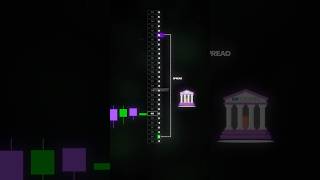
Kardec Trader explains what happens in order-book markets when major news drops like NFP or CPI. Market makers post limit orders to earn spreads, but they cancel them right before the news hits, leaving almost no resting offers. When market takers' orders flood in, prices jump hard.
Chapters
When a news is released, such as nfp, CPI or fomc, here's what's happening behind the scenes. In every market, there's two types of traders. Market makers in the order book, buy and sell orders resting above and below price and market takers. People actually buying and selling to the best price. When a market maker and a market taker agree on a price and trade, that price becomes the current market price. So a market making firm will provide liquidity by placing both buy and sell limits. So its business model is to sell at a slightly higher price and buy at a slightly lower price. From and to all traders who buy and sell market to earn a spread. This is a massively profitable business. But if the market would start rising all of a sudden, maybe because the Fed has finally cut interest rates. Good afternoon. And stock bulls are happy. For a market maker, that means trouble. Because it would have to keep selling at a higher and higher price and lose a lot of money. So to prevent this risk, market making firms before any news release have the ability to cancel all the orders and stop providing liquidity for some seconds. This way, the spread between the best sell offer and the best buy offer will be really wide. All it takes is a buy market order which will be matched with wherever there is at least one sell offer. So price will immediately jump wherever there was a sell limit. In a matter of milliseconds, if someone in this time frame sells market, it will be matched with the first buy offer which could be substantially lower. And in a matter of milliseconds price will drop. And just like that, with two very small order, there can be a huge volatility simply because of a lack of liquidity from market makers.