What’s It Going to Take to Get to the Next Level in Your Trading
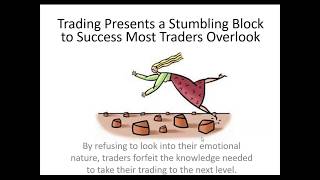
Randy Howell says most traders have the technical skills but fail because emotional hijacking—limbic responses to uncertainty—sabotages their decisions. He teaches emotional regulation and a probability-focused mindset through a 10-week group course starting June 14 and individual coaching.
Chapters
Welcome, everyone. My name is Randy Howell with Traders State of Mind. And I am just delighted that you're here and that we're sharing this time together. You know, there comes a time in a trader's journey where they realize that something essential is just missing in their performances in trading that's holding them back. Okay. They see the potential that trading really manifests, and they can taste it. Well, today we're gonna be taking a look at what's this missing part? Okay. And I have a question for you as we go along. And that first question is this. What would it mean to you if you were trading at your potential? Okay, Now I've asked that question. What I want to do is just go over a few housekeeping rules before I get started.
Feel free to write questions or communicate by typing all you want during the presentation.
Dolores always is producing these things. She knows everybody, and she is very accessible if you have questions and things like that. However, if it's a trading question, that's really, for me. Okay, Trading psychology question. And as always, I hold questions toward the end, so hold on to that, but feel free to question. And now, you know, let's just get started. Let's really start this journey, and let's start right here. You know.
What does it take to get to the next level? Because initially, you know, what happens on the surface, trading looks pretty easy. Not easy like there's a lot of knowledge, there's a lot of understanding that you have to have. But it's something that, you know, I get these parts. I learned this, I learned that, and I should have that victory. Okay?
You know that it's all about the numbers. Okay? And that's all you have to do, is just follow your rules. Understand, this is a numbers game. And then you find out, well, but then something else takes over and it crashes the party. How many of you have experienced that? You know you've got it. You know how to trade. You have stuff down, you have platform down. You finally found the type of rules, the methodology that'll work, and you have everything there. You can trade quite successfully in simulation. Lots of paper money. Yet when it goes live, when the money's real, things again fall apart. There's something. Something's going wrong that just absolutely ambushes your best plans. So how do we. How do we. Why is it that we fall apart at all the wrong times? You know, ultimately.
Dealing with your emotional nature is the biggest challenge in trading. Once you know how to trade, very few traders ever learn that trick. And that's why there is such an enormous burnout rate. 95% within three years. Friends. They either blow out their capital and finally comes the moment that it's not going to work for them. They go in with all this and they, and these are smart people just like you. Okay? So ultimately this biggest challenge, learning how to deal and work with emotions, it's not really optional, okay? By not understanding emotions and learning to work with them, you forfeit your potential in trading.
Okay, Doris is asking if everybody can hear me. So just put in yes or no. Type in yes or no and let's find out. Of course, if, if you type in no, then I'll have, I'll do a whole bunch of suspicions of you. Yes. Okay, thank you very much. Thank you very much. So here we are, okay? We, we're sitting here and we want to go. Well, you know, I'm gonna learn how to trade. I'm gonna learn, I'm gonna learn this thing about how to, how to master the mind. And you know what happens? It's really amazing is the first thing that happens is this. You look in all the wrong places, okay? You know that you spend time and more time and get more knowledge, get that knowledge base up. You get more ways to make trades and make them more predictable. In fact, you get so much stuff that it really bogs you down.
And then emotions are still there. They're still there. Despite all the stuff you have, despite all that, gosh, whatever you've been trying, all the positive thinking, all that visualization, all those affirmations, ultimately it still comes down to, you know, I'm still experiencing the fear or the over trading or the overconfidence and the revenge trading. I'm still experiencing that. And I find that I still want to be right.
God forbid. I don't want to be wrong. You find that still. You still find that element. You want to be right. I don't want to be wrong. God forbid. And yet at the same time, if you hold on to that belief that I declaration about needing to be right, not and needing not to be wrong, you're not going to be able to learn to trade. Well, so we look down, we've looked down the Howitzer. Ultimately, why is this? Because the thinking brain is the last one to know about anything. I want you to take a look at this graph. This is the glitch that works in your brain. You see all that information coming into the spinal cord. That's where the information coming from all sorts different places. Whether or not it's the eyes, whether or not it's feeling whether it's all coming in there. Then it comes up there to the limbic system that's the emotional brain. And in particular it passes this judgment, this place at the hippocampus. And it makes a decision about whether or not, whether or not we need to act right now before thinking or whether or not we can send this information to the thinking parts of the brain. And ultimately that's where the trick happens, okay? Emotions such as fear, anger, overconfidence are directly linked to the emotional brain. It acts before thinking. And you can see over there, that neocortex, man, it's way over there. It's too late for survival, okay? And the emotional brain on like really ambiguity, really uncertainty has already acted without even sending any information to the thinking brain. If you've ever had that situation where you said, you know, I have no idea what I was thinking, why did I do that? What was I thinking? This is what the hijacking looks like, friends. And it happens all the time. And it's not going to stop until you learn how to operate in the world of probability, okay? It's not about trying hard, it's about the mindset that you bring. That's the big deal. So ultimately, when you get hijacked, this is exactly what's happening, okay? And until you learn to deal with it, there's going to be a missing piece of puzzle to the whole mind game that you're bringing to trading. And at this particular time, you know, most people make the really awful decision thinking, I'm just going to leave my emotions on the table, you know, I'm just going to push them aside. I don't need emotions. The truth is, is that you're an emotional being, okay, that has a rational possibility. You're not a rational mind that has emotions. Your emotions come first. It may not seem that way. And Rene Descartes, I think therefore I am, was so wrong. But he just absolutely opened up a Pandora's box that when we come to trading, years later, we still haven't fixed where's that missing piece of puzzle. And what we need to learn how to do is to learn how to deal with uncertainty differently or it's going to continue to happen. Just because you can strong will, something out here in the world that you live in outside of trading means nothing. When in trading, what you discover is that willpower is like basically what you're basically telling the emotional brain to do is to become an 800 pound gorilla. The more you resist the emotion, the more it persists. The stronger it gets. The deal is you really actually have to learn how to manage and self master the emotion. What's behind that emotion? Think about it. Your brain evolved to avoid uncertainty because it was associated with biological threat. That's the way it is, friends, is that, you know, just a few short years ago, by geologic time, we're living in caves. A few years before that, we're living on the African savannas and we're tiny little creatures that are no match for a bear like this or saber toothed cats. And ultimately the unknown was dangerous. And what was built, what the brain adapted to, was to take the unknown and say, I don't want the unknown. What I want is, I want certainty, I want to control the environment, I want to control outcome and I want to make sure that I avoid the bear. Okay? What happens is that in all the ensuing years, you as a trader, sitting in front of your, your computers and your screens and the same uncertainty produces the same vulnerability, the same ambiguity that caveman experience right there in your emotional brain and triggers. And it goes back to that slide I was showing you, that the limbic system gets the feed from the, from the spinal cord, okay? The reptilian brain, it decides there whether or not all your smart stuff, all your, all this knowledge you have is going to be accessible or not. In the moment of heat. Most often and particularly with trading, you'll discover that that's not what happens. What happens is that hippocampus decides to hijack the route way over there to the new brain and you start working from reactions. If you've ever frozen, if you've ever like had panic stuff, if you've ever felt revenge, trading, if you've ever over traded, you have, you have experienced, you have experienced this phenomenon, okay? So ultimately trading looks like a dangerous place to the emotional brain, okay? And it's full of uncertainty. That chance, okay, that the thinking brain is not going to be given a chance. Ultimately though, is what your brain does.
Is it builds a comfort zone. It builds a little area so that you say, okay, if everything exists in here, I'm in control and I've got it together. And this is when, this is when basically you come to a moment of where it doesn't really matter what the person says, you believe what you believe and you're going to fit the facts to fit whatever you believe. This is called cognitive dissonance. If you stay there, the cognitive dissonance of the person learning to trade and before they get successful is such that it's going to Keep them bleeding money either blowing up accounts or bleeding by a thousand tiny cuts. It doesn't have to be this way. You're gonna have to take a look at that comfort zone. You're gonna have to say, I'm gonna have to redesign that so that it, so there's magic that happens so that I can think from a different way. Because ultimately, once a pattern has been established, the brain does not want to change it. It's successful. Emotions are out of the comfort zone, friends, so you deny them until it's too late. That's the, that's the history in trading. And until you learn how to do it differently, you're gonna get the same old results. Your brain's not your friend, okay? Your brain is something you're gonna have to learn to work with. So, and here's the kicker, okay? Your emotional brain can't tell the difference between biological threat, psychological discomfort.
The key is how do you diffuse this glitch.
It just can't see the difference between risking capital and a saber toothed cat bearing down on you with sixth sense incisor teeth. It can't tell the difference. Ultimately.
It'S impossible to stop the emotional hijacking when you're risking capital, when there is uncertainty and you don't know how to develop the skills to do it. This is your biology and your brain's response to uncertain certainty. That's all it is. And it's been built in there for, oh, about six and a half million years at least. And ultimately then you add psychology on top of that, then you've got a mess, okay? It's not your fault, friends, okay? But if you're going to be successful in trading, it's your responsibility. I want you to hear that this isn't about, oh my God, I'm not going to talk about that stuff, blah, blah, blah. Well, the truth is your trading account is telling you whether or not you have effective beliefs that you're trading from anyway. If you don't go in and say, they're not working, I need to change them, then you have a problem as trader. You're not a trader, you're a person who's gambling. So we get this thing.
And we recognize, oh, it's my responsibility. Well.
And let me give you a few examples of this, okay? And here's an example. I want you to imagine that, you know, you're sitting there. You're sitting there and you know that. I'm going to give you an example. Client of mine.
Was having serious problems with being able to Pull the trigger. And she thought the problem was pulling the trigger. What we finally discovered is that it wasn't pulling the trigger where the problem occurred. The problem occurred when she and her husband finished breakfast and he got up from the table, kissed her, and he walked out into the garage and got in his car and went to work. At that time, she got up and would go to the sink and wash the dishes from breakfast. And. And while she's washing the dishes, she freezes. She feels a sense of dread. She doesn't want to go into the trading room.
That'S freezing and avoiding behaviors.
Now let's take one further. Okay, now let's take a look at say something like pulling the trigger and why it's so hard. You're sitting there and understand if you see it from the position of the emotional brains, desire for survival. You're sitting there and you're seeing confirmations line up. You know that you've hit the zone. Yeah, there's some ambiguity and you want more confirmation, but you're sitting there and it. And basically that setup meets qualifications. Okay? And you don't get in. What happens is the emotional brain is looking at that stuff going, you know something, if he doesn't get into that trade, he can't lose money. So if I just stop him from getting in the trade by fear, so then we actually win. Okay? Because ultimately what happens here is the demon that you have right now, this fear of entry is better than the demon that you might run into, that saber toothed cat, right. Sitting in the fork in the road. So ultimately it's making a decision that it's short circuiting your rational thought to be able to say, okay, can follow my rules, I'm hitting this stuff. This is a high probability trade. We, we're moving on. Well, what happens is you didn't know how to manage the emotional brain. You didn't know how to produce the emotional brain that gives rise to the kind of thinking that you're going to do so you don't get in the trade. Survival wins, man, but success loses. Let's take one more to kind of, I want to make sure that you get it, is that.
This isn't psychobabble, it's not neurobabble. This is, this is happening right there. As you trade, I want you to think about revenge or over trading. Think about what happens. Revenge, trading. What happens is you take a loss. That's okay, take another loss, another loss, and all of a sudden something triggers it. It's not fair. I'm going to get it back. I'm going to get, I'm going to make them pay. And all of a sudden this anger goes on. And anger is an emotion that is going to take away threat by power by taking them down a notch or two. And the thing is, is that that emotion works very, very well when there is a biological threat there. But the thing is, you're risking capital. This is psychological discomfort. Okay? The saber tooth kiker, the wolf is not at the door, hopefully. And at the same time, you've triggered to anger and there it is, okay? And all of a sudden it's just like with overtrading. You want to prove yourself, you want to prove yourself, you want to prove yourself. You know, I have won. I've made a lot of money, I've run companies, I've done this. I, I know how to make things happen. And I'm going to get in there when I'm trading, you know, I've got to be doing something to be doing something. I'm going to, I'm going to make this thing happen. I'm going to show them what a great alpha and an executive I am. As if the markets care. That kind of mindset ultimately puts you in a situation where you're viewing setups and you're minimizing, you're minimizing the risk that's sitting in front of you. Friends, this is the way the emotions in the mind work. Okay? Now.
Let'S just say this. If you really want to become a successful trader, this is what must be done. This headline, the default way a trainer's brain, a trader's brain reacts to uncertainty in the short term.
Must be overcome. Okay, that's not going to happen by magical thinking. That's not going to happen by your thinking that. I can just think through this. Oh, I'm going to listen to Randy's webinar here and I'm going to get that kernel of knowledge that's going to change my trader psychology. No, what happens is what we're doing right now is we're talking trader psychology. We're not doing trader psychology. The doing of trader psychology is actually getting there, getting and learning how to regulate emotions and then being able to change the belief structure that you're projecting onto the markets. That's what has to be done. That's not, that's a process, friends. That's not an event. So you get there and go, everybody dances around this issue. Okay, I want to repeat that issue one more time. The default way a trader's brain reacts to uncertainty in the short term must be overcome. If you understand what came with you. The brain that you brought, the mind that you brought to trading, it's a miracle of survival. It's dominated the earth. It may have produced success in another endeavor. However, you were a very small fish. I mean, you were a very big fish in a small pond. Now in trading, totally different environment where the rules change. You're a very small minnow in a vast ocean. The rules change. You're working under probability, not control now. So everybody dances around this issue. Everybody distances themselves from its reality. That's your trading account until it's too late. Do you try to control uncertainty or do you embrace it? That's the real question. And look in tomorrow, start taking a look at the way you trade. Are you trying to control uncertainty? Are you embracing the uncertainty? And you'll see the difference.
You know, unfortunately.
We'Re not taught how to deal with uncertainty. We're taught how to, how to win. We're taught how to not lose.
Very interestingly is I am, I finished reading an article in Scientific American and what they're doing is they were going in and they were talking about the lack of critical thinking skills. And what they're doing is they're saying really what's happening is that kids are taught to not lose. People are absolutely deathy, deathly afraid of not losing. Okay? And if you're taught that, if you know that's your background and you're bringing that into trading, how do you change that? Okay? So ultimately instead folks are taught in a classroom, okay? And they think that they're going to be able to take that knowledge and apply it directly in live trading. That's not true. This is why traders with great knowledge of trading simply don't make money that their knowledge is capable of making. Because what they've done is they know how to trade in a.
Basically a sterile environment and a calm, what I call the yoga studio, where it's calm and stuff like that. But they don't know how to trade in the rigors, in the environment of trading where things are ambiguous, things uncertain. That's the thing, okay, so you're doing that and you're going, well, you know something.
When you finally really realize this, you recognize something, that trading is not for the get rich crowd. There's lots of people there. I was on a website the other day and everybody was talking about getting rich. And of course they're getting in with a thousand dollars, five hundred dollars, doing all this stuff and they think they're going to Multiply that by a thousand percent in a year and they're gonna make all this money. And they're dreaming, and they're dreaming and they're dreaming. And you know as well as I do, starting at things like that, that's a long haul. And they're thinking get rich quick. They're not thinking about how do I grow myself into a trader. What we want to do is take a look at the basic programming that you brought to trading. It's very survival basis, okay? It wants to it, it sit there and it wants to survive. And psychologically one of the big deals, the difference between do I fear uncertainty or do I embrace uncertainty? What uncertainty will do? This is the big trick in trading friends. It will expose one of four beliefs that produce unsuccessful trading. The first is a fear.
Literally a fear of your inadequacy.
The second is a fear of your not mattering. If I make a lot of money, I'll matter. There's also a fear of worth. I really don't deserve to make this money. There's a fear of the powerlessness that the truth is you have to acknowledge that control is an illusion and you really don't have power over the outcome. You have power over yourself.
The truth is a successful trading mind is just simply not natural to the evolution of the brain. It's the mind that you bring to trading is just simply not going to be the mind that is going to win in trading. Okay? Because ultimately what you have is, you have, you have a mind that basically wanted to control outcome as a survival trait and understand it was great doing it. I mean we killed mammoths, we built civilizations, we stood up to same as two tigers. We did all sorts of things and this trait allowed us to prosper as a species. Now it has to be modified to create the probability baseline instead of controlling outcome. Okay. You wait to see what the market will give you. Completely different. You let go of control, you lock into performance. Okay, now this starts. How do you about, how do you go about rebuilding this mind? The first place is you start by really beginning with a little emotional intelligence. Okay.
It starts with understanding how the mind really works in this particular image. This is an image from inside out from Pixie Disney. It's a kids movie, okay, Pixar, Disney.
And what you're looking at is an incredibly well researched. They actually had neuroscientists working on staff, said they would be able to build the way that the mind shows up. And these are emotional programs. There on the right is Joy. There next to her is Disgust. There in the red is anger. The there in the blue is sadness. And there to the left and high of joy is anxiety. What happens is these are emotional programs that are organizing cooperatively and in competition with each other all the time. And ultimately this is where the hijackings occur. And these get together, they form what we call a community of rival programs. And it builds a self.
And it just so happens in the movie, what you discover is the way that self had been built in the little girl simply was no longer effective after the move from Minnesota to San Francisco. It had to be rebuilt, it had to be rejiggered so that there was a new emotional program team going on that built a mind. That's what we're going to have to do. Okay.
So that's the first piece you need to understand, okay, that emotional programs create the mind they use. And that it's not like, it's not like, it's not like you can ignore emotions. The truth is you're an emotional being and you have to learn how to use emotions to create the mind that manages uncertainty. And, and I mean you have to learn it, friends. It's not what you came stuck with. The default programming is survival instinct. It wants to survive in the moment. In probability mind, you're looking for long term survival and thriving. Completely different animals. You can learn how to do this, but it's not easy. So what we get here is that the emotional programs.
Give rise to thinking. And at the same time, do you remember that comfort zone thing? And the magic's out here. Ultimately what you're looking at when you're seeing this guy, that was a very laid out rational point. But I still hold my emotional opinion based on no facts or evidence. That's called cognitive dissonance. Every traitor who holds on to, to stuff that's not working is practicing cognitive dissonance. They're going to resist change. Yet if you resist change, you're going to burn out your capital and you're going to be out of trading in three years or less. Okay? Or if you're really into it, into suffering longer. However, if you start going, okay, I know this cognitive dissonance. I know that I have to change the emotional opinions. I have to fit the facts and evidence that, guess who the trading account is telling me. Logic is highly overrated.
It's the last train out of the station.
And this is a big deal to traders. We want to be logical, we want, we want to be rational. And then what we discover.
Is that in order to be logical and Rational. We have to have an enormous amount of emotional intelligence to manage the mind so that those two emotional programs can be actually trading. Because those are the ones that you want for probability management. Your fear, your disgust, your sadness, all those. Those are all about survival management. So you can see that this is. This is tough. You know, ultimately.
When it comes down to it.
Listen to your trading account and what happens in your performances. Don't listen to your alibis. Ultimately, all the. The rational mind is doing. I want you to hear this really, really carefully. All the rational mind's doing is producing an alibi or an explanation that supports what the emotional brain has already decided. Okay? So what's revealed behaviorally in trading are your most primitive beliefs about managing uncertainty. And I want you to take this. Are you a half empty or a half full kind of person? My hope is that you actually come to a moment of. You recognize that neither of those positions, positive nor negative, produces an effective trader. The truth is, it's all probability. The what? The glass has water in it. Okay? And you don't know if it's half empty or half full. What you're doing is you're seeing what the markets are going to tell you. But yet you look over here on the right and you begin to see this fulcrum that starts going from my beliefs. I am. You start seeing this little thing that goes on, and suddenly it produces feelings. That's the chemistry of the emotion. And suddenly you start having desires or motivations. Then you start taking actions. Remember, actions happen before thoughts, okay? Then thoughts arrive late. So ultimately what you're doing, you're saying, boy, I'm going to have to figure out. I have to change this circle. There's some things going on here that I have to get past the surface talk of all my stuff to what the trading account is telling me about myself. Because ultimately it's really all about, you know, if you're having a problem in trading and know how to trading and know how to trade. It's about a sense of inadequacy, not being good enough. It's about not mattering unless I make a lot of money. That's a setup for overtrading and revenge. Trading are your sense of worth. You've connected your sense of worth as a human being with your net worth. And boy, I'm gonna tell you something that's. That's given the devil, the, the driver's seat and powerlessness is that when you. You have to acknowledge that you truly are powerless is you can go and become a bucking horse in a burning barn. Or you can realize that no, you don't have power over outcome, you have power over you.
If you get that, you become a very good trader. It takes effort to learn how to do that, though. So we're doing this and we're going, okay, so now.
This is where we start realizing that this observer stuff is really important. In quantum mechanics, there is actually an axiom that goes something like this. Everything exists as potential.
The observer of that potential is what brings forth the form. And they particularly talk about that when they're experimenting with light being both energy and mass. And how depending on what the person believes they're seeing is the way that the actual, the light shows up either as photons matter or as energy. Okay, so this is the power of belief. But ultimately what we're doing is you begin to recognize is that there is no single eye in the mind. What there is is a collection of emotional programs that have created itself that you have fused to and see that as your identity. That's what has to change. Because ultimately what you are, if you follow this, if you follow this slide, you see that you're an observer and the projector is your beliefs. And all the output coming out of that projector are the emotions and the interaction with the environment. That's your market, that's your perception. And you begin to go, wow.
Wow. So this is all about my, my, my trading is all about my beliefs that I'm holding onto about uncertainty. And the trading account is the only truth meter that's going to help me. The truth. That, yeah, that trading account is not your, it's not your enemy. What happens, it's revealing. I'm asking you to look at that trading account very differently, like a detective. Because ultimately all.
All perception is observer generated. So ultimately the. To put it this way, in neurobiology, what we would say is that you have never experienced reality.
Or in trading, we would say you've never experienced the markets. What you've experienced is your brain creating a virtual representation from all your sensorial inputs. In creating this virtual representation, your beliefs that you then project, okay, that's what you're trade, that's your trading mind. And I hope you understand this is man. I'm gonna tell you something. You need to be very dead serious about the mind you're creating to go trade. Most people don't. And you see what happens.
Also.
Once you understand that what you see is generated by your, your beliefs about your capacity to manage the uncertainty of the unknown, you really come down to this thing, where.
Do you fear the unknown or do you embrace the unknown? Take a look at that. When you trade notice, are you a fear driven trader? Are you embracing the unknown going, I know there's probability, so you're looking at it and going, this is the essential question, okay? And it has to be dealt with.
And ultimately what happens here is you have to really rethink what being a winner is. Guys who come in and says, I want to win, I want to win, that's what I want to do. What happens is before you set yourself up for failure, simply because you do not have the capacity to determine outcome, to win, what you have the capacity to do is to perform. You have to begin to really rearrange what you see as winning. Okay? This is really all about performance. Because ultimately.
Your brain, your mind evolved to fear the unknown and then your psychology followed the dictate. You know, if you're a perfectionist, what happens is you're going to try to do everything right so you won't be wrong, we won't lose. You know, if you're an Alpha, you have this idea that by sheer force of will I can make things happen. These are all beliefs, okay? And neither of them are effective, okay? Because ultimately what we're all scared of is the fear of the unknown or what Freud call thanatos, okay? Is that ultimately we don't want to fail. I mean, understand from an evolutionary standpoint, failure is death. So you have this bias sitting there. So we're going to have to develop skills to embrace the uncertainty. We're going to have to move from survival based programming that created a mind that you brought to trading. And we're going to have to learn how to produce a probability based mind that is focused not on winning but on performing. So now we're talking about, now we've covered the emotional intelligence portion of this and you know, a lot of people will have be like this guy, they're sticking their ears, I don't want to hear this, I don't want to hear this, I don't want to hear this. I, you know, I want, I want the world to conform to my magical thinking. Okay, how do you do it? It's very doable. It's not easy, but it's doable. The very first place you start is to recognize that the default programming of the brain and mind that you brought to trading is not going to work. Okay? That's the first thing. And that you know that, okay, I need to learn to become very different around uncertainty than I have Been and I really want to win. But the truth is I have to let go of that too. The second thing that's going to have to happen is you're going to have to learn how to regulate emotion. What we're looking at here in this graphic, the same thing when we were showing you information into brain steam, coming to hippocampus and hippocampus, deciding whether or not it's going to be routed to the amygdala and basically the fight flight response or whether or not the signal is going to be routed to the thinking brain. Okay, you have to train yourself, okay, my friends, that when you see a stressor, when you see challenge, when you see what the emotional brain would call threat, what happens is you are learning how to disrupt that pattern from emerging and taking over mind. And you do that, okay? You recognize that emotions are biological, they take over mind. And so you're going, okay. And all thinking is emotional state dependent. So how am I going to be able to do this? Well, we know that there's a, there's, we know that it has to be done here. What you're looking at here, this is what you want. What you actually are looking at is a graph that shows the, what is known as the parasympathetic nervous system. And that's literally what we call rest digest. That's when you feel really, really calm. And if you're really, really calm, you can't trade, you're too calm. You need to be alert. On the other side, it's the sympathetic nervous system where what happens is it starts cranking you up and getting you closer and closer and closer to fight flight. What you're looking for.
Is a modicum, you're looking for something where your physiological self is aroused a little bit, but it's not egging you on over to fight flight. You're at a place where you're alert, you're focused, you're ready. This is the sweet spot between fight flight and rest Digest that you have to learn how to first produce, then maintain. That's the sweet spot. That's just the biology, that's not the mind part of it. Okay? To do that you're going to have to learn emotional regulation, ultimately managing the intensity of an emotion so that it does not contaminate the trader's mind mental decisions. That's what you're looking for. And you discover is you remember I said that emotions are biological. They take over psychology. What you're doing is you're realizing within that biology of an emotion are both Breathing and muscle tension, those are volitional things that you can actually get at. You can alter the way you breathe under stress. And what happens is stress cannot stay there. It depends on short breathing, it depends on muscle tension to be able to maintain the arousal of going up. Literally, when you are in the group course or an individual course, you are literally learning how to manage this breath in the environment of trading. You're learning to go, oh, my God, I've been sitting there just absolutely fixated on the screen. I've been holding my breath. I've been, no, you're gonna have to train yourself out of that. The first two or three weeks of my training programs focus on training you just to do that. And it's rote training, learning how to regulate the emotion. Because if you can't regulate the emotion, you can't get to the mind. There's no way. But let's just say you come to the moment where you regulate the mind. This is where I mean, regulate the body. This is where it gets really interesting. Because the next thing you have to develop mindfulness, or what I call awakening the observer in this cool little image, what you're looking at is this eye looking into the brain and saying, I can hear myself read this sentence in my head.
Who is saying that? All of a sudden you realize that there is awareness outside of your thoughts. That's the ticket, friends. When you realize that, you go, oh, my God, my thoughts and I are not the same. My beliefs and I are not the same. What happens is it's just one organization. And I can learn to step back out and I can observe, observe them. And by observing them, I can begin to change them and redirect them into higher functioning. That's the cool thing. That's the next thing that's learned, okay? And that's literally that happens early. You start learning how to do it fast. Because mindfulness is an enormous tool. It's the tool that I would call that you begin to change. Because ultimately what you really get is this.
You realize that the you that you've been talking about, all this I, I, I stuff, I get scared. I get this, I get that. That's all crazy is this. You is only one potential organization of a self. And now you can step back out and you can begin to observe it, calm it down. And this is what you need to reorganize the brain and the mind for probability thinking rather than for survival. You know, your hard will, your, you know, your tough upper lip that doesn't work. Begging doesn't work. Giving up doesn't work. What works is recognizing that there's a multitude of potential you have to develop the observer. Remember what in.
Quantum mechanics, the notion is that everything exists as potential. The observer of the potential is what brings forth the form. This is the application here is you have the observer, okay, now we've got the observer. And the first thing we're doing is we're observing. Oh, this is a mass of emotional programs that I need to reprogram. I need to reprogram about who's in charge here. Okay? This is where it becomes very, very powerful. Ultimately, you get it very clearly is that historical self.
This I that you talk about, that you brought to trading, you know.
This is the one you were born into. This is what your brain taught you. And you already had that negative assessment machine already in you, what I call the inner critic. And before you know it, you're sitting there and your mind is basically looking your, your brain by itself going to look for negative intent. It is wired for anxiety. It's wired to see bad stuff happening on the horizon. That's why you can have all this, all this confirmation of a trade and they're still gonna get in. Because what if something goes wrong? Well, it could, okay, but it's unlikely. But all of a sudden you start seeing all these different positions the mind can start taking. The dread of the woman I was talking about the resentment of a revenge traitor. The fear of someone who can't pull the trigger. The self pity of a victim, you get it. The worry of the person who says, oh my God, what's going to happen to me? All of a sudden you realize that.
These are examples of an untrained, undisciplined mind. And the key is, how do we go about doing it? Okay? The next thing is once we have sat there and we've learned how to regulate the emotion, we've generated observers so that we're beginning to look inside and say, you know something, this is pretty messy. You know something, what's happened? We begin to look and perceive the mind really as if you looked at it as a committee with various different kinds of players on it, some competitive with each other, some wanting to cooperate. And all of a sudden you have not noticed it. And all of a sudden you get there and say, wow, wow. It's time for me to start taking charge of how the mind is organized. You're not stuck with the one that came with friends. There is so much more and it's so necessary for managing the mind that trades. Because Ultimately it comes down to this.
Instead of fear, overconfidence, creating the mind that trades, you can be so much more. You can be working from the emotional programs of discipline, of courage, of self soothing and of clear thinking. These are emotional programs, friends, that you can learn to produce. You know.
We actually in the course, in the group course and in the individual course, you will actually learn how to pull emotional programs out. How you feel when you're being facing a challenge from actual experience. You actually learn how to recalibrate a memory so that you get the actual feelings. You're not depending on. You're not depending on visualization, you're not depending on.
Affirmations. You're depending on your ability of taking an experience, reworking that experience so that you have access to the emotional programs that were there. That's a process that I call memory enrichment. And it is powerful, friends. It's very powerful. When you do this, you have access to this and you discover is that even when you pull and have this stuff managed, you have discipline as a ruler, you have courage as a warrior, you have the self soothing, calming your fears down as a caregiver and you have that clear thinking as a sage. The challenges of uncertainty are still there. The difference is this. You're not approaching the uncertainty with I've got to win, I can't lose. You're not bringing the survival mind to engage in uncertainty. You're bringing what's in this image here. You're looking at people really seriously challenged and yet nobody's panicking. Everybody has their act together. People know what. People know what the captain wants. Everybody's doing their job. And what they're doing is they're standing and delivering. They have the state of mind to move that boat in the same way we want to build a state of mind that moves your methodology and your platform on probability base so that you're in the zone. Now. This is where you really, this is where you discover it. So actually my question to you is, go back to that very first question I asked you. What would it mean to you if you were trading at your potential? What if you as an observer had the ability of organizing the mind that you needed for probability thinking rather than accepting the one that you came with? Imagine what that would look like. Okay, this is where it comes back to. Okay, and what if, what if you could really do it? What if you could really learn how to do that? What would that be worth to you? Okay, I mean in dollars and cents. And then also your personal life in achieving goals. What Would it be worth for you to be able to be able to build that mind.
That can trade effectively?
Well, you can learn and I'm going to show you how. One last slide. Though I often use the analogy of the American cougar as a prime example of an apex predator and reflects the qualities of a great trader, what happens is he's an apex predator. If you've ever been in the presence of a cougar, you realize that he's an apex predator. Okay, what happens? He does not stalk the white tailed deer. He sits on a tree like this or on a rock outclot cropping. And he knows the habits of the whitetail deer. He waits in ambush for the deer to show up.
He has setups that he knows are highly predictable. When the deer gets into the setup, it springs into action. Bam. He has a high success rate. And if he misses it, if he loses the trade, he just simply climbs the tree and starts over again. He knows his method works, but he's driven by patience and uncertainty. Okay, this is what he's brought to manage uncertainty. This is what you can learn here. Okay? Now, how do you go about doing this? Well, friends, I want to tell you something. Good news. We're having a groups course start here pretty darn soon. Okay? And it's June 14, as a matter of fact. What this group course does is it teaches you these very skills that I've outlined here. It's giving you the emotional intelligence background. It's teaching you how to regulate emotion. It's teaching you how to produce the observer. It's teaching you how to find the bad guys and no longer get ambushed by them. It's teaching you how to build an effective trading mind. Okay?
And it's teaching you how to take that mind, not assume you're going to go off into the sunset. But the challenges of trading are there. But you bringing a very different mind to it. It does that in 10 weeks. Five different sessions. Okay? You have a virtual classroom with unlimited access. Okay. 24, 7. And there are five group sessions of an hour each. And you have lots and lots of homework. This is a process. This isn't. We're just going to talk about. It works through the progression I've shown you. And you're given the real goods about how you build a mind. Not the platitudes, not the talk about trader psychology, the how to build the mind. Okay, that's the one. And also, if you sign up real soon, you get a bonus of an emotional regulation workshop that I did a couple years ago. It's just more to say it's $200 value. Sign up early and get the thing. Ultimately you can break the course down into five payments. Okay. And it makes it very affordable, makes it workable, and it teaches you the basic skills you're going to need. We also have the individual courts, which is fundamentally, it's highly comprehensive, it's highly personalized and it comes on with one on one personal coaching from me. Okay. By Skype. So we're looking at each other, we're talking with each other. It's very powerful. And it's a multimedia learning system where you get all the downloads, you have all the stuff. Okay, friends, if you're serious about trading and if you realize that you're going to have to develop the mind that trades, I encourage you. And right now the group course is here. And if nothing else, if you're wondering between individual course, group course, what do I really want to do, what's best for me? Get a free consult. Just simply go to the website, hit contact us, we get your request and what happens is Dolores finds time for us to meet on Skype. Okay. We talk and it's about an hour and you get to ask any questions you want. And I would encourage you to read my book first. It makes it a lot more interesting. But the main thing is, what I'm saying is, are you serious about taking it to the next level? If you are, I encourage you deeply into one of these courses. Okay. The group course is simply a lot more affordable. It we get a lot of people running through them and people walk out trained to know the skill sets they need to be able to develop the mind. Lots and lots of good, lots of good feedback from everybody that's taken it. So I want to thank you. And if you have any questions, type them in right now. We've got a few minutes. I'd love to take a look at your questions and answer them. And while we're waiting.
What I'd like to do is thank you for coming.
You know, it's ultimately question.
I am muted and cannot hear. Oh, that's from earlier. Boy, I am really glad that wasn't it. Boy, boy, I would hate to think that somebody went through this whole thing and had a muted thing and we're looking at slides but weren't able to listen to me. Okay.
Okay. If you have a question, type it in because we just have a couple more minutes and we're out of here. Okay. So what I want to do is I want to thank you. I want you to thank you for coming, investing your time into exploring your potential. Because ultimately what you're going to discover about trading, that it is the most powerful self development program that I've ever seen in my life. It just simply forces you to recognize is that I have to develop the mind that I'm going to bring to trading. Okay, we got some questions. Hi, Randy. Hello. What are your thoughts on controlling your emotions by walking away from the screen after placing a trade? It's a good technique. I know plenty of people who do that. And it's at the same time, what I would encourage is that when you still walk away, how are you managing the emotion? I'm asking people not to stop trying to control emotion and manage the emotion. What I would encourage is that when you're walking away, that's good because you're not doing damage to yourself. Okay. As you're walking away, though, is what I would encourage you to do is start turning toward the fear. Okay. And learn to master it. Because ultimately your trading is still going to reflect the beliefs that you're projecting.
And so anyway, it's a good start. I would just encourage that. You know, ultimately you're still in a place of self mastery and you still need to work when you're walking away. What you realize is that you trigger. And what you want to do is you want to work on that trigger and master it. Okay. Hello. I have several parts talking to me and who contradict each other. Yep, you got it. How would you handle that? I would take my course. That's what I would do. You'd learn a heck of a lot more about it. The problem right now is that you're hearing various emotional programs show up as voices in your mind. That's the neurological way of describing the phenomenon. And what happens is what you would learn in either of the two courses is you would actually learn to be able to take the thought, what the thought is actually saying, and pin it back into the emotional program that it comes from. And out of that you're going to get to a moment of, particularly when most people are having these contradictory things. You're having internal struggle and you're dealing with what I call the inner critic. All that negative.
Judgmental type of thinking going on, and a sense of fear or impulse. That was what I call orphan. The deal is your job comes down to being able to regulate that and say, you know something, These thought streams may be present, but they're not the ones that I want in this particular moment in time to be able to perform At a high level. That's the real thing is you need to be bringing an intentional mind into that moment rather than a mind that is compromised by different parts talking.
But yes, you can learn a lot more about that. Consider yourself lucky, is that you actually recognize that you have different streams of thought that are going on in mind. A lot of people are just absolutely baffled by the notion that they have really a conflicted community of thought of emotional programs creating havoc in the mind. Okay, so you're in good shape. Okay. Thanks, Randy. You're welcome. You're welcome, Ed. Well, friends, my hope for you, no matter what, is good sailing. Okay? My hope to you is that you realize that there is an enormous opportunity here for self mastery of creating the mind anew that can engage uncertainty. It's not going to happen by itself. You can do this for years. You get around these trading rooms, you realize guys been doing this 10, 20 years and they haven't made diddly. The key is, is that at some moment, it's not about the knowledge, it's about the psychology you bringing to the moment.
If you're at that moment, come and learn with me. Okay. I thank you for your time and I look forward to seeing you. Take care, my friends.









