Why Effort is Never Enough
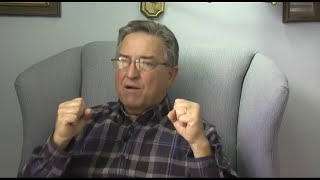
Randy Kardec Trader argues traders can't eliminate emotion, only manage it. He walks through common mistakes like hesitation and impulsive entries, then prescribes breath work, mindfulness, and emotional awareness as the real edge in trading.
Chapters
How many times have you ever heard just leave your emotions at the door, just be rational. And with that and some hard work, you're going to be able to learn the strategy, you're going to be able to be there and you're going to be able to take that methodology and you're going to be able to win in trading, how many times have you heard that? A lot. I bet. There is a conception that if you're only rational, then what happens is right there you're going to win the game. Because rational cutting yourself out of emotion is the way to do it. If you have emotion in trading, then you're going to be losing and you're going to go nuts. What? Well, that's not really true. The truth is that you're an emotional being. And denying that you're an emotional being in fact sets you up for failure. If you know that, okay, I have fear. The key is, can I regulate that fear? Can I get to the bottom of that fear and can I resolve the fear so that I can get back to a rational state of mind? And the point is, rational is not the absence of emotions. It actually is an emotional state. I like to call it impartiality. Impartiality gives me the ability of saying, okay, I know now what emotional state rational thought comes from. I know that it's also a highly coveted emotional state to think from. Very important. There it is, is what the misconception trade without emotions and be rational doesn't understand, is blind to is that all thought is emotional state dependent. Literally, your emotional brain makes a decision and your rational mind, that left brain then simply produces an explanation that supports, no matter how irrational that decision is, that's what the left brain does. You don't have to believe me. You can prove it to yourself. Where you have a problem in trading, it could be in pulling the trigger. It could be the impulse of getting into trades, it could be trade management. When you're under the throes of either exuberance or an urge to trade, or a fear to get in, a fear of losing, what you start noticing is you hear the get in, get in, get in, get in. It makes perfect sense. After the facts over with, it doesn't make sense. But the emotional brain has made a decision.
The left brain has simply produced an explanation that supports that decision. Same thing about order entry is when you try to pull the trigger and you hear that, are you sure? Are you sure? Get more. What if you lose? What if you lose? Suddenly your hesitation, your thinking totally supports the Decision that, that it's dangerous. Same way with trade management. You're in the trade and suddenly you've got some money. After all the flux after it's gone against you, after you finally worked yourself out, man, your emotional plow has been cleaned and it finally gets to a moment where you've got some money there, suddenly it makes enormous sense to get out of the trade. Now.
There again, the emotional brain has made a decision.
The left brain, the seat of logic. Thinking is simply producing explanation that supports that. Now, suddenly, though we've been blinded in most traders that come to me, what's happened is they believe in rational thinking. By believing in rational thinking, it doesn't allow them to see that they themselves are the problem. Okay? And that really, when it comes down to it, it's not freedom of emotion that is even remotely possible.
What is possible, though, is freedom of emotion. Yeah, freedom of emotion. If you come to the moment where you go, okay, I'm an emotional being. I'm not a rational being. I'm an emotional being. If I have a body, I'm an emotional being, then the question becomes, how do I go about managing that emotion so that I end up in peak performance? Mind.
The first key, always, if you look through my work, always, what you discover is that it starts with managing the body of emotion. You manage the body by breath and by tension, relaxation so the emotion does not grow. Arouse, arouse, arouse, then become a feeling and pulse through your body and take over mine.
The second thing is you produce this sense of mindfulness where you step back and you recognize that you know even your biases that you've been blind to, okay, you have to learn to see them. And in seeing those biases, you don't have to be like the poor group of people who come to me all the time and say, randy, I wish I'd listened. I wish I knew. I was so sure that you could leave your emotions at the door. And the problem was out there that I didn't realize it was my own biases, my own beliefs that blew up all my money and tore up all my time. I can't afford to trade anymore. Yet if you go back and you say, wow.
It'S this emotion that I need to start learning to manage, not run from, not hide from, actually approach and engage and learn what's there. When you do that, you start having the capacity at mindfulness to be able to say, okay, let me look at this trading psychological demon of mine. And you look at it not as like, oh, my God, what are people going to find out? It's like, wow, this is curious. This is how the self I am that trades has been organized through time and through circumstance. And it's just one possible organization of the self. Now you're talking because at that particular time you realize that identity is fluid and that you can construct an identity, construct a self that's really emotionally intelligent, that can trade well. You learn how to manage the emotion. You learn how to recognize you and your thoughts, you and your beliefs are not the same. But you have to respect that history because it's been creating your experience. Then you start realizing that there are enormously powerful emotional circuits running around in your brain from many millions of years ago, that.
Everything'S fed through them. You're not going to not have these emotional circuits firing and rational is not one of them. And here they are, my friends. They're seeking fear, anger, care, lust, and play. Okay, These are all there. They're all running through. Oh, no, I did. I didn't mention panic lust, by the way. It's not, you know, like hot and bothered. It's literally like having to get in the trade. Having to get in the trade, okay, Fear, you know what it is? Anger, you know what is care is there too. Suddenly you start realizing that these circuits can be accessed and built to build a much better mind for managing probability. You're no longer having to be right, okay? You're no longer having to control outcome, which you never could do anyway. What you can do, though, is you build the self.
That can execute. Suddenly you're building a mind.
That you know the one thing you can control is the very mind that you bring to performance of execution. That's the edge, friends. That's when you start going, I have freedom of emotion. I can pull these emotions together. And suddenly what I can do is I can build the mind that I'm taking to trading rather than taking a mind that I'm ignorant of. I now have a mind that I'm emotionally intelligent about. That serves me well under pressure. That's the key. Friends, thank you.









