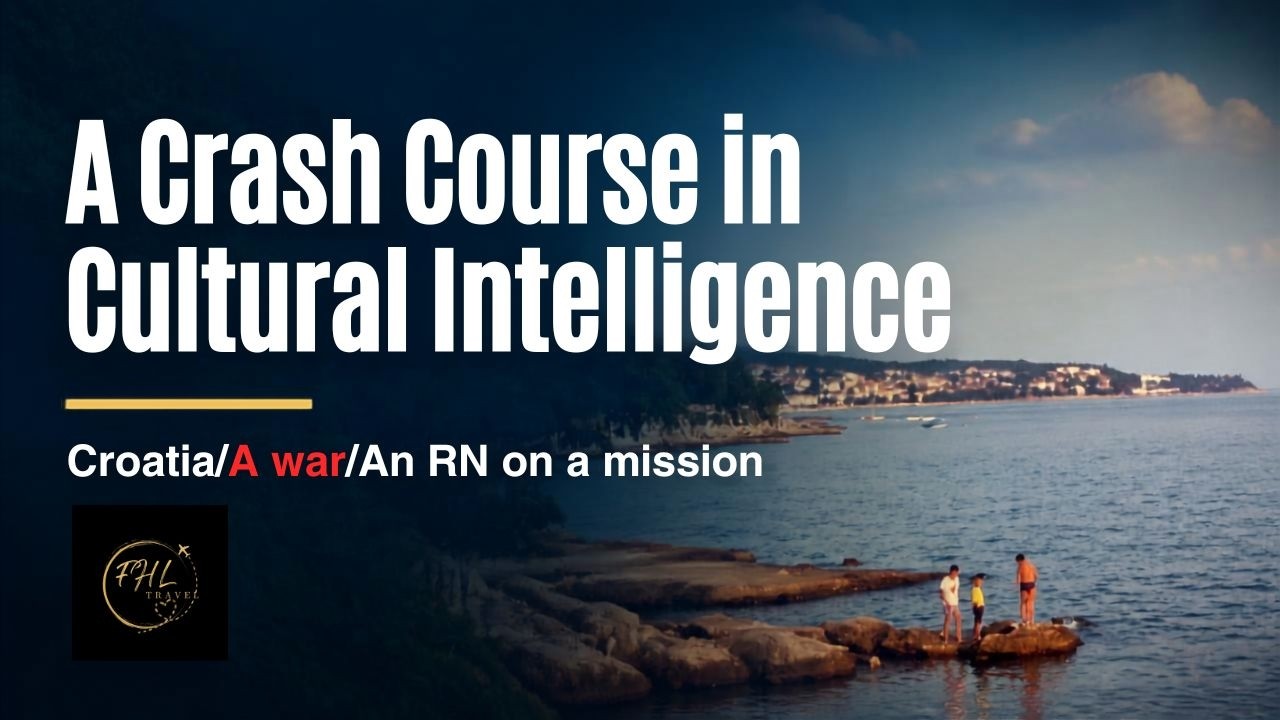
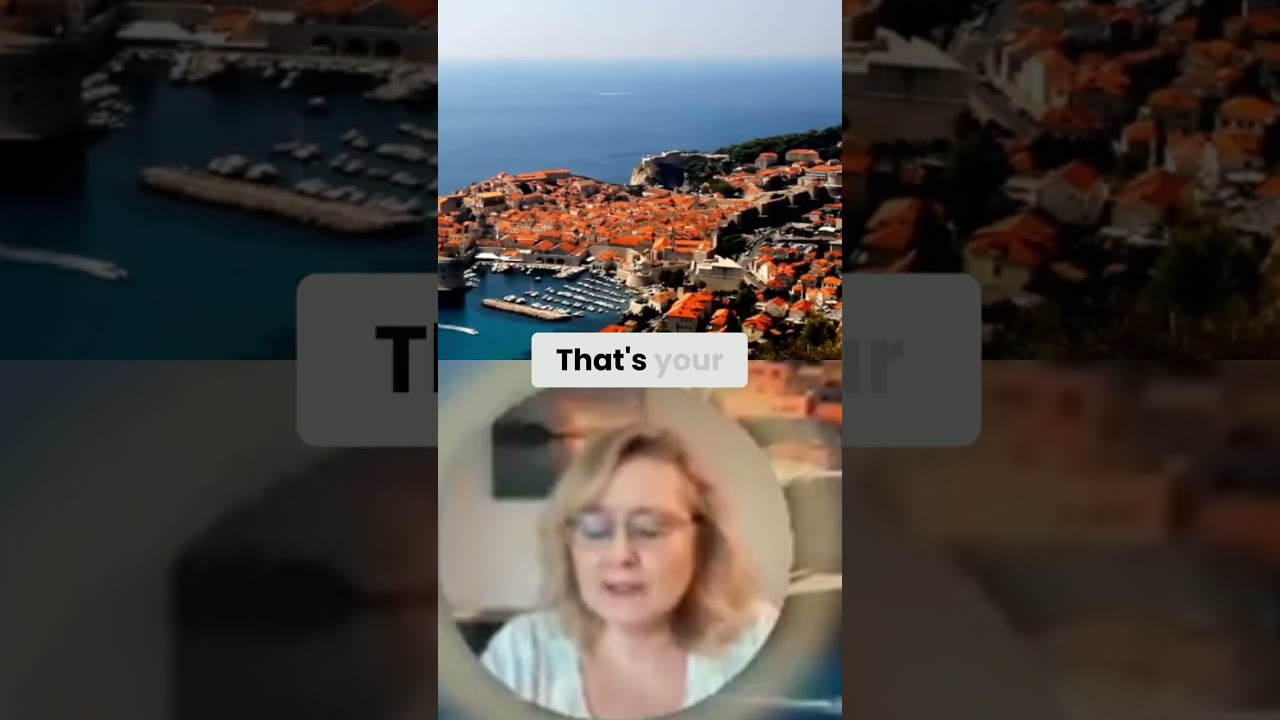
In this first‑person educational video, Dr. B, a pediatric registered nurse, recounts her 1994 humanitarian trip to war‑torn Croatia. She describes how customs officials blocked a box of basic medical supplies she had prepared, forcing her to confront a stark cultural clash. Using this experience, she introduces the four capabilities of the Cultural Intelligence (CQ) model—CQ Drive, CQ Knowledge, CQ Strategy, and CQ Action—illustrating each with concrete moments from her four‑week mission. She explains how her initial motivation (CQ Drive) was insufficient without understanding local systems (CQ Knowledge), how she had to reframe her assumptions and adopt a listening stance (CQ Strategy), and how she ultimately succeeded by respecting hierarchy and following official protocols (CQ Action), resulting in the supplies reaching a children’s hospital. The narrative leads to her decision to pursue a master’s in international cross‑cultural community health nursing and to create a video series that breaks down cultural values (power distance, collectivism vs. individualism, time perception, etc.) for travelers and professionals. She invites viewers to share their own cross‑cultural challenges in the comments.
Chapters
In the summer of 1994, I took my very first international trip to a country that was actively at war. It was Croatia. I was part of a group going over to help and minister to refugees. We were told the actual fighting was happening several hundred miles away, so we would be stationed And there was no risk to our safety. I was young, highly motivated, and totally ready to make a difference. Before I left, I called up some of my friends in the healthcare industry, and we put together a massive box full of medical supplies— toothbrushes, toiletries, bandages, first aid kits— things we were going to hand-deliver to the ref— to the refugees we were meeting who would desperately need them. I stepped off the plane feeling like I was bringing a little bit of hope, dignity, and hopefully some comfort to those severely affected by the war. When we hit customs, the officials wouldn't let me bring the boxes into the country. They asked what was in them, and being— trying to be honest and forthright, I said— I told them what was in there. And they refused to let it come into the country. So I sat over in the corner on my suitcase while I let the men in the group deal with the very armed and official-looking people in customs. This was only my second trip abroad. Truth be told, I was too angry to be civil, and I was smart enough to realize that being uncivil would get me in a whole lot of trouble. So I stayed quiet. I had these boxes full of things that were going to be practical and very needed for people living in a refugee situation. I mean toothbrushes, toothbrushes, bandages— nothing major. That trip threw me into the absolute deep end of what I later learned I could call cultural intelligence. I had no choice but to learn how to swim Or pack up and abandon the whole reason I was there. Over the next 4 weeks, I got a masterclass in what the Cultural Intelligence Center calls the 4 capabilities of CQ. There's CQ Drive, CQ Knowledge, CQ Strategy, and CQ Action. And I'm going to explain all those by telling you the rest of this story. First of all, let's talk about CQ drive. I had it in spades. CQ drive just means your motivation to learn about another country. I was there. I wanted to help. I was excited. I had good intentions. But here's the hard truth: drive alone isn't going to be helpful if you don't know how the system works. What is cultural intelligence? Cultural intelligence, defined by the folks over at the Cultural Intelligence Center, is the capability to function effectively across various cultural contexts— national, ethnic, organizational, generational. There's too many to list, but you get the idea. Okay, I taught on this for years because in nursing we're told that we have to be culturally Competent. Funny word. We'll talk about that another day. Cultural intelligence, function effectively. That makes a lot of sense. So my first encounter in this situation, like I said, I had tons of CQ drive. What is CQ drive? That's your motivation to learn about another culture. Now, I had been in other cultures prior to that, I had a lot of experience with a family who spoke multiple languages. So there was intrinsic drive. I just wanted to get better myself so I could function better even in my own family. There's extrinsic drive. Some people have extrinsic drive because your boss is telling you you have to learn the language or your boss is telling you you have to cut a business deal. That is extrinsic motivation. And then there's self-efficacy. Self-efficacy is simply your desire to function effectively in another country or another culture because you want to feel good about yourself. You want to feel like you're competent. There's nothing wrong with that. Okay, so those are the things that impact our CQ drive. In this situation, I had a lot of it and I really wanted to help. The second area is CQ knowledge, cultural knowledge. In my story, this is where I completely failed at the border. I was operating under very limited American assumptions. In the US, if you show up with free medical supplies, people open the doors. You're a hero. You're the good guy. But I didn't understand the context I was walking into. I was shoved into the deep end. This was my masterclass. I was entering a nation that was under siege. I didn't know what that meant at the time. They weren't just dealing with refugees, they were dealing with an invasion. They had a government, they had a healthcare system, they had protocols, and here comes this foreign kid trying to bypass their national system with a box of toothbrushes. To them, I wasn't a helper, I was an amateur ignoring both their systems and sovereignty. I learned a whole lot in the next 4 weeks. And just to be clear, I had no intention of disrespecting either their systems or sovereignties, but without any knowledge of these systems and how they worked in that country, I made assumptions that took some time to sort out. That's the second area of this CQ model, CQ knowledge. What do you know if you're going to travel to another culture? If you're going to do business with another culture, what do you know about their businesses and how they operate? What do you know about their values and norms? Can you speak the language? Can you say hello in their language? Can you say thank you or please or no thank you or where's the bathroom? You know, the one we all learned about in Spanish class. And how does their leadership function? Not your leadership model that you prefer, but how does their leadership model Function? In that business, in that community. Good question. The next quadrant of the CQ model is called CQ strategy. This is where you have to stop and check your own assumptions. It's something I learned on trip number 1. For the first week I was in Croatia, I was internally fuming. My strategy was just, these bureaucrats are being completely unreasonable. Don't they care about their own people? Don't they care about these people who have come here with nothing? Our incredibly gracious hosts helped me to learn to redirect my focus and learn about what I could actually do to help these people. I had to catch myself. I had to ask, what if I'm the one missing the point? What if respect here isn't about doing things fast, but doing them properly? I had to let go of my savior complex and actually listen to how they wanted to run their own country. It was 4 more weeks before I got to do that again. That brings me to this final quadrant of the CQ model, which is CQ action. What would you actually do, or what do you actually do to try and function effectively when you're working or living in another culture? For me, it took 4 weeks of waiting, navigating a lot of red tape, And learning how to follow both rules and cues. I was paying close attention. By the end of the month, we were back in Zagreb, and I was granted a meeting with the highest official in the healthcare industry in the country. It would be like me going to Washington, D.C. today and walk— walking into the office of the Director of Health and Human Services. That's how high they— They stuck me. I was overwhelmed and shocked and just thinking, oh my goodness, what have I done? What am I gonna do? So I learned another lesson there. Most international healthcare is actually run from the top down. It's totally not like the United States at all. Everything that happens in local hospitals is directed by the government, and that is how it is in most other countries in the world outside of the United States. It's just the way it is. I sat across from a very well-dressed, articulate healthcare provider who was a very gracious lady. This time, instead of pushing my agenda, I adapted my behavior. I showed deference to her authority. I followed her protocols. Eventually, she looked at the box and looked at me and gave me the authorization to officially designate which local hospital would receive the toothbrushes and bandages I had brought over. Since I was a pediatric nurse and concerned mostly for the children affected by the war, I chose the children's hospital. It wasn't the door-to-door refugee handout I had envisioned when I packed that box, but to be honest, it turned out better. I had no idea how I was going to keep chaos in a refugee camp From erupting from a small box of— it wasn't that small, but a box of supplies. And because I was willing to respect their structure, their hierarchy, and their processes, the supplies finally made it to some of the people who needed them. For me, the trip was a brutal wake-up call. Literally a few weeks after I got home, I started working on my master's degree in international cross-cultural community health nursing. So I'm talking to tourists today, but I'm also talking to international business travelers and anyone who experiences another culture and isn't immediately enthralled with that other culture. Cultural intelligence isn't about avoiding an awkward dinner conversation in a foreign country. Well, sometimes it is, but sometimes it's the difference between your entire mission succeeding So I'm going to be creating a series of short videos where, through my own experiences and at times cultural incompetence, I'll give you some things that you might want to think about as you experience life in a different country. We're going to break down the cultural values that drive societies like this one. Values like power and distance, or how do people deal with authority. And values like respect and intimacy. Individualism, an American trait, versus collectivism, a trait that many other countries hold dear. We're going to talk about how different cultures view the concept of time and much more. When you understand how culturally actually ticks and how to look for the cultural values that people don't necessarily always talk about, you stop being an obstacle And you actually can start making a difference. If you've ever traveled abroad and realized the rules of normal don't apply anymore, let me know in the comments. I'd love to hear about your experiences. I'll catch you in the next one. Signing off for now and wishing you safe and wonderful travels. I'm Dr. B. Take care.