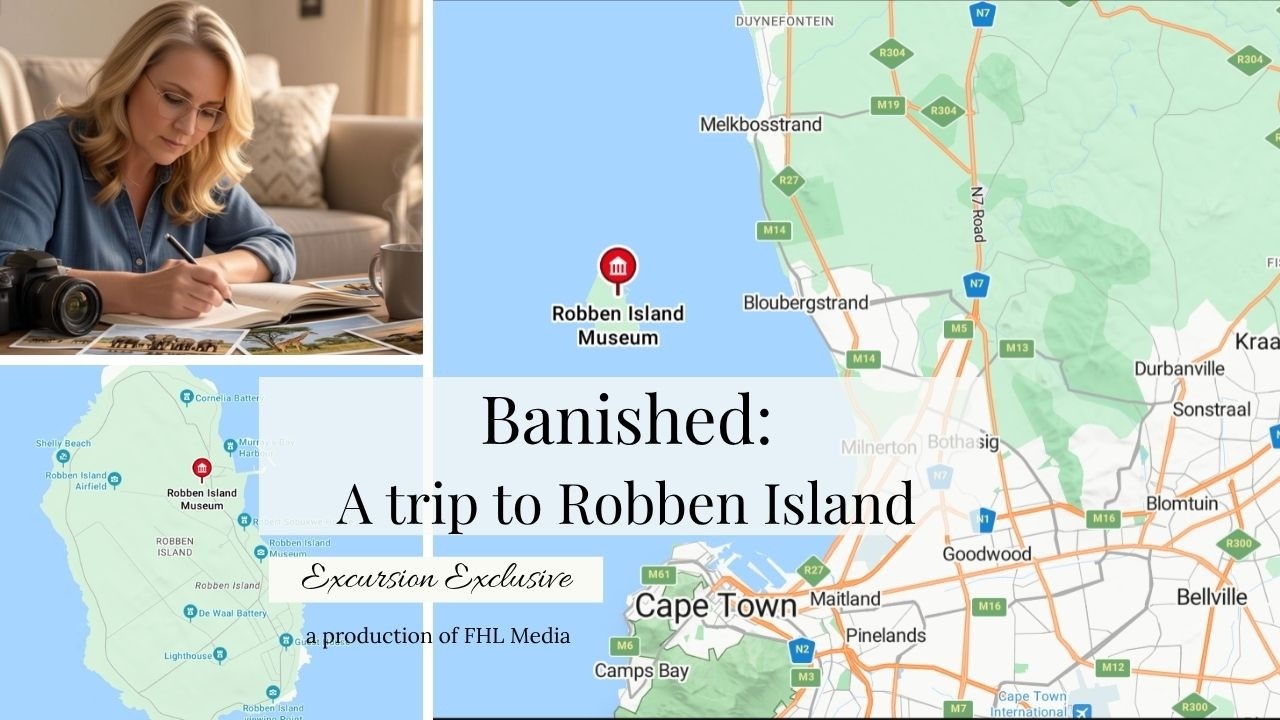
In this narrated travel video, the creator recounts a ferry trip from Cape Town to Robben Island, using the journey as a lens to explore the island’s layered history of human exclusion. The narrative begins with logistical details of the 40‑minute crossing, then moves through the island’s past as a leper colony (1846‑1931) with its multiple denominational churches and graveyard, its role as a World‑War‑II naval base, and finally its transformation into a maximum‑security prison where Nelson Mandela and other political prisoners were held. Key sites visited include the Church of the Good Shepherd, the limestone quarry—where prisoners turned forced labor into a “university” of debate—and the prison’s B Section, highlighting Mandela’s garden where he secretly hid pages of his autobiography. The video also introduces the modern stewards—former prisoners and museum staff—who maintain the site under the Department of Arts and Culture and the Robben Island Museum Council. Throughout, the narrator reflects on themes of resilience, agency, and the fragile nature of liberty, ending with personal questions about how we treat dissent and what sustains the human spirit under oppression.
Chapters
Spanish. A trip to Robben Island. This video will give you highlights from an excursion to Robben Island just off of Cape Town, South Africa. It's been a few years, but as I look back at the crossing to Robben Island, I realized it was more than just a short trip across the bay. It was a journey into the architectural history of human exclusion. This was a place that functioned as a leper colony, a military base, and eventually Eventually, a maximum-security prison, a site where the world tried to bury the people it feared. Yet, those very people grew to reshape the world. The trip from Cape Town to Robben Island takes about 40 minutes. It is about 11 kilometers or 7 miles from Cape Town. Our first stop was the Church of the Good Shepherd and a walk among the graves in the leper graveyard. Yes, long before Robben Island was a prison, Robben Island was a place of banishment. Between 1846 and 1931, it served as a means of isolating people that were chronically ill, with mental health conditions or leprosy. The churches on the island offered spiritual comfort and ministry to the ailing. There were 7 churches representing different denominations at the peak of the Christian involvement that were integrated into life on the island. These churches represented the Anglican, Dutch Reformed, and Roman Catholic denominations. Pastors from other denominations, such as the Moravian churches, visited the island often. The churches were constructed at different times in the history of the island for specific groups of people, For example, for women with leprosy. During WW2 in 1942, this church was refurbished and reconsecrated as the Naval Church. Our next stop was the limestone quarry. The guards had intended this site to be a place of broken bodies. The glare from the white rock was so intense that it caused permanent damage to the eyes of the prisoners, including Nelson Mandela. But the most striking realization I had was that the prisoners transformed this site of forced labor into what they called their university. They used the grueling, sun-drenched hours to trade knowledge and debate the future of South Africa. It was a testament to the fact that they never surrendered their agency, even when the system did everything in its power to strip it away. Mandela was one of many political prisoners during his time there. In his book, Long Walk to Freedom: The Autobiography of Nelson Mandela, Mandela reports that he studied the guards closely. He learned to understand their culture, communication, and systems. Most importantly, he was able to observe how the negotiationated. As we drove toward the far end of the island, the environment shifted from the prison's stark concrete to something far more domestic. It was a surprise to many, but Robben Island remains a place of residence. It is managed by the Department of Arts and Culture and the Robben Island Museum Council. But it is also a home. The people we saw, those who work here to maintain the grounds, preserve the park, and keep the history alive, are the island's modern-day stewards. It was a windy yet clear day. We passed the lighthouse, an enduring beacon on a site that once stood for total darkness. Looking out from the northern point, the Cape Peninsula appeared across the water, a sprawling distant reminder of the world that these prisoners were cut off from for so long. Finally, we got to the prison. Yes, the prison where Nelson Mandela was imprisoned between 1964 and 1982. Before entering the B section, we stood in the prison courtyard. It was here that I saw the garden in a place of concrete and control. The small patch of earth in the corner was a miracle of defiance. It was here that Nelson Mandela tended his tomatoes and chilies, but he also did something far more dangerous. He used the COVID of his gardening to bury the pages of his autobiography. This garden wasn't just for sustenance. It was a sanctuary for his legacy. Only after standing in that courtyard did the weight of B Section truly hit me. Walking through those narrow halls felt stifling, even many years after the prison had When I stood at the door of cell 46,664, the reality of 18 years spent in that cramped, dark space finally settled in. It was a place designed to foster decay, yet even in the dim light, I realized it felt Failed to break the spirit of those who chose to cultivate life and ideas in the cracks of the system. The tour ended and we settled back into what now seemed like a short ferry ride for our trip back to Cape Town. The measurements of years of imprisonment compared to 45 minutes to freedom was a haunting reminder of how fragile and how precious the concept of liberty truly is. As the island receded into the distance, it appeared peaceful, almost beautiful. But I understood then that beauty was only on the surface. The island demands that we ask hard questions of ourselves. How do I treat those with whom I disagree? Do I seek to punish, or do I seek to understand? My visit to the island changed how I viewed the concept of resilience. I listened to the former prisoners who served as our guides, and I treated their accounts with the weight they deserved. Coming home, I was left with a single, persistent question. What is resilience? If I had been confined to a space that sought to break my spirit, what would I have clung to in order to remain whole?