Navigating Growth and Change with Kathleen Booth
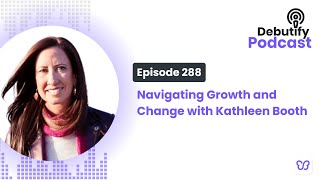
In this interview, Kathleen Booth, SVP of Marketing and Growth at Pavilion, discusses her transition from overseeing both marketing and member success to focusing solely on acquisition and growth. She outlines Pavilion’s three 2024 growth pillars—member‑led growth, event‑led growth, and partner‑led growth—explaining how the organization is shifting to a franchise‑style model that empowers local chapter heads to run their own campaigns. Booth details the decision to shut down paid advertising in 2022, the reliance on word‑of‑mouth, referral programs, and charitable incentives to lower acquisition costs. She highlights the need for a customer‑lifecycle “center of excellence” to coordinate communications across sales, success, and marketing. Booth also introduces the Go‑to‑Market Consortium, an industry‑agnostic effort to create independent standards for GTM practices. She reflects on Pavilion’s focus on executive membership, the resulting growth despite a tough B2B SaaS market, and the shift in SaaS pricing from seat‑based to usage‑based models. The conversation turns to AI’s disruptive impact on e‑commerce, SEO, and content creation, emphasizing authenticity, original research, and strong points of view as ways to stand out. Finally, Booth shares personal health resolutions, including abstaining from alcohol and prioritizing exercise and family time.
Chapters
Kathleen, welcome to the show.
Thanks, Alex. Happy to be back.
Yeah, we're happy to have you again. So, just for those who may not know who you are, could you tell me a little bit about you and Pavilion?
Sure. So I'm Kathleen Booth and I am currently the SVP of Marketing and Growth at Pavilion. And Pavilion is a private membership community for Go to market executives in B2B tech. We have about 10,000 members around the world and we serve primarily the go to market leadership team, which is the CEO, founder and then the VP level or above, heads of sales, marketing, customer success and revops. And we're all about basically helping that individual leader to achieve their full professional potential, to succeed in their careers, to build a meaningful life that includes a career that they're proud of. Um, and we support them both functionally in how to do their job, as well as cross functionally how they can succeed within a broader team and with other skills they need, such as leadership, listening, mindset, et cetera.
Absolutely. And it's extremely community driven. I feel like that was kind of the bulk of our last conversation. So the last time we spoke, you were the senior vice president of marketing and member success teams. Since then you've transitioned to a different role in charge of or a part of marketing and growth teams. So I'm curious, what are the different responsibilities in your new role?
Yeah, so last time we spoke, you're right, I was leading the teams having to do with marketing and what most people would commonly call customer success. But because we're a membership organization, it was member success or member experience as we really termed it. And that was interesting because it was my first time leading a customer success team. And I think the reason that we put those two under one person was that at Pavilion, historically so much of our growth has come from happy members telling other people about their experience. And so it's that organic, word of mouth kind of membership growth flywheel. And so it made a lot of sense that the organization that ran marketing would also oversee the organization that ensures that our members have great experiences because that's the primary driver of growth. And we did that for about a year. And then right around the time I was coming up on my one year anniversary, we decided to bring in a full time professional head of customer success, which has been one of the greatest things. And so I happily turned over the keys to that person and now we have that team running on its own. And in the meantime, now my new role is head of marketing and growth, which is really marketing and sales. And so what we've done essentially is realign the organization so that we have one team internally that's really focused on retention and customer satisfaction. And then my team is really focused on acquisition. So that's going to be what I'm mostly working on in 2024.
And. And that's closer to your wheelhouse, isn't it? I mean, your current role at least dependent on your past experiences, right?
Yeah, I mean, you know, it's been. I have a sort of an odd career in the sense that I'm definitely trained as a marketer and that's always been my main focus. But I was a founder and CEO for 11 years and so I kind of had to do everything. So I've dabbled in customer success, I've dabbled in sales. Again, my bread and butter is marketing and that's where my main focus has always been. And I think also as we think ahead with Pavilion to next year, you know, we're not a company that's building a huge sales organization. So while I am overseeing marketing and growth, it's. It still does very much remain focused on organic growth and satisfying our members. And so there's three pillars that we're focused on for 2024, which is member led growth, meaning happy members again begetting more happy event led growth. We do a lot of events and we see that as a great vehicle to, to shine a spotlight on what's so special about Pavilion and partner led growth. I think you hear a lot of companies talking about partner led growth or partner ecosystems right now, and we're certainly no different. We have a lot of different partnerships that have been really strategic for us that we formed over the past year. And in 2024 we're just going to be leaning into those more and looking to deepen how we partner with those different companies.
No, that's great. And we will definitely dive a little deeper into those three goals a little later in the conversation because they sound extremely interesting. But first, I did want to know, because it is such a normal thing that a lot of entrepreneurs and a lot of our listeners will probably deal with if they have not yet. I was curious if you'd be willing to share a little bit about your how your experience in your previous role is usable to focus more on your new responsibility, which I hear is essentially what you're saying is growing kind of the top line revenue more than just the retention marketing. So I'm kind of curious how you use that previous role to inform your new one.
Yeah, I mean, it's really Interesting, because if we take a step back, we talk about this a lot at Pavilion. You know, revenue, revenue comes from not just new customers. It's really part of a continuum. And if you look at, if you look at the data with organizations that really successfully scale and make it past that early growth stage, they're able to do it because they have both nailed the new customer acquisition side of the funnel, but they've also nailed the recurring revenue side of the funnel, which is retention and expansion. And so I think for me, as, like, even though I come from a marketing background, I like to think of myself as a revenue executive. And so what I've really appreciated over the course of the last year at Pavilion is I've had an opportunity to really immerse myself in all aspects of that full revenue funnel, which, you know, we, we call it a bow tie. We work really closely with winning by design. And that's how they talk about the first side of the bow tie is the, the new customer, or the new member in our case, acquisition funnel. And the second side is that, that retention, that expansion, that upsell side. And so last year I was very much looking at, at both sides. I was looking at the first side more from a marketing standpoint and the second side from the customer retention standpoint. And this year I'm definitely focused on the first side of the bow tie. But I think, you know, any, any marketer or sales executive needs to understand when they're looking at attracting new customers, what that's going to mean downstream for upsells, expansion, retention. So it's about looking for the right type of customer. It's about being really, really dialed in on who your ideal customer profile is and not getting distracted because, you know, there are definitely certain types, and this is true of any business, there are certain types of customers that are more likely to, to benefit from your product, that will have the best product market customer fit, and therefore are most likely to have the greatest customer lifetime value to be able to be retained and to continue selling too. And so I think having focused on that last year, it puts me in a better position to help our team stay focused on what the right type of customer is. But then the other thing is, even though I'm not overseeing customer success, when you're in marketing, you do still have a responsibility to either own or assist in some way with customer marketing. You know, it does. The job doesn't end when you close a new customer. You're still really looking at how do we help the organization maximize lifetime value? And so One of the things that we're looking at this year for Pavilion, in addition to all the things I just mentioned, is really putting in place a more kind of focused customer life cycle, call it center of excellence within the company. And what I mean by that is, you know, in most companies, you have lots of different parts of the business that want to communicate with the customer. You have your, you know, your account reps on the customer success side, you have your sales team that might be working on an upsell. You have the marketing team that might be sending out newsletters or letting customers know about events or things along those lines. And, you know, customers will be bombarded with communication. In fact, I was just having this conversation with another CMO in our community the other day about, like, how do you throttle emails and how do you manage that? And when you don't have a good customer lifecycle function within the company, looking holistically at how you communicate with your customer and how those communications do or do not effectively pull them through the ideal customer journey, what happens is it creates friction internally. And when you don't have that holistic viewpoint, you have things happening like sales teams saying, hey, marketing, stop emailing. You know, customers that I'm actively talking to about an upsell. It's too much, it's too much noise. Right. And so a big goal of ours this year is to put in place someone to, to own customer life cycle marketing or communication so that we can holistically look at that and give the customer the best experience and the best journey while also serving all different parts of our team. So that was a really long answer, but that's kind of how we're.
No, I love it. It's extremely in depth. And, and, and I appreciate that. And, and one of the things that we didn't even talk about when you were last on the show are some of these marketing channels that you use. I mean, you mentioned emails a lot. I'm curious about how you specifically do promote Pavilion. I mean, is it social media? I heard you mention one of the goals for 2024 is community events or program events, Event growth specifically. So I'm curious about your actual tactile marketing approach and those specific channels.
Yeah, we're a little different in this regard. I. So I started at Pavilion, I think it was last September of 2022, and by the middle of November, we shut off all paid ads. We had stopped doing paid advertising entirely. And with the exception of one or two tiny experiments, we really haven't turned it back on at all. So our Growth has come from a combination of the number one thing that I mentioned already, which is word of mouth and that starts with really delivering for existing customers and then secondary to that, it's paving a path and making that path as friction free as possible for customers to tell other people about you. And so we have, we use Referral Rock, which is a referral software platform that allows our members to refer other members in and get paid like a bonus for that. But we also do other things like we use a platform called Grateful Giving and right now we're running campaigns where if somebody new joins, we actually give them a $250 credit. Oh wow. To contribute to the charity of their choice. Pavilion's very much a values and mission driven business. And so that's something that we feel is really important. And so a of our, our efforts are around how can we encourage members to, to share what they love about Pavilion and, and coming into the new year, we're going to be even fine tuning that more by working more closely with our chapter heads. So we do have local chapters all around the world and we have members who lead those chapters. And the thing that I'm working with my team on is I really want us as an organization to shift how we think about the business and to, to change our mindset, to think a little. We were almost a franchise business in the sense that I want local chapter heads to feel a sense of ownership over how they're growing their local chapters and a sense of agency. So rather than it being all about my team at Pavilion HQ running campaigns, we'll do that. But I really want the emphasis to be more on how can we empower our local leaders, who are our members, to run their own campaigns in their local markets and to reach out to the people that they think would be great members. Because at the end of the day, like the value they're going to get locally is going to come from having other really good, high caliber executives that they bring in as peers and other members in the community. And so to the degree that we can enable them to do that, that will make their experience better, it will make them more successful as local chapter leaders and ultimately it will accrue up to us as an organization. And so that's a big shift for us. Retraining an HQ team to think about the company as a franchise model and to think about what that means in terms of how we go to market and how we have to enable what is in effect a large field sales team is, is a really big change for us.
Yeah, but I think there's something extremely savvy to that mentality. You know, the way that McDonald's and Nike have to market is different than other companies. And because it's not like an awareness play, you know, everyone has already heard those companies. So it is definitely more of a reminding people more than it is like a, like educating people. And I personally appreciate the creativity that can come from that. You know, when, when, when you act like the Yankees, you play like the Yankees a little bit, you know, and I'm a Red Sox fan and even I can say that. So I appreciate your mentality in there. I'm curious, though, when you immediately started, you said, we shut off paid ads. And that feels like, in this industry, at least to my very limited knowledge, crazy. I'm extremely curious if you could expand a bit more about why that decision, why not to turn them back on and if everyone is getting it wrong or if it's just like a. This is just a personal Pavilion decision type thing.
No, I wouldn't say everybody's getting it wrong. Look, there's always, I think, a case to be made for paid advertising. And, and by the way, it's a red flag when anybody says, like, you should never do X or X is dead. Like, to me, that's always. That always sets off alarm bells in my head. So I'm definitely not saying that. But when I came on, I think we started to ask a lot of questions around what results are we really getting from these paid ads? We're spending a ton of money. Like, it's not a small investment to do paid advertising. And I will say that if you're going to do paid ads, you need to be prepared to really invest in it. You can't be like halfway in, right, because you're not going to see results. And so we were spending a good amount of money and we just couldn't prove the ROI from it. And so initially when we turned it off, we weren't thinking we were going to be turning it off forever. We were like, let's turn it off for now. And number one, let's see what happens. And number two, like, let's just reevaluate and figure out what we need in order to do it successfully. So we turned it off. In November. We immediately saw a drop in website traffic and a drop in the number of applications of people that were applying to join Pavilion. But what's fascinating is we really didn't see a drop in the number of people who joined. So what that told me immediately was That a lot of the traffic we were getting from our paid ads was just really low intent traffic. And similarly, a lot of the people that were starting the application process, it was low intent. And that was because these were people who really didn't know us and they didn't know what we were about. They might not have even known that you have to pay to join, because, let's be honest, there's, there's a lot of free communities out there versus the people that come in through word of mouth. They, they, they're so much more well educated as prospects because another member has, has said, oh, my gosh, I'm loving Pavilion. Here's what I love about it, here's why you should join, and then I'm sure the conversation follows, like, well, how much do you pay? Well, here's what you should probably expect. You're going to need to spend, right? And so when that person comes to our website, when they hit apply, now, they know exactly what they're getting into versus the person who's like, oh, maybe this is free, maybe it's $50, maybe it's, you know, and then they get down the application process, they find out what it costs and it just, like, it does not meet their expectations. And so we've kept paid ads off because we've been able to sustain and actually grow the number of executive members we have in our community without it and without spending that money. So that's brought our cost of customer acquisition down. You know, I think we will look at paid ads in the future, but before we start them again, I think we just need to be more educated around what is it going to take to use them effectively? Number one, if we're going to target people who don't know about Pavilion, what is that education process going to have to look like as we nurture them through the funnel so that when they do get to our site and they do hit apply, they're informed enough that their intent is there and they're going to join and the conversion rate will support that. Or, like, should we be using paid ads more to retarget people who've already been to our site and to essentially shorten the amount of time between initial contact and conversion? So I think, like, that's what we're really thinking through right now is, is if we're going to do it again, how do we do it in a way that's really smart and that's going to produce the results we want? No.
And I think you're making exquisite sense because, you know, There has been an increasing level to which people, especially in a digital age, love to shop for themselves and love to educate themselves a little bit. So if, if I see an ad, I go to the website, I look at it, I don't want it, I leave. You know, I mean this, this is kind of the age we're in now compared to, you know, when everyone had a personal butcher or tailor or barber. You know, it was such an intimate relationship and it's kind of gone away, super away from that now. So it definitely makes your job a little bit more difficult. But again, you get to find creative solutions, which is currently what you're doing. And it sounds extremely exciting. I'm curious, what if we could expand a little bit? Are some of the even more specific challenges that you're facing now that you didn't face in your prior role? Maybe like that.
That's a really interesting question. So, you know, when I think about that, I go back to like what my focus areas are for next year.
Sure.
And so number one, I think this, this focus on member led growth, it really is about this franchise thinking. And look, I've never been head of marketing for a franchise business, so I have as much to learn as my team does. And that learning curve is going to be steep and we have to figure it out pretty quickly. And so that's going to be the number one challenge I think, is really like understanding how do we turn that ship so that we're really aligning ourselves more around empowering our chapter heads versus just trying to centrally kind of approach it from a command and control mentality. That's number one. Number two, I would say is formalizing our partner strategy. So, you know, we formed a lot of partnerships in 2023. It's been a great year for us. And 2024, our focus is going to be on, on putting some structure behind those because this year we've, we've like inked a bunch of partnerships and we've worked together with a bunch of other companies, but there really isn't a plan, like a concrete plan in place or a sense of ownership within the organization for who's driving momentum behind those partnerships. So what I'm thinking through right now is how do we take what has, what has almost unintentionally become a very successful part of our business and really like see what's possible when we approach it more intentionally. And that means like having somebody actually own the outcomes coming from it. And I don't know yet whether that's going to be a full Time person or, you know, somebody who's already on the team taking on a new role, like, and what is the right profile of that person to drive results there? So that's number one. But then also I think even more importantly, it's how do we structure these partnerships so that there is a sense of mutual value? You know, I know what I want to get out of these partnerships, number one. And I say this to all the partners we talk to, number one is always like, how do we deliver more value for our members? Because that's at the heart of everything, right? We've already talked about that. Like, if they're getting value, they're going to talk about it and that's going to, you know, wind up driving growth. So, number one, how do we leverage partnerships to deliver additional added value to members that they're not currently receiving? And then number two is how do we leverage partnerships to get the Pavilion name, like, out further into the marketplace and, and raise brand awareness for who we are and what we do. So, you know, that's something I'm spending a lot of time thinking on right now. And then I think the last thing is, we haven't even talked about this yet, but one of the interesting things we did in 2023 is we launched something called the Go to Market Consortium. And this is really new for us. It's an industry agnostic movement, if you will. And we founded it with Winning by Design and with GTM partners. And the whole intention of it is to provide the kind of Go to Market ecosystem with a set of independent operating standards. Much like in the rest of the world, you have, for example, environmental standards. You'd go to ISO14000. I think ISO9000 is quality standards. You know, these are industry standards that are independent of any vendor that have been put together that are, that are. There's no cost to see what they are. You know, anybody has access to them and they've become widely accepted in terms of best practices. And so what we saw was that this was really lacking when it comes to go to market strategy planning and execution. And so one of our biggest initiatives this year is to put some structure around that through this independent consortium and to have a point of view on what excellence looks like in Go to Market, but in a way that is agnostic of any vendor or any particular software solution and to coalesce the industry around that and to provide not only our members, but the broader B2B tech industry with, with access to educational information and standards that can help them do their jobs better. So it's a pretty big undertaking.
Yeah.
That we've just begun. But I'm really excited about it and I think the reception it's gotten so far has been really positive because I do think, like, and I say this all the time, if you ask 100 people to define, even just define, go to market, you'll get 100 different answers, which is crazy. So, like, how can we do this well if we don't even really know what it is? And how can we get aligned as leaders? Like, how do you align marketing, sales, cs, ops, the founder, CEO behind go to market if they all have different definitions, if there's no clarity on who owns it and how to do it? So those are the questions that we want to try to help answer.
No, absolutely. And I really appreciate the thoughtfulness in that answer. And I'm curious how you get there, if I'm honest, like in. In terms of what sort of growth you've been able to achieve with Pavilion since the last time that we spoke. To get to. Okay, now, these are our goals. These are our focus. I mean, what. What have you seen in that last year that put you in this position to start looking, I don't know, this holistically forward.
Yeah, it's a great question. This has been a hard year, I think, for a lot of us. I mean, we survey our members pretty frequently. And so we have a lot of data on, you know, what's happened within the broader B2B tech landscape in 2023. And, I mean, we're not the only ones. There's a ton of data out there that you can reference, whether it's from the VCs or from CARTA. But all the data shows that, you know, most companies are not meeting their revenue targets, most sales reps aren't meeting quota. There's been a ton of layoffs, budgets have tightened, sales cycles have lengthened, average contract value has come down. Like, pretty much almost any metric you look at has gotten worse over the past year. So, you know, it's really tough. And our members are hugely affected by all of this because they are the people that are charged with driving results for exactly the types of companies that are suffering and that are selling to the types of companies that are suffering. And so it's really interesting because a lot of people have described particularly B2B SaaS as like a Ponzi scheme, not in any kind of a corrupt way, but more in the sense that so many SaaS companies sell to so many other SaaS companies. And I think that's true of B2B tech more broadly. So, like, when tech is suffering, it is almost like doubly bad because we're all so dependent upon each other.
Everyone's doing it. Yeah, yeah, yeah, yeah.
So it's been a tough year and I think, you know, it hasn't been without its challenges for us, certainly. I will say we're very fortunate that our executive membership has grown throughout the year. And I think that's because we made a decision early in 2023 to focus exclusively on that part of the business. And if you had asked me this question a year ago, would have had a very different answer. Because when I first joined Pavilion, you know, we have different levels of membership. We have executive membership, we have associate membership, which is sort of anything below executive. And then we have CEO membership and teams membership and teams is like when you sign your company up for Pavilion. So we decided earlier this year that we couldn't be all things to all people. We didn't have the resources to solve for everything. And so we were going to really just pour everything we had into being successful at the executive level because that's actually how Pavilion started. It started with executive members and that's the beating heart of the community. So that's a scary decision. I think this is a scary decision for any company that undergoes these kinds of prioritization exercises where you say, like, we're not putting resources into these other business lines. And we've definitely seen, you know, I would say, some stagnation in certain parts of the business where we haven't been focusing, but that was by design. The stagnation wasn't by design, but we knew that that was a likely outcome from the choice we made versus focusing on the executive members. Knowing that if we were able to stay laser focused, it would drive growth, which it has. And knowing that the more we build out our executive community, the more that has a halo effect on the other parts of the business. So when we have happy executives, very often they'll talk to their CEO and their CEO will join. Sometimes they'll say, hey, I'm interested in bringing my team on. Or they tell the people who report to them, you should join Pavilion. And so it's not that we haven't seen growth in other areas, but like, really our focus was on that one area, understanding that that would have second order effects across the rest of the business. So now what's happened, because, you know, we've gotten through the hardest parts of 2023, I hope, and we were able to grow our executive business. Now what that's done is it's enabled us to kind of take a step back, take a deep breath and begin to refocus our efforts on some of these other areas and to rethink like the place we want them to hold within the broader landscape of the business. And so coming into 2024, I think you'll see us spend a little bit more time and effort and resources on our associate community, our CEO community and our team's packaging.
No, that's wonderful. And you mentioned some of the, I don't know, the B2B SaaS companies, how they kind of feed each other or keep each other afloat a little bit. And I'm extremely curious about maybe that as an example of maybe how you've seen the industry as a whole, the e commerce industry as a whole change in the last year. You know, is that something that's always been that way or has that something that's, is that something that's developed more in this last year? Are there other examples of things in the e commerce industry that you've seen significantly change?
Yeah, I think the biggest thing that I would sort of cite in response to your question is that the last year has really caused software businesses, and this is true of e commerce software as it is of a broader software landscape, to change how they think about pricing. And the reason is that you, you know, we just talked about how there's been tons of layoffs in the past year and so many different software businesses were, were sort of focused around seat based pricing. So user based, meaning like, you know, we're going to sell you 50 seats for your 50 people on your team. Well, what happens is in a year where that 50 person team might have gone from being 50 people to 25. And this is what I mean by we're all dependent upon each other. And it's almost like a Ponzi scheme. The companies that sell to that company all the software that they use, if they were selling on a per seat basis, they saw their revenue cut in half because that company went from 50 users to 25 users. And that's tough, right? Like as a sales team you can't really go in and be like, you know, hey, I have these, you know, like, let's keep your 50 licenses. Like it's very black and white. You either have 50 people or you don't. Versus, you know, I think a lot of companies are now looking at usage based pricing which allows you like it's a little less dependent and a little less affected by swings in staffing numbers and it gives your sales team more leverage to drive upsells and to preserve like contract value, especially in times when teams are being downsized. And so like I think within E commerce, you know, when you see E commerce software companies, I advise a couple of them, A lot of them are looking at like pricing and packaging or if they haven't done so already, this is something they're thinking through as they head into the new year. Like how do we, not only what should our price be but how should we structure pricing? Should it be on a per se basis, should it be on a usage basis? And how do we, how do we structure it so that it's tied to a unit of value for our customer that they're going to really appreciate? And then the other sort of side of that that I'll address is Pavilion is in many ways an E commerce business in the sense that we sell memberships to people, right? Like our customer is an individual consumer and you can buy a membership self serve on our website without ever talking to a human being. So we have, we have a shopping cart and a checkout and, and over the course of the past year, you know, we didn't always have that, I should say, we, we introduced, it was the end of last year, we introduced self serve membership purchases for the first time. And over the course of the past year our efforts have really been focused on like, how do we eliminate as much friction as possible in that online. We call it enrollment process, but it's like a purchase process, you know, just like any other e commerce business, it's streamlining the checkout flow and eliminating points of friction. But I would also say, you know, outside of kind of that almost conversion rate optimization lens, what we've seen is somewhat diminished buying power because so many of the executives that we market to have been laid off. And you know, there is a, there is a population of people that join Pavilion for whom their employer pays for their membership. But there are also many people that pay their own way. And those people, a lot of those people were dramatically affected in the last year. Just as I'm sure with any E commerce business that's selling into any customer audience. Like if people have been laid off, their buying power is reduced. And so, you know, how do you think about the way you're going to make up that revenue as a business? You know, you have a lot of choices. You can either look at different audiences and try to make it up there or you can look at discounting. And we've definitely done that. We actually have a special discount for people who've been laid off. It's really, really generous. And part of that is just realistically, like, there's no way they could join otherwise. And part of it is honestly that we feel somewhat beholden to doing that as a service to our community. I mean, our mission is to help these people be successful. And if they've been laid off, our best way to help them is to get them in and get them access to the resources we have in terms of like job listings and career coaching, etc. And so we're thinking through all of those things just like any e commerce businesses, like, how are we going to sustain our flow of customers while acknowledging that their buying power has changed a lot in the last year?
Yeah. And I love these philanthropy efforts, if I'm honest. I think they're really commendable. Do you have any specific predictions for how the e commerce industry might change in the upcoming year? Playing Nostradamus, I would be remiss position to be in.
Yeah, I would be remiss if we, if I, if like we didn't do this whole podcast episode and I didn't mention the, the term AI as part of it.
Sure.
You know, it's, it's, it's crazy. Like if you went back to this time last year, chat GPT wasn't, I don't think at this point publicly available last year. So it's like shocking, shocking how much our world has changed in 12 months. And there's absolutely no denying that every industry is going to be completely affected and changed because of AI. E commerce is no different. You know, I do advise a couple of e commerce software companies, one of which is an AI product recommendation company called Proto AI, if anybody wants to check it out. So there's like, there's a lot of, I think companies that are developing new solutions for e commerce, companies that are built on AI to help them get better results out of their, their websites and their, their customer buying experiences to increase personalization. I mean, I think that's like, look, when I think about AI, the promise of it is 100%. It's about improving the customer journey and the customer experience through more personalized, you know, pathways on a website. And part of that selfishly is like how products are recommended. That's one of the reasons I love working with this one company. And then part of it is like how you create the content on your site and the speed with which you do it and the efficiency with which you do it. I think, you know, teams that aren't using AI are going to fall behind because we are. A lot of us have had to downsize and have smaller teams and everybody hates that phrase do more with less. But the way you do more with less right now is you have an AI copilot and there's a lot of tools out there that can help you do that. So you know, we should all be like educating ourselves on how to use them and making sure our teams are educated and pushing our teams to, to test these things, you know. And I, but I think the other piece of this is like how we sell and market to customers and AI is gonna, is gonna offer us a lot of new possibilities to fine tune how we do advertising. You know, when we talk about E commerce, I think in E commerce you have to almost be doing paid ads and there are tools out there that can help you do them better and more effectively. Where I think it's a little bit more kind of scary or I don't know if scary is the right word is search engine optimization. You know, I think in the past I've always been a very content forward marketer. I really believe in content and in educating buyers and using SEO to get in front of them. But AI like overnight changed the game with SEO and it made it so that anybody could like give a prompt to a chatgpt or a bard or whatever tool they're using and say, build me a page that will rank first in search engines for term X. Right. And it will then go and do it. And so that's become table stakes. Right. So how do you like in the short term? I think there's an opportunity to really benefit from that because unfortunately not everybody is using these AI tools. So there is an opening in the market right now for companies that are aggressively leaning into AI to claim search engine results. Page listing visibility through the use of AI that's, that's happening right now. But that opening or that gap is going to close pretty soon when everybody starts to mainstream it. And then it becomes, you know, how do you stay on top of the search engine results pages in a world where everybody has access to these AI tools? And in my opinion the opportunity there is, is in a couple of areas. Number one, it's by like truly leaning into authenticity and create. And I think that was actually Merriam Webster's Word of the year is authentic. Because in this age of AI like that's the thing we're all going to be craving is how can you inject authenticity into your content in a way that AI can't do, number one. Number two is original research, you know, data that people can't get anywhere else. And if you can be the creator of that and the source of it, people will continue coming back to you for it. And number three is strong points of view or opinions. Right. I think this is where we've already seen a lot of thought leaders gain tremendous traction and visibility by having very distinct points of view that may be a little controversial. And so I think if you have opinions, this is the time to share them. Right. And to really, like, put your stake in the ground and stand behind them because people will gravitate towards that. And, you know, not everybody's going to agree with you, but. But that's how you stand out in a world where anybody can create a listicle or a checklist or how to article.
No, I totally agree with you. I'll give you one right now. I personally think that very similar to what you're saying, but just expanded a little bit. I think especially when you look at the strikes in Hollywood, that is going to be closer to a norm in terms of maybe not even labor unions. But I think you're totally right. A lot of small companies that are willing to educate their small staff can be fast, can be quick, and don't have to have the growing pains that a larger company would have to have when they decide to implement AI, which is more inevitable than not. You know, I mean, a larger company is going to have to go through all these contracts with other employees. Some of them are going to not want to do it. Some of them are. And there's just a lot of growing pains there that a smaller company, frankly, I don't think will have. So it wouldn't be surprising to me if we saw a bit of like a power struggle switch a little bit where these larger companies start to get a little bit more sluggish and these smaller companies can be faster, quicker, stronger, and, you know, meet in the middle, which I, I appreciate a level playing field like that. So I think there's something kind of exciting there in terms of that financial restructuring a little bit again. Yeah, big fish usually eat the little fish, but the little fish can become bigger fish and then they fight it out like a good, you know, free market capitalism society should. And I think there's something kind of valuable there.
I would agree.
So before we wrap up, Kathleen, you know, I mentioned to you that I always end the show by asking about your hobbies and interests, you know, kind of trying to implement a less stressful lifestyle in The e commerce world. But since we know a little bit about that and the New Year is right around the corner, I'm curious if you have any sort of resolutions that can do the same thing, you know, that can try to ensure good mental health, hygiene, harmonious work, life balance type stuff. Do you have any New Year's resolutions you're already working on?
Oh, it's. I'm not going to make any resolutions, I don't think. But this has been an interesting year for me because I had a couple health scares and everything's fine. I'm good, but sorry to hear that. No, no, no, it's. It actually, it's weird. There are a lot of silver linings that came out of it because it made me think through, like, what was really important in life. And I also became a grandparent, which tends to happen, like, reevaluate things. Thanks. So what I did this year that I'm hoping to continue is I stopped drinking alcohol altogether. I didn't drink a ton, but I just found that it, like, stressed me out and probably put on a few Covid pounds because of it. And, you know, it probably didn't wake up to exercise a few mornings because of it. And so I've stopped that. And, you know, no, no big proclamations about whether I'll ever drink again. But I think for now I'm really enjoying just how I feel without it. So I'll keep that going through the new year and then.
Awesome.
You know, trying to make sure I exercise regularly and to just make sure I set aside time to spend with family. I think, like, those are if you can. If you can get to a point where you feel like you're. You're eating and drinking healthily and getting some exercise and filling your cup with the people you love, like, oh, yeah. What more is there? Right? That's all you need in life.
That's great. I love it. Look forward to talking to you again next year. Hopefully. Kathleen, Good luck in 2024. Good luck with pavilion and thank you so much for your time.
Thanks, Alex. Great seeing you again.
More from Kathleen
The Counterintuitive AI Strategy That's Working for Top CMOs Right Now w/ Kathleen Booth