3 things I WISH I did differently
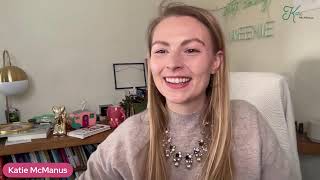
Katie McManus shares three costly mistakes from starting her coaching business: building an expensive website before validating her niche, buying generic digital courses instead of using her existing skills, and charging too little, which attracted uncommitted clients. She breaks down pricing strategy and what she'd do differently now.
Questions this video answers
Get the first five high-paying clients.
$1,000 to $6,000 a month.
$20 an hour.
About a half hour.
Monday through Friday for the foreseeable future.
I can taste yo, yo, yo yo I can taste yo, yo, yo I can taste yo, yo, yo, yo I can taste yo, yo, yo I can taste yo, yo, yo, yo, yo yo y.
Hello everyone and happy Wednesday morning. I'm Katie McManus, business strategist and money mindset coach. Coming to you live. Lots of places on the Facebooks, on LinkedIn, YouTube, Instagram, and over here on my phone on TikTok. Hello, everyone. One thing I am really looking forward to at some point, if Tick Tock sticks around, that they will allow for people who are Mac users to go live on desktop because it's always odd looking at two different cameras. Anyway, I'm gonna be going live. I know I always say this. I'm gonna be going live pretty consistently over the next month. And if you there's any topics that you want me to talk about, just let me know. Just DM them to me, okay? Coming up with the topic a day to go live about is a lot of work and I would appreciate any help from that you can offer here. So today I wanted to talk about some things that I regret, but also don't regret doing wrong. When I first started my business, and the reason I say it like that is because when I first started my business, I made a lot of mistakes. And sure, they costed me. They cost me a fuck ton of money. They really did. Hi, Dakota. Welcome. It was really expensive to make these mistakes. And also I am so happy I made these mistakes because as a business strategist and I just want to like, preface. I did not start off as a business strategist. Okay. I started off as a dating coach and then I moved into executive coaching, and then I moved into leadership development and coaching. But these mistakes that I made early, early on because I made them and because I saw, like, and experienced how I can move past them. And a. It allows for me to have a ton of empathy for my clients when they start with me, when they're feeling super, super insecure about having made the same mistakes. All right, because we've all been there. All right, because we just don't know. We don't know with that at that point. Hi, Core. Hi, Jesus. Christy. I love that name. Welcome. And so I, I love that I made these mistakes just like my clients because when they come to me and they have so many, so much embarrassment and shame around having done the same thing, I mean, we'll say, whoa, whoa, you're not alone. It's not just you. This is really hard to do. Hi, Gmail. Welcome Yeah, Dream job, right. Of having your own business, being able to help other people with their businesses. It's a lot of fun. But anyway, I think that's what you're talking about. And hi. 7:13 and hi. Be the king. Welcome. But anyway, so I'm so happy I made these mistakes early, early on in my journey as a business owner because it allows for me to have so much understanding and compassion for my clients and show them how to have compassion for themselves. Right? Because you just don't know what you don't know when you first start. Right. I also really appreciate that I experienced making the mistake, seeing how badly things went and then figured out multiple ways to recover from it. Multiple ways to say, okay, cool, like, this was a mistake. I'm going to set this aside, I can do better. Right. And I was able to experience being successful on the other side. Right. Because when you're, when you first start a business, like, you're terrified of a lot of things. You're terrified it's going to fail. You're also kind of terrified it's going to succeed and that you're going to get a ton of. Of attention. You're going to have too much money to deal with, which sounds insane, but is actually something that people have a fear of. One of the most common questions I get from my new clients and potential clients is, oh my God, like, what about taxes, right? Like, forget that they're professionals and they have been paying taxes for their entire adult lives. The idea that they are then responsible for taxes and that there's going to be a chunk of money taken out of the money that they are bringing into their business, that they have to pay the taxes. That can be really stress inducing. Right. But that is a version of how we are afraid of our own success. They're terrified that, you know, they're going to say the wrong thing. I mean, here I am going live and I'm totally going to make myself nervous in a very meta way. Like, what if I accidentally said something super offensive right now? What would happen? I don't know how many people are watching because Streamyard doesn't always tell me. I have a few people over here on, on TikTok, but what if I said something offensive right now and I got canceled? Like, that is a big fear people have. All right. It's one of the reasons why a lot of people don't go live. Even though it is a great tool to build a relationship with your audience, it's also why a lot of people are so, so stressed out about the idea of even posting the social media when they first start, right? This is why, especially in the coaching space, you see a lot of new coaches sharing, sharing, like, inspirational quotes on Instagram because it's like, it's a safe way to kind of put yourself out there, but not really, right? And so, like, when you're. When you're in that state where you're putting yourself outside your comfort zone, where you're asking people to pay attention to you for something that you know, you have really no proof that it's going to go well, that's a lot of pressure to put on yourself. And also, like, you just don't know what you don't know, right? So. So to my clients who start working with me, I just want to. I want to celebrate you all. It is a really brave action to take, to ask for help, to acknowledge that you don't know what you don't know, and say, okay, you know what? I really, really want this, though. I want to run my own business. I want to be able to help people in the way that I can help people. How can I do this? Who can I turn to? Right? This is a really vulnerable, brave thing to do. All right? So I am honored that you've chosen me as your coach. And for those of you who are just in the beginning stages of your entrepreneurial journey, know that there are some really talented people out there who can help you, all right? I might not be one of them. I might not be the right person for you, but it's going to take you going out there and recognizing where you have a gap, where you don't have the skill set and understanding what kind of support you're going to need. All right? And then having the ovaries to go and get it, to go and get that support. All right? So today I want to talk about the three mistakes that I made early on. And of course, like, these are just three of the numerous mistakes that I made. But these are three mistakes that, like, I see the most often with people who come to me who are curious about working with me. And I say this, you know, being fully transparent. I made these mistakes, all right? I'm not perfect. I didn't know better. This is, you know, very, very common business advice that is handed out to new people, to new business owners. Hi, Nature dog. Welcome. And it is. It is okay if you made these mistakes, too. If you're in the midst of making those mistakes, I want you to have compassion for yourselves. I want you to know that you are not alone. I do this. And I made these mistakes early on as well, all right? And I can't tell you how many people do this as well. Okay? So first and foremost, when I first started my business, I was absolutely terrified that I would go out and announce, hi, everyone, I just started a business. This is the service I provide. Come and hire me. And that people would just kind of laugh behind my back that they would see, like, see this announcement and be like, is she joking? Like she's not qualified for that. That they would either think that I was a fraud or they would just, you know, assume that I wasn't credible, right? They, they would just tear me down and that no one would take me seriously. Right. And I think this is really, really common a, for younger people. I was at the end of my 20s when I first started coaching, and, you know, I think we, we do disc. We do treat younger people like they don't have credibility. It's just a natural thing. And. Hi, Charlie, Welcome. So I was terrified that people wouldn't take me seriously. And, you know, what do we do when we're like, terrified someone won't take us seriously? Like, we look for things that will make us appear more credible, right? And so for me, a couple things that fell into that category was a, a website, right. Which I now know is not something that actually adds to your credibility. Not in that way. I also invested in, in, what are they called? Business cards. I can't even remember the term. I bought business cards. I had new business cards made every single time I changed my business name. And yeah, those also didn't add to my credibility. But, but here's why I thought it would, right? Because it feels so official. When you talk to someone, they're like, hey, I'm starting a business here, here's my website. You can go learn more, right? What, what it actually is, it is a barrier, right? So when we, when we're starting a business and we're like, terrified that people aren't going to take us seriously, what we actually don't want to have happen is we don't want to see them not taking us seriously. It's a lot less vulnerable to say, yeah, I started a business, go and look at my website. Don't have the conversation with me, go and look at my website. And then you can have all the reaction to my website where you think that I'm not credible. Right? It's a defense mechanism. It really is. And here's the thing about early, early days in any business, especially when you're offering some kind of service, like you don't have like mugs that you're selling or journals that, you know, you put together, whatever you don't have something tangible to show people is when we create a website, talking about what we do, oftentimes the first website we create, especially if we haven't done market research, if we don't have a very clear, clear, you know, defined, clearly defined niche, then our website doesn't do shit. Our website basically is an elongated version of our resume. Talks about us and like, you know, our back background, our professional history, you know, the fact that we played lacrosse in college, you know, all this, all these details that sure, you may think builds a case for why you are a credible person, for why you should be trusted with people's money to provide them the service. But in actuality, like your clients don't have the ability to connect. This was the captain of the college lacrosse team to, oh, they're also a talented leadership coach or they're also a talented consultant who can help me with this transformation in my company. They don't like, you're, you're leaving way too much work up to them, right? And honestly, like, like, people can come up with a lot of different, oh my God, I almost just knocked over my coffee talk with my hands too much. People can come up with a lot of different connections as to like, what all that background information means about the service you provide. Chances are none of it's going to be accurate unless you tell them, here's exactly how I can help you. Right? And so when clients work with me, you know, one of the first questions I get is like, cool, I need to put up a website. And I'm like, nah, no, I actually don't think you should put up a website. When you first start, I think you need to a, figure out, hi, Juan, welcome. And hi Anna, welcome. I think you A, need to figure out who your ideal client is and you know, AKA your niche and B, need to start just going out and getting clients. You need to use social media. It's a free thing that we all have. It's this incredible tool that we can use to kind of test drive our, our messaging and figure out like who we can attract that way. But go out and start getting clients, right? And then once you have a verified niche, once you have verified clients and you know that people are willing to spend money with you for your service, that is when you can go and build a website. All right, this is one of the things that I actually focus on in the beginner program of byob. So BYOB is my build your own business group program. The first year is all about my clients getting their first five high paying clients. All right? And when I say high paying, I mean clients. Clients who will pay you between 1,000 to $6,000 a month to work with you, depending on your service, depending on your niche, right? Because at that point where you can consistently attract clients who are paying that amount of money, you, my friend, have a validated offer. You have a service that you know that there is a market for and that you can continuously sell it, right? Once you have that and you have some money in the bank as well, then it makes perfect sense for you to go and invest in a website, okay? To invest in someone to design it and write the copy for it and all that jazz. And to describe your ideal client, because you now have a description of who your ideal client is and the kinds of problems they come to you with and the outcomes that they want before you have that. You could spend a lot of money like I did on building a website that isn't actually going to get you clients, that isn't going to build credibility and is honestly just going to be a massive waste of money. You're just going to have to redo it a bunch of times. All right, so mistake number one. I thought to be credible as a business owner, especially in the online space, that I needed to have a website. Bullshit. You do not. Okay? And hindsight, I wish instead of wasting all my time and money and resources on having websites built, I wish I had just gotten onto social media, gotten out of my comfort zone and started talking about the people that I wanted to work with. All right, so that's mistake number one, right? Being afraid that I wasn't going to be seen as credible. People weren't going to take me seriously. And so coming up with bullshit ways to make myself feel a little more credible. Hi, Judy. Welcome. Okay, and then mistake number two. So mistake number two is kind of all encompassing, right? I had no idea what I was doing. Zero idea. I had never started a business before. I was a very talented coach. I'd gone through a very extensive training program. I was certified. I had also worked in sales and marketing for a really long time before this. I had a lot of different experiences that fed into me later. Being able to create my own way of building a business that actually works for other people. It's what I teach in all of my programs. But when I first started, I didn't understand how any of that could be applied here. Right. And so instead of, you know, looking to my past experience and seeing what would have worked in a sales environment or in a marketing environment, I decided to go and spend more money that I did not have on courses, digital courses, online, obviously, that would show me, step by step instructions on how to start a business. Right. And of course, that sounds logical, right? If you don't know how to do something, then absolutely invest in instructions on how to do it. The only problem was these were kind of business in a box instructions. Right. So they are created by someone who wasn't me, who wasn't adhd, who had a different, like, work style, who had a different comfort level with certain things. And basically they sold to. Sold these programs and saying, okay, well, this worked for me, so it's gonna work for you. I've since learned that that is impossible. Just because something works for one person does not mean it's going to work for everyone else. Right? What has worked for Dwayne the Rock Johnson to get in super shape like that works for him in his body type, in his lifestyle, in his ability to digest certain kinds of food. There are a lot of factors that go into play for his workout routine, working for him. That workout routine would not work for me. The dude works out, what, twice a day for what, over an hour each time? I don't have that kind of time. Right. I also don't have those kinds of goals. Right. And I don't have. I don't. Honestly, I like, I don't have the equipment for that. You know, he. He's very, very lucky in that he has the financial resources to invest in trainers and to do all that stuff. I just don't. Also, my physical fitness has nothing to do with my success in my career, whereas for him it does. Right. It's the same for business. What works for one person is not necessarily going to work for everyone else. And it's not that the advice that was given in these programs was bad. It was just. It didn't feel like a fit for me and what I wanted to create. Create, right? And so I spent a lot of money on these different courses and I, like, would buy one, be like, that didn't work. And then I'd buy another and be like, oh, that's not working either. And then I'd buy another one, be like, oh, this is again not working. And what ended up happening was not. I realized, oh, this model doesn't work. What ended up happening was actually pretty fucked up. I started believing that there was something wrong with me, right? Because I was the common denominator. I was the one who was buying the course, starting the videos, getting bored and not really paying attention, which, I mean, is the fault of the person who created it. Or like I get a little ways in and be like, this just doesn't feel like me. This does not feel aligned to who I want to be, to the business I want to build, or to any of my values. And then I would abandon ship. And I made that about me. I made that my own personal failure for ways too long, right? It wasn't until I realized, no, no, no. So if this isn't working, maybe there's my way of doing this. Right? Took me a long time to realize, hey, wait, wait a minute. I've worked in sales for, for like years. Years. I. How many years? A lot of years. I can't think. Seven years. At that time I had been involved in a lot of the marketing campaigns as a sales salesperson, which I was really lucky to be able to do because a lot of sales people aren't allowed that that insight. I was a nerd about marketing. I like studied marketing for funsies. I still do. And hi Candy, welcome. And hi Elliot and hi Amy. But so I had all this ability, I had all these skills, I had all this know how and I just wasn't applying it to my business. Right? And I think we do this. Everyone does this. Everyone discounts what we already know in favor of what other people tell us, right? And I mean that's important. That's important in like science, you know, we have to look at the facts. We can't just intuit what's going to work for us. But when I started really following what would work for me, I realized that there are core set of skills that everyone needs to know. Sales, marketing, copywriting, and a few other things. And when I started being successful in my business, my friends from my coach training started coming out of the woodwork and they're like, hey, how'd you do that? How are you getting clients? How are you charging that much? And I started showing them, I started teaching them those basic skills. And unlike the situations with the, the online courses, that didn't work for me. What I was teaching them did work for them. They were going out and they were signing clients for thousands and thousands of dollars. And the beauty of this is that like, I realized that learning this skill and then like having the freedom and flexibility to apply it in your business, in the way that feels aligned to your values is the key to success. And so that's, that is the foundation of how I design, designed my one on one coaching program, every single group training I ever ran until I launched my build your own business group program which has a couple different levels and takes people really through like you know, getting their first five high paying clients all the way through building that foundation with a website, with email marketing, with all that stuff that will allow them to have the foundation to grow to multiple six figures and beyond. Right? I wouldn't have learned that if I hadn't made this first mistake of signing up for all these stupid digital courses that did not work for me. Right. I also wouldn't have the empathy for my clients because you know, like when you spend money and doesn't, you won't get anything out of it. You feel stupid, you feel like you've been tricked, conned, and you just feel naive. And you know what, like there's no need to feel that way, right? You were someone who didn't know what they were doing and you spent money looking for instruction and it's not your fault that the instruction didn't work for you. And also like you, because you haven't done this before, you genuinely didn't know what to judge those instructions on, right? It's a natural mistake that people make early on in their business, right? And this is one of the reasons why I do not accept every single person who, who inquires about my programs, right? Because I'm not going to be able to help everyone, right? There are some people who have business models that I just, I, what I teach is not the most helpful there. And so I'm not going to take money of people who cannot benefit the most from working with me. And also like there are people who like I just don't connect with on a, on a chemistry level, right? And when you don't connect on a chemistry level, like it's unlikely that the what I'm going to be teaching is going to connect with you on a values level, right? This is why it's so important when you're starting a business to really find someone. If you're looking for a business strategist or a business coach, find someone who you feel really aligned to. All right? So that's mistake number two. Okay? I signed up for how to courses that did not actually work for me to figure out my business. Okay? Now number three, this is a big one and this is one that everyone makes everyone. There's not a single soul out there in the world who does not make this particular mistake, all right? When I first started my business, I massively undercharged. Massive. And the reason I did it is because I figured, okay, well, I'm new to this. I have never sold coaching before in my life. I have never owned my own business. I've never been an official coach before. I should discount my services for my first few clients for taking a chance on me. Right. For being like, my baby clients. Right. And most of the time when people do this, they a think, okay, well, I'm gonna build myself up to my higher prices. Right. And that's, you know, that's valid. Absolutely. If you literally cannot name, I charge $2,000 a month to work with me. If, like, your body and mind and heart just won't let you get it out without you vomiting, yeah. You don't have to start off by charging $2,000 a month. Right. You get to work your. Your comfort level up to that. Right? But that's one. That's one of the reasons why people do this. And sometimes it's valid, and sometimes you go too far with it. Sometimes you think, okay, well, I'm just going to charge really, really, like, stupid rates, like $20 an hour. And of course, like, if you're a coach and you have 20 clients who work with you two times a month, that's $40 per client. And that's. That's not a lot of money. That's not enough to live, okay. Unless you live in someplace that has really, really low cost of living anyway. So that's. That's part of the mistake here. The other part, the only, the other reason why people do this is because they think, okay, well, I don't have any testimonials yet. I don't have a way of proving that I'm good at what I do. Right? So I'm going to get some clients who pay me basically nothing, and I'm going to coach them or provide my service to them. And then at the end, they're going to provide me with a glowing testimonial. And then with that testimonial, I'm going to turn around and I'm going to use it in my marketing to attract more clients who pay more. Right? And that sounds logical, right? It sounds logical. It sounds like something that would make sense. However. However, the clients you attract when you massively undercharge a are not going to be fully committed to getting the result they want from you. All right? I don't know about you guys, but, like, when I am paying, like, under a hundred dollars an hour for something, I'll no show it. I won't do the homework. I, I like if I'm working with a personal trainer, you know, like, I'm far more likely to no show or not no show because that's rude. But like late cancel and lose the session with someone that I'm not, that I am not paying that much for. Right. But if I'm paying a lot for it, then I am far more likely to show up and to do the work and to follow through. And so when, when you undercharge, you attract people who really aren't that serious about the thing. And so they're not that serious, they're not that committed, they'll probably slack. And that means they're not going to get an incredible result after working with you. Right. Just because they're not doing the work. And most of the people that I work with, like, they're not doing everything for their clients. Most, most of them. So they're not getting the result you want, they want. And the other thing to think about is like the clients that you attract for $20 an hour, they have a different set of problems than the client you attract when you charge like a thousand dollars an hour. Right. So when you do get really great results for someone who's paying $20 an hour, they are $20 an hour results. Right. So someone may be really happy that you helped them, like, I don't know, pick out an outfit for an interview for $20 an hour that made them feel more confident to go into the interview. Someone who's paying $1,000 an hour, they need help with how to answer interview questions. They need to be able to figure out, like, what career change they want to make. They need to rewrite their resume in a way that feels aligned to them and also, you know, displays their skills and experience in a way that makes people want to hire them. They have a different level of need. Right. And so the testimonial that you get from the client who's only paying $20 an hour doesn't translate to the client who has the deeper need, who's willing to pay $1,000 an hour for your help. Right. So you may get great testimonials by charging very little. However, it's not going to ultimately bring in those higher paying clients. Okay. So anyway, those are the three mistakes that I made early on in my business. And I, yeah, I regret them. Like I wasted a lot of money and I also left a lot of money on the table. However, I don't regret them. I don't regret making those mistakes because it makes me that much more able to empathize with my clients and to show them a pathway forward that honors where they've been, doesn't shame them and allows them to be massively successful down the road. Anyway, that is all that I have for this morning. We've been going for about a half hour now. If you have any questions, I am going to be going live Monday through Friday for the foreseeable future. And so I'm going to need topics. So if you have any questions, if you, you know, want me to talk on some topic that has to do with starting your business, then please DM me. I love crowdsourcing ideas and I cannot wait to be live with you very soon. All right, everyone, I'm Katie McManus, practical business coach and money mindset coach. Thank you for being here and I will see you all tomorrow. Have a great day. Bye.
More from Katie





How to do self care right now, so you can do what needs to be done, for yourself, your business, and

How to do self care right now, so you can do what needs to be done, for yourself, your business, and

#greenscreen How to build a consulting business that makes you $200,000-$700,000 a year

#greenscreen How to build a consulting business that makes you $200,000-$700,000 a year

Maybe we’re not the imposters…? #businesscoach #startup #entrepreneur #smallbusiness #consulting

Maybe we’re not the imposters…? #businesscoach #startup #entrepreneur #smallbusiness #consulting
