4 Signs Your Money Story Sucks
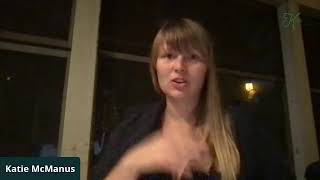
Katie McManus (business strategist and leadership coach) explains four subtle signs that a person has an unhealthy relationship with money and gives practical, behavioral fixes. She uses personal anecdotes and metaphors to show how money beliefs spill into self-worth and relationships, then offers daily habits and thought exercises (check accounts daily with gratitude; plan creative payment solutions; reframe spending as investing; take incremental actions toward big financial dreams).
Chapters
Good evening. I'm Katie McManus, business strategist and leadership coach. This is my final money mindset Monday from Cape Cod. Monday next week, I am driving to Philadelphia and I'm going to be living there from now on. So I'm super excited and a little sad that this is one of the final lives I'm going to be doing from my pandemic home and childhood home. It's been a weird, weird year and a half. But anyway, I am so excited to be going live with you today. I wanted to get back to my normal money mindset Mondays, which kind of fell off the wagon there for a moment, but as is life. And I want to talk today because it's so easy to believe that you have a healthy relationship with money and to kind of skate over this and not pause to actually make sure that it's all good. And so I wanted to spend a little time this evening and actually talk about some signs that your relationship with money is pretty toxic. And these are small signs. I'm not talking about anything big. You're not like a million dollars worth of debt. You're not about to have your home foreclosed on. There are little, little things that eat away at us throughout our day, throughout our life if we have a bad relationship with money. And the reason I want you to go there, the reason I think this really, really matters, is that when we have a bad relationship with money, oftentimes, and I have to say I haven't come across anyone who this isn't. Hasn't been true for. If you have a bad relationship with money, it reflects also in your relationship with yourself and your belief of your own self worth, your own belief about what you're worth in regards to time and attention, in regards to love, in regards to self care, in regards to having healthy foundational friendships, relationships, romantic relationships. It is all tied to what we believe when we think of money, okay? Because if we have a crap relationship with money, it's gonna spill over. The way I describe this to my clients who are working with me to build their businesses is, you know, you. So you're building a business, obviously, because you want to be able to generate an income unless you're independently wealthy and it's a side hobby. But here's the thing about a business and a bad relationship with money. Have any of you ever lived in an area where there are lots of, like, small ponds around? I grew up on Cape Cod and I'm here right now. So Cape Cod was created by a glacier way, way back in the day. And there are all these little like smaller glaciers that basically melted into all these little ponds. And they're beautiful, idyllic places to have a house on the edge because it's kind of a safe like secluded way or place to go swimming. There are fish, if you like fishing. There are swans and ducks and it's just gorgeous. But the people who typically buy on the edge of the pond are fairly well off because it's a waterfront property and they want their properties to look really nice. And so what do they do with the landscaping? They put a ton of fertilizer in it. Now the fertilizer seems to do well for the lawn, it does well for the roses, the vegetable patch, whatever you have. But when it rains all that nitrogen rich fertilizer, guess where it gets washed into, into the pond. And guess what happens to the pond? There becomes an, a very toxic algal bloom that kills everything. Okay, so it's a very detailed metaphor, but this is what happens when you try to build anything with a bad relationship with money. It may look nice to start, it may appear to be all, all fine and good, but ultimately it's going to poison the pond that you paid so much money to be, to be on. And you won't be able to utilize it. And so I don't think we should, any of us live like that. So here are four signs that you have a crap relationship with money. And I'm also going to be talking about some ways to heal it. And for those of you who are curious about more of this work, this is part of the six month group program that I'm rolling out in November called byob. Build your own business. Money work is so critical to building a successful business that there's a bigger section on it in that program. So if you're curious about that, then just reach out to me. But for now, I'm just going to dive right in. So number one sign that you have a crap relationship with money is that you are terrified of checking your bank accounts. You are terrified. Like the idea of checking your bank accounts gets your heart beating a little faster. Maybe your, your palms start sweating. Like this is a physical fear that you have when credit card statements come in. You avoid them. You don't open them right away because you know that opening them will cause more stress. And you feel like just not knowing is better than knowing. And if you have a healthy relationship with money, you're gonna hear me say this and you're like, what is she talking about? She's crazy. Like why would I be afraid of my checking account? This is a big thing for people who have a really unhealthy relationship with money. And I can say this from experience, because I used to be there. I used to have the worst, worst fear and anxiety whenever I had to go in and check my bank account to see what the balance was. My credit card bills, like, oh, my God, like, I can. I. Like, my body's having, I don't know, like, memories in it of that. Like, my stomach started gurgling when I started thinking of that. I don't have credit cards anymore, and I don't agree with them. I don't want to use them because of the trouble I got in because I was so unhealthy in my money. But if you're in this, let's talk about the cost, okay? So ignorance is not bliss. Let's just nip that little belief in the budget, okay? Ignorance is not bliss. If you don't know what's going on with your money, I guarantee you, you are, A, spending money on shit that you don't need to be spending money money on. B, you're gonna run out of money from time to time, and that's gonna be extra, extra stressful. Who has ever run out of money at one point or another? And by the way, if you're starting a business or you're scaling your business, this is actually a really normal phase in that process, okay? So if you're scaling a business and you're. And you haven't run out of money before, but you're kind of coming up against that now, I just want to tell you, take a deep breath. It happens to the best of us, okay? It's part of. It's honestly one of the worst parts of growing a business, but it happens. But if you have a bad relationship with money, this doesn't just happen in your business. It happens in your personal life as well. You also aren't being intentional about saving. You're not being intentional about. And saving, not just for a rainy day or for, like, special purchases, but for retirement for that next big purchase they have to make, like a car or a house. You're not. You're not being intentional about that. And the ultimate thing that all this stuff wraps into is humans get really, really anxious when we feel like we're not in control, okay? And so not checking the numbers and not checking what you owe and being too afraid and too much of a weenie to just sign into those accounts and see what the number is, you're Actually setting yourself up for a deeper level of anxiety because you are telling yourself on a core soul, body level that you are not in control of your life or of your destiny or of anything in the world. When, baby, this is the. One of these few places you can have some control is just by keeping yourself up to date and knowing what you have to work with. Okay, so this is going to make the acid come up in your throat if you have a bad relationship with money. But here is how you fix it, okay? This one little thing. And there's a lot of stuff here. So it's not. This is not the fix all to everything. If you dread if that feeling of shame and embarrassment and just fear bubbles up every time you think about checking your numbers, checking your checking account, your savings, your credit card statements, whatever, you need to check it every day. Every day. This is now your meditation practice. This is now your religious prayer time. This is your conscious self care moment. It'll take three minutes. That's at least. I clocked it to try to figure out how long it would take me to sign in and check out everything. If I wasn't rushing and I was able to drink some coffee in between, it was about three minutes. And it's going to be really scary in the beginning. Okay, it's going to be really scary and it's going to make you have a jump in anxiety in the beginning. So I just want to set you up there. But what you're going to do is whatever you see in your bank account, in your credit card statements, you are going to be grateful for whatever is there, even if it's a negative number, even if your checking account is $53.02 in the red because you got overdrawn yesterday, you are going to be so grateful for the money. Having been there and knowing that the money is going to come in to cover that, that charge, you're going to be so grateful for the credit that some company out there trusted you with so that you could buy whatever you needed to buy with those credit cards, you are just going to have gratitude. And if it helps for you to experience that gratitude on a deeper level, you are going to write out what you are grateful for, what you are thankful for. I know this sounds counterintuitive because it's being grateful for something you don't have. But here's the thing. If you train yourself that I don't have it, I don't have it, I don't have it, guess what? You're just living in a world of scarcity and nothing happens. In a world of scarcity, you get your base pathetic needs, needs met and nothing else. Okay? When you start refocusing on what you do have, on being grateful for whatever it is, even if it's debt, even if it's a scary situation, you start retraining your brain that you live in a world of abundance where there's a lot more possibilities. Okay? So I know this sounds like basic and scary and, and all the things, but I highly recommend it. This is one of the things that helped me turn around my relationship with money. And if you know my story, like, I was on the verge of declaring bankruptcy. I avoided it by the skin of my teeth. And I have a really successful business now, and I'm. I'm. I'm not perfect with money. I will own that. Okay? This is not like, I used to suck and now I'm the best. Not at all. My relationship with money is ever evolving, but I'm so much better than I was when I started. So I just want to give you some faith that there are small things that you can do that will help this along. So that is number one. Okay, so you have a shit relationship with money if you're afraid of checking stuff. Okay? So that is number one. Number two. Number two, how many of you know this scenario? You're in line at the grocery store or at a shop, and you're holding whatever you're going to buy in your hands, and you also have your card ready, your. Your debit card or your credit card. And in your mind, you have that voice practicing, okay, well, what if there's not enough money to cover this? What if my card gets rejected? What is the story I'm going to tell? Okay, I've been there. I've been there so many times. I think this is like, just something that everyone goes through in college. Also, because you don't have any money and you often run out of money at that stage. But it happens to adults, too. And so if you're in that scenario, don't. I don't want you to feel any shame. I'm not shaming you for not having the money. We've all been there. But here's what I want to point out that you're actually doing to yourself. So that is one way of being. Being in that panicked. I care so much about what they think of me. They're going to think I'm poor, whatever. Like, oh, my God, I don't want them to pity me. You know, all this stuff you're coming up with like, a defense argument as to why you're not able to purchase the thing that you wanted to purchase. That is one way of being. And if you really have a crap relationship with money, this new way of being is going to be kind of a flip for you. So when you have a healthy relationship with money, your mind doesn't go to defending why you don't have it. Your mind instead taps into its creativity. And in those moments where, say, your debit card gets rejected or your credit card gets rejected, it does logically think, oh, no, that's not good. Like, I, I should have money in there or something is going wrong or whatever. But instead of wasting the energy trying to explain to perfect strangers why there's no money on the card or why the credit card's not going through, a healthy brain with money will start problem solving. We'll start realizing, oh, my gosh, okay, so this problem is happening. I want to buy this thing, but the money's not happening. So how can I create a solution to this? Like, there's not even shame on the table. There's not even guilt or feeling bad about it on the table. It is just, oh, crap, this is happening. That's not good. Let's. Let's fix this. How can I fix this? You know, is there a friend in the store who can cover me? Can I do Apple pay with different card? Like, it's, it's just problem solving. And so, and there, there are literally a million ways for you to figure out in one of these scenarios. You can ask them to hold it while you go and check things. You can turn to the person behind you in line and say, oh, my God, you know, I forgot this. Do you have Venmo? Can I Venmo you something? And then do, do you mind covering this? Or whatever? And people may say, no, but here's the difference is that when you have a unhealthy relationship with money, that is not where your brain goes. And here is the truth of all truths is money is not your key to security in life. I know we've been taught that, and it's been sold to us that having a lot of money gives us security in our life. How many billionaires and millionaires do you know who've gone broke and lost it all, by the way? Yeah. So money is not our key to security. Our access to our creativity is. Okay, so if you have constant access to your creativity, your ability to problem solve, your ability to come up with, with amazing ways to solve problems, you. You're going to Be fine. No matter what that is, that is your actual security. If you put it all on money, you're going to be sold or really disappointed. I don't know why I said it in that voice, but I kind of like that voice. It's a fun little accent I made up there. Anyway, so here's a small thing I want you to do. Here is if you are that person who sometimes, like, is in line and is thinking up that story or you've been there in the past, here's what I want you to do, is I want you to go later tonight or tomorrow, write a list of 10 creative ways that you could pay for whatever those goods are in a different way, in a different method or whatever. If your debit card got rejected, you know, could you ask someone, could you ask someone for charity? Could you ask someone to actually just help you? Could you offer to do some work in this, in the shop? Could you put it on layaway? Could you do this? Could you do that? Like, there's so many different ways. And imagine doing that without shame, doing that without embarrassment. Like, oh my gosh, this thing happened. Hey, do you mind helping me? I'm just kind of in a bind in the moment. Oh, my gosh. Calling a friend who lives nearby to come and help you out. It's the emotional charge around it that blocks us from our creativity. Nothing else. Nothing else. Like our lack of money doesn't. Doesn't block us from our creativity. It's having that emotional charge. It's having it mean something that gets in the way of our access to our creativity. And who wants that? That's crap. Especially when our creativity is the source of all security. So let's have that not be the thing anymore. Sound good? And hi, I'm not being very interactive in the moment. Hi, whoever's watching, welcome. If you do have any questions or this resonates, I'd love to see it in the comments. And as per usual, I am doing this through Streamyard, to the Facebooks, to LinkedIn and to YouTube. So sometimes Streamyard doesn't show me all the comments from everywhere. So if you are commenting, I'm just not seeing it. It's not you. It is the technology. I'm not mad at you, I promise. So number three. So we're going through the four signs that you have a crap relationship with money. So number three is that when you do get money, when it does come into your life and it's in your hands, it burns in your pockets. And you know how this feels. I Think we've all been here and burning in your pockets because you're thinking about the things you're going to buy, the ways you're going to spend the money. Here's the flip. You're thinking about spending the money, not investing the money. Okay? So if you get like an influx of $30,000 and you really wanted to buy a home as an invest investment or you need to purchase a new car because your old car is crapping out and it's making you unreliable for work and you may lose your job, those are investments that will help you make your life a little more secure. It'll build your portfolio. In the case of the property, it'll, you know, have you accrue equity, all those things. You may also want to invest it in a training program or in working with a coach. That's one of the things I did so that you can further yourself and make more money and be more in touch with your creativity. But let me tell you about the time I made $16,000 in two weeks. Okay. It was my very first sales job. I started working pre sale for Equinox, which is a high end fitness class. And we were doing pre sale for a long awaited new location in a very wealthy area of San Francisco. So in two weeks I think I was the second to last in the ranking for of the four salespeople, one of my colleagues made like $24,000 in two weeks. It was really cool. But I want to just tell you, the year before I had made $30,000 the whole year, okay? So I just made in two weeks more than half of what my income had been the previous year. This money did not mean anything to me. It didn't seem real. It seemed like monopoly money. And guess what I did? I didn't use it to pay off debt. I didn't use it to save or invest. I went and bought, I don't know, like a few thousand dollars worth of workout clothes because I was working at a gym. Okay. And I can say that laughing now. There is a period of my healing story where that story made me cry, that, you know, I wish, I wish I'd been better educated on one hand, but also there is that I just didn't believe I deserved it. I didn't believe I deserved it. And money to me only meant things. It only meant things. It didn't mean progression in my life. And so when you have an unhealthy relationship with money, you are literally just seeing it as a representation of the things out there that you can have you're not seeing it as a representation of the life you can live, okay? It's. You're not seeing it as a representation of the person you can become, okay? Because money does give you access to that. It's really incredible. It's like this magic force that allows for us to. To acquire new skills. It's almost like it's. I mean, it's just like a video game. When you have more money, you can get more skills and tools and you can fight the bad guys and do the things. But when you. When you just see it as, oh, cool, I'm just gonna sit here and buy these things, it's not working for you. It's just. It's like stagnant energy, okay? It's kind of like, you know, when you're really angry with someone and it's just like they're a close friend with. Of yours, and you feel betrayed and. And you just have a lot of emotions about it. If you're to go to them and have like a row, like a real fight about it, like an argument, and maybe you work it out and maybe it actually gets worse and you have to end the relationship. But that. That. That emotion has a place to go, okay? It either gets worked out of your system or it helps you create a conclusion to the story, okay? That is a healthy relationship with money. It helps you further things along. But when you don't use it to further things along, it's kind of like you have this awful situation with a friend. They really deeply, hurtly. And you just go into a room and ruminate and stew for months and months and months and months. And whenever anyone asks you about that friend, it sends you right back into it, okay? Those are the differences. I don't know about you. I'd rather have the fight with a friend. I'd rather have that energy that is money do some work for me and move me further along in my life. And so I do, actually, the thing. So the thing that I want you to work on here is look at the investment possibilities that are available to you, okay? And I know it's scary, especially when you're crappy with money. You don't have a lot to call a financial advisor, but I highly recommend calling a financial advisor and playing the what if what if game with them. So ask them, what if I had $10,000? What would you help me do? Or what would you have me do to make that money grow? What would be the best way for that? And what if I did this? And what if I Did that and what if this, what if that? And say, okay, none of this stuff is true. Maybe some of it is. How can we make this true? And they're, they're brilliant. They're trained to do this, they're trained to help you make more money. So go and do that. Okay, so it's another homework. I'm giving you guys a lot of homework, okay? So if you do just one of these things, I want to hear about it. So send me a dm. And like I said, this is just kind of an overview of the four ways that you may have small things happening that indicate that you have a shitty relationship with money. If you do have a shit relationship with money, you're trying to build a business. I'm doing a deeper program on this in the BYOB program that's coming out in November. It's gonna be bomb and it's gonna change the game for so many people. I know because all the work that I did, that changed the game for me. Okay, so we've gone through number one, which is you're afraid of checking your checking account and your, your credit card statements. Number two, you have those rejected responses like queued up whenever you're in line. You're worried about money being in the bank. Number three, you're thinking money equals stuff to buy or things to buy and not ways to grow. Number four, this is a big one because especially for those of us in the United States, for capitalist country, right? I almost said capitalist company. I mean, but you know, we dream big here, okay? We dream big like this is the place of self made billionaires and everyone has that dream of doing one thing that will just kick them off into multi, you know, hundred million dollar land and they'll live happily ever after. Okay? And everyone has that conversation of, you know, when I have a lot of money, I'm going to do this and when I have a lot of money, I'm going to buy that. And when I have a lot of money, this is going to be the thing. So that stuff is all well and good and I actually use that as a really cool exercise, is like the winning the lottery exercise to help people figure out what their values actually. Because you know, if you're like, oh, I'll quit my job and spend all my time with my family, it's like, oh cool, so you value time with your family. What can we do right now to make you do that? But when you hold yourself in your current position and you over here dream all these big dreams about what if and Someday and if I ever had that and I would do this. What you're actually doing is creating two separate realms of your life. You're actually fractioning out your life. So you're fractioning out the current status and the ideal that I will be happy here. And every time you refer to it, every time you point to, if I ever had that much money, I would be doing this. If I ever did this, blah, blah, you're reminding your consciousness that there's a huge ass gap between what you have right now and what you really, really want. So every here's the problem in this, and here's a sign that you have a bad relationship with money is that if you are currently making $75,000 a year and you're able to pay rent and you're able to, you know, put some money away for retirement and you're able to, you know, go on the occasional vacation, life is okay, right? You can survive, but you really, really want to buy like a $500 boat. I'm sorry, $500,000 boat. And you want to buy a bigger home and you want to do this and you want to invest and you want to help charities and, and there's just all this stuff that you really, really want, but you don't do any action to make it real. All you're doing is training your brain to be really dissatisfied with the life you have. Oh, that's the only thing you're doing. You're not being aspirational. You are not motivating yourself further if you're not taking any action to make these things real. Okay? Now I'm not saying that you taking action right away is going to make all that stuff real. It may be like a 30 year plan, but let me tell you, a person with a healthy relationship with money can give themselves credit for working towards a big goal as they get closer to it, okay? They have more access to freedom. As they work closer, they get closer to it. Okay? So maybe it's you live in a smaller, smaller home for a little while and then you're able to save up, save up, save up and do these big, exciting, expensive things. But here's the sign that if I'm going to boil it down to one sentence, because I've had a hard time distilling this into just one sentence, is you have a bad relationship with money if you hold your happiness and in this dream of being rich, if, if that's what your happiness and your plan to be happy is all tied up in and you derive great satisfaction from imagining it, but you don't actually make any action steps to get there. You're just telling your brain to be dissatisfied in your life. That's all you're doing. And that's really sad. Can we not do that? That's like really sad. And I used to do this. I used to do this all the time. And it's amazing when you stop doing it and you start tapping into your creativity and start thinking of ways to make even just a fraction of what that dream is real. Okay, so maybe you're not buying a huge mansion. Maybe you're buying like a three bedroom, two bath home that's so far from where you are now. Okay? So you need to. And this is different for everyone. So if you're in that mind space where you imagine winning the lottery and you imagine, you know, getting your, like your small business that you work for gets IPO'd or something, you get a big buyout, whatever, and you have like this what if thing. Stop having just the what if and like the someday dream. Start working towards it now, like get a side hustle, make extra money, do overtime. I don't care what it is. Start investing. Start doing stuff that will help you save up for that big dream. Because that will create a lot more satisfaction in the here and now. Anyway, those are the four signs that you have a really crap relationship with money. If I spoke to you, if you heard this and you were like, yep, that's me, and that's me. That's not really me, but that's me. If any of these things were true for you, I want you to do the homework, check your accounts every single day and be grateful. Okay? Think of creative ways that you'd be able to pay for something if your cards got rejected. Okay? Keep your access to creativity. Stop thinking about money as just a sub out for the things you want. Start thinking about if you did get some money in, what would you want to invest in? Where do you want to take your life and have it translate into that? Instead of okay, and if it helps to write all the stuff out, that's really, really helpful. And the fourth one is a big homework piece. I don't expect you to do it tonight. But if you have that big dream of the stuff that you want to do when you, when you're ultra rich, when you win the lottery, whatever, I'm not making fun of it, but you need to start making small actions to make parts of it true at some point. At some point. It doesn't have to be right now. I'm not expecting you to turn your $20 into 50,000 and be able to go and buy a boat. I'm saying, you know, $20 every week eventually will hit 50,000, especially if you invest it well. And knowing that you're taking those actions will make you feel a lot better, a lot happier in the here and now. Anyway, I wish you all an amazing relationship with money, a happy life, and if you want any more information on the BYOB program, build your own business that has a longer course section on this stuff. Then reach out to me. And also reach out to me if you've done any of the homework assignments that I just gave because I really want to hear what it brought up for you. Anyway, I'm Katie McManus, business strategist and leadership coach. Thank you so much for joining me this evening. I can't wait to be going live with you later this week, my final week on Cape Cod. And I hope at some point I probably will cry. So just be warned. Anyway, love you all. Have a great night. Talk to you soon.
More from Katie





How to do self care right now, so you can do what needs to be done, for yourself, your business, and

How to do self care right now, so you can do what needs to be done, for yourself, your business, and

#greenscreen How to build a consulting business that makes you $200,000-$700,000 a year

#greenscreen How to build a consulting business that makes you $200,000-$700,000 a year

Maybe we’re not the imposters…? #businesscoach #startup #entrepreneur #smallbusiness #consulting

Maybe we’re not the imposters…? #businesscoach #startup #entrepreneur #smallbusiness #consulting
